
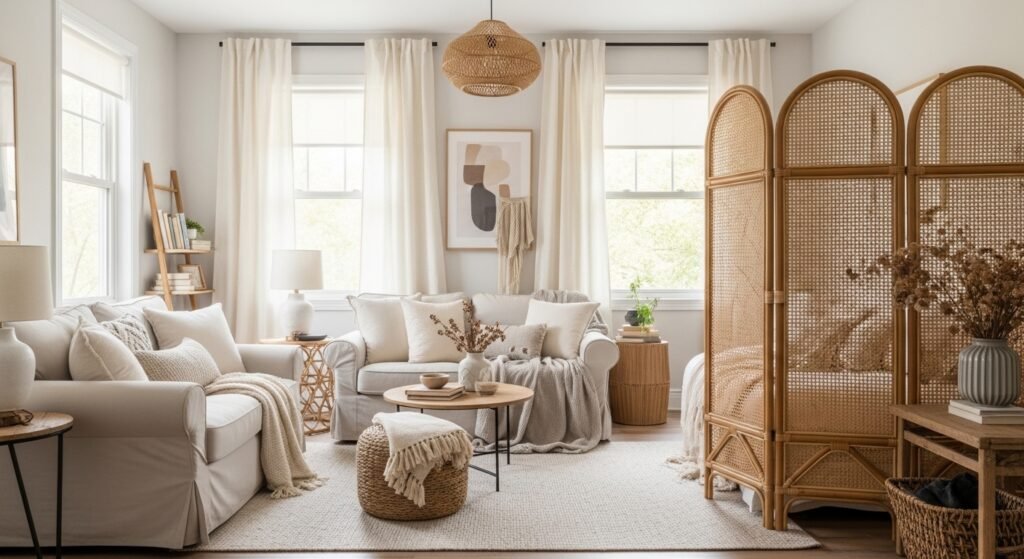
I stared at my one-room layout and realized the issue wasn’t furniture — it was zones. I needed a clearer living area, a tiny office, and a restful sleep corner that all felt intentional. Small changes like a rug, a pendant lamp, and a screen made my studio feel roomy and purposeful. These ideas helped me stop tripping over clutter and start enjoying each part of my apartment.
This list leans modern-boho with warm neutrals and organic textures, all renter-friendly. Most suggestions are under $150, with a few splurges around $200 for pieces that actually last. These looks work best in studios, micro-lofts, and single-room rentals. Lately I’ve noticed warm wood tones and rattan popping up everywhere, and curtain dividers are a quick, cheap way to add height and separation.
What You'll Need to Get This Look
Textiles & Soft Goods:
- Cream chunky knit throw blanket (~$35-55)
- Linen blend curtains, 84-inch (~$30-50 per panel)
- Velvet pillow covers, set of 4 (~$40-50)
Wall Decor & Art:
- Set of 3 floating shelves, white oak (~$45-70)
- Large round mirror, 36-inch (~$80-120)
Lighting:
- Rattan pendant light shade (~$30-60)
- LED Edison bulbs, warm white (~$15-20)
Plants & Greenery:
- Artificial fiddle leaf fig tree, 6ft (~$60-90)
Budget-Friendly Finds:
- Peel and stick wallpaper panels, neutral (~$20-35)
- Compact fold-out desk, wall-mounted (~$80-130)
- 8×10 natural jute area rug (~$90-150)
Layered Textiles for a Cozy Reading Nook
Style/Vibe: Cozy Modern / Boho
Budget: $$ (under $100)
Best For: Living area / Corner nook
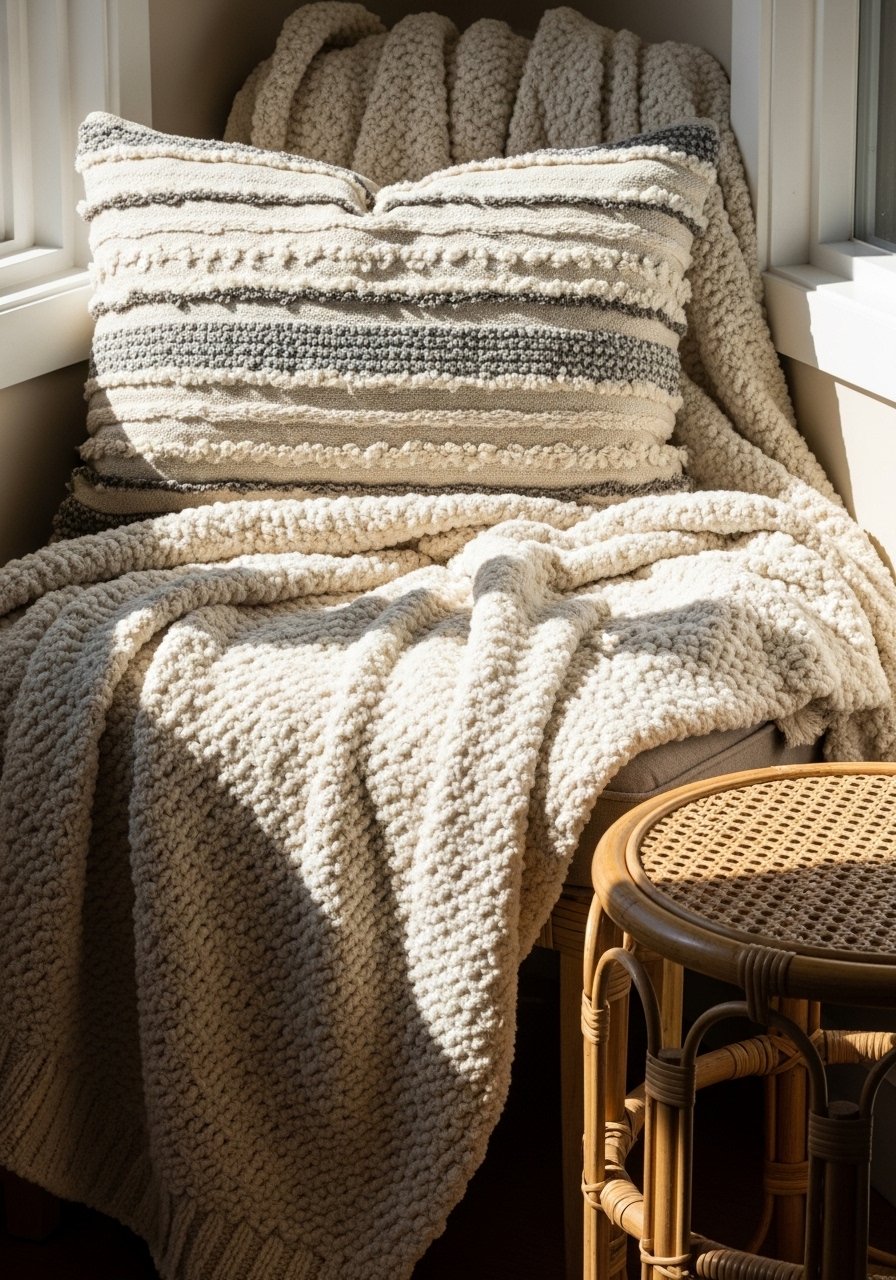
I layered a cream chunky knit throw over a slim armchair and added velvet pillow covers for contrast; the combo made my corner feel like a dedicated retreat. I used this cream chunky knit throw and a 20"x20" velvet pillow set to keep proportions cozy. Avoid overstuffing with too many patterns — aim for three textures and stick to warm neutrals plus one accent color for balance.
Rattan Room Divider to Define Bedroom Zone
Style/Vibe: Boho / Coastal
Budget: $$ (under $150)
Best For: Studio bedroom separation
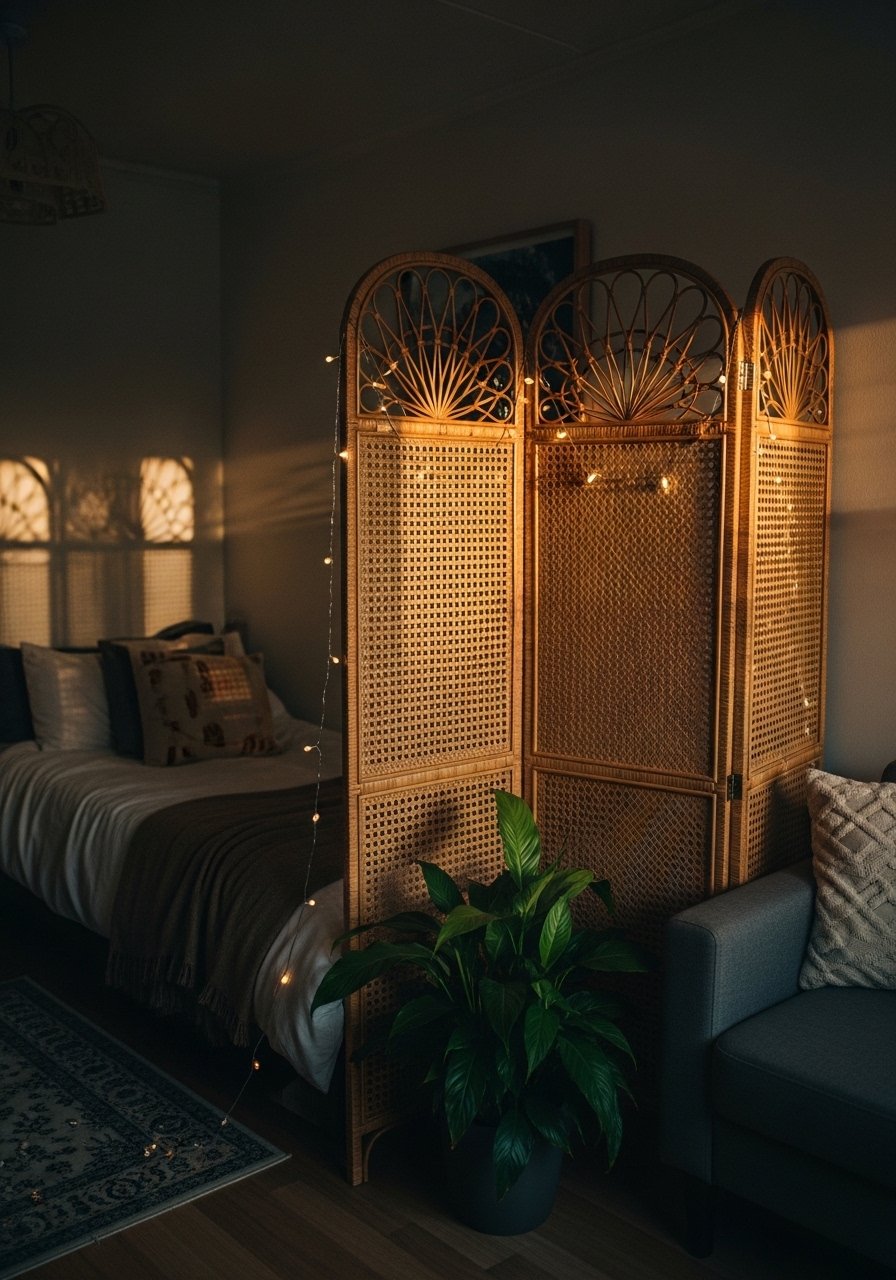
I used a three-panel rattan screen to separate my bed from the sofa; it adds texture while letting light through. A rattan screen reads lighter than a bulky bookcase and pairs well with warm wood accents from West Elm or Ikea. I recommend a 60–70" high screen. Common mistake: placing the divider too close to the bed — leave a 12–18" walkway so the zone breathes and feels intentional.
Floating Shelves with Curated Greenery for a Mini Office
Style/Vibe: Minimalist / Scandinavian
Budget: $$ (under $100)
Best For: Workspace / Wall above desk
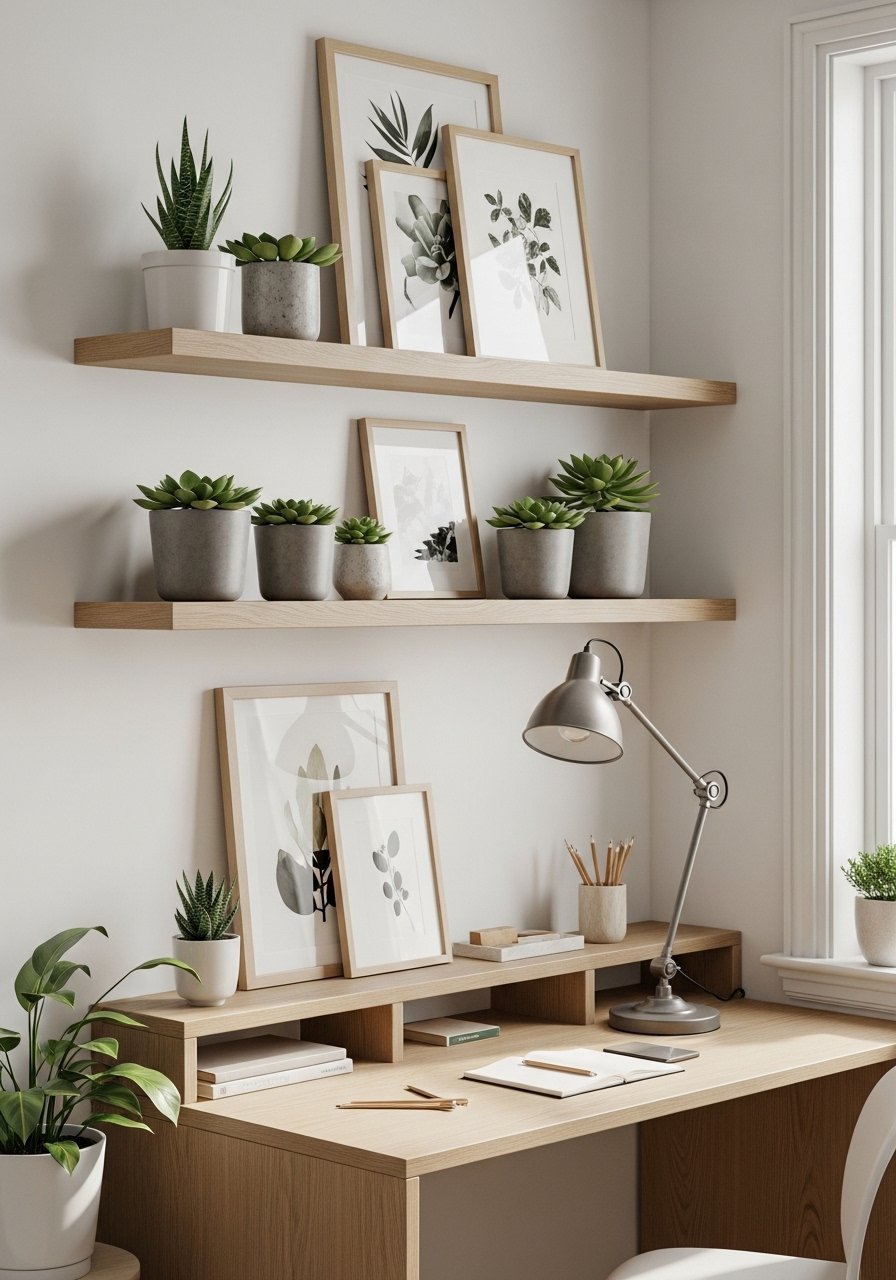
Floating shelves above my fold-out desk keep supplies off the tabletop while defining an office zone. I used white oak floating shelves and staggered heights in groups of three for balance. Use odd numbers and vary plant heights to avoid a static look. Avoid overloading shelves; aim for one functional item, one plant, and one decorative piece per shelf for clarity and flow.
Fold-Out Desk as Efficient Office Nook
Style/Vibe: Modern / Minimalist
Budget: $$ (under $150)
Best For: Work-from-home station
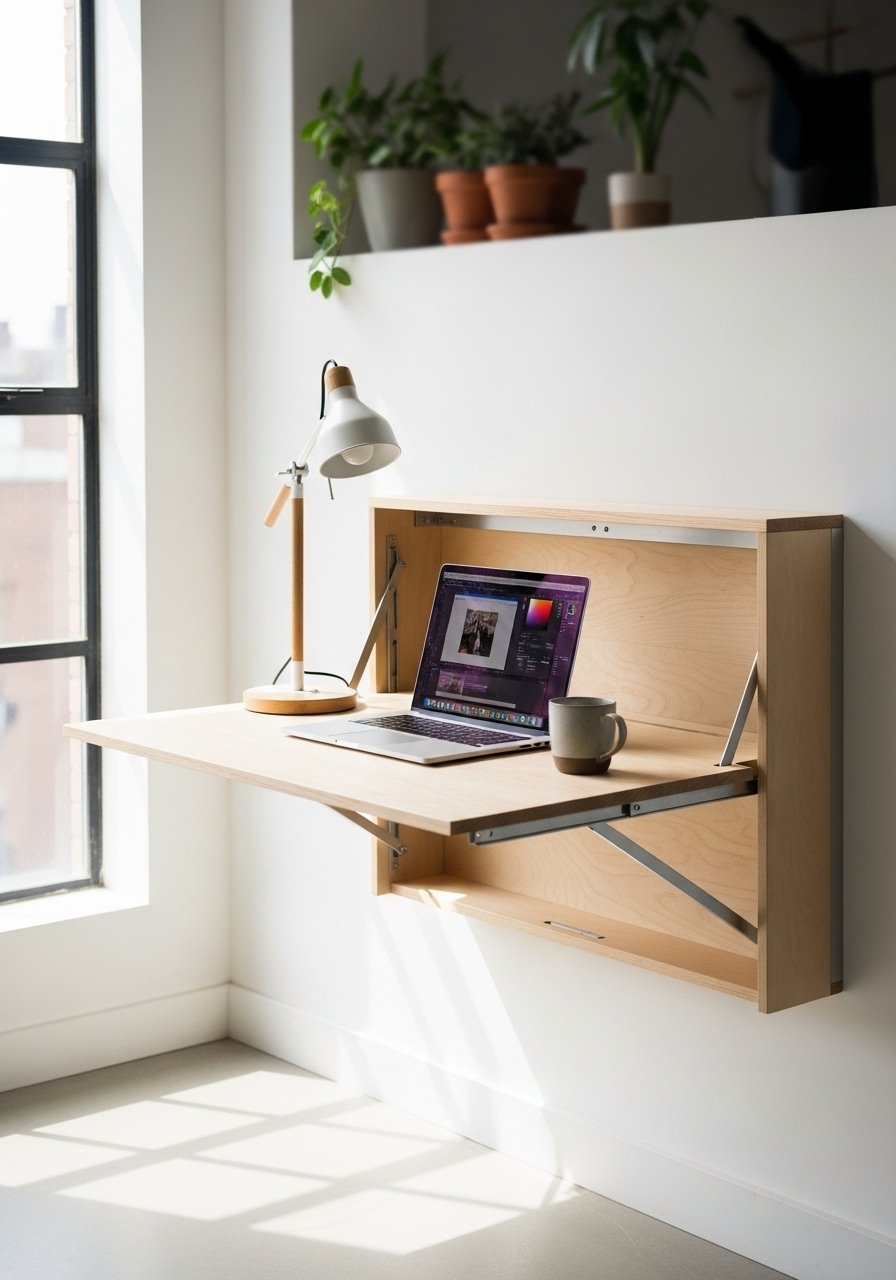
I installed a compact wall-mounted fold-out desk to reclaim floor space. It’s roomy enough for a laptop and a notebook but tucks away on evenings. I paired it with a slim task lamp and a small corkboard to keep visual clutter off counters. Avoid deep, heavy desks that overwhelm a studio; choose a 24–36" wide surface to keep proportion and allow circulation around the living zone.
Area Rug to Anchor the Living Zone
Style/Vibe: Modern Farmhouse / Minimalist
Budget: $$$ ($90-150)
Best For: Living room / Seating area
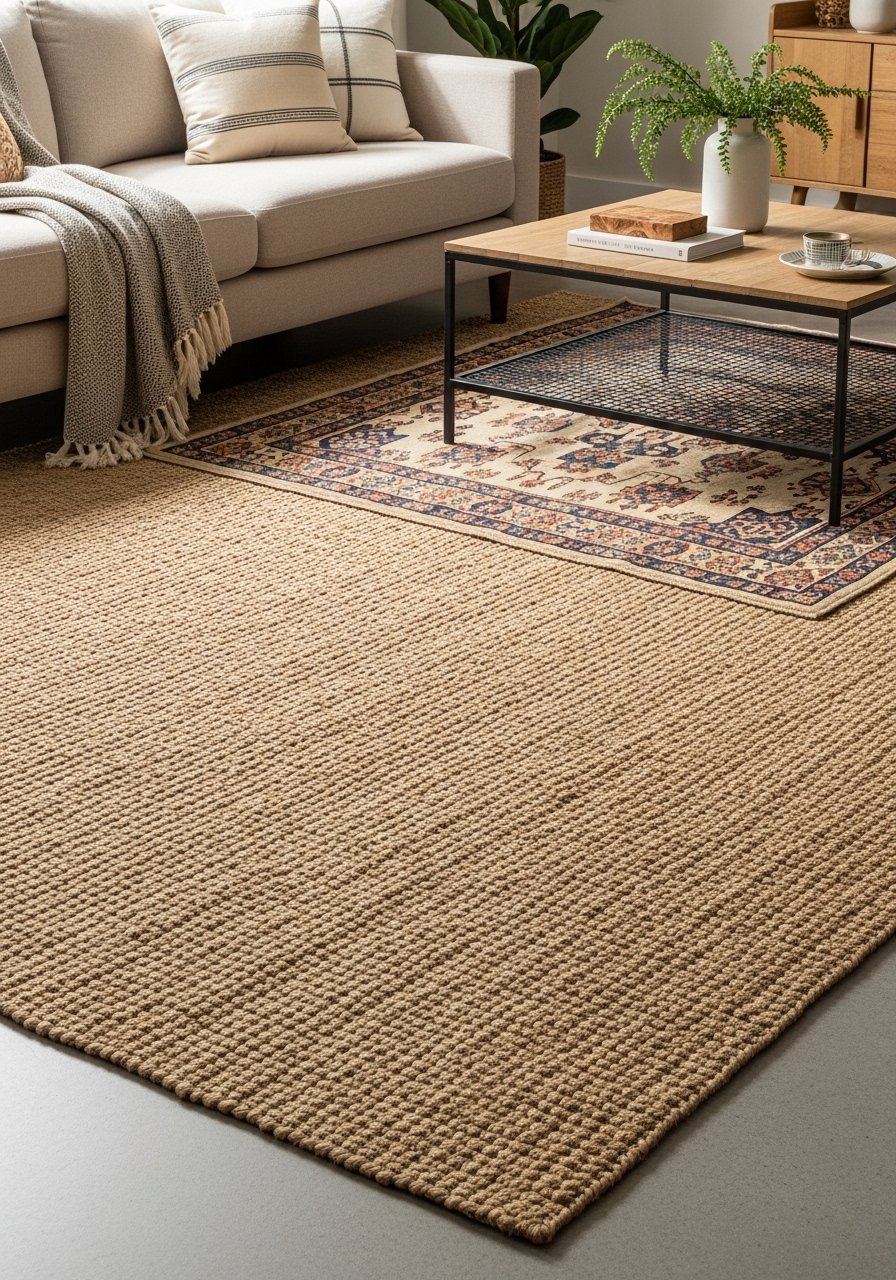
I dropped an 8×10 jute rug under my sofa and coffee table to visually anchor the living area. Rugs are one of the easiest ways to create separate zones — I’ve noticed nearly three out of four small layouts benefit from a clearly defined rug. My rule: front legs of the sofa should sit on the rug. Avoid rugs that are too small; a 5×8 looks like a doormat and breaks the flow.
Floor-to-Ceiling Curtains to Add Height and Divide
Style/Vibe: Elegant / Modern
Budget: $$ (under $100 per panel)
Best For: Sleeping area / Closet hideaway
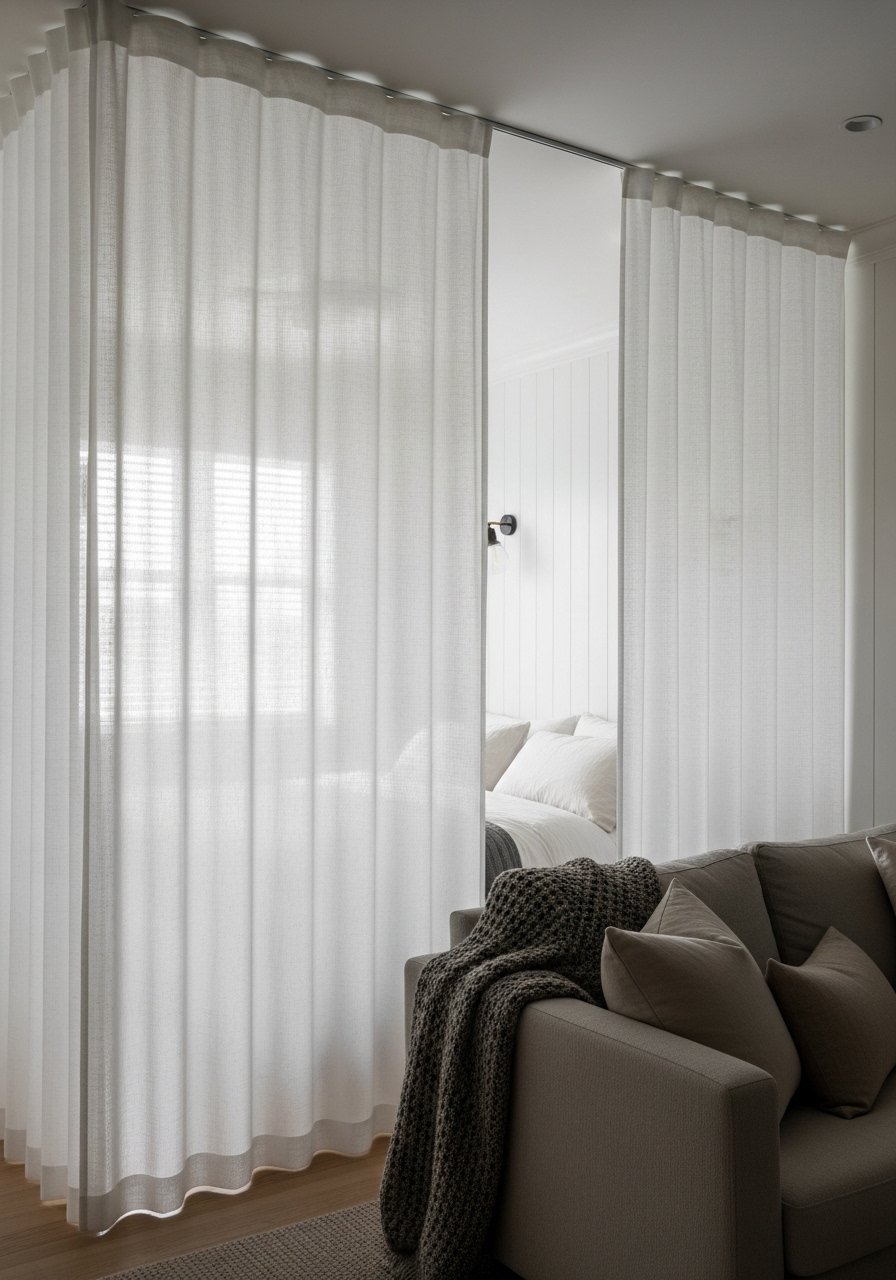
I hung linen panels from a ceiling-mounted track to create a soft bedroom curtain — it added height and a sense of privacy. Use 84–96" panels for standard rooms; for tall ceilings choose 108–120". I used neutral linen blend curtains and clipped them back during the day. A common mistake is hanging curtains too low; always mount as close to the ceiling as possible to visually lift the space.
Oversized Mirror to Brighten Dark Corners
Style/Vibe: Scandinavian / Minimalist
Budget: $$$ ($80-150)
Best For: Living area / Entryway
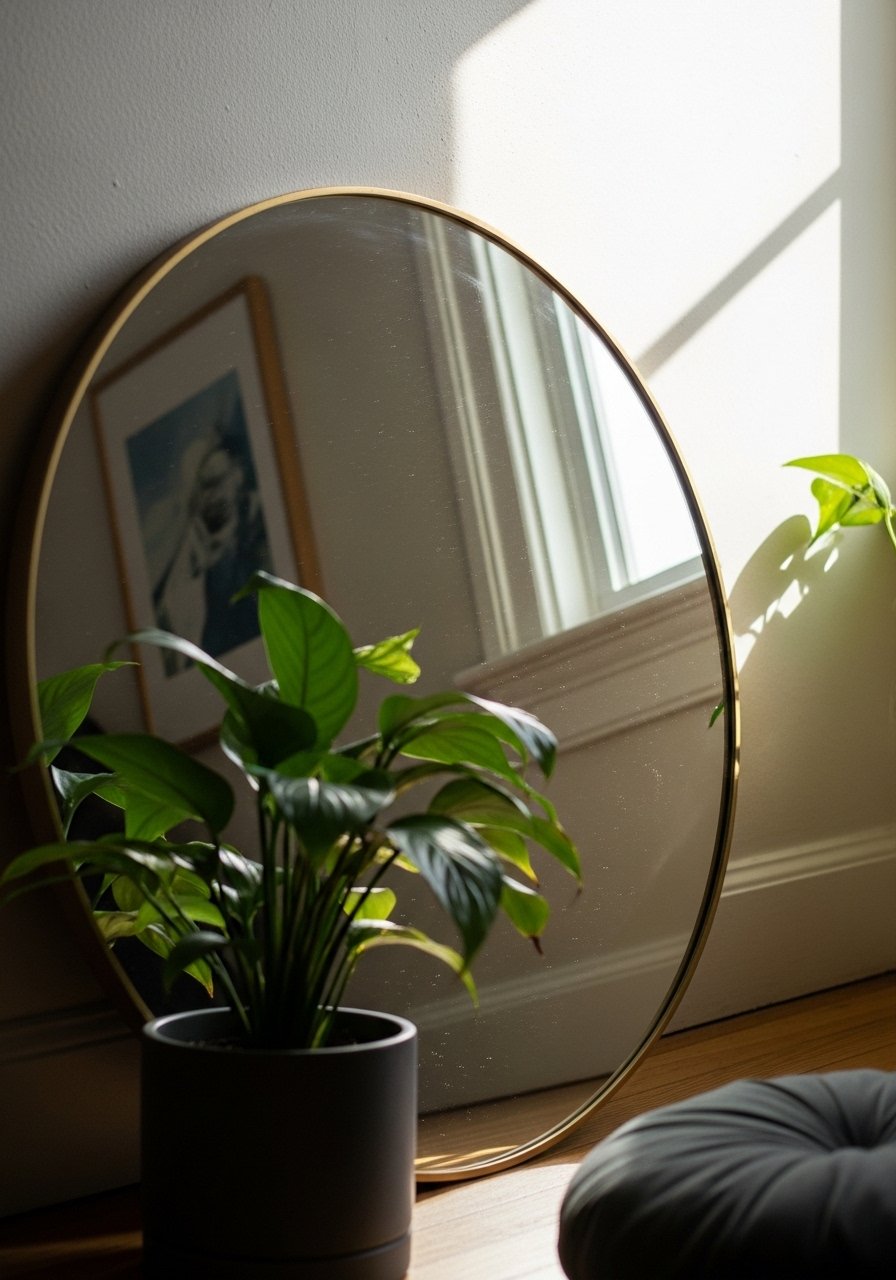
A large round mirror opposite my window doubled the daylight and made the whole studio feel larger. I picked a 36-inch diameter with a slim frame to keep proportions balanced against my sofa. Mirrors also help define zones by reflecting a specific area, like a dining nook. Avoid heavily ornate frames in tiny spaces — they compete visually. Keep the mirror at eye level or slightly lower when leaning for the best effect.
Gallery Wall Using Mismatched Frames to Define Entry
Style/Vibe: Eclectic / Modern
Budget: $$ (under $100)
Best For: Entryway / Kitchen wall
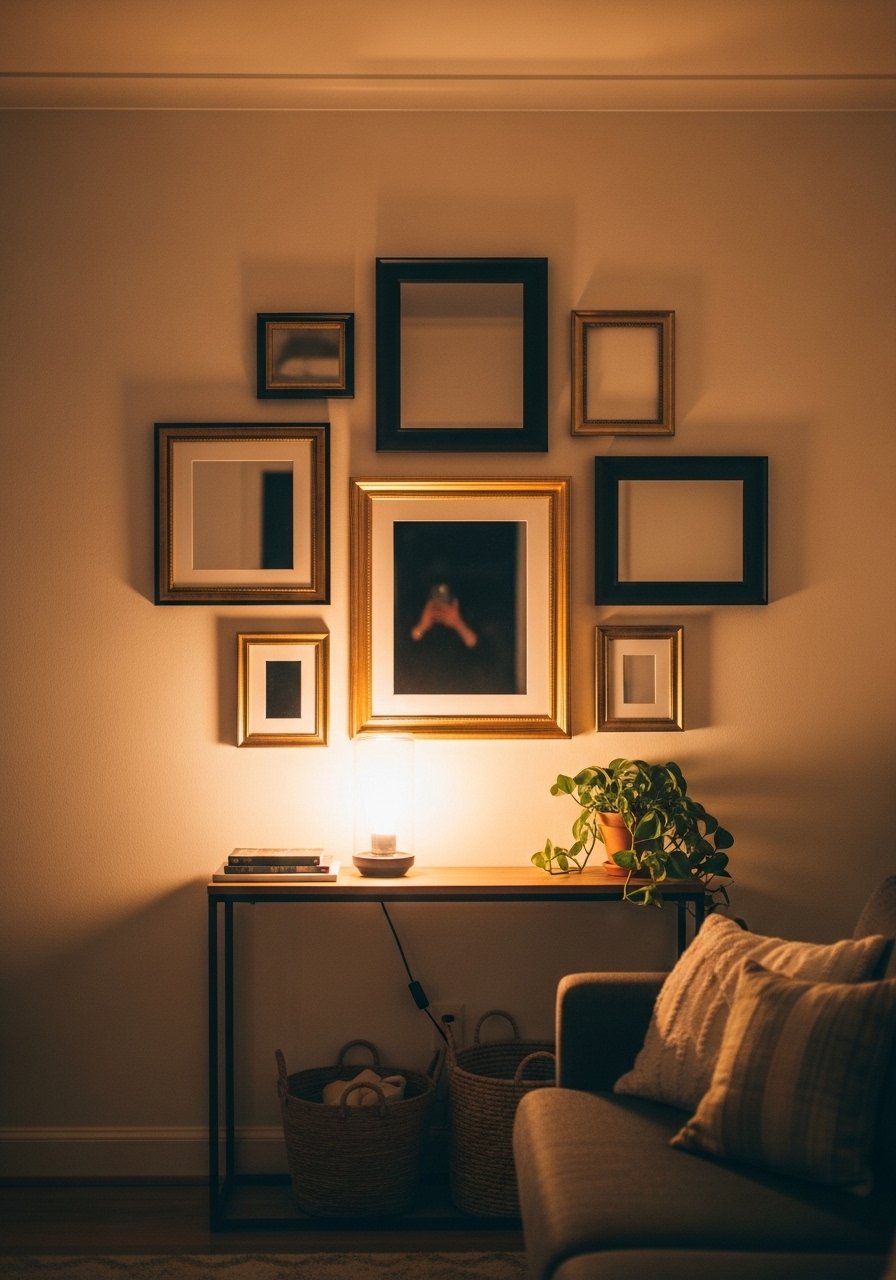
My entry sits right by the kitchen, so I made a gallery wall to claim that zone. I thrifted frames and balanced them with new white mats for cohesion. I mix black and brass frames and keep spacing at 2-3 inches for rhythm. One mistake is hanging pieces randomly; sketch a layout on the floor first. Use a vertical group near a console to visually separate the entry from the cooking area.
Lofted Bed Platform With Storage for Privacy
Style/Vibe: Industrial / Modern
Budget: $$$ ($200-400)
Best For: Sleep zone / Storage
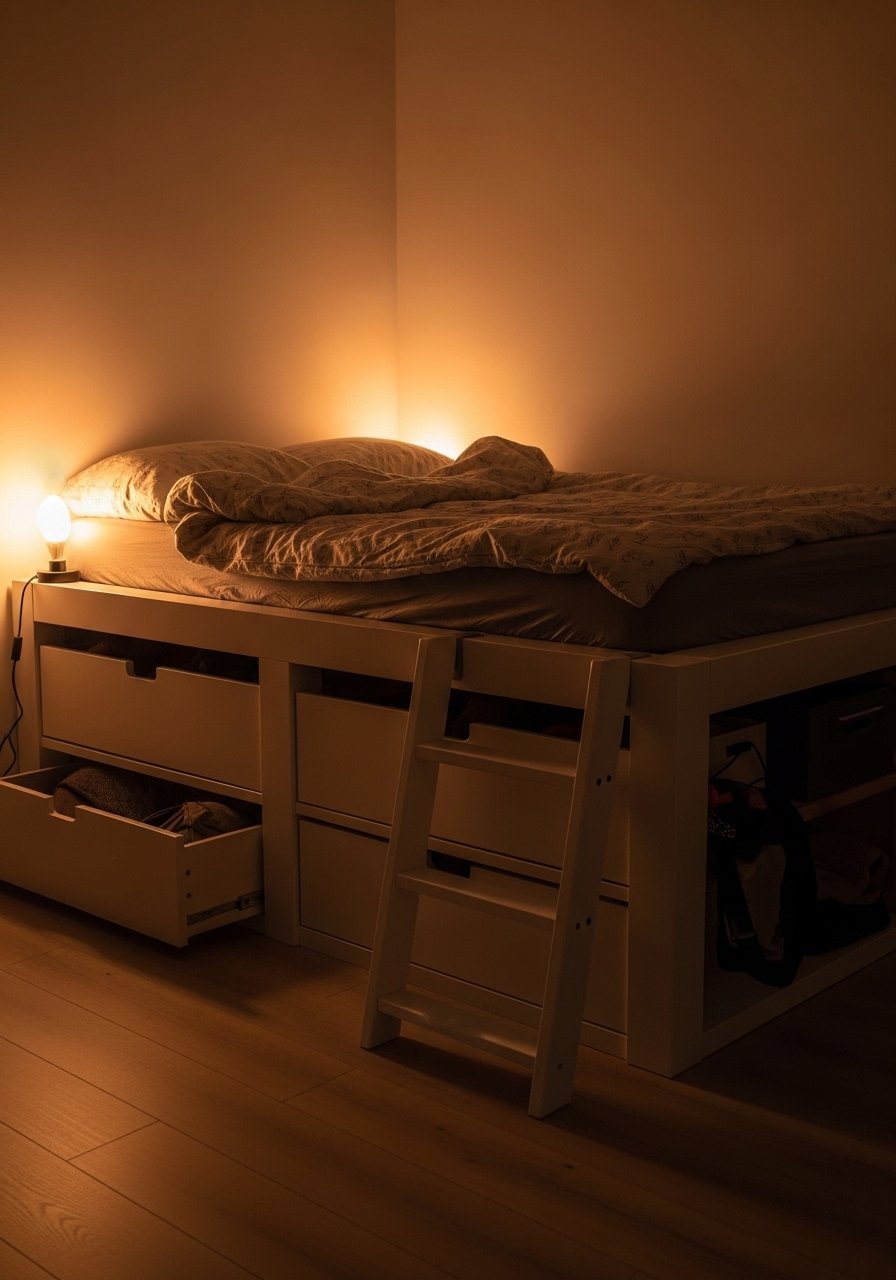
I built a low platform bed with drawers beneath to create both separation and storage. In studios, vertical solutions win — the platform defines the bedroom without walls. I left an open side for airflow and added a slim curtain for extra privacy. Mistake to avoid: using a platform that’s too high with no railings — it can feel unstable. Aim for a platform height you can access comfortably and that allows storage beneath.
Multifunctional Sofa Bed for Guests and Seating
Style/Vibe: Modern / Practical
Budget: $$$ ($200-500)
Best For: Living room / Guest sleeping
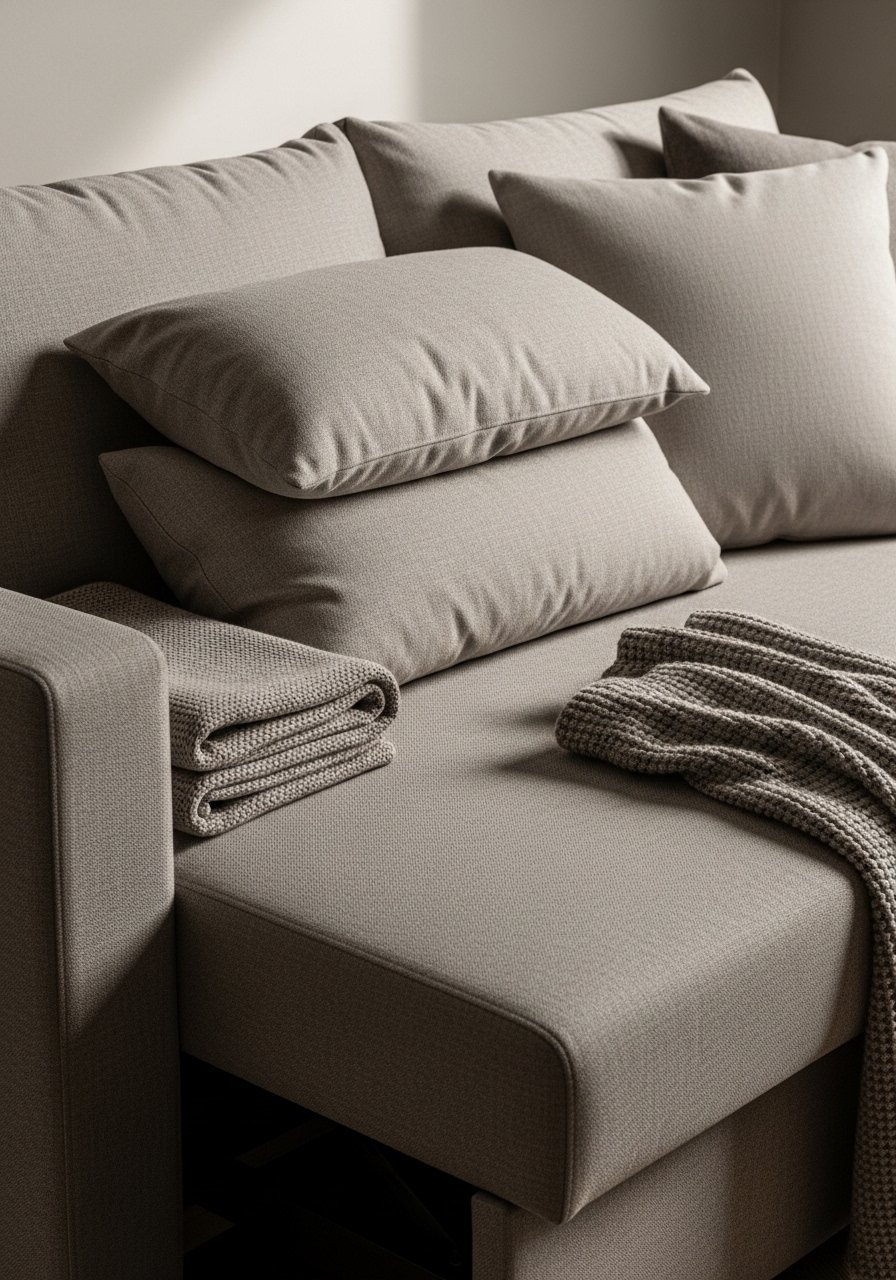
I chose a compact convertible sofa that’s comfortable for daily use and converts easily for guests. Pick a model with a mattress thickness of at least 4-6" for real sleep comfort. Avoid cheap click-clack mechanisms that wear quickly. Keep throw cushions stored in a basket so the sofa can be cleared quickly. This gives the living zone dual purpose without sacrificing style or sleep quality.
Open Clothing Rack as a Stylish Closet Zone
Style/Vibe: Minimalist / Scandinavian
Budget: $ (under $80)
Best For: Wardrobe / Dressing area
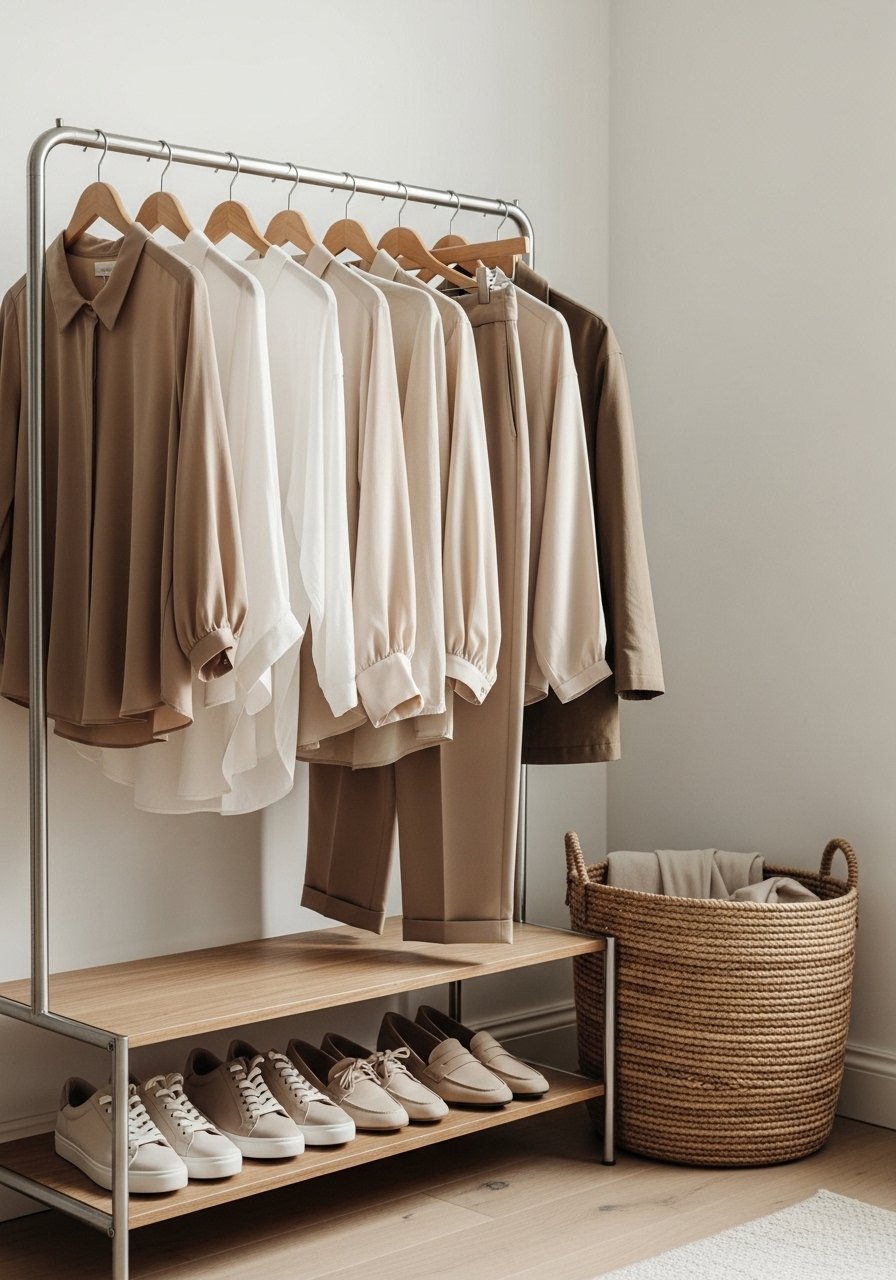
I swapped a bulky dresser for an open clothing rack to visually zone a dressing area. Keep hangers uniform, group items by color, and add a low shoe shelf to reduce visual clutter. I added a woven basket for off-season storage. Avoid overcrowding the rack — aim for 60–80% capacity so items breathe. This creates a boutique-like corner that feels intentional and practical.
Low Bookshelf Half-Wall To Separate Kitchen and Living
Style/Vibe: Modern Farmhouse / Transitional
Budget: $$ (under $150)
Best For: Living / Kitchen divider
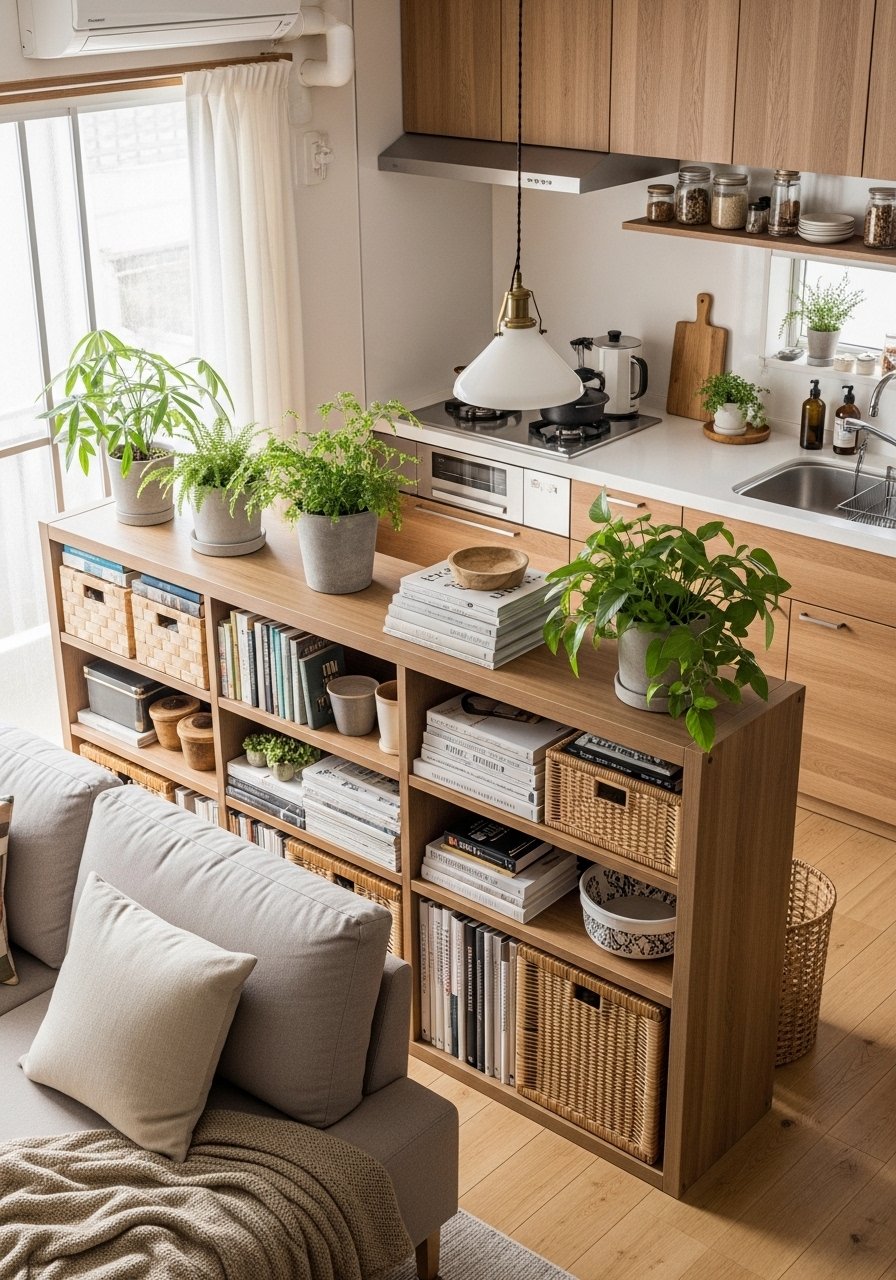
I used a low open bookshelf to split my sofa from the kitchenette; it provides storage and a clear visual border without closing the room. Keep styling balanced — books on one side, baskets on the other — to avoid a lopsided feel. Mistake: making the shelf too tall, which blocks sightlines. Aim for a height around seat back level (24–30") so the room stays connected.
Statement Pendant Above a Dining Nook
Style/Vibe: Modern / Boho
Budget: $$ (under $120)
Best For: Dining area / Kitchen island
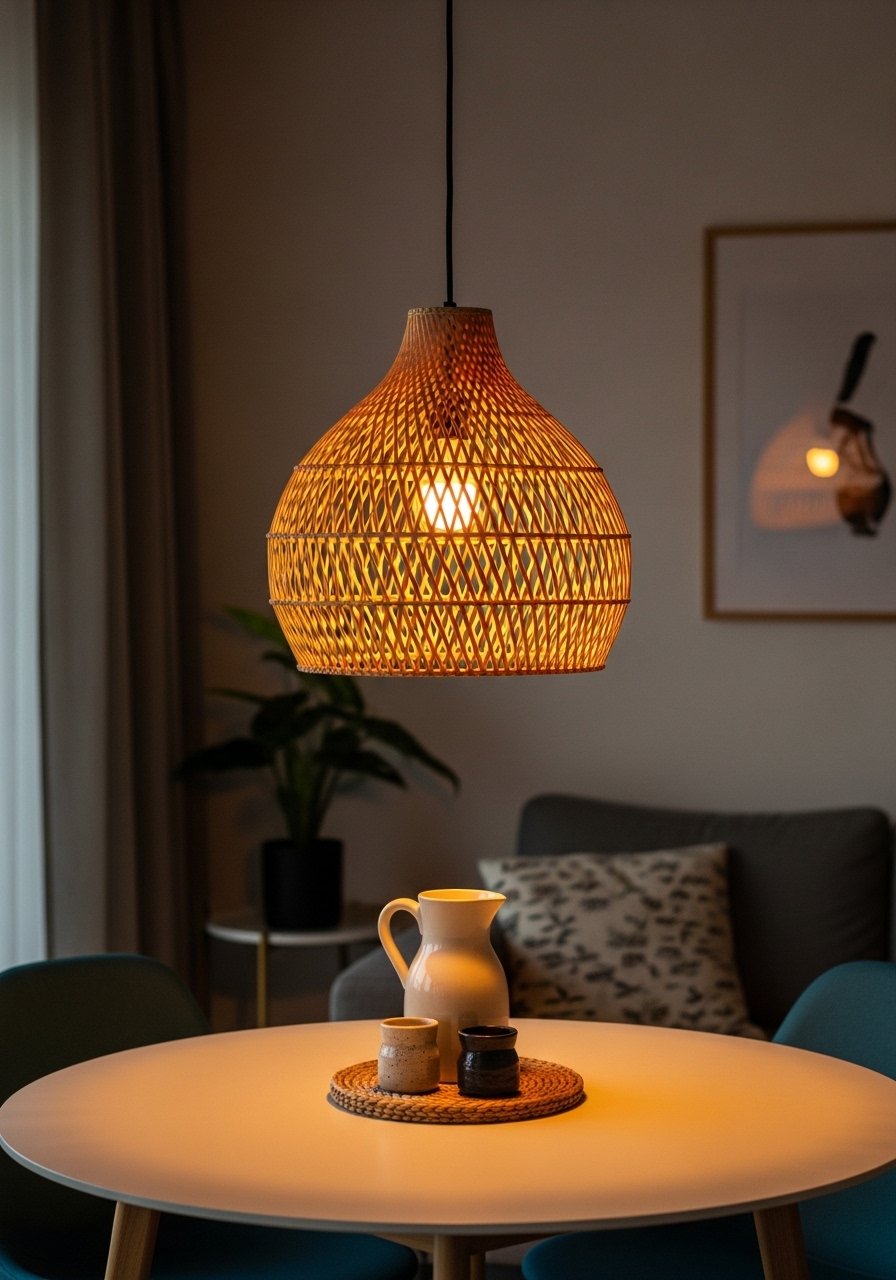
I swapped my basic ceiling light for a rattan pendant above a small round table; that single change created a dining zone instantly. A 16–20" diameter pendant is perfect for compact tables. Pair with LED Edison bulbs for warm light. Avoid pendants that hang too low — keep 30–36" above the tabletop for comfortable sightlines. The pendant makes the area feel deliberate and gives the rest of the studio breathing room.
Peel-and-Stick Accent Wall for a Work Nook
Style/Vibe: Modern / Eclectic
Budget: $ (under $50)
Best For: Work surface / Feature wall
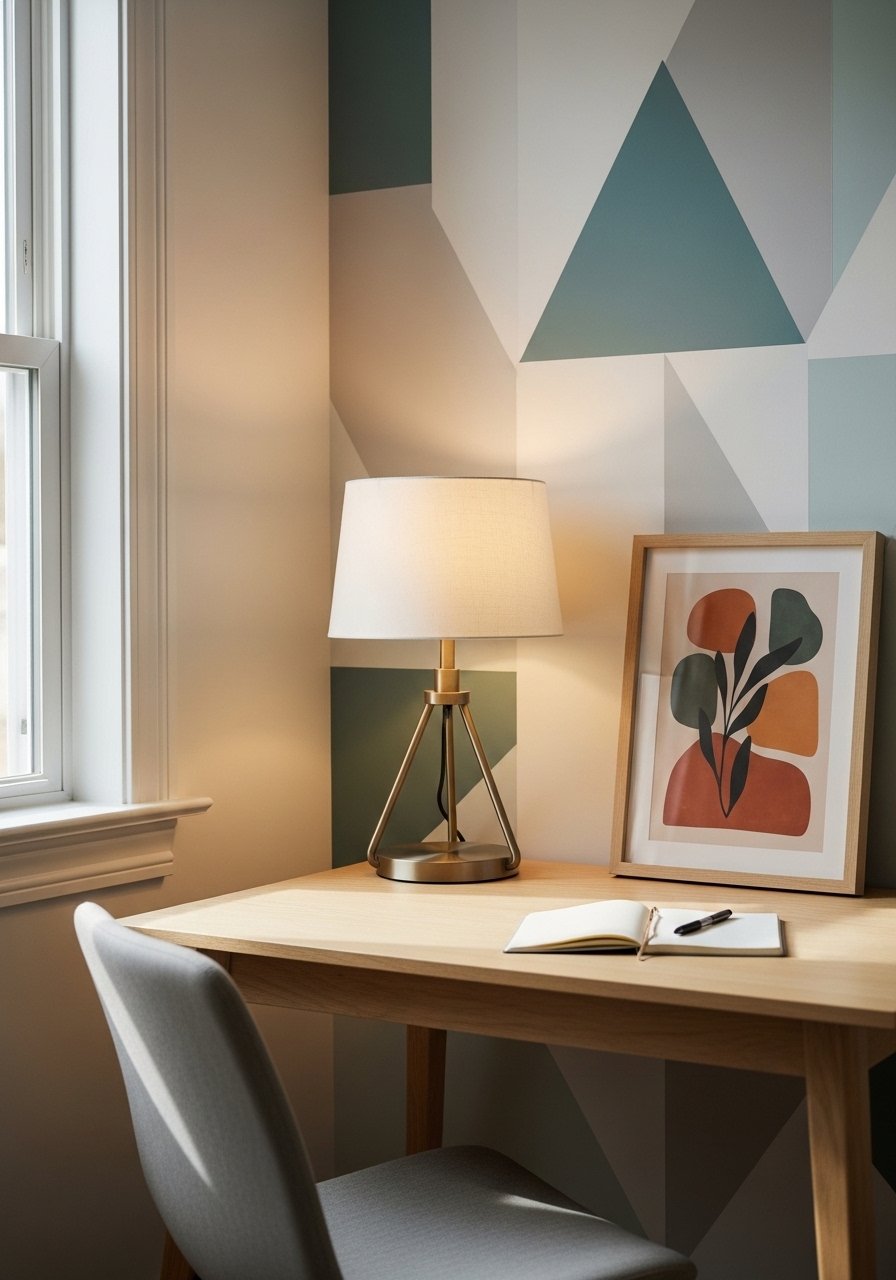
I used neutral peel-and-stick wallpaper behind my desk to create a backdrop for the office zone. It gives the look of a painted feature wall without commitment — perfect for rentals. I kept the pattern subtle and used warm neutrals so the nook doesn’t overpower the studio. Common mistake: using a bold pattern at full wall scale; opt for a half-wall or framed panel if you want a gentler effect.
Mixed Metallics for a Kitchen Bar Zone
Style/Vibe: Modern Glam / Transitional
Budget: $$ (under $150)
Best For: Bar / Counter area
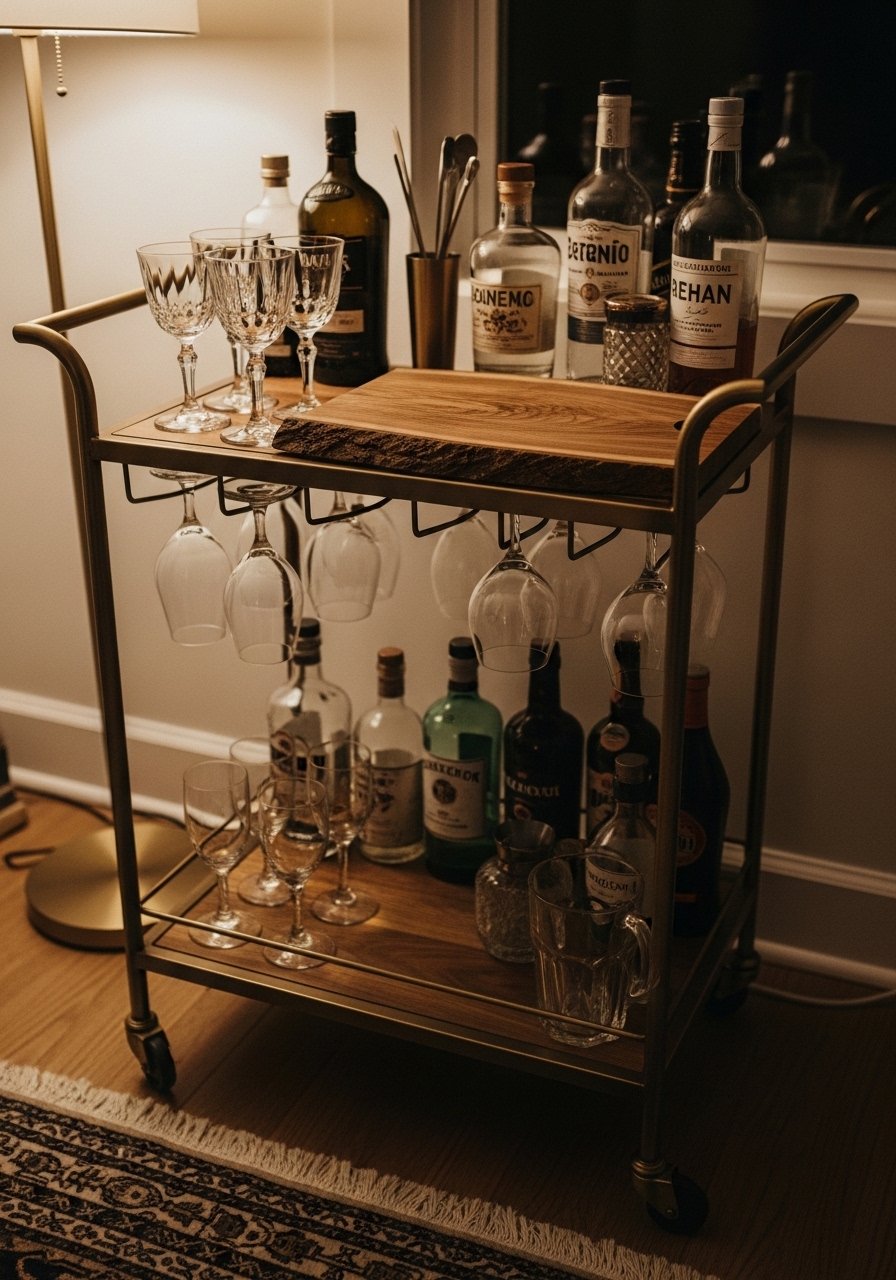
I styled a compact rolling kitchen cart as a bar zone and mixed brass handles with matte black trays for depth. Mixing metals keeps the area current; pick one dominant finish and use others as accents. Avoid matching everything — a little contrast reads intentional. Use a small wooden board and glass decanter to add organic texture. The cart keeps drinks and prep items contained and visually marks the bar area.
Concealed Storage TV Console to Keep Living Zone Tidy
Style/Vibe: Minimalist / Modern
Budget: $$$ ($100-250)
Best For: Media / Living area
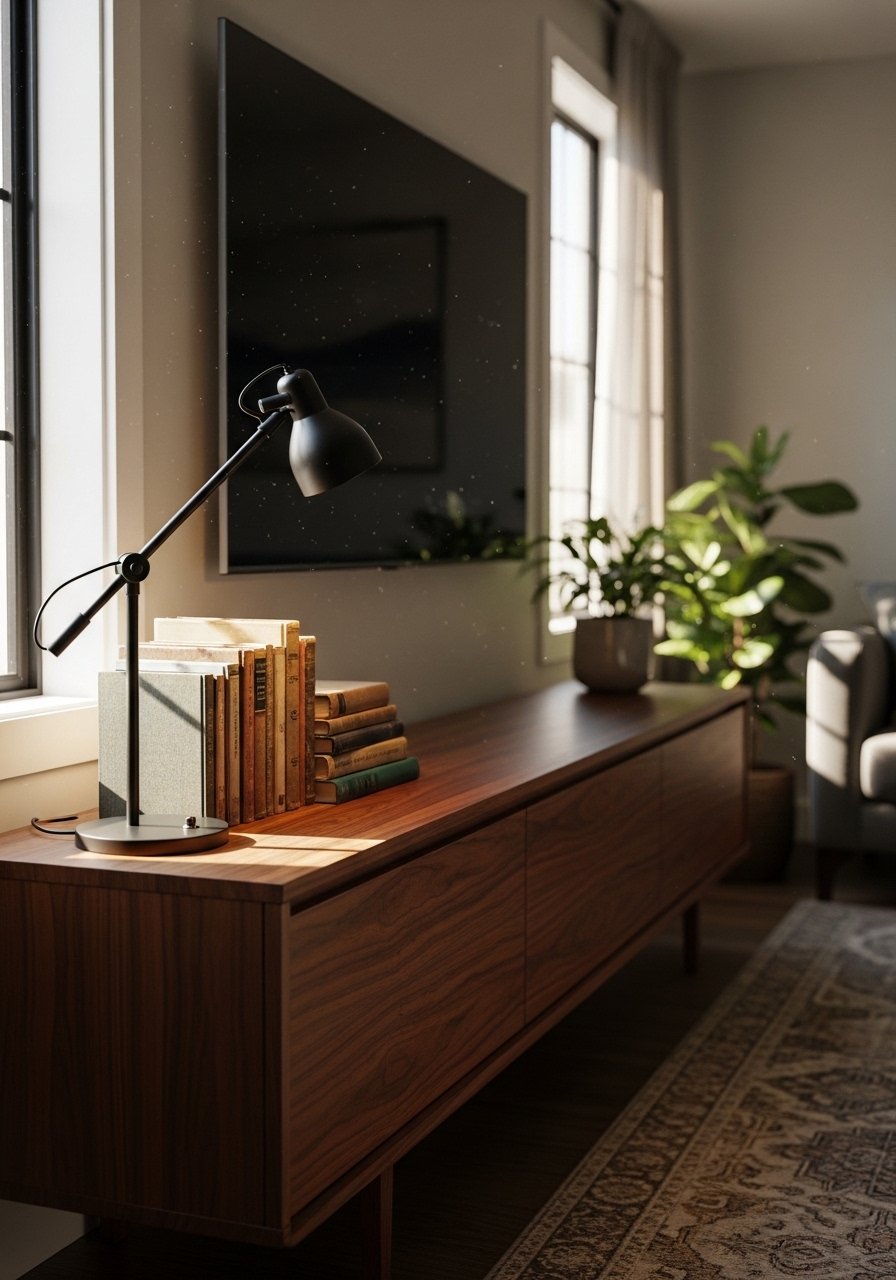
I went with a low TV console that has hidden drawers to stash remotes, cords, and blankets — it keeps the living area tidy and defined. Choose a width that aligns with your sofa length for proportional balance. Avoid open shelving under the TV for electronics if you have limited storage; closed drawers look cleaner. A console with a slim top gives a surface for a lamp to help the living zone feel intentional.
Balcony Styling to Extend the Living Zone
Style/Vibe: Coastal / Boho
Budget: $ (under $150)
Best For: Balcony / Outdoor space
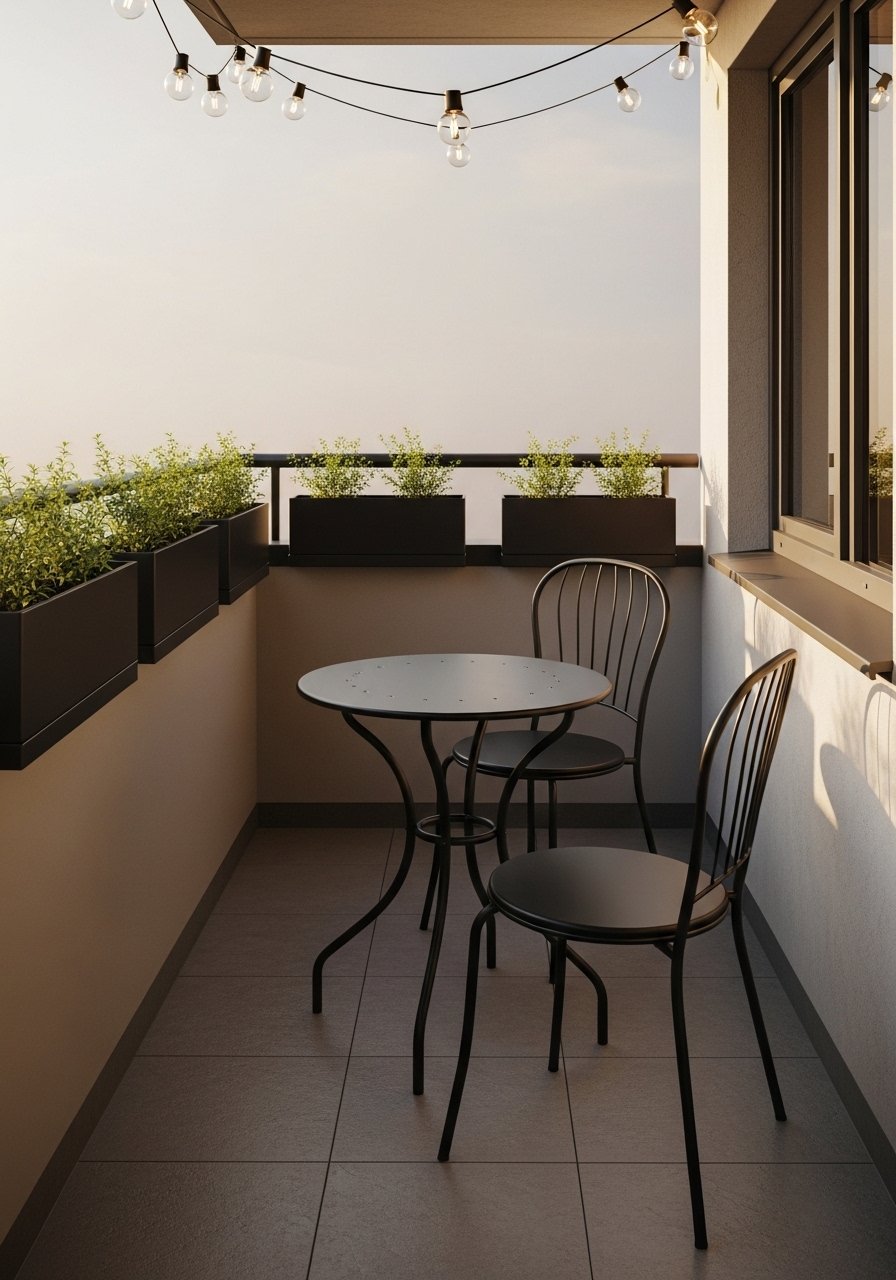
If you have a balcony, treat it like another room. I added a compact bistro set, a weatherproof rug, and planters to make it an outdoor living zone. Use one large plant, like a 6-foot faux or real fiddle leaf fig, for impact rather than many tiny pots. Avoid cluttering the floor with too many small items; choose a couple of statement pieces so the balcony reads as an extension of your living area.
Clustered Plants to Carve Out a Green Zone
Style/Vibe: Boho / Urban Jungle
Budget: $ (under $120)
Best For: Corner / Transitional space
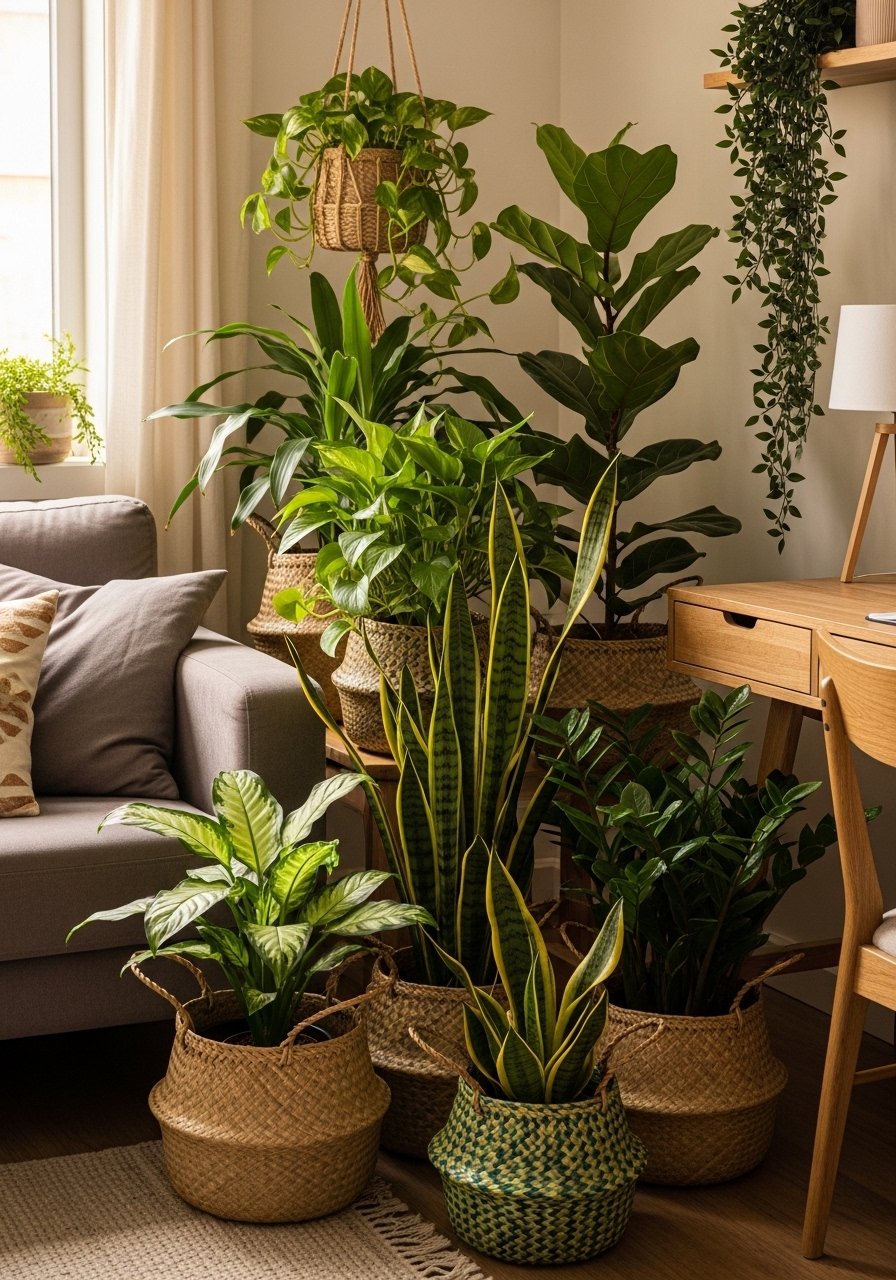
I grouped plants of varying heights to create a leafy divider between my sofa and the workspace. A 6-foot artificial fiddle leaf fig anchors the group while smaller potted plants add texture. Clustering plants mimics a partial wall and softens transitions. Mistake: scattering plants too thinly — grouping creates impact. This approach solves both the need for a visual boundary and the desire for biophilic texture in a small studio.
Round Bistro Table for a Flexible Dining Area
Style/Vibe: Modern Farmhouse / Minimalist
Budget: $ (under $120)
Best For: Dining nook / Work surface
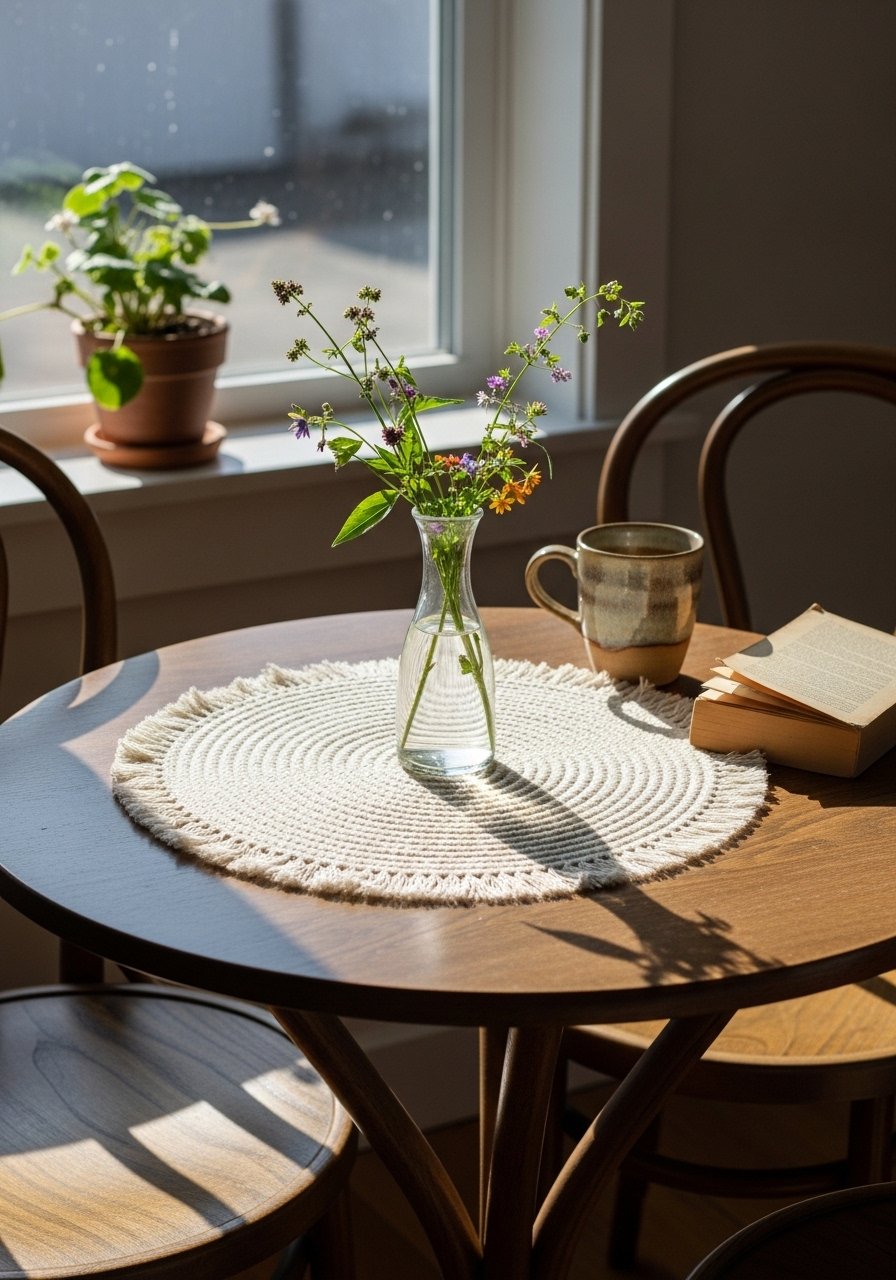
I picked a 30-36" round bistro table that doubles as a dining spot and extra work surface. Its curved shape is great in tight studios because it promotes circulation and reads as an intentional dining zone. Avoid oversized rectangular tables that block flow. Pair with stackable chairs you can tuck away to keep the living path clear. This table size makes hosting two people comfortable without eating up the room.
Neutral Monochrome Palette with One Bold Accent
Style/Vibe: Minimalist / Scandinavian
Budget: $$ (under $100)
Best For: Whole-studio cohesion
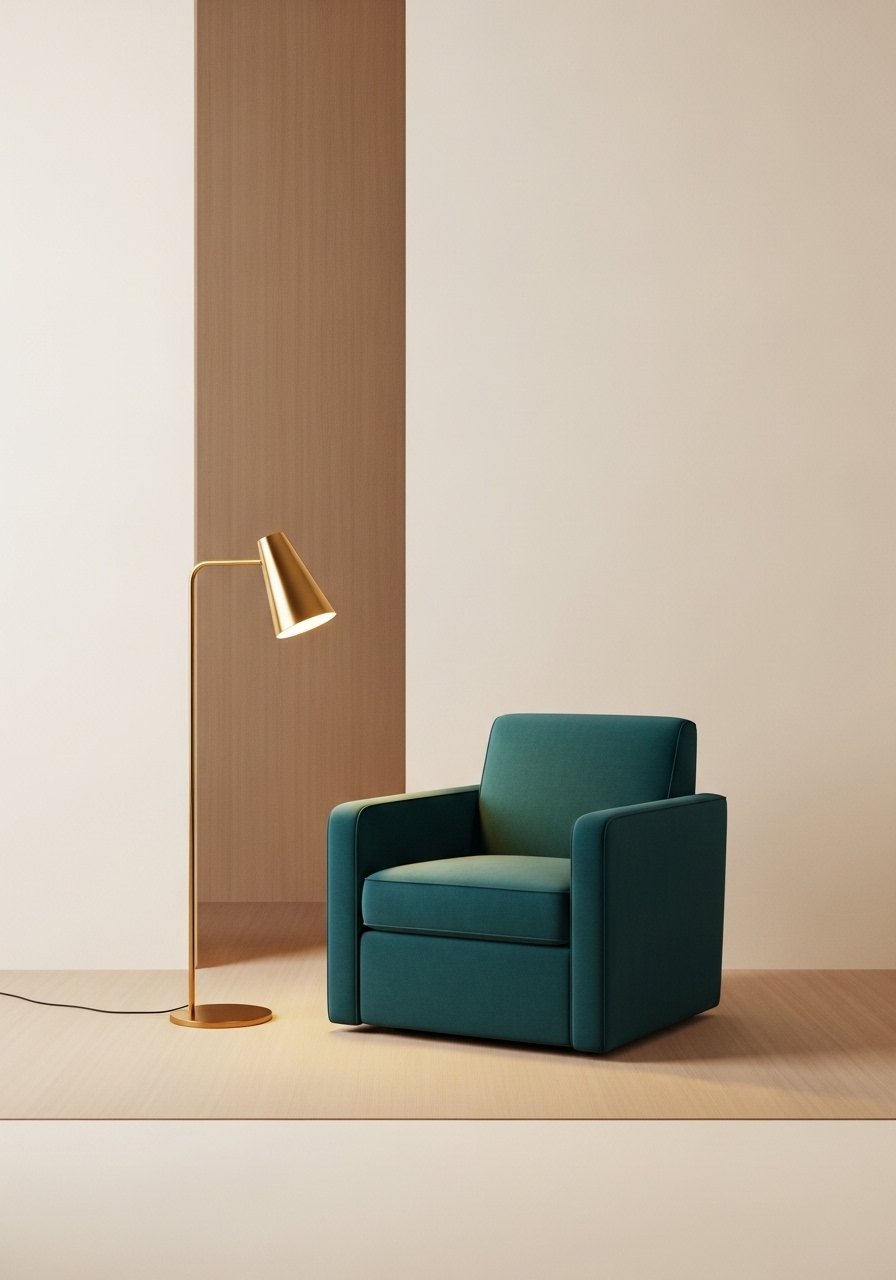
I kept walls, rugs, and large furniture in warm neutrals and introduced one bold piece — a deep teal armchair — to create rhythm between zones. This approach preserves a calm backdrop while making each area feel purposeful. Common mistake: too many accents; pick one focal color and repeat it sparingly across pillows, art, or a small rug. It’s an easy way to keep the studio cohesive yet layered.
Textured Headboard or Wallpaper Behind Bed for a Sleep Cocoon
Style/Vibe: Modern Farmhouse / Cozy
Budget: $$ (under $150)
Best For: Bedroom / Sleep zone
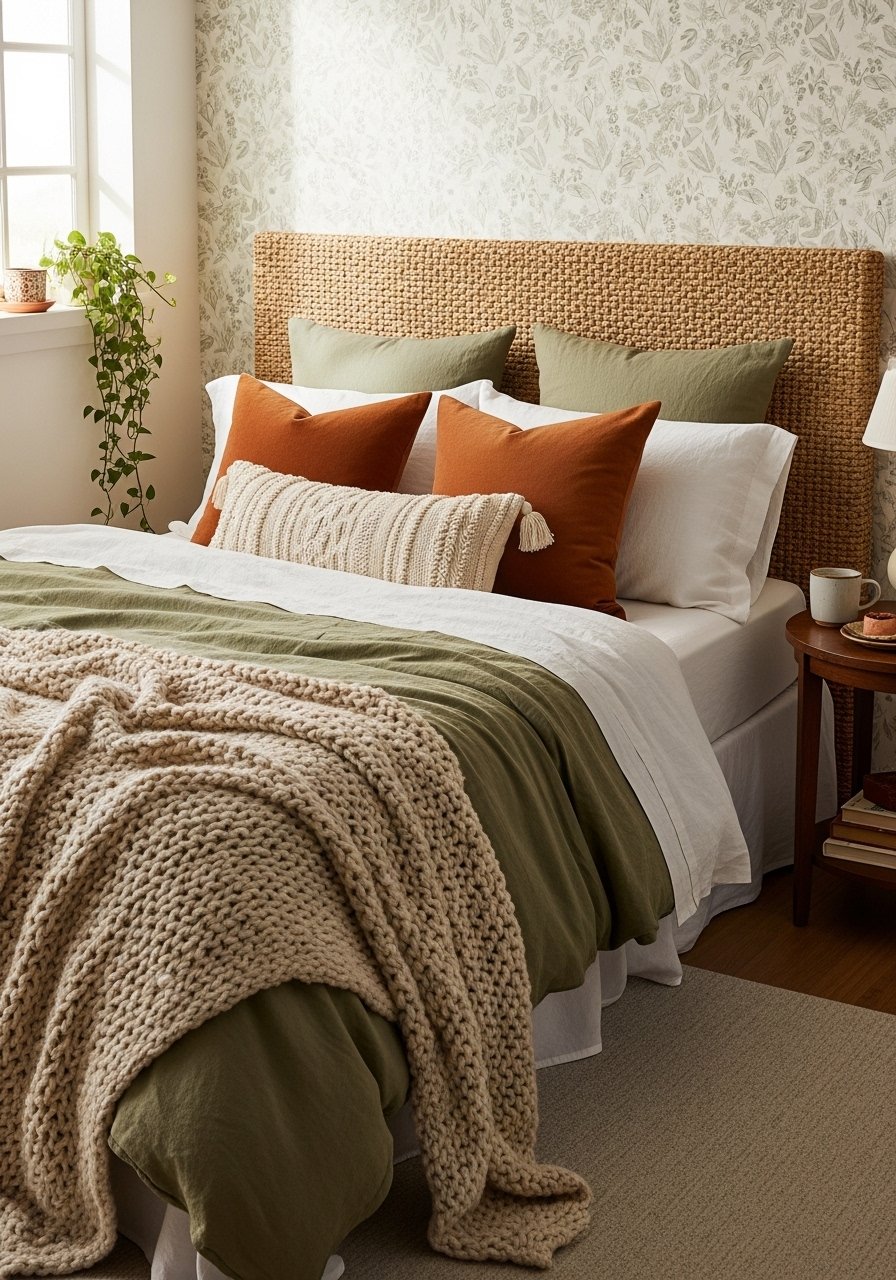
I anchored my sleeping area with a woven headboard and a subtle neutral peel-and-stick wallpaper panel. Texture behind the bed creates a cocoon effect and distinguishes the sleep zone from living areas. Avoid busy patterns that fight with bedding; keep scale moderate and colors warm. Using a half-wall of wallpaper behind the bed works well in studios and is reversible for renters. It instantly signals rest without heavy construction.
Portable Kitchen Cart as a Dedicated Prep and Bar Zone
Style/Vibe: Industrial / Transitional
Budget: $ (under $120)
Best For: Kitchen / Bar / Storage
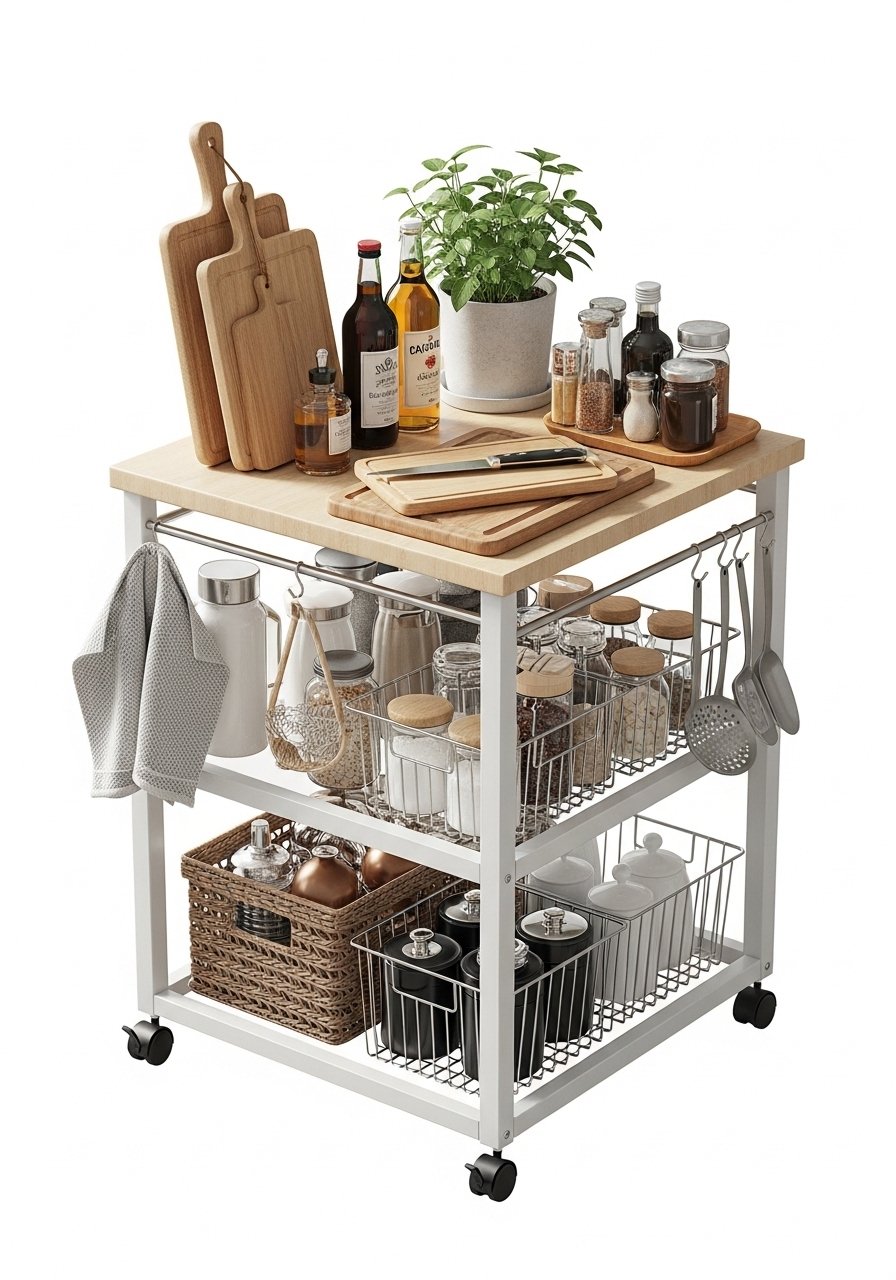
I added a portable kitchen cart to create a dedicated prep and bar zone. Wheels let me tuck it away or roll it closer when hosting. I keep trays and a small fruit bowl on top, with baskets for linens below. Mistake: choosing a cart with no locking wheels — it should stay put. This solution gives the kitchen functional square footage and visually separates cooking from lounging.
Shopping Tips for These Looks
Buy throws and pillows seasonally: I swap mine every three months. Velvet pillow covers in jewel tones are affordable and update the vibe instantly.
Invest in one large plant, not five small ones: A single 6-foot artificial fiddle leaf fig creates more visual impact than several tiny succulents.
Use floating shelves for dual function: White oak floating shelves act as decor and storage — ideal above desks.
Opt for peel-and-stick in rentals: Neutral peel-and-stick wallpaper panels let you add pattern without commitment.
Choose a neutral 8×10 rug to anchor zones: This 8×10 jute rug grounds furniture and reads natural across styles.
Frequently Asked Questions
Q: What's the easiest way to create distinct zones in a studio without building walls?
A: Use rugs, lighting, and vertical elements like a rattan room divider or floating shelves. These cues signal separate areas while keeping the room airy.
Q: How can I add storage without crowding my studio?
A: Go vertical and multi-use: a low platform bed with drawers or a low TV console with hidden storage hides items while creating zones.
Q: Are faux plants okay, or should I get real ones?
A: Both work. I keep one real low-light plant and a high-quality faux fiddle leaf fig for height without upkeep.
Q: What size rug should I buy to define my living area?
A: Aim for at least an 8×10 so the sofa’s front legs sit on it. This 8×10 natural jute rug is neutral and durable.
Q: How do I make a small studio feel taller?
A: Hang curtains high and use a 36-inch round mirror to reflect light. I mounted my curtain track close to the ceiling and the room instantly felt taller.