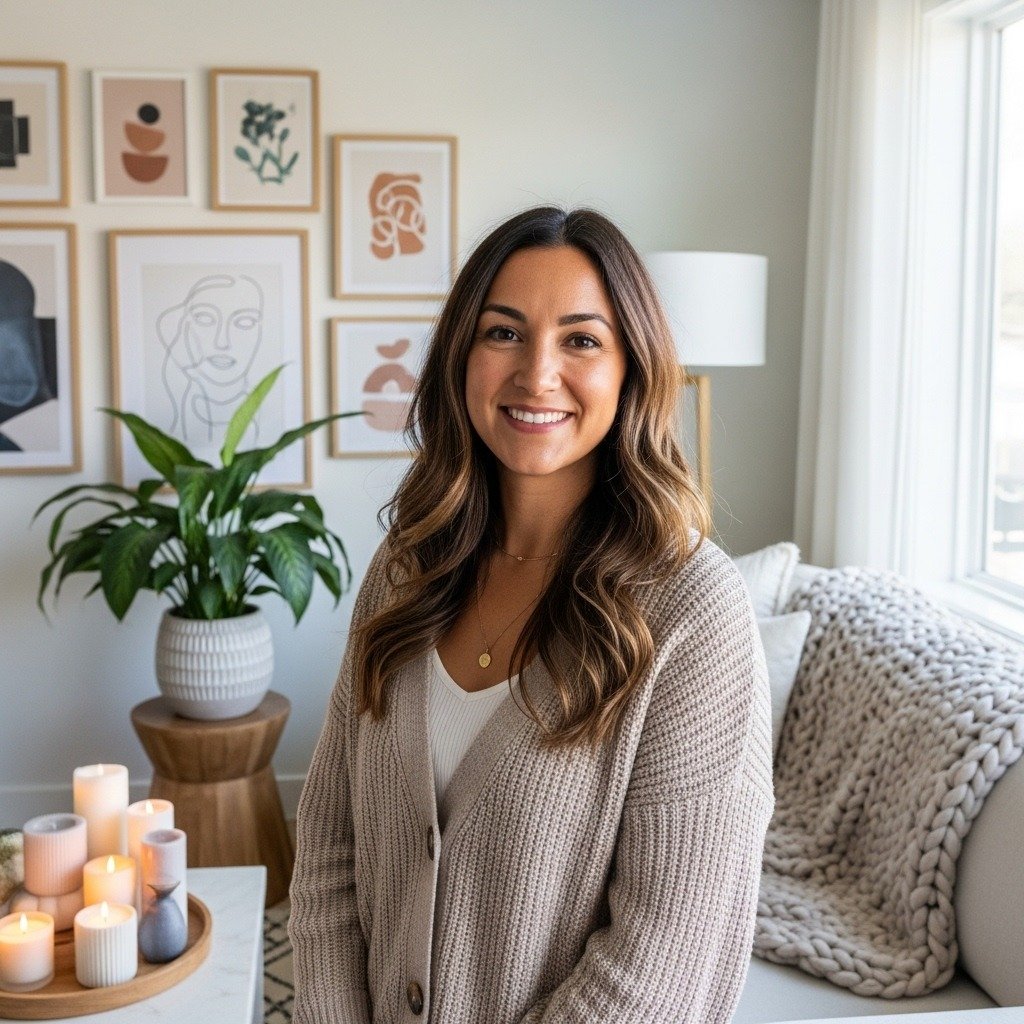

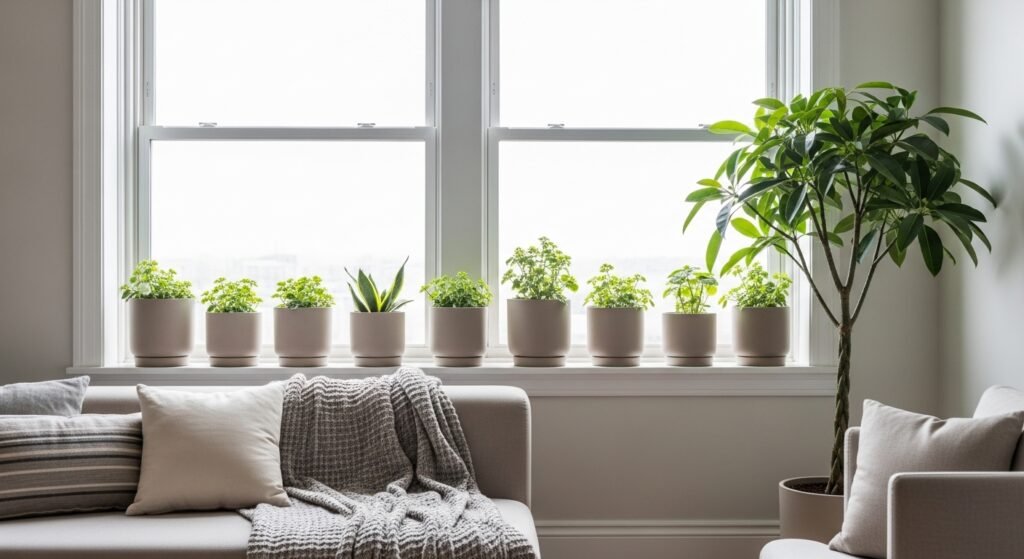
My living room had nice furniture but it still felt like a waiting room. Took me embarrassingly long to figure out that the plants were what made it breathe. These ideas lean toward pared-back, modern-minimalist houseplant styling. Most tweaks run from free to under $100, with a few splurges around $150. They work for apartments, small balconies, kitchen windows, or any corner that needs life without chaos.
Single-Species Statement Planter For Living Rooms
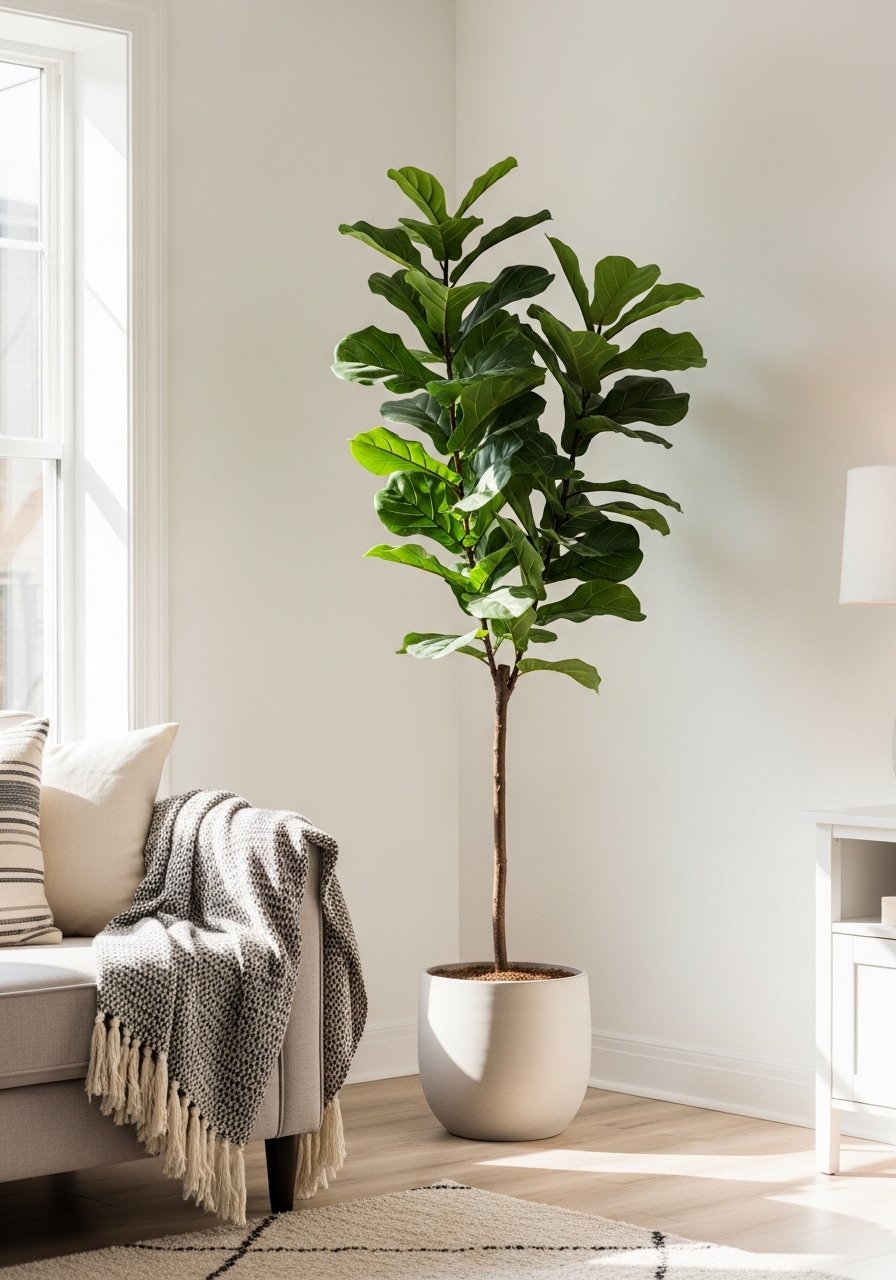
The moment I put a single large plant into my living room the whole vibe changed. Choose one architectural species like a fiddle leaf fig or snake plant and give it a pot at least 12 to 14 inches wide so the root ball has room to breathe. That empty, neat look comes from restraint, not scarcity. Budget runs $50 to $150 depending on plant and pot. I use a tall neutral ceramic planter for balance, and I linked a sturdy 14-inch ceramic pot that made placement easy. A common mistake is surrounding the statement plant with too many tiny pots. Leave 18 inches clear on one side so the plant reads as an intentional object, not clutter.
Kitchen Herb Window Sill With Slim Pots
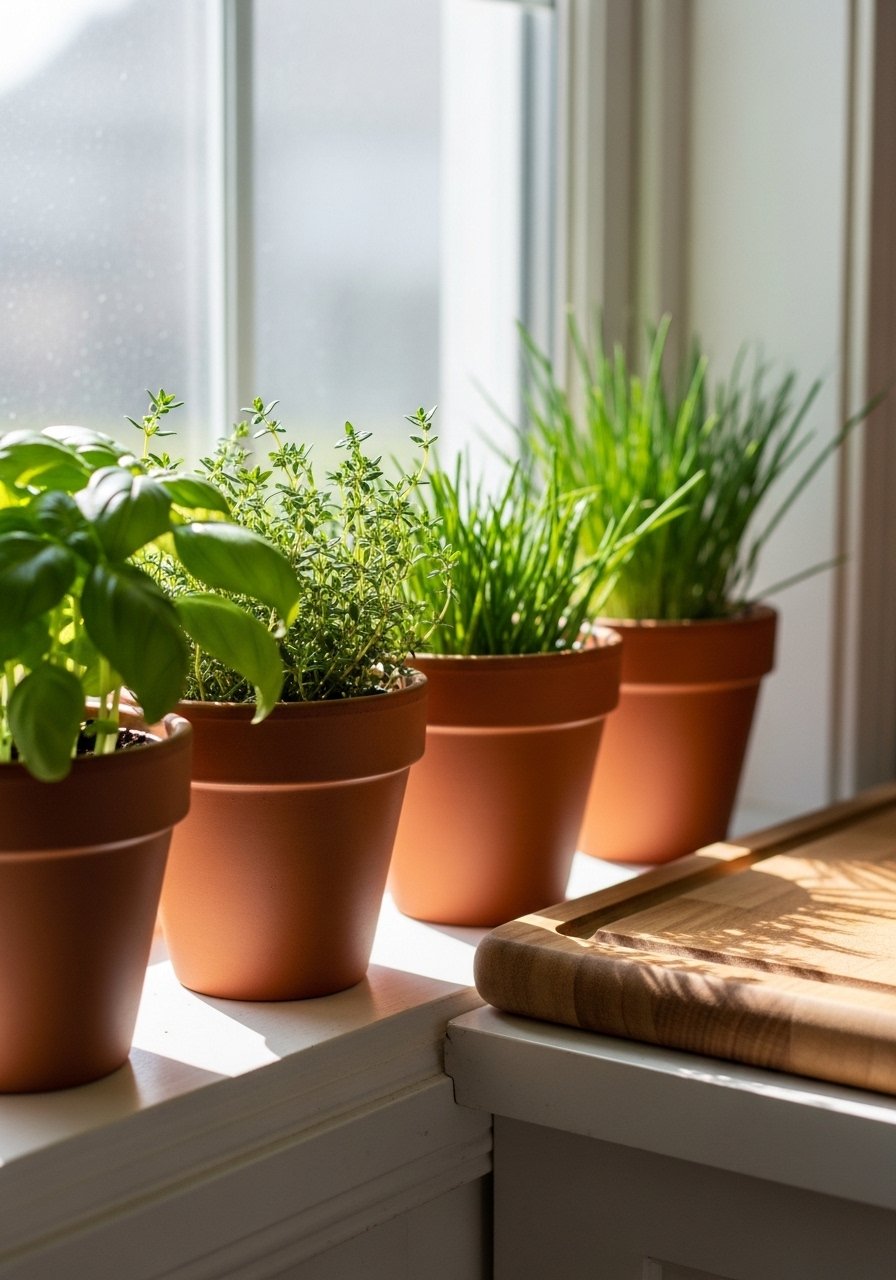
I keep basil and chives in narrow 3 to 4-inch pots on a sunny sill. The key is consistent light and a thin layer of well draining soil, not a giant pot that holds water. Use shallow pots so herbs get the slight drying cycle they like. Budget is tiny, about $15 to $40 for a set and seed packets. A small under-shelf LED grow light helps in winter when daylight dips. A mistake I see all the time is crowding herbs together without airflow. Space pots 2 to 3 inches apart and rotate them weekly so the leaves grow evenly. This setup doubles as fresh garnish and a tidy visual strip of green.
Zen Moss Tray For Calm Corners
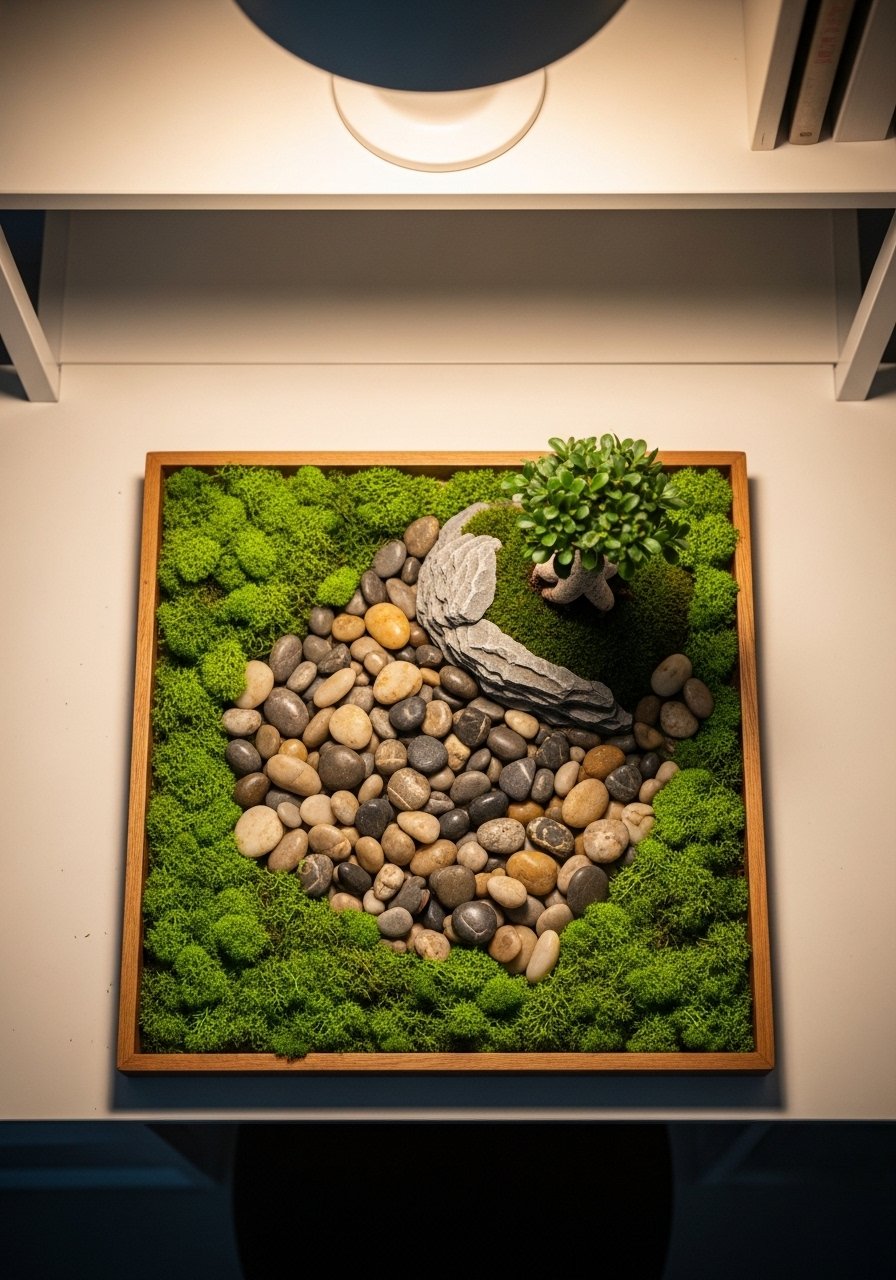
If you want calm without fuss try a moss tray. I used a 12-inch shallow tray, a base layer of pebbles for drainage, and preserved sheet moss for near-zero maintenance. Preserved moss stays soft to the touch and only needs a mist every two weeks. Budget is $25 to $70 depending on tray and moss. The trick few people mention is to keep the tray two inches off the wall so humidity does not stain paint. Most people put tiny decorative elements that fight scale. Stick to one low element, like a small round pebble cluster, so your tray reads like a quiet moment, not a shelf of miniatures.
Vertical Succulent Panel For Small Balconies
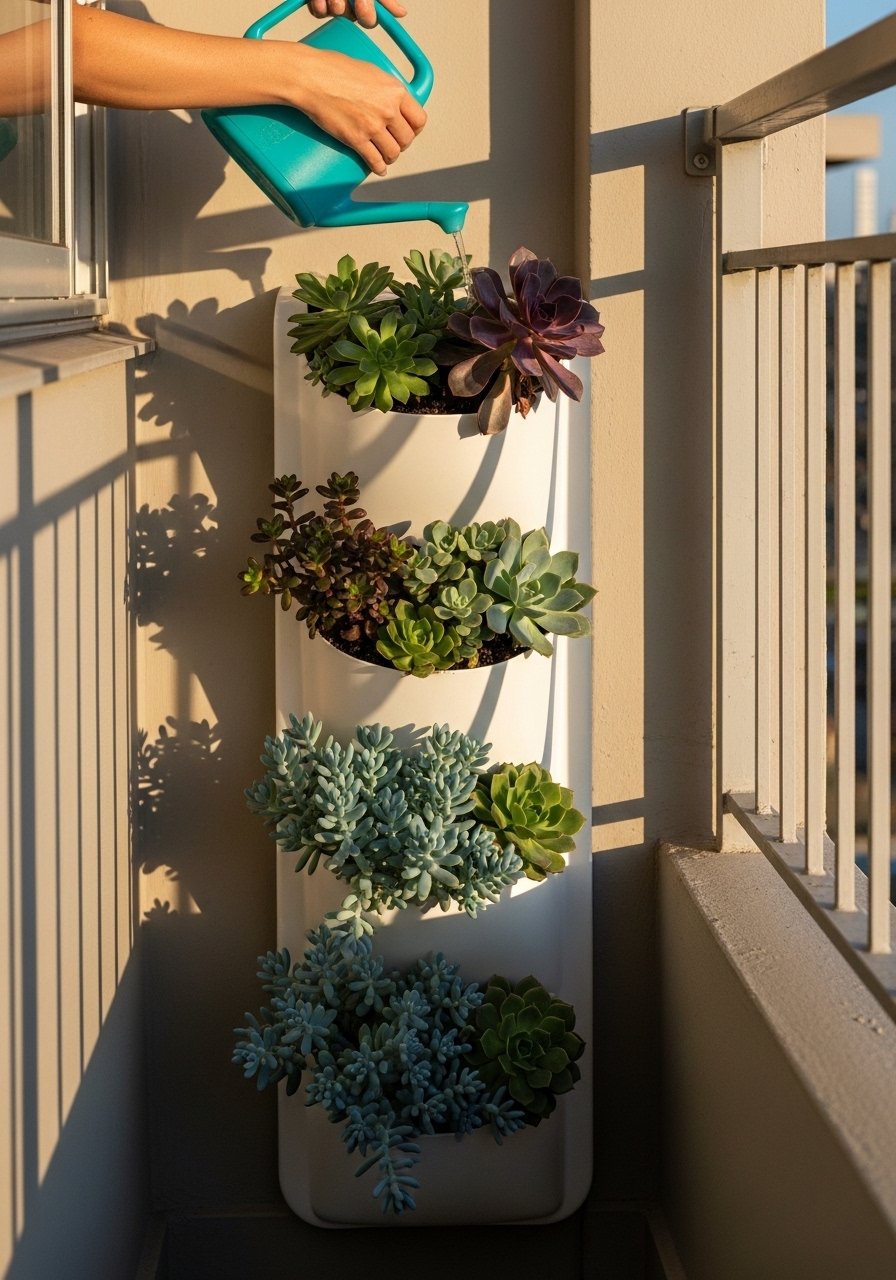
Vertical succulent panels turn a tiny balcony into a focused green wall without fuss. Pick felt pocket panels and plant 2 to 3 small succulents per pocket. Space pockets 3 to 4 inches apart to let each rosette breathe. Budget is about $40 to $120 depending on panel size. I hang mine on a hook at eye level so it reads like art. A lot of people try to cram too many varieties. Stick to three succulent families for a calm palette. For winter light bring the panel indoors or add a compact grow light. Scanners hit 8 out of 10 right these days, but you cannot scan sunlight. Test the wall in morning and evening light for a week before committing.
Uniform Neutral Pots For Minimalist Cohesion
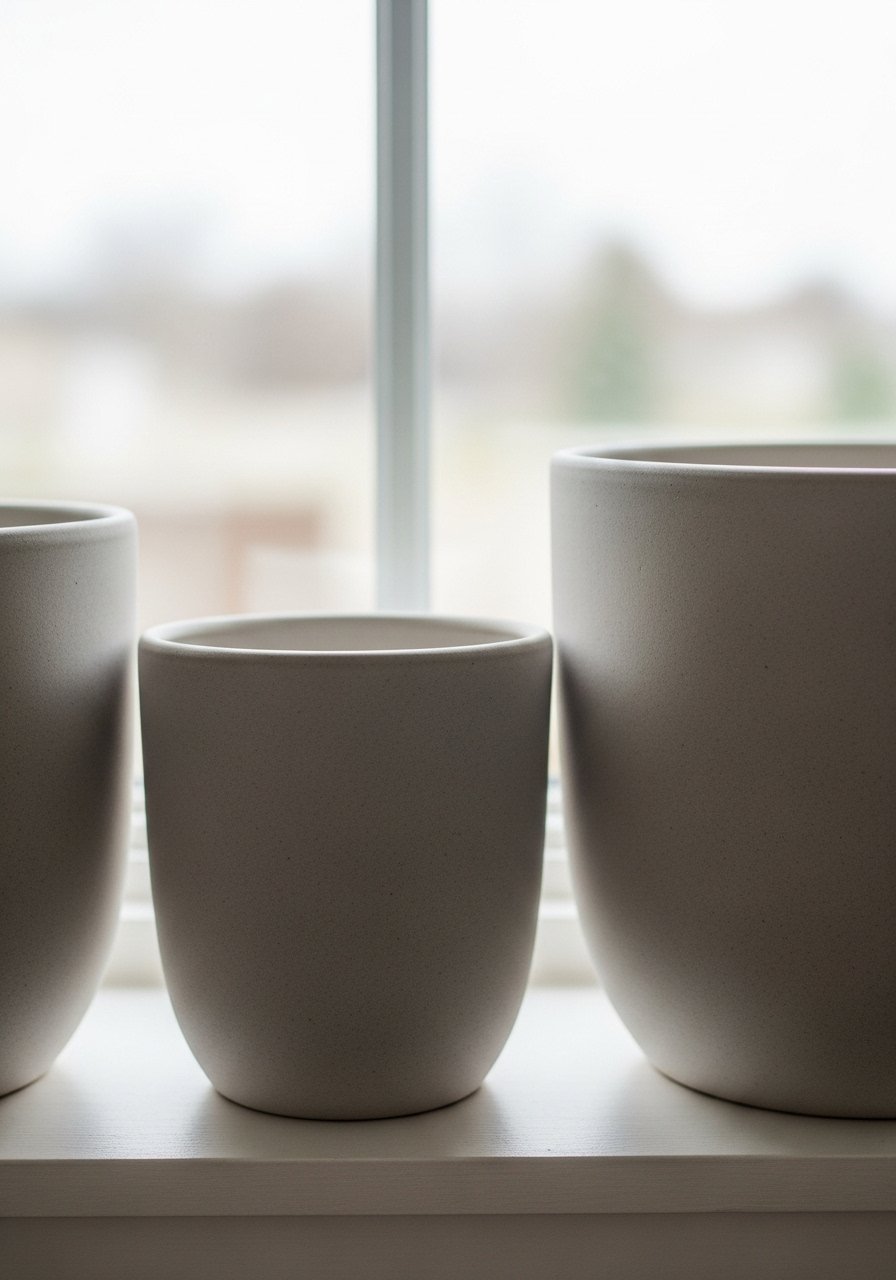
One of my cheapest wins was swapping mismatched plastic pots for a set of 3 neutral ceramic pots in graduated sizes. Use 6, 8, and 12-inch diameters for a simple visual rhythm. The rule is odd numbers when grouping, and keep all glazes within the same tone family. Budget for a full set is $50 to $140. People think pattern or color will add interest. In minimalist planting it clutters. Match texture instead of pattern, and note the real-life detail most guides skip: matte glazes hide water streaks better than glossy finishes. Swapping brands cuts costs by a quarter easy when you compare sets.
Hanging Jute Planters For Entryways And Hallways
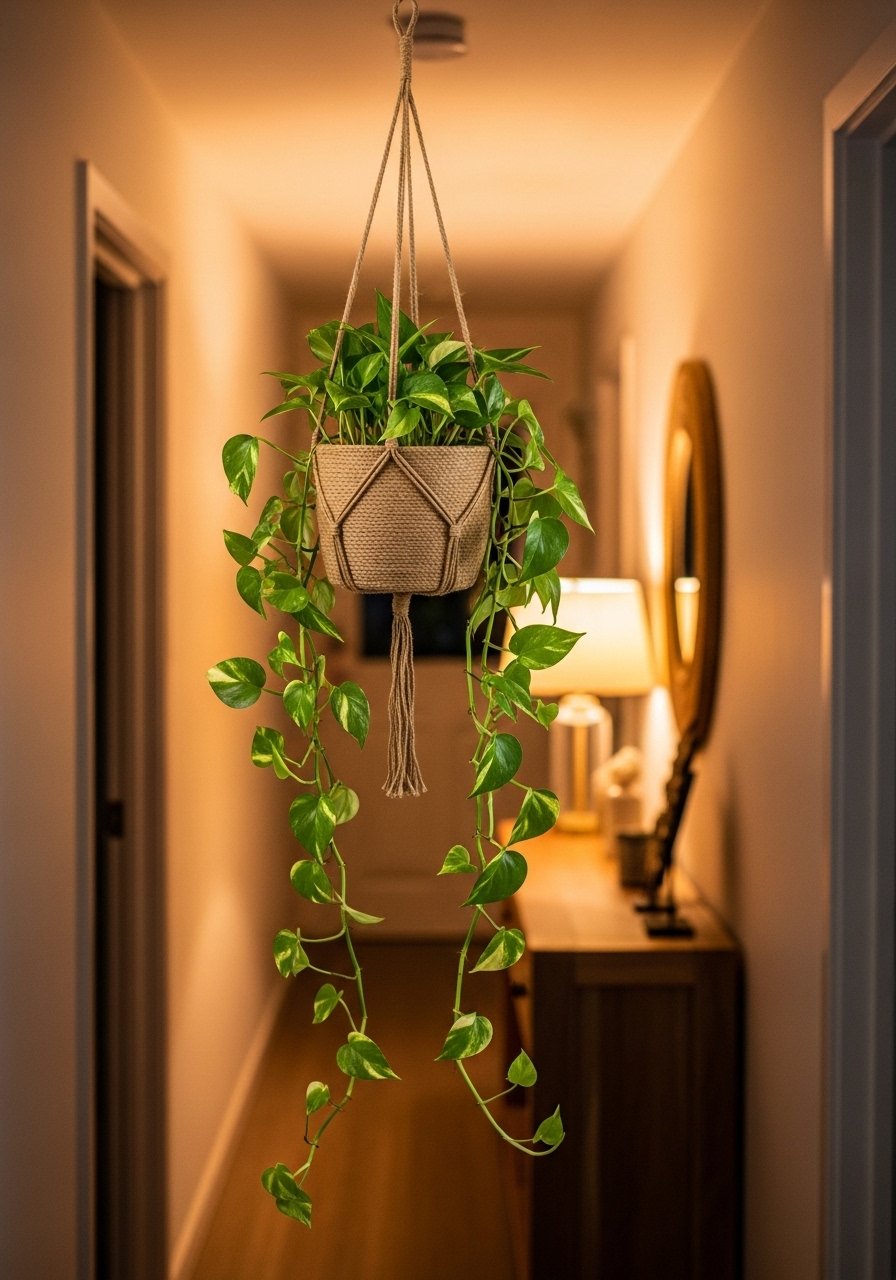
I hung a single jute planter over my entry console and it made the hall stop feeling sterile. Hang one planter at about 60 inches from the floor so it clears shoulder height but still reads as an object. Choose trailing plants like pothos or string of hearts for that relaxed cascade. Budget is $20 to $60. A common beginner mistake is hanging multiple planters at the same height. Stagger heights by 8 to 12 inches for a composed look. If you rent and cannot drill, use a tension rod near the ceiling or a ceiling hook that fits into a simple adhesive system rated for weight.
Self-Watering Planters For Busy Folks
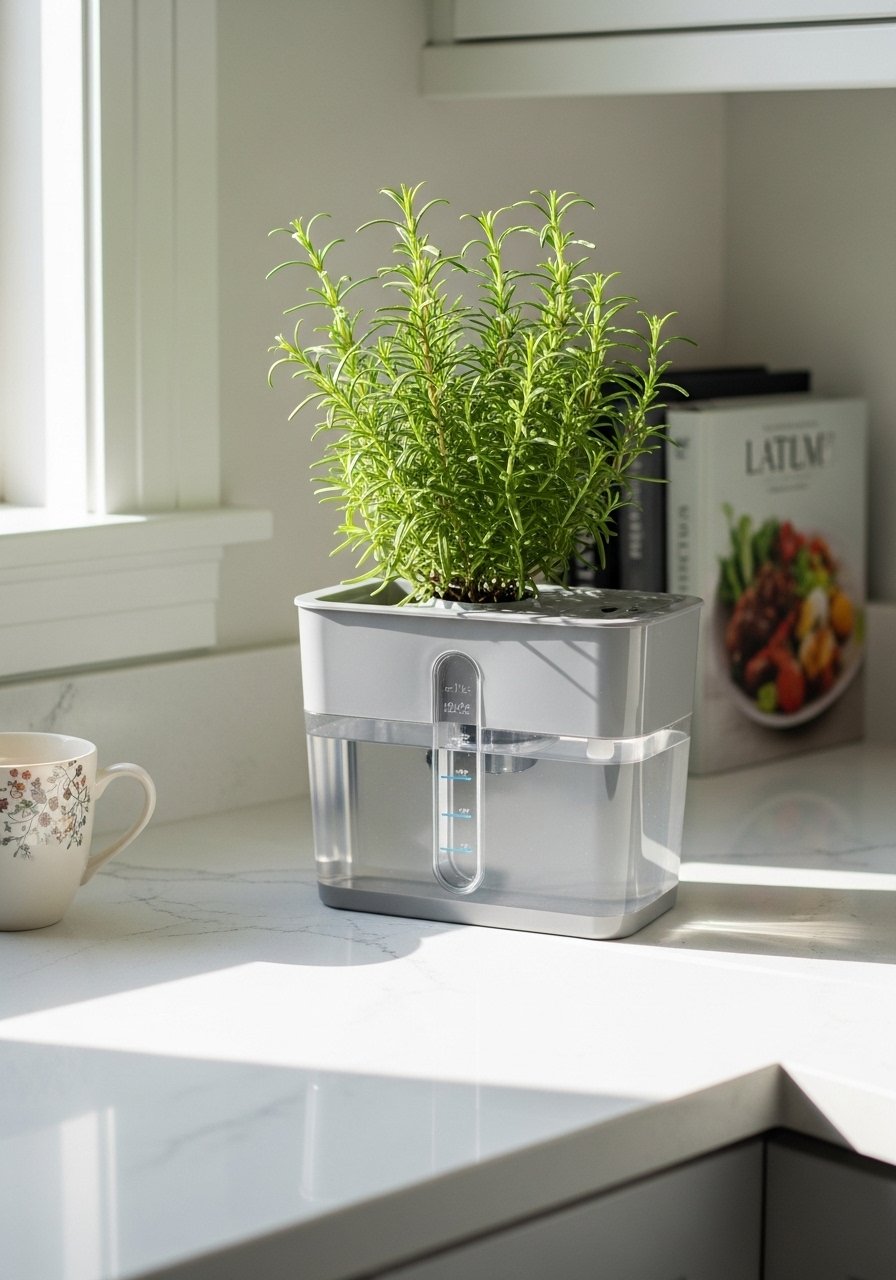
Self-watering planters saved me during long weekends away. Look for ones with a visible reservoir and a capacity that matches your travel habits. A 1 to 2 liter reservoir usually keeps most houseplants happy for 10 to 14 days. Budget $25 to $70 depending on size. These are perfect for renters because you do not need to overhaul drainage. People sometimes overpot and forget that reservoirs change soil moisture dynamics. Use a lightweight potting mix and fill the reservoir only when the soil is dry to a finger test. That little habit prevents root rot and keeps the minimalist look tidy.
Slatted Plant Bench For Balcony Styling
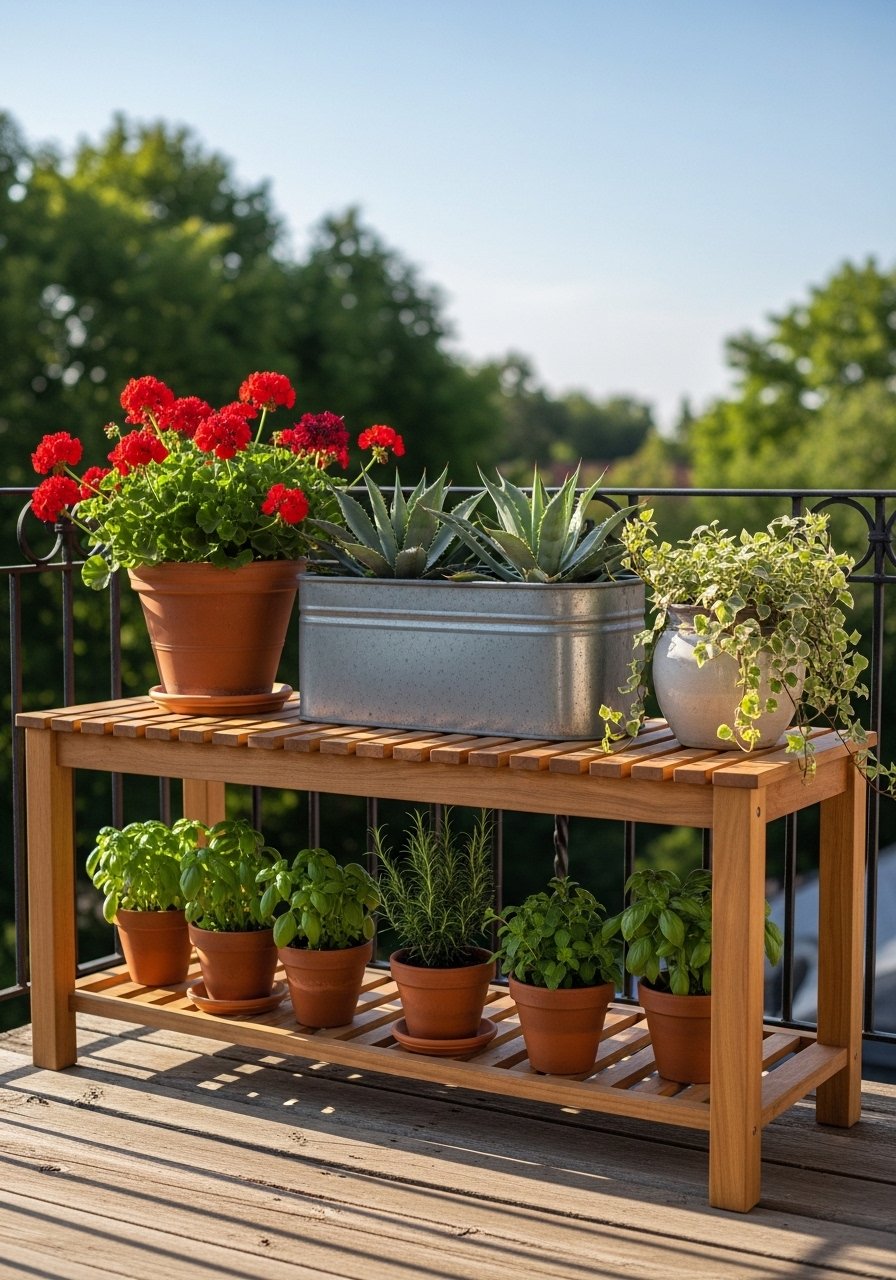
I built a simple 48-inch slatted bench to keep pots organized and off the floor. The bench gives height and doubles as storage for soil bags and tools. For a balanced arrangement put taller plants on one end and a low drape at the other, with 6 to 8 inches between pots. Budget runs $80 to $200 depending on material. Avoid scattering small pots across the railing. One long surface organizes them and reads calmer. White oak or teak slats resist moisture, and the design makes watering less messy because excess drains through the slats instead of pooling on your balcony floor.
Tabletop Fountain With A Single Plant Accent
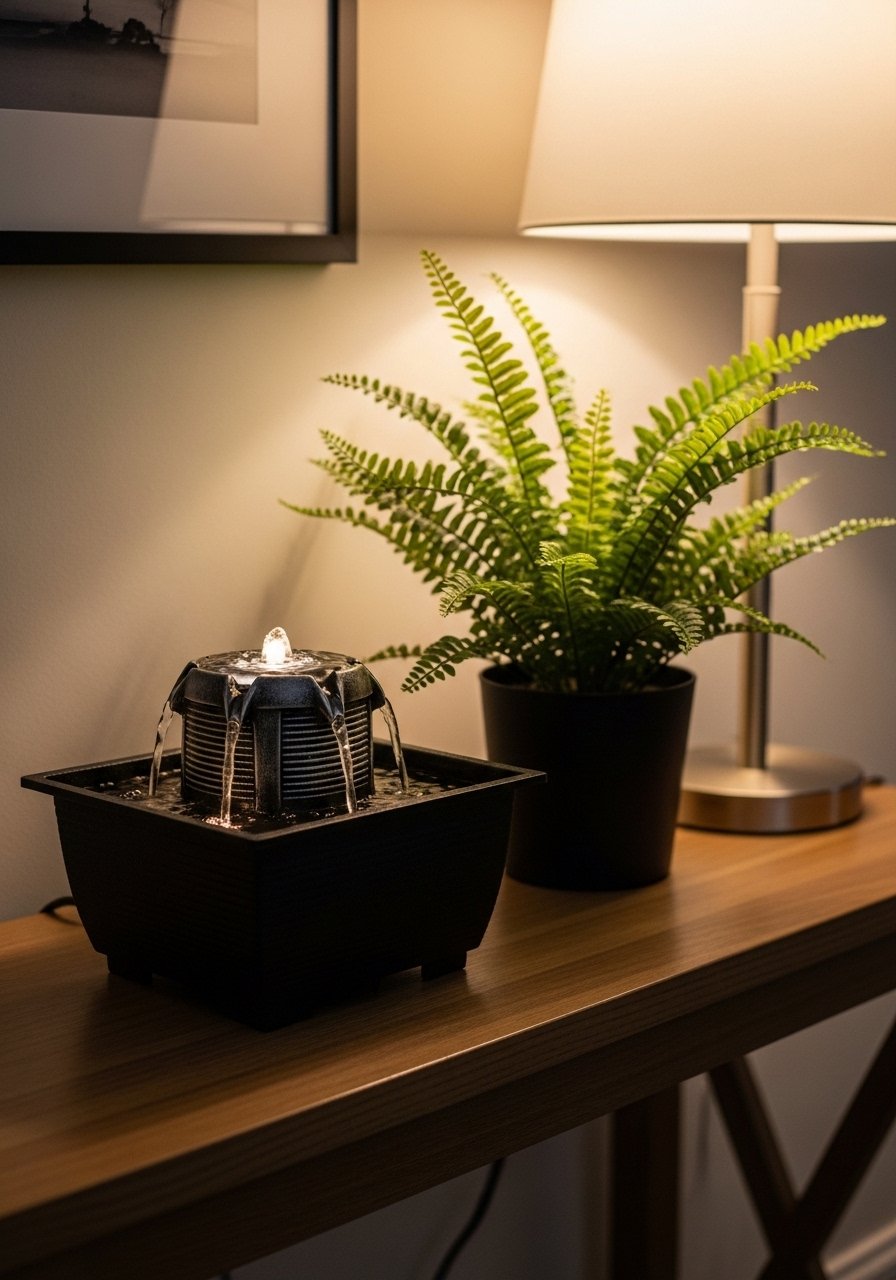
A tiny fountain adds moving water without turning your home into a greenhouse. I paired a 10 to 12-inch pump fountain with a single fern on a pebble tray. Keep the fountain low and avoid placing it under sensitive books or electronics. Budget is $30 to $120 for a quality pump and basin. The detail people miss is the noise profile. Test pumps on low before final placement and place the fountain on a rubber mat to soften vibration. This is one trick that gives a calm sensorily rich moment while keeping the visual language minimal.
Trailing Shelf Garden For Bookshelves Or Desks
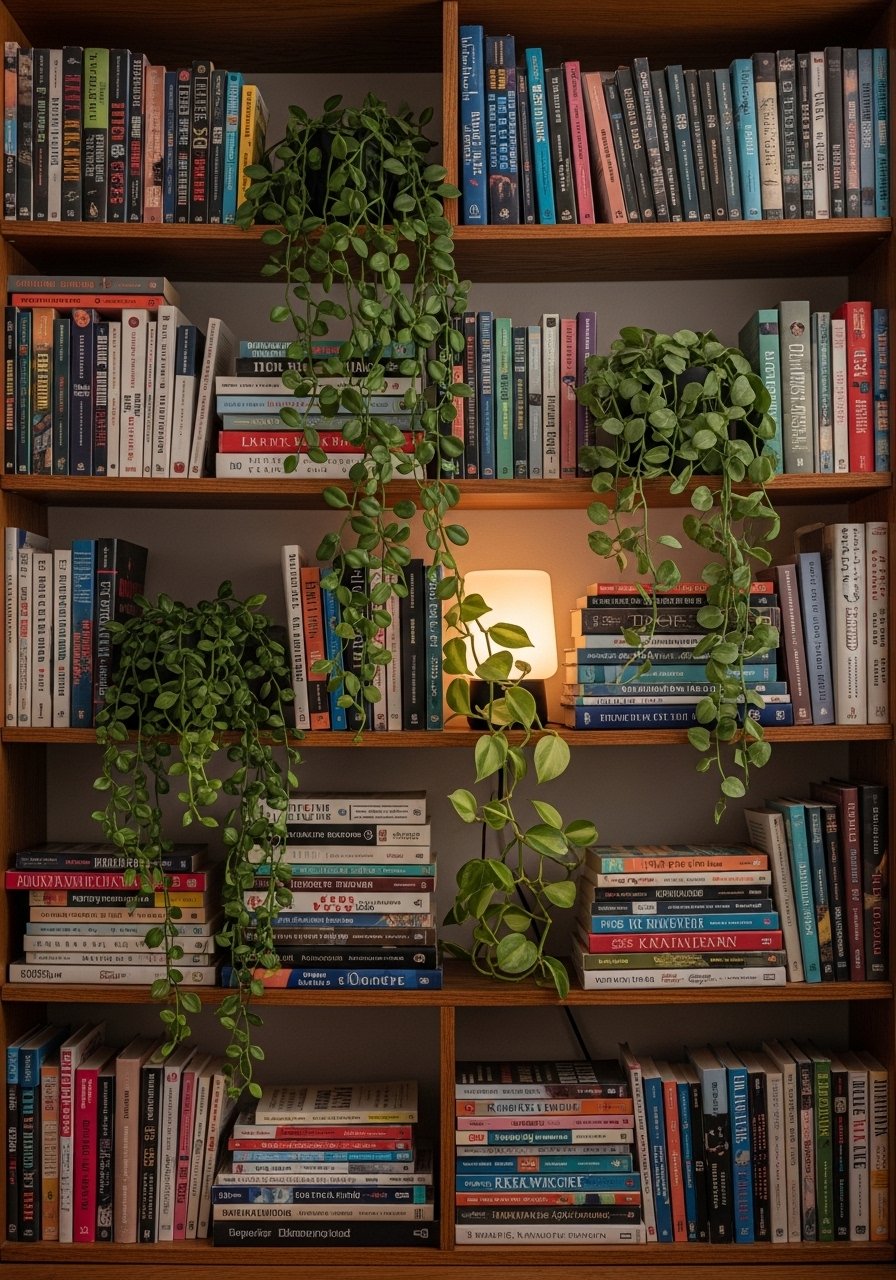
There is something about green spilling over a book edge that suddenly makes a shelf feel lived in. I place trailing plants on alternating shelves and train stems to drape no more than 8 to 10 inches. Use lightweight pots and saucers to protect wood. Budget is modest, $15 to $60 for planters and trailing plants. The common mistake is putting thirsty plants on interior shelves with little light. Choose low-light trailers like pothos or philodendron. Rotate plants to the window every two weeks so growth stays even. Pairing this with the neutral pot set idea above keeps the shelf language cohesive.
Simple Care Routine And Low-Maintenance Plant List
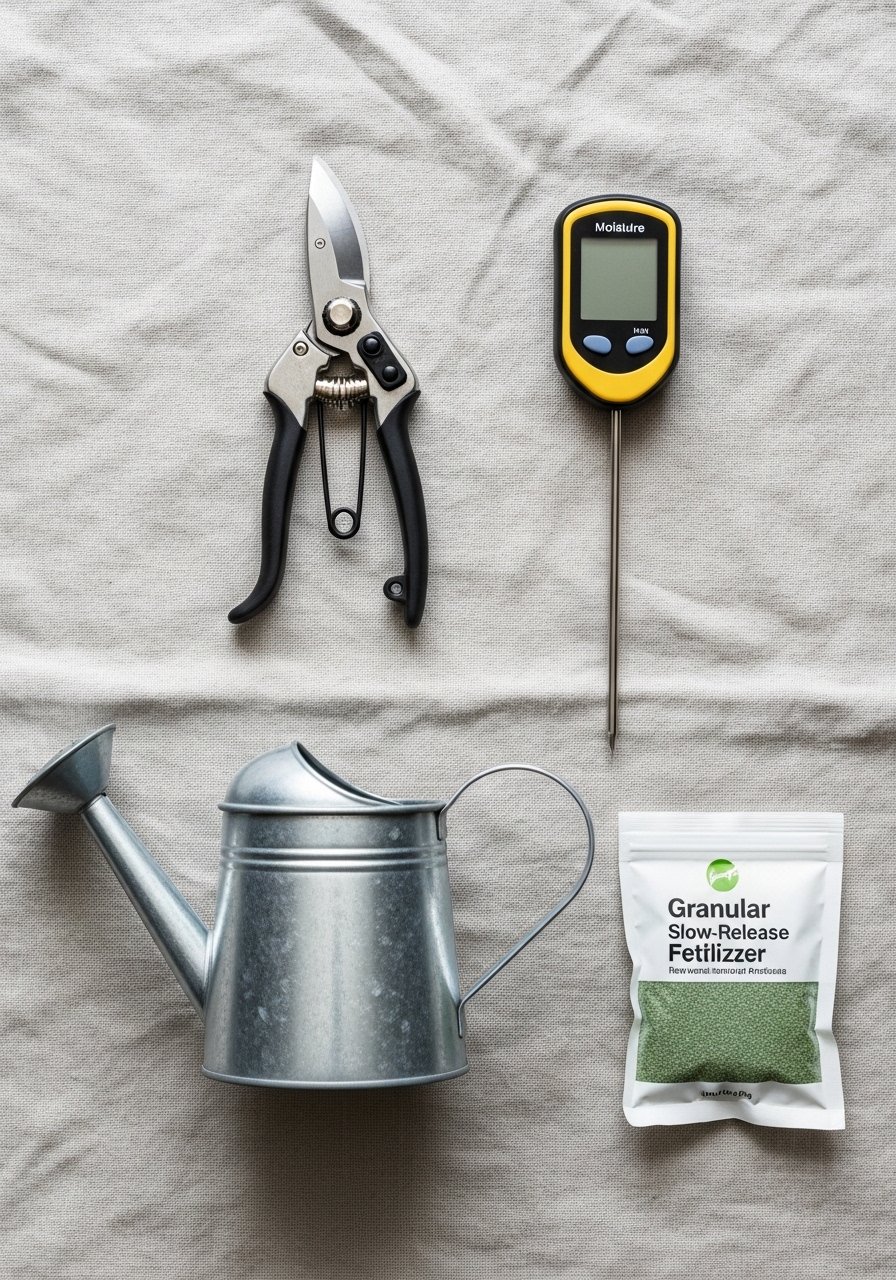
After years of overwatering and under-watering, I settled on a weekly check routine. Water when the top 1 to 2 inches of soil is dry, feed monthly with a diluted balanced fertilizer in spring and summer, and prune sparingly. Keep a small set of tools on a shelf: pruning shears, a hand scoop, and a moisture meter. Budget for tools and supplies is $20 to $60. My go-to low-maintenance list is snake plant, pothos, ZZ plant, and a small aloe. Avoid high humidity tropicals in drafty rooms. One practical detail most articles skip is marking the last water date on a plant tag. It saves guesswork when you have more than four pots.
Your Decor Shopping List
Textiles
- Honestly the best $35 I have spent. Chunky knit throw in cream for bench seating or sofa arms
Planters
- For the statement plant, 14-inch neutral ceramic planter (~$60). Good balance for tall plants
- Three-piece ceramic pot set in neutral tones (6/8/12-inch)
Tools & Care
- Small pruning shears with safety lock (~$15). Crisp cuts keep plants healthy
- Hand moisture meter (~$12). Simple way to stop overwatering
Specialty
- Self-watering planter for herbs (~$30)
- Preserved sheet moss pack for moss trays (~$20)
Most of these have similar finds at Target or HomeGoods if you prefer to shop in person.
Shopping Tips
"White oak beats dark wood in 2026." Design feeds have shifted completely. These white oak floating shelves look current, not dated.
Grab a 96-inch tension curtain rod for renter-friendly hanging. It works for light-filtering curtains and suspending lightweight planters.
Buy a compact LED grow light bar if your window is north facing. A fifth of matches flop because of bad light. Test placement for a week before you invest in a full wall fixture.
Lead with a felt pocket wall planter for vertical gardens. They are cheaper than rigid panels and easy to swap.
Frequently Asked Questions
Q: Can I have a minimalist plant setup in a small apartment without drilling holes?
A: Yes. Use a tension rod, adhesive hooks rated for the weight, or a freestanding plant bench. Self-watering pots also reduce trips to the sink. Self-watering planters are a renter-friendly win.
Q: How do I stop my shelf plants from making books smell musty?
A: Keep saucers under pots and wipe the shelf surface weekly. Rotate plants to the window every two weeks so humidity evens out. Use lightweight pots so spills are easier to manage.
Q: Which plants actually survive neglect for busy people?
A: Snake plant, ZZ plant, and pothos. They forgive missed water and do well in low light. A small snake plant in a neutral pot gives height without drama.
Q: How much space should I leave between pots for a calm look?
A: Aim for 6 to 18 inches depending on plant size. Smaller pots sit fine 6 to 8 inches apart. Bigger specimens need 12 to 18 inches so each one reads as a deliberate piece rather than crowded clutter.
Q: I want a living wall but have low winter light. What should I do?
A: Pick low-light succulents or switch to faux for winter. A compact LED grow light bar above the panel gets you through darker months. Scanners hit 8 out of 10 right these days, but light matters more than the match device.