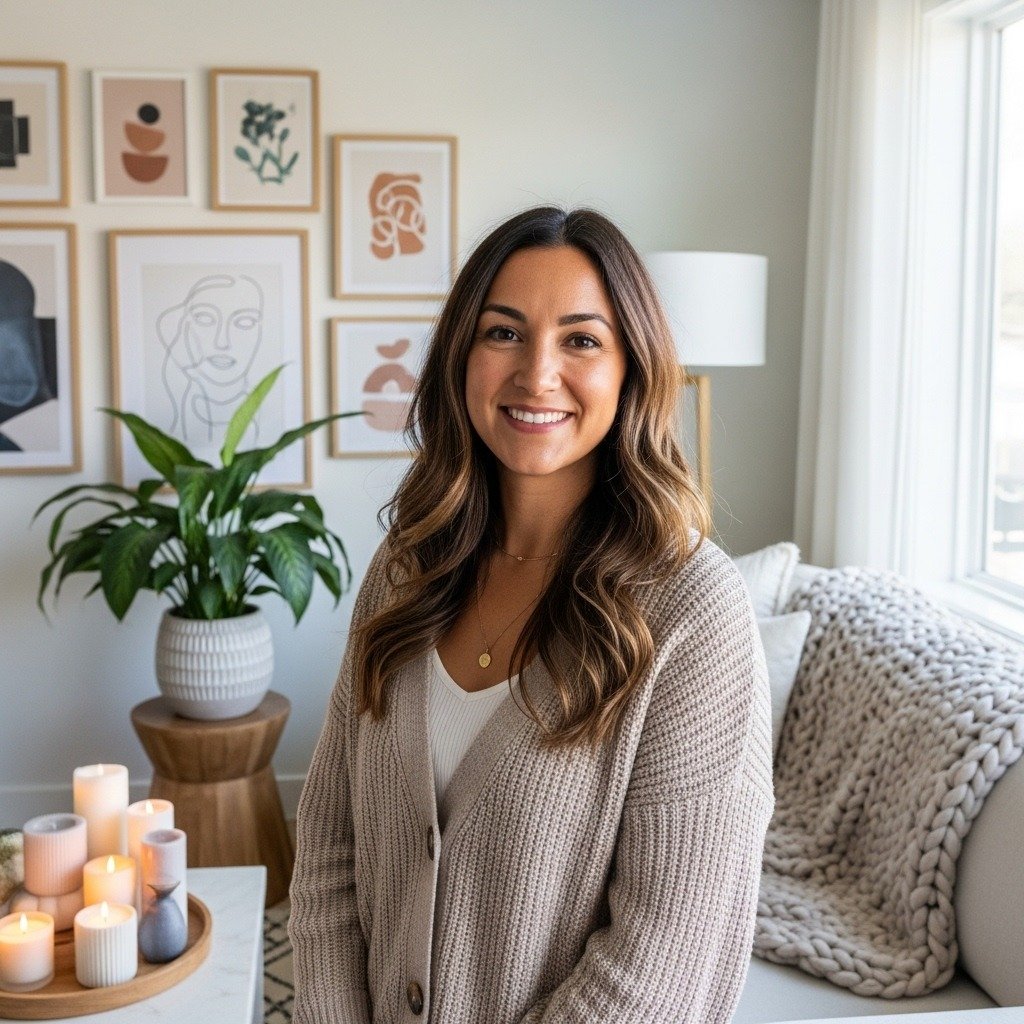

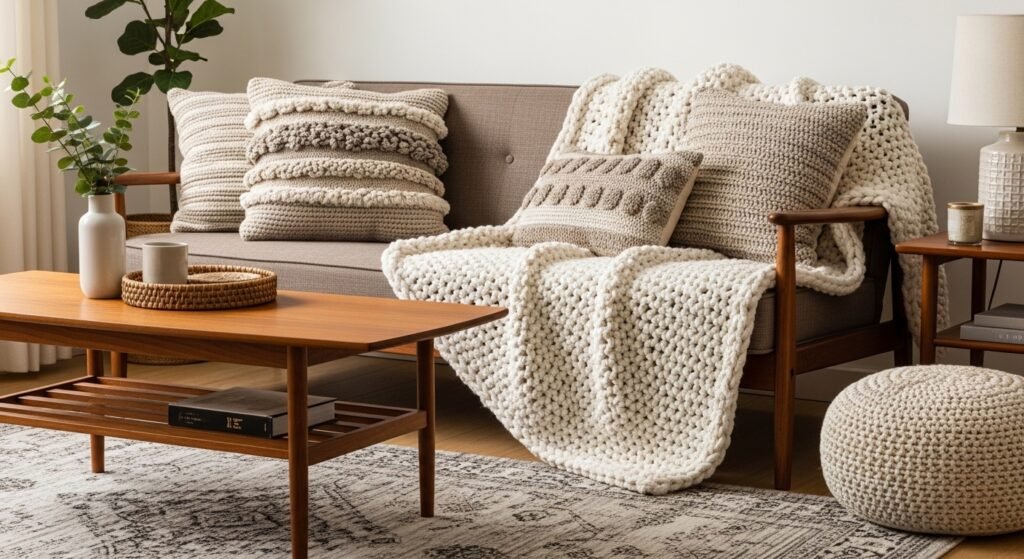
My living room had nice furniture and decent lighting but it still felt like a waiting room. Took me embarrassingly long to figure out it was missing texture. Every surface was smooth, every color was flat, and nothing invited you to actually sit down. Adding crochet in small, mid century-appropriate doses fixed it faster than I expected.
These ideas lean mid century modern with a relaxed, handmade edge. Most projects run $15 to $80, with a few splurges under $150. They work in living rooms, bedrooms, nurseries, or tucked into a reading corner where you want the room to feel softer and more layered.
Chunky Crochet Throw Draped Over A Walnut Sofa
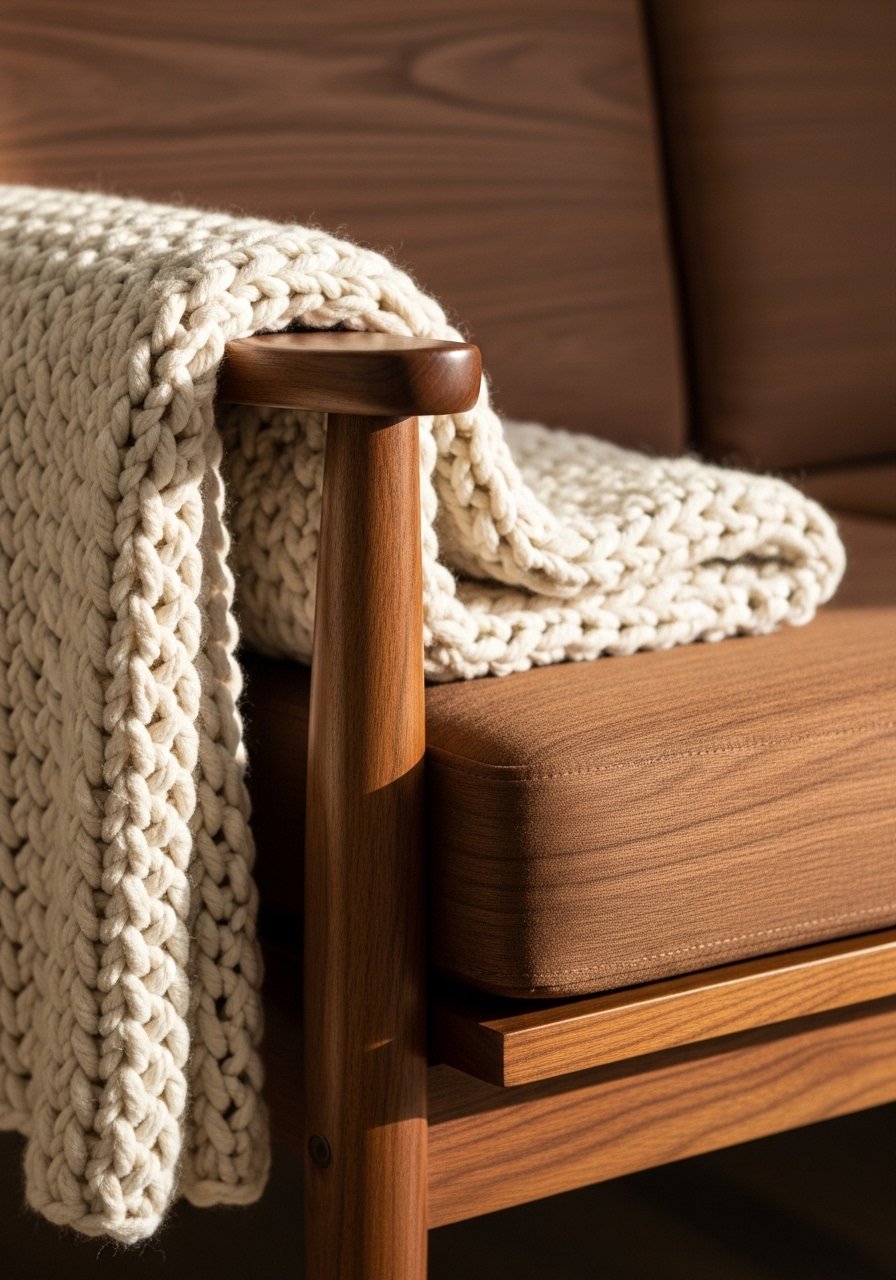
The moment I draped a chunky knit throw over the arm of my gray sofa, the whole room stopped looking flat. A heavy crochet throw, roughly 50 by 60 inches, adds weight and invites you to flop down. I like a cream option in chunky cotton because it reads vintage but cleans easily. I bought a similar chunky knit throw in cream for under $50 and it pulled the whole seating area together. A common mistake is using a too-small throw. Aim for two thirds the sofa length so one corner can hang to the floor. Pair this with the pillow mix below for depth.
Crochet Pillow Stack On A Low Profile Lounge Chair
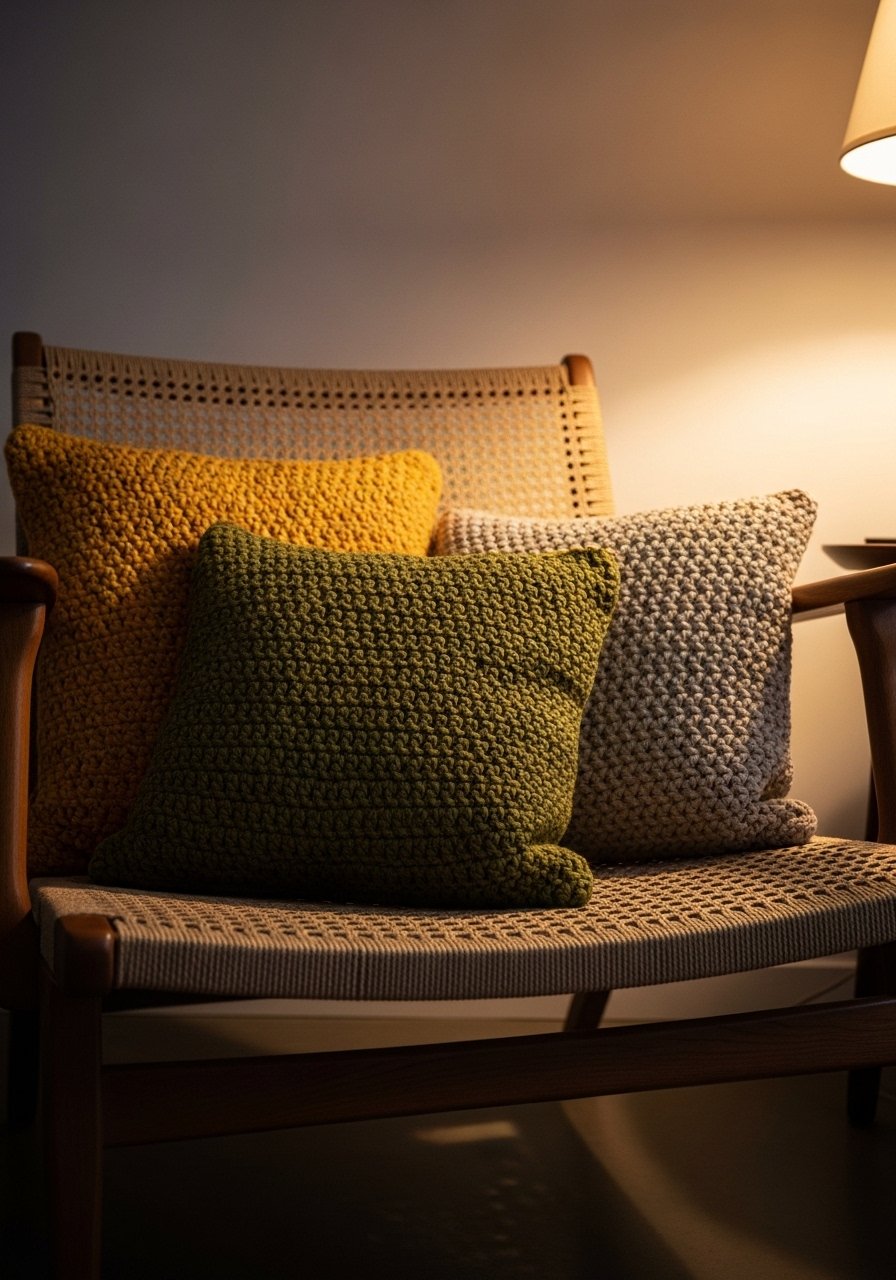
I built a soft triangle on my club chair with two 22-inch linen base pillows and one 18-inch crochet accent pillow on top. Mixing a textured crochet cover with a smoother linen keeps the mid century silhouette clear. Budget for this is $15 to $40 per cover depending on fill. I picked up a set of 22-inch linen pillow covers and a hand-stitched crochet cushion for the top. People often grab identical cushions and end up with a boring stack. Vary size and material, and keep at least one pillow in a muted hue so the chair still reads vintage-modern.
Macramé-Style Crochet Wall Hanging Over A Teak Credenza
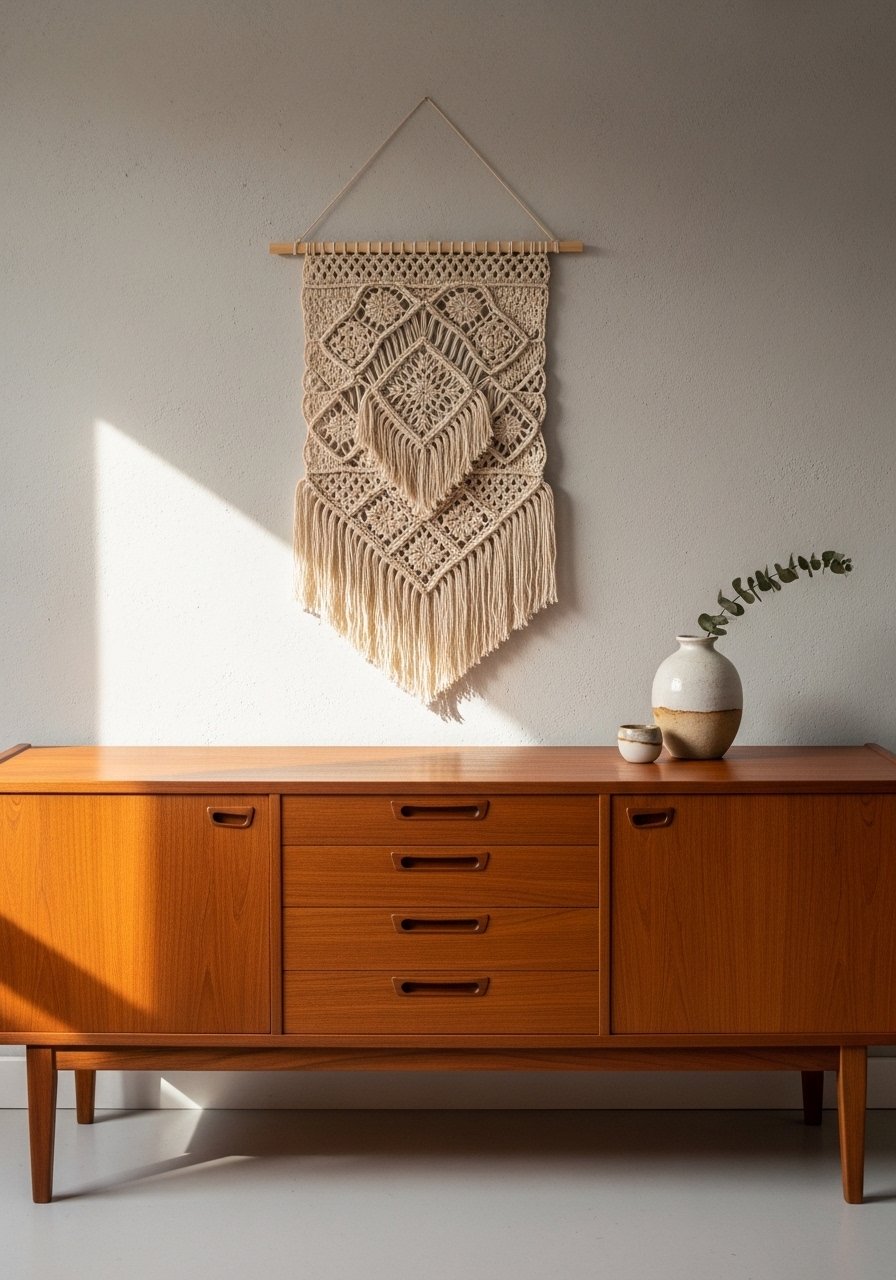
A mid century wall needs a low center of gravity. I swapped a large framed print for a 30 by 40 inch crochet wall hanging above the credenza and the room stopped feeling studied. Crochet offers tactile interest without competing with walnut grains. Expect to spend $40 to $120 for handcrafted pieces. Try a neutral with a subtle fringe, like the one I bought linked here beige crochet wall hanging. Common mistake is hanging it too high. Measure so the bottom of the hanging sits about 4 to 6 inches above the credenza top, not centered on the wall.
Crochet Plant Hangers By The Window For Soft Vertical Lines
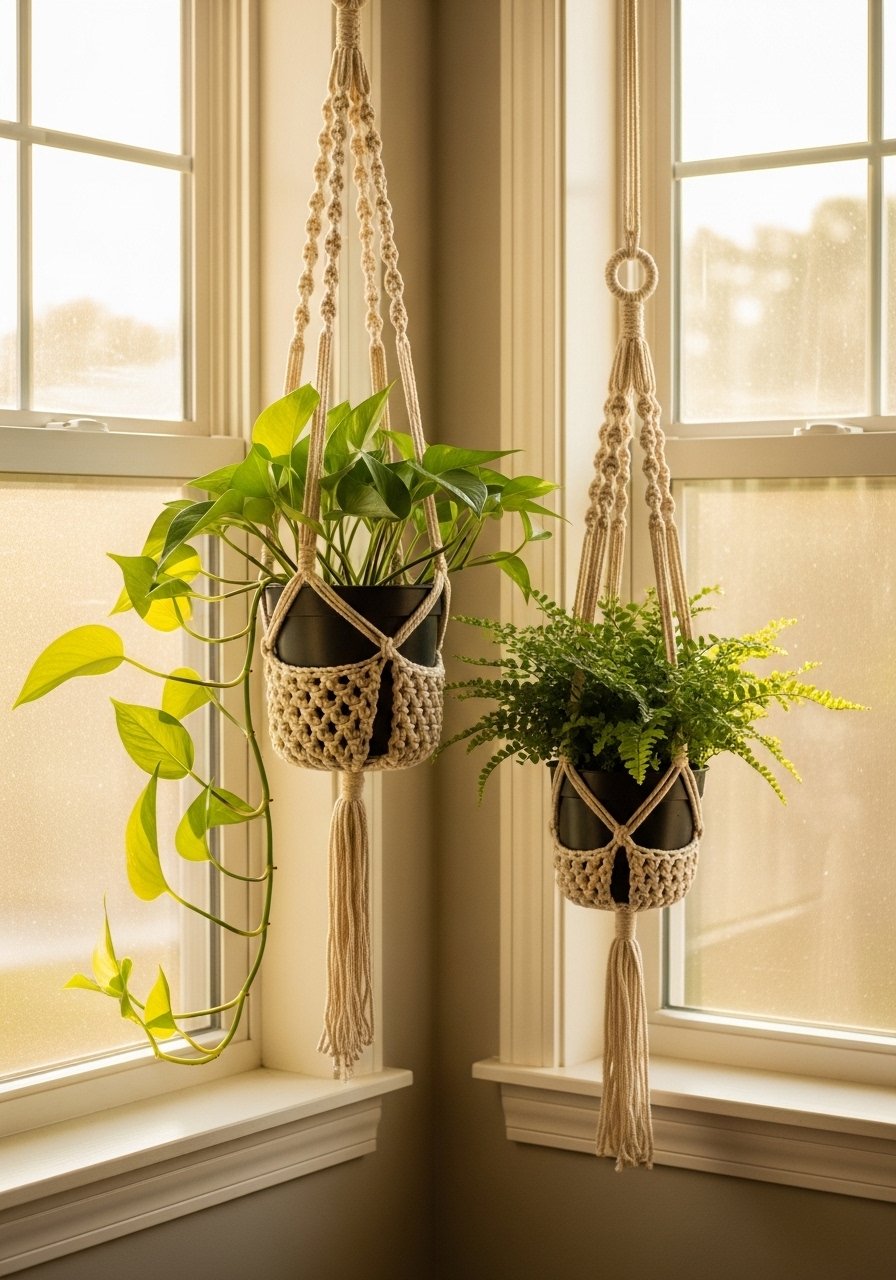
There is something about crochet and plants that feels right with tapered legs and teak shelves. I added two crochet plant hangers, one at 36 inches and one at 48 inches from the floor, and it created vertical rhythm without adding heavy furniture. A single 6-inch pot in a crochet holder reads intentional and not cluttered. I use a washable cotton hanger and a faux plant in one room where I forget to water things. Scanners nail it 9 times out of 10 if you tweak by eye after. The most common error is crowding the window with too many hangers. Two or three at staggered heights is enough.
Crochet Table Runner On A Mid Century Sideboard
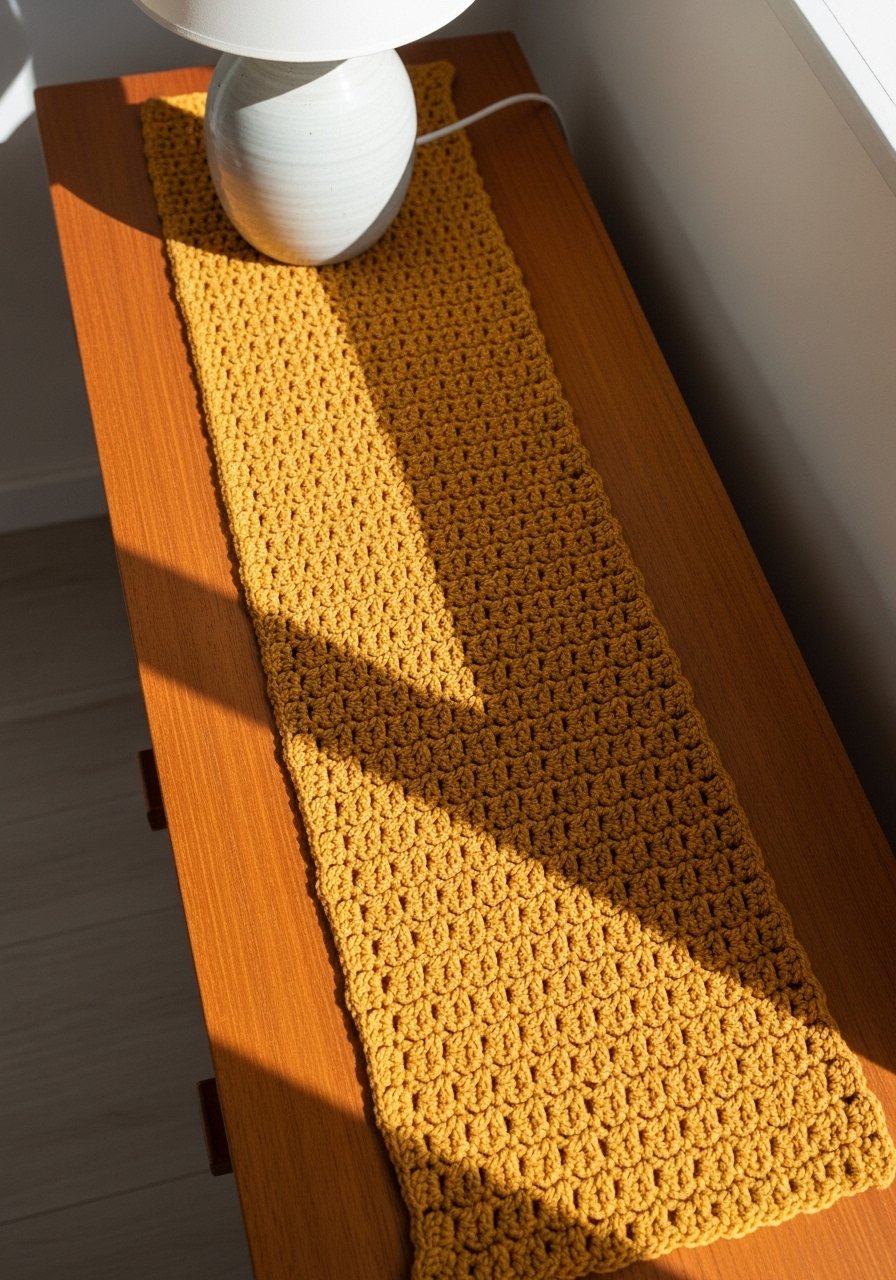
Before the runner, my sideboard had a lone ceramic lamp and felt unfinished. A 14-inch-wide crochet runner in a contrast color anchors objects without hiding the wood. I used a mustard runner about 36 inches long for a compact credenza. Budget is $20 to $45. I like pairing this with a brass tray to display keys and a candle. People make the mistake of using runners that are wider than the piece. Keep it roughly one third the width of your sideboard so the wood still reads as part of the design.
Layered Crochet Rugs For A Cozy Entryway
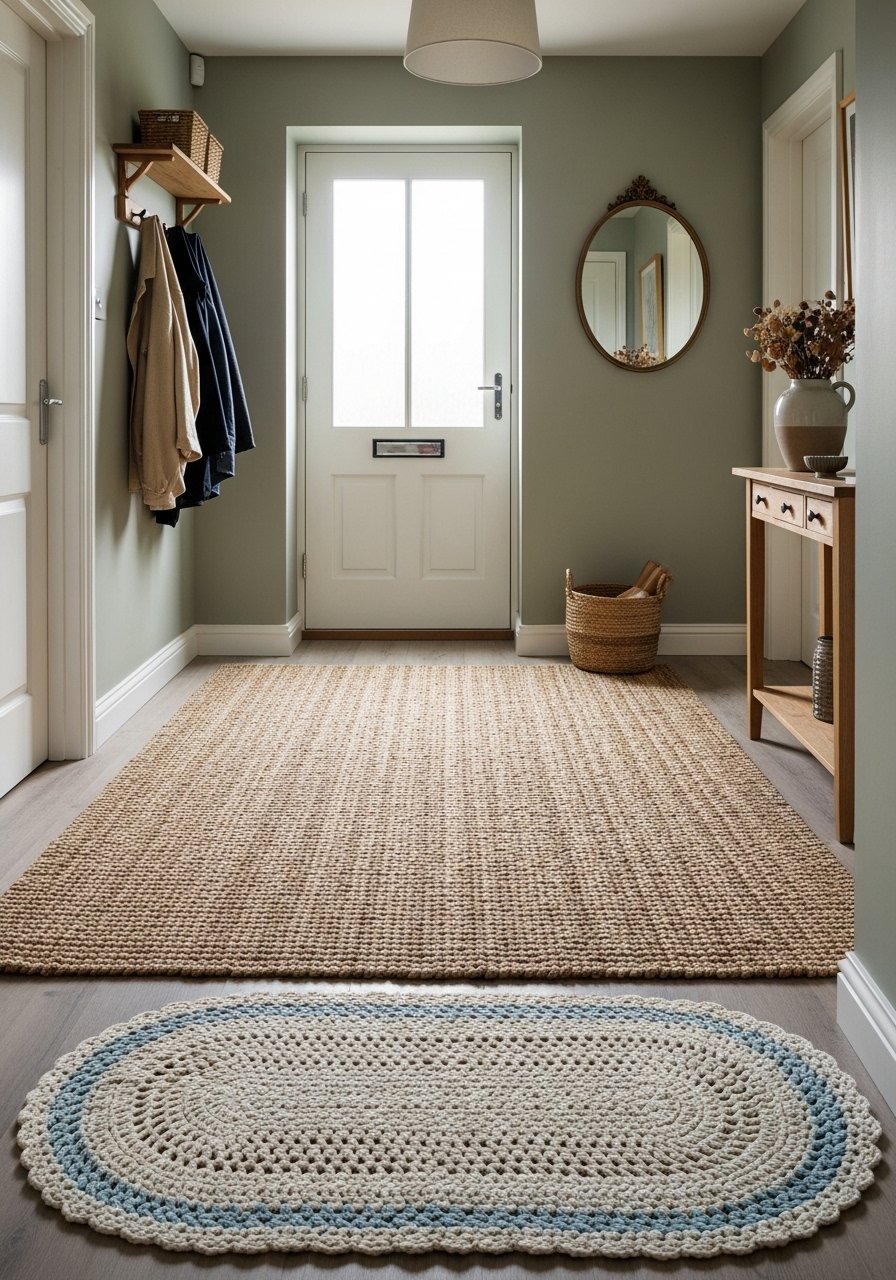
My entryway used to swallow shoes and mail. I layered a 5 by 8 jute rug with a smaller 3 by 5 crochet rug on top and it instantly felt edited. Smaller crochet rugs in durable cotton hold up in high traffic if you anchor them with a non-slip pad. Expect to spend $35 to $90 depending on fiber and dye. A common mistake is using slippery backing or tiny rugs that slide. Keep the top rug centered and leave 6 inches of the jute showing on all sides for balance.
Crochet Pouf For Flexible Seating And Warmth
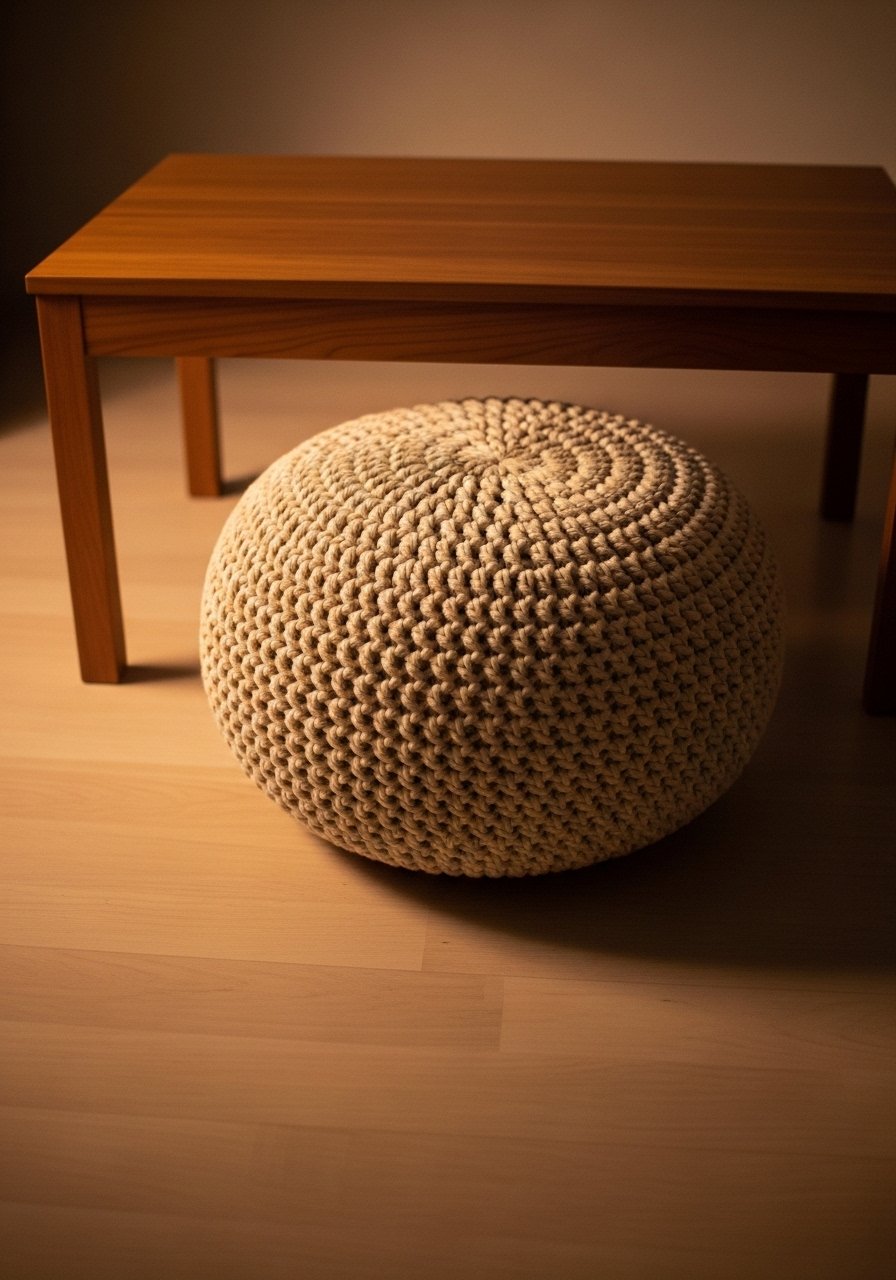
There is a practical charm to a crochet pouf. I use mine as a footrest, a kid seat, and an impromptu tray support. Look for 20 to 24 inch diameter poufs stuffed with dense filling so they keep shape. I found a comfortable option for about $60 and it outperforms inflatable alternatives. Avoid tiny 12-inch poufs unless you have a dedicated floor cushion plan. This pairs nicely next to the throw idea above and makes the seating arrangement feel casual rather than staged.
Crochet Lamp Shade Cover For A Softer Glow
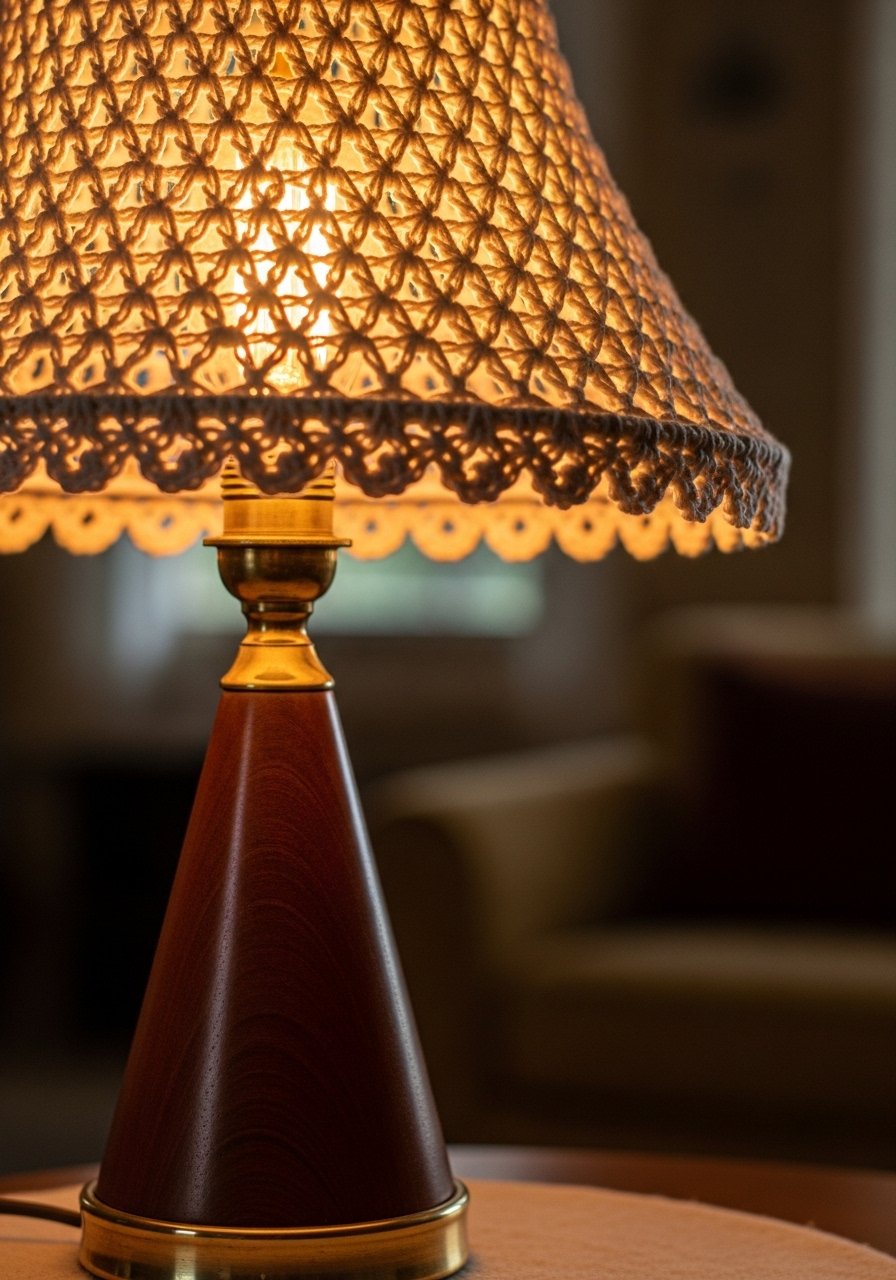
Replacing a bright white shade with a crochet cover softens the lamp and adds texture at eye level. I slipped a crocheted sleeve over a 12-inch drum shade and the diffused light stopped washing out the wall color. Budget under $30 for a sleeve. A mistake is using crochet on a shade where the bulb sits too close to the fabric. Keep an LED bulb under 9 watts equivalent and give 2 inches clearance. This trick pairs well with the lamp placement in the wall hanging idea for layered focal points.
Crochet Storage Baskets For Tidier Mid Century Nightstands
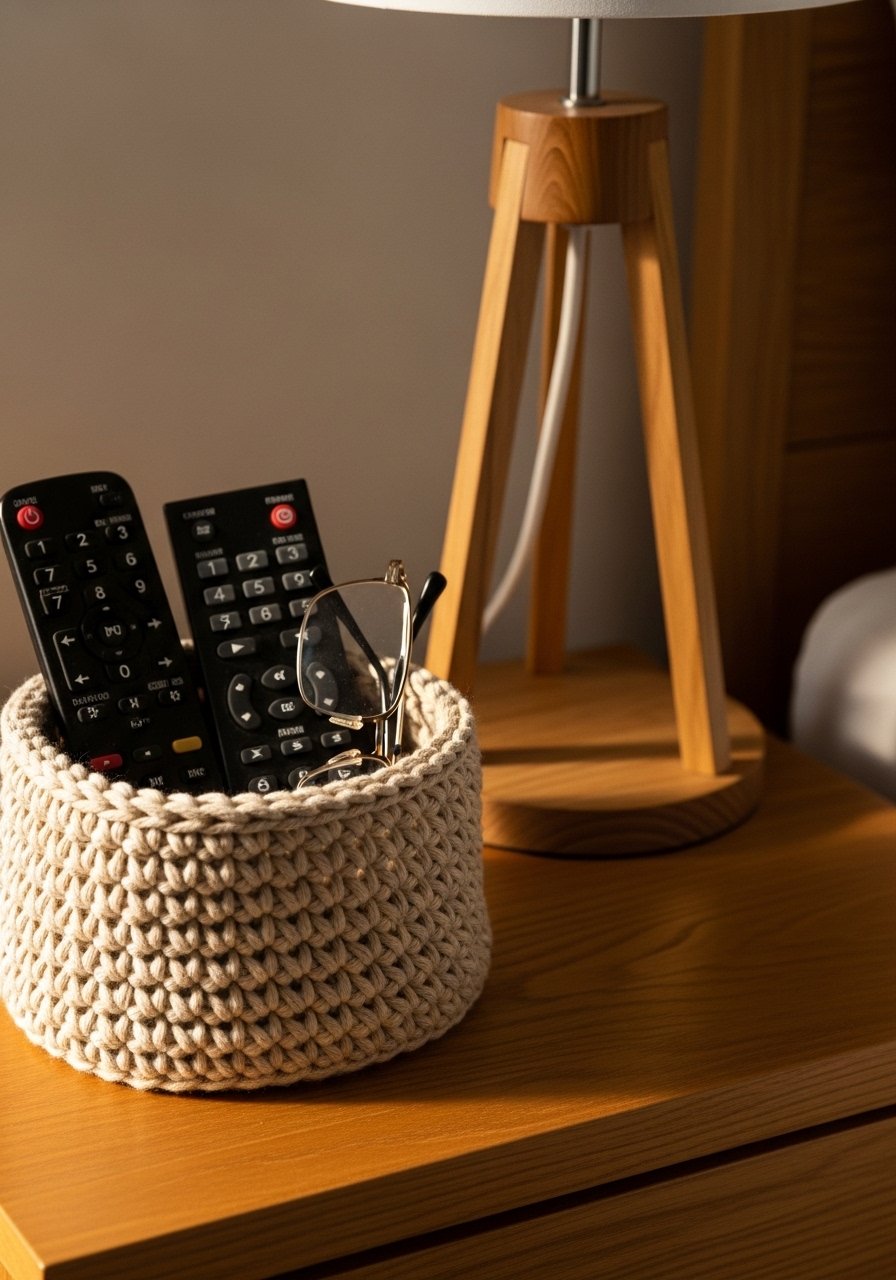
My nightstand used to be clutter central. A 10 by 8 inch crochet basket corrals remotes, a book, and a pair of glasses while keeping the mid century lines visible. Cotton baskets hold up to frequent use better than acrylic. I like one small basket and one shallow tray per surface. A common mistake is picking a basket that is too floppy. Look for tight stitching and a 1 to 2 millimeter internal board if you want it sturdy. These also work under the sideboard in idea five for seasonal storage.
Crochet Coasters And Tray Set For Coffee Table Styling
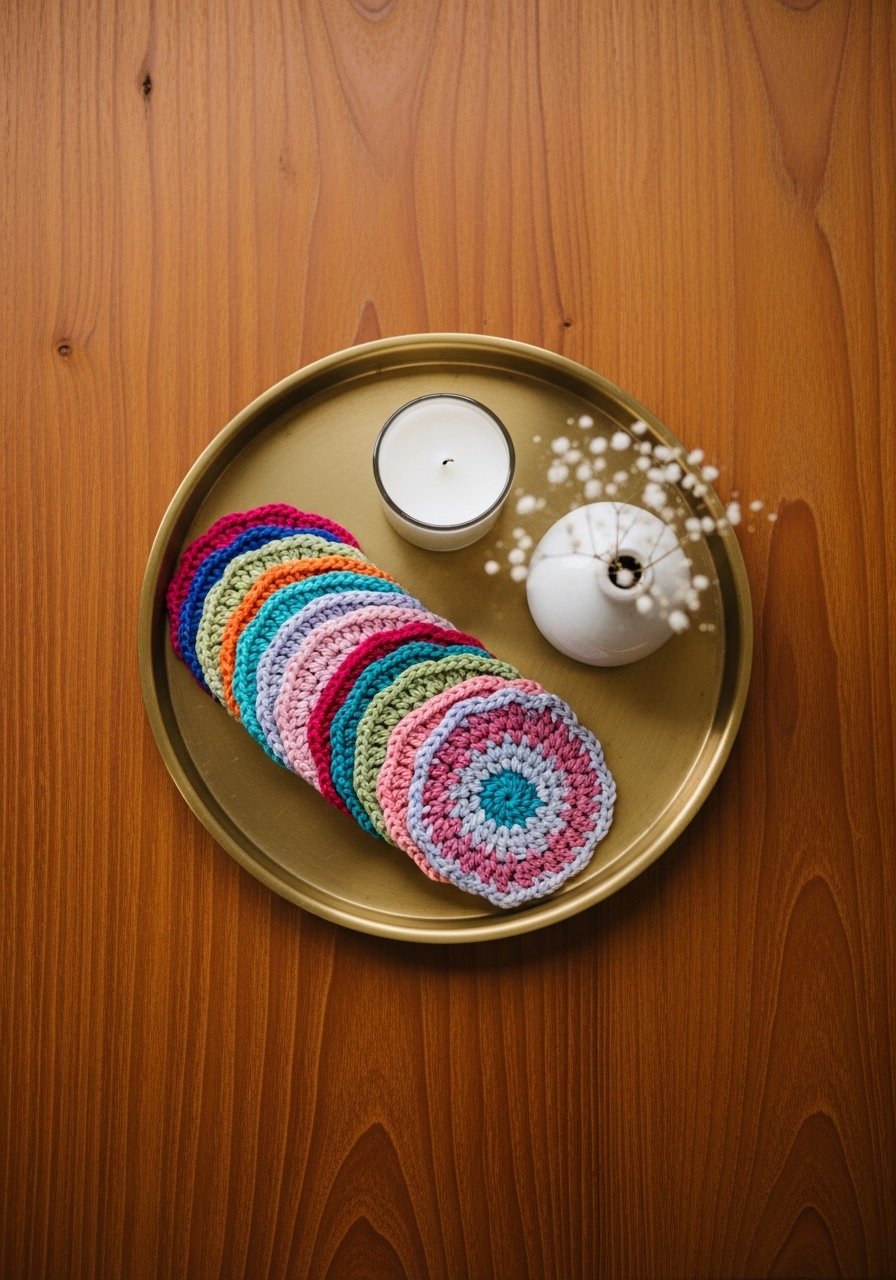
I gave up mismatched coaster chaos with a set of crochet coasters and a shallow brass tray. Coasters about 4.5 inches in diameter protect finishes and read handmade without feeling fussy. I keep four on the tray and rotate them as needed. People often buy tiny coasters that leave marks. Go slightly larger than the base of your mugs. I like pairing natural fiber coasters with a brass tray for contrast. You can find sets for under $20, which is cheaper than replacing a coffee table top.
Blanket Ladder With Crochet Throws For Vertical Texture
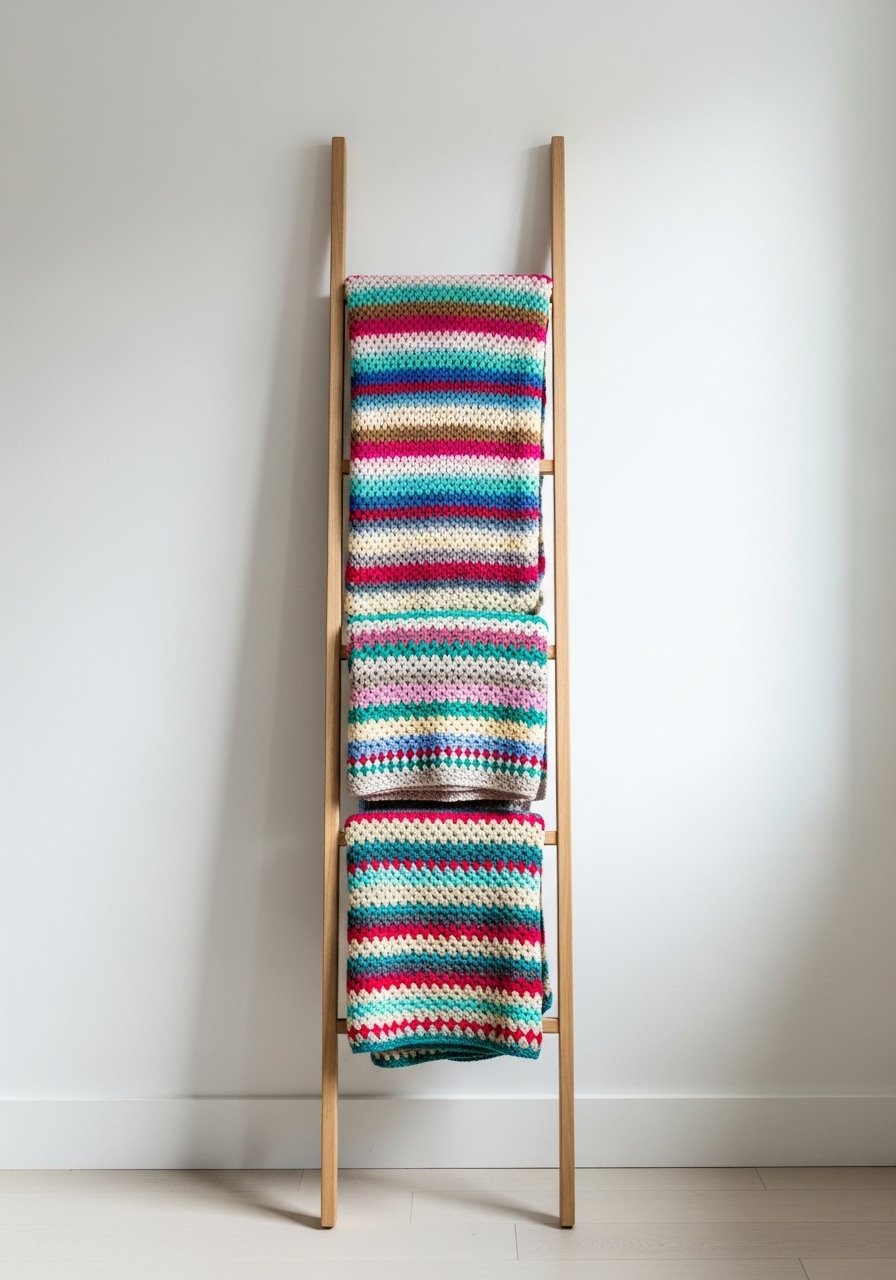
My entry corner used to have a blank wall. A 60-inch leaning blanket ladder with three throws creates organized layers and gives a place to dry-wash lighter blankets. Keep rungs 8 to 10 inches apart so throws fold cleanly over two rungs. A mistake is leaning a ladder too close to the sofa where it looks like leaning furniture. This looks best near a doorway or behind a reading chair. Ladder and throws together cost around $80 to $150 depending on materials.
Crochet Fringe Accent On A Mid Century Bedspread
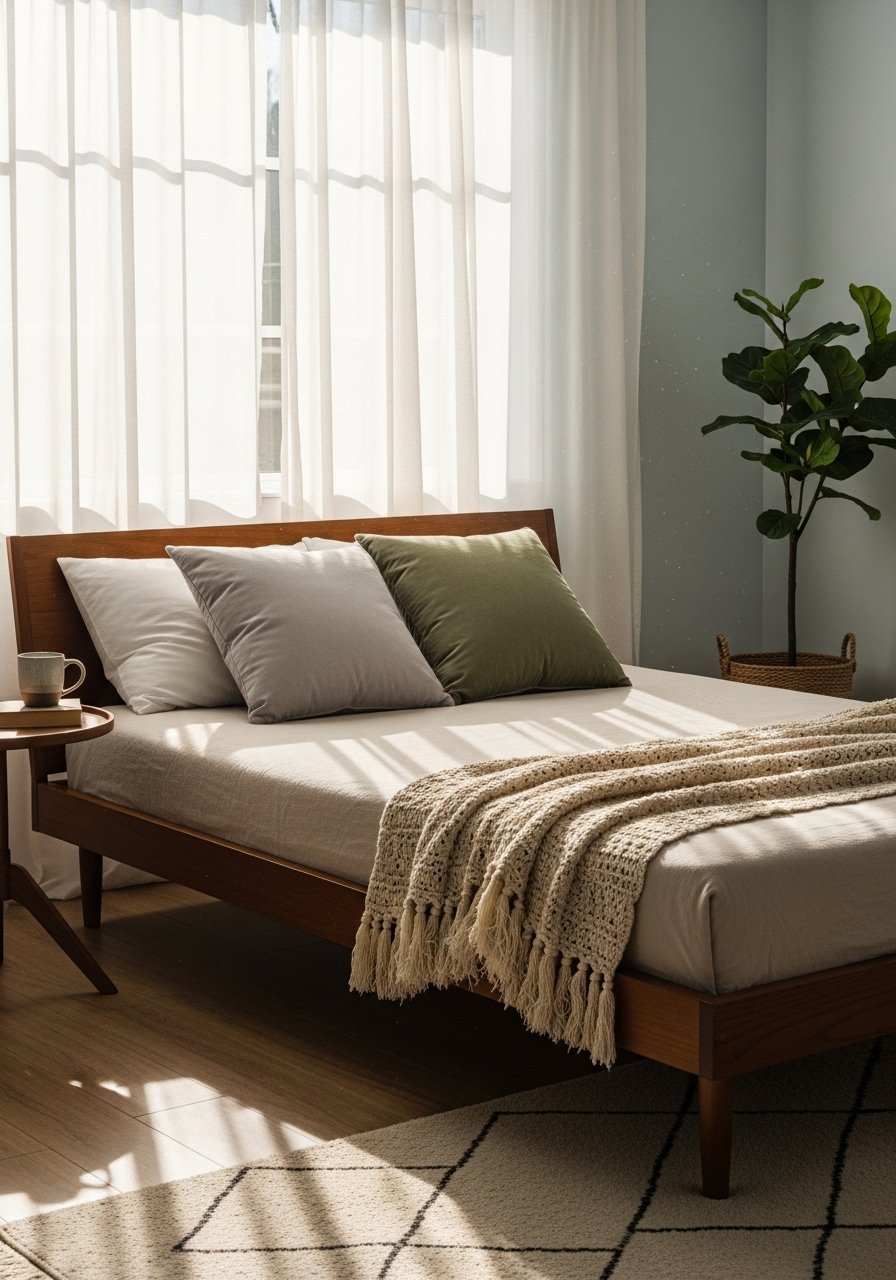
There is an instant homey feel when I add a crochet fringe throw across the foot of the bed. A 50 by 70 inch throw works for a queen. Fringe in off-white or warm gray keeps the palette quiet. Avoid heavy fringe if you toss the bedcover in the wash. I bought a machine-washable cotton option for $45. The mistake people make is choosing a throw color that clashes with wood tones. Test a swatch on the footboard first and check how it looks under your bedside lamp.
Crochet Chair Slipcover For Dining Room Seats
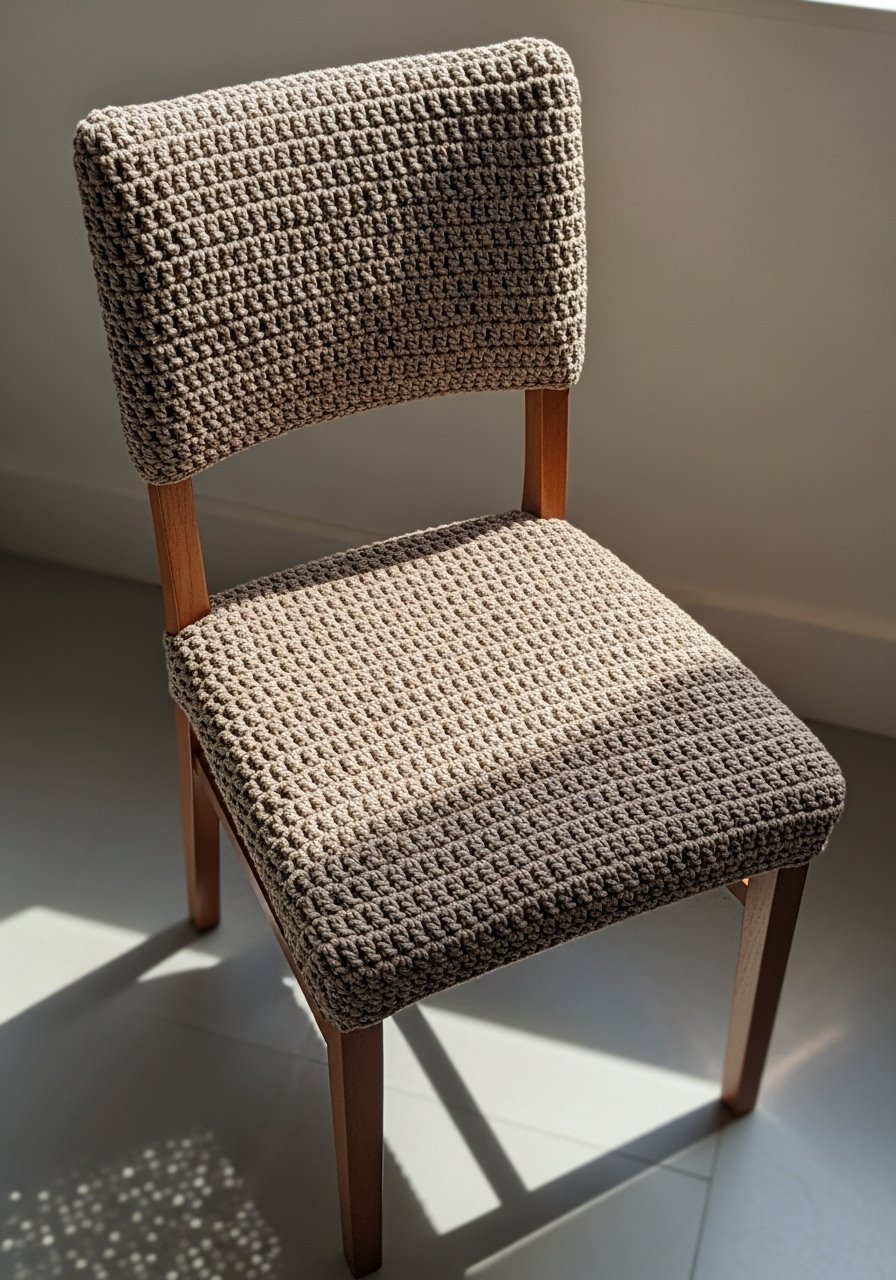
My dining chairs had vinyl seats that felt too slick next to wood. A slim crochet slipcover adds grip and makes the set feel cohesive without new upholstery. Measure the seat width and depth, then pick a cover labeled to fit those dimensions. Expect $20 to $45 per cover. The common error is buying "one size fits all" covers that either sag or pop off. These are great for casual dining rooms and pair well with the coaster and runner ideas for a coordinated table look.
Crochet Art Panel Gallery Above A Low Sofa
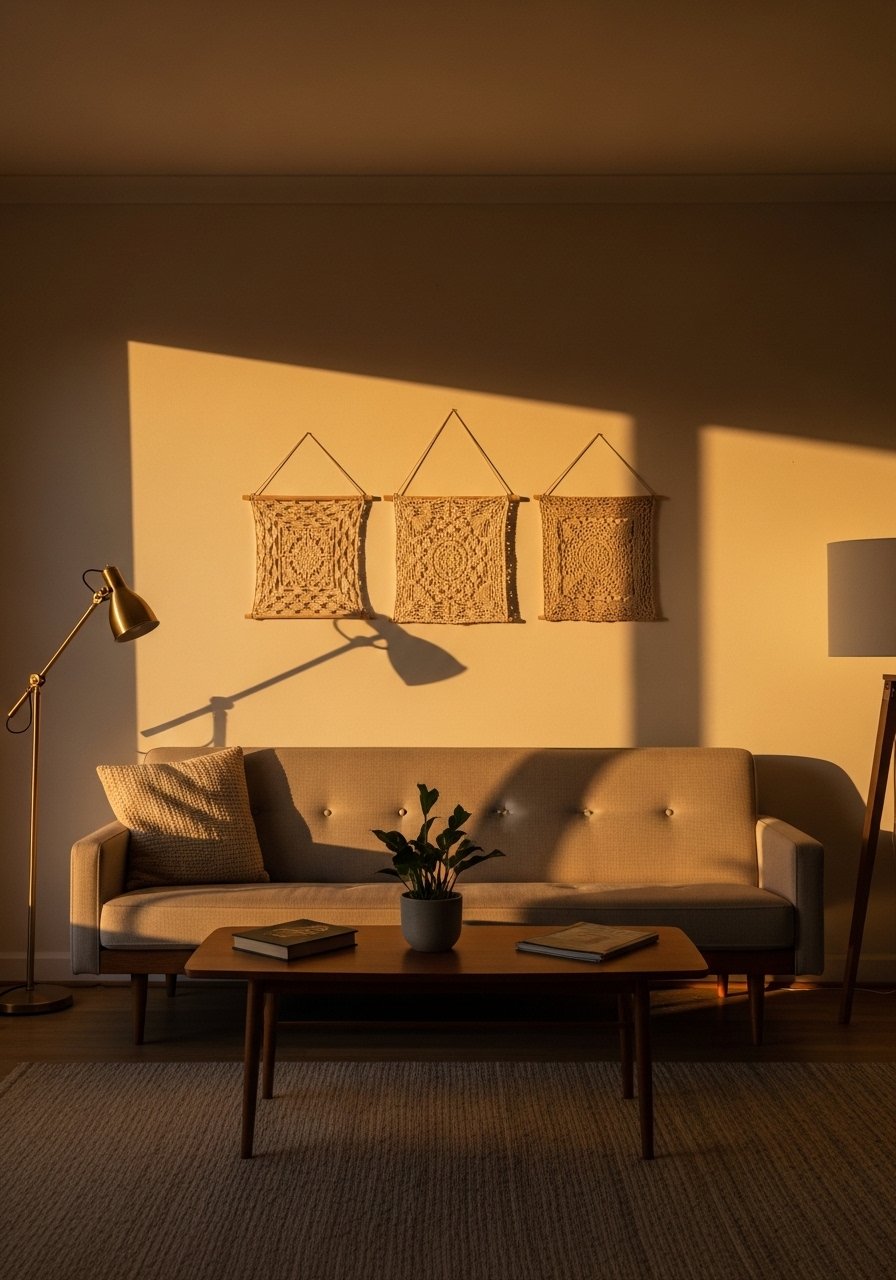
My sofa wall looked like an office for months. Three 12 by 18 inch crochet panels hung horizontally created a low, calming band that keeps the focus at seated eye level. Use consistent spacing of 3 to 4 inches between panels. A mistake is centering art too high above a low sofa. Keep the center line about 12 to 18 inches above the sofa back so the art and furniture relate. This approach ties into the wall hanging idea but keeps things more graphic and modular.
Crochet Mobile Or Wall Mobile For A Kid's Mid Century Nursery
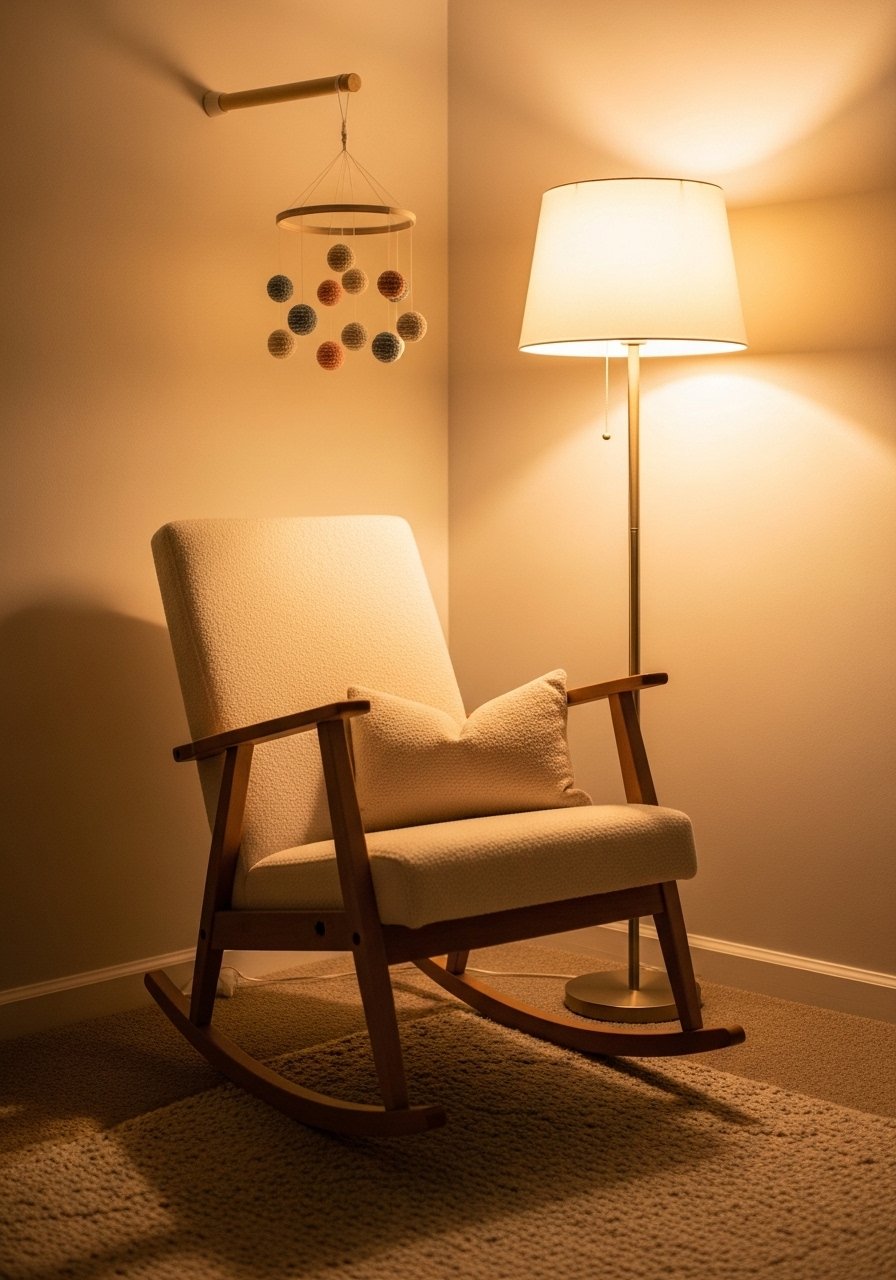
There is a gentle charm to small crochet mobiles over a mid century nursing chair. I hung a 14-inch diameter mobile about 30 inches above the changing mat for visual interest that does not overstimulate. Use secure knots and keep pieces out of baby reach. Budget $20 to $45. New parents often pick mobiles that are too heavy or noisy. Stick with cotton and keep the mobile lightweight. This also gives you a handmade touch that matches crochet textiles used elsewhere in the house.
Your Decor Shopping List
Textiles
- Honestly the best $40 I have spent. Chunky knit throw in cream 50×60 inches
- Found these while looking for something else. 22-inch linen pillow covers, set of 2 in oatmeal and olive
- Crochet pillow cover 18-inch for accent layer
Wall Decor
- Beige crochet wall hanging 30×40-inch handmade look under $100
- Set of three crochet art panels 12×18-inch
Lighting
- Crochet lamp shade cover 12-inch for soft glow
- LED bulbs warm 800-lumen to keep cozy color
Storage & Smalls
Budget Finds
- Crochet pouf 20-inch diameter under $70
- Similar at Target or HomeGoods for one-off vintage finds
Shopping Tips
White oak beats dark wood in 2026. Design feeds have shifted completely. These white oak floating shelves look current, not dated.
Grab 22-inch linen pillow covers for about $20 each. Swap the covers seasonally and the room feels refreshed without a full re-do.
Curtains should puddle or kiss the floor, never hang halfway up. These 96-inch linen panels are the right call for standard 9-foot ceilings.
One big plant is better than five small succulents. Try a faux fiddle leaf fig 6-foot if you need height with no fuss.
When in doubt pick washable cotton for crochet pieces. Machine-washable crochet throw options keep maintenance easy.
Frequently Asked Questions
Q: Can I mix boho crochet with mid century furniture without it looking messy?
A: Yes. Keep shapes minimal and limit crochet to one to three focal pieces, like a throw, one pillow, and a wall hanging. Keep colors muted and tie a single accent color across two items so the look reads intentional.
Q: How do I avoid the "great on the chip, wrong on the wall" problem when matching yarn to paint?
A: Bring the actual yarn and try a two-foot square sample under your home lighting. Your lights can throw colors off by a full shade. Scanners nail it 9 times out of 10 if you tweak by eye after. If you rent, use peel-off sample pots or photos in multiple lights first.
Q: What size crochet rug do I need for an entryway?
A: For a standard entry, layer a 5×8 base rug with a 3×5 crochet rug on top. Leave about 6 inches of the base showing on each side to frame the smaller rug.
Q: Should I buy real plants or faux with crochet planters?
A: Both work. Real snake plants and pothos handle neglect and look great in crochet hangers. Use a faux fiddle leaf fig 6-foot where you need height without maintenance.
Q: How do I make crochet look modern and not dated?
A: Pair crochet pieces with clean-lined mid century furniture, repeat one or two colors across pieces, and mix textures in odd numbers. Avoid overly ornate crochet that reads Victorian.
Q: Any tips for renters who cannot paint or make big changes?
A: Focus on textiles and movable pieces. Use a blanket ladder, pouf, and a wall hanging that hangs with removable hooks. Half the time formulas flop, grab the real sample instead when you are matching colors to existing textiles.