
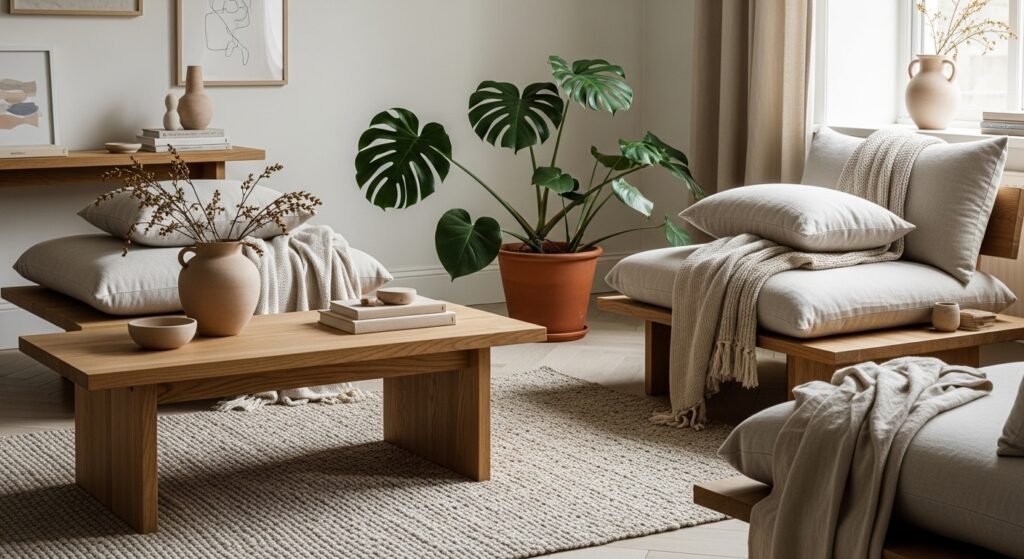
My living room had nice furniture and decent lighting but it still felt like a waiting room. Took me embarrassingly long to figure out it was missing texture. Every surface was smooth, every color was flat, and nothing invited you to actually sit down. I fixed that by adding one big plant, one wabi-sabi ceramic, and a long linen curtain.
These ideas lean toward warm minimalism with a Japanese nod, using mostly natural materials and simple shapes. Most items are under $100, with a few pieces around $150. Works for living rooms, bedrooms, entryways, or any tight apartment corner that needs breathing room.
Large Monstera for a Warm Japandi Living Room
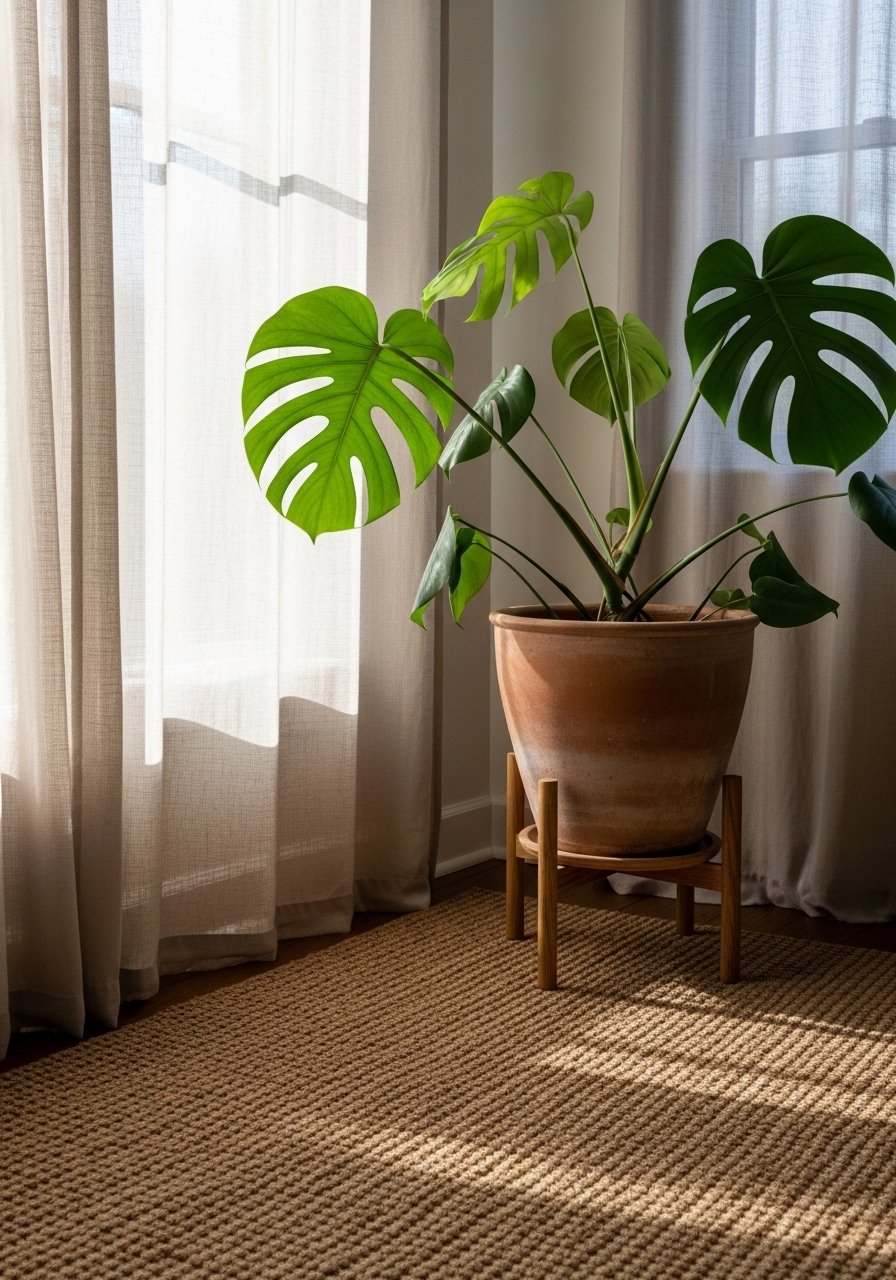
A single big plant carries the whole room more often than five tiny pots. One or two large plants max per room keeps the calm without turning your living room into a jungle. I put a Monstera on a terracotta stand for that raw-earth vibe and it made the space feel lived in immediately. Plant care note, most low-light apartments do better with a hardy plant or a realistic artificial one. If you want a real option, try a potted Monstera for a beginner friendly pick, or a terracotta pot if you want the matte earth finish. People love wood and plants over synthetics these days. A common mistake is clustering too many small plants. Instead, go big and leave space around it.
Low Wood Coffee Table with Rattan Accent for Cozy Seating
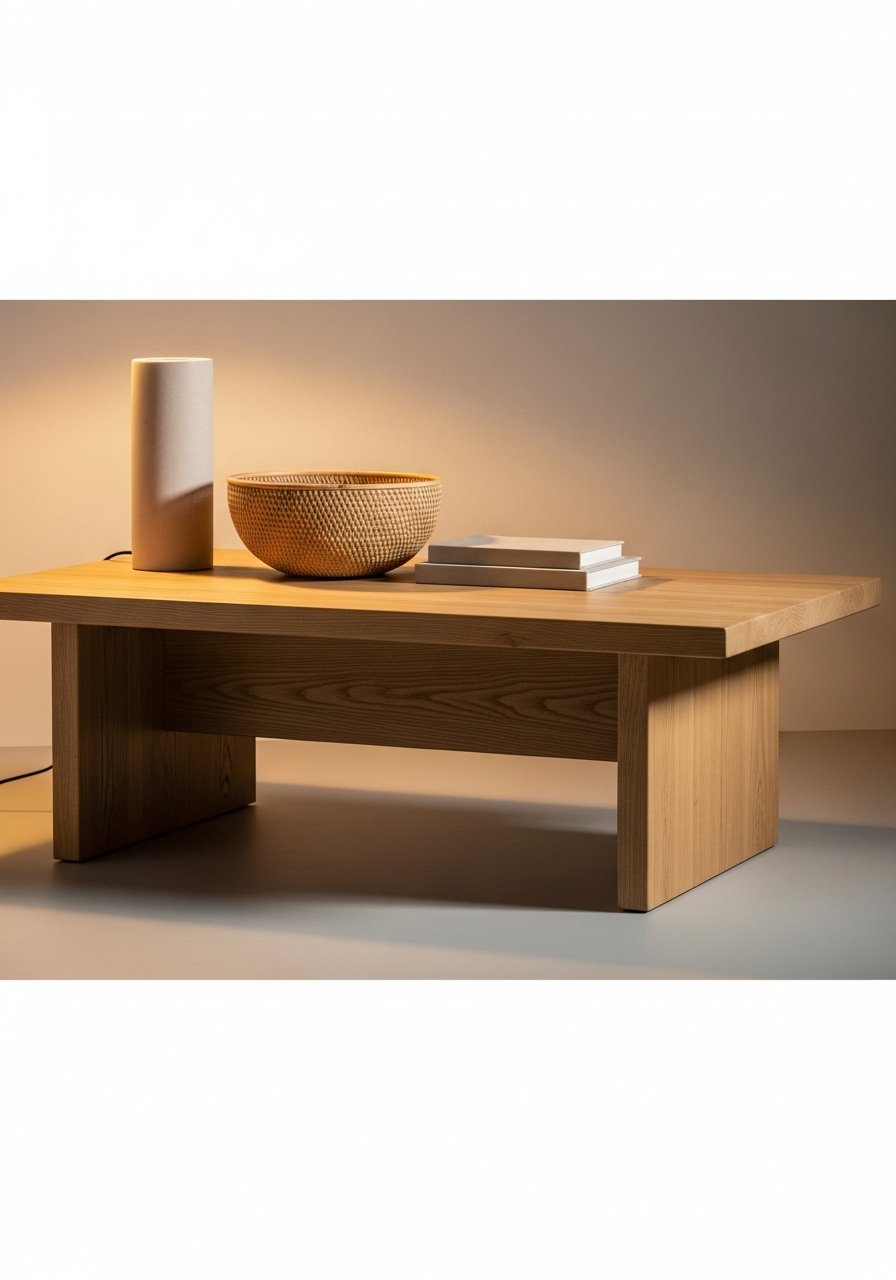
Low furniture makes rooms feel bigger. My sofa seat is around 16 inches and swapping my old table for a low wood coffee table finally matched the scale. Aim for max 18 inches seat height on sofas and low tables that sit well with them. I paired a warm oak table with a rattan bowl for texture and used the 80/20 rule: 80 percent wood and linen, 20 percent ceramic or metal. The budget range here is $100 to $250 depending on finish. People often buy tables that are too tall. If your sofa looks disconnected from the table, measure the seat height first. For renters, a light oak table can be swapped or sold easily and it photographs well for resale listings.
Floor-Length Linen Curtains to Make Ceilings Feel Taller
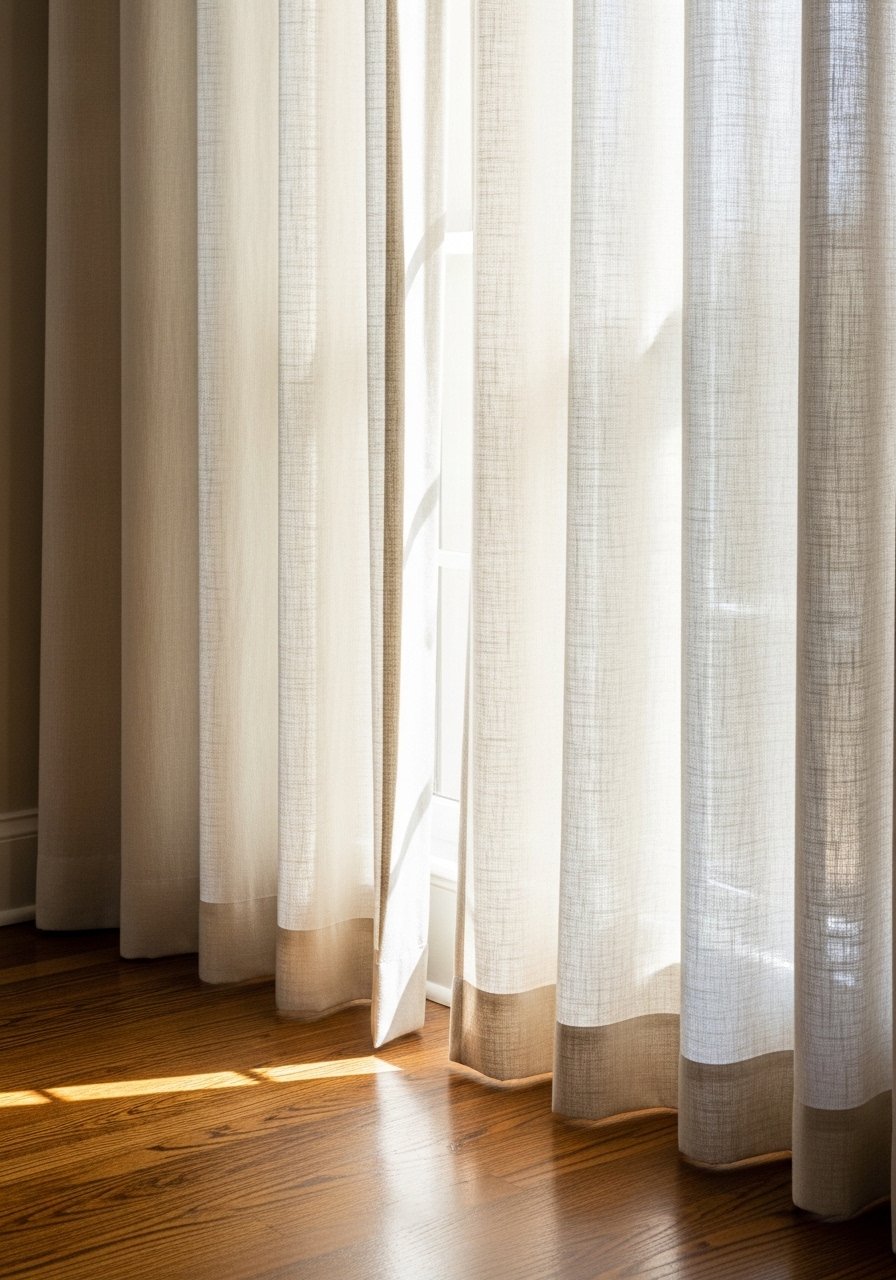
Most people hang curtains exactly inside the window frame. That is why rooms look shorter than they are. Hang floor-length linen panels about four inches above the window trim and let them kiss or puddle on the floor. For standard 9-foot ceilings, 96-inch panels work best. Linen or linen-blend panels blur the edge between indoors and out without blocking light. I bought affordable 96-inch panels and used a tension rod for a renter friendly install. Budget $30 to $80 per panel depending on weight. Stretch your curtain rod wider than the window so panels stack off the glass when open. One more tip, heavier curtains in winter swap in easily for warmth.
Layered Linen Throws and Neutral Sofa Styling for Softness
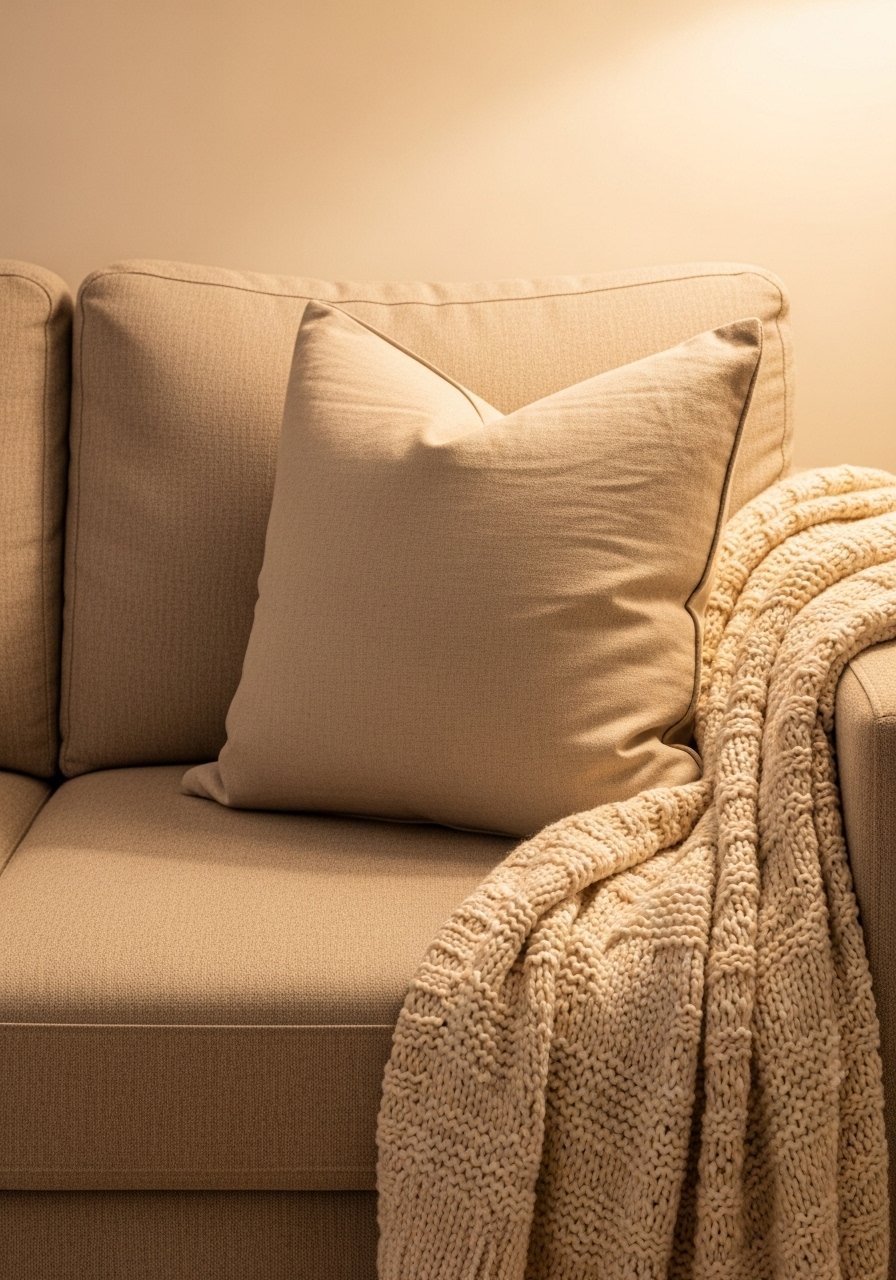
I spent $400 on a sofa and the room still felt cold until I layered textiles. Linen throws, 22-inch down-filled linen pillow covers, and a thinner wool in winter add that lived-in feel. Go 80 percent natural materials, 20 percent a single standout texture or color. Boucle fabrics look trendy, but if you have pets they will pill fast. Use linen or cotton-linen blends instead. Budget here is $30 to $150 depending on throw quality. One mistake is matching every pillow exactly. Instead, mix one patterned linen with two plain shades in the same family. If you need a renter fix, slipcovers or removable pillow covers do the heavy lifting.
Wabi-Sabi Ceramic Vase with Foraged Branches for Personality
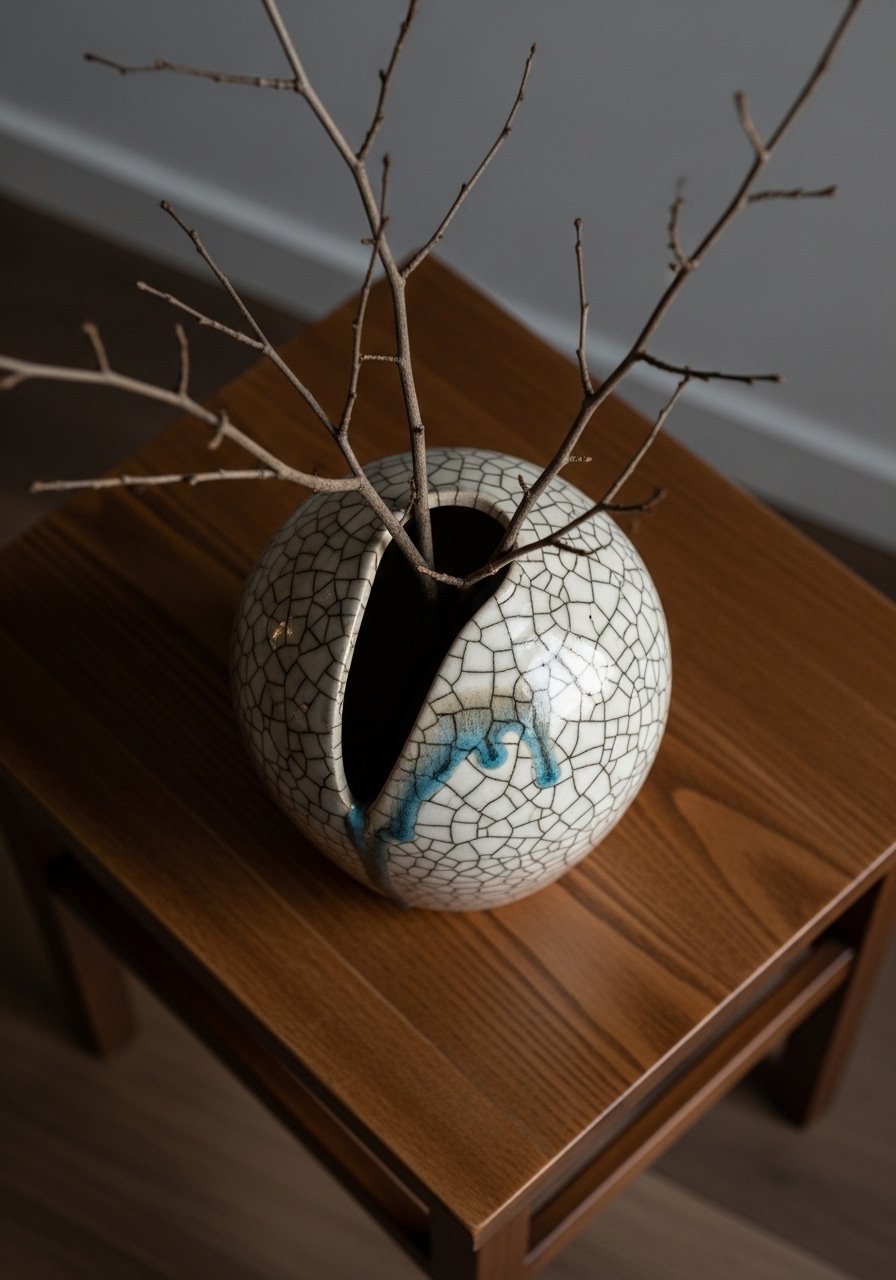
Perfection is overrated. A single imperfect ceramic vase with a few foraged twigs adds soul where everything else is neat. Wabi-sabi ceramics bring texture and a handmade feel, and the cost is usually $30 to $60 for a statement piece. I like one large ceramic rather than three tiny matching vases. One real-life detail people forget is to dry any foraged stems completely before bringing them inside or they will attract pests. This vase idea works great on consoles or low side tables and pairs well with the driftwood sculpture idea later. If you want a budget copy, there are handmade options that look genuine for around $40.
Natural Jute Rug Under Low Seating to Anchor the Room
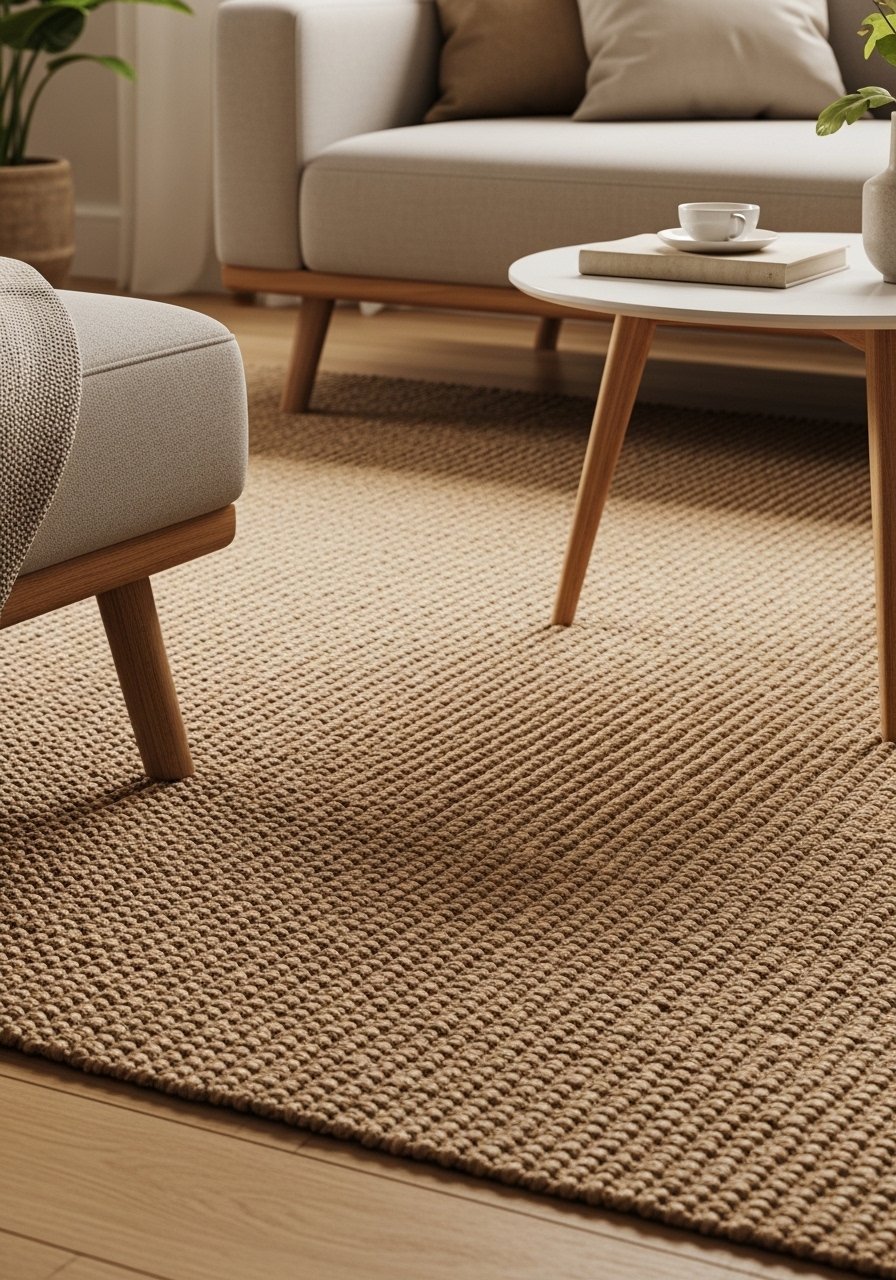
Rug too small is one of the most common mistakes I see. For a standard living room, go 8×10 minimum and place all front legs of seating on the rug. That single change unifies a space better than rearranging furniture. Jute or natural fiber rugs warm up wood floors and cost $100 to $250 for decent sizes. Heads up, jute will shed in the first month. I sealed edges with a thin rug pad and vacuumed regularly until it settled. For homes with kids or pets, look at washable seagrass alternatives or a synthetic blend in a neutral tone. The rug anchors everything and makes low furniture feel intentional.
Muted Art Wall with One Large Print or Three Odd Frames
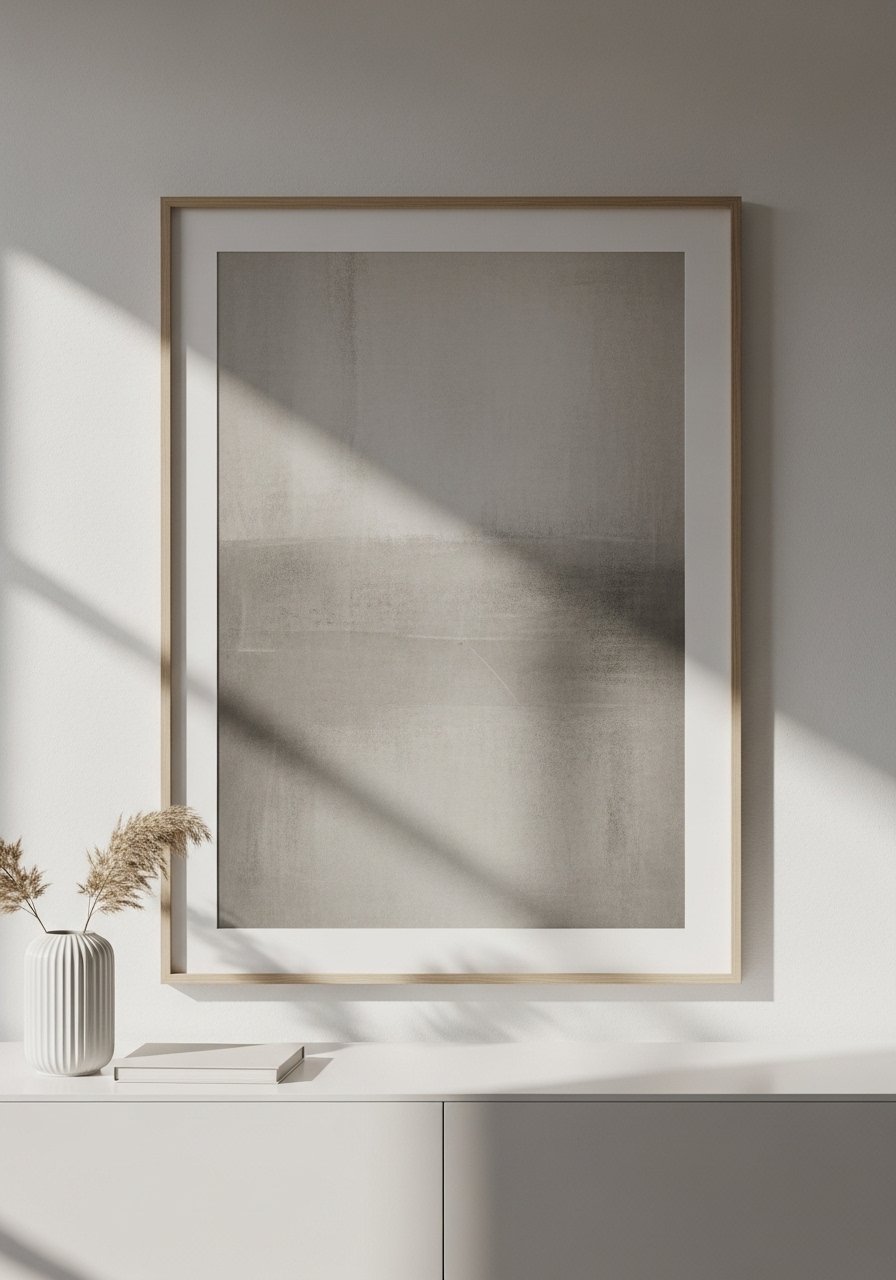
Gallery walls used to be the default. I switched to one large neutral art piece above my console and the space finally read like a room, not a hallway. If you prefer multiples, stick to odd numbers like three or five and use only black or natural frames for cohesion. Budget $40 to $120 for a quality print and frame. One common mistake is hanging art too high. Aim to center art at eye level, or lower if furniture sits under it. For renters use brass picture ledges that let you swap pieces without new holes. Muted Japanese calligraphy or an abstract in mushroom tones pairs perfectly with oak and linen.
Bonsai Nook for a Quiet Zen Corner
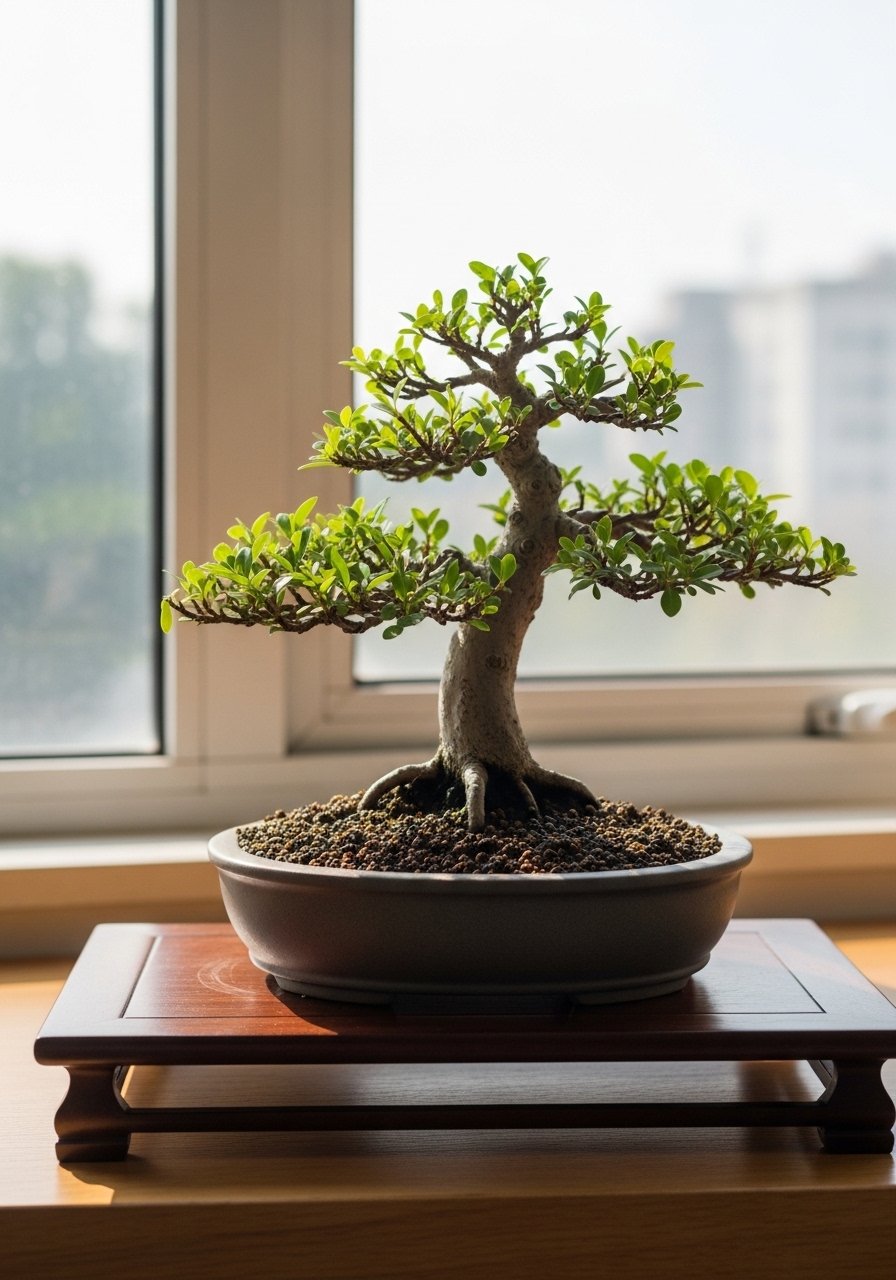
There is something about a bonsai on a low stand that makes a reading corner feel intentional. Bonsai are sculptural so you do not need many accessories. I keep mine next to a window and rotate it weekly for even light. Beginner bonsai kits cost $40 to $80 and come with basics to get started. A lot of articles tell you to add three small plants, but for Japandi, one carefully tended bonsai wins every time. If you lack natural light choose a moss-covered faux bonsai that reads real at a glance. The small scale fits apartments and plays nicely against the large-plant idea earlier.
Incense and Scented Layers with a Rustic Metal Holder
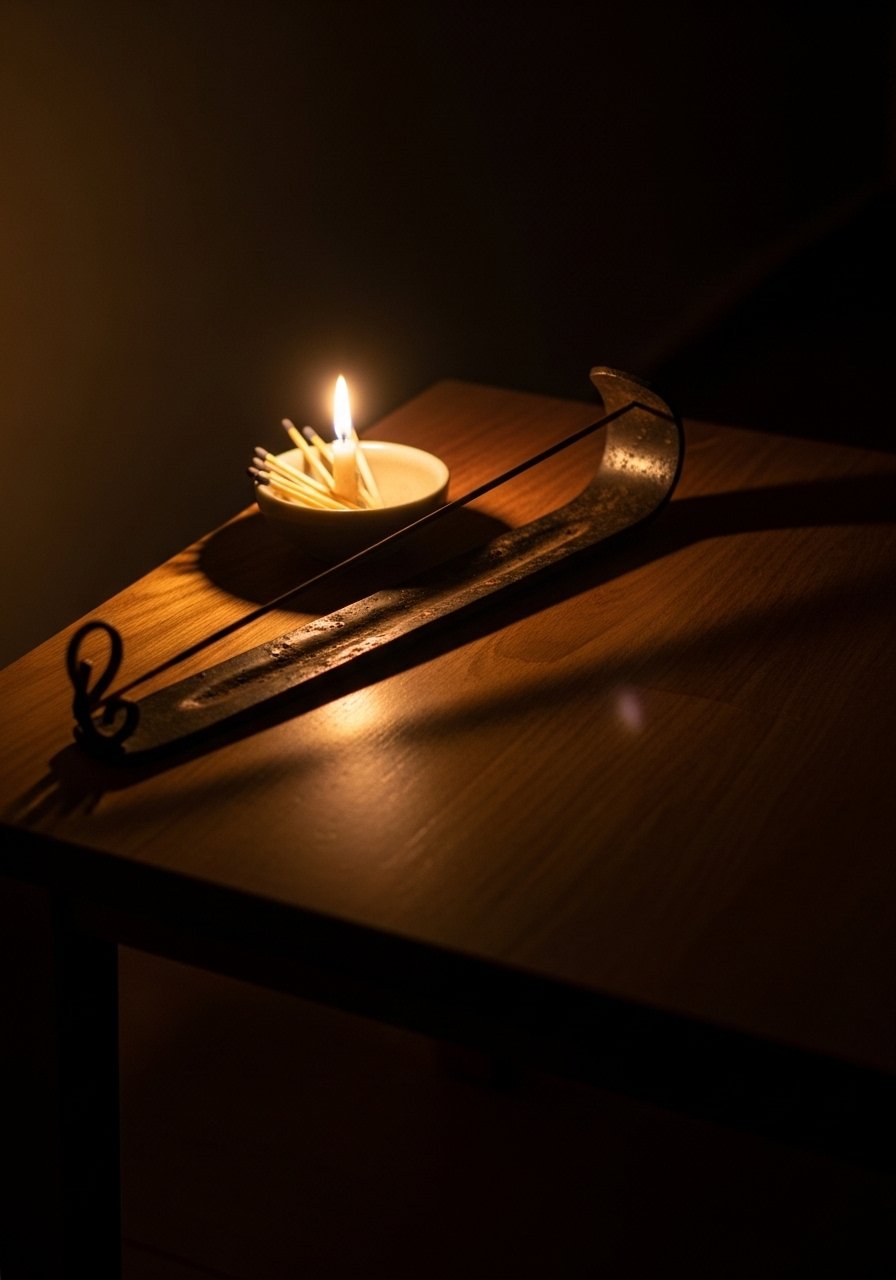
Scent is the secret layer most people skip. An incense holder with a metal base adds a ritual feel without clutter. I light one stick during quiet evenings and the room feels different right away. Keep scent subtle and choose woody or green aromas rather than heavy florals. Incense holders range $15 to $35 and look great next to a wabi-sabi vase or on a low shelf. If you have pets or small kids, pick a covered holder and never leave burning incense unattended. For renters use a small ceramic tray under the holder to protect surfaces.
Your Decor Shopping List
Textiles
- Honestly the best $40 I have spent. Chunky knit throw in cream (~$35-55). Drape over the sofa arm for instant warmth
- 22-inch linen pillow covers, set of 2 in warm white and mushroom for layered seating
Wall Decor
- For the muted art idea, try neutral abstract wall print, 24×36 (~$40)
- Found these while looking for something else. Brass picture ledges, set of 2 (~$18-25) let you swap art without new nail holes
Lighting and Tabletop
- Low wood coffee table, oak finish (~$120)
- Wabi-sabi ceramic vase (~$40)
Plants and Pots
- Potted Monstera Deliciosa plant for a bold green presence
- Terracotta plant pot unglazed, 12-inch (~$25)
Flooring
- 8×10 jute area rug natural (~$150). Washable options at Target or HomeGoods
Small Rituals
- Rustic metal incense holder (~$20)
- Bonsai starter kit (~$50)
Shopping Tips
White oak beats dark wood in 2026. Design feeds have shifted completely. These white oak floating shelves look current, not dated.
Grab these 96-inch linen curtain panels for $30 to $60 per panel. Hang them wider than the window and a few inches above the frame.
Curtains should puddle or kiss the floor, never hang halfway up. Weighted curtain clips help keep linen panels from flaring in drafty spaces.
Found these while hunting for cheap texture. Natural jute rug protector pad keeps a jute rug from moving and reduces shedding.
Everyone buys five small succulents. One single 6-foot artificial fiddle leaf fig has ten times the visual impact.
Frequently Asked Questions
Q: What size area rug do I actually need?
A: Bigger than you think. For a standard living room, go 8×10 minimum. All front furniture legs should sit on the rug. This 8×10 jute rug is neutral enough for the style and will handle foot traffic.
Q: Can I do Japandi in a small apartment without it feeling empty?
A: Yes. Scale down the ideas, not the principles. One low table, one large plant, and floor-length curtains do more than three matching accessories. Use tension rods for curtains and removable wall hooks for art if you rent.
Q: My plants keep dying. Should I use fake ones?
A: Both real and faux work. Most folks go for wood and plants over synthetics these days. Pick low-light tolerant plants like snake plants, or choose a high-quality faux for height. Realistic faux fiddle leaf trees are fine where light is poor.
Q: I have kids and pets. Will jute or linen survive?
A: Linen is better than boucle for durability around pets because it does not pill as fast. Jute sheds in the first month. For heavy wear choose a washable neutral rug or a synthetic jute alternative. Washable flatweave rugs are a good compromise.
Q: Should I mix metals or match them all?
A: Mix them. It looks more intentional. Use one dominant finish and sprinkle a secondary finish in small hardware or frames. Mixed metal picture frames are an easy start.
Q: How much should I expect to spend on a room refresh?
A: People drop $200 to $500 when they redo a room like this. You can do a lot with textiles and a rug under $200, and add a couple of investment pieces later if you want.