
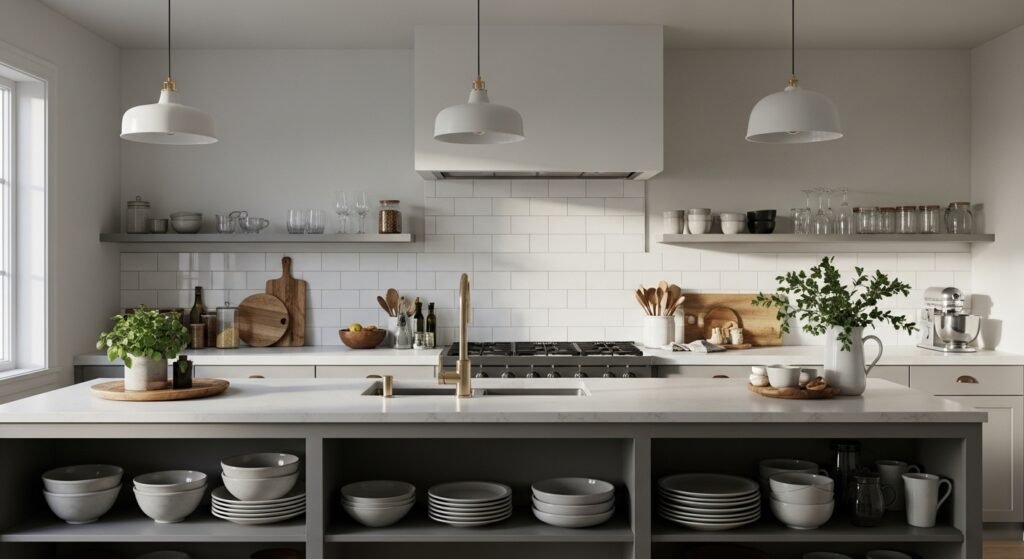
I used to stand in my kitchen and feel like something was missing. Counters were either cluttered or bare. Shelves looked awkward and the space felt cold.
I learned that simple decor—small, intentional choices—fixes this without a major overhaul. You don't need a big budget. Start with a single shelf or counter and watch the room settle.
How to Decorate a Kitchen With Simple Decor
This is the method I use every time a room feels unfinished. I’ll show how to make one area feel calm and balanced so the whole kitchen reads as intentional. The result is an organic modern, lived-in kitchen that looks put together without fuss.
What You'll Need
- Flatwoven kitchen runner rug, 2.5'x8', neutral stripe (~$40–90)
- Linen kitchen dish towels, set of 4, natural (~$20–35)
- Acacia wood cutting board, 18×12 inch (~$30–60)
- Ceramic utensil crock, matte white, 6"x6" (~$20–40)
- Small ceramic vase with dried pampas stems, 10" (~$18–45)
- Potted herb kit with rosemary, basil, thyme (~$15–35)
- 8×10 framed minimalist art print, matte black frame (~$15–40)
- Woven seagrass storage basket, medium (~$25–60)
Step 1: Pick one anchor zone and let everything orbit it
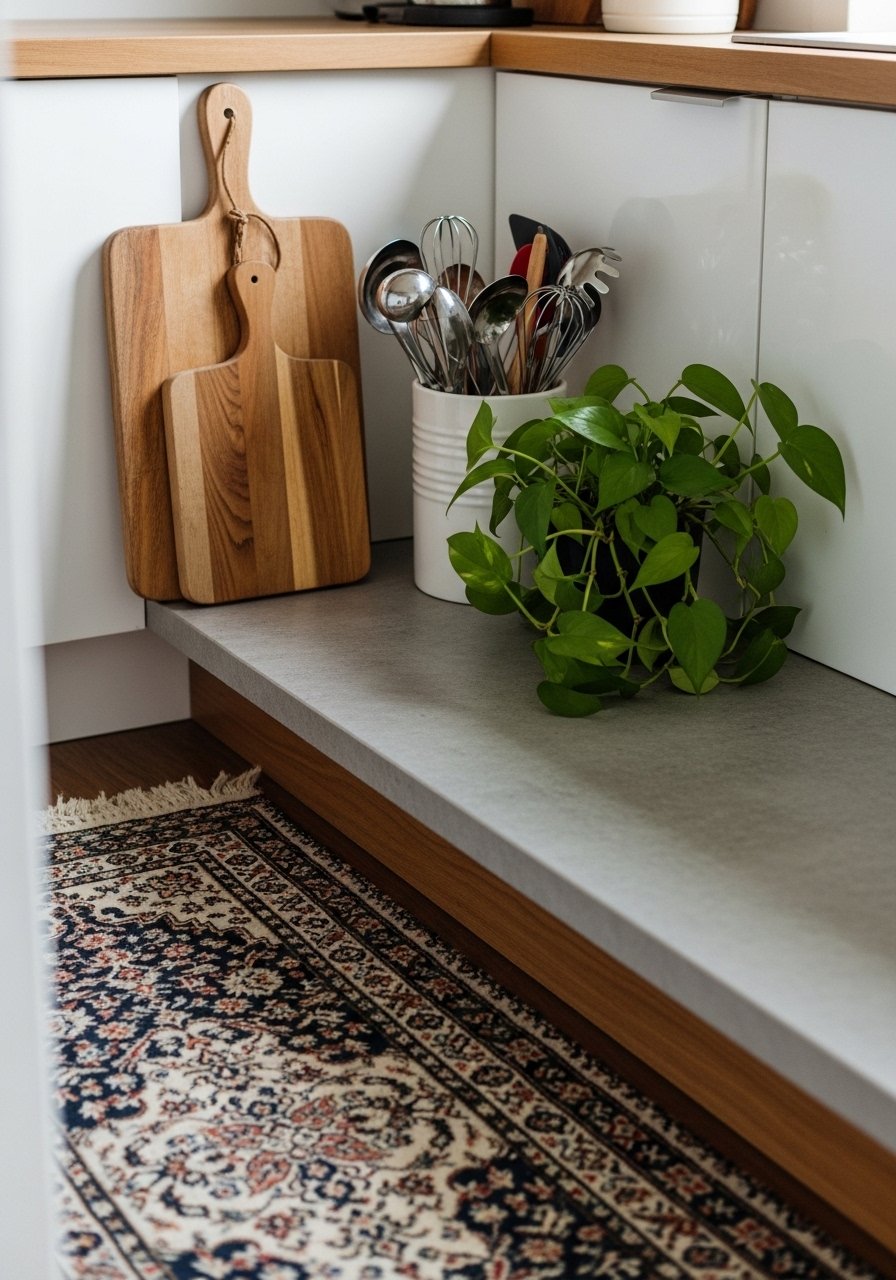
I always start by choosing one anchor: the counter beside the stove, an open shelf, or the island end. I keep everything else minimal so the eye has one place to land. Visually, the room stops feeling scattered and gains a quiet center.
Most people try to decorate every surface. I miss that restraint at first. Don’t make the anchor too large—one tidy zone is better than three half-done ones.
Step 2: Lay a base of texture and height
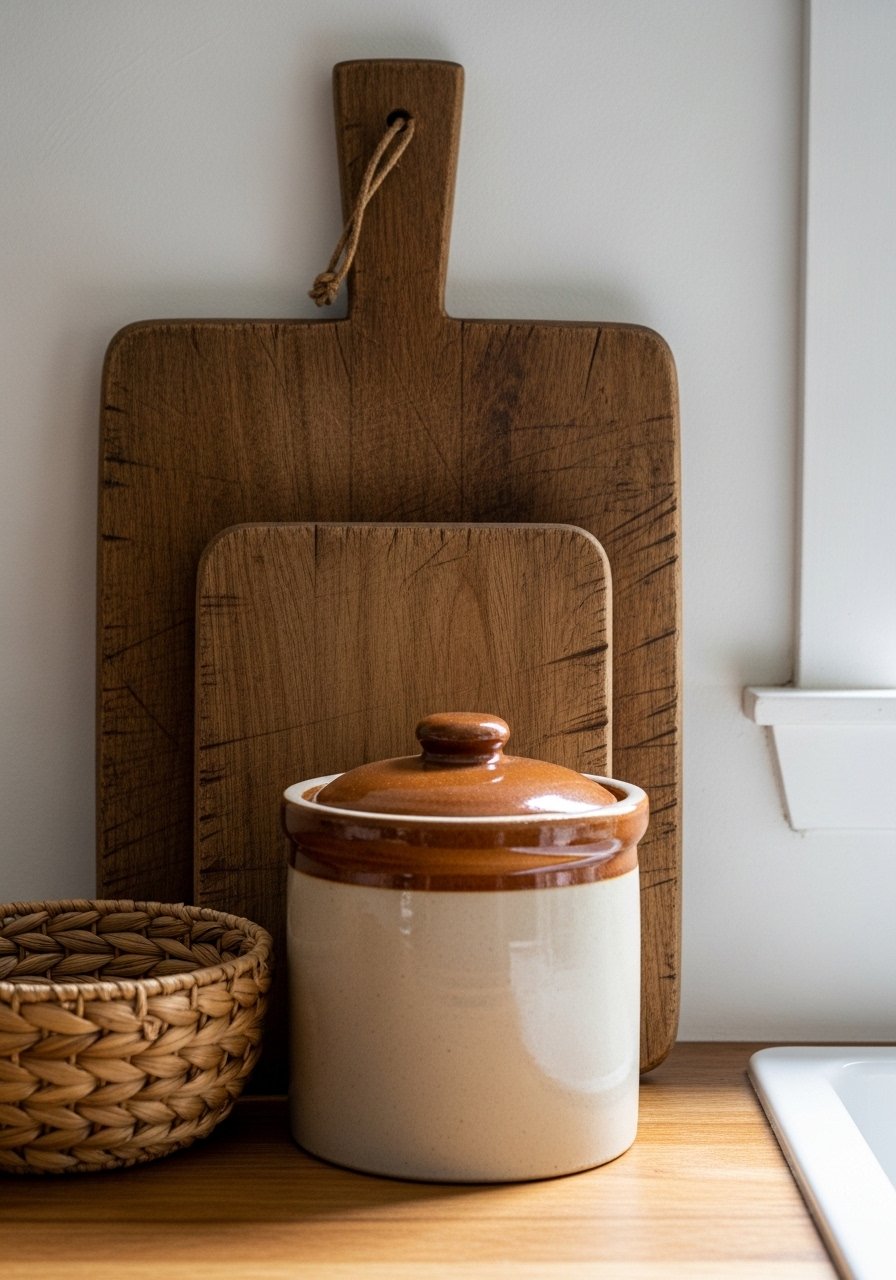
I build a base with three textures: a wood cutting board, a ceramic utensil crock, and a woven basket or tray. I place taller pieces at the back and work forward. The change is immediate—the area reads layered, not cluttered.
One insight I learned: odd numbers feel balanced. I usually use three main objects. Avoid lining everything up in a row; that creates a flat look.
Step 3: Add one living thing for warmth
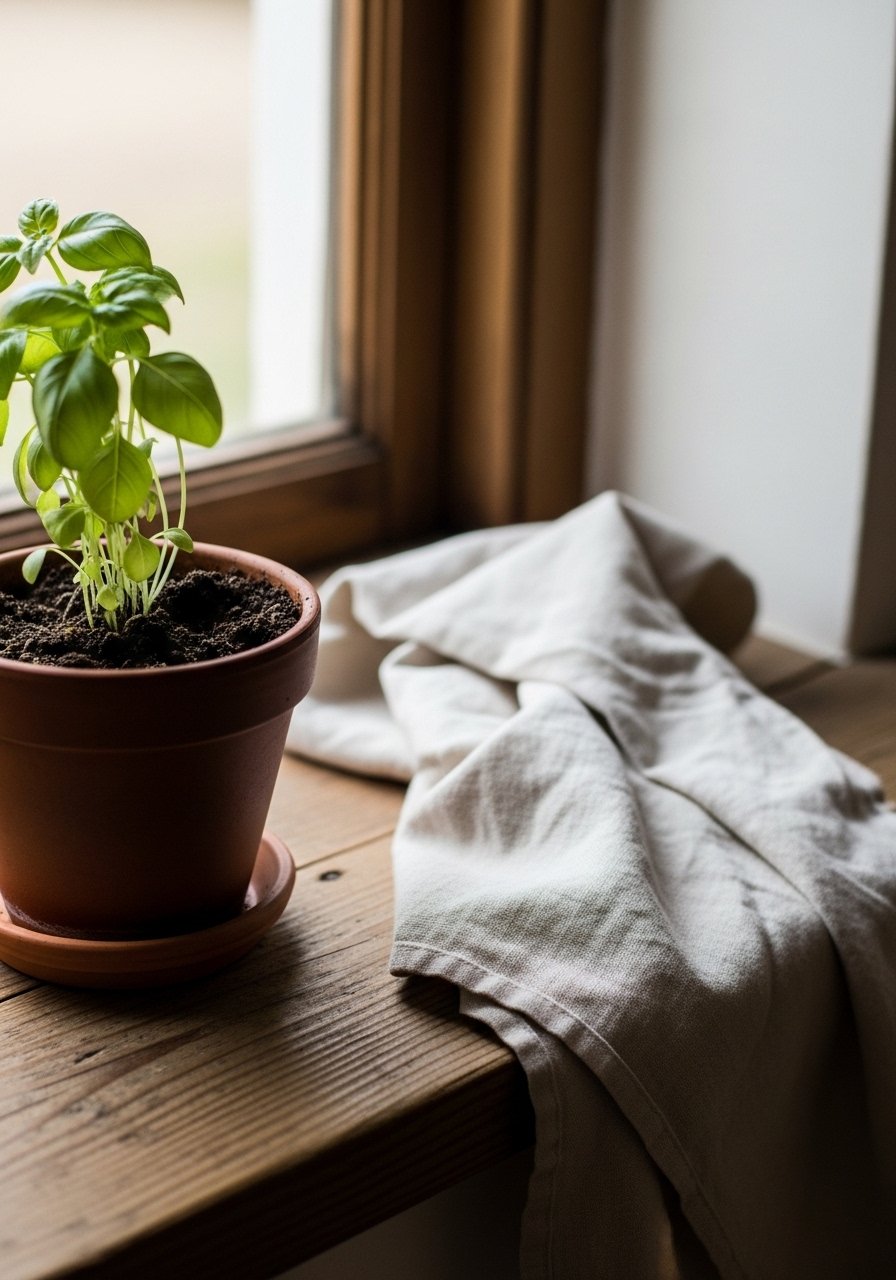
I add a single living element—often a potted herb or small plant near the sink. It softens hard surfaces and connects the kitchen to the rest of the home. The visual change is subtle but makes the space feel cared-for.
People overdo greenery. I keep it to one plant in the anchor area. The small mistake is grouping too many plants; that reads chaotic in a working room.
Step 4: Introduce vertical interest with art or a leaning frame
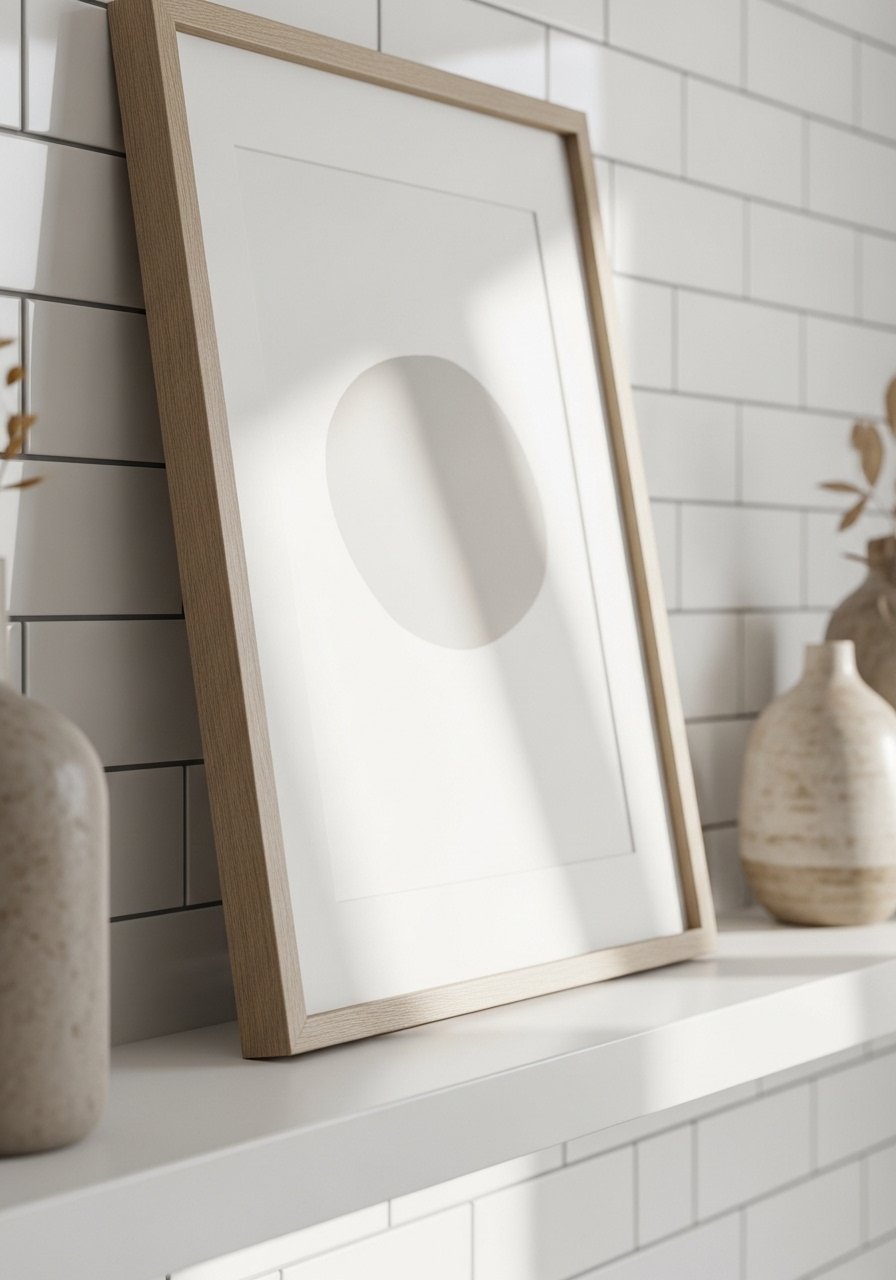
I lean a simple 8×10 framed print or place a small piece of art on a shelf. That vertical line balances the horizontal sweep of counters and a runner. The room immediately feels intentional and calm.
A common miss is hanging art too high. I keep the frame at eye level for someone standing in the kitchen. Avoid tiny art on a large wall; scale should feel deliberate.
Step 5: Finish with soft textiles and a single bowl of fruit
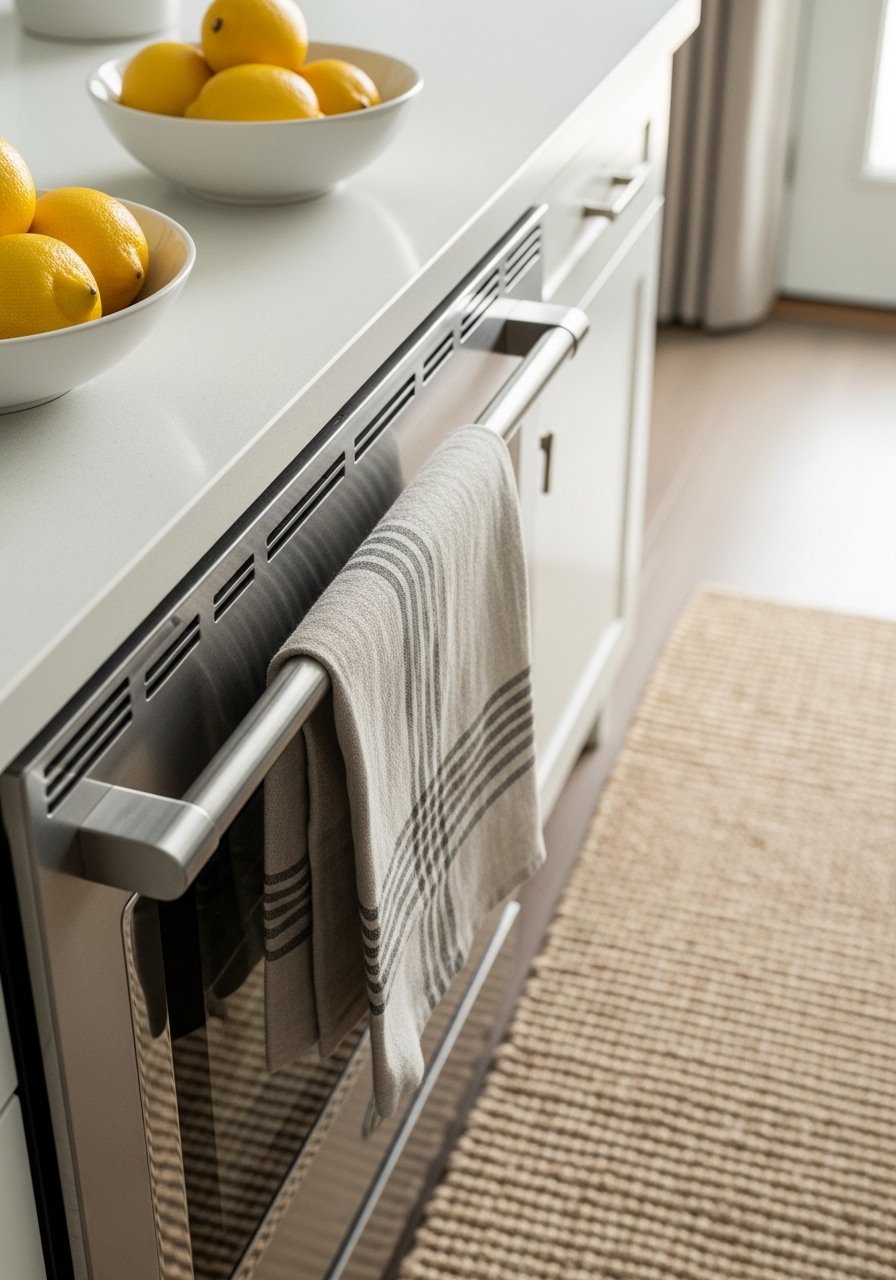
I finish by adding one soft textile—linen towels and a neutral runner—and a single fruit bowl. Textiles bring warmth and the bowl adds a practical pop of color. The whole kitchen stops feeling cold and reads lived-in.
People often add too many patterns. I stick to solids or subtle weave. A small mistake is overcrowding the island with decorative items; I keep one functional accent there.
Common mistakes I see (and how I fix them)
I often find kitchens that look staged or cluttered because every surface has “something.” I remove everything and start again with the anchor method.
- Trying to decorate every shelf at once. I style one shelf and leave breathing room.
- Mixing too many finishes. I choose one dominant texture (wood, ceramic, or woven).
- Hanging art too high. I lower it to a natural standing eye level.
Adapting this look for small kitchens or a tight budget
I work the same way in tiny kitchens—smaller scale, fewer pieces, same rules. A 2.5' runner and one small plant make a big difference.
- Swap a framed print for an unframed art card or postcard.
- Use a single cutting board as a backdrop instead of multiple items.
- Choose linen towels and a ceramic crock as inexpensive, high-impact pieces.
Mixing new simple decor with what I already own
I rarely buy everything at once. I mix a new herb pot or art print with existing dishes and a treasured bowl.
- Group like with like: place a new vase near an old pitcher.
- Edit ruthlessly: remove items until the group reads calm.
- Keep function first: if it gets in the way of cooking, it’s too much.
Final Thoughts
I start small. One anchor corner, one plant, one art piece. The kitchen settles quickly when choices are intentional. I trust texture and scale over trends—linen towels are a low-commitment place I usually begin. Small edits produce a calm, comfortable kitchen that actually feels like home.