

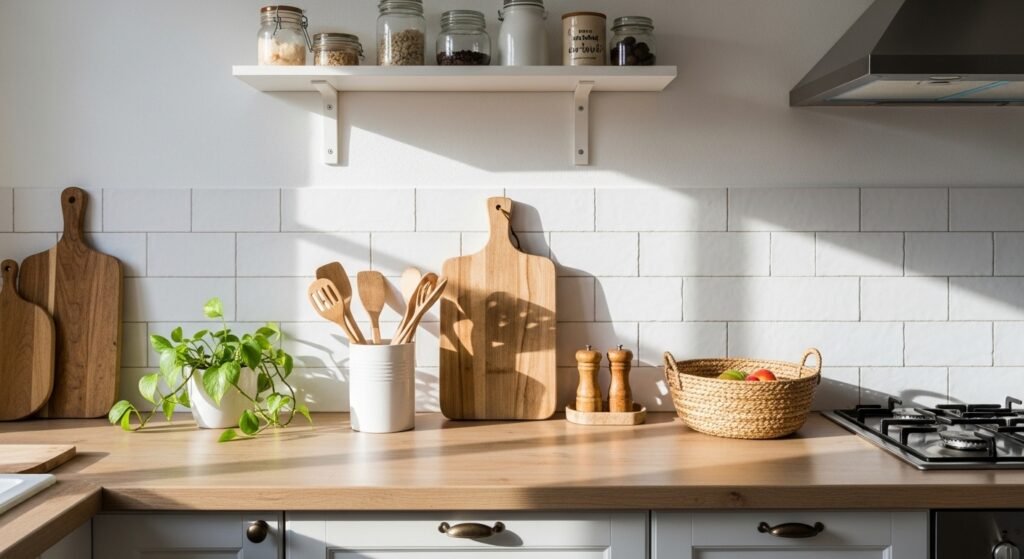
I used to stand in my kitchen and feel like something was missing — counters cluttered, walls too bare, the room felt cold instead of welcoming. I didn't need a renovation; I needed small, simple touches that make the room feel intentional.
This guide shows how to add a few pieces and placements that actually change the room's feeling.
How to Decorate a Kitchen With Simple Decor
You’ll learn how to make a kitchen feel lived-in and balanced using a few affordable pieces, smart placement, and texture. It’s the method I use when a room feels unfinished — calm, simple, and very achievable.
What You'll Need
- Linen dish towels, set of 4, natural (~$15–30)
- Matte ceramic utensil holder, white (~$20–40)
- Small faux potted plant, 6–8 inch fiddle leaf (~$12–30)
- Walnut cutting board, 12"x16" (~$30–70)
- Marble-look counter tray, 14"x6" (~$25–60)
- Handwoven seagrass fruit basket, medium (~$20–50)
- Minimalist wall clock, 10" matte black (~$30–80)
- Glass pantry canisters, set of 3 with bamboo lids (~$25–60)
Step 1: Clear a focal zone on the countertop
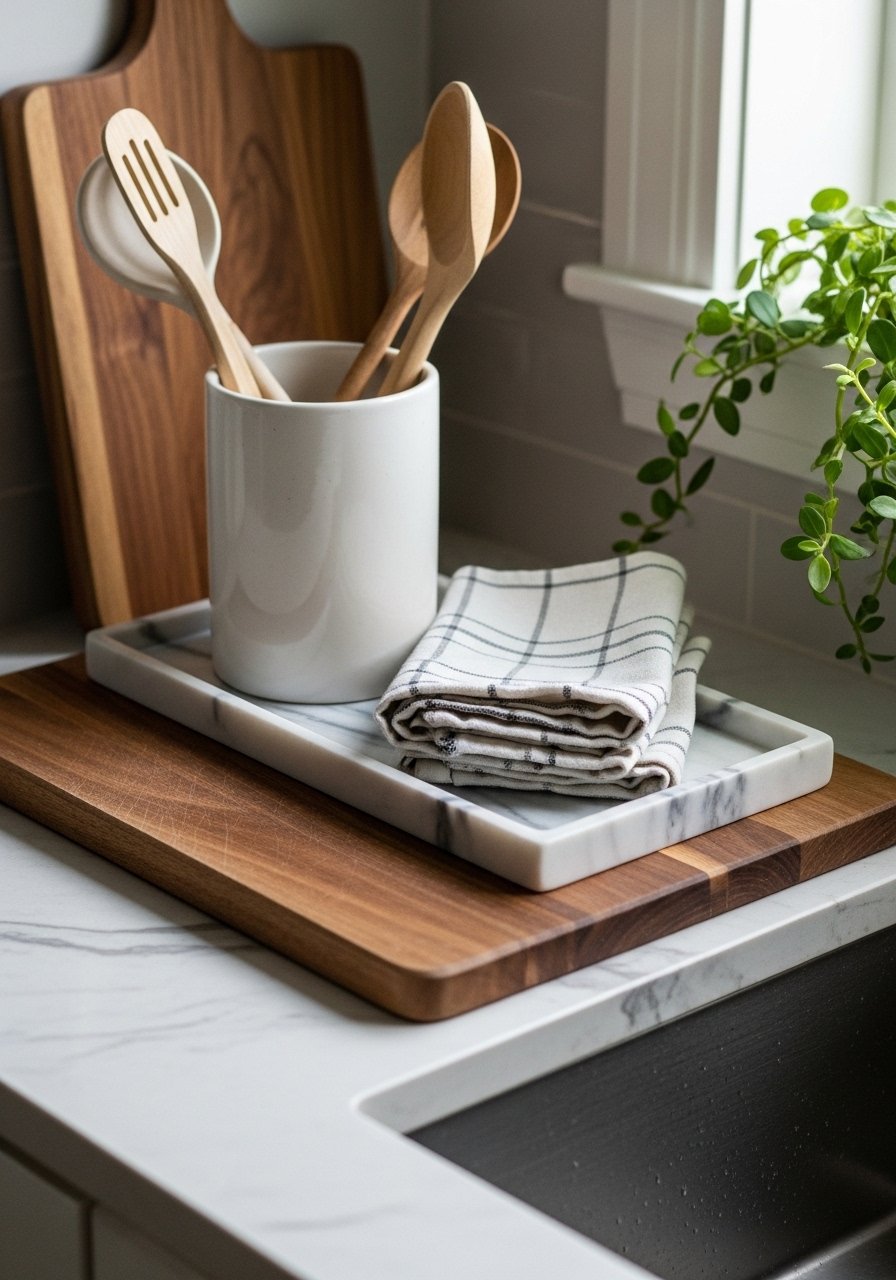
I start by clearing everything off a short stretch of counter. Then I pick one small focal zone — usually by the sink or next to the stove — and place a Walnut cutting board, 12"x16" and a Marble-look counter tray, 14"x6" together. The visual change is immediate: clutter becomes curated.
People often miss that a defined zone makes the whole kitchen read as intentional. Small mistake to avoid: piling every pretty item into the zone until it looks crowded. Leave breathing room.
Step 2: Add height and texture in groups
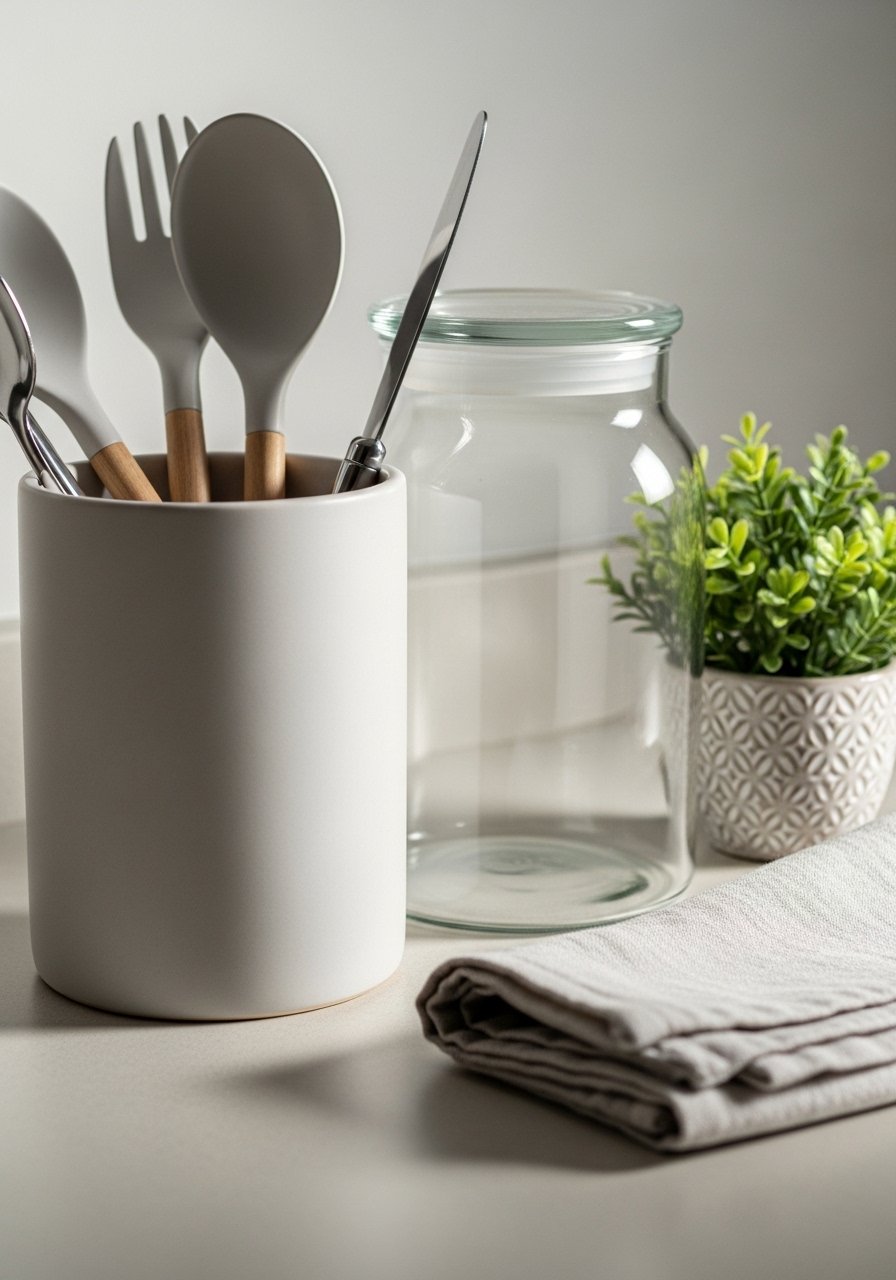
Next I layer three items of different heights — a Matte ceramic utensil holder, white, a glass canister, and a small faux plant. Height and texture stop the eye from sliding over the space. The counter looks balanced, not fussy.
One insight people miss: materials matter more than color. Wood, ceramic, and glass together read calm and collected. Mistake to avoid: lining things up like soldiers. Slight overlap and staggered heights feel more natural.
Step 3: Edit open shelves and counters for balance
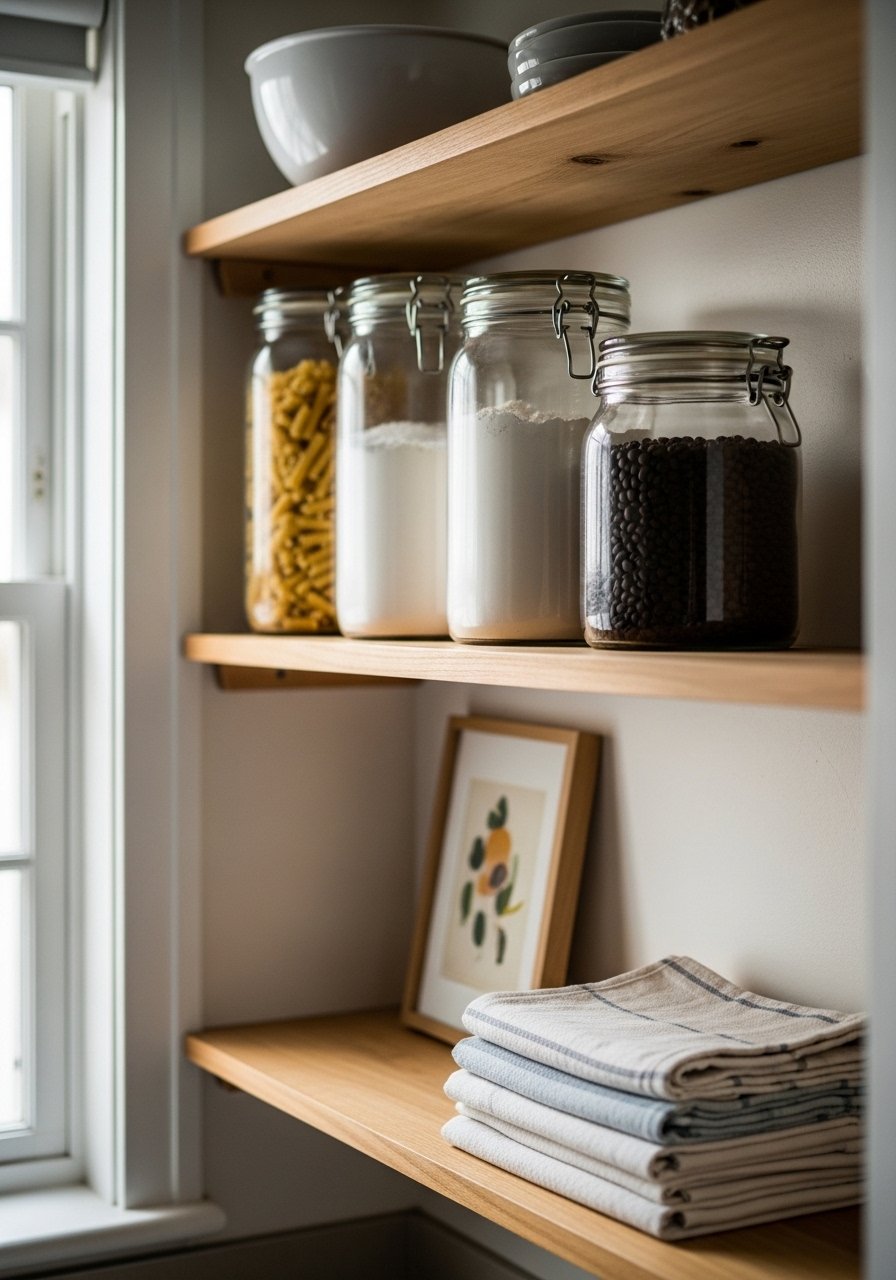
I step back and remove anything that competes with the focal zones. On shelves I keep groups of three or four items and leave negative space around them. Visually the kitchen breathes. Counters feel cleaner when I hide bulkier items in drawers or the pantry.
A common miss is symmetry pressure — things don't need to match perfectly. Small mistake: overfilling shelves because empty space feels unfinished. Resist the urge; empty space is intentional.
Step 4: Anchor the room with one wall piece and small vignettes
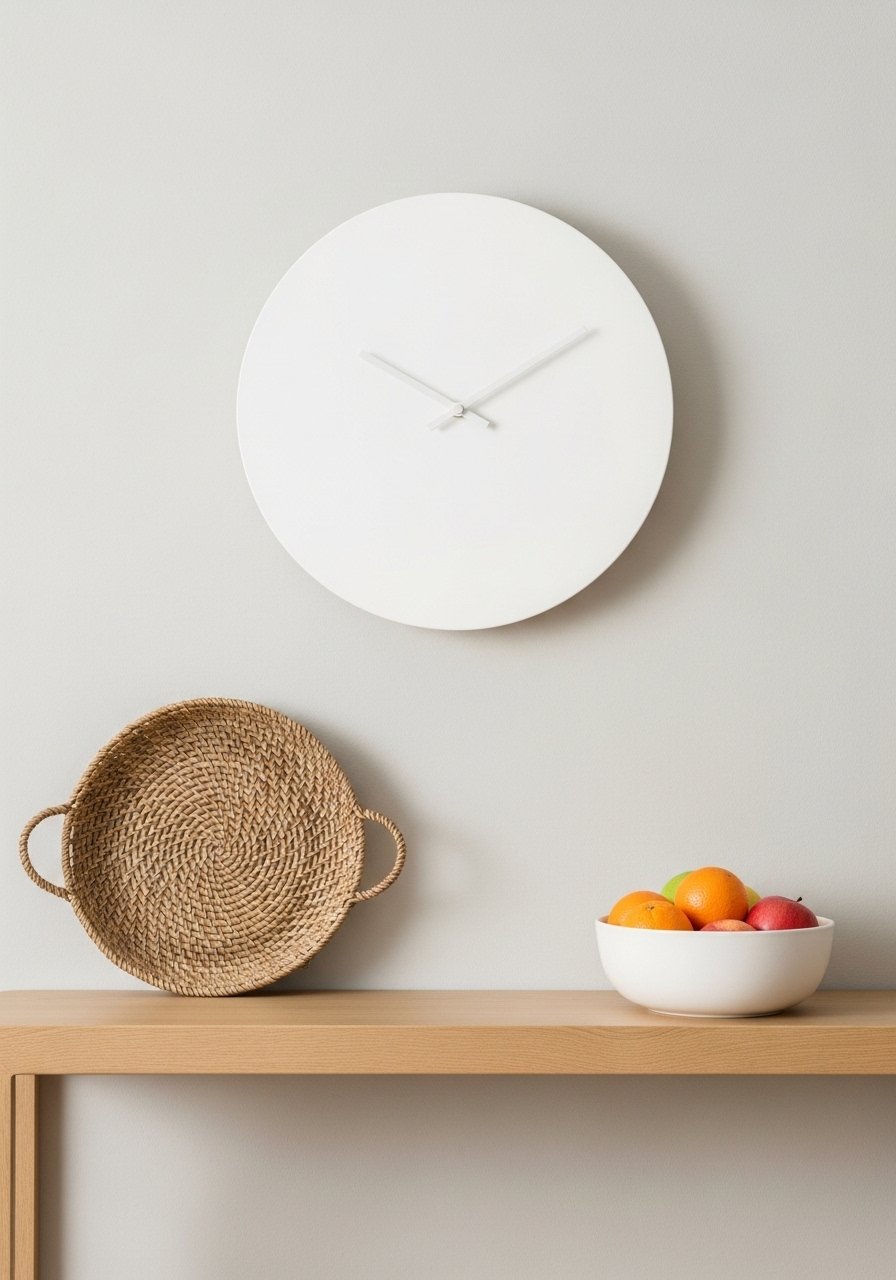
I choose one wall piece — often a Minimalist wall clock, 10" matte black — and keep other wall decor minimal. That single anchor point helps the room feel finished without shouting. Then I create small vignettes: a basket of fruit, a folded linen towel, a canister or two.
People miss how placement height changes the perceived scale. Mistake to avoid: hanging art or clocks too high. Keep the center of the piece at eye level for a comfortable feel.
Step 5: Keep it lived-in with small, repeatable habits
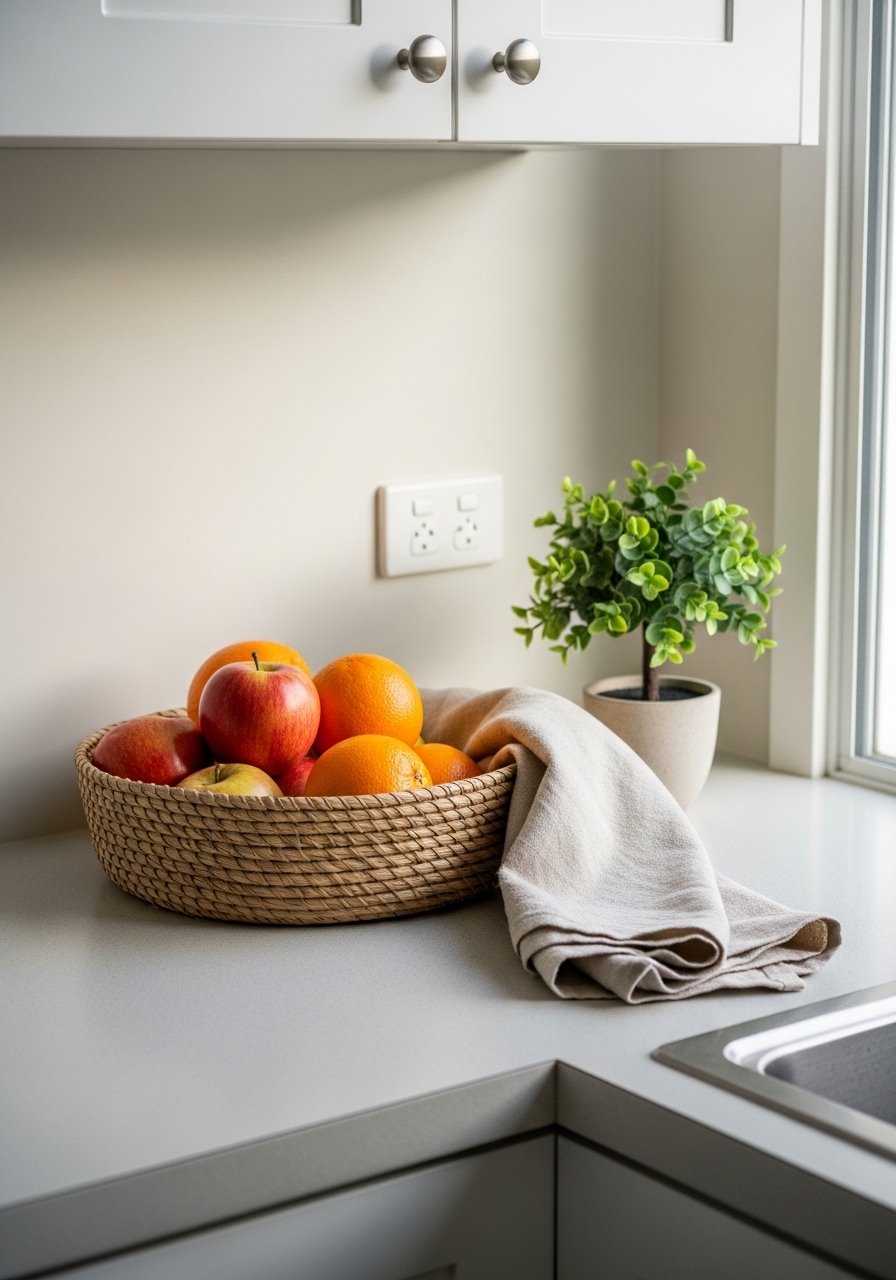
Finally, I make a habit of rotating one item weekly — a different fruit in the basket, a new folded towel, or a small plant moved to the counter. These tiny changes keep the kitchen feeling cared-for and not staged. Visually, rotation prevents the decor from becoming wallpaper.
Insight: low-effort upkeep beats perfect styling. Mistake to avoid: treating decor as static. If stuff becomes permanent clutter, simplify again.
Common mistakes I see (and how I fix them)
I often find people try to fill every surface. That makes the room look busy, not cozy. I fix it by picking one or two focal zones and editing the rest.
- Too many small items: combine or store similar things.
- All the same height: add a tall plant or a low tray for contrast.
- Hanging art too high: lower it to eye level.
I keep a mental checklist: one anchor, one texture change, one plant.
Adapting this look for small kitchens or a tight budget
In a small kitchen I scale everything down. One tray and one plant can do the job. I use multitasking pieces: a cutting board that also serves as a display base, or canisters that store staples and look tidy.
Budget tips: linen-look towels ($15–30), a faux plant ($12–30), and a simple utensil jar ($20–40) deliver big visual returns.
- Choose pieces that work both as tools and decor.
- Buy one high-impact item, not ten small ones.
How to mix simple decor with what you already own
I never throw out pieces that mean something. Instead I use neutral anchors — a wood board, glass canisters, a matte clock — to tie them together. Old patterns work when paired with plain textures.
If you have a colorful toaster or vintage kettle, place it as the star in a curated zone and keep the rest neutral. Small adjustments — swapping a dish towel or moving a plant — help the whole look feel cohesive.
- Use one neutral material across the room (wood, ceramic, or glass).
- Let sentimental items sit in small, edited vignettes.
Final Thoughts
Start with one small corner and one swap — a tray and a plant, or new linen towels. I promise the room will feel calmer after that single change.
Simple things, placed thoughtfully, make the kitchen feel lived-in and intentional without fuss. If you want an easy place to begin, try the linen dish towels as a low-commitment update.