

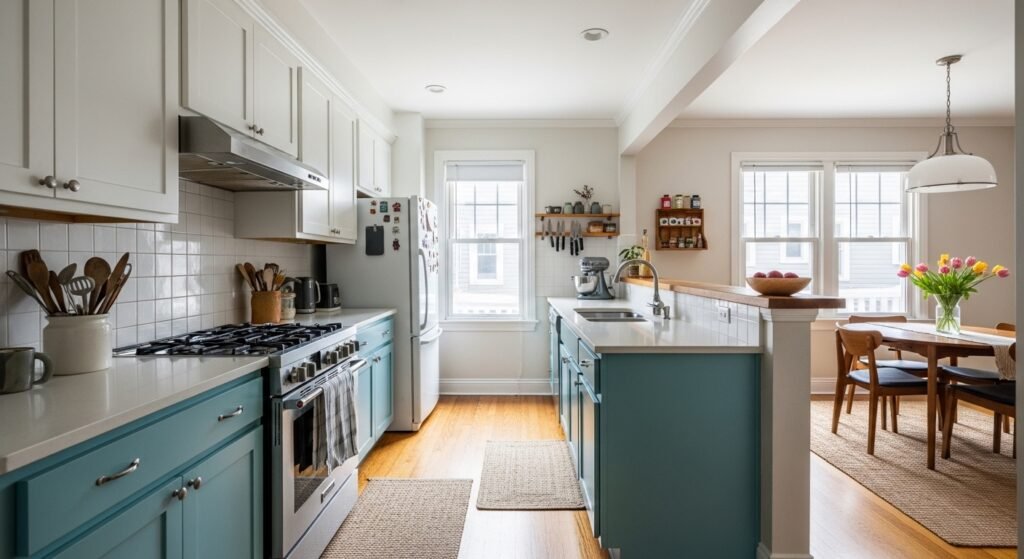
My kitchen felt like a showroom sample when I moved in. Everything looked neat but cold. Bare floors made the space echo. Rugs seemed obvious, but every choice felt wrong.
I tried runners that were too wide. I bought soft mats that trapped crumbs. It took several adjustments to stop rugs from looking like afterthoughts.
I've noticed a simple rule fixes most of it. Place rugs for how you move through the room, not where you think they should be pretty. That approach gives a grounded, lived-in kitchen that still cleans easily.
What You'll Need
- Flatweave kitchen runner, 2.5×8 ($40 to $120). Durable and low pile, the kind I use for main aisles.
- Waterproof washable sink mat, 20×34 ($25 to $60). Machine washable. Use it where spills happen.
- Jute area rug, 8×10 ($90 to $160). Natural texture for an open-plan dining nook.
- Rug non-slip pad, cut-to-size, 2-pack ($12 to $30). I cut mine to match runners and small mats.
- Round braided rug, 4-foot ($30 to $90). Small breakfast-nook anchor, easy to tuck.
- Chair mat for kitchen high stool, 24×36 ($20 to $50). For bar areas that see heavy foot traffic.
- Rug spot cleaner spray, 16 oz ($8 to $20). Worth keeping under the sink for quick spills.
Step 1: Measure the traffic and choose one main runner
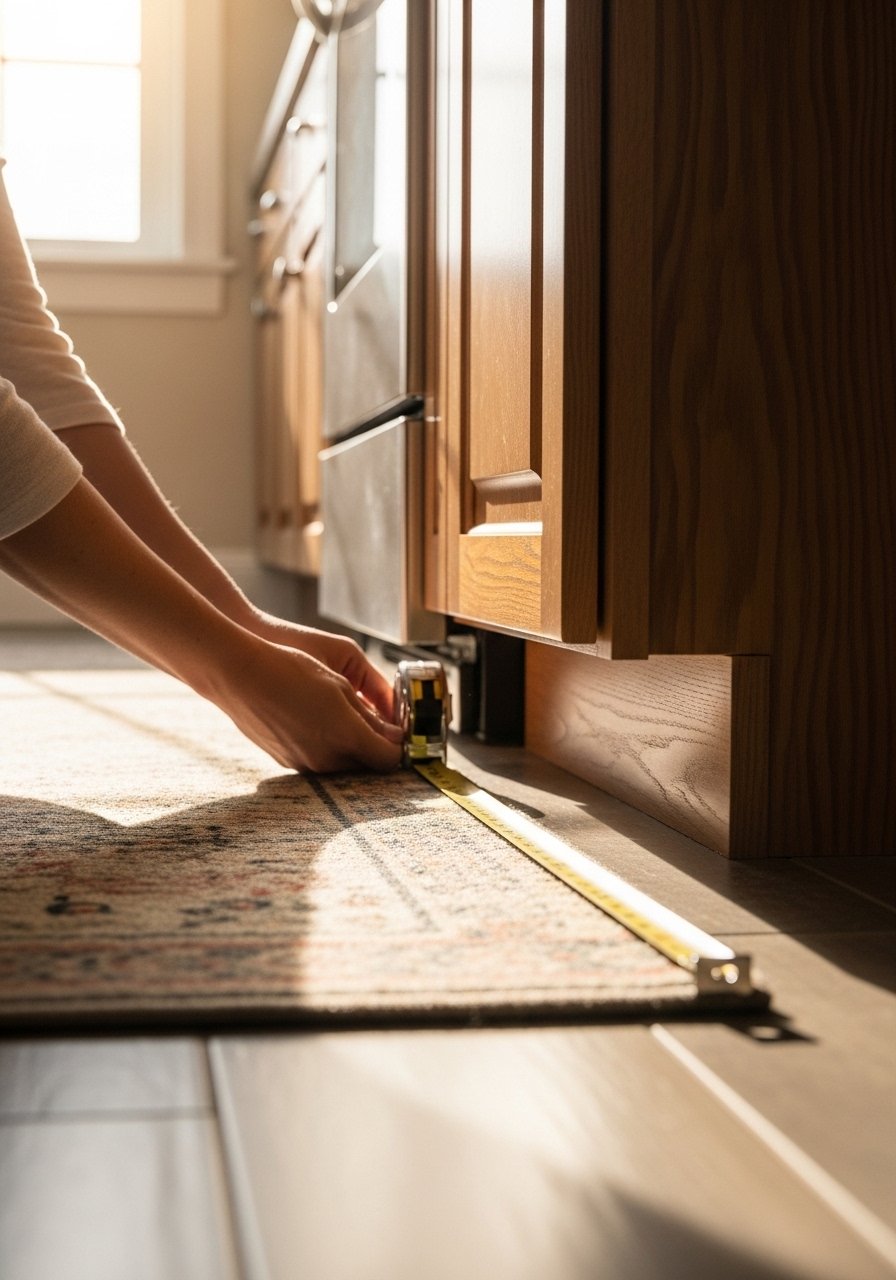
Walk the route you use most. I mark where feet land between fridge, sink, and stove. The main runner should leave 3 to 4 inches of floor showing on each side. That spacing makes the runner look intentional without crowding cabinet doors.
What visually changes is immediate. The aisle reads as a path, not a random rug. People often pick a runner that is too narrow. Another common mistake is letting the rug run under cabinet doors. Measure door swings first. If in doubt pick flatweave material so it stays low and easy to clean.
Step 2: Place washable mats at active workstations
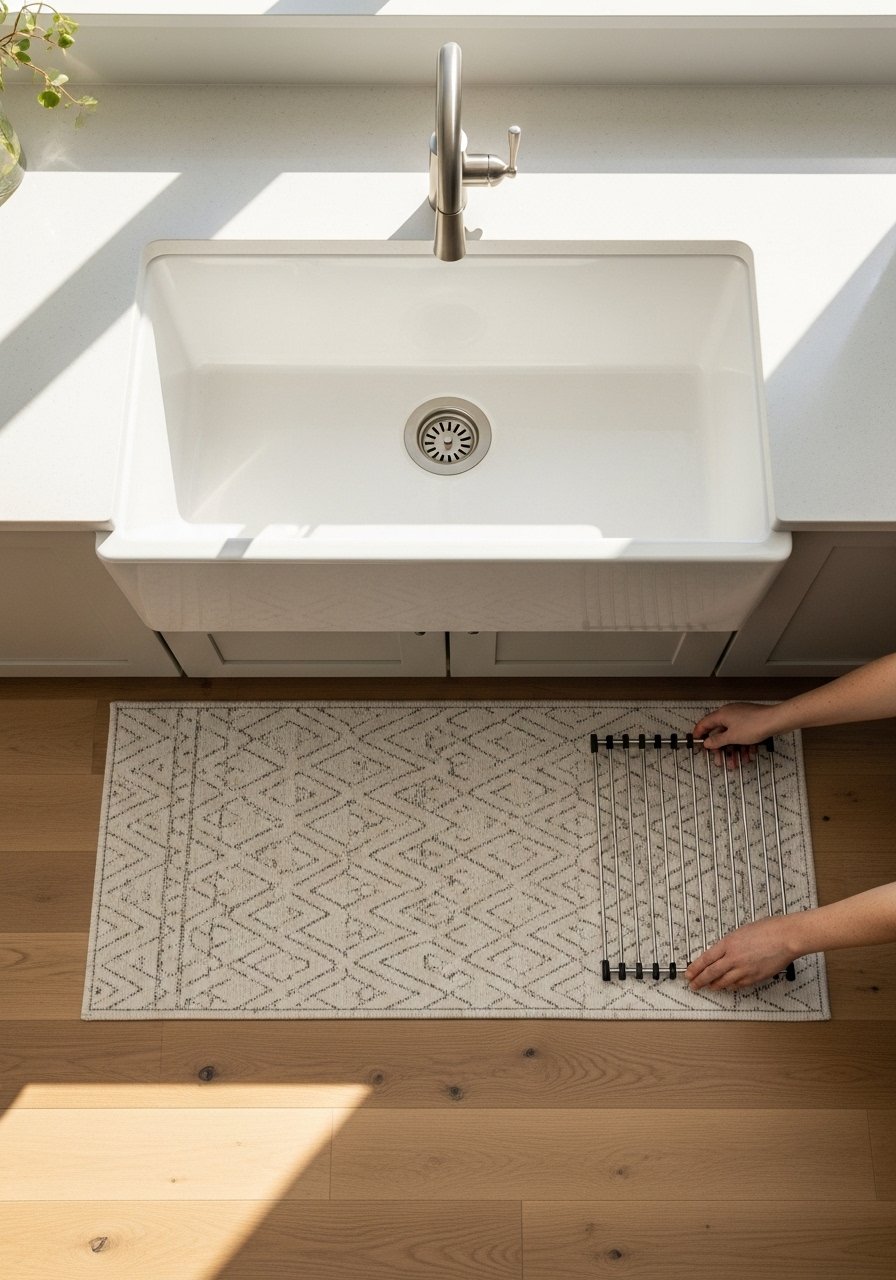
This is where the kitchen stops feeling fragile and starts being usable. Put a waterproof, washable mat directly in front of the sink, and a slim mat at the stove if you stand there a lot. The sink mat should match the sink width or be about two thirds of it. That proportion keeps the mat functional and tidy.
People miss matching rug performance to the task. A plush rug will hide coffee spills and smell. A washable mat cleans in minutes. Avoid piling rugs on top of each other in work zones. That creates trip hazards and hides spills.
Step 3: Anchor dining and casual seating with proportional rugs
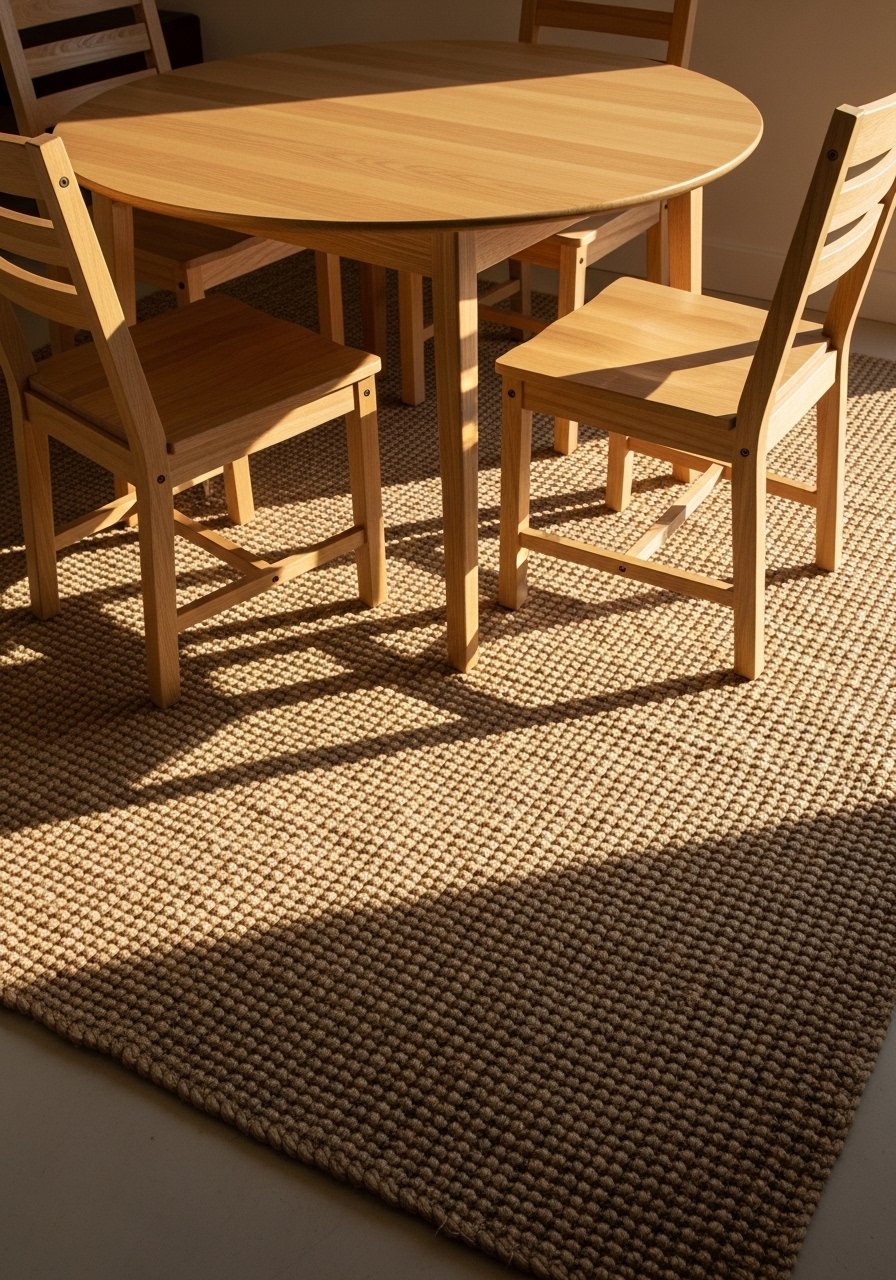
Under a dining table the rug must extend about 24 inches beyond the edge to allow chairs to pull out. For a small two-seat table a 4-foot round or a 5×7 jute pattern often works. When the rug is large enough the area reads as one cozy zone. When it is too small the table looks like it is floating.
One mistake is choosing a rug that matches the cabinet color exactly. That removes contrast and flattens the room. Pick texture over exact color match for depth. If you have an open plan, orient the rug edges to align with cabinetry lines to keep visual flow.
Step 4: Use the right pad and maintenance routine
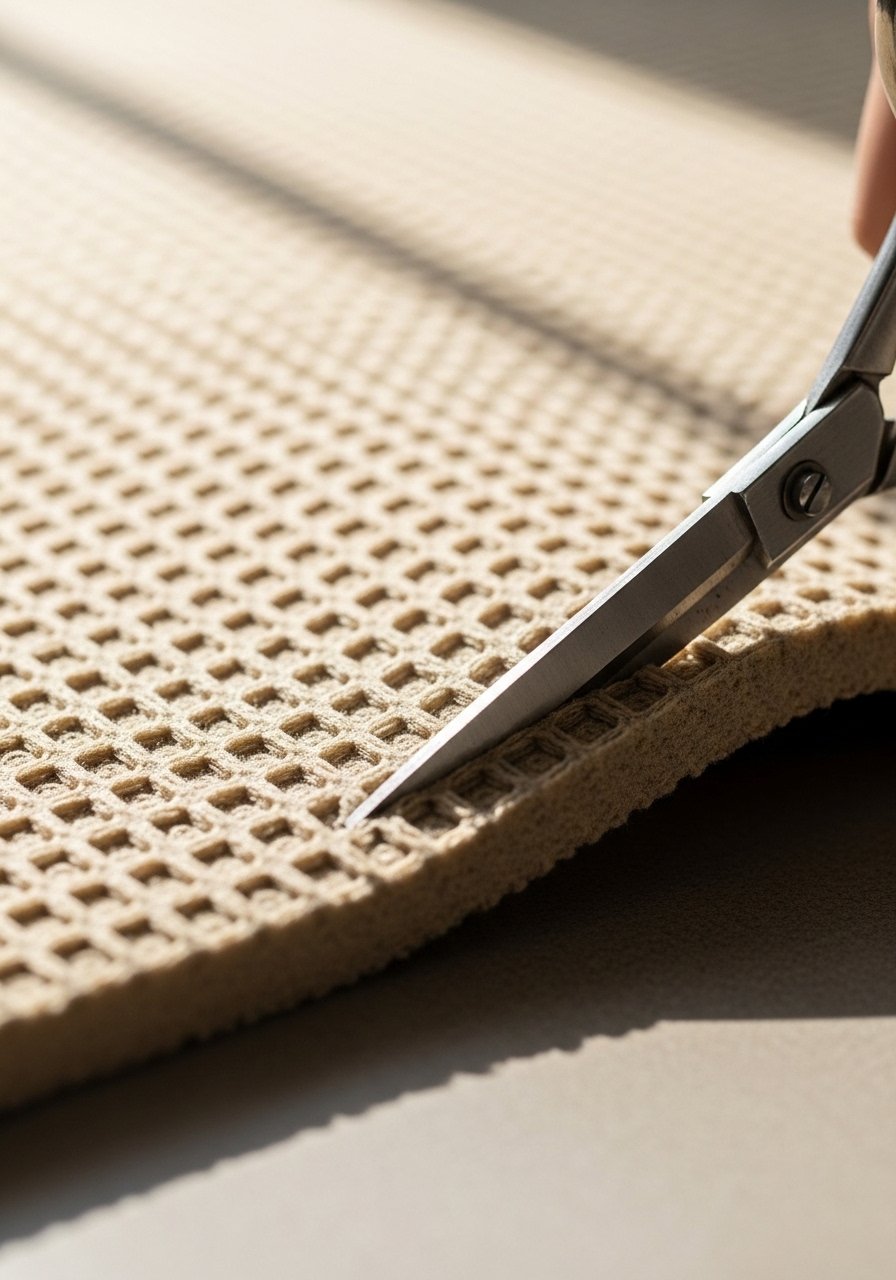
A pad is not optional. It prevents slipping and extends life. Cut the pad so it sits 1 to 2 inches inside the rug edge. That small gap keeps edges from catching and looks cleaner. For thin flatweave runners I use a low-profile pad. For jute I pick a thicker pad to soften the feel underfoot.
People underestimate cleaning. Keep a spot cleaner under the sink and blot spills immediately. The biggest error is buying a shag rug for kitchen work. It traps crumbs and stains and will look tired quickly.
Step 5: Balance color and texture to make rugs feel intentional
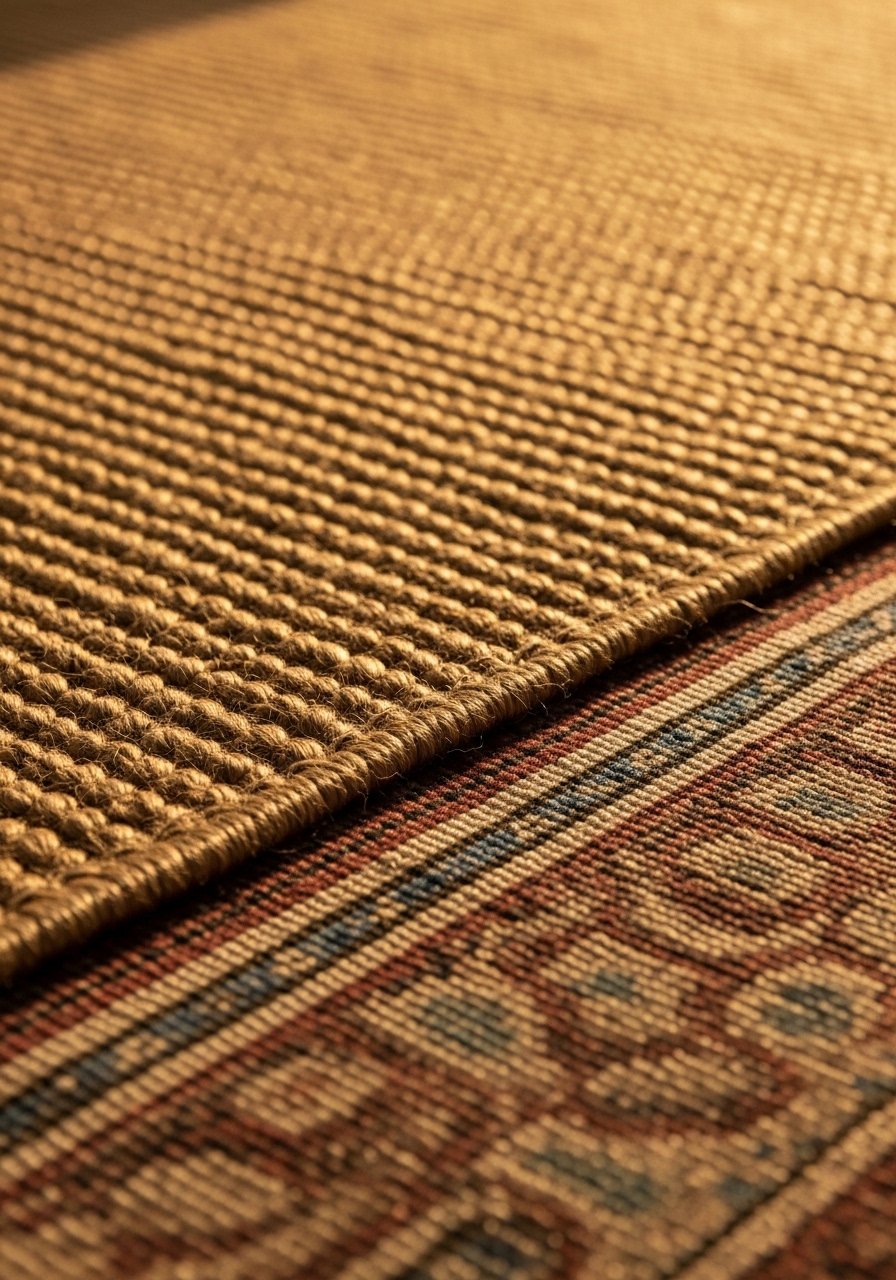
Treat rugs like furniture pieces. Repeat a color or tone from your cabinets or decor once or twice elsewhere. I usually repeat one neutral and one accent. That repetition ties separate rugs together. Keep one area relatively calm and let another carry more pattern.
A common oversight is aligning patterns on different rugs so they clash. Instead, offset patterns and think in odd numbers when grouping textures. Avoid placing two high-pattern rugs next to each other. The room reads as layered and balanced when one rug is simple and another has personality.
Common Rug Mistakes That Make Kitchens Look Messy
I keep seeing people buy rugs that look great online but fail in a real kitchen. Scale and function are the usual problems. Small rugs under a large table. Plush rugs at a sink. Too many patterns competing.
Simple checklist:
- Measure traffic and clearance first
- Pick flatweave or washable material for work zones
- Match rug size to table plus 24 inches per side
- Use a pad trimmed 1 to 2 inches inside the rug edge
Fix those and the room instantly looks edited and usable.
Making This Work in a Small Kitchen
Everywhere I look this year I see small kitchens using rugs to define zones. In narrow kitchens pick one focal rug, usually a runner, and skip a second area rug. A smaller jute circle under a corner table also works.
When space is tight:
- Choose low-pile, flatweave material
- Keep runner width that leaves 3 to 4 inches of exposed floor each side
- Use washable mats at sink and stove rather than several decorative rugs
This keeps movement easy and cleaning manageable.
How to Mix Rug Textures with Cabinets and Floors
I keep my cabinet finishes as a guide. Warm wood calls for natural fibers like jute or braided wool. Cool gray cabinets pair well with a flatweave in muted pattern. Match the rug texture to the room use. High-traffic areas need tighter weaves.
An example: pale shaker cabinets, medium-tone oak floor. I chose a neutral patterned runner and a round braided rug in the breakfast nook. The runner handles traffic. The braided rug adds warmth under the table. The pairing keeps the palette calm and layered.
Start with One Zone, Not the Whole Room
I switched to this six months ago and it saved time and money. Pick the busiest spot first. The sink or the main aisle is a low-risk test. Buy a washable mat for that area and live with it for a week.
If it feels right, add a runner or a dining rug next. Small choices build into a balanced whole. Keep measurements handy and a good rug pad in your shopping cart.