

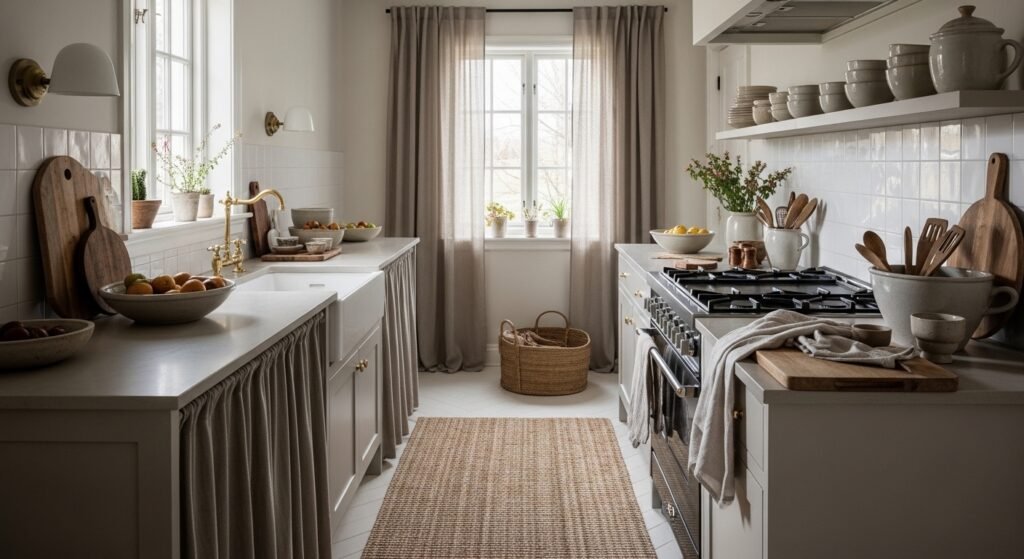
I stared at my all-white kitchen and felt something was missing. Everything was clean but cold, like a showroom that hadn’t been lived in.
Neutral kitchens are easy to overdo. I’ll show how I make a neutral palette feel intentional and warm, using simple placement, texture, and a couple lived-in touches.
How to Decorate a Kitchen With Neutral Colors
I’ll show how I arrange surfaces, pick textures, and balance warm and cool neutrals so a kitchen reads intentional, not bland. This is the method I use when a room feels unfinished—soft layers, practical accents, and quiet contrasts.
What You’ll Need
- Neutral jute runner rug, 2.5×8 ft (~$80–150)
- Linen kitchen curtains in natural, 54×84 (~$30–80)
- Stoneware dinnerware set, 16-piece, matte beige (~$60–140)
- Ceramic utensil crock, white speckle (~$20–40)
- Solid oak cutting board, 18×12 (~$30–70)
- Textured tea towels, set of 4, oatmeal linen (~$18–30)
- Woven placemats, round seagrass, set of 4 (~$25–50)
- Marble-look countertop tray, 14×8 (~$20–45)
Step 1: Choose two neutrals and an anchor tone
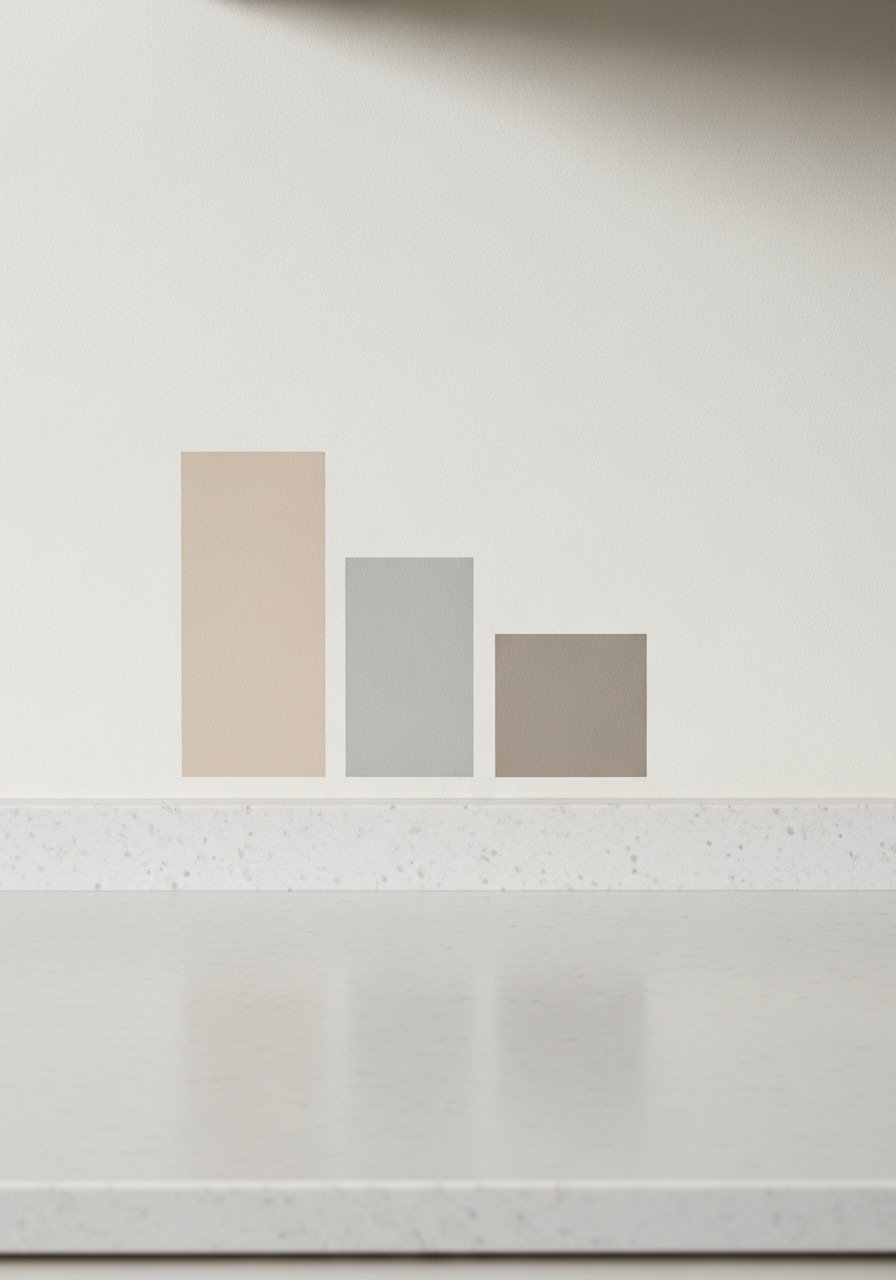
I start by narrowing the palette. I pick one warm neutral (like a beige or warm greige), one cool neutral (soft gray or off-white), and a stronger anchor tone—usually a wood or deep taupe. That keeps the room calm but layered.
Visually, the space stops reading flat when there’s contrast between a light wall and a richer anchor. I often miss how much light changes a white; it can read blue in shade. Mistake to avoid: choosing five near-identical whites so nothing reads as an intentional choice.
Step 2: Layer textiles for instant warmth
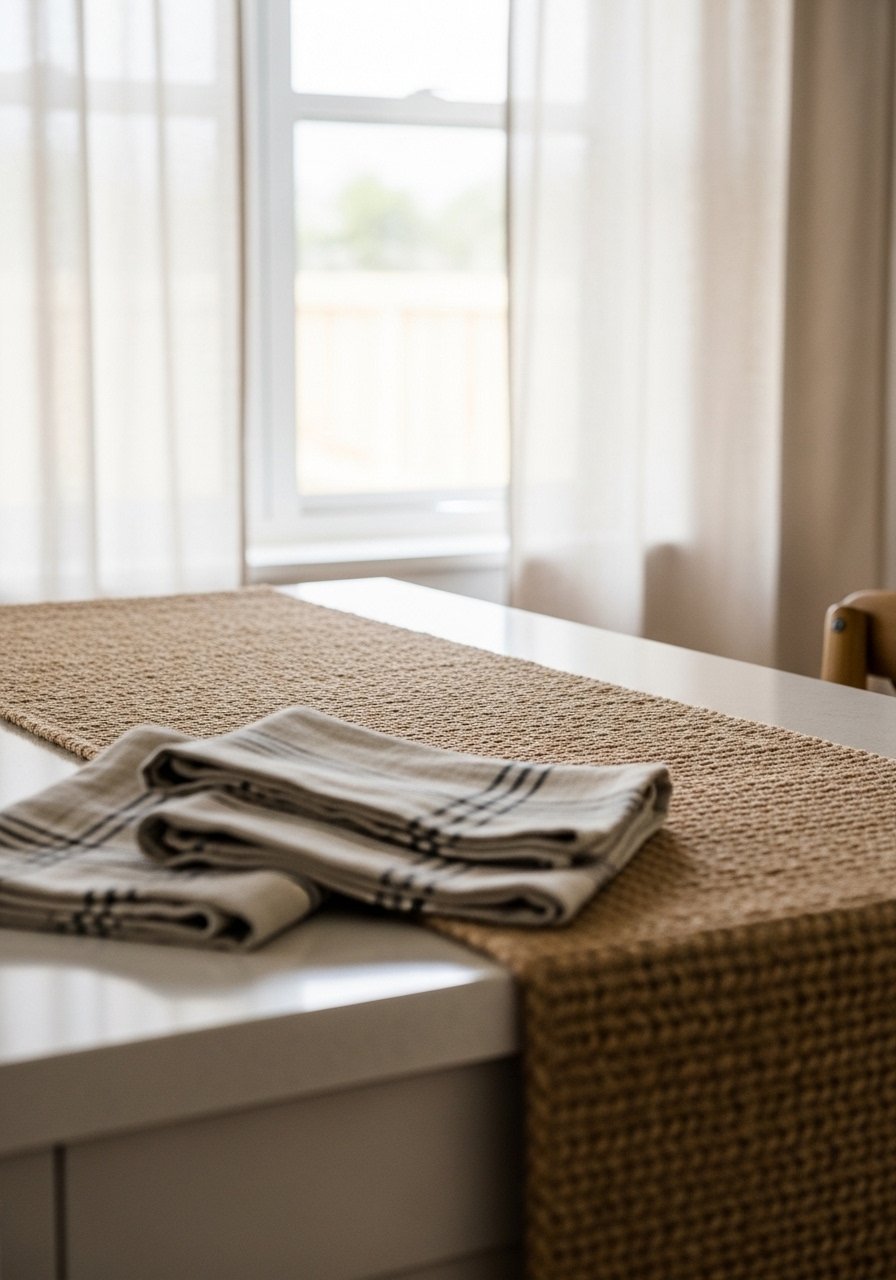
I add textiles next. A jute runner and linen curtains give weight and movement. I fold linen tea towels and let one hang off the counter to suggest use. Woven placemats on the table keep the eye moving.
What changes is immediate: the room feels softer and more tactile. People often miss the scale of textile—small, coarse weaves anchor a large floor, while fine linens suit open shelving. Mistake to avoid: piling every textile in one corner. I spread textures around to keep balance.
Step 3: Anchor surfaces with natural materials
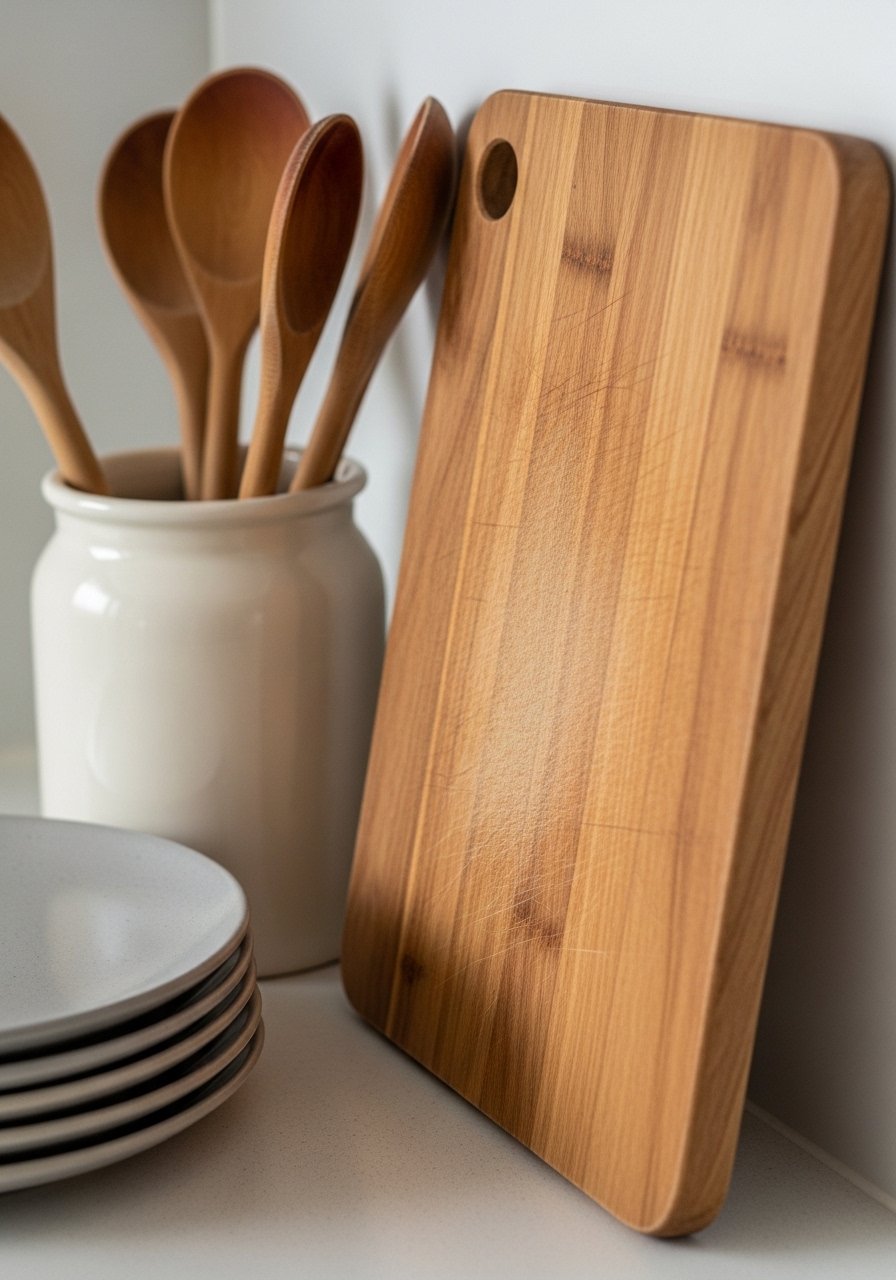
I place wood and ceramics where hands touch most—cutting board by the prep area, a ceramic crock near the stove, stoneware stacked on open shelves. Natural materials bring warmth that paint alone can’t.
The visual change is subtle but powerful: the kitchen reads lived-in. One insight I learned is that imperfect surfaces (small knife marks, glaze variations) make neutral schemes feel honest. Mistake to avoid: everything new and perfectly matched. I keep one item with wear to add personality.
Step 4: Edit countertops and corral items
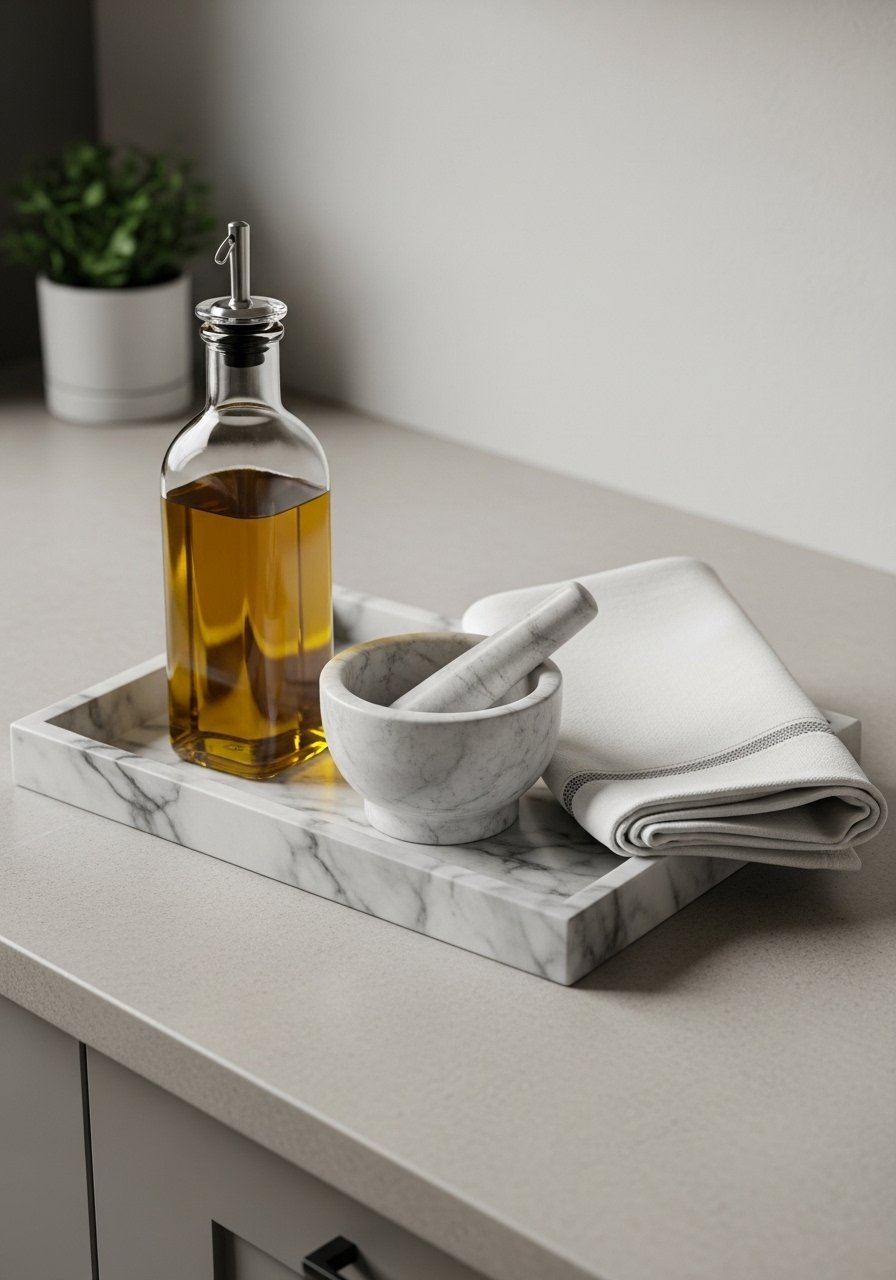
I clear most counters and corral the rest on a tray. A marble-look tray or a single wooden board groups daily items so the eye has rest. I keep only tools I reach for often out and put the rest away.
Visually, the counters stop screaming for attention. I often miss the power of negative space; empty surface is part of the design. Mistake to avoid: arranging too many symmetrical stacks. I prefer a small cluster plus empty space for balance.
Step 5: Add lived-in details and keep them seasonal
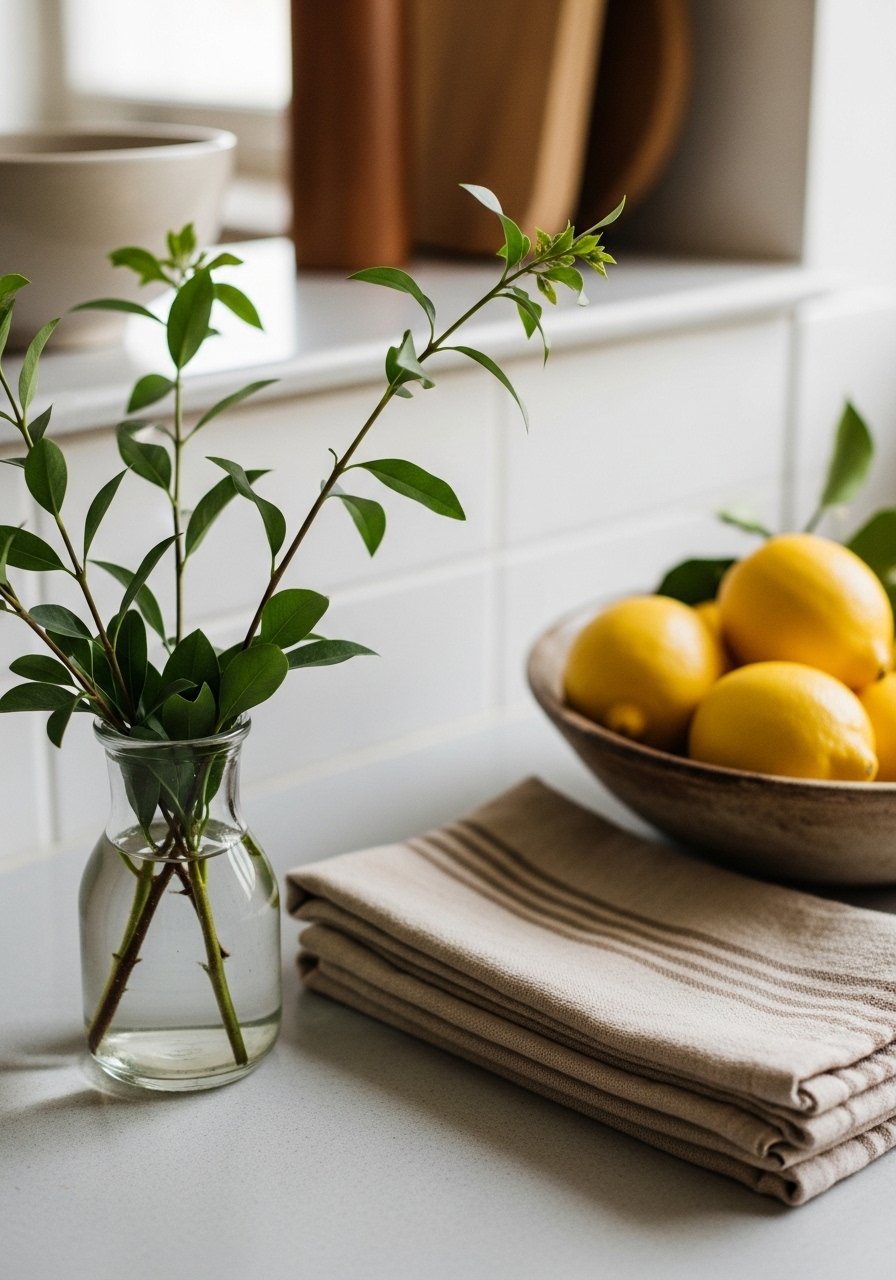
I finish with small, changeable details: a linen towel, a small vase with greenery, a bowl of citrus in winter, fresh herbs in summer. These are the touches that make neutrals feel lived-in instead of styled.
The room immediately feels warm when I add a little movement. One insight is to edit often—swap one item seasonally. Mistake to avoid: matching every detail to the palette. I like one subtle contrast (a warm wood or a dark utensil) to keep the eye interested.
Common mistakes with neutral kitchens
I see the same missteps. First, people treat neutrals as boring neutrals. I treat them as layers. Second, everything being the exact same white kills depth.
- Too many identical surfaces—mix warm and cool tones.
- Over-accessorizing—stop when the eye rests on a few points.
- Forgetting functional wear—leave one item that shows use.
Adapting this look for a small kitchen or a tight budget
I work with what I have. In a small kitchen, I focus on one or two swaps: an inexpensive textured tea towel set or a small seagrass runner brings big change. On a budget, I choose visible-touch items (towels, a board, a crock) rather than replacing cabinets.
Bullet tips I use:
- Swap textiles first—curtains or towels (~$20–80).
- Buy one natural-material piece at a time—cutting board or tray.
- Edit daily clutter; often the change is decluttering, not shopping.
Mixing neutrals with what I already own
I always match tones, not exact colors. If I have a dark chair or an old pendant, I pull a shade from it into textiles or ceramics. I let existing pieces anchor the palette rather than forcing them out.
Practical steps I take:
- Pull a color from an existing item and echo it in small accents.
- Use a neutral base so bold or vintage pieces read intentional.
- Keep hardware and fixtures simple so materials stand out.
Final Thoughts
I start small. A set of oatmeal linen tea towels or a seagrass runner is enough to change how a kitchen feels. I tell myself I can edit later, and that keeps the process easy.
I trust texture over exact matches. Once I place a few lived-in pieces, the room stops feeling like a showroom and starts feeling like mine.