
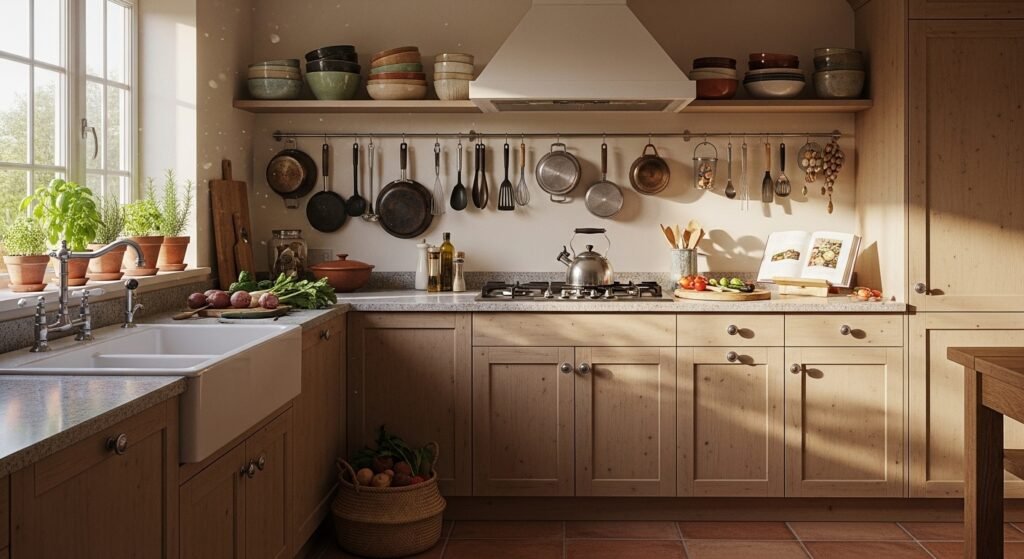
Sometimes my kitchen looks like a pretty display that never quite works. Counters collect one-off tools and empty corners make the room feel unfinished.
I kept flipping between wanting clean surfaces and needing things at hand. I learned to use decor that actually works so the space feels comfortable, balanced, and lived-in.
How to Decorate a Kitchen With Functional Decor
This is the method I use every time a kitchen feels half-finished. You’ll learn how to place useful objects so counters, shelves, and walls read like calm, intentional decor. The result is an organic-modern, comfortable kitchen that looks put-together and feels easy to use.
What You’ll Need
- Ceramic utensil crock in matte white, 6″ tall (~$18–35)
- Set of glass canisters with bamboo lids, 500–1500ml (~$25–60)
- Solid acacia wood cutting board, 18×12 inch (~$30–75)
- Magnetic knife strip, 12–18 inch, matte black (~$25–55)
- Woven wire storage baskets, medium set of 2, bronze finish (~$20–45)
- Linen kitchen towels, set of 4, natural (~$15–30)
- Stoneware prep bowls, set of 3, neutral glaze (~$20–45)
- Wall-mounted rail with hooks, matte black, 24 inch (~$25–50)
Step 1: Create one anchor zone on the busiest counter
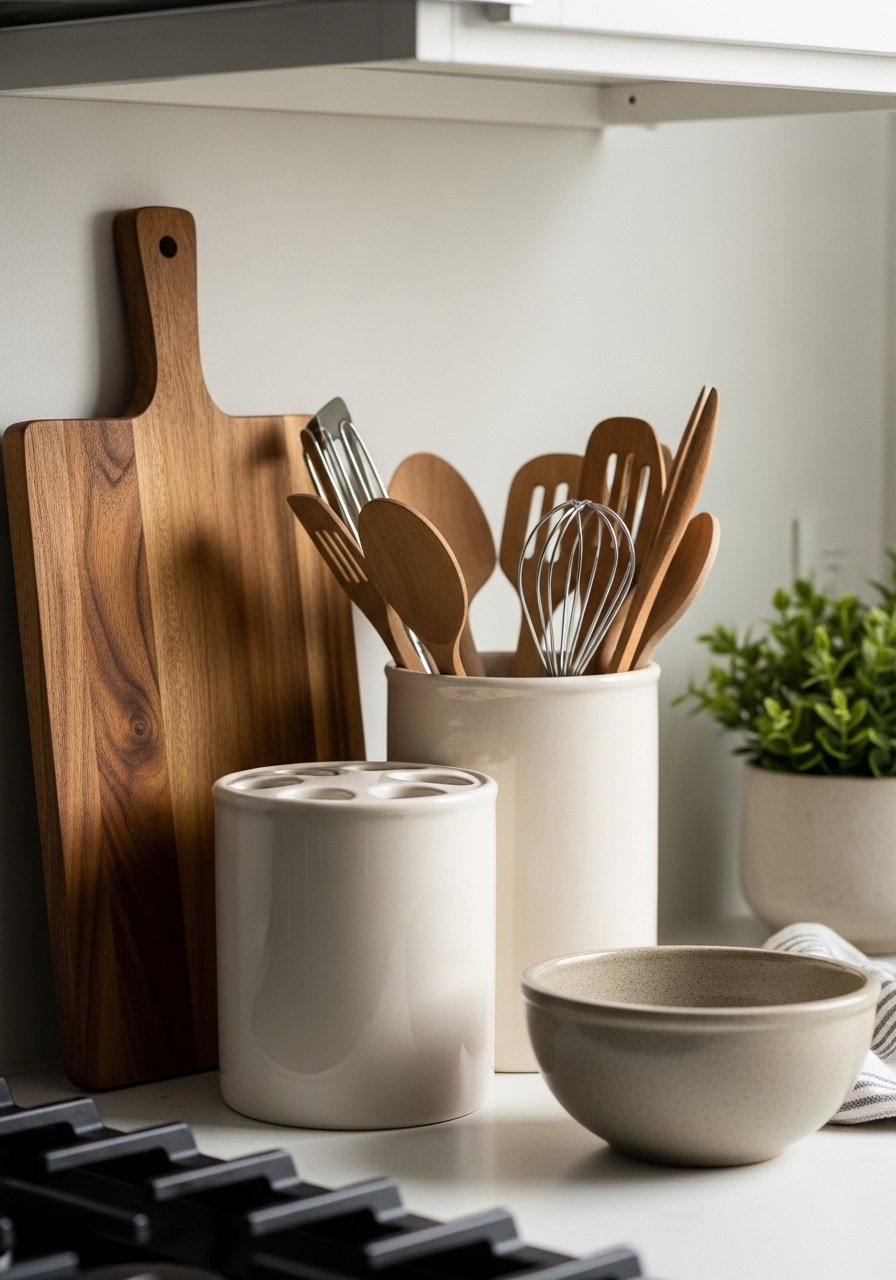
I start by picking one small area as the visual anchor—usually the counter by the stove or sink. I cluster three functional pieces: a utensil crock, a cutting board turned sideways, and a prep bowl. Together they read like a vignette instead of random clutter.
What changes: counters immediately look intentional. Insight most people miss: leaning a cutting board vertically creates height and keeps the area from feeling flat. Mistake to avoid: overcrowding the anchor—three objects with varied heights beat six small things.
Step 2: Put function on the wall to free the counters
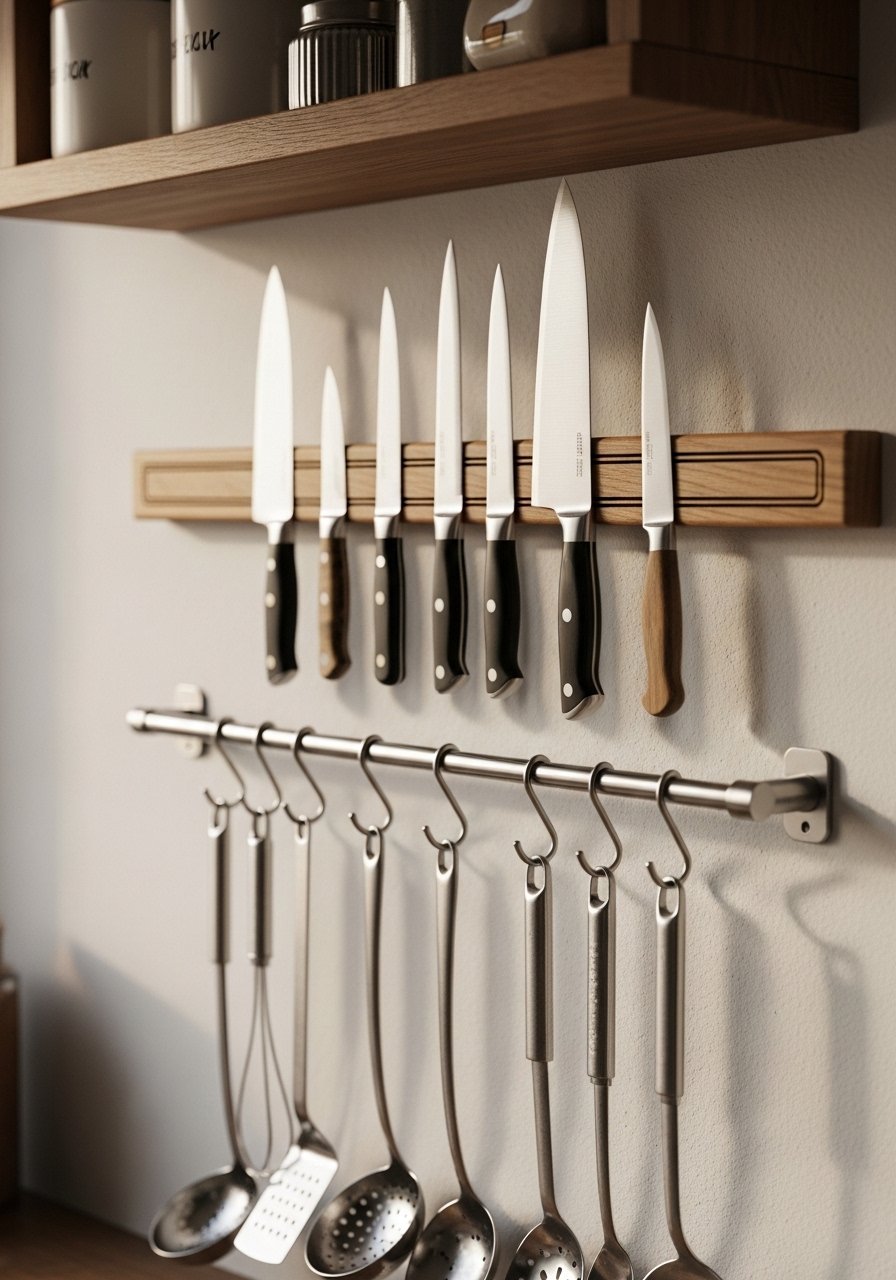
I move frequently used tools up to eye level. A magnetic knife strip and a short wall rail with hooks are both handy and decorative. Hanging things vertically clears surface space and creates a rhythm along the wall.
What changes: visual clutter drops and the eye follows a line, which makes the room feel larger and cleaner. Insight people skip: keep the rail short and close to prep areas for comfort. Mistake to avoid: plastering every wall with hooks—leave breathing room so each piece reads like part of the design.
Step 3: Style open shelves with real storage
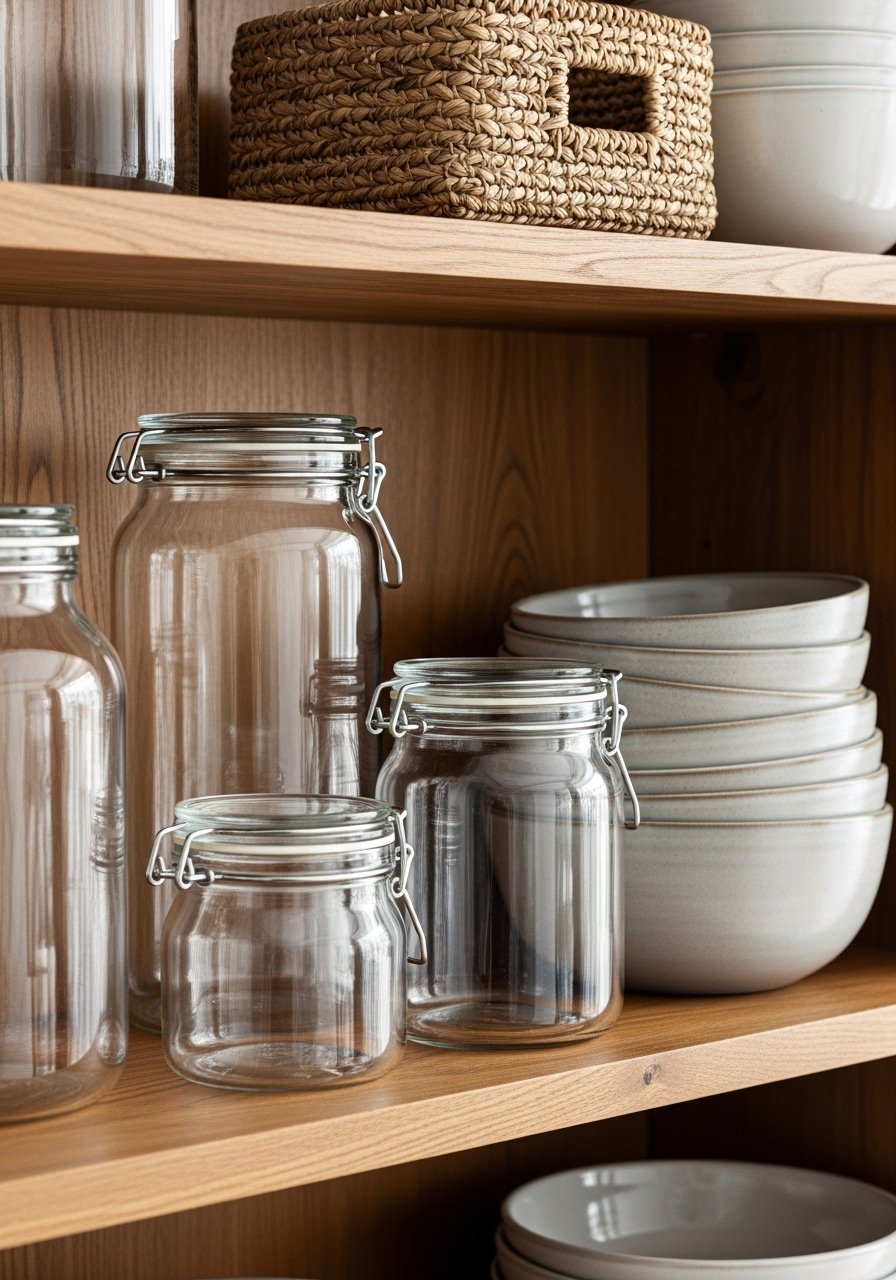
Open shelving can look showy or useful. I mix functional containers (like glass canisters) with everyday dishes and one woven basket for small bits. Use consistent color and material tones—neutrals and wood—so the shelf feels calm.
What changes: shelves feel edited, not like a storage dump. Insight many miss: group similar items in odd-number clusters (3 or 5) for balance. Mistake to avoid: displaying fragile pieces you use daily—save those for higher, less-handled spots.
Step 4: Soften with textiles and practical greenery
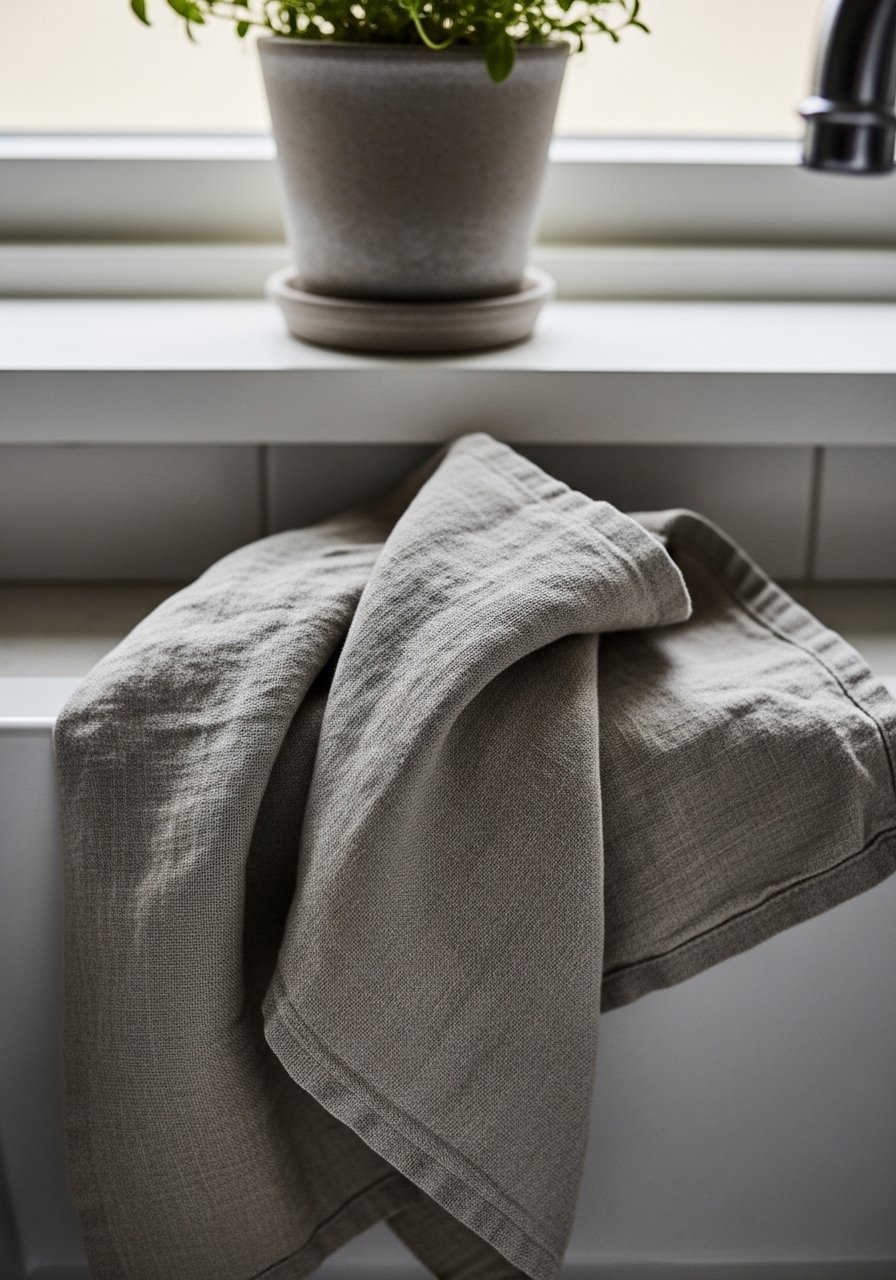
I add linen towels and a small herb pot to bring warmth and life. Textiles anchor function—towels are both useful and visually soft. A living plant gives color without taking up key prep space.
What changes: the room stops feeling like a showroom and starts to feel lived-in. Insight people miss: fold or drape towels in predictable places so they feel intentional. Mistake to avoid: too many textiles near heat sources—keep them practical and washable.
Step 5: Leave deliberate empty space and do a quick reset
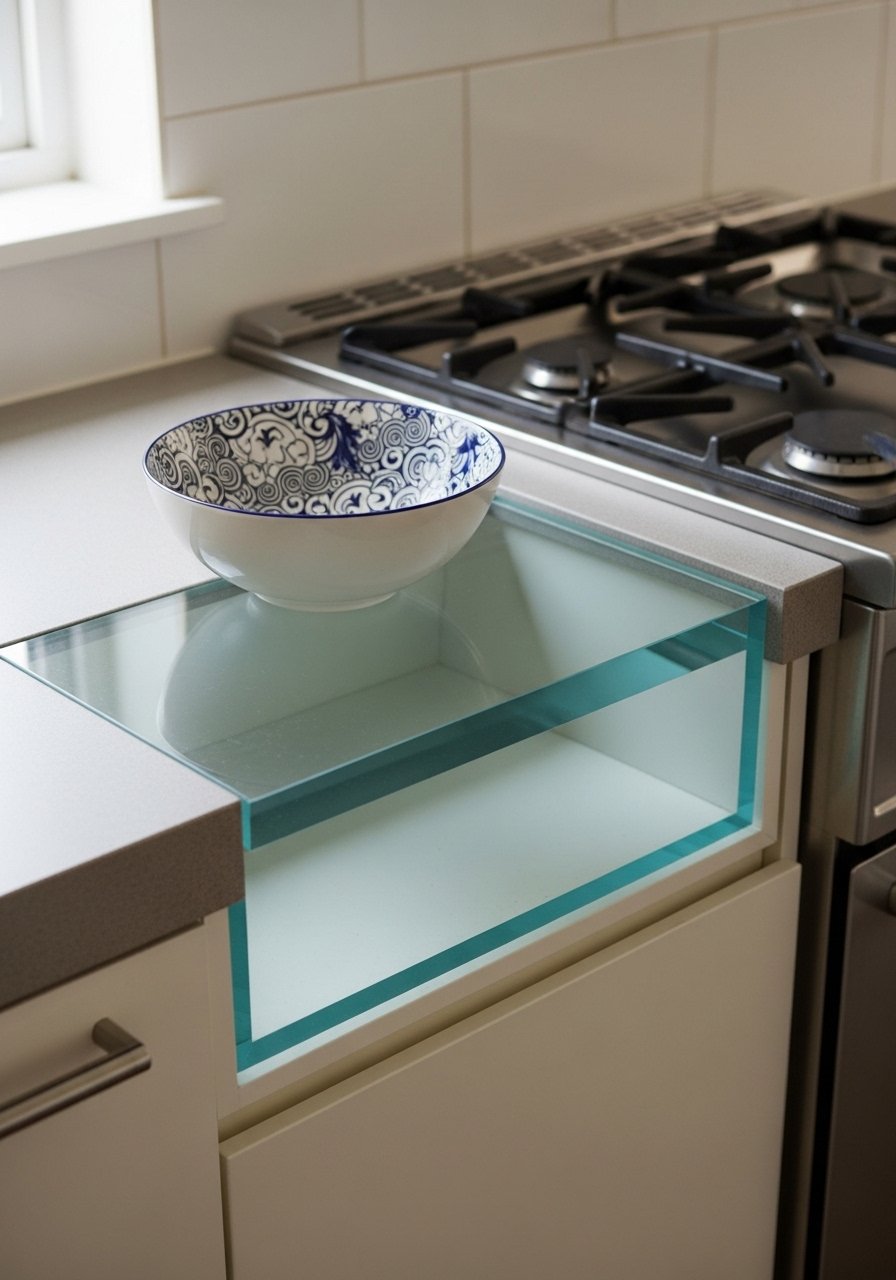
I always keep one clear stretch of counter. It’s a deliberate pause that makes the other styled zones sing. At the end of the day I spend two minutes returning items to their spots—canisters on the shelf, utensils in the crock, towels folded.
What changes: the kitchen reads calmer and more intentional. Insight people miss: empty space is as important as objects—don’t fill every shelf or counter. Mistake to avoid: treating reset as optional. A short habit keeps even small kitchens looking balanced.
Common mistakes with functional decor
I see three repeat problems. First, people buy everything at once and end up with mismatched scales. Second, they fill shelves without considering negative space. Third, they make function hidden—useful items should also be visible and pretty.
Quick fixes I use:
- Edit to three functional items per vignette.
- Match materials across zones (wood, stone, matte metal).
- Keep heavy-use tools within reach and pretty on display.
Adapting this look for small kitchens or a tight budget
I pared down in my first small kitchen by focusing on multi-use pieces. A single quality cutting board became art and work surface. Choose a modest set of canisters rather than full matching dinnerware on display.
Budget tips:
- Start with linen towels (~$15–30) and one utensil crock.
- Use baskets for hidden storage instead of closed cabinetry updates.
- Shop one anchor piece at a time; live with it for a month before buying more.
Mixing functional decor with what you already own
I never toss what I love. Instead I group older items with new functional pieces so nothing looks isolated. If your vintage bowls are colorful, pair them with neutral canisters and a wooden board to ground the palette.
How I arrange:
- Place older items in odd-number clusters.
- Use neutral textures (wood, stone, linen) to harmonize a mixed collection.
- Reserve one shelf for sentimental pieces—everything else stays practical.
Final Thoughts
Start with one small anchor zone and one wall solution. You don’t need a full remodel—just one or two thoughtful pieces will change how the room feels.
Be patient and tidy up for two minutes each night. It’s the small habits that make functional decor feel intentional and comfortable.