
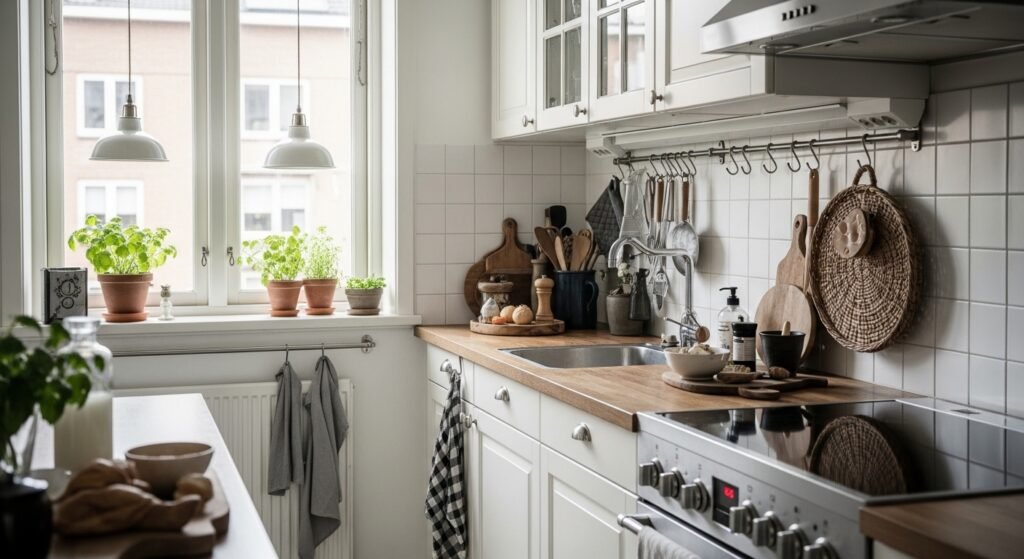
My kitchen often felt like two things at once: cluttered where I needed space and empty where I wanted personality. I’d stack gadgets on one counter and leave the backsplash bare. It made cooking feel fussy and the room, oddly cold.
I learned to treat decor as helpers, not ornaments. That shifted the whole feel. Little changes made the kitchen feel easy to use and calm to be in.
How to Decorate a Kitchen With Functional Decor
This shows you how to let everyday items do the decorating. I’ll show you how to create a warm, organic-modern kitchen with things that work and look intentional. You’ll end up with counters that feel calm, shelves that are useful, and small touches that read as design, not clutter.
What You'll Need
- Walnut edge grain cutting board, 16×10 (~$30–70)
- Stainless steel wall rail with hooks, 24-inch (~$18–40)
- Ceramic utensil crock in matte white, 6-inch (~$18–35)
- Set of linen kitchen towels, neutral pack of 4 (~$20–40)
- Woven seagrass basket, medium (~$25–60)
- Stackable ceramic canisters, set of 3, cream (~$30–60)
- Indoor herb starter kit with pots, 3-pack (~$15–35)
Step 1: Define work and display zones with a few larger pieces
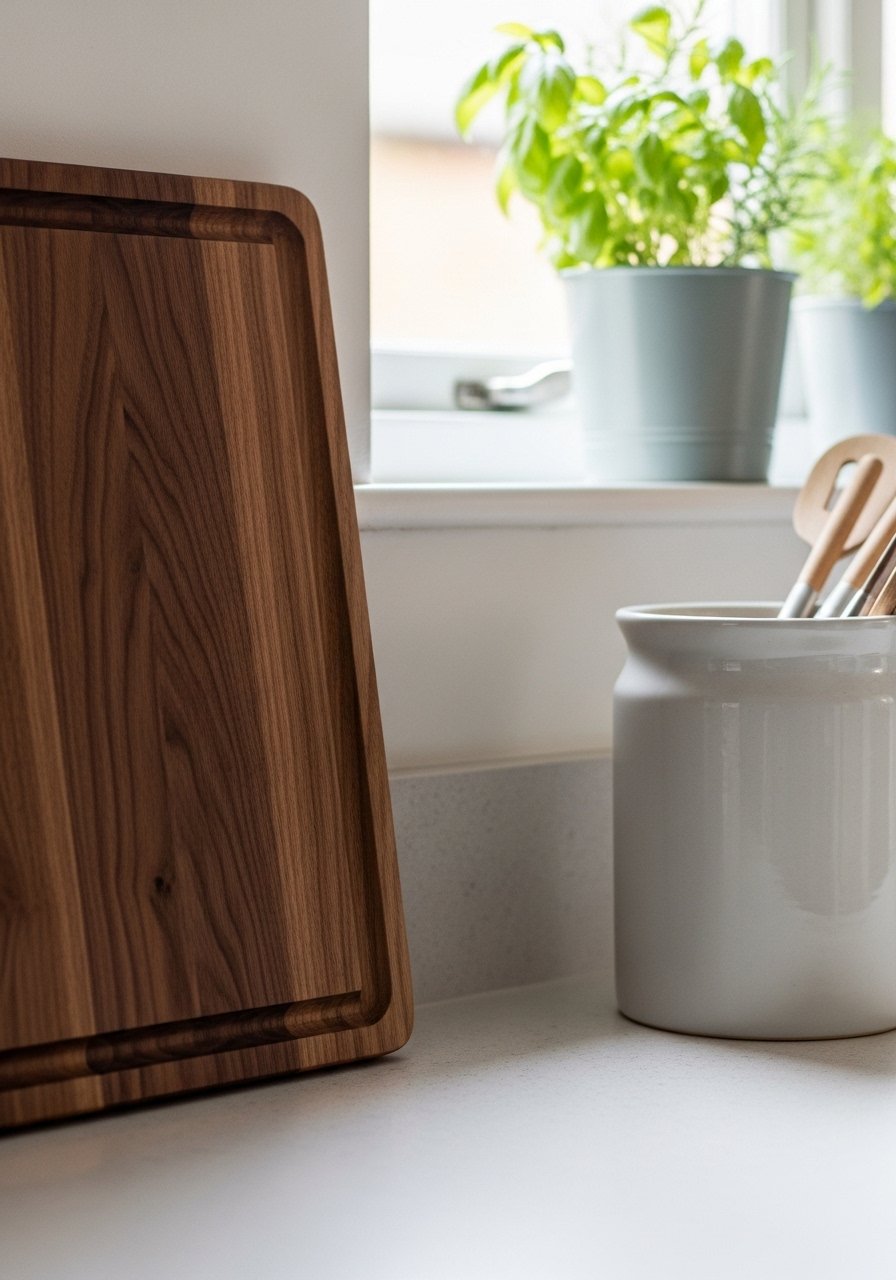
I start by creating clear zones: prep, cook, and display. I place the cutting board and utensil crock in the prep area so tools look purposeful. It reads as “this is where I work” instead of a random pile of things. Visually, larger items anchor a counter and give smaller pieces somewhere to belong.
People often skip scale. Too many tiny things make a counter look busy. Avoid lining the whole backsplash with small decor. Leave negative space so the zones breathe.
Step 2: Hang function where you see it most—eye level, not above the stove
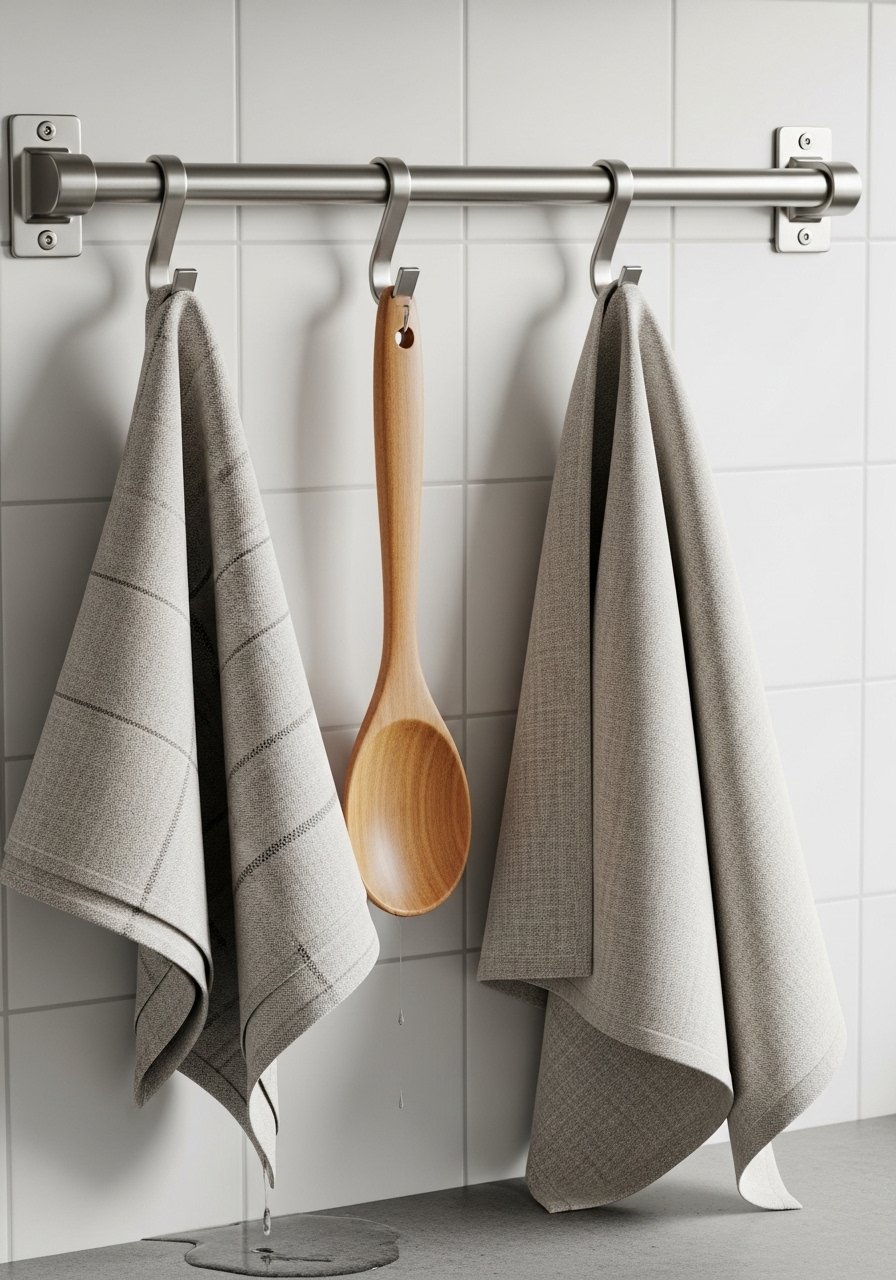
I put the wall rail at eye level near my prep station. Towels, a ladle, and a small skillet hang there. It makes grabbing things second nature and looks intentional—an organic-modern detail that’s both tidy and tactile. Hanging textiles add softness against tile or metal.
A common miss is mounting rails too high. If you can’t reach what’s on the rail, it becomes decor only. Also avoid overloading hooks—three to five items look balanced. Too many pieces read as clutter.
Step 3: Anchor awkward corners with textured storage
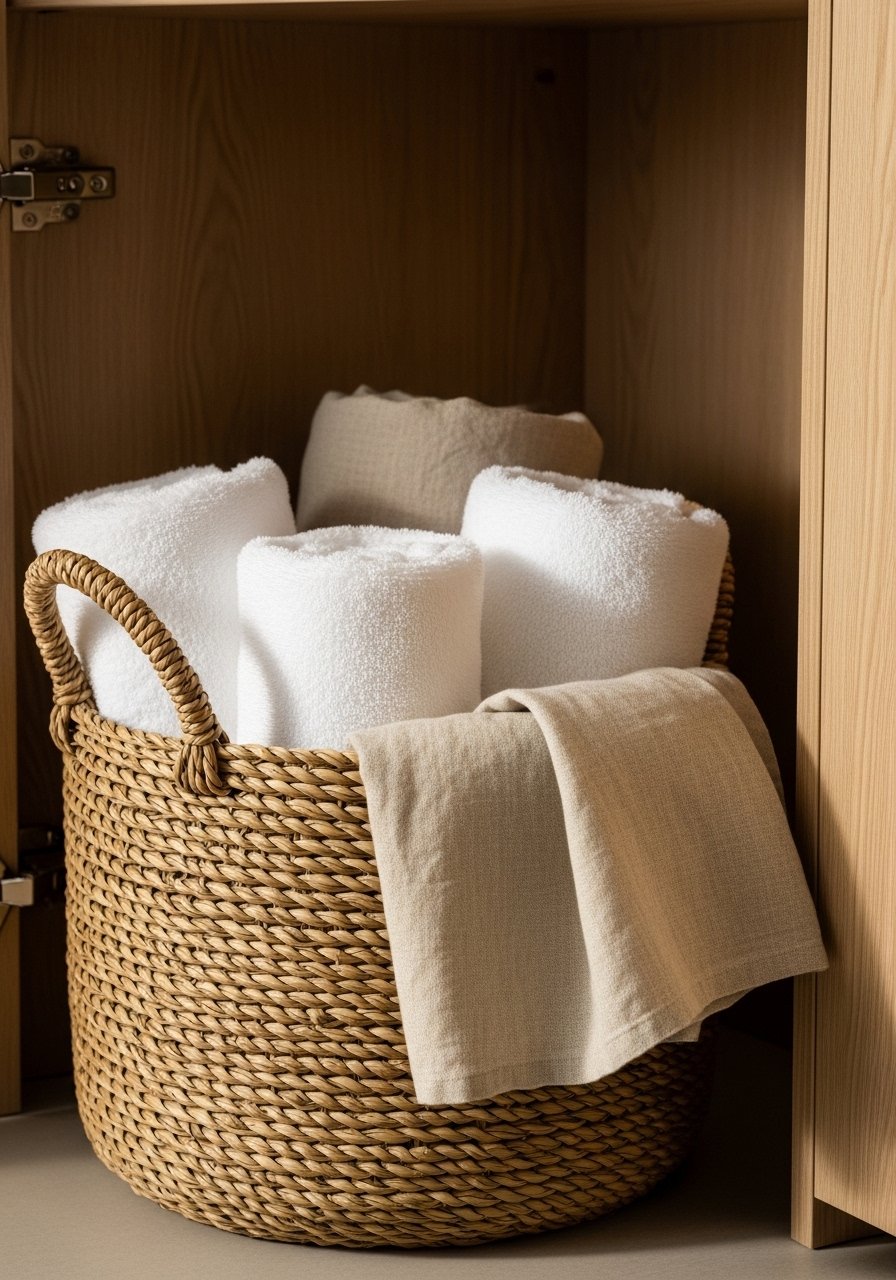
Corners that feel empty tend to scream for something fussy. I tuck a medium woven basket into the corner and use it for overflow: extra towels, a folded tablecloth, or a kids’ snack caddy. The texture warms the room and hides function without hiding usefulness.
People think every basket must be full. Leaving some visible negative space in and around the basket lets it read like a deliberate choice, not a catch-all. Don’t pick a basket so small it looks lost or so large it blocks traffic.
Step 4: Style countertops with purpose and leave working space
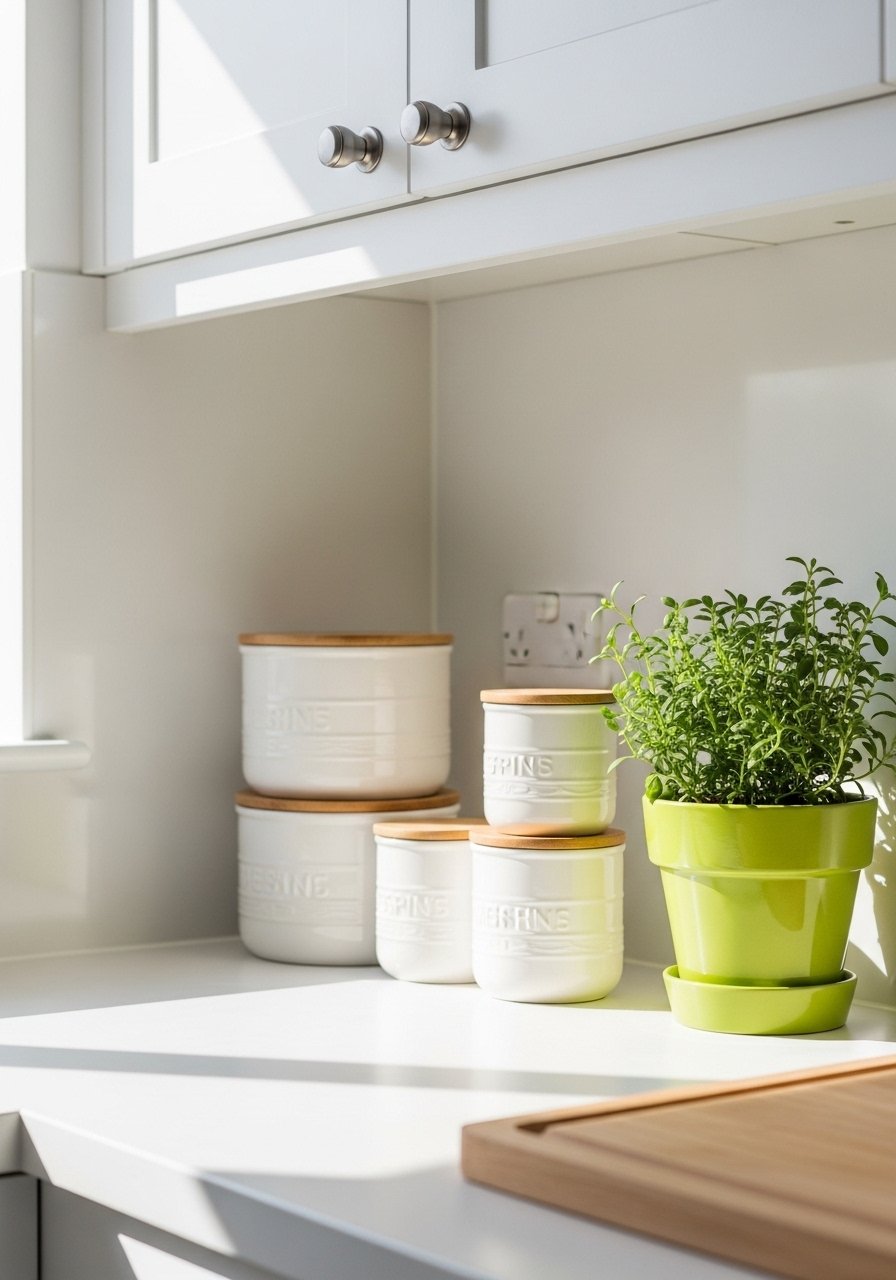
I style one or two clusters on the counter rather than scattering items everywhere. A trio of ceramic canisters holds staples and looks finished. The herb kit sits in a sunny spot for freshness and color. The rest of the counter stays clear for food prep.
The insight most people miss: empty space is part of the look. It makes the functional pieces feel curated. Mistake to avoid: using every inch for display. That makes the kitchen less usable and more stressful.
Step 5: Keep textiles and small tools visible but edited
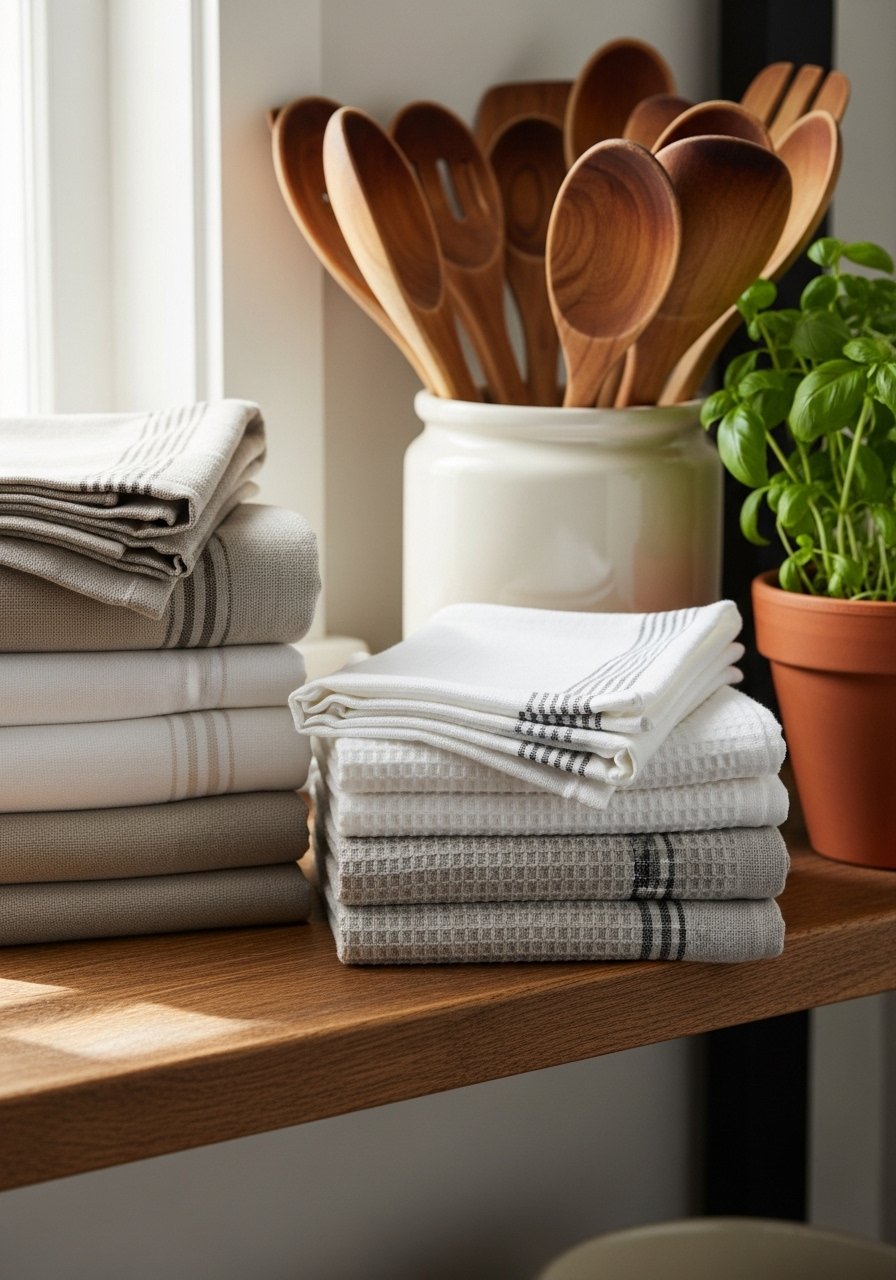
I use linen towels, a crock for wooden spoons, and one or two pretty tools as decor. They add rhythm and texture. When these items are attractive, they do double duty—use and style—so I don’t need extra knickknacks. I rotate colors seasonally for a subtle shift.
People often display every gadget. That dilutes the look. Pick a few items that are both pretty and used regularly. Store the rest where you can reach them quickly.
Common mistakes with functional decor
I’ve learned the same missteps repeat. Being aware helps you avoid them early.
- Filling every surface. It hides the pieces that matter.
- Forgetting reachability. If it’s not easy to use, it’s just decoration.
- Choosing mismatched scales. Keep one dominant object per zone.
I keep a mental rule: if it doesn’t help or make me smile, it goes in a drawer.
Adapting this look for small kitchens or tight budgets
Small kitchens need strict editing. I choose multipurpose items and keep a single focal cluster.
- Use a wall rail instead of open shelving to save space.
- Swap expensive solid wood for a walnut-look board to get the feel without the price.
- Start with linen towels or a herb kit—low cost, big impact.
I spend where it counts (an attractive utensil crock or canisters) and budget elsewhere. The result still feels planned and calm.
Mixing functional decor with what you already own
You don’t need a full overhaul to get this style. I mix textures and eras.
I pair simple ceramic canisters with an older family cutting board. The contrast makes the space feel lived-in, not showroom. If you like "organic modern" or "japandi" touches, lean into matte ceramics and natural fibers.
- Keep a consistent color thread—neutrals or warm wood.
- Rehome single statement pieces to where they can actually be used.
- Edit seasonally: swap towels and herbs for a small change.
Small shifts keep the kitchen feeling intentional without erasing what you already love.
Final Thoughts
Start with one zone: pick the prep counter or the rail. A walnut board or a linen towel set is an easy, low-commitment place to begin. I promise the room responds quickly to honest edits.
Make choices that help you cook and feel at ease. Functional decor should make the kitchen feel comfortable, balanced, and used—never staged.