
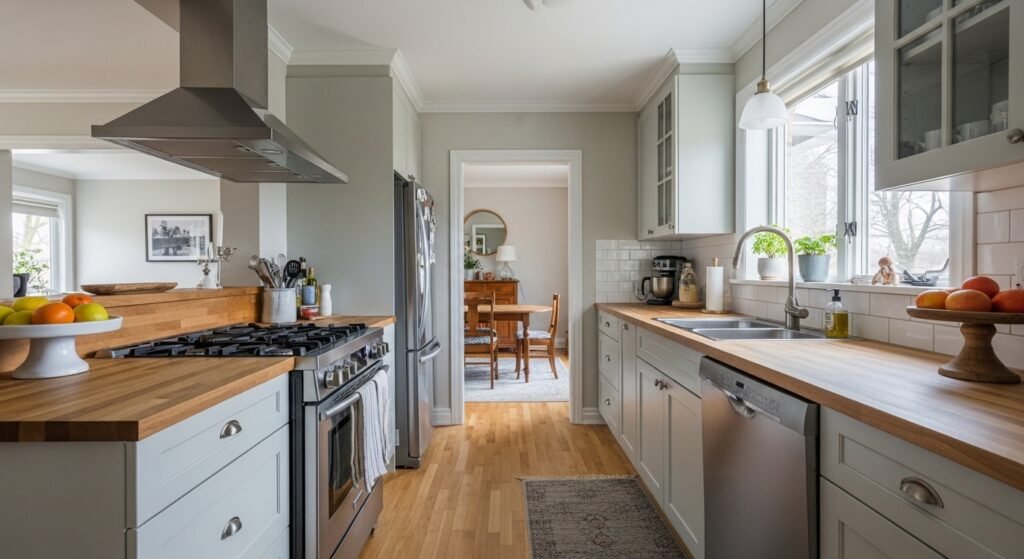
My counters looked useful and lifeless for months. I kept stacking pretty bowls with no plan. Every morning the kitchen felt cold, even with warm wood cabinets.
I finally treated it like a room, not a utility space. Small, deliberate choices made the whole place feel like a room you want to linger in.
This is the approach I use when a kitchen needs to feel cozy but not cluttered. You will end with an inviting sightline, layered textures, and a few functional displays that actually get used.
What You'll Need
- Chunky knit throw in oatmeal, 50×60 ($40 to 65). Drape over a chair or a banquette for instant warmth
- Linen tea towels, set of 4 ($15 to 30). Keep one on the counter, folded, not hanging
- Set of 3 ceramic vases, matte white ($25 to 40). Use in odd numbers on open shelves
- Brass picture ledges, 24-inch ($18 to 30). Perfect for rotating prints or recipe cards
- Jute area rug, 8×10 ($90 to 160). Natural fiber anchors the space underfoot
- Pendant light in warm brass ($80 to 200). Swap a cool fixture for something warmer
- Wooden cutting board, large ($25 to 60). Lean it against the backsplash for texture
- Woven storage basket, medium ($30 to 60). Tuck under open shelving or by the pantry
- Indoor potted plant with ceramic pot ($25 to 70). A single, healthy plant changes the energy
Step 1: Clear sightlines and pick one anchor area
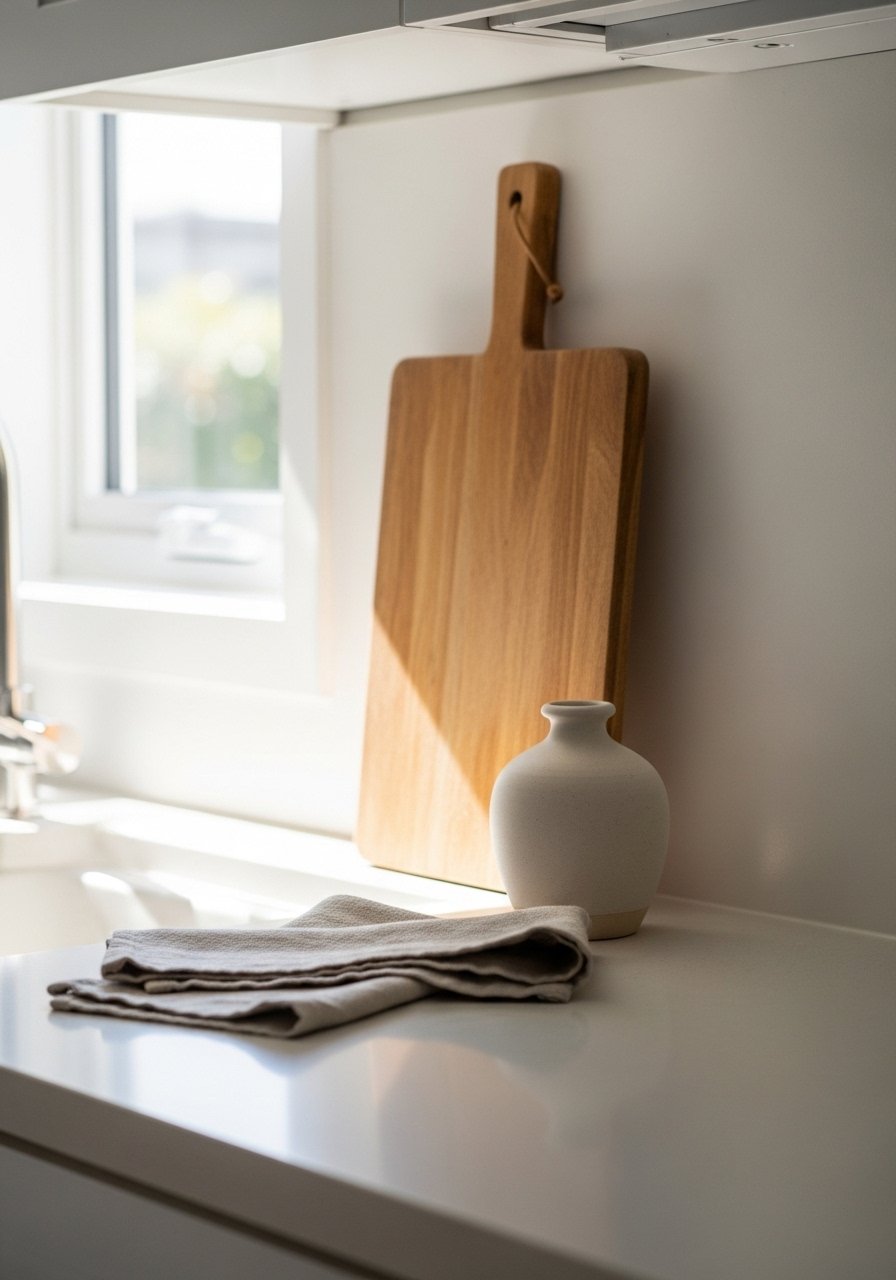
Pull everything off the counters in your main sightline. I clear at least 18 to 24 inches around the sink and stove. That breathing room makes the eventual styling read as intentional.
Put back only items you use daily. The visual change is immediate. Instead of a random collection, you get a curated strip that welcomes the eye.
Many people skip the edit and then fuss with accessories. The insight is the calm comes from absence as much as presence. Mistake to avoid, put too many small tools back on that cleared strip. One large board and one vase work far better than five tiny jars.
Step 2: Layer the light for low-glare warmth
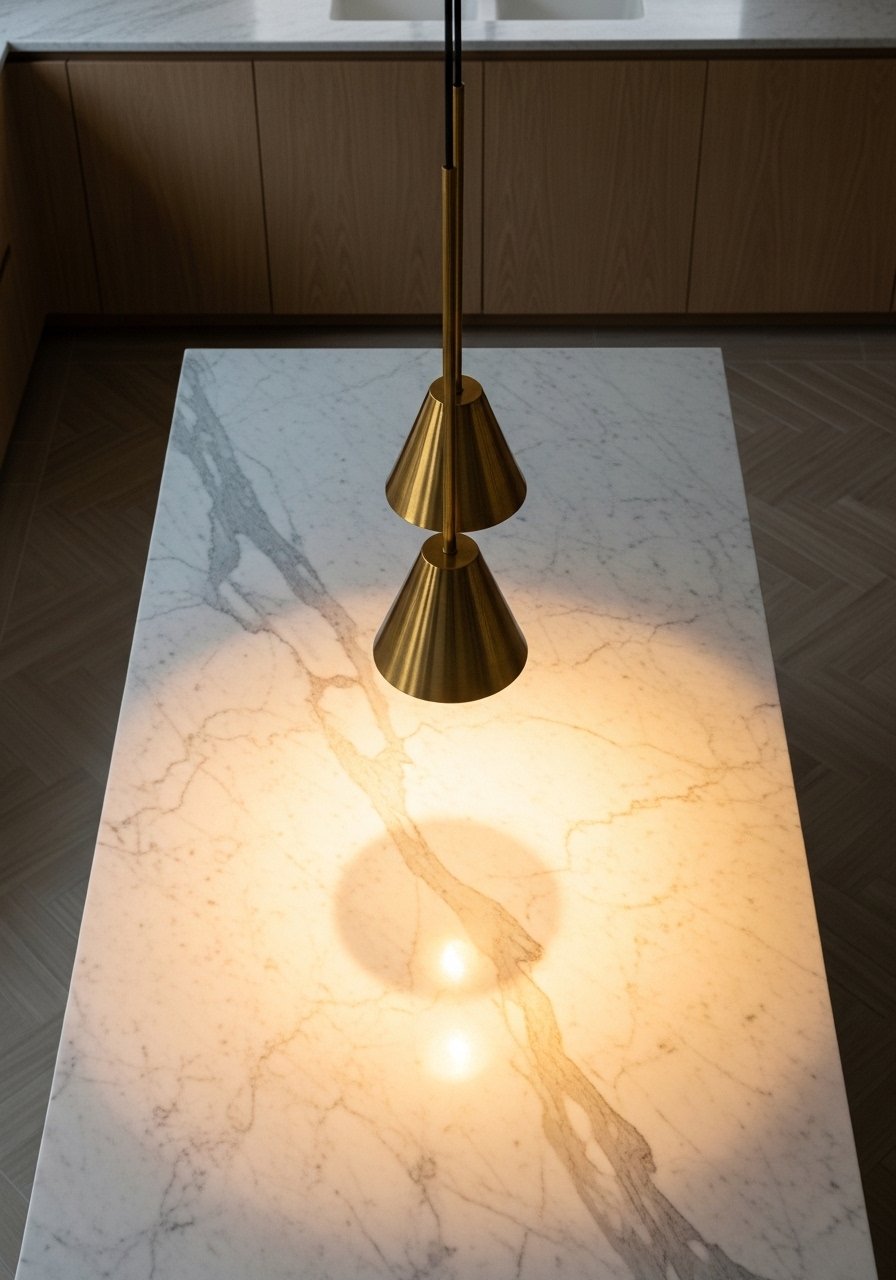
Swap or soften the main fixture. I keep a pendant that hangs 28 to 34 inches above an island. That height gives a pool of light without blasting the whole room.
A warm-toned bulb and a lower fixture immediately change mood. The room goes from functional to cozy because the light reads as human scale.
People often leave only a single bright ceiling light. I learned to add one warm pendant and under-cabinet glow. Mistake to avoid, choose a fixture too large for the island. Aim for a pendant head that is 1/3 to 1/2 the width of the island for balance.
Step 3: Add texture underfoot and on surfaces

Layer a natural fiber rug in front of the sink or the prep zone. For narrow aisles, pick a runner 2.5 to 3 feet wide. That width prevents tripping while still feeling cozy.
Roll in a chunky knit throw on a kitchen bench or banquette. Fold linen towels on the counter rather than hanging them. The visual change is quieter color and softer edges throughout the room.
I used to match everything by color and lost the sense of touch. The key is mixed textures. Mistake to avoid, choose a rug with a busy pattern that fights the rest of the kitchen. Neutral texture works best.
Step 4: Edit and group items on open shelves and counters
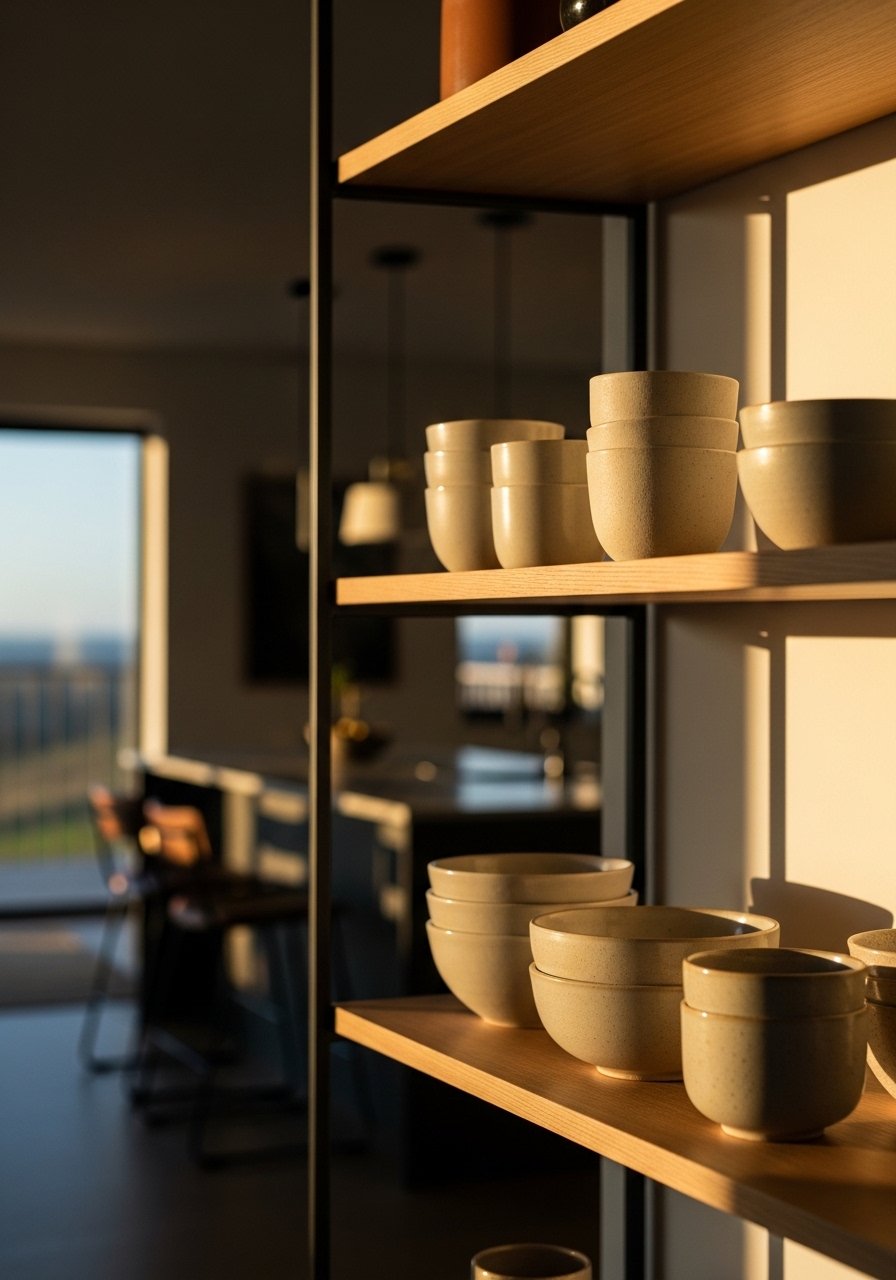
Treat shelves like small scenes. Group items in odd numbers. Keep 2 to 3 inches between grouped objects so each piece breathes. Start with a larger item, then add two smaller ones.
Visually, shelves move from cluttered to purposeful. Shelves suddenly read as intentional decor instead of storage that happened to be visible.
Most people pack shelves tight with equal spacing. A trick I use is to vary heights and materials, matte ceramics next to glass. Mistake to avoid, overloading with one material. Mix wood, ceramic, and metal for depth.
Step 5: Add living elements and rotate slowly
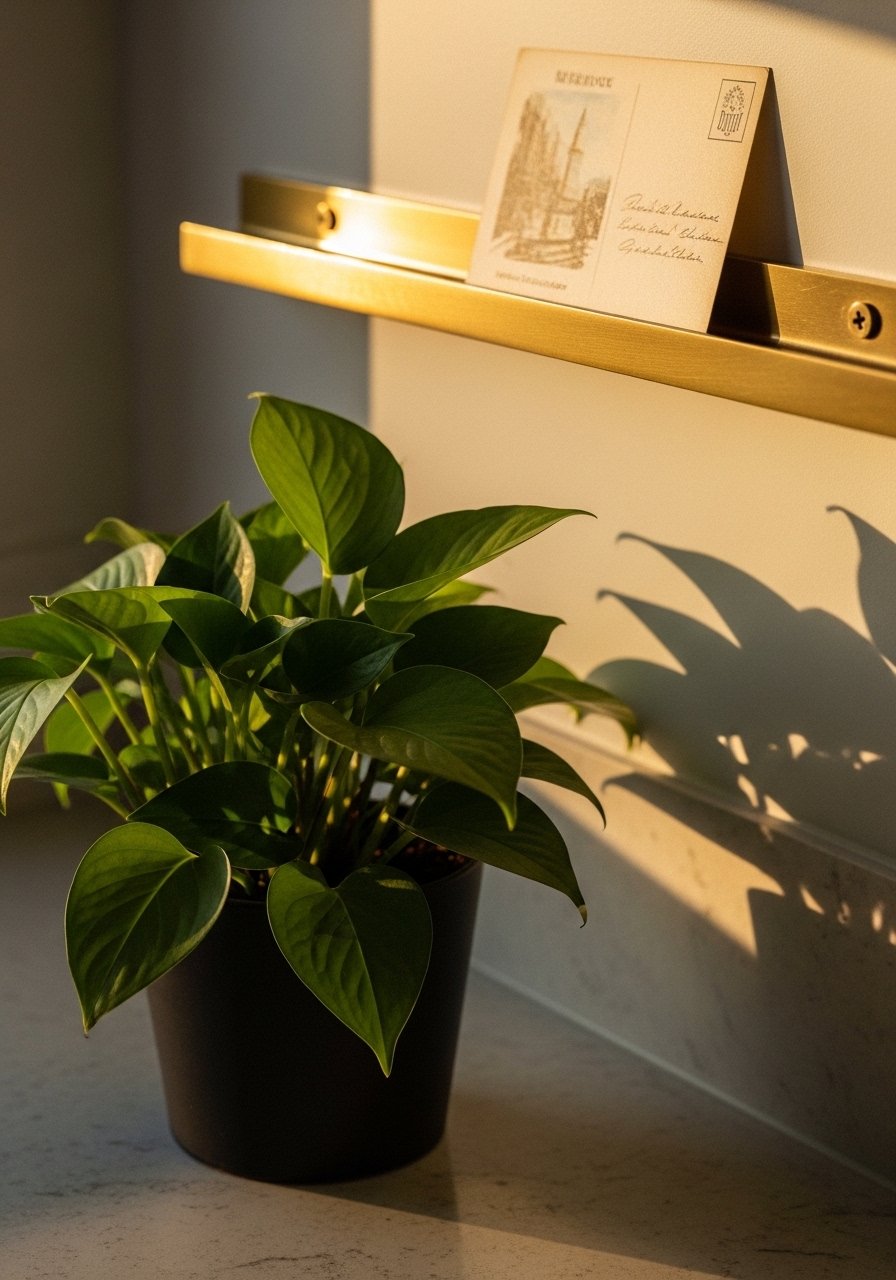
Bring in a single healthy plant or a vase with seasonal stems. Pick a pot that is 6 to 10 inches in diameter for counters. A living element creates movement and softens hard surfaces.
Lean a small framed print on a brass ledge instead of hanging it. Rotating one piece every few weeks keeps the kitchen feeling fresh without starting over.
I used to buy lots of decor and swap constantly. Now I edit slowly. Mistake to avoid, add many tiny plants that read as clutter. One strong plant and one rotating art piece do the work.
Why Your Kitchen Still Feels Cold
I've noticed cold kitchens usually have too much unfinished hardware and too few soft surfaces. A large metal faucet and stainless everything can feel sharp. Balance that with warm wood accents and textiles.
Quick actions:
- Replace a single fixture with warm brass or oil-rubbed bronze
- Lean a wooden cutting board against the backsplash
- Fold a linen towel on the counter, not draped over the oven handle
Those small swaps change how the space feels when you walk in. The room keeps its function, but it no longer feels like a professional kitchen set.
Making Cozy Work in a Small Kitchen
I keep seeing people panic about size and then overfill every surface. Small kitchens need more editing, not more stuff. Pick one decorative anchor, like a jute runner or a brass pendant, and stick with it.
Practical moves:
- Scale the rug to allow 12 to 18 inches of floor showing on each side
- Use a single woven basket under open shelving for infrequently used items
- Choose compact plants with upright growth to save counter space
Working within limits makes the cozy effect feel believable. It also keeps the kitchen functional for cooking.
Mixing Cozy with Modern Finishes
Everywhere I look this year, modern kitchens keep warm accents. You do not need to swap cabinets to get a cozier result. Contrast finishes thoughtfully.
My approach is to let modern lines carry function. Then add softer elements that sit beside them. A sleek countertop benefits from a rougher wooden board and a matte ceramic vase. Keep metal finishes cohesive by repeating one tone twice, like brass in the light and a small accessory. That repetition creates calm.
Start with small contrasts. You will see the room settle into a quieter, more intentional rhythm.
Start with One Corner
Pick one corner to fix tonight. Clear it, add a small rug or a woven basket, a wooden board, and a plant or a vase. Test the lighting and fold a linen towel on the counter.
You will feel the change fast. Small, deliberate edits build on each other. If that corner feels warmer, the rest of the room will follow.