
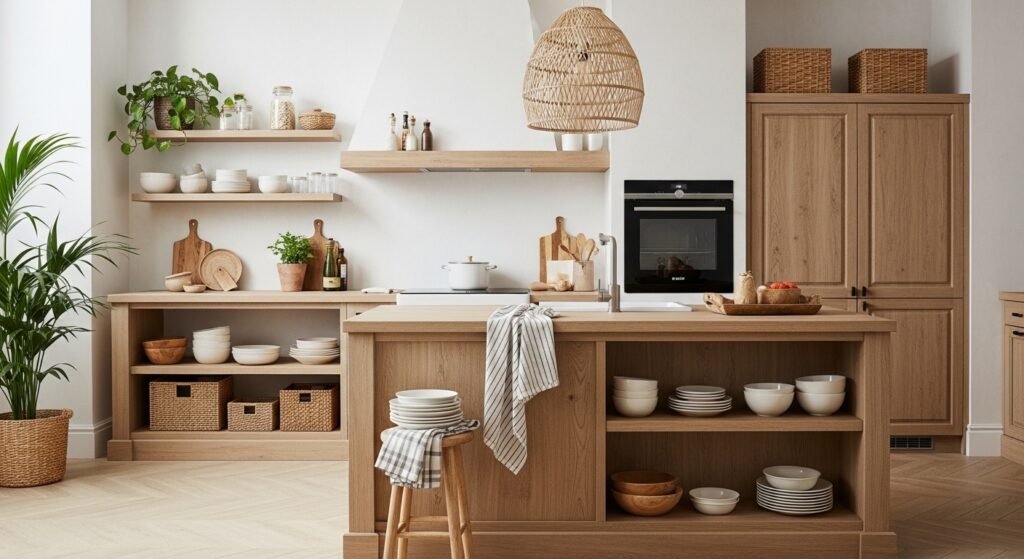
My counters felt unfinished for months. I stacked pretties on top and it always looked cluttered. I wanted a kitchen that felt calm and layered, not like a shop display.
I started by stripping everything back. I learned to choose a single anchor and build from there. Small moves changed the whole room.
I keep seeing kitchens pair natural textures with simple ceramics. You can get the same relaxed, collected feel without major renovations. By the end you will have a kitchen that feels intentional and easy to live in.
What You'll Need
- Macrame wall hanging, medium ($30 to 65). Great above a small towel rail or a narrow wall.
- Rattan pendant light ($120 to 250). I swapped one over my island and it changed the mood
- Set of 3 matte ceramic vases ($25 to 40). Use odd-number groupings on open shelves
- Jute area rug, 3×5 or 4×6 ($40 to 110). Runner or small rug near the sink anchors the zone
- Woven basket set, medium and small. I use them for onions, tea towels, and stray mail
- Hand-thrown dinnerware, set of 4 ($60 to 120). Imperfect glaze is perfect for boho
- Terracotta plant pots, set of 2 ($15 to 35). Small herbs and a trailing plant change the whole shelf
- Linen tea towels with subtle pattern. I buy two and rotate them daily
Step 1: Pick one neutral anchor and remove visual noise
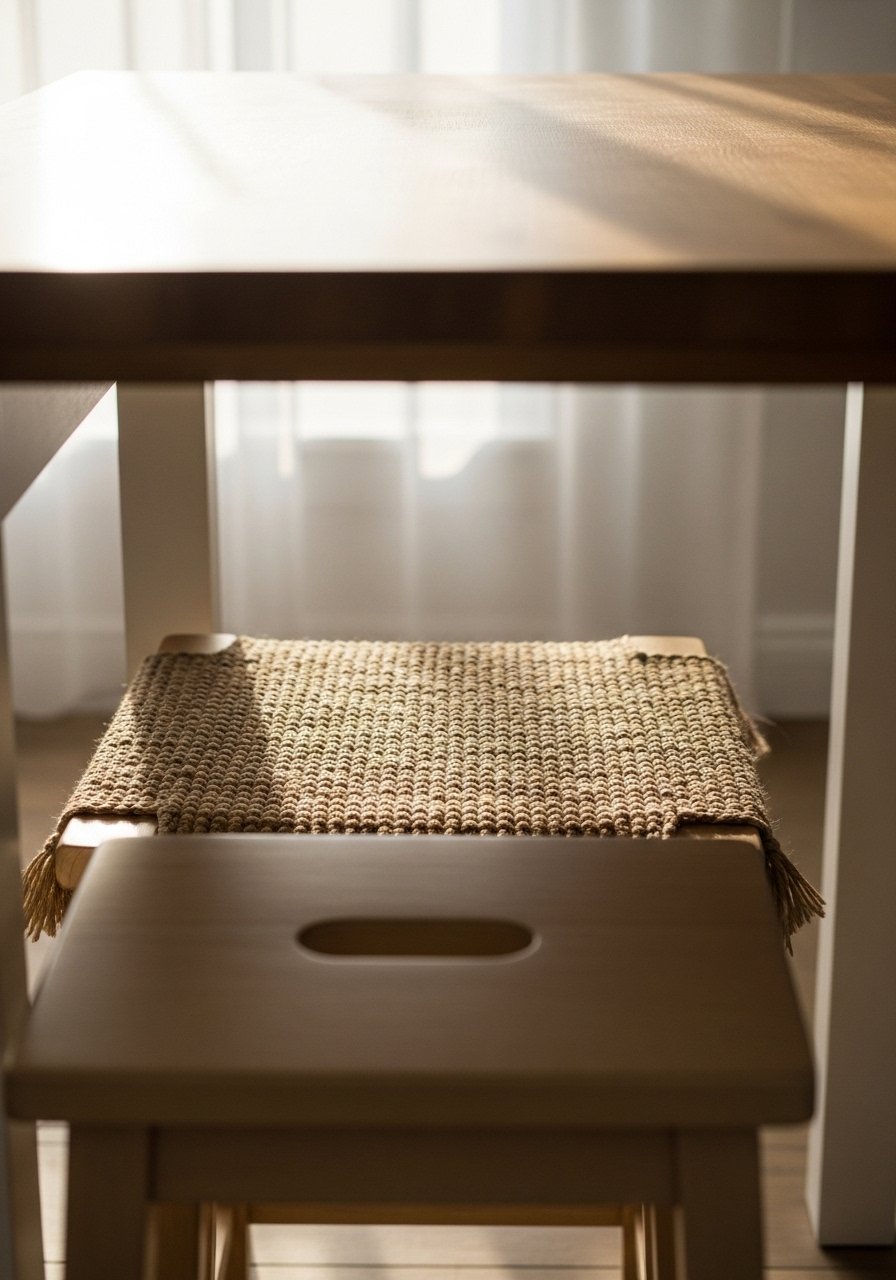
Start by choosing one neutral anchor, like a jute rug or rattan pendant. Everything else grows from that choice. I removed mismatched decor and left only the essentials. The visual change is immediate. The room reads calmer. Most people try to layer before they have a base. That makes everything look busy. Avoid too many competing colors at first. Stick to two or three neutrals, then add one accent color in small doses.
Step 2: Layer textiles for comfort and rhythm
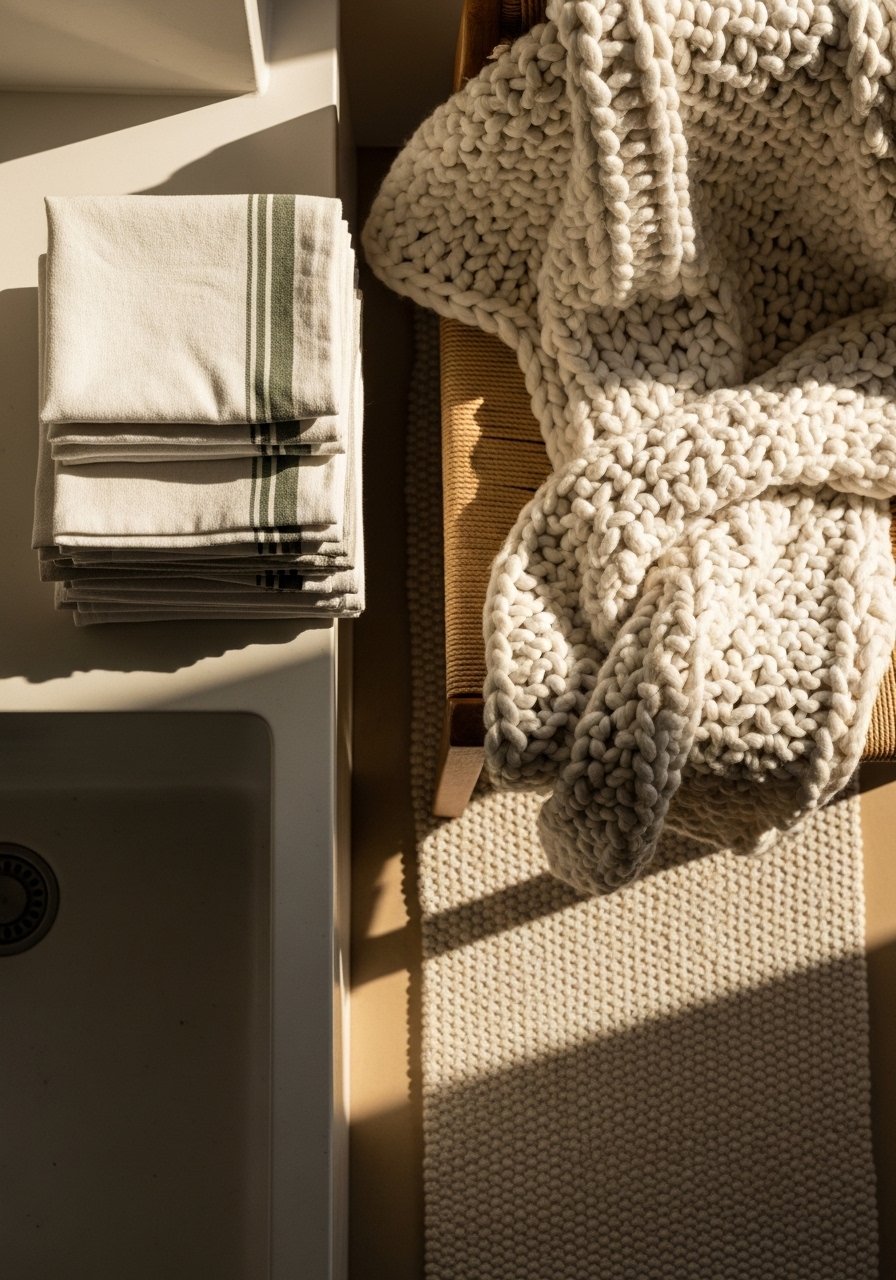
Add linen towels, a runner, and a lightweight throw on a chair. Textiles give the kitchen pockets of softness. I leave 2 to 3 inches of counter between stacked items so the eye can rest. When done wrong, textiles feel random and messy. When done right, they guide movement through the room. Resist the urge to cover every surface. A single folded throw on a stool or a towel draped over an oven handle is enough to suggest the look without clutter.
Step 3: Edit open shelves like a gallery, not a store
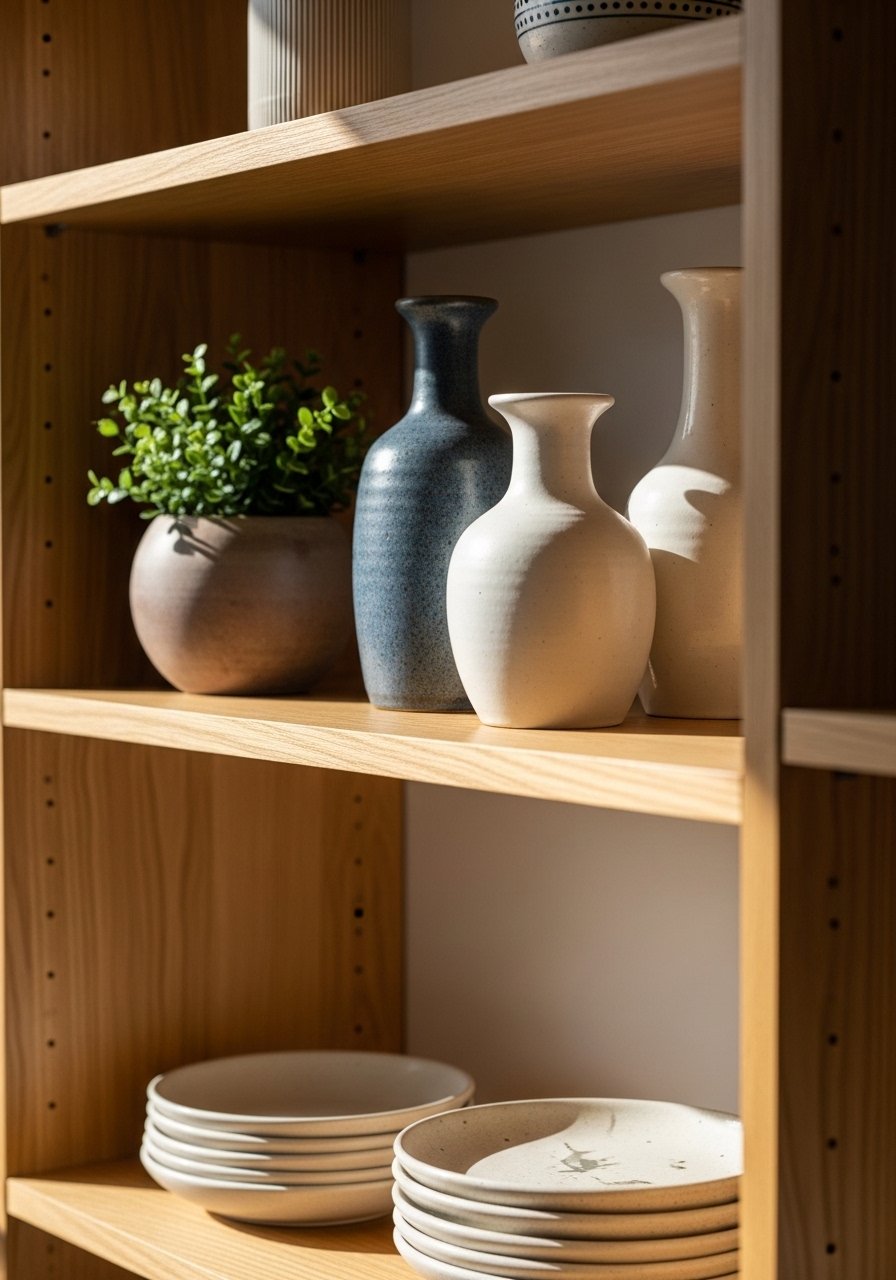
Pull everything off the shelves and start fresh. I group ceramics in odd numbers and leave breathing room. The visual change is that shelves read collected, not piled. A common miss is filling every inch. Leave negative space. One mistake is arranging by color only. Instead, mix heights and textures. Use the matte vases and a small plant for contrast. For narrow shelves, stack two plates with a single cup on top, not rows of plates that hide the back wall.
Step 4: Add organic lighting and wall texture
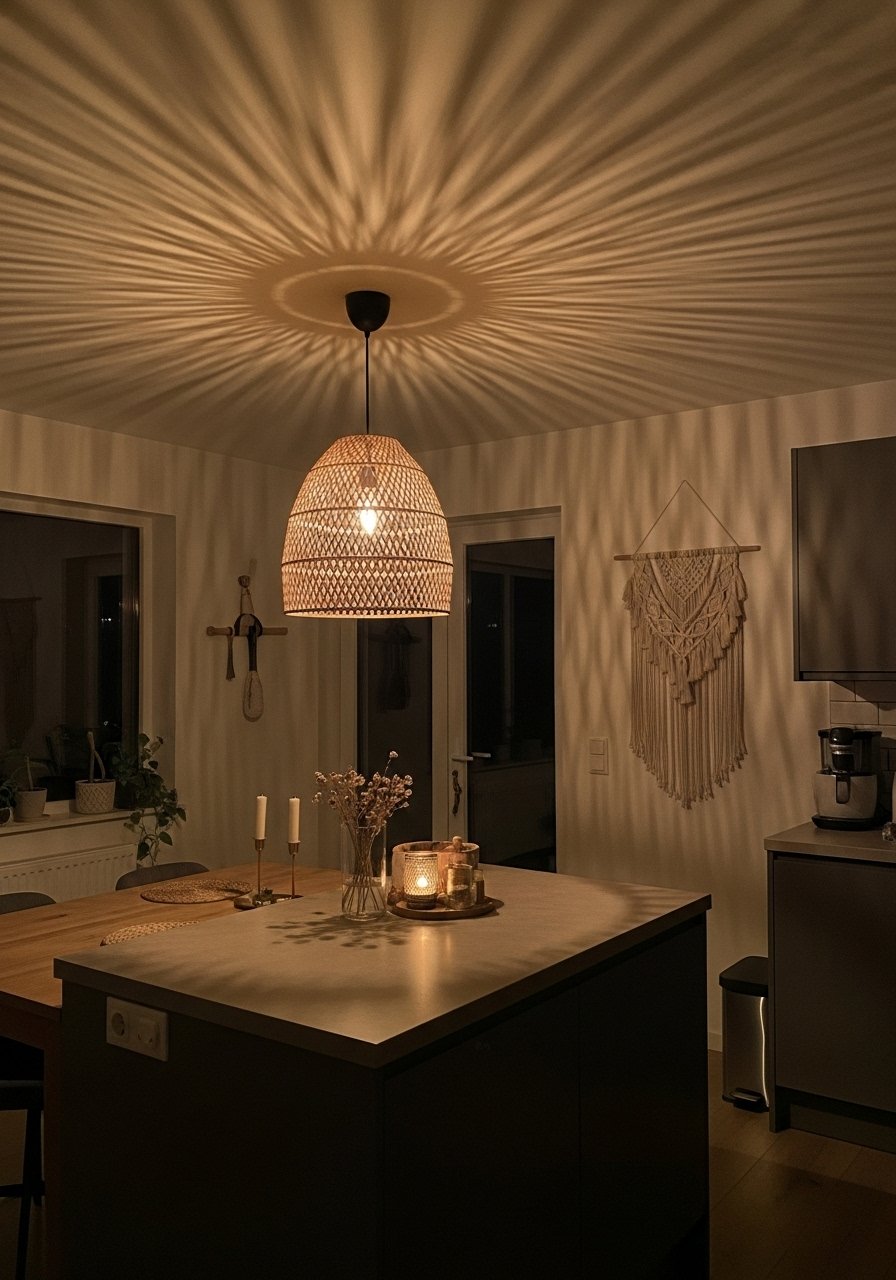
Swap a harsh fixture for rattan or woven lighting. I replaced a flush mount with a pendant and the room felt softer at night. The lighting creates pockets of warm glow and highlights texture. A common temptation is to go too ornate with multiple pendants. One well-placed organic fixture often reads better. Avoid polished brass if your goal is relaxed. Choose warm natural finishes that age well. If ceilings are low, pick a shallow pendant or a wall macrame to keep scale right.
Step 5: Anchor small details and set habits
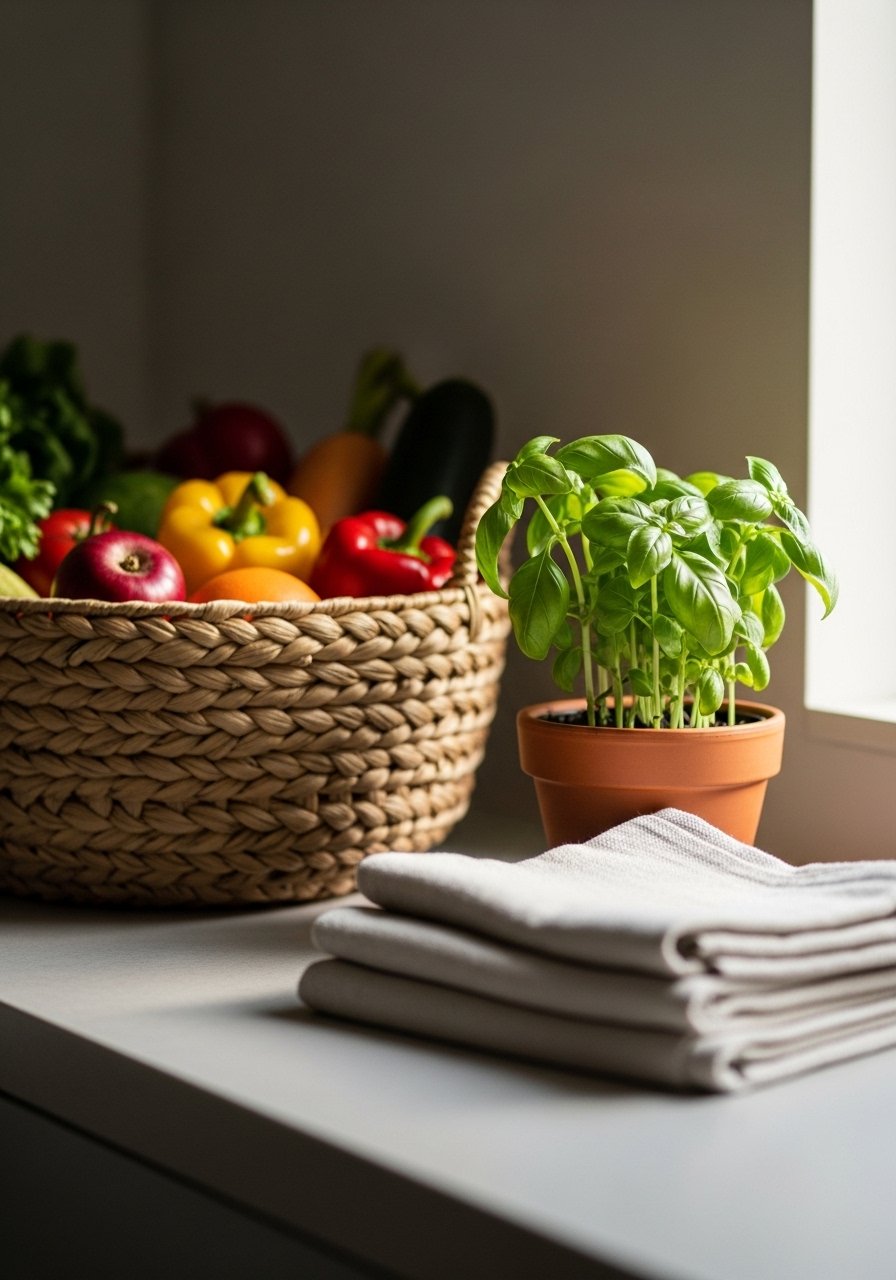
Finish with function that looks intentional. I add a basket for produce, a small herb, and a tray for oils. The visual change is cohesion from counter to shelf. People often add decorative objects that disrupt workflow. Put only what you use regularly on counters. One mistake is over-accessorizing with fragile items near the stove. Keep breakables on upper shelves. Swap items seasonally so it never feels static. If you want a small test, replace one set of plastic lids with a wooden tray and see how the room feels.
Why Your Open Shelves Still Look Cluttered
I used to think more was better. Now I edit ruthlessly. Start by removing everything that is chipped, mismatched, or purely decorative. Keep three types of objects per shelf. For example, plates, a plant, and a tall vase. Leave 3 to 4 inches of negative space on each side. If a shelf is narrow, use stacked plates to create height rather than tall objects that stick out. Lighting matters. A single under-shelf puck light or a small plant that catches the window light makes shelves read intentional and lived-in.
Making Boho Work in a Small Kitchen
Small kitchens can feel overwhelmed by pattern. I use neutral anchors, then layer small textures. Tips that helped me:
- Pick a 3×5 or 4×6 jute rug to define the sink area
- Use slim open shelves instead of full upper cabinets when possible
- Choose one hanging piece, like a macrame, not both a rug and multiple wall hangings
- Keep countertops mostly clear, store appliances in baskets
If storage is tight, use matching baskets to hide essentials. That keeps the visual rhythm calm and the style readable.
Mixing Boho Elements With What You Already Own
I kept my stainless appliances and added boho pieces around them. Start by matching one finish, like the metal on your faucet, with one accessory, such as a small brass tray. Introduce texture through textiles and ceramics so the modern pieces feel grounded. An easy swap is changing cabinet knobs to a warm wood or matte brass. Try one change at a time. If a full set of new dinnerware feels like too much, replace two mugs and a serving bowl. Small, consistent choices pull the whole look together.
Start with One Corner
Pick a corner, a small wall, or the space above your sink and commit to styling it. I began with a single macrame and a small plant. That tiny investment taught me what to add and what to skip. Once one corner felt right, the rest of the room followed more easily.
A low-commitment pick is a 3×5 jute rug or a single rattan pendant. Try that first and live with it for a week before changing anything else.