

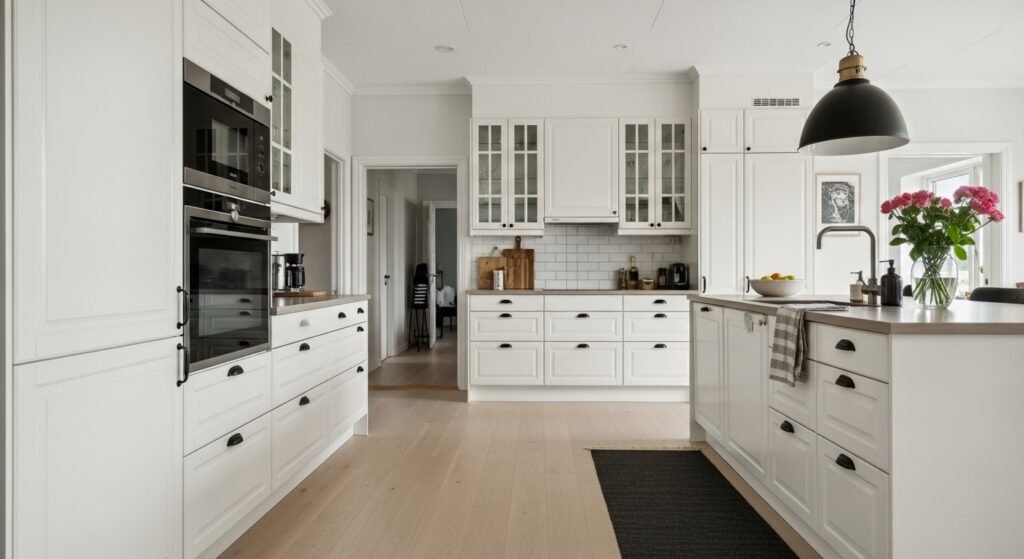
I kept staring at my kitchen and wondering why it felt unfinished. Small changes looked either timid or too heavy. I wanted the room to feel deliberate, not stark.
I learned to use black accents to anchor a room without making it cold. This is for when your kitchen needs intention, not a renovation.
How to Decorate a Kitchen With Black Accents
I’ll show you how to place black pieces so the kitchen reads layered and calm. You’ll get a clear sense of balance, a shopping checklist, and simple styling moves that work for organic modern or modern farmhouse kitchens.
What You’ll Need
- Matte black cabinet pulls, 10-pack (~$15–35)
- Matte black kitchen faucet, single-handle (~$80–250)
- Black metal pendant light, 12″ diameter (~$60–180)
- Industrial black bar stools, 24″ seat (~$90–200)
- Black framed kitchen art, 16×20 set of 2 (~$25–70)
- Matte black canister set, 3-piece (~$25–60)
- Black dish rack, stainless base (~$25–60)
- Black rug runner, 2.5×8, low pile (~$60–180)
Step 1: Choose one or two anchor points for black
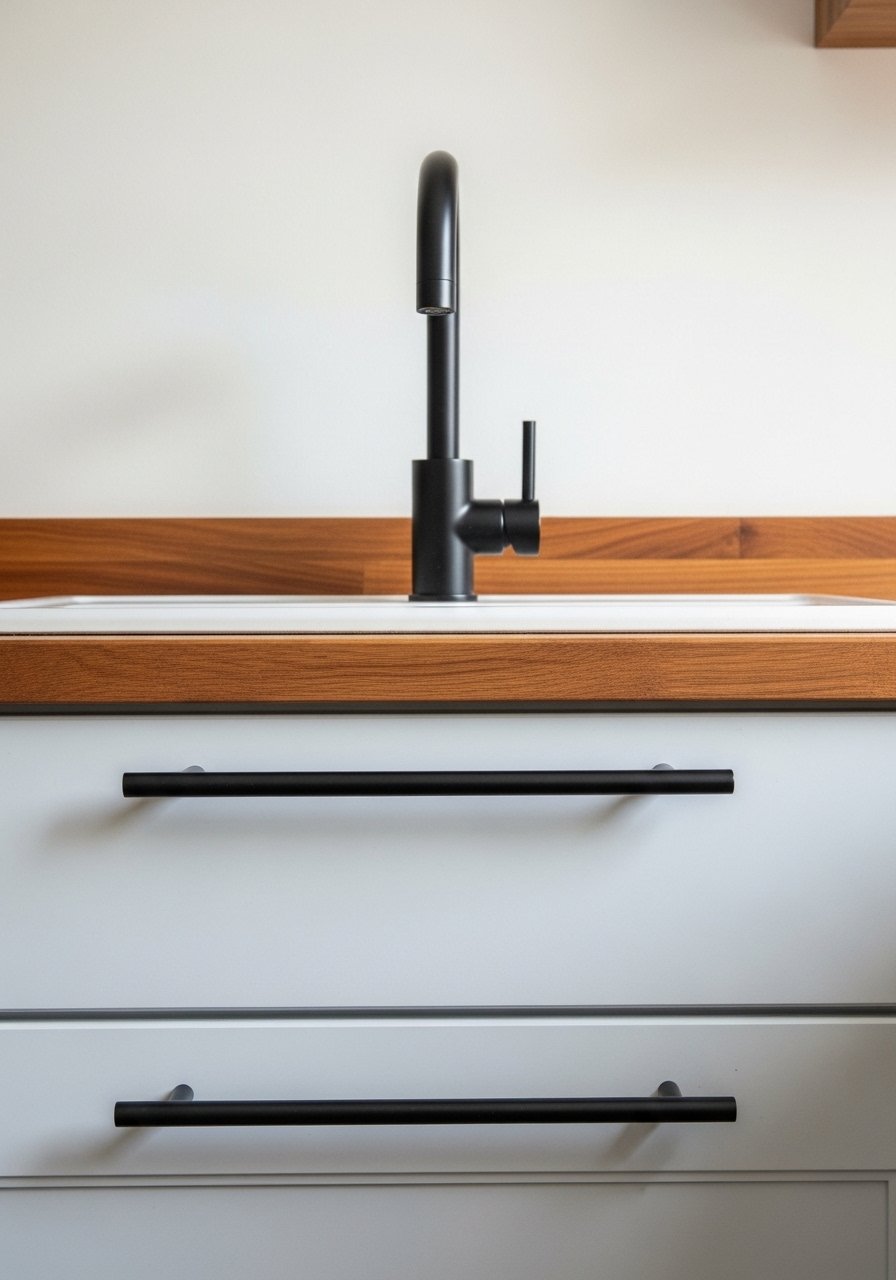
I start by deciding where black should do the heavy lifting. For me that’s often the faucet and a single light fixture. Anchors give the eye something to return to and stop the look from feeling scattered.
Visually, anchors make the room read intentional. One insight I learned: anchors should be at different heights so black travels through the room. Small mistake to avoid: fretting over matching every finish perfectly—variation of matte and satin keeps it lived-in.
Step 2: Repeat black in small doses across surfaces
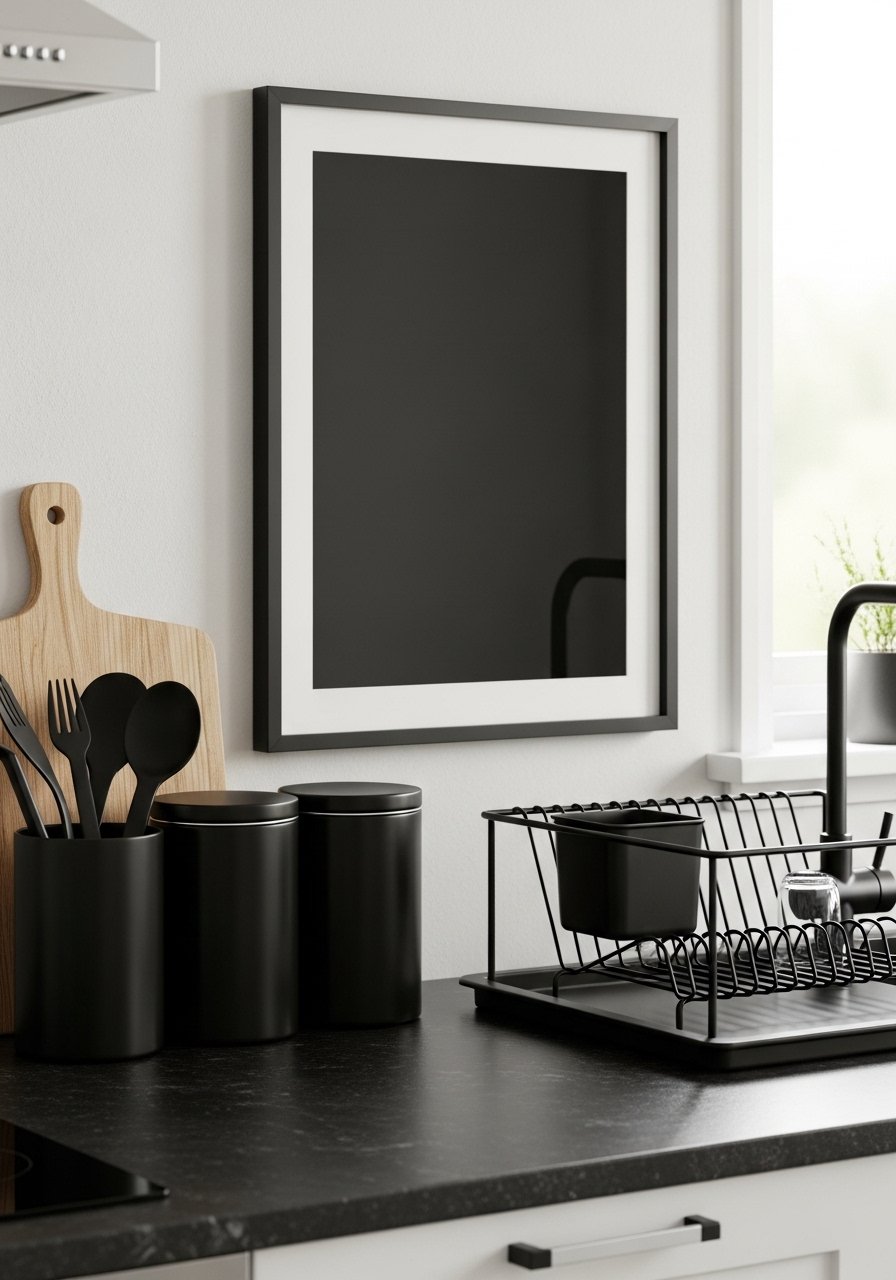
After anchors, I repeat black in smaller places—canisters, a dish rack, picture frames. It creates rhythm without shouting. I place repeats at roughly eye, counter, and floor levels so the color feels intentional.
People usually miss scale: tiny black items clustered together read stronger than spread-out pieces. Avoid the mistake of putting every small black item on one counter; spread them so black becomes a thread, not a block.
Step 3: Balance black with warm textures and mid tones
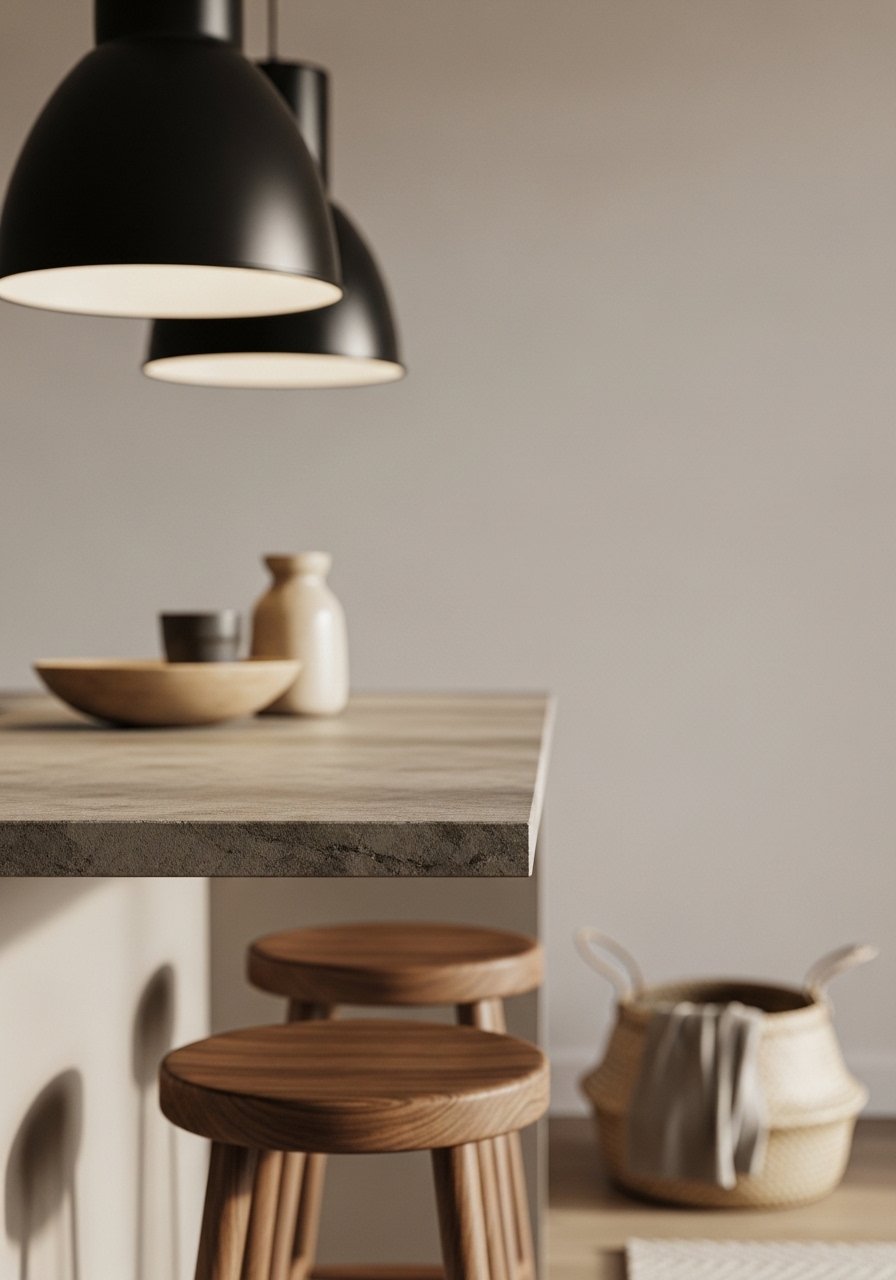
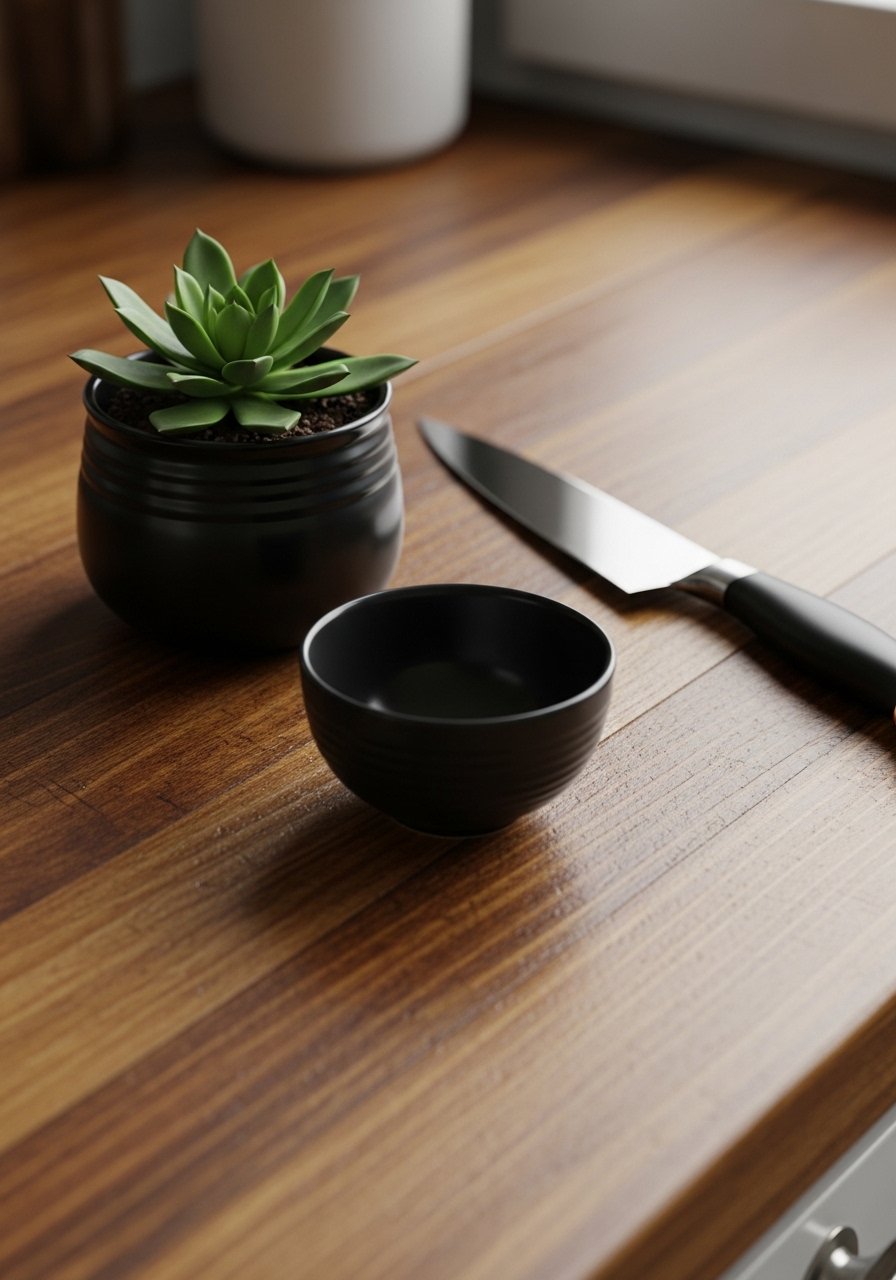
Black reads cold if everything else is cool. I bring in warm wood, leather, linen, or a woven basket to soften edges. That warmth lets black read modern and cozy at once—think organic modern rather than stark industrial.
One insight: wood grain next to black makes the metal feel edited, not aggressive. The small mistake to avoid is over-polishing: too many shiny blacks can feel harsh. Mix matte and warmer finishes for a calm, balanced look.
Step 4: Place black vertically and horizontally for flow
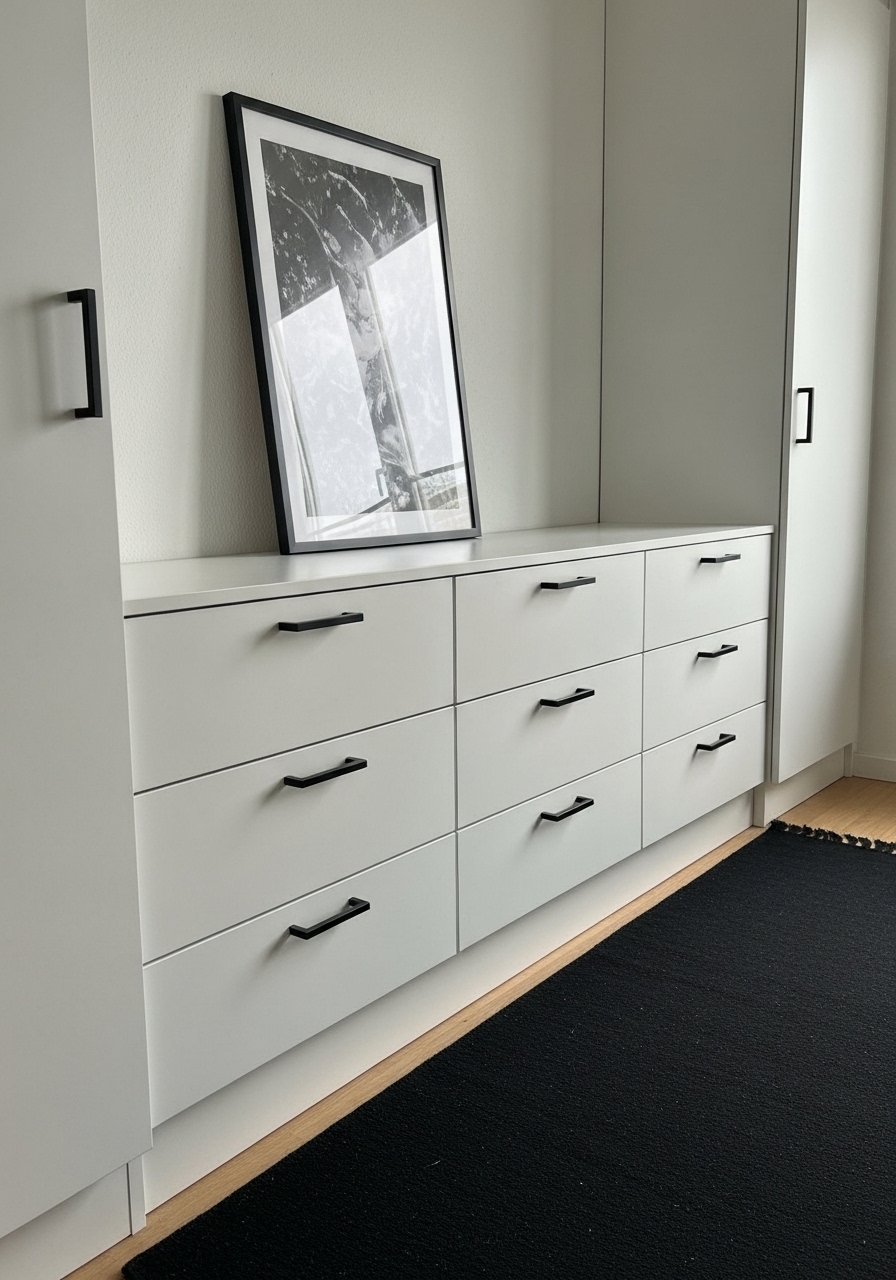
I pay attention to how black moves. Vertical elements—art, a tall pendant—pull the eye up. Horizontal elements—runners, hardware lines—bridge the room. When both directions are used, the kitchen feels composed.
People often miss this directional play. A common mistake is clustering everything at counter height. Spread black up and down to guide movement and give the space a quiet structure.
Step 5: Edit, live with it, and adjust lighting
I edit after living with a change for a week. Lighting alters how black reads. I dim or add a warmer bulb if the accents look too stark. Sometimes removing one piece creates more calm than adding another.
Insight: small swaps—different bulb temperature or replacing glossy black with matte—make a big difference. Mistake to avoid: over-correcting immediately. Give your eye time to accept black as part of the room.
Common Mistakes I See
I often see people treat black like neutral paint—apply it everywhere and wonder why it feels flat. Black is a weight; use it as punctuation rather than a base.
Other pitfalls:
- Clustering all black in one zone so the room feels lopsided.
- Using only glossy finishes that reflect harsh light.
- Forgetting warm materials that counterbalance black’s severity.
Adapting This Look for Small Kitchens or Rentals
In a small kitchen I keep anchors compact: a black faucet and two black frames. Scale matters—choose slim bar stools and a narrow runner so black doesn’t crowd the floor.
If you’re renting, focus on movable pieces:
- Swap in black framed art and a black rug runner.
- Use peel-and-stick black hardware covers for a temporary change.
- Add a black dish rack and canister set for counter-level repeats.
Mixing Black Accents with What You Already Own
I almost never start from zero. I look at what I already own and layer black where it’s missing. If you have brass fixtures, use black in textiles and art so both finishes read intentional.
Quick pairing ideas:
- Wood counters + black hardware + woven baskets.
- White shaker cabinets + black faucet + black pendant.
- Stainless appliances + matte black smallwares for contrast.
Final Thoughts
Start small. Swap one anchor and live with it for a week. I find confidence grows as the room feels more intentional, not contrived. A matte black faucet or a simple black pendant is an easy, low-commitment first step.