

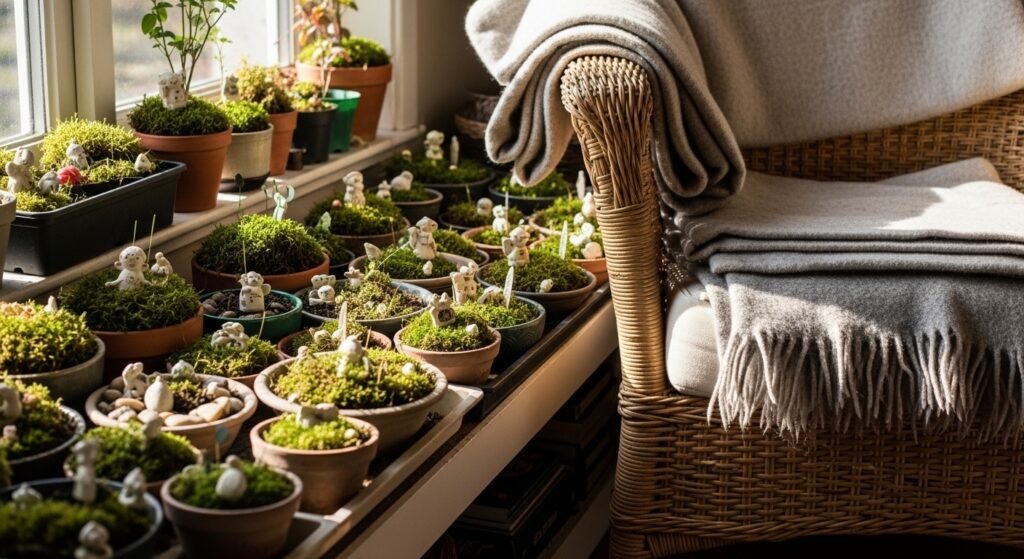
My living room had nice furniture but it still felt like a waiting room. Took me embarrassingly long to figure out it was missing texture. Every surface was smooth, every color was flat, and nothing invited you to actually sit down. Making a bunch of small fairy garden crafts forced me to pay attention to texture, scale, and the little design choices that actually make a space feel lived in.
These ideas lean cottage-meets-modern craft. Most projects run $5 to $40, with a few splurges around $60 for sculpting tools or LED lanterns. They work on windowsills, balcony planters, small side tables, or in a tabletop terrarium when you do not have outdoor space.
Cottagecore Fairy Circle For Windowsills
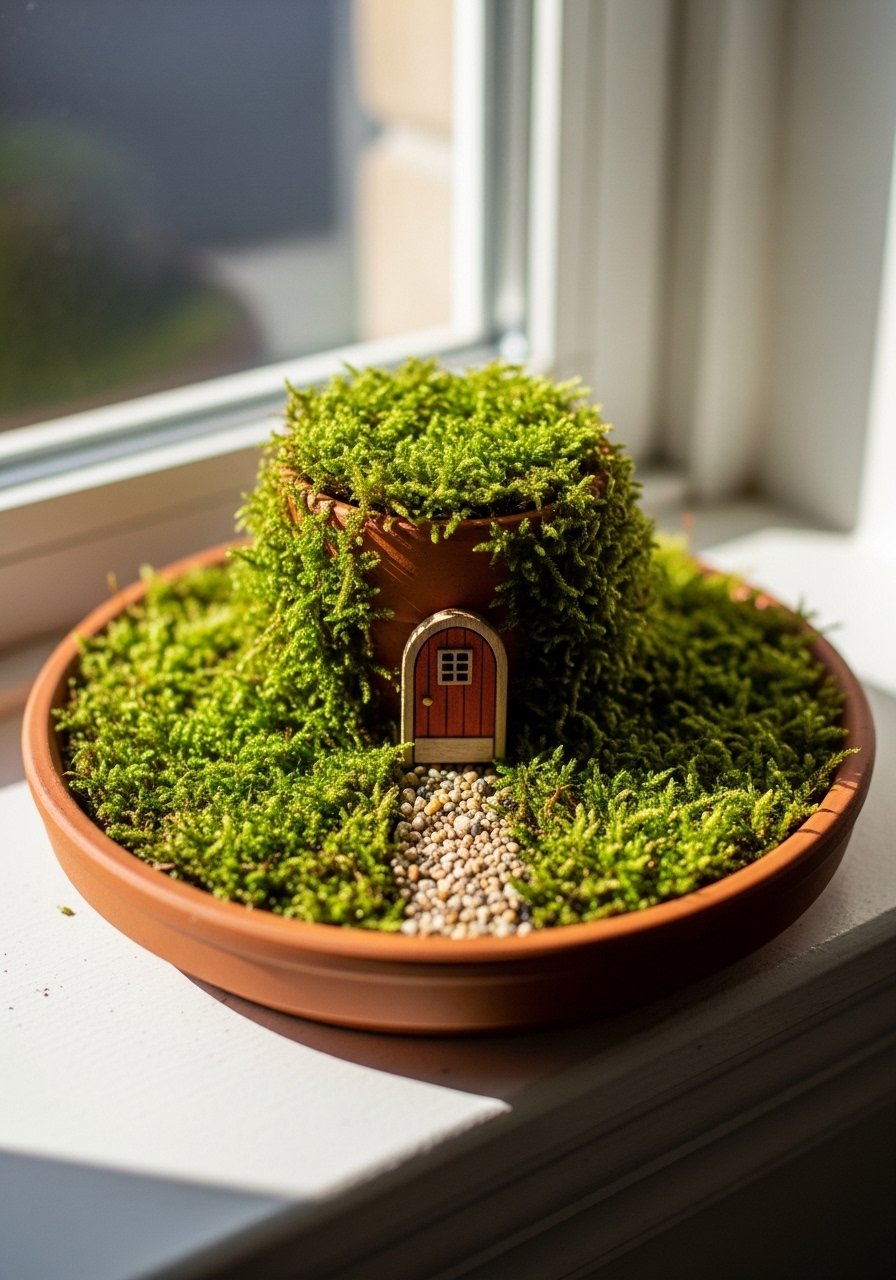
The idea is a small round scene that fits a 6-8 inch saucer, which is perfect for a kitchen windowsill or a narrow apartment ledge. I like using a 2-inch depth of potting mix, topped with sheet moss so the scale reads right. A common mistake is overloading the saucer with too many miniatures, which makes it look cluttered. Follow the rule of three for focal pieces: door, bench, and lamp. I used a set of miniature fairy doors and trimmed moss with scissors for a neat edge.
Mini Mossy Pathway For Outdoor Pots
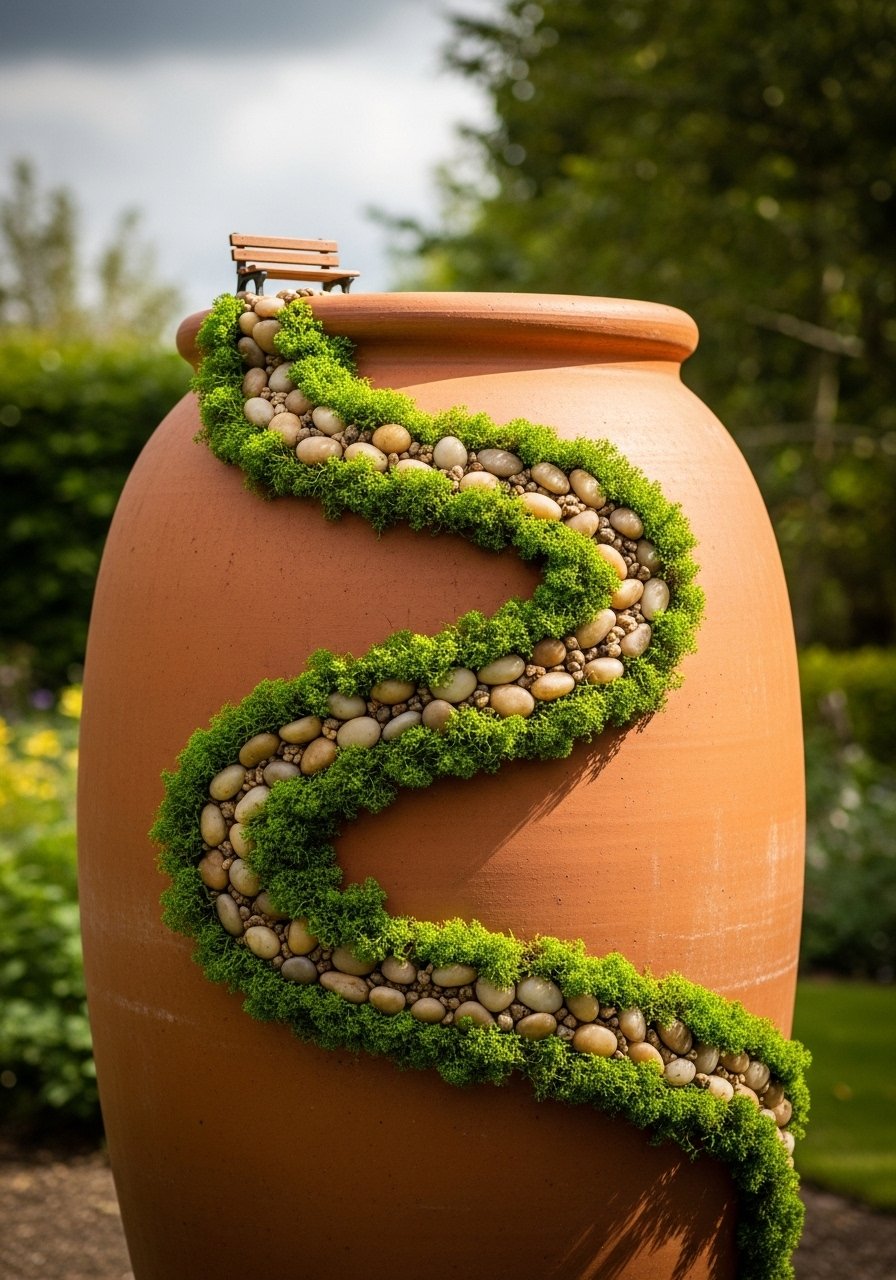
A moss pathway brings movement to a pot without adding height, so it works when your plant is the hero. I lay a 1/2-inch strip of craft glue, press preserved moss, and set 1/4-inch pebbles for a border. People often put paths that are too wide; keep it at 20 to 25 percent of the pot diameter so the plant still reads as main scale. These preserved moss sheets are cheap and last a season outdoors. Use preserved sheet moss and small river pebbles for contrast.
Tiny Teacup Planters For Shelves
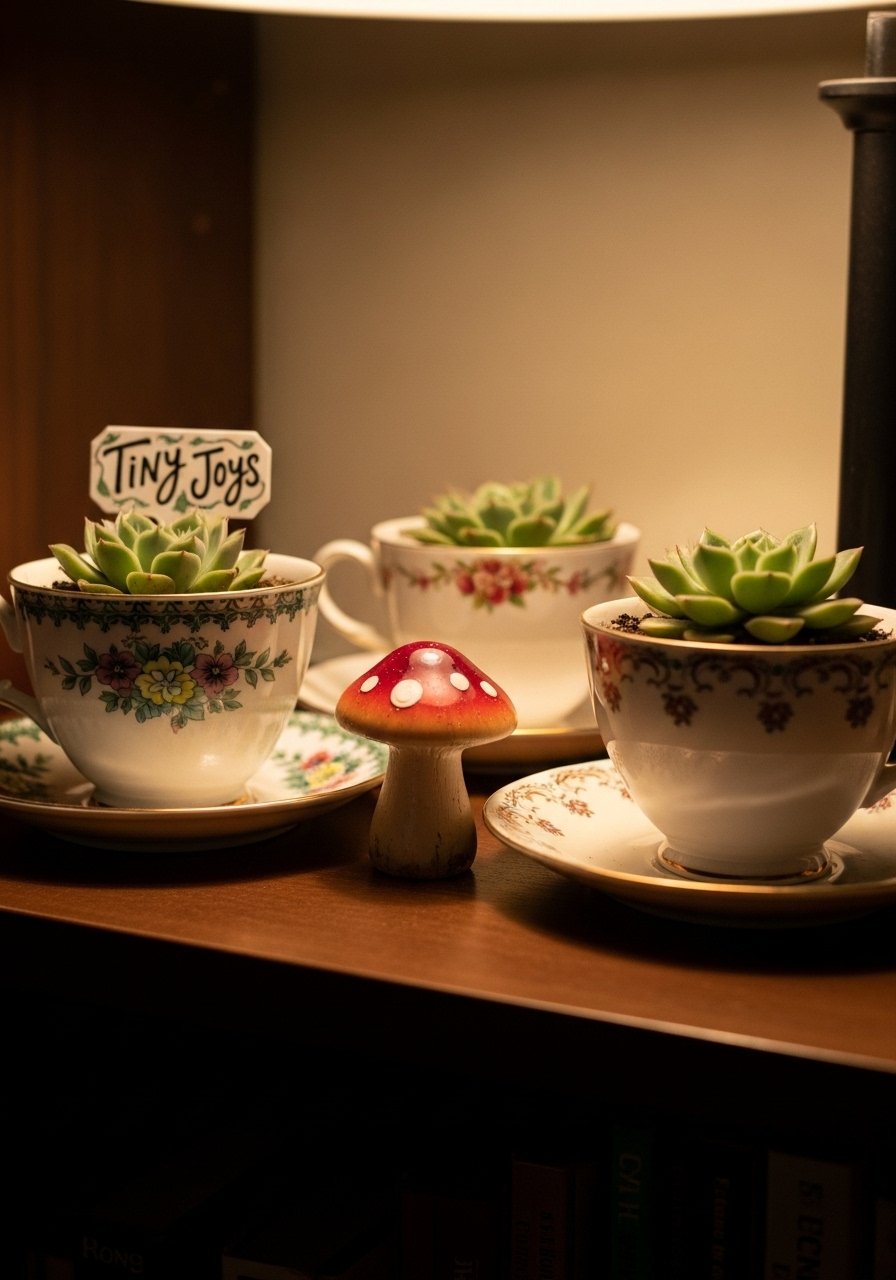
Teacup planters are my quick fix when I need personality on a shelf. Pick cups with 2 to 3 inch diameters and punch a 1/4-inch drainage hole if you plan to use real plants, or layer rocks and soil for no-drainage designs. The frequent mistake is planting a fast-growing succulent in too-small a cup. Use slow growers or artificial moss instead. I used a set of mini terracotta pots for practice before trusting vintage cups. These are kid-friendly and under $15 for a set.
Pebble Mosaic Fairy Door For Flower Pots
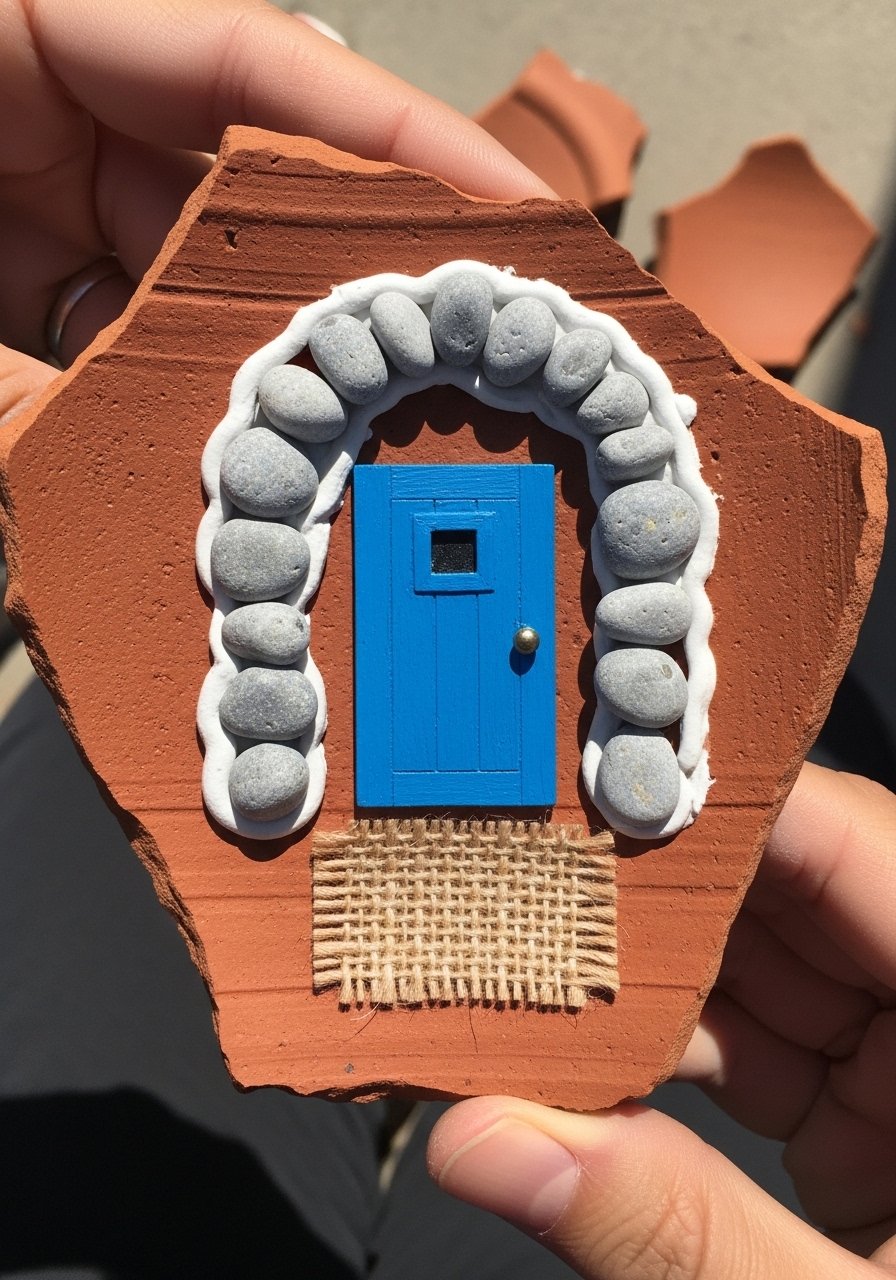
Making a pebble arch frames any fairy door and hides pot seams. Glue 1/8 to 1/4-inch smooth pebbles in an arch, leave a 1/4-inch gap for grout, and wipe clean before it sets. Newbies often pick stones that are too large, which throws the scale off. Stick to pebbles under 1/2 inch for 3-inch doors. I keep a mixed pebble pack on hand for color and texture matching. Pair this with the teacup planters idea for a cohesive shelf display.
LED Lanterns For Indoor Terrariums
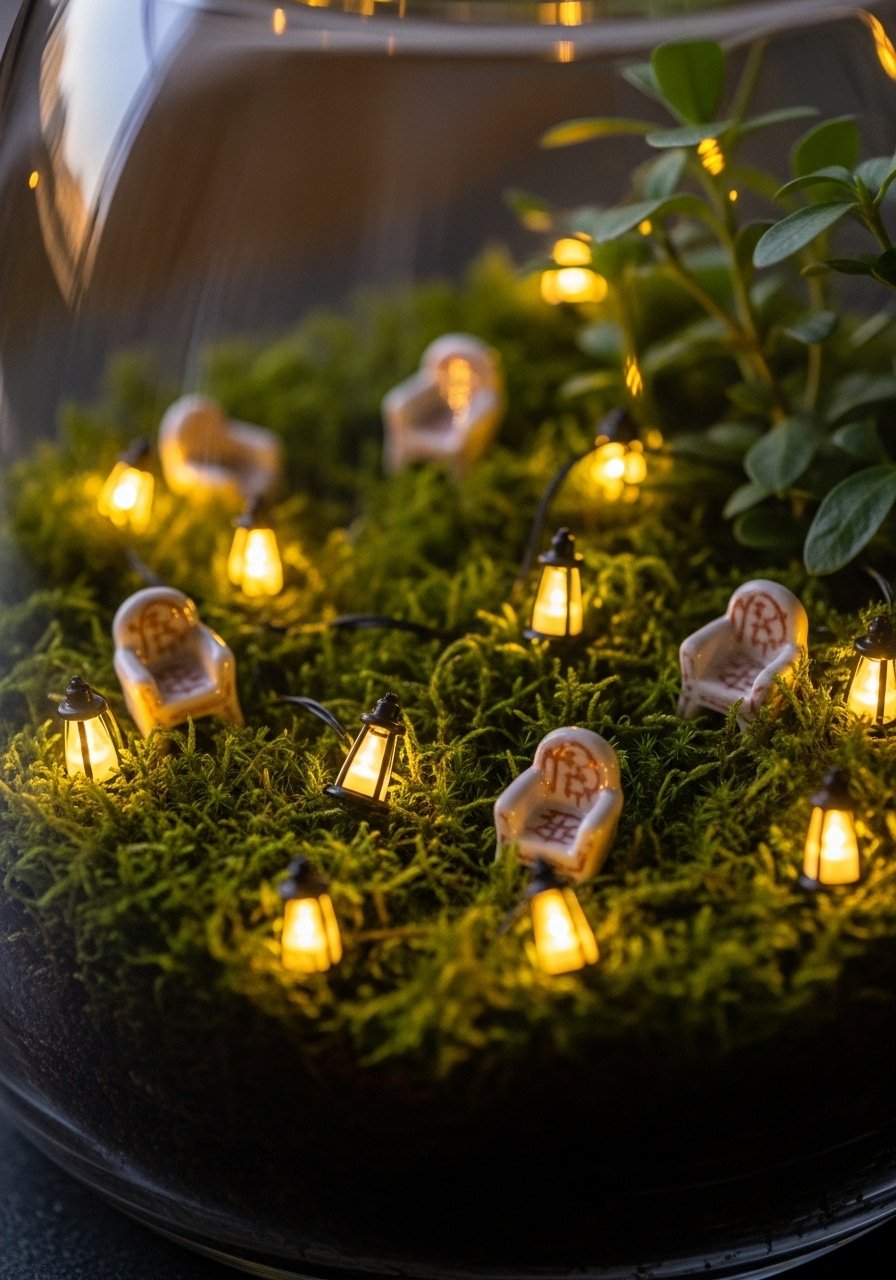
A single string of battery LEDs makes a fairy garden readable after dark. Use warm white micro LEDs and tuck the battery pack behind a rock or under sphagnum for invisibility. A common oversight is using daylight-toned LEDs that look harsh in a small scene. I prefer warm lights and spread them at three points for balance following the rule of three. These micro LED string lights run on AAA batteries and are weather resistant for covered patios.
Resin Mushroom Cluster For Outdoor Pots
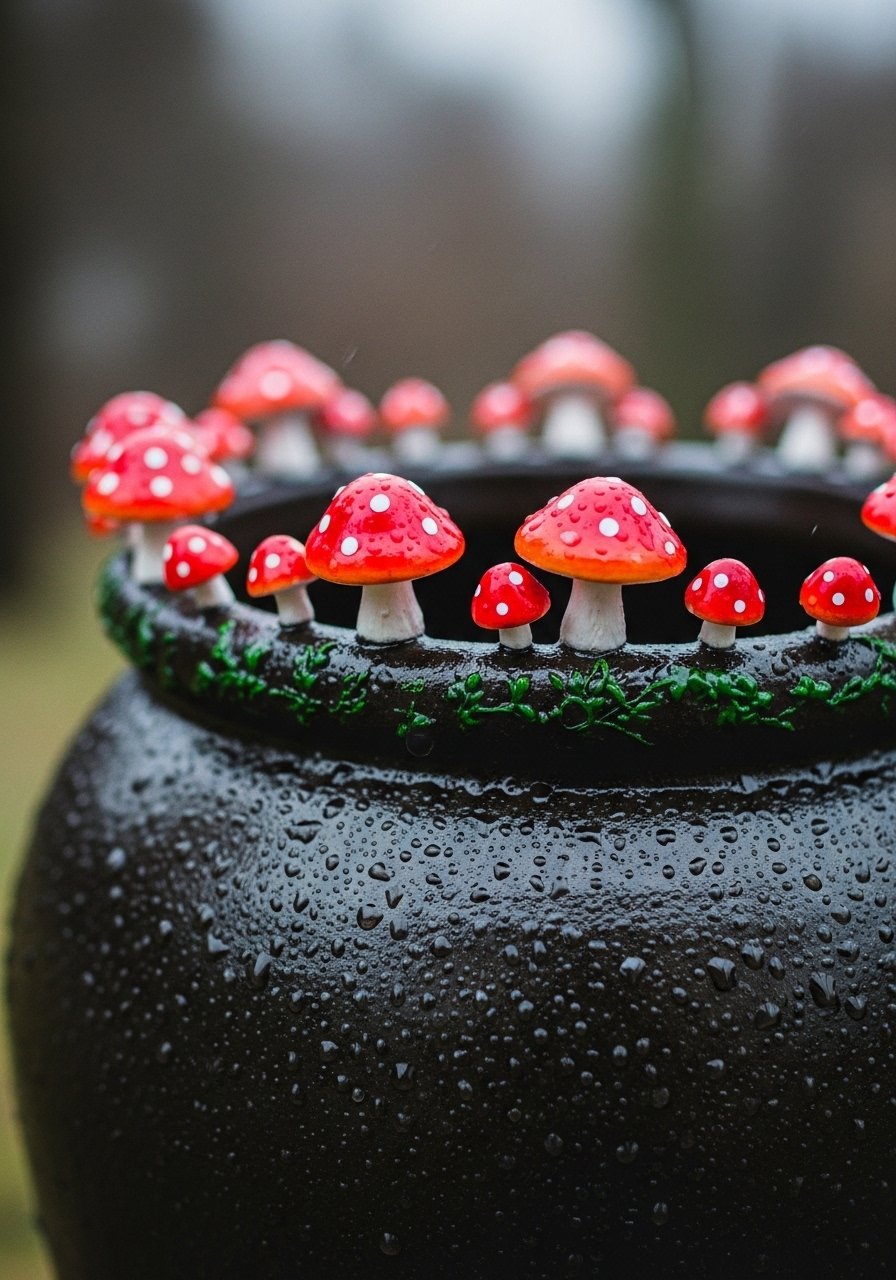
Resin mushrooms are a fast way to add character if you do not want to fuss with living fungi or clay sculpting. Plant 3 to 5 in a loose cluster at the pot edge for a natural look. The mistake is evenly spacing them as if they are ornaments. Nature clusters. Keep stems at varied heights, about 1 to 2 inches difference. I picked a pack of resin garden mushrooms that were weatherproof and held up through rain. They are inexpensive and kid-safe.
Driftwood Bench For Patio Pots
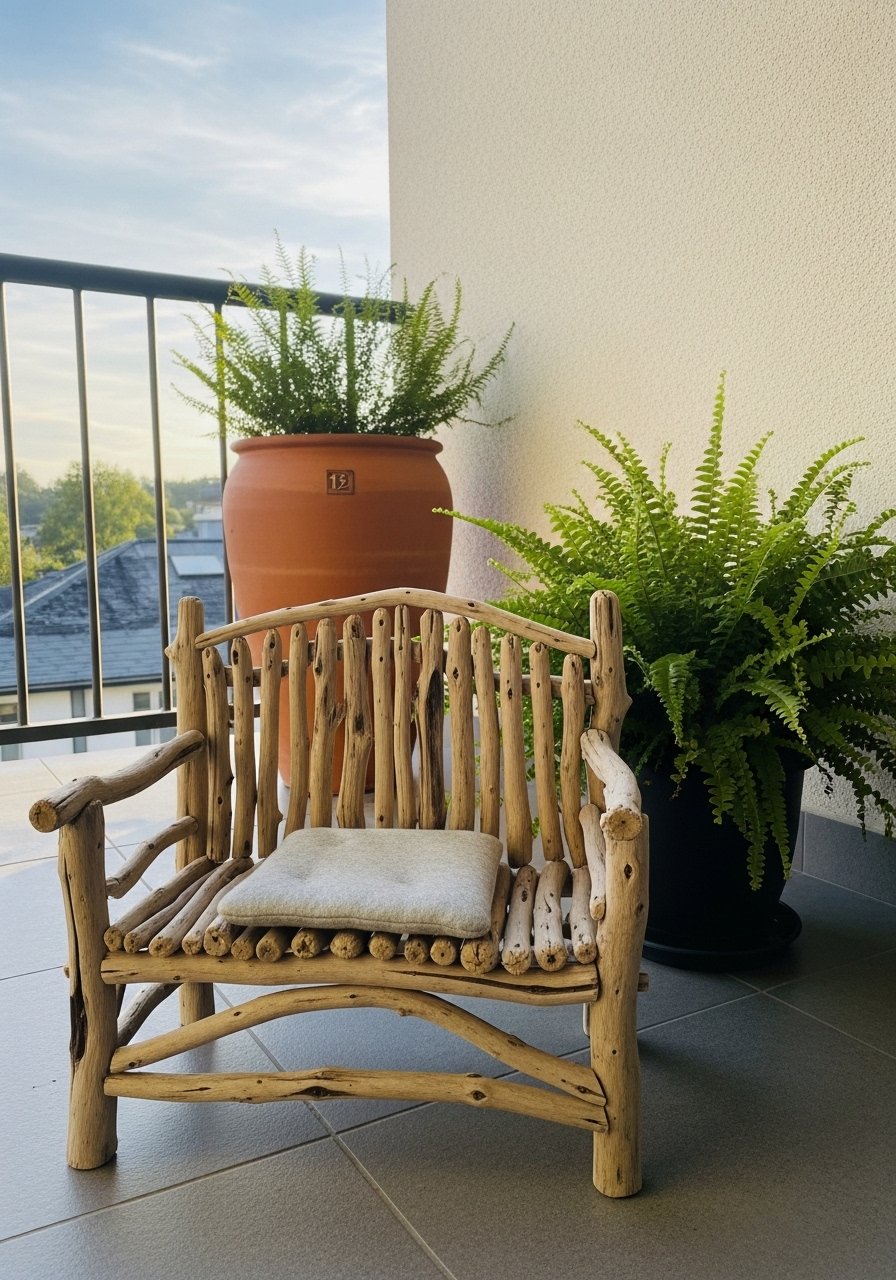
I made a tiny bench from glued drift twigs and it instantly made my biggest pot feel like a real scene. Cut pieces to 2.5 to 3 inch lengths for the seat and 3.5 to 4 inch legs so the scale fits a 10-12 inch planter. People forget to sand rough ends, and tiny splinters will ruin a cuddle prop for small hands. For sturdiness, I used wood glue and a dab of hot glue for joints. I keep a pack of craft twigs for pieces like this.
Pressed Flower Picket Fence For Tiny Beds
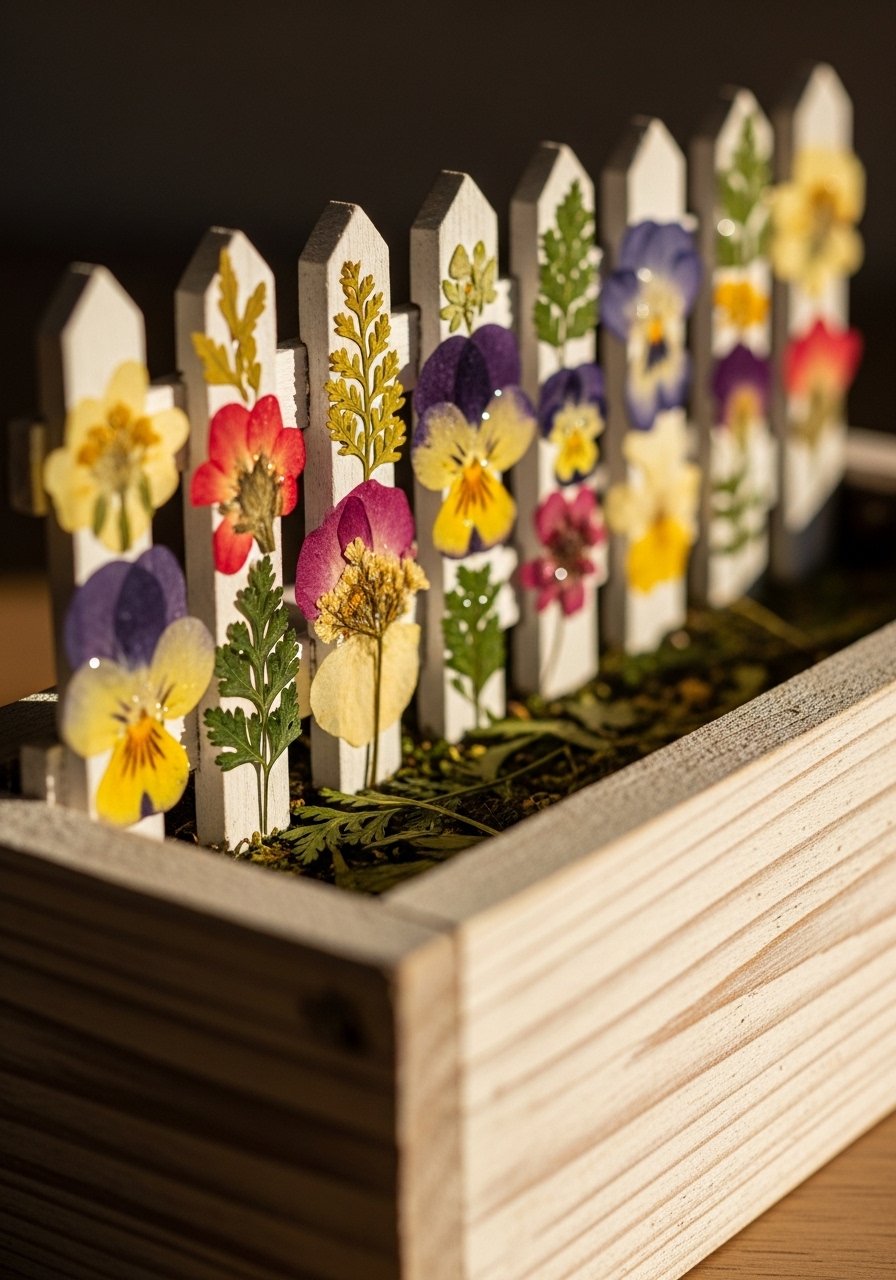
This one is delicate and looks great on a sunny console or entryway table. Paint a 3-inch-high craft stick fence, glue pressed flowers in patterns, and seal with clear matte spray. A frequent error is using too glossy a finish that reads fake. Keep finish matte and stick to a 80/20 color ratio: 80 percent neutral paint, 20 percent color from petals. I used a tiny pack of mini picket fences and pressed flowers from a kitchen bouquet.
Bottle Cap Pond For Indoor Tray Gardens
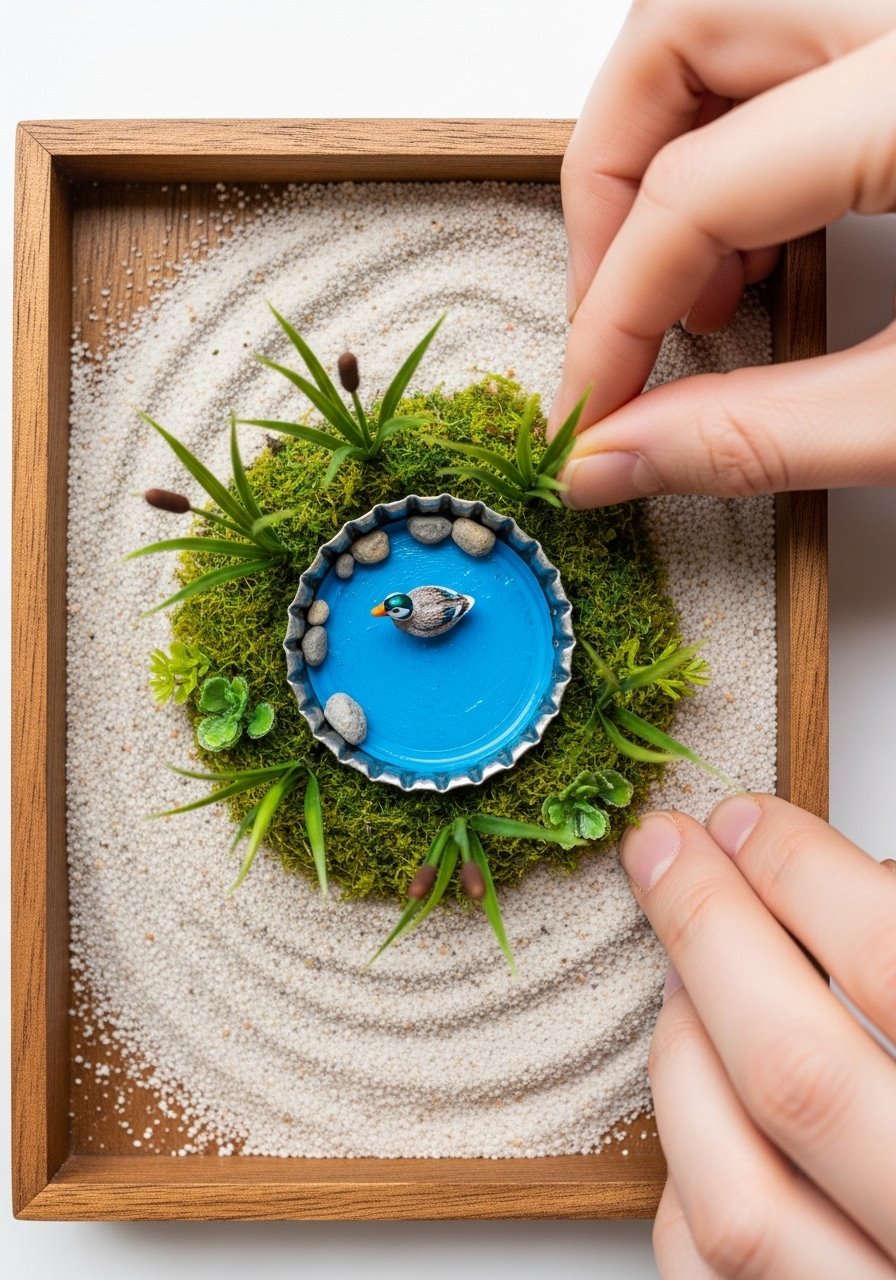
Bottle caps are the easiest pond substitute and they sit flush so the surface is plane with sand and moss. Paint the inside with two coats of blue and add a gloss coat if you want reflection. People try to use shallow caps and then accidentally spill; use caps that retain 1/8 inch of depth. I keep a collection of craft bottle caps for quick ponds and add a dab of gloss medium for a water look.
Textured Clay House For Entry Table

Sculpting a little house is addictive and looks great on an entry table. Use air-dry clay, keep walls 1/8 inch thick, and score edges for a strong seam. People make walls too thick and it dries unevenly. I texture the roof with a fork for shingles and place a 1-inch LED tealight inside to make windows glow. These air-dry clay packs are inexpensive and forgiving for beginners.
Hanging Glass Globe Fairy Garden For Small Balconies
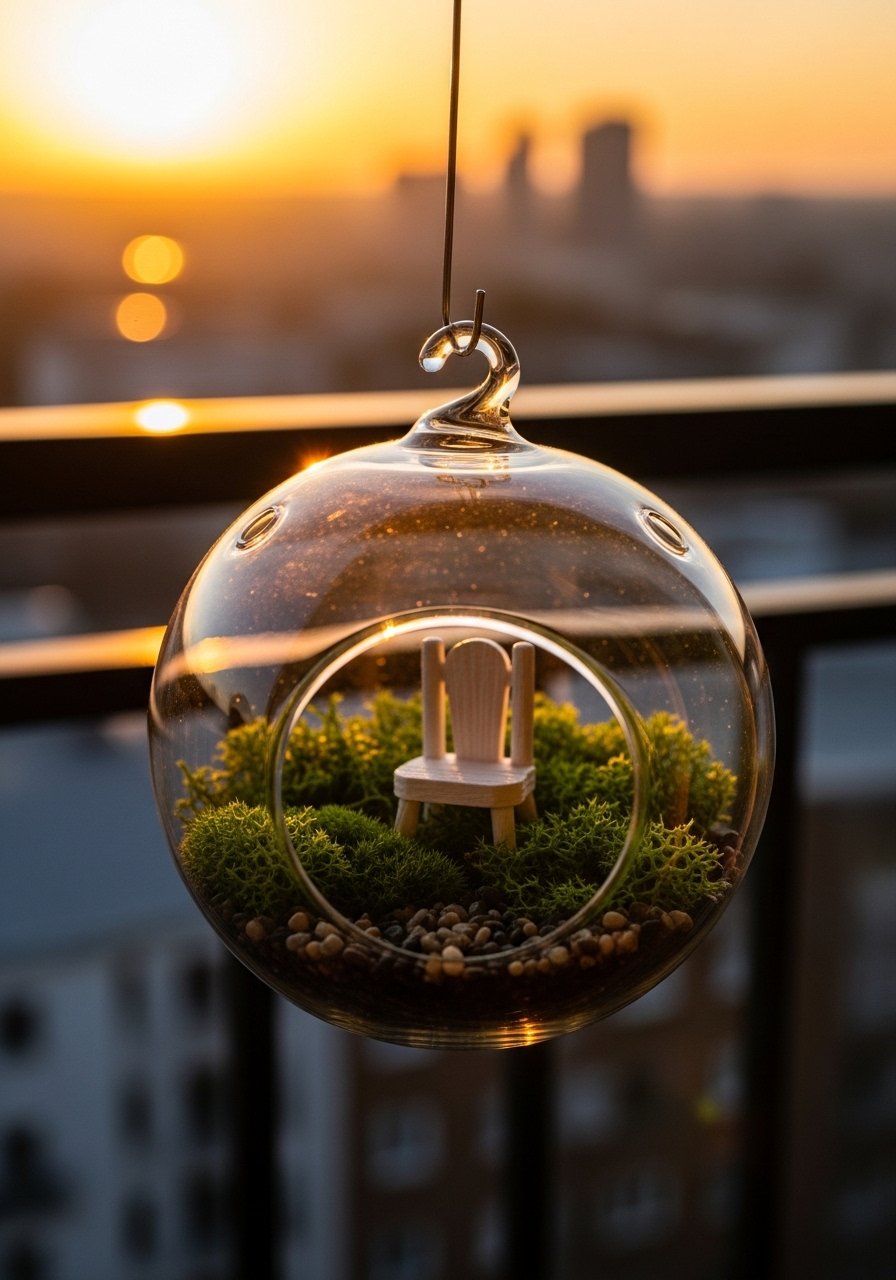
Glass globes let you have a three-dimensional scene without taking surface space. Anchor the plant with 1.5 inches of soil and use lightweight accents. The typical mistake is overloading the globe; keep elements to three or fewer to avoid crowding. I used a 4-inch globe and added a tiny felt pillow for the chair. For hardware I link to these hanging glass terrariums.
Repurposed Jewelry Tray Fairy Scene For Coffee Tables

Jewelry trays are shallow and chic for a coffee table vignette. I upcycle a brass tray, add 1/2 inch of potting soil, and anchor mini sculptures. The mistake I see is treating this like a planter and using damp soil; keep it dry or use preserved moss to avoid rings and damage. A tray gives the grown-up look while the mini scene brings warmth. I used a simple decorative jewelry tray as the base.
Twig Arbor And Climbing Vines For Garden Corners
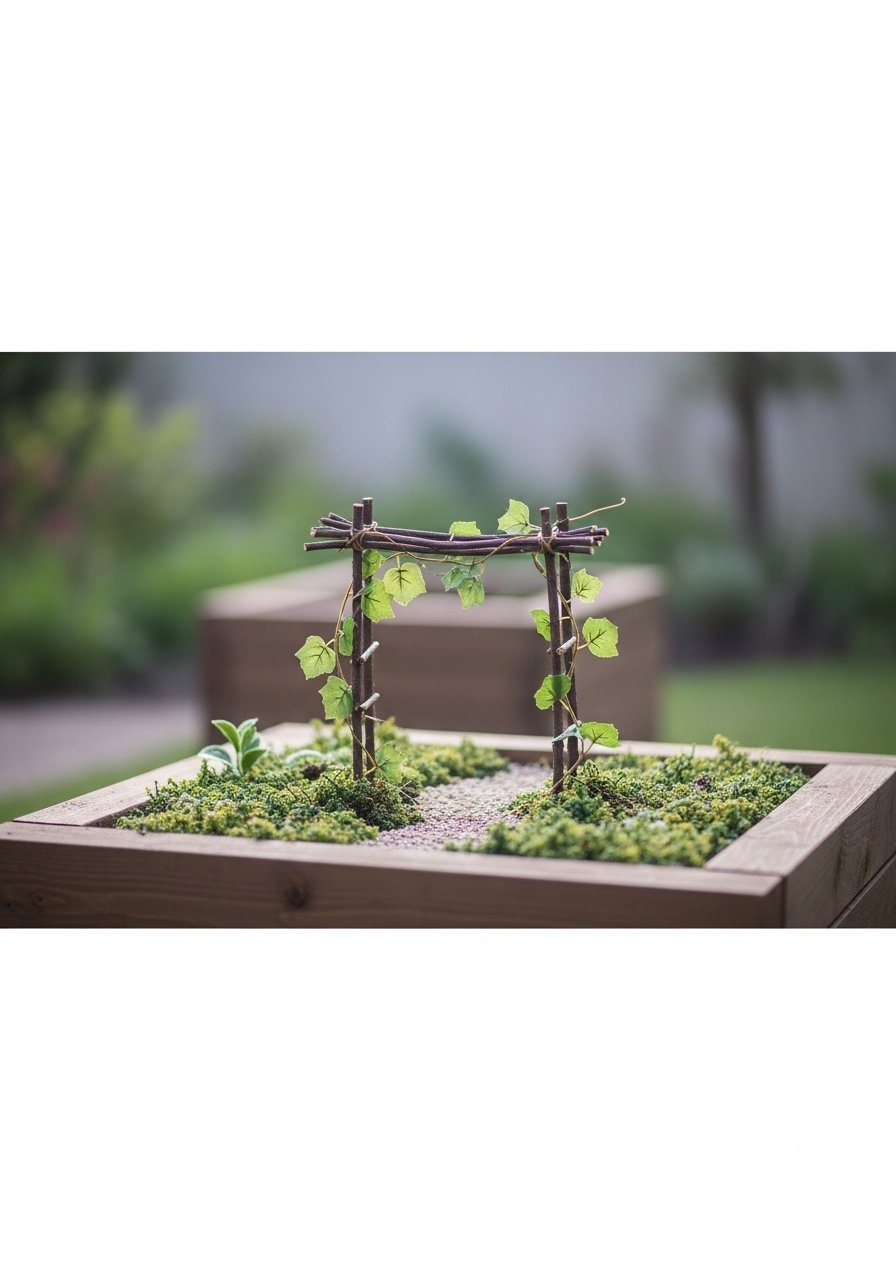
A twig arbor frames a tiny path and draws the eye up, which is great for porch corners. Bind twigs with floral wire and secure them 2 inches into foam so they stay upright. People skip anchoring and the arbor tilts after watering. Use tiny faux vines or train baby ivy with a dab of glue as a starter. I keep a spool of fine floral wire for assemblies like this.
Seed Packet Pathway And Signposts For Kid Projects
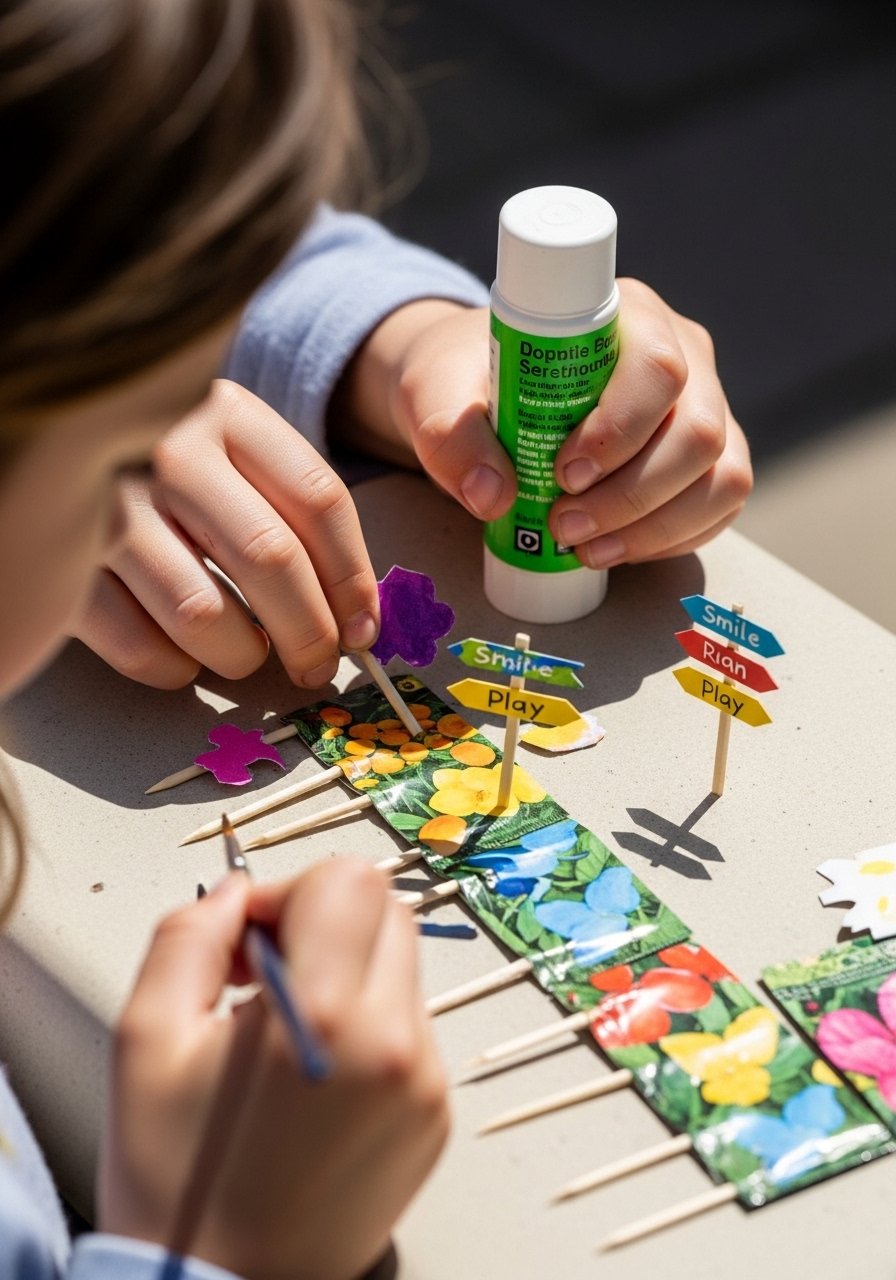
This is my go-to for craft days because it is low mess and high personality. Cut seed packet images to 1 x 1.5 inches, glue them to toothpicks, and alternate colors to create rhythm. The common mistake is making signs too tall; keep them under 2 inches so they stay in scale with small plants. It teaches kids basic composition and the 80/20 color rule naturally. I used a set of mini garden flags for fast results.
Layered Shadow Box Miniature Landscape For Wall Display
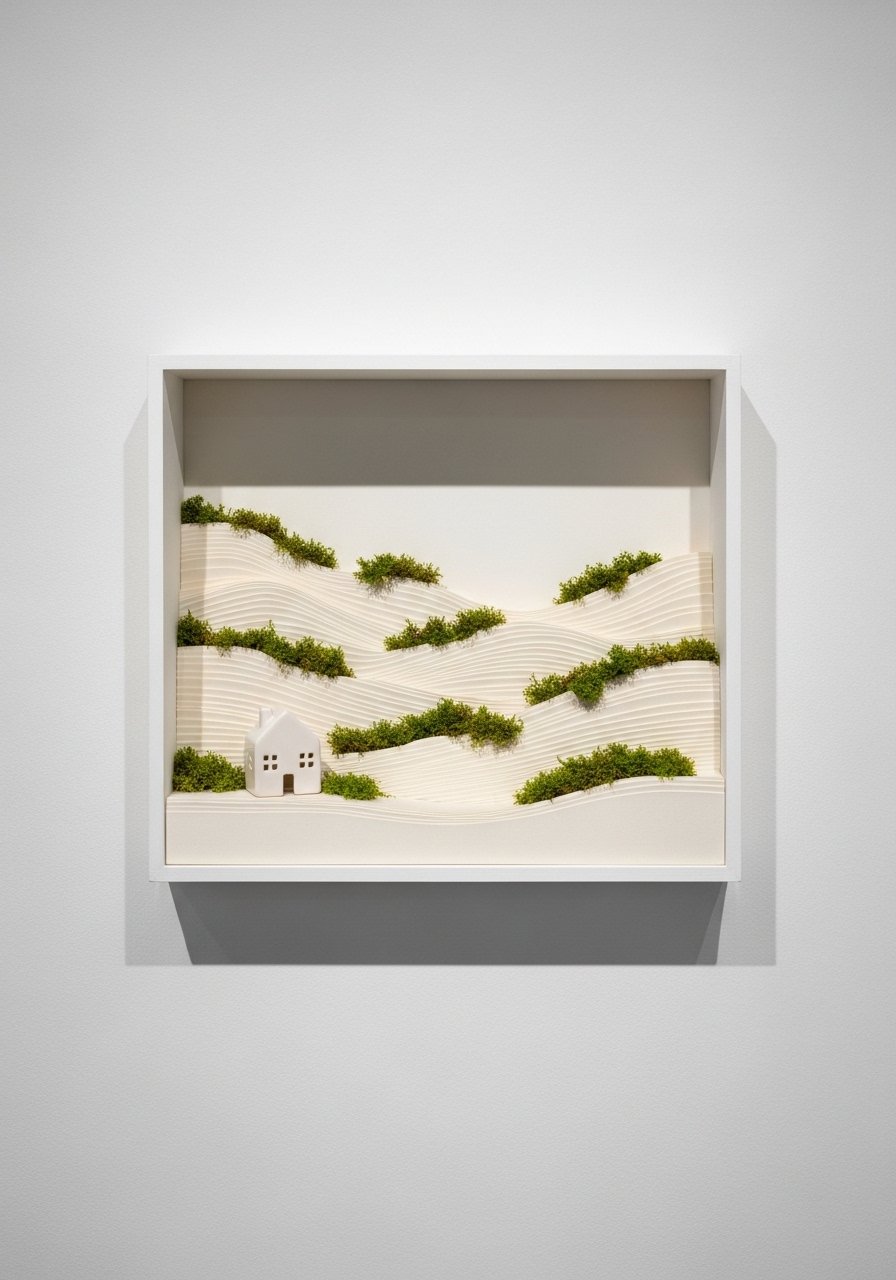
A shadow box lets you keep a fairy scene on the wall where pets and kids cannot disturb it. Build depth in three planes: foreground, middle ground, background, each about 1/4 inch apart. People try to cram everything on one plane and it reads flat. Use muted colors for the back and saturated tones up front to create depth. I framed mine with a 6 x 6 inch box and used felt glue. I source small shadow boxes when I want a permanent display.
Your Decor Shopping List
Textiles
- Honestly the best $35 I have spent. Chunky knit throw in cream 50 x 60 inches, soft acrylic, perfect to photograph next to a tray garden.
Wall Decor - Small shadow box frames 6×6 (~$12 each). Use for permanent mini landscapes.
Lighting - Micro LED string lights battery (~$10). Warm white, 20 LEDs, battery pack hides easily.
Plants & Moss - Preserved sheet moss 12 x 12 inch sheets, great for paths and carpeted surfaces.
Miniatures & Tools - Miniature fairy doors assorted pack (~$9). Ready to use.
- Resin garden mushrooms set (~$14) for weatherproof accents.
Budget Finds - Craft bottle caps mixed pack (~$6) for ponds and bases. Similar stuff at thrift stores.
Splurge Tools - Air-dry clay 16oz pack (~$20) for sculpting houses and benches.
Hardware - Floral wire 26 gauge 50 yards, useful for arbors and detail work.
Shopping Tips
Keep scale consistent with a simple rule. If your main planter is 10 inches across, pick miniatures between 1 and 3 inches. These mini terracotta pots are a good reference.
Grab micro LED string lights for any indoor scene. Warm light reads better than cool white in small vignettes.
Curtains should puddle or kiss the floor, never hang halfway up. If you display fairy gardens on a console near a window, use linen curtain panels 96-inch to frame the view.
If you want quick durability, buy preserved moss sheets. They look alive without the watering maintenance.
Mix real and faux plants intentionally, not randomly. One real small succulent and one faux fiddle leaf fig 3ft for height keeps the look balanced.
Frequently Asked Questions
Q: Can I use real moss in indoor fairy gardens?
A: Yes, but be realistic about light and moisture. Live moss needs indirect light and consistent humidity. For an entry table I often use preserved moss instead because it avoids spills and staining. Preserved moss keeps its color and texture for months without care.
Q: How deep should the soil be for a tiny teacup succulent?
A: About 1.5 to 2 inches is enough for slower succulents. Anything shallower will force frequent repotting. If you are using a non-draining cup, layer a 1/2 inch of pebbles first and top with well-draining cactus mix.
Q: What scale should I follow so my miniatures do not look toy-like?
A: Aim for 1:12 to 1:24 scale, which means a 3-inch chair suits a 36-inch person in real terms. Keep most elements within a 20 to 25 percent size variance for cohesion. The rule of three helps place focal items.
Q: Are battery LED lights safe in outdoor covered planters?
A: Yes, choose weather-resistant micro LEDs and hide the battery pack away from direct soil. I tuck mine behind a rock or under preserved moss. Replace batteries seasonally to avoid corrosion.
Q: How do I stop a fairy garden from looking cluttered?
A: Use three to five focal elements, pick one dominant texture, and keep 80 percent neutral tones with 20 percent accent color. Think about spacing proportionally, and leave negative space so each miniature can be read.
Q: Can kids join these projects without making a mess?
A: Absolutely. Pick projects like the seed packet pathway or bottle cap pond for kids. Use glue sticks or tacky glue instead of hot glue for safety, and prep trays so any spilled sand or pebbles are contained.