
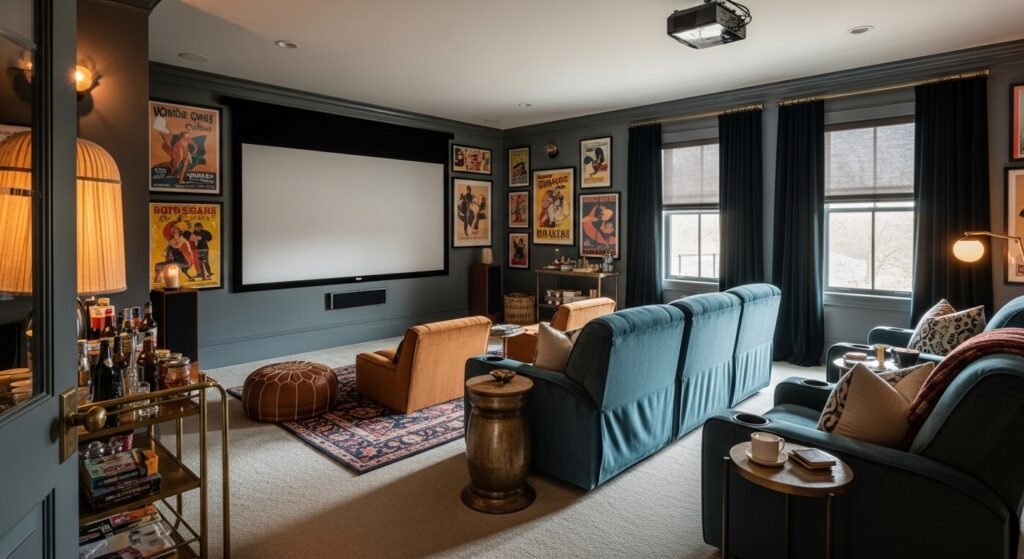
My living room had nice furniture and decent lighting but it still felt like a waiting room. Took me embarrassingly long to figure out it was missing texture. Every surface was smooth, every color was flat, and nothing invited you to actually sit down. Once I fixed that one problem the whole room finally felt like a place people wanted to stay in for a movie marathon.
These setups skew eclectic with warm neutrals, some brass, and a few boho pieces. Most projects land between budget-friendly and a small splurge. Most folks drop 2 to 5 grand when they go all-in on a theater room. These ideas work in basements, spare bedrooms, or any living room you can darken.
Vintage Poster Gallery Wall Behind the Screen
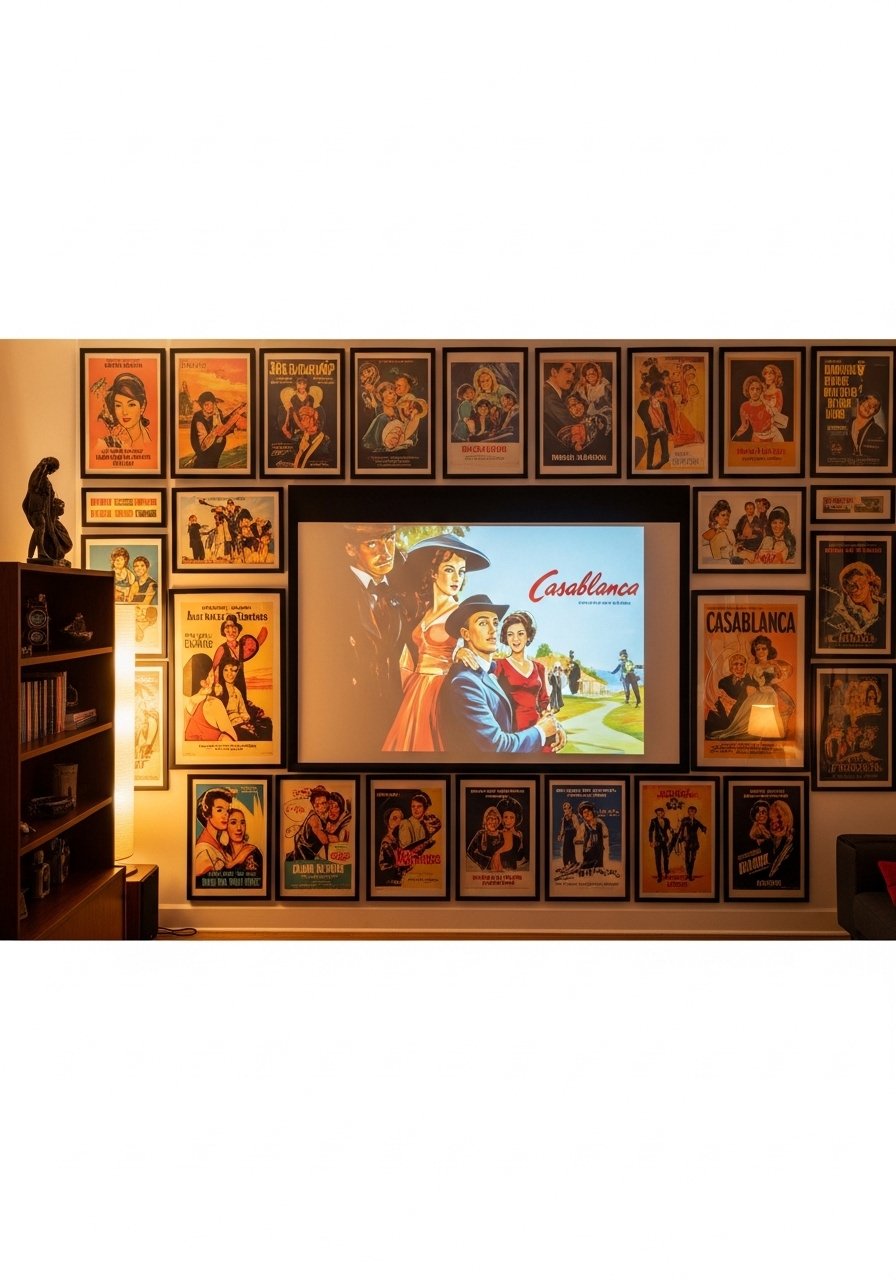
I hung a collection of 24×36 framed movie posters behind the screen to give the wall real character without competing with the picture. The trick is to keep the frames about 57 to 60 inches off the floor at eye level and to do 60 percent vintage posters and 40 percent modern prints so it reads eclectic, not chaotic. I used brass picture ledges to swap prints easily, they cost less than a framed original and let me change themes. A common mistake is packing the wall too close to the screen. Leave a 6-8 inch buffer so projector glow does not hit the art. If you rent, use heavy duty command hooks on the ledges.
Layered Floor Seating with Poufs for Group Viewing
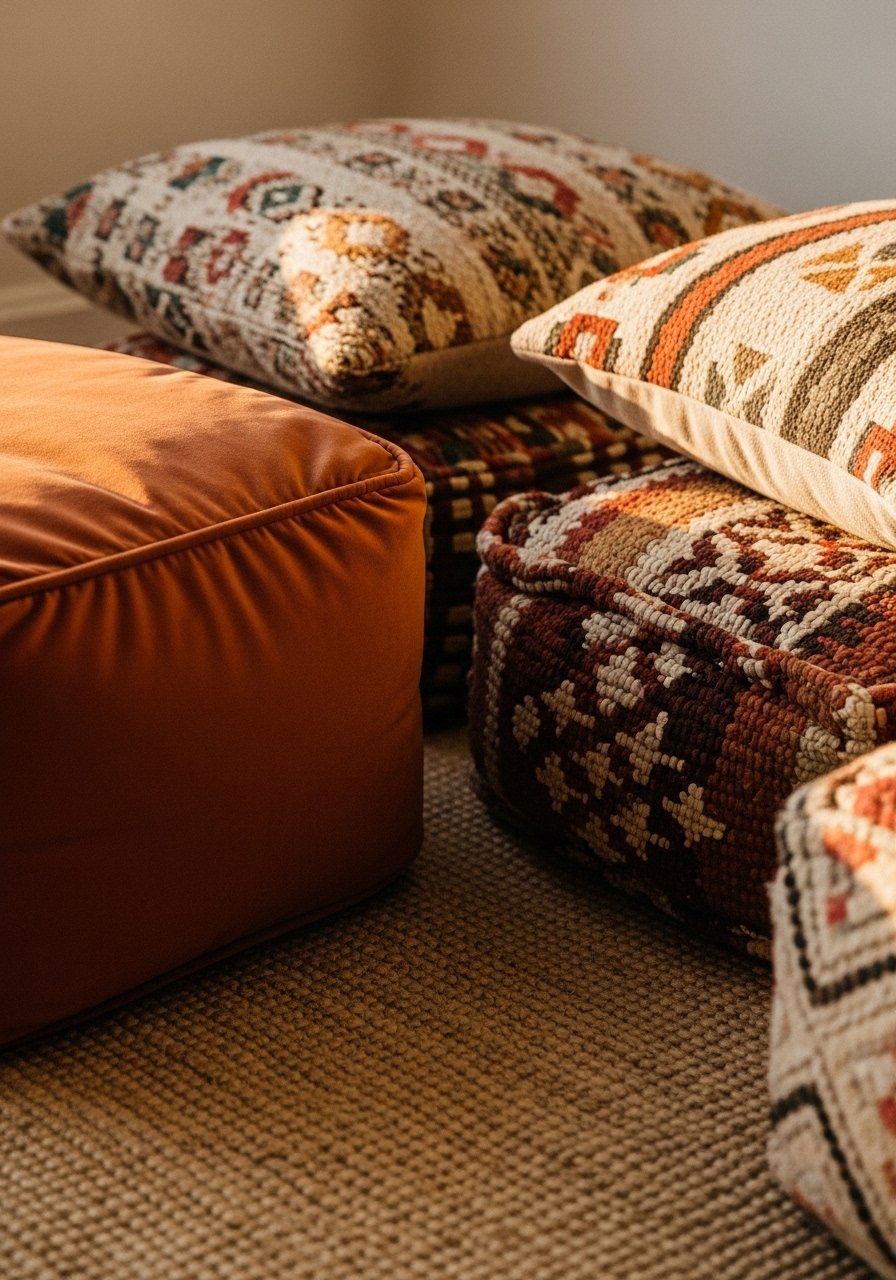
My first movie nights were ruined by people craning for a view. Layering seating fixes that. Put 2-3 recliners on the back row, then 4-6 floor poufs or rugs up front so everyone has sight lines. Use a minimum 10×12 foot rug under all seating so the room reads as one area. I grabbed terracotta velvet poufs and washable floor cushions from Amazon for under $40 each Terracotta velvet poufs. People mistake tiny scatter rugs for anchoring pieces. Make every front leg sit on the rug so the layout feels intentional.
Layered Textured Curtains to Kill Daylight Glare
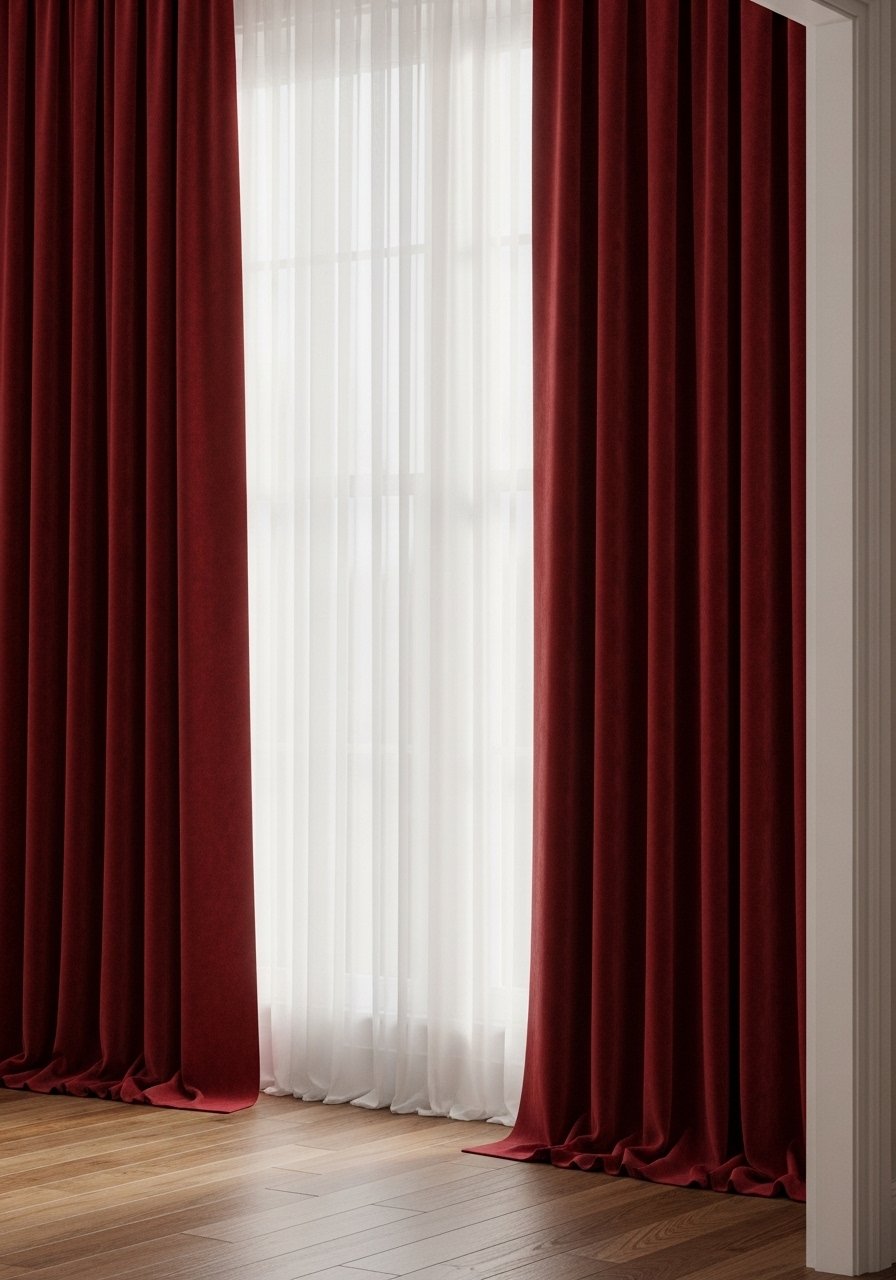
Most people hang curtains at the window frame which makes a room look shorter. Hang panels so they puddle 2 to 4 inches and mount the rod 6-12 inches above the window to fake height. I doubled up blackout velvet panels with a sheer layer so I can keep light out for a matinee and still have an evening glow when needed. For renters, tension rods work if you cannot drill. I used 108-inch thermal panels that block enough light for an ultra-short throw projector. Over 7 in 10 hate how lights wreck their movie vibe. Add dimmers on overheads and two table lamps to hit about 1500 lumens when needed.
Mixed Metal Shelves for Collectibles and Cable Hiding
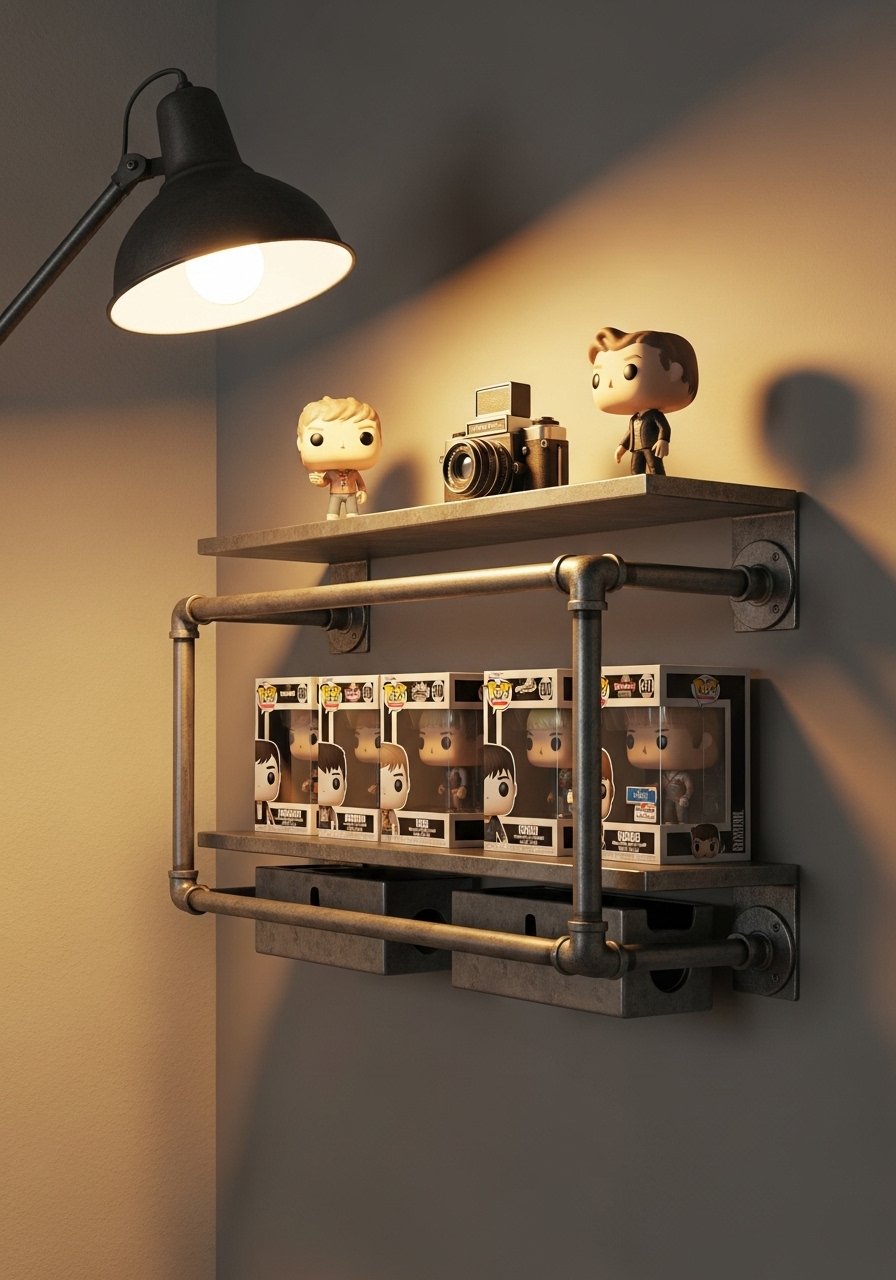
Shelving that mixes brass and black steel makes memorabilia feel curated. I installed three floating shelves at staggered heights to follow the height variation rule: tall, medium, low. Put your AV hub behind a slatted basket or a metal box shelf to hide wires and remotes. I used brass picture ledges for prints and a black cable management sleeve tucked behind the lowest shelf. Wired systems look cheap beside nice seating because the cables are visible. Hiding cables under baskets keeps the tech from stealing the aesthetic. A mistake is uniform shelf heights. Vary them and use odd numbers for display groupings.
Recliner Back Row with Ottoman Clusters for Comfort
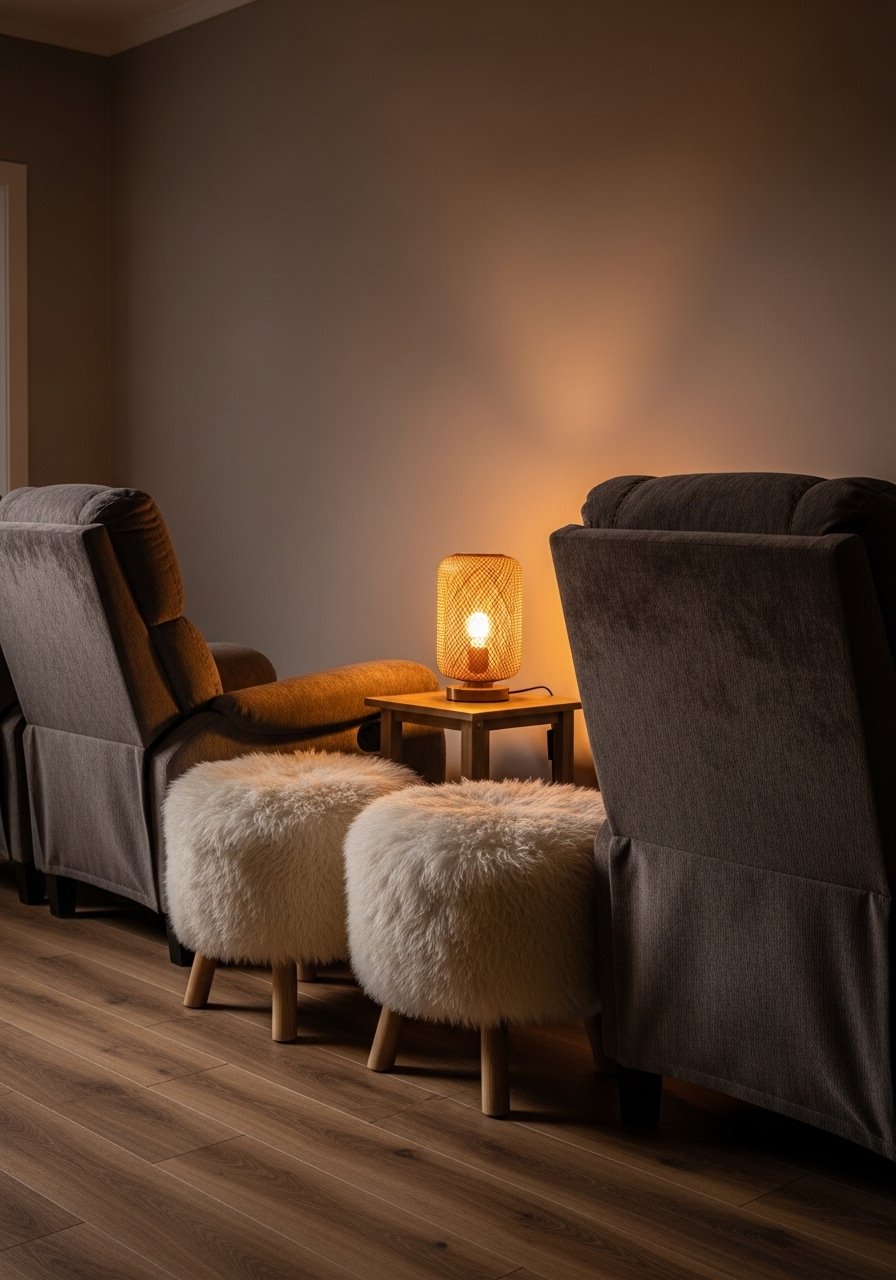
I finally stopped fighting with friends for the good seat when I added a proper back row. Two recliners with ottomans give couples and sleepers their own space. Keep the recliners 6 to 8 feet from the screen in a 12×15 room so you hit a comfortable viewing angle. Use performance velvet or pet-proof fabrics if you have dogs or kids. I paired my recliners with sheepskin-topped ottomans to hide remotes and offer flexible footrests. People think a sectional is the only answer. Recliners plus ottoman clusters give better sight lines and the room breathes.
Neon Sign Accent for Retro Glow
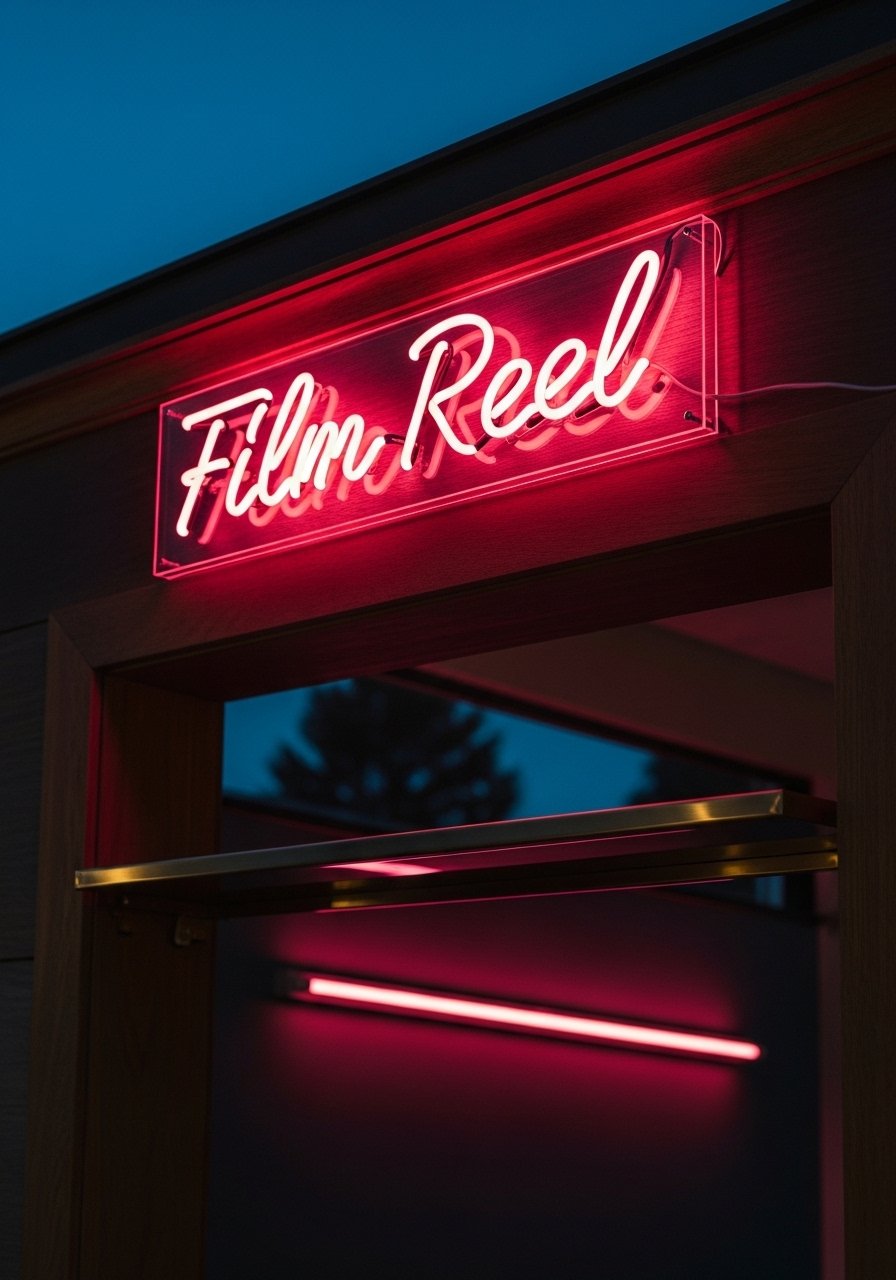
A neon sign above the doorway gives that late-night projector bar feel without adding glare on the screen. I got a dimmable custom sign and wired it to a switch so it serves as a subtle night light. Neon works best in brass or warm metal surroundings. Avoid placing neon directly opposite the screen where reflections can bounce. I tuck mine above the entrance so it frames the room rather than steals attention. If you rent, look for adhesive-mount options or a freestanding neon box.
Textured Acoustic Panels Halfway Up the Wall
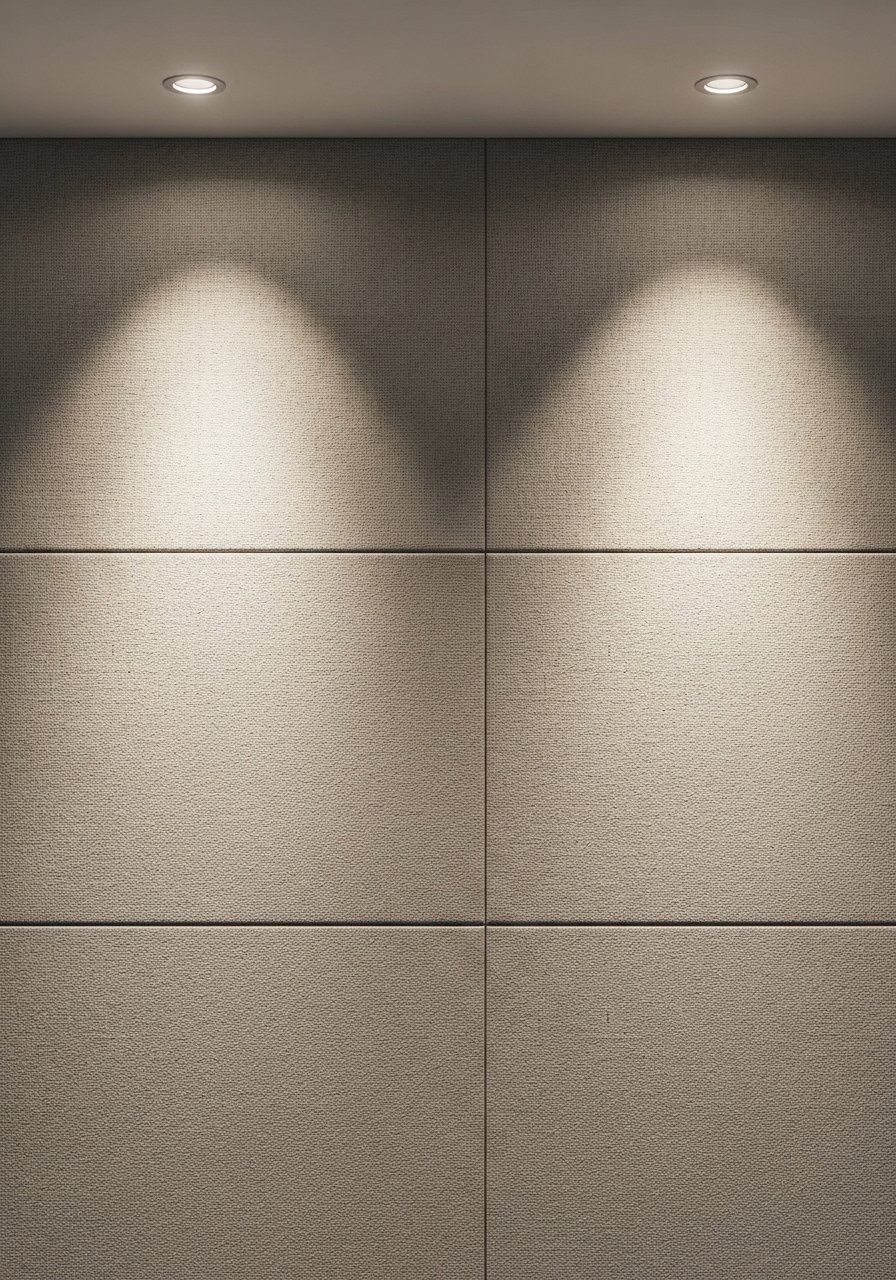
My echo problem vanished when I added textured panels halfway up the walls and filled in with gallery art above. Peg the panels at 60 percent coverage of the wall, then hang prints at 57 to 60 inches so they sit within the unpadded space. I used peel-and-stick linen panels that double as sound dampening and style. A lot of articles tell you to cover the whole wall. That flattens the look. Halfway up keeps the room warm and lets the art breathe. For renters, removable panels are a lifesaver.
Bean Bag Loungers in Corners for Overflow Seating
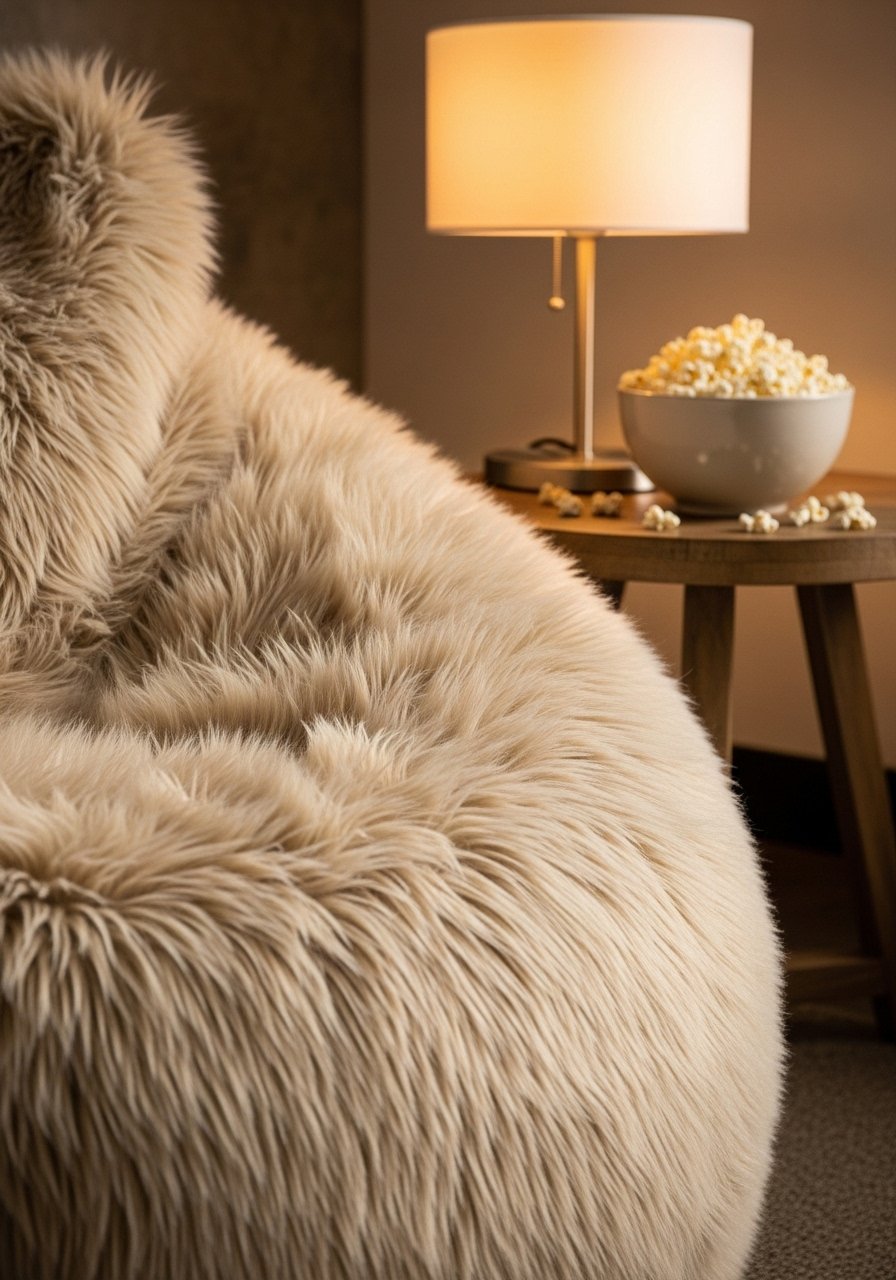
I learned that corners do not have to be dead space. Two bean bag loungers in opposite corners give overflow seating that is casual and kid-friendly. Choose vinyl or outdoor fabric for easy cleaning if you expect spills. Keep bean bags slightly angled toward the screen so necks do not cramp. They are cheaper than extra chairs and easier to stash when you need floor space for a yoga mat or a group scene. For small apartments, scale the poufs down by 20 percent and use a foldaway screen.
Popcorn Station Bar Cart for Snacks and Style
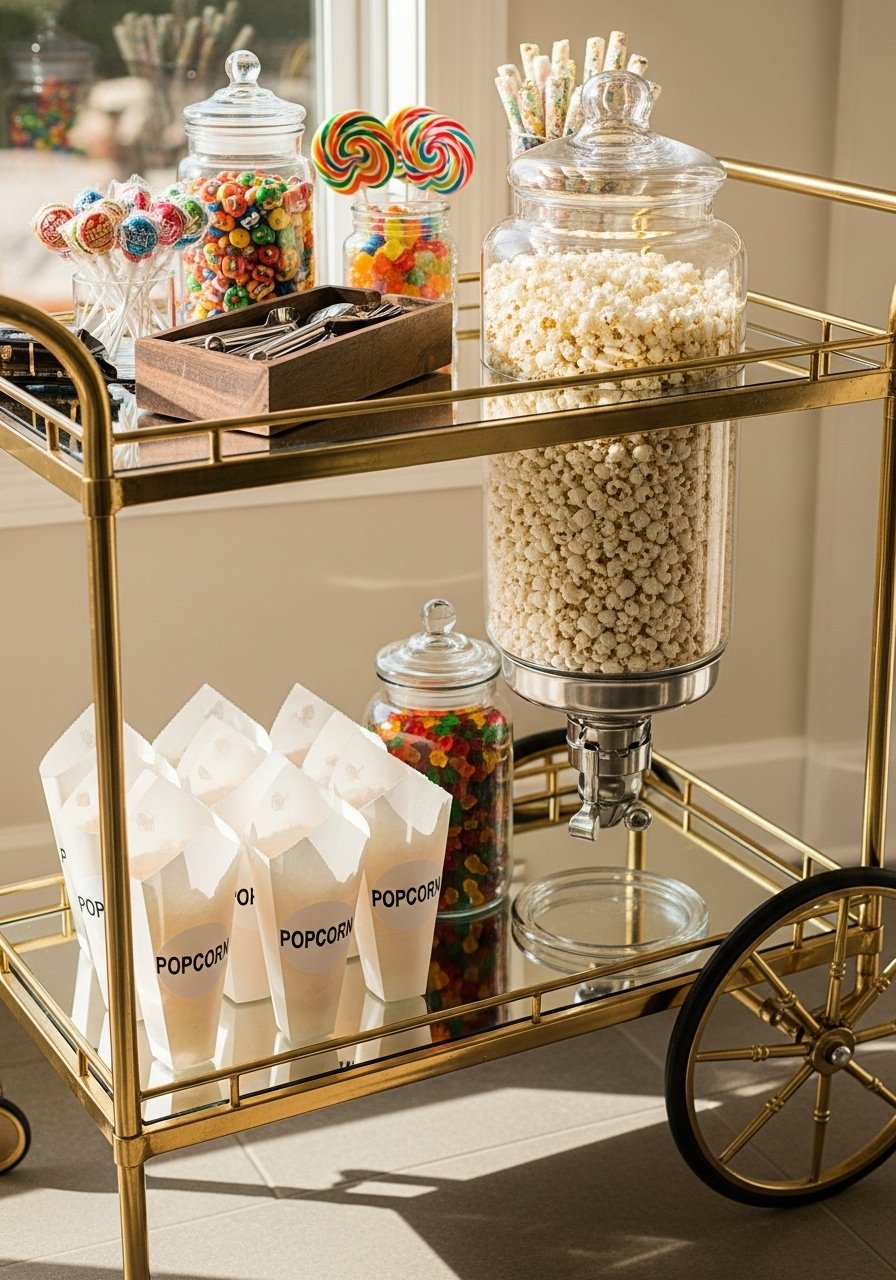
A snack station keeps crumbs off the sofa. I put a small wheeled cart near the entrance with a glass popcorn dispenser and trays for toppings. It doubles as a drink cart for pre-show cocktails. The cart should be narrow enough to pass in a hallway and stable enough that kids do not tip it. My cart cost under $200 and paid for itself after the first movie night. A mistake is overloading the cart with fragile items. Use baskets on the lower shelf for napkins and remotes so everything has a home.
Velvet Curtains and Jute Rug Pairing for Texture
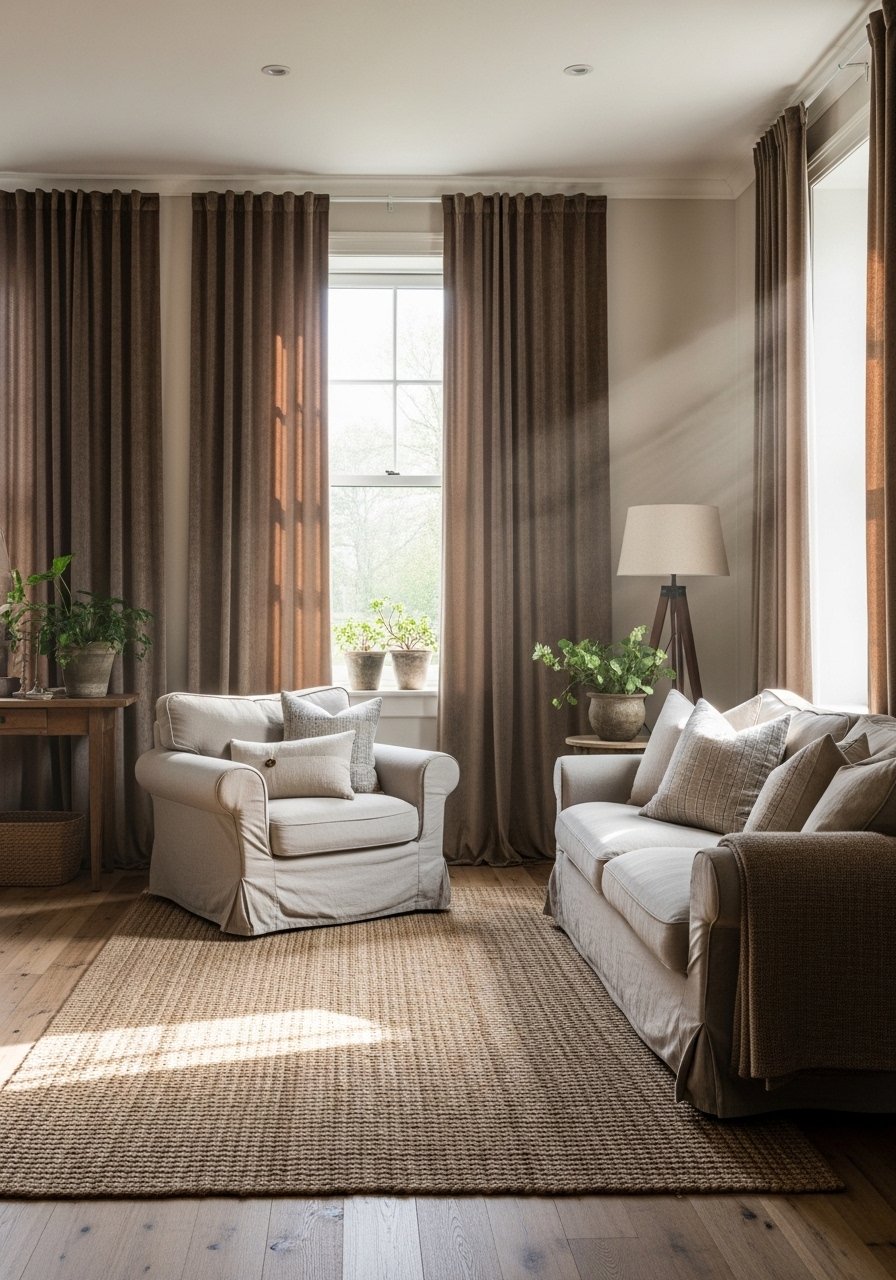
I used velvet curtains with a big 10×12 jute rug to marry softness and earthiness. The rug should be large enough so the front legs of all seating sit on it. That single move grounds the whole room. I layered 22-inch linen pillows in neutral shades with a single bold accent pillow to keep the 80/20 fabric rule. A common misstep is buying a rug that is too small. If you have pets, pick a washable rug or something you can spot clean. Pairing velvet with jute gives good contrast and hides wear better than all velvet.
Vinyl Record Wall as Side Accent for Pre-Show Vibes
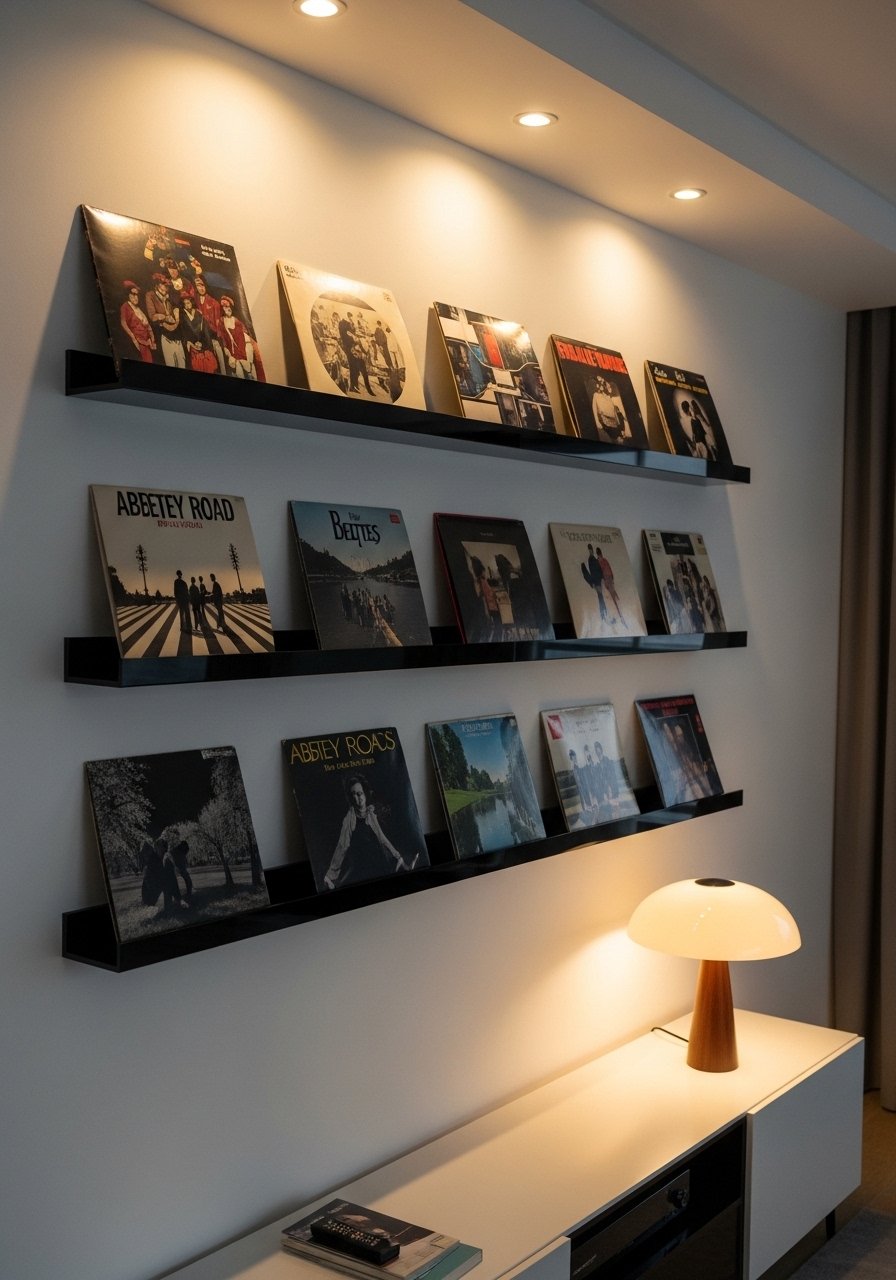
Records make a room feel lived in and give you music for pre-show playlists. Mount floating shelves in groups of three or five and stagger the heights. Keep the record wall away from the direct projection path so glossy sleeves do not reflect. I used black acrylic shelves that are thin and inexpensive and they hold my friend’s mixtapes and show posters. This corner pairs nicely with the bean bag loungers idea for a music-first nook. A mistake is crowding too many sleeves in a single line. Odd numbers look collected not staged.
LED Strip Border That Syncs With Sound
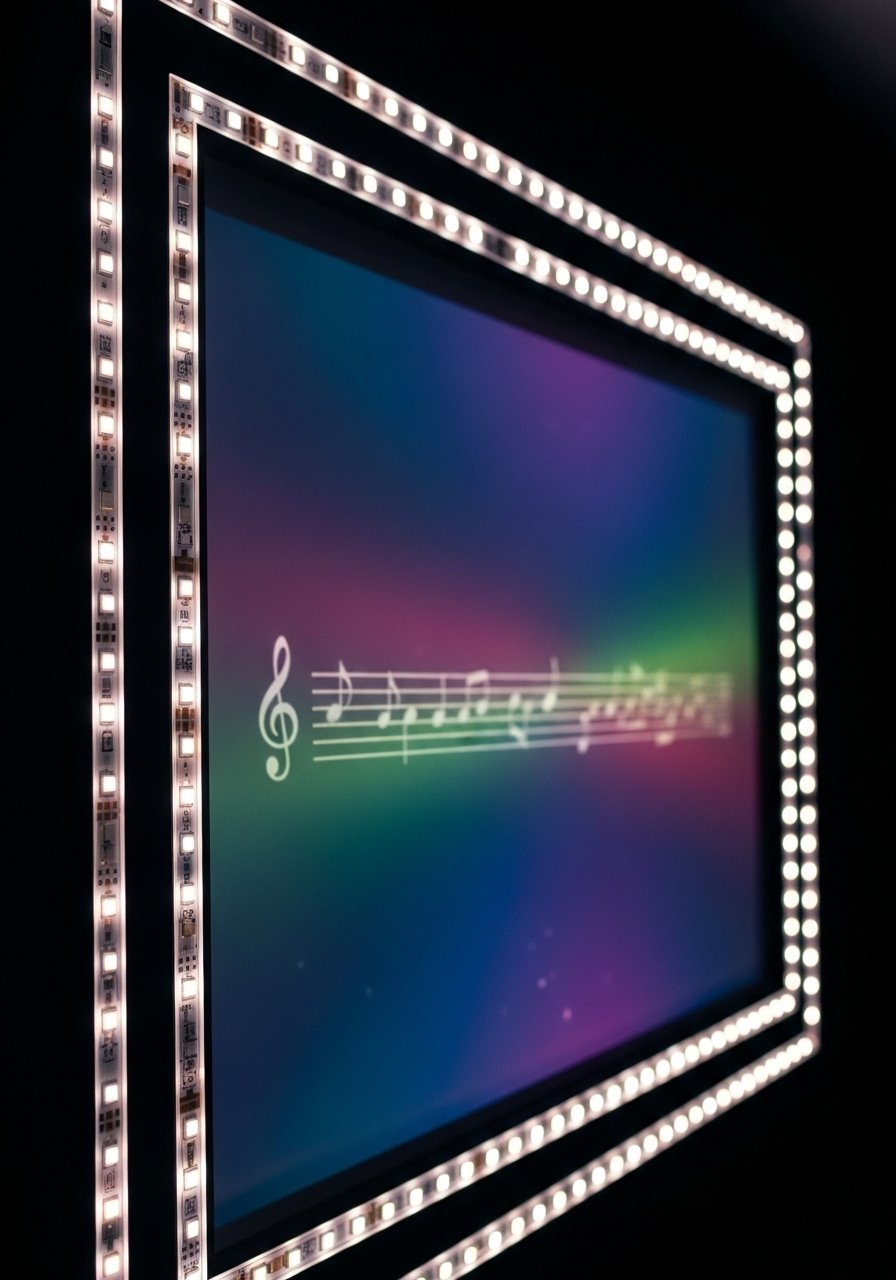
I added a music-sync LED border around the screen to give low-level bias lighting and a bit of movement during opening credits. Use strips with an app so you can dim or set color temps that do not wash the projection. Keep them tucked behind a thin frame so the glow is indirect. Many people throw RGB lights on the wall and end up with color casts. Bias lighting should be subtle and set to warm whites or muted ambers when the movie starts. I used Govee strips that were under $50 and easy to hide.
Faux Leather Chaise Side Wing for Solo Luxury
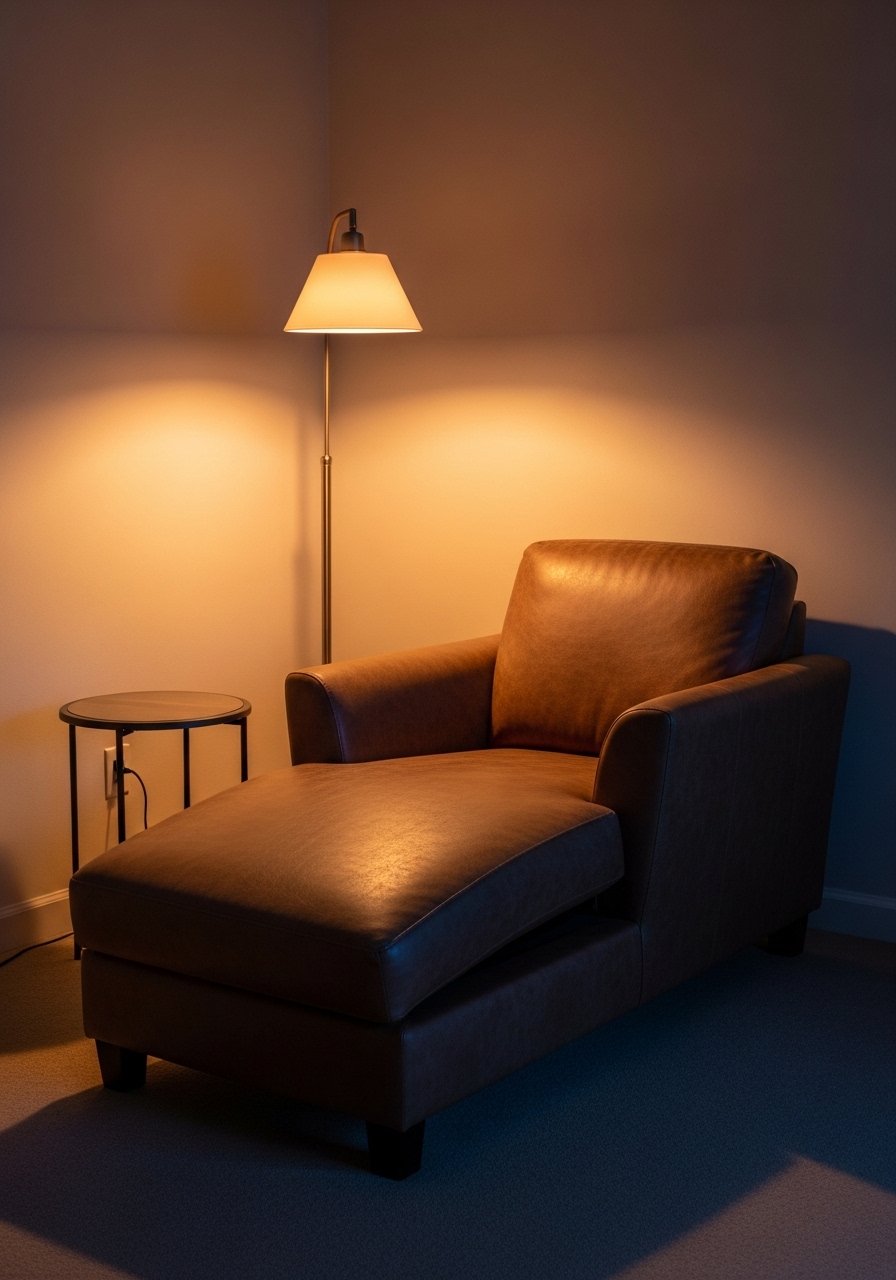
There is something about a single chaise that makes a room feel intentional. I picked a faux leather chaise for easy cleaning and placed it near the records wall so someone can read or nap while others watch. The chaise creates a private spot that does not block sight lines. Keep it off-axis from the center screen so it does not cast a silhouette. A common mistake is making the chaise too large. Scale it to the room by reducing standard chaise dimensions by about 20 percent in small spaces.
Themed Washable Rug to Tie Colors Together
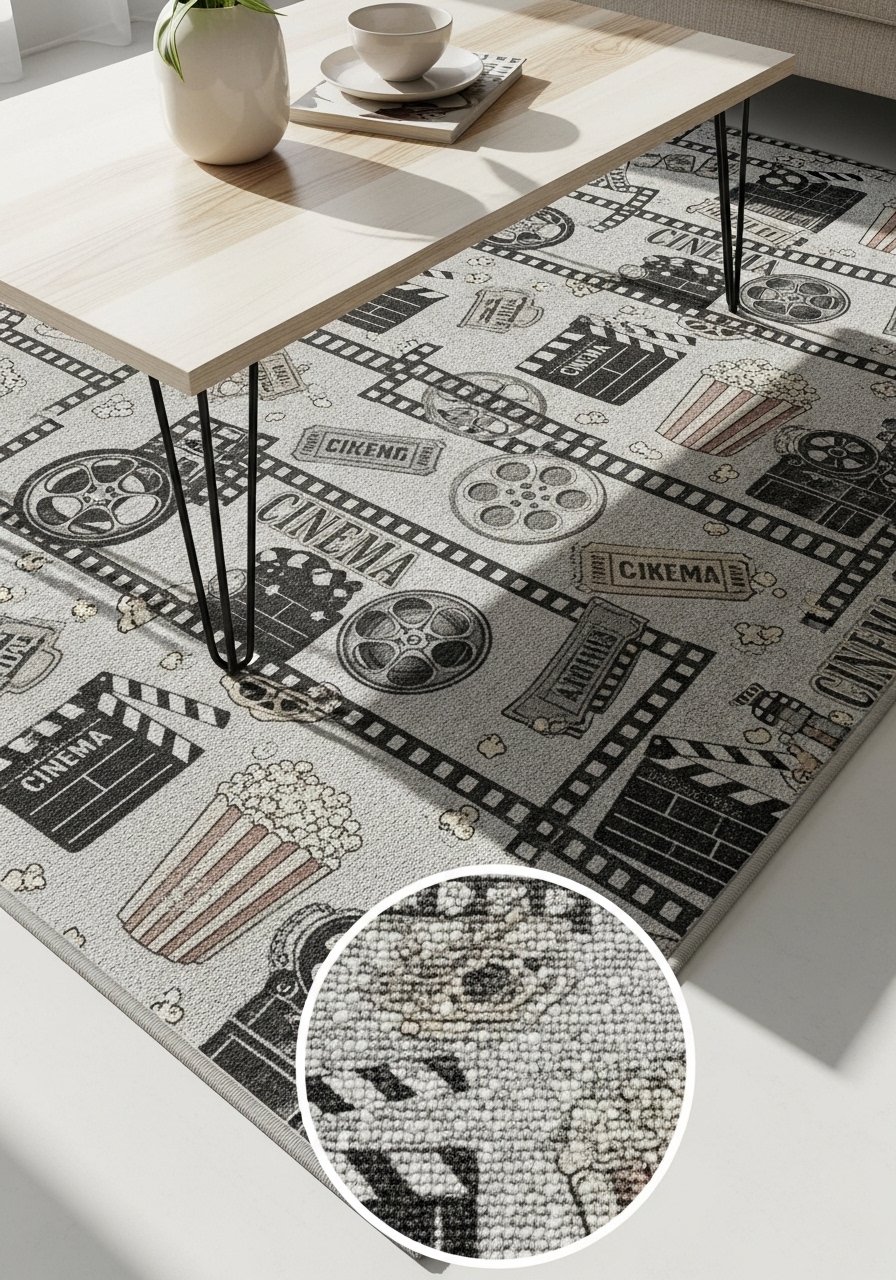
My popcorn stain experiments ended when I switched to a washable themed rug. A printed cinema-inspired rug hides spills and gives the room personality without overwhelming the walls. Go for a pattern that repeats at least three times across the rug so it reads balanced. I bought a Ruggable-style washable 8×10 and stepped up to 10×12 for areas with more seating. A mistake is choosing a rug with a single dominant color that competes with pillows or posters. Pick a pattern that echoes one of your accent colors so the room reads cohesive.
Your Decor Shopping List
- Honestly the best $40 I have spent. Terracotta velvet poufs in two colors for a layered look
- For blackout curtains, get length right. 108-inch velvet blackout panels (~$40-80 per panel) for 8-9 foot ceilings
- Found these while looking for something else. Brass picture ledges, set of 3 (~$20-30) let you swap art without new nail holes
- 110-inch projector screen, floorstanding for rooms that cannot mount to the wall, fits a standard 12×15 layout
- 10×12 jute area rug in natural for grounding seating, durable and hides wear
- Govee music-sync LED strips (~$30-60) for app control and sound sync
- Peel-and-stick linen acoustic panels (each panel 2×4 feet) for renter-friendly sound control
- Glass popcorn dispenser and gold wheeled bar cart for snack central
- Washable printed 8×10 rug for spills and pattern impact
Similar at Target and HomeGoods if you want to see materials in person.
Shopping Tips
White oak beats dark wood in 2026. Design feeds have shifted completely. White oak floating shelves look current, not dated.
Grab velvet pillow covers, set of 4 for $12 each. Swap them every season and the whole room feels different.
Curtains should puddle or kiss the floor, never hang halfway up. 108-inch linen curtains are right for standard 9-foot ceilings.
One tall plant beats five small ones. Artificial 6-foot fiddle leaf fig gives height without the upkeep.
For renters who cannot mount, choose floorstanding projector screens and tension-rod curtains to avoid drilling.
Frequently Asked Questions
Q: What size projector screen should I pick for a 12×15 foot room?
A: Go for 100 to 120 inches diagonal in that footprint. A 110-inch screen usually fills the wall without overwhelming viewers and keeps the image readable from the recommended 6 to 8 foot seating distance.
Q: How do I stop my room from echoing?
A: Add soft textiles on at least three surfaces first. Half-wall textured panels and a big rug under all seating solve most echo problems. Peel-and-stick panels work if you rent and they also add needed texture so the room does not scream DIY.
Q: Can I mix boho textiles with modern furniture without it looking messy?
A: Yes. Stick to the 80/20 rule where 80 percent of fabrics are neutral and 20 percent are bold accents. Use odd numbers for pillow groupings and vary textures like velvet, linen, and jute to keep the mix intentional.
Q: What seating layout works for groups?
A: Layer seating. Aim for 2-3 recliners in the back row, 4-6 poufs or floor cushions in front, and 1-2 bean bags angled in corners for overflow. This creates flow and keeps necks from twisting during long movies.
Q: My projector looks washed out during daytime. Any renter-friendly fixes?
A: Use blackout curtains with a sheer layer and bias lighting to reduce perceived wash. A floorstanding screen placed away from direct windows and a curtain that puddles a couple of inches will help dramatically.
Q: Which fabrics survive kids and pets?
A: Performance velvet, faux leather, and washable rug covers are your friends. Look for pet-proof tags and machine-washable rugs. Choosing washable covers for pillows and poufs makes life easier and keeps the room looking more lived in than staged.