

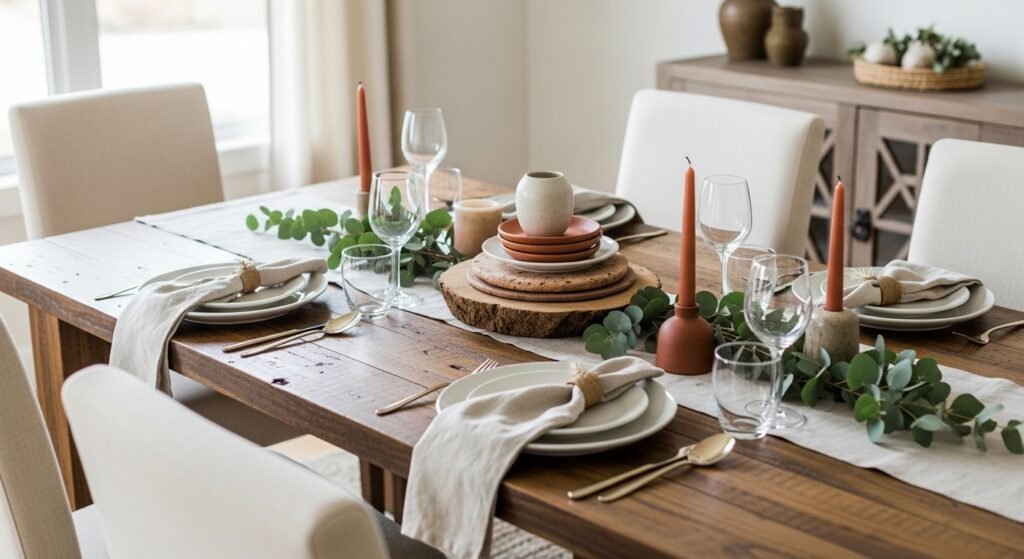
My living room had nice furniture and decent lighting but it still felt like a waiting room. Took me embarrassingly long to realize every surface was the same height and everything was the same color family. I fixed it with small vignettes and one singled-out centerpiece. Suddenly people stopped making polite small talk about the decor and actually asked where things were from.
These centerpieces lean rustic and modern-earthy. Most setups run under fifty dollars, with a couple of splurge ceramics around one hundred. They work on dining tables, console tables, coffee tables, and even wide kitchen islands. You can remake most old colors at any store these days. Almost every paint job fights lighting tricks at home.
Low Terracotta Stack with Dried Olive Branches
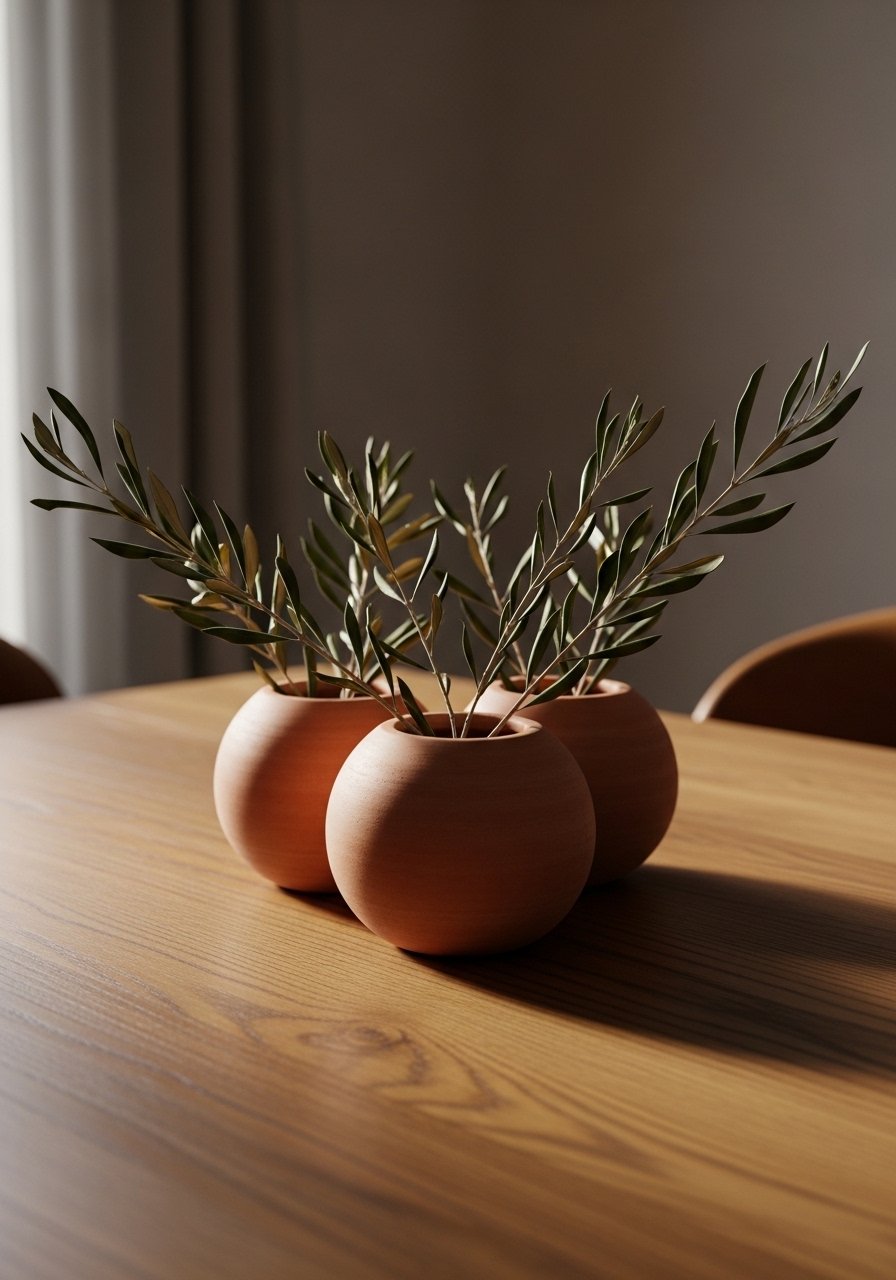
The secret to an earthy centerpiece is keeping the height low so conversation is easy. I stack two small terracotta bowls and top them with a handful of dried olive branches. It reads organic and collected, not staged. Works well in a cozy farmhouse dining room and costs about twenty to sixty dollars depending on the pottery you pick. I use a small terracotta planter set and tuck in preserved olive stems. A common mistake is making each piece match exactly. Let the bowls vary in size by about two inches so the stack looks effortless. For scale, aim for a centerpiece footprint about one third the table width.
Woven Tray with Stone Candleholders and Citrus
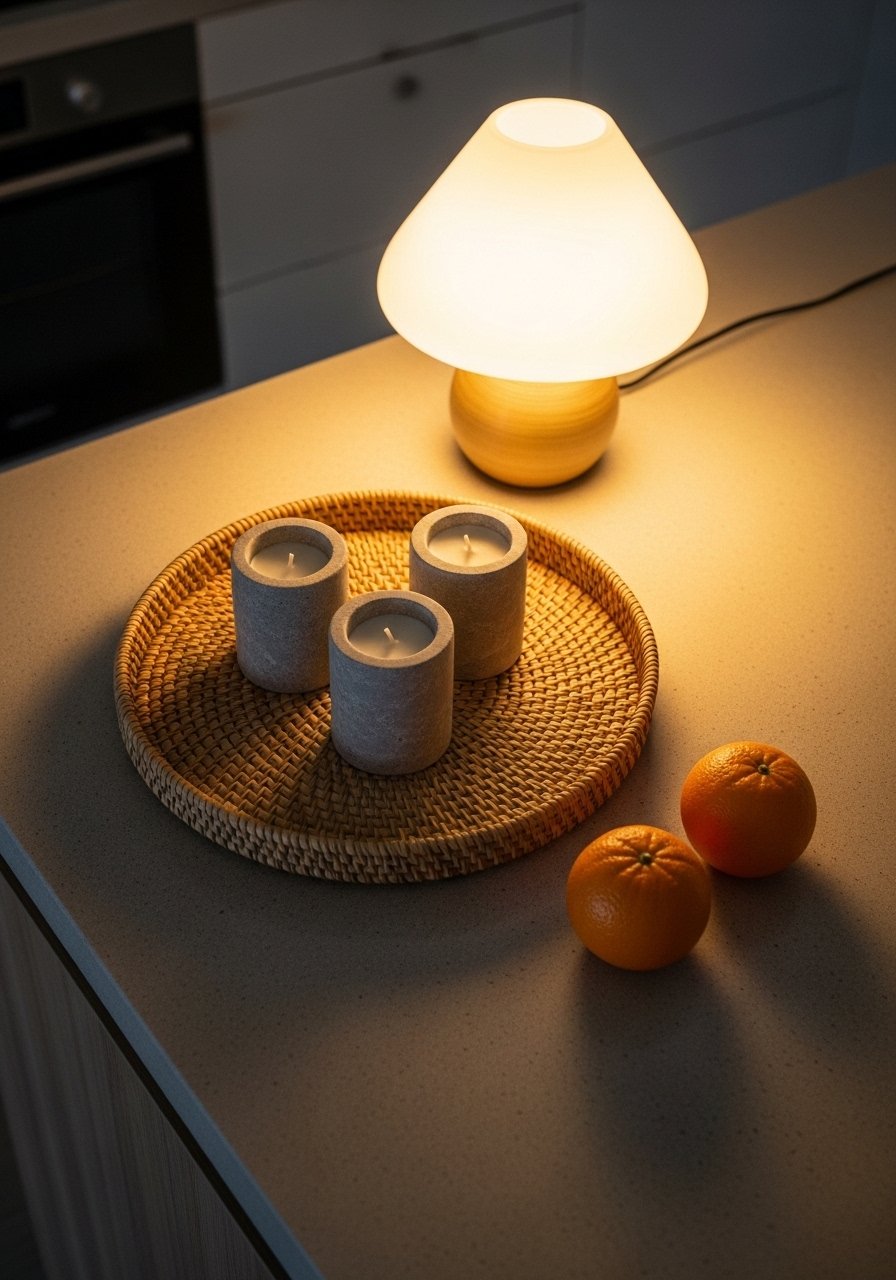
I pulled a woven tray out of the closet and suddenly my island stopped looking cluttered. Put three short stone candleholders in the center and scatter citrus for color and smell. This combo is casual-modern and perfect for kitchens and breakfast nooks. Budget runs from thirty to eighty dollars. I grabbed stone pillar holders and a natural seagrass tray. People often overfill the tray. Leave negative space equal to about one third of the tray so the arrangement breathes. One small trick I use is rotating citrus every few days so the color stays lively.
Driftwood Centerpiece with Mini Succulents
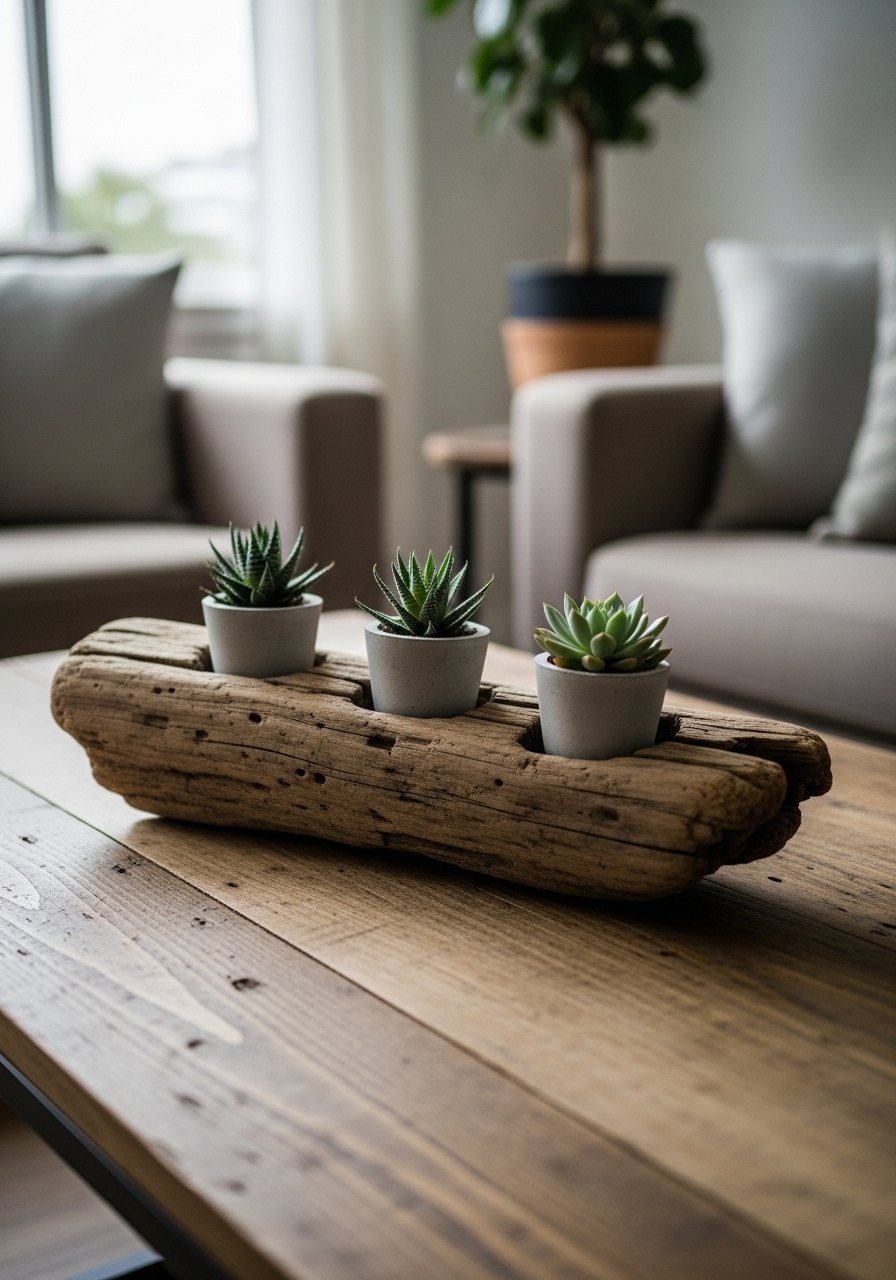
A single piece of driftwood grounds a modern-beach or coastal-earthy table and it requires almost no styling skill. I wired three tiny concrete cups onto a driftwood length and planted hens-and-chicks in them. The whole thing looks collected and lasts if you go faux in high-traffic rooms. This is great for living rooms and covered patios. I use mini concrete planters and a found driftwood log. The mistake people make is overwatering the succulents in small containers. Planting medium should be two parts gritty mix to one part potting soil for drainage. If you need less upkeep, switch to artificial succulents.
Layered Books with a Ceramic Bowl and Twig
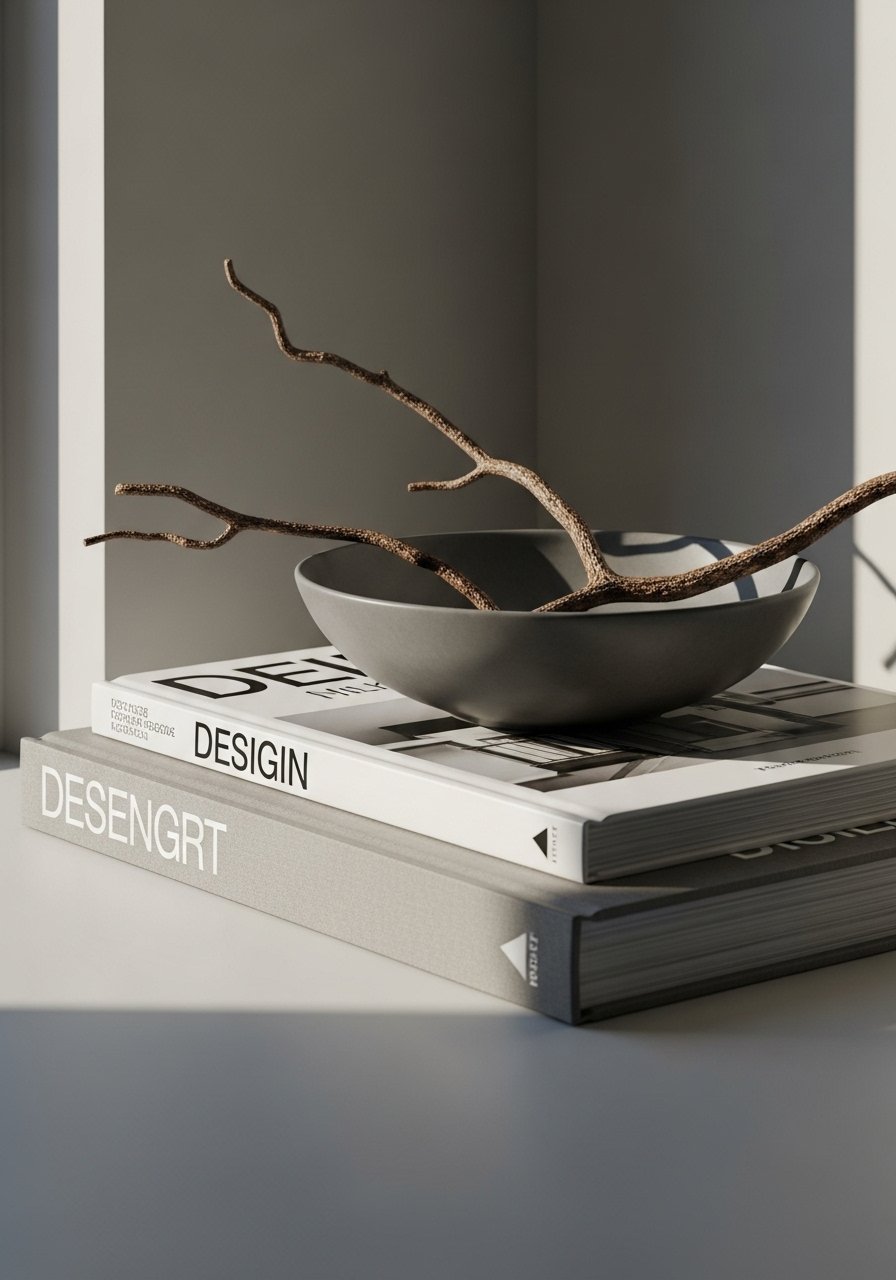
Stacking books gives height without blocking sight lines. I stack two oversized art books, set a shallow ceramic bowl on top, and tuck a single twig in the bowl. It reads editorial and lived-in at the same time. Works on console tables and large coffee tables, budget twenty to forty dollars if you buy used books. I like this shallow ceramic bowl. People try to match book colors to everything else. Let the books be slightly darker than your surface by one shade for contrast. Specific detail I learned is to keep the top book no wider than the bowl by about an inch for visual balance.
Single Oversized Clay Vase with Pampas Grass
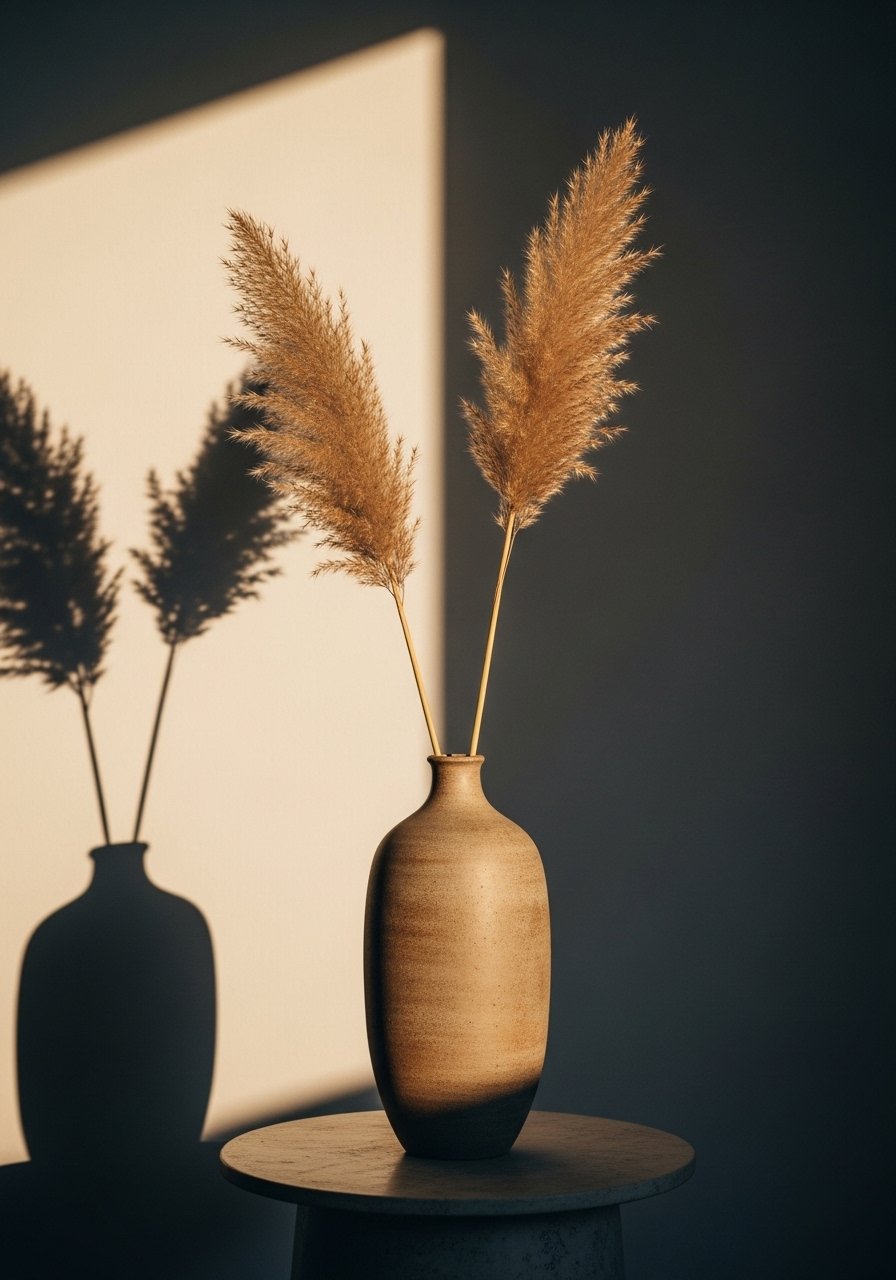
There is a reason everyone loves one big vase. Two stems of pampas grass in an oversized clay vase feel intentional and effortless. My dining room looks taller with this in the center because it draws the eye up. This idea is modern-earthy and costs thirty to one hundred dollars depending on the vase. I pair a large clay vase with natural pampas stems. The usual mistake is adding too many stems. Two to three stems are enough for a 14 to 16 inch wide vase. For a real-room note, fluff the stems outside of the house before placing them so they do not shed indoors.
Wooden Beads on a Tray with a Small Ceramic Pitcher
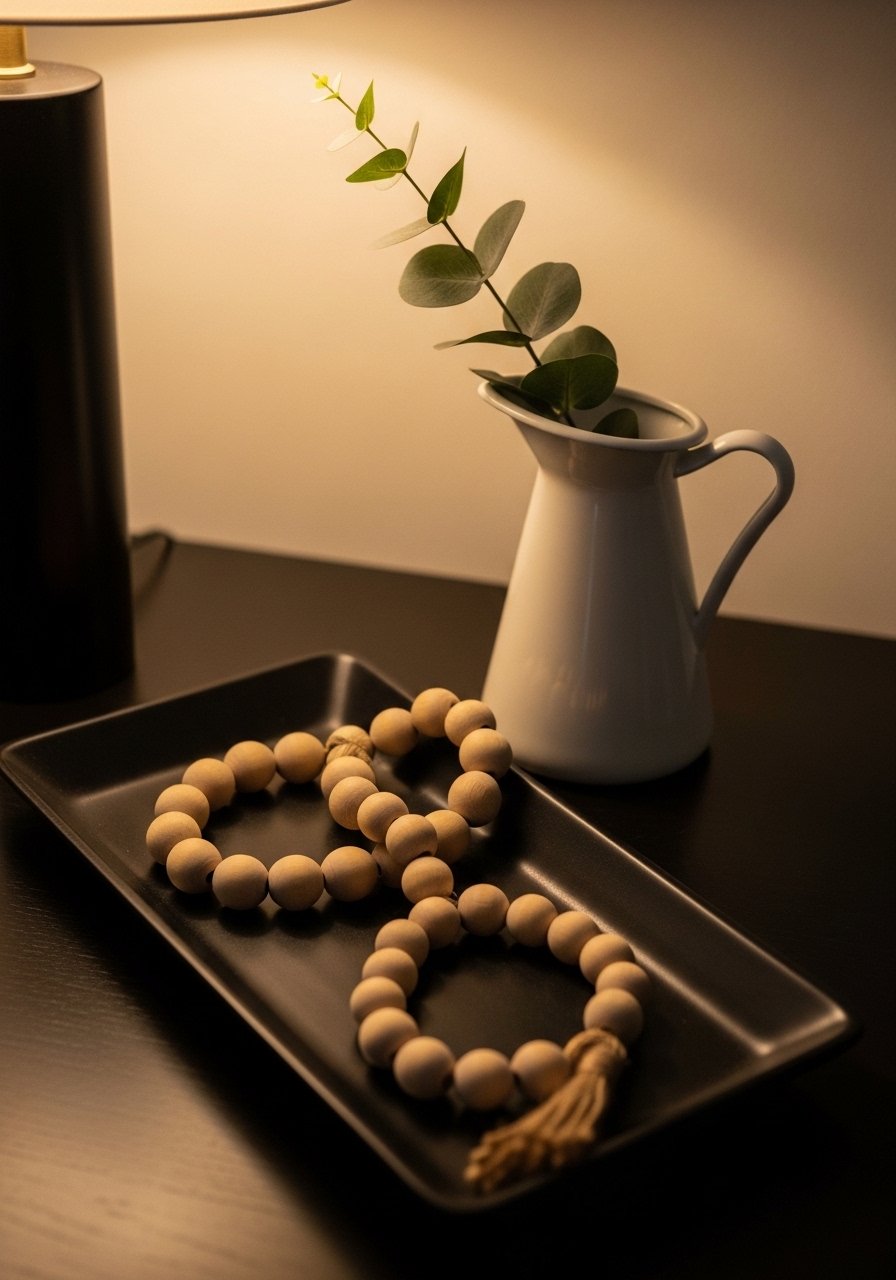
I learned the wooden bead trick at a flea market. They read warm and tactile even when they cost under twenty dollars. Loop beads across a tray, add a small ceramic pitcher with a single eucalyptus sprig, and you have a centerpiece that works in both Scandinavian and boho spaces. Use a wooden bead garland and a small ceramic pitcher. People try to make beads a focal point by themselves. They perform best layered with one other natural element like a stone or a green sprig. For scale, choose beads where each is roughly the size of a quarter to a ping-pong ball.
Moss-Filled Glass Cloche for a Small Table
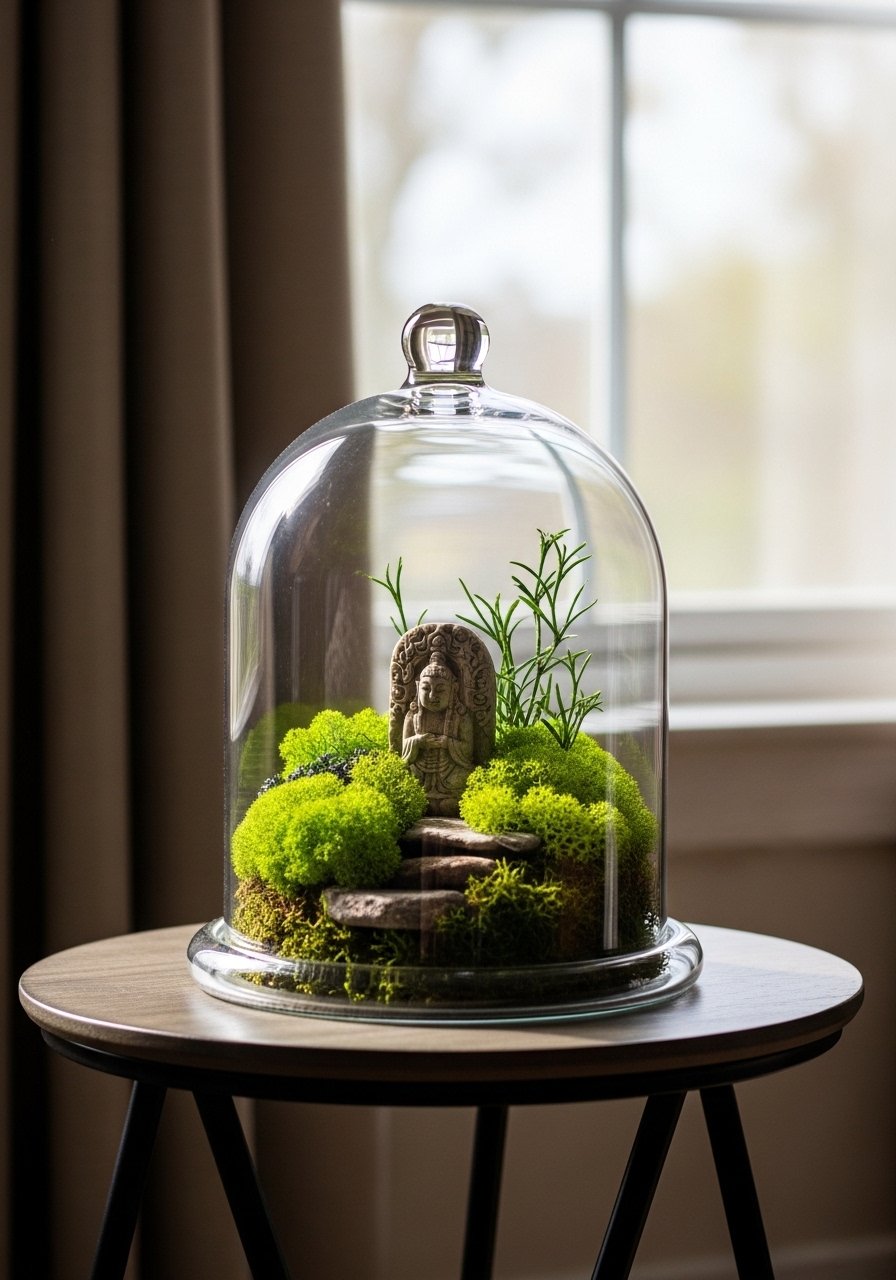
A moss cloche looks like you carried the forest inside. I used preserved moss to avoid watering and placed a small stone figure inside for personality. This centerpiece reads vintage-earthy and fits entry tables and bedside tables. Expect thirty to eighty dollars depending on cloche size. I used this glass cloche with preserved sheet moss. The common mistake is crowding the cloche with too many objects. Keep one focal piece inside and let space show around it. One practical detail is to set the cloche on a ceramic saucer to protect wooden surfaces from moisture rings.
Mixed Metals Votive Cluster on a Raw Linen Runner
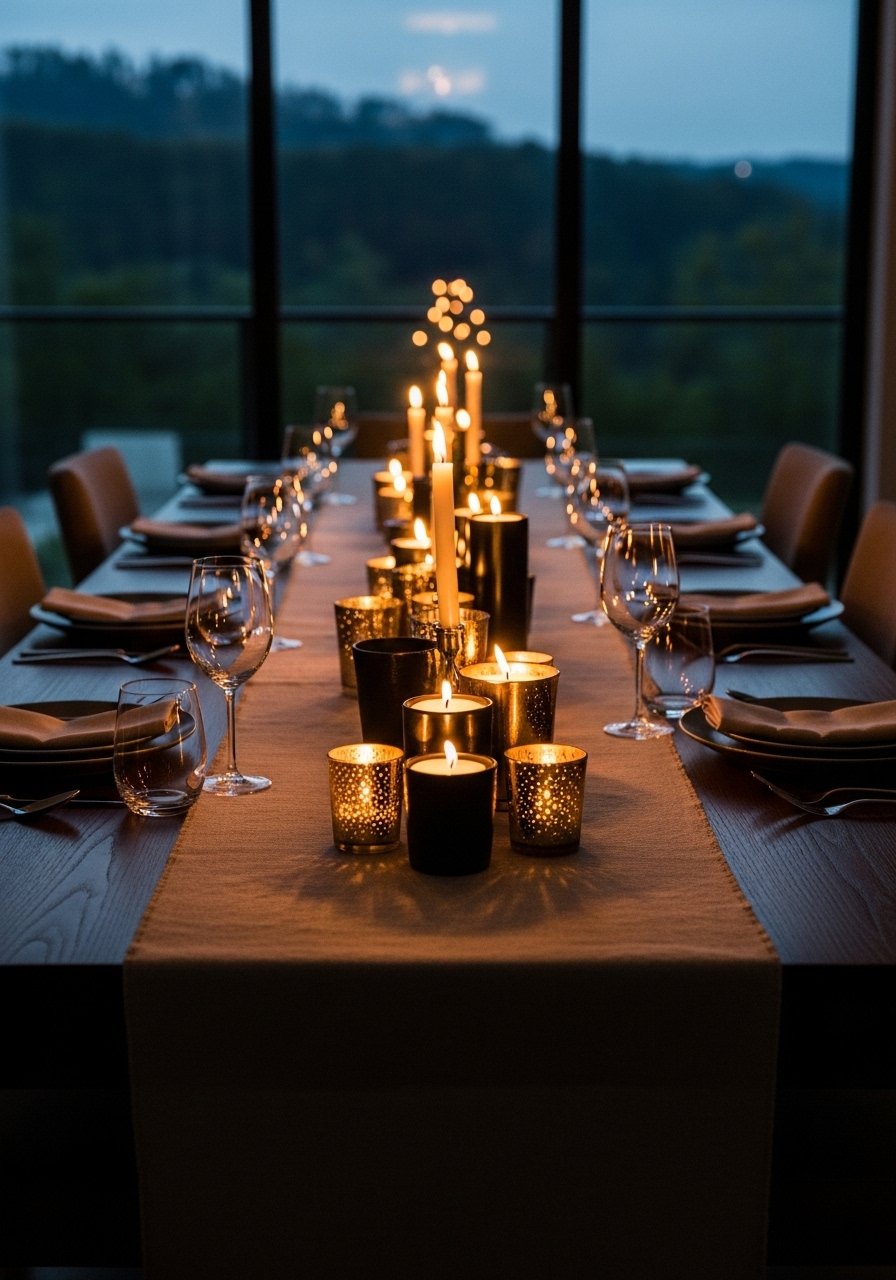
Candles instantly warm a table. Grouping votive holders in mixed metals across a raw linen runner gives an earthy rhythm from end to end. This is great for long farm tables and special dinners. Budget is modest, around thirty to seventy dollars. I picked up mixed metal votive holders and a raw linen table runner. The mistake is scattering singles with no pattern. Instead, place votives in clusters of three spaced about 18 inches apart. For safety, use glass-lined votives for real candles or swap to LED tea lights for a kid-friendly table.
Simple Herb Pot Row for Kitchen Islands
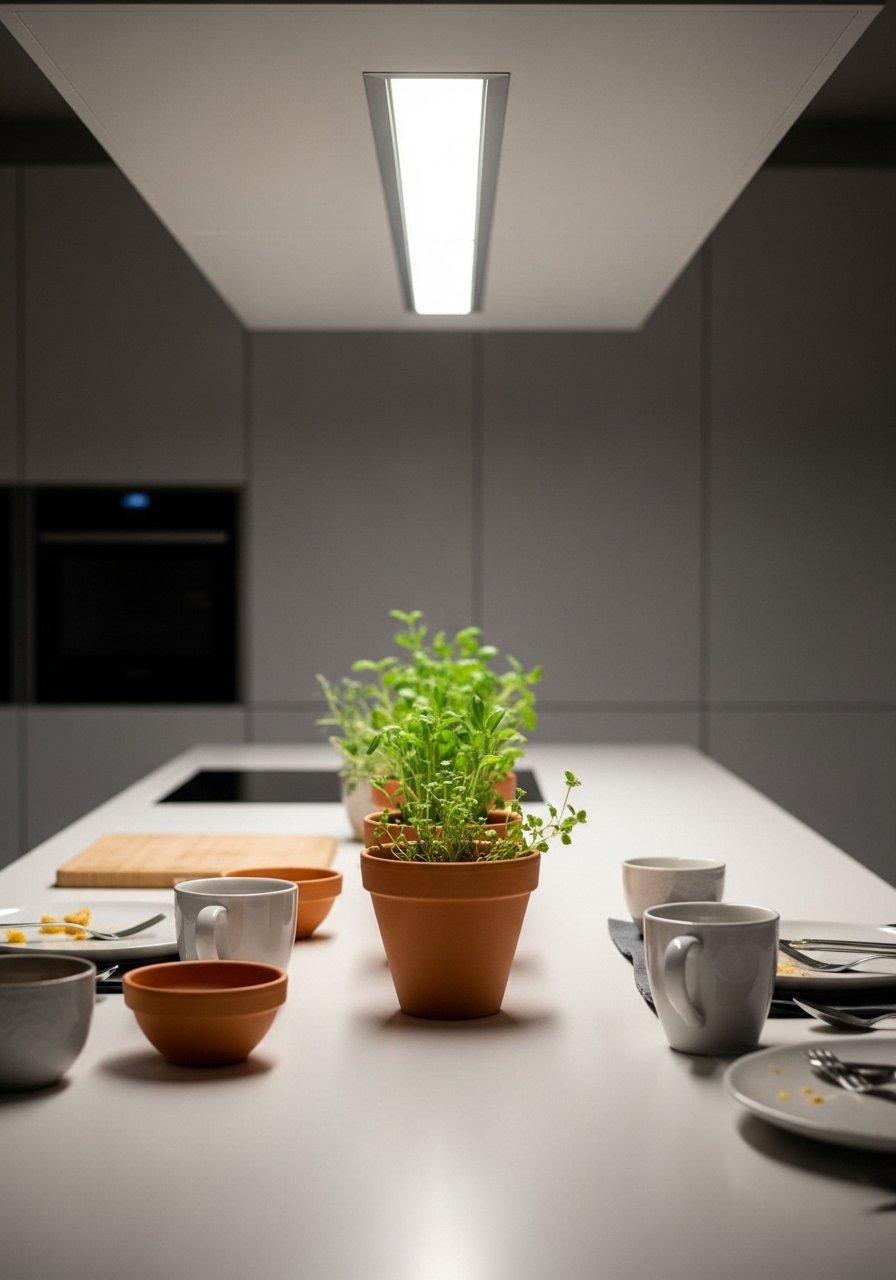
Fresh herbs make a centerpiece you can use. Line small terracotta pots with thyme, rosemary, and sage along a kitchen island. They give a lived-in, work-with nature vibe and they are useful for cooking. This is practical-earthy and runs twenty to forty dollars. I use small terracotta pots and clip herbs from a local nursery. People buy pretty pots that are too wide and then the herbs look lost. Keep pot diameter between 3 and 4 inches for compact herbs on narrow islands. Rotate which herb sits in the center so the row looks casually arranged, not regimented.
Sculptural Stone Bowl with Seasonal Finds
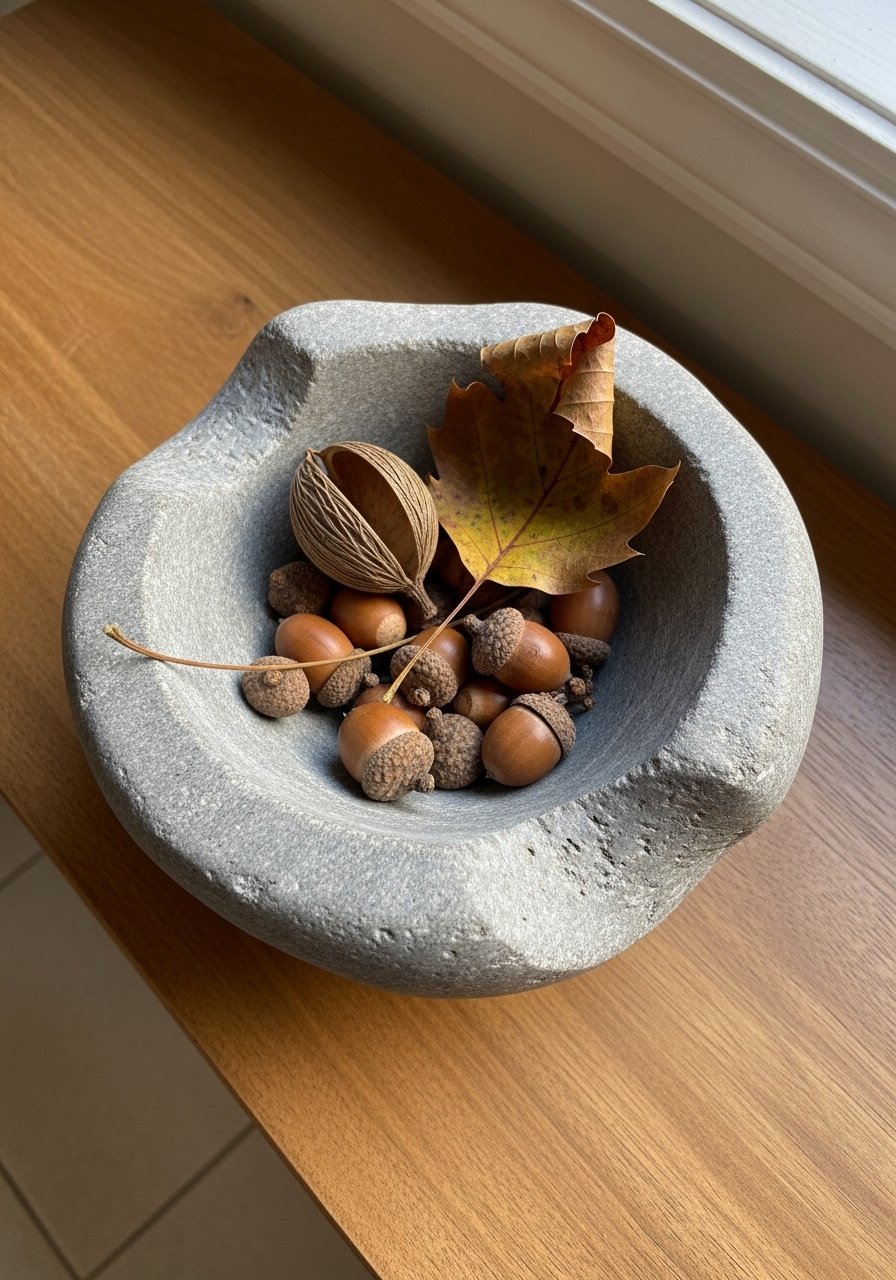
A single sculptural stone bowl feels anchored and intentional. I change what goes in the bowl with the season, from acorns in fall to smooth river stones in summer. This centerpiece feels quietly curated and suits entry tables and mantel areas. Budget ranges from thirty to one hundred fifty dollars for hand-formed pieces. I like a handmade stone bowl. New decorators often pack the bowl to the brim. Leave the top third empty so each item reads as an intentional find. One styling note I use is to keep each item under three inches across for a collected look.
Your Decor Shopping List
Textiles
- Honestly the best $45 I have spent. Raw linen table runner in natural, 14 by 72 inches
- Chunky knit throw in cream (~$35). Drape over bench seating for warmth
Tabletop Vessels
- Large clay vase in terracotta, 10 inch height
- Shallow ceramic bowl, 9 inch diameter
Natural Elements
- Pampas grass stems pack of three, natural tone
- Preserved sheet moss for cloche arrangements
Small Accessories
- Wooden bead garland in natural finish
- Mini concrete planters set of three, 3 inch diameter
Budget Finds
- Seagrass serving tray (~$25)
- Mixed metal votive holders set of five
Shopping Tips
White oak beats dark wood in 2026. Design feeds have shifted completely. These white oak floating shelves look current, not dated.
Grab mini concrete planters for $20. Swap plants seasonally and the whole tabletop feels different.
Curtains should puddle or kiss the floor, never hang halfway up. These 96-inch linen panels are right for standard nine-foot ceilings.
Everyone buys five small succulents. One single 6-foot fiddle leaf fig has ten times the visual impact.
Frequently Asked Questions
Q: What size centerpiece should I get for a long dining table?
A: Aim for a footprint about one third the table width, and keep height under 12 inches for unobstructed conversation. If you want a linear look, repeat a small element every 18 inches.
Q: Can I mix live plants and faux elements?
A: Yes. Use live herbs or succulents where you want maintenance and swap in faux pampas or preserved moss in low-light spots. This keeps the look alive without extra care.
Q: How do I make a centerpiece smell nice without overpowering guests?
A: Citrus and fresh rosemary give subtle scent. Place them toward one side of the table so the smell moves gently rather than hitting faces directly.
Q: What common mistake makes a table centerpiece look cluttered?
A: Putting too many small items without negative space. Leave roughly one third of the table surface clear so the arrangement reads deliberate, not accidental.
Q: How often should I change a seasonal centerpiece?
A: Every four to eight weeks depending on freshness. Swapping one element like foliage or fruit is enough to refresh the whole arrangement.
Q: Are there budget alternatives to expensive ceramics?
A: Yes. Thrifted bowls, terracotta, and a simple seagrass tray create a premium look for under fifty dollars.