
My living room had nice furniture and decent lighting but it still felt like a waiting room. Took me embarrassingly long to figure out it was missing texture. Every surface was smooth, every color was flat, and nothing invited you to actually sit down. Once I started tweaking the light layers, the space finally felt lived in.
These ideas lean toward modern cozy and mid-century touches. Most projects run under $100, with a few under $30 and a couple splurges around $150. They work in living rooms, bedrooms, closets, stairways, and small patios. I focus on renter-friendly fixes and simple wiring so you do not need an electrician for most of them.
Bias Lighting Behind the TV for Comfortable Viewing
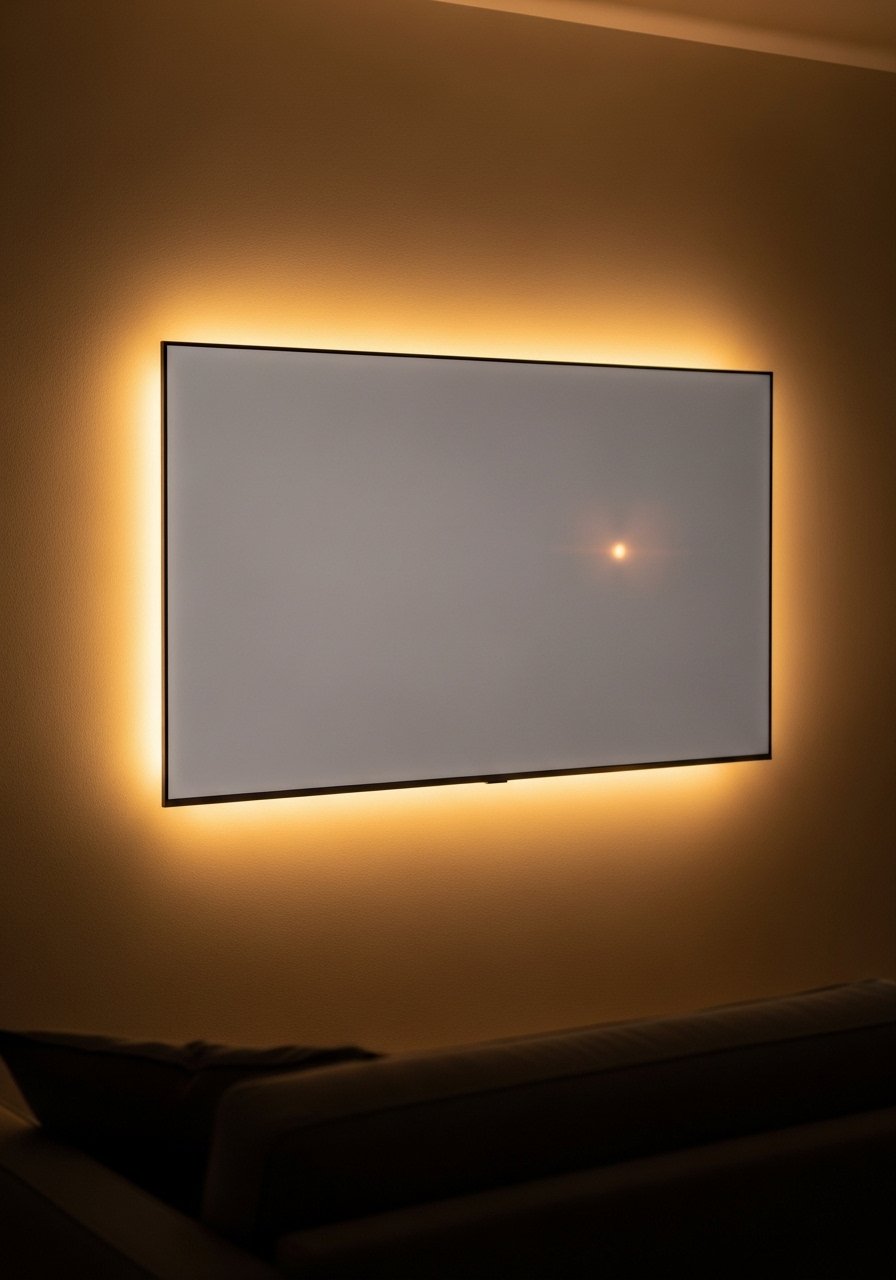
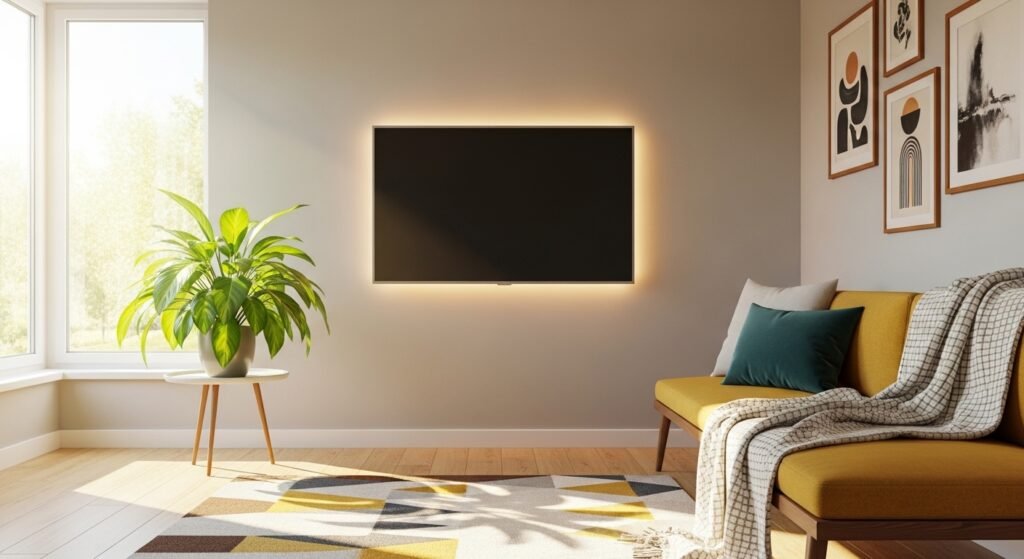
Bias lighting cuts eye strain and makes the TV look brighter without cranking brightness. I stuck 2-inch-wide LED strip lights along the TV perimeter about 1 to 2 inches behind the screen so the halo covers the wall evenly. Use warm white around 3000K for movie nights. A common mistake is using full RGB without dimming, which reads gimmicky. I used LED strip lights that come with a dimmer and adhesive backing. For a neater install, route the excess cable down the TV stand and hide it behind a cable management channel. If your wall is very dark, go one brightness level higher.
Under-Shelf LEDs for Cozy Kitchen Task Lighting
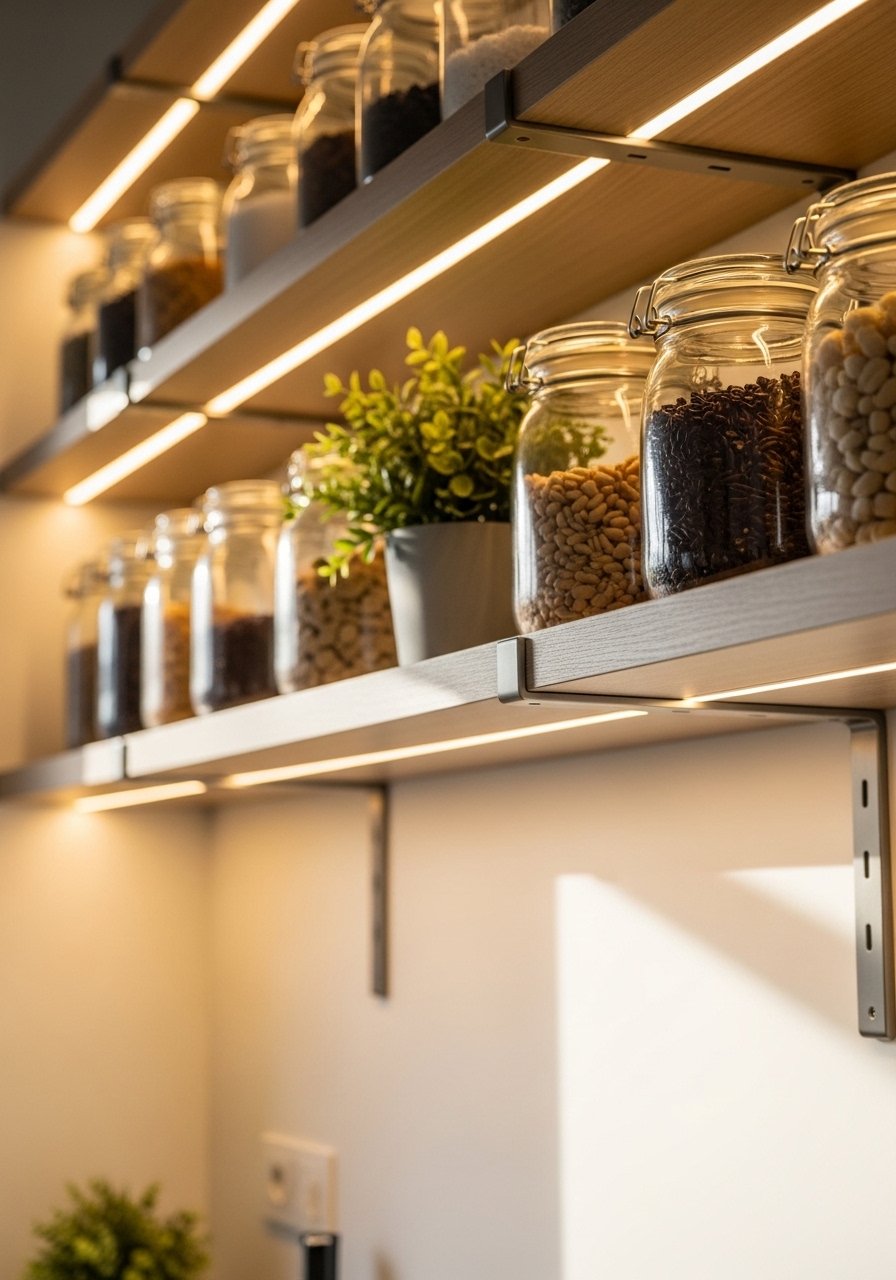
Under-shelf LEDs made my kitchen feel finished and useful. Mount strips 1.5 inches from the shelf front so light washes forward, not directly into your eyes. Use 2700K to 3000K for warm food-friendly light. The problem people run into is not measuring depth. If your shelf is shallow, use narrower strips or puck lights to avoid hot spots. I keep a roll of led-under-cabinet-lights on hand for quick swaps. Budget wise this is under $50 for most layouts and it pairs nicely with the LED vanity idea later for continuity.
Soft Headboard Backlighting for a Cozy Bedroom Glow
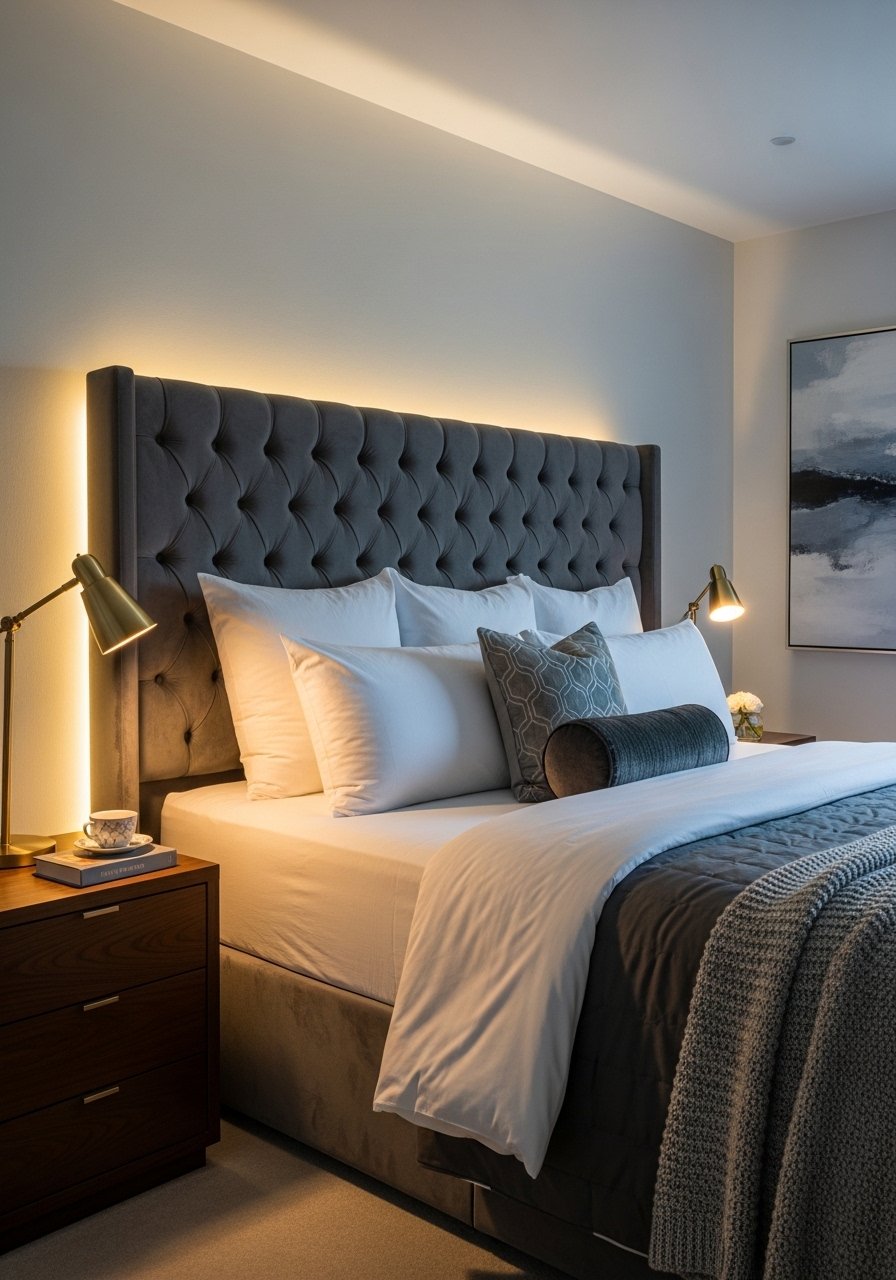
I added a strip behind my headboard and the whole bedroom stopped feeling like a hotel. Tuck the strip 1 to 2 inches above the headboard top so the light spills upward and gives ceiling depth. Use a warm white to keep the room calm. A frequent mistake is mounting lights flush to the wall where they show bright lines. My fix was a 1.5-inch spacer strip so the glow is even. I used peel-and-stick led-strip-lights and a wireless dimmer to avoid running a cord across the bed. Budget about $30 to $70 depending on length.
Stair Riser LEDs for Safe, Inviting Steps
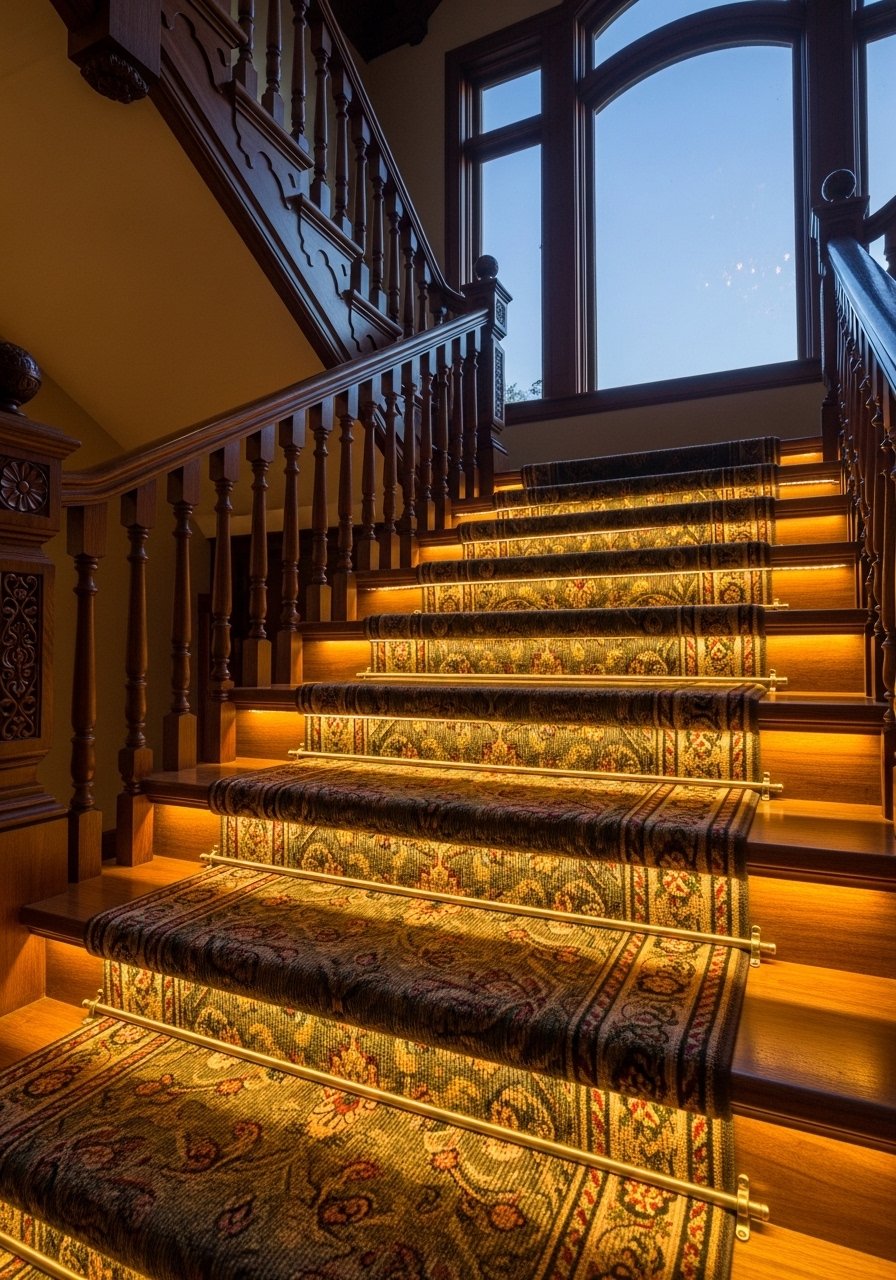
Lighting the risers changed my entry from intimidating to inviting. Install narrow LED strips under each tread so the light hits the riser below. Spacing matters. Keep 2 to 3 inches of strip visible for consistent light and aim for 100 to 200 lumens per step. A common oversight is wiring each step separately which looks messy. I ran a single low-voltage feed and daisy-chained the strips, then put a motion sensor at the top. Narrow led-strip-lights work well for shallow overhangs. This also solves the problem of harsh overhead foyer lighting.
Motion-Activated Closet LEDs for Renter-Friendly Light
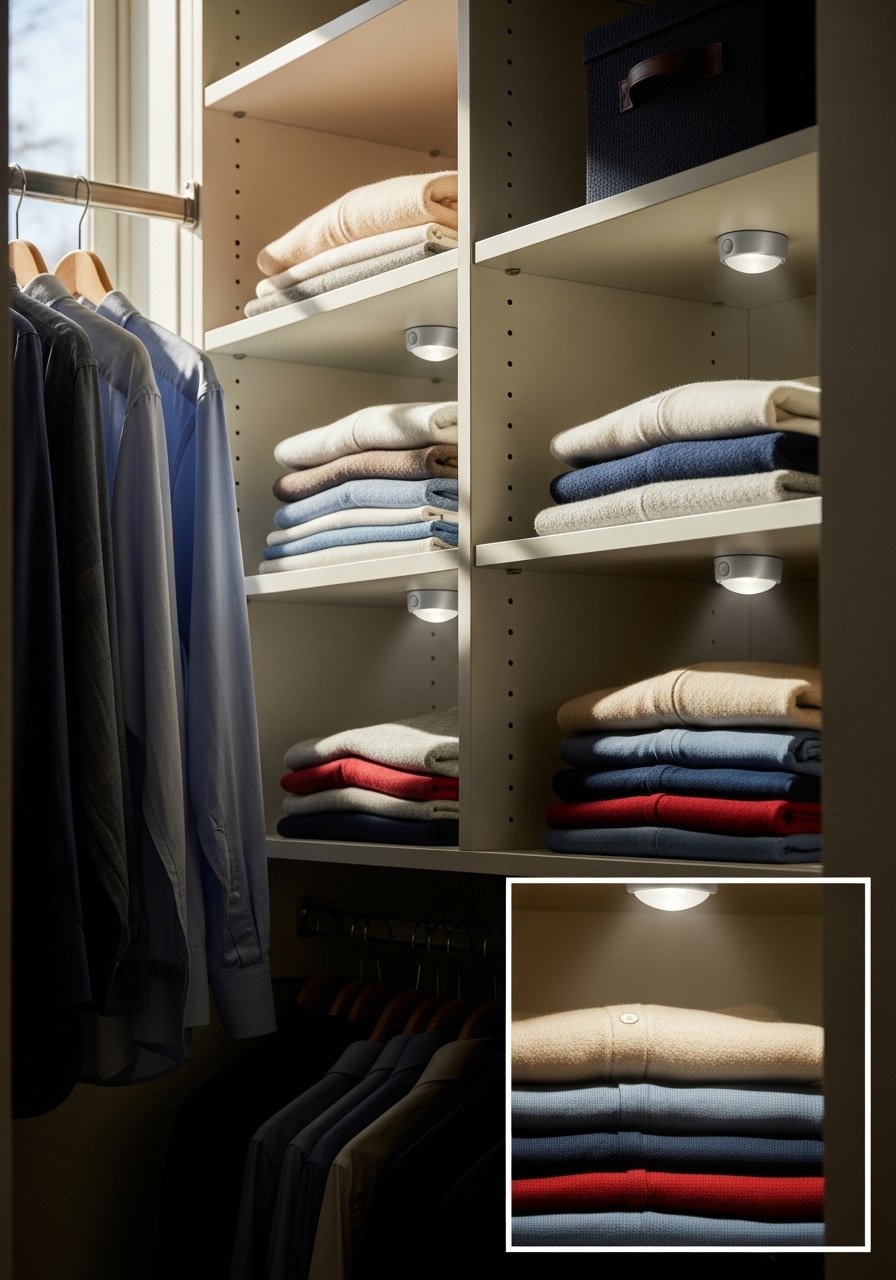
My friend hated fumbling with a switch in a dark closet. Motion-activated LED puck lights are the answer. Stick them under shelves or on the ceiling where they catch movement. The trick is to place sensors near the door so the light comes on immediately, not after you step in. Many people put too few lights and end up with shadows. Use one puck every 2 to 3 feet on narrow closets, or a strip behind the rod for longer runs. I bought rechargeable motion-sensor-puck-lights so there are no batteries to replace every month.
Glass Cabinet or Display Case Accent Lighting
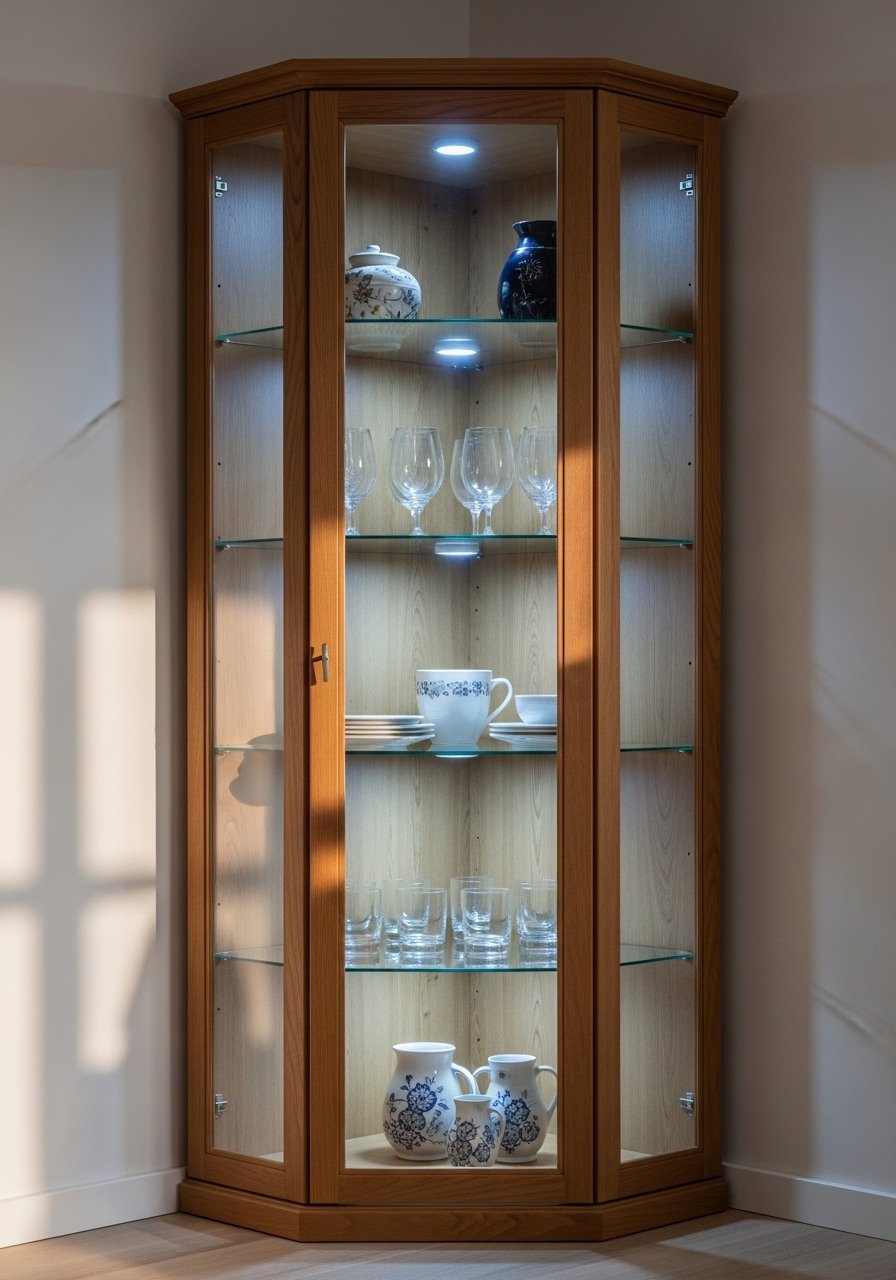
A case that was a dust catcher turned like-it-belonged once I added lights. Drop LED puck lights at the top inside a glass cabinet to make objects pop. Use neutral white, near 3500K, to keep colors true. Mistakes include mounting too close to delicate items which creates hotspots. Keep lights 3 to 4 inches back and use a diffuser if you can. I used led-puck-lights with dimming so the collection looks curated, not showroom bright. This also pairs well with the floating shelf idea for consistent lighting language.
DIY Vanity Mirror Lighting That Feels Like a Salon
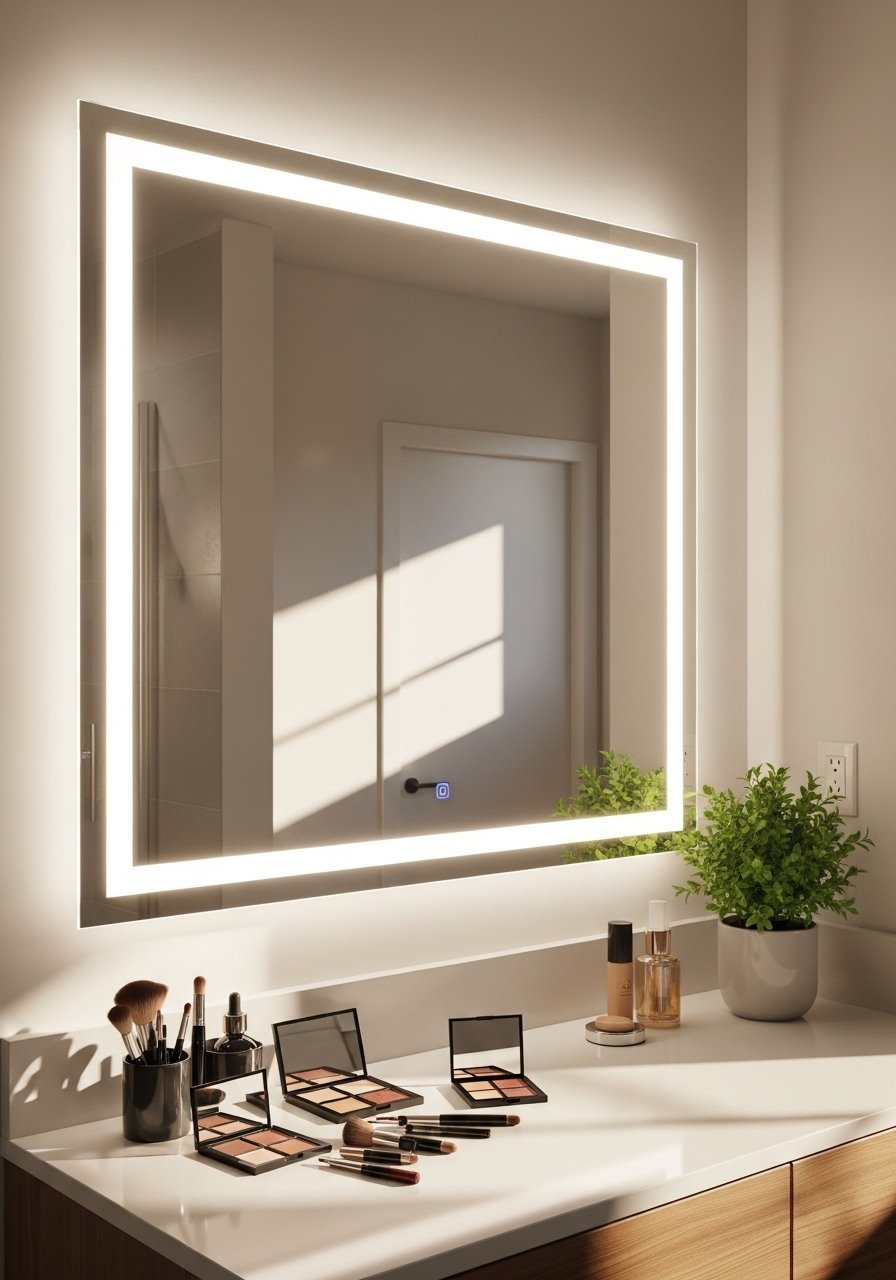
I swapped harsh overhead bulbs for LED strips around the mirror and my skin looked better in selfies. Run strips behind the mirror frame so the light is even and not directly in your eyes. Aim for 3000K to 3500K and 1000 to 1500 lumens for a standard vanity. A mistake is placing strips on the mirror surface which shows hot lines. Use adhesive-backed strips and a mirrored frame to hide them. I used warm-white-led-strip-lights and a plug-in power supply for a renter-friendly install. Pair with the under-shelf kitchen lights for visual continuity.
Low-Profile LED Trim Under a Sofa for Floating Effect
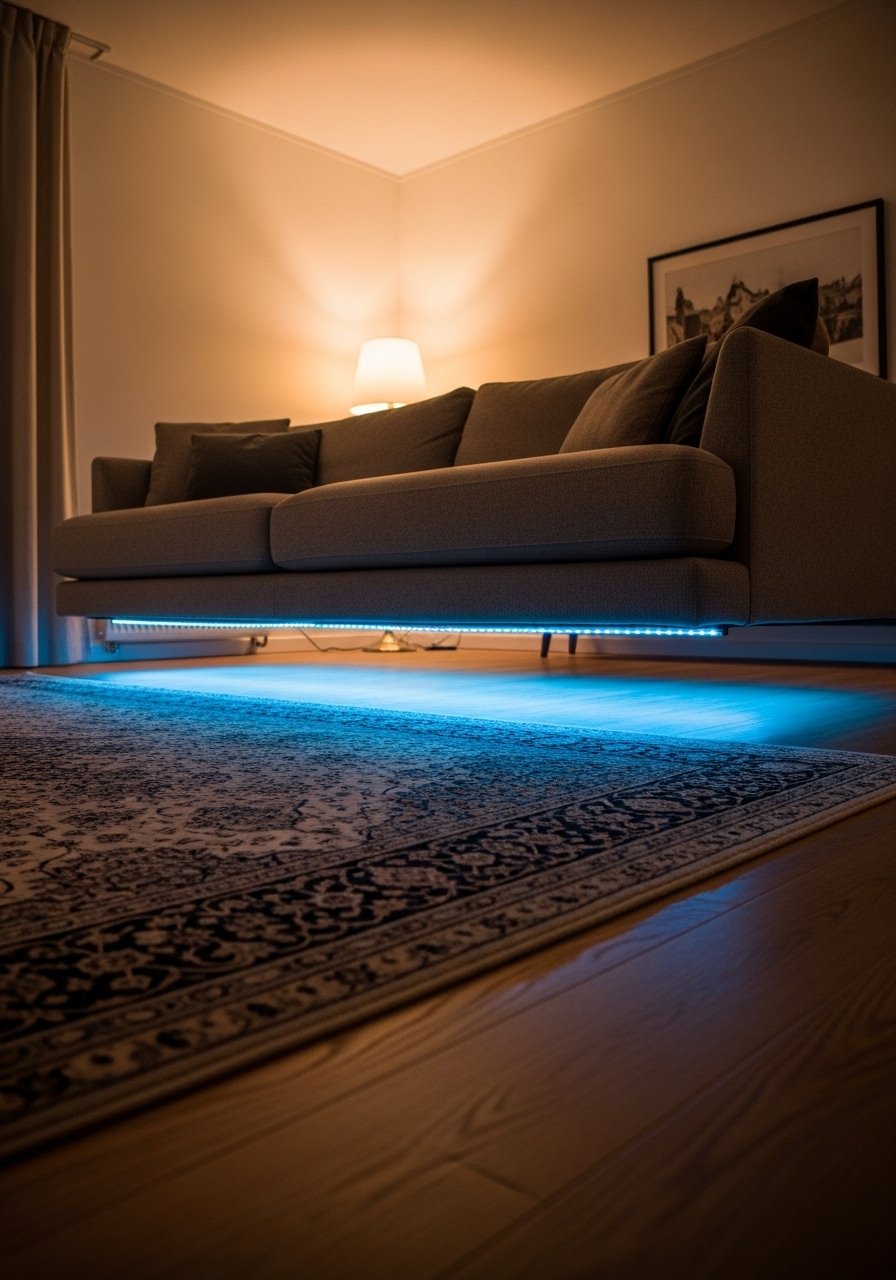
Installing LED trim under the sofa made it feel like it floated and the room felt larger. Use waterproof strip lights if you have pets. Mount them centered under the front rail so the light pools on the floor and does not shine at eye level. Most people put strips too close to the edge and it looks like a bright line. I left 2 to 3 inches of overhang behind the rail for an even wash. led-furniture-lighting is low voltage and often comes with adhesive and connectors. This is a low-cost detail that reads designer.
Floating Shelf Glow for Minimal Modern Display
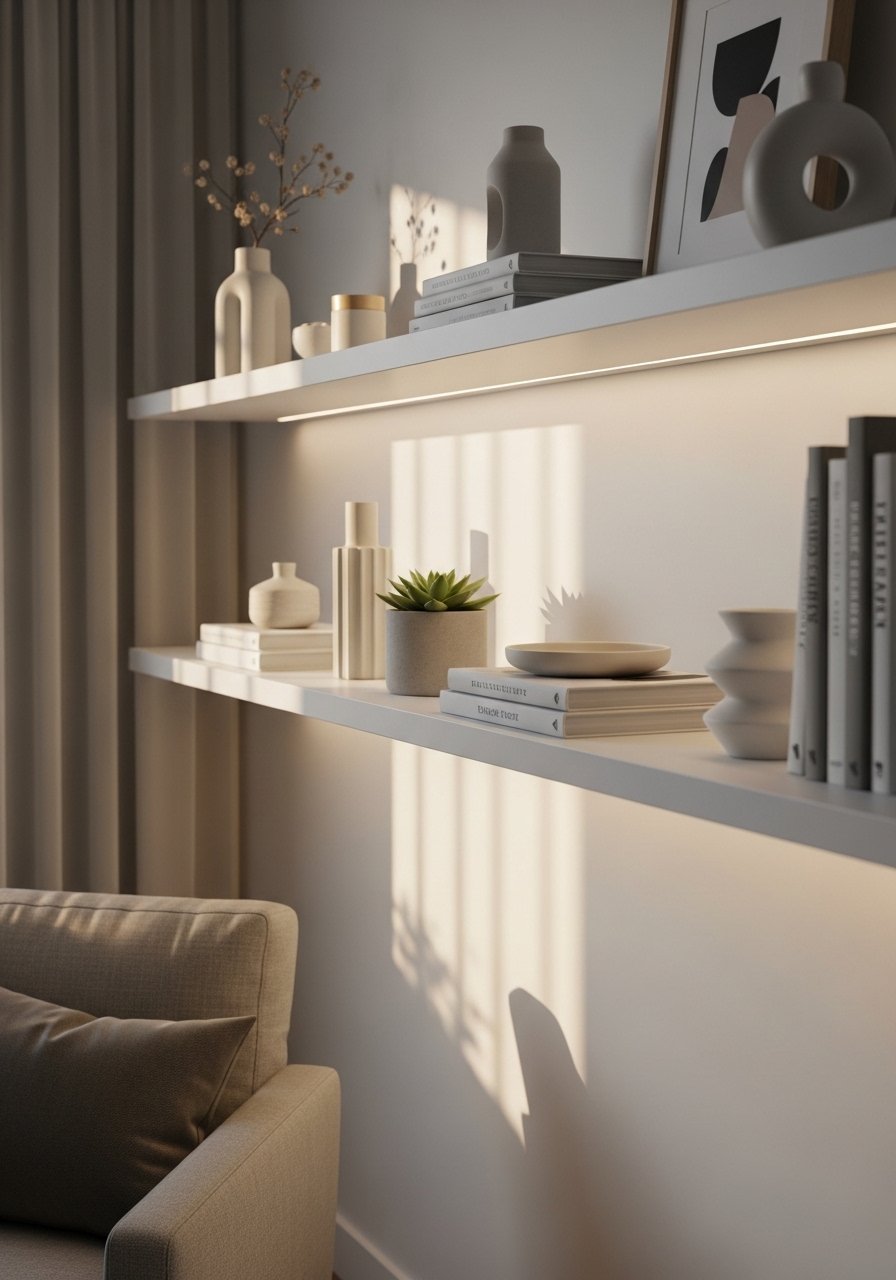
Floating shelves with LED lighting make objects feel intentional instead of cluttered. Attach strips to the underside of each shelf, 1.5 inches back from the front so the glow hits the shelf below and the wall. Use the rule of three when styling, three objects per shelf for balance. I used warm-led-strip-lights and rerouted wiring through the shelf supports. A common mistake is too many different temperatures, which reads messy. Keep the color temperature consistent across shelves and pair with the display case lighting idea.
Backlit Picture Frames for Art That Pops
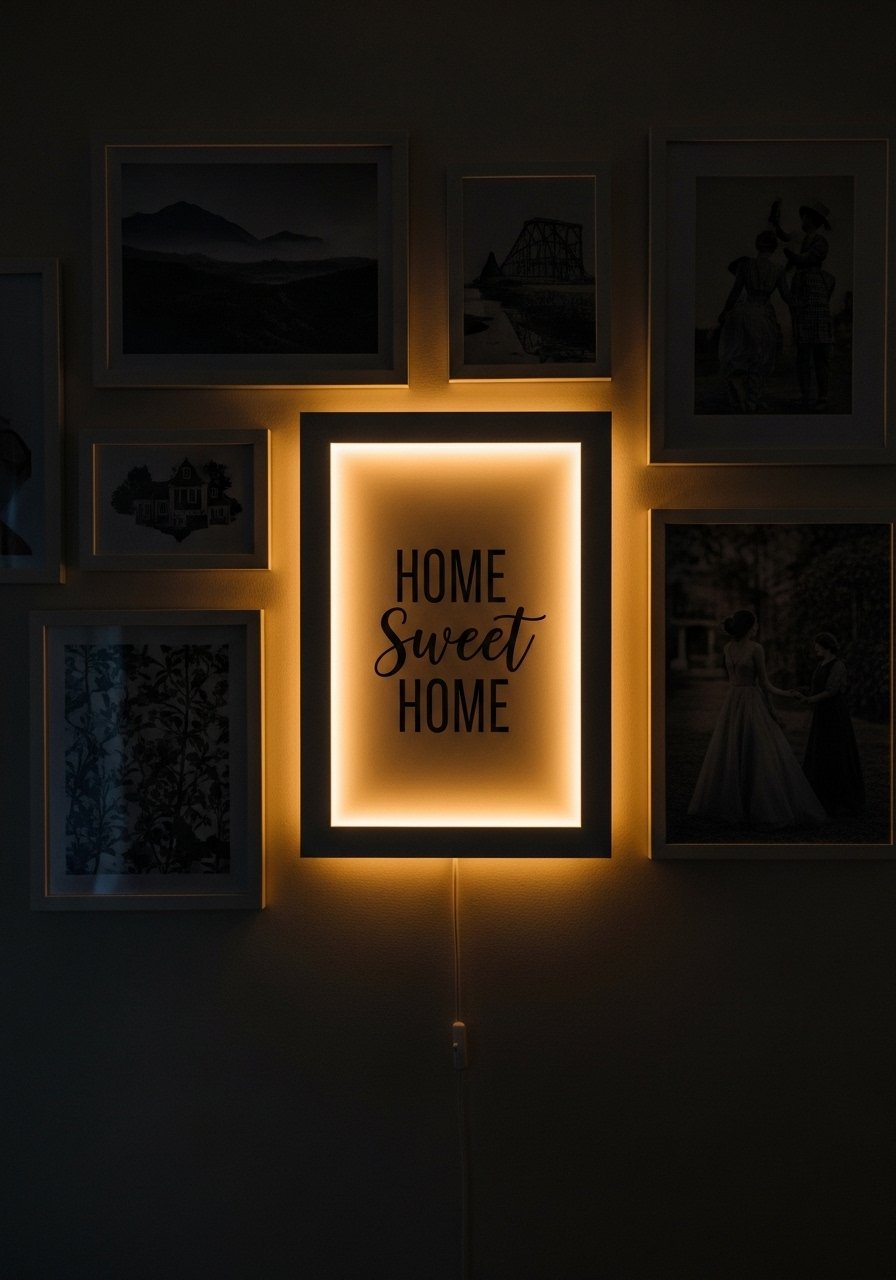
Backlighting art adds depth to a gallery wall without new frames. Use slim LED tape behind frames and space them 1 inch from the wall for even diffusion. People often light every piece the same. Instead, highlight single anchor pieces to create focus. I highlighted one oversized print and left the rest matte, which solved my wall feeling busy. I used led-tape-lights and a battery-powered driver so there were no visible cords. For scale, match the light intensity to frame size; bigger frames need more lumens.
Cove Lighting for a Subtle Ceiling Glow
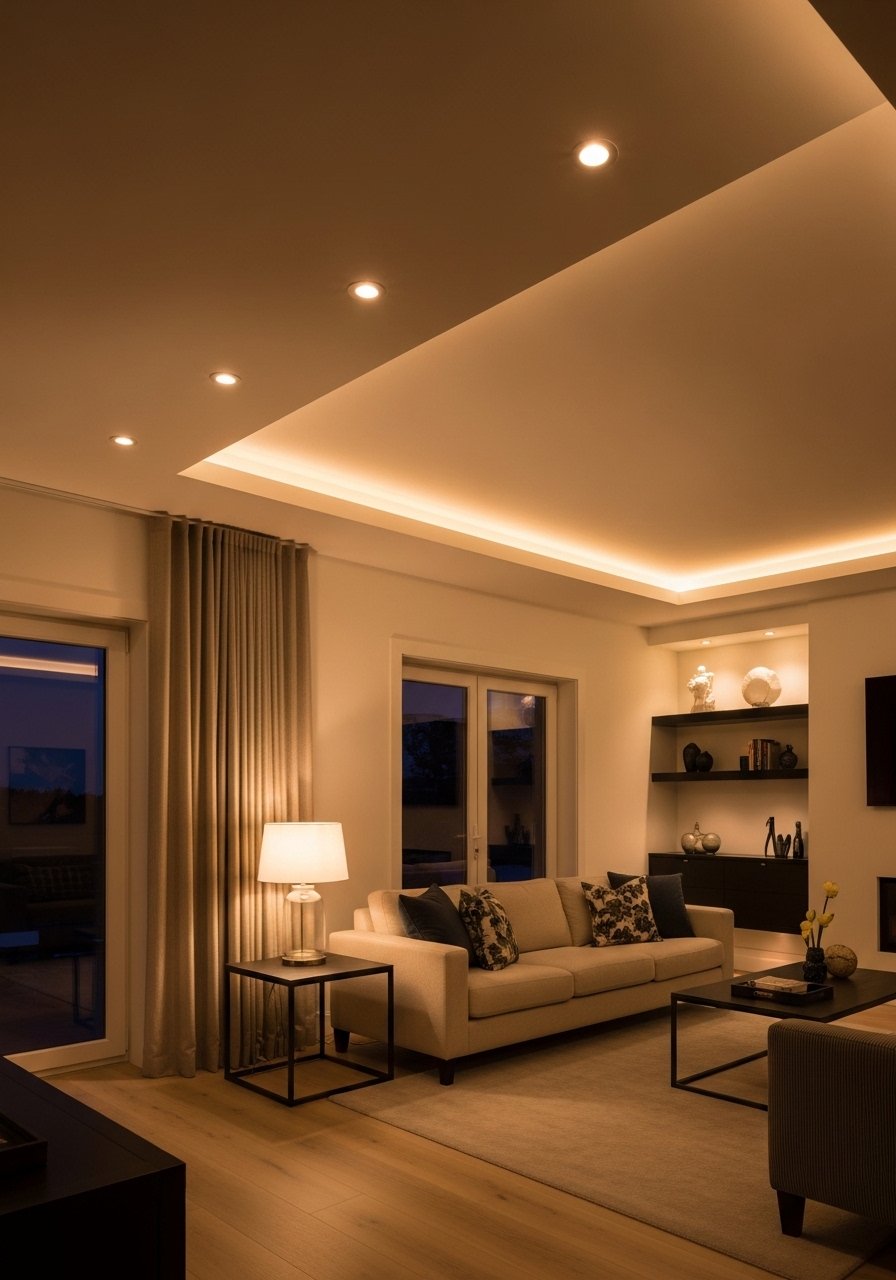
Cove lighting makes ceilings feel higher and rooms feel calm. I ran LED strips into a shallow soffit about 3 to 4 inches deep so the light reflects off the ceiling rather than shining out. Keep the strip out of direct sight to avoid bright lines. Folks often choose overly cool temps for cove lighting and it reads clinical. Warm whites around 3000K are better for living spaces. I installed led-cove-lighting with a dimmer so the glow can be mood lighting or bright enough for tasks.
Mason Jar Pendant Lights with LED Bulbs for a Rustic Modern Look
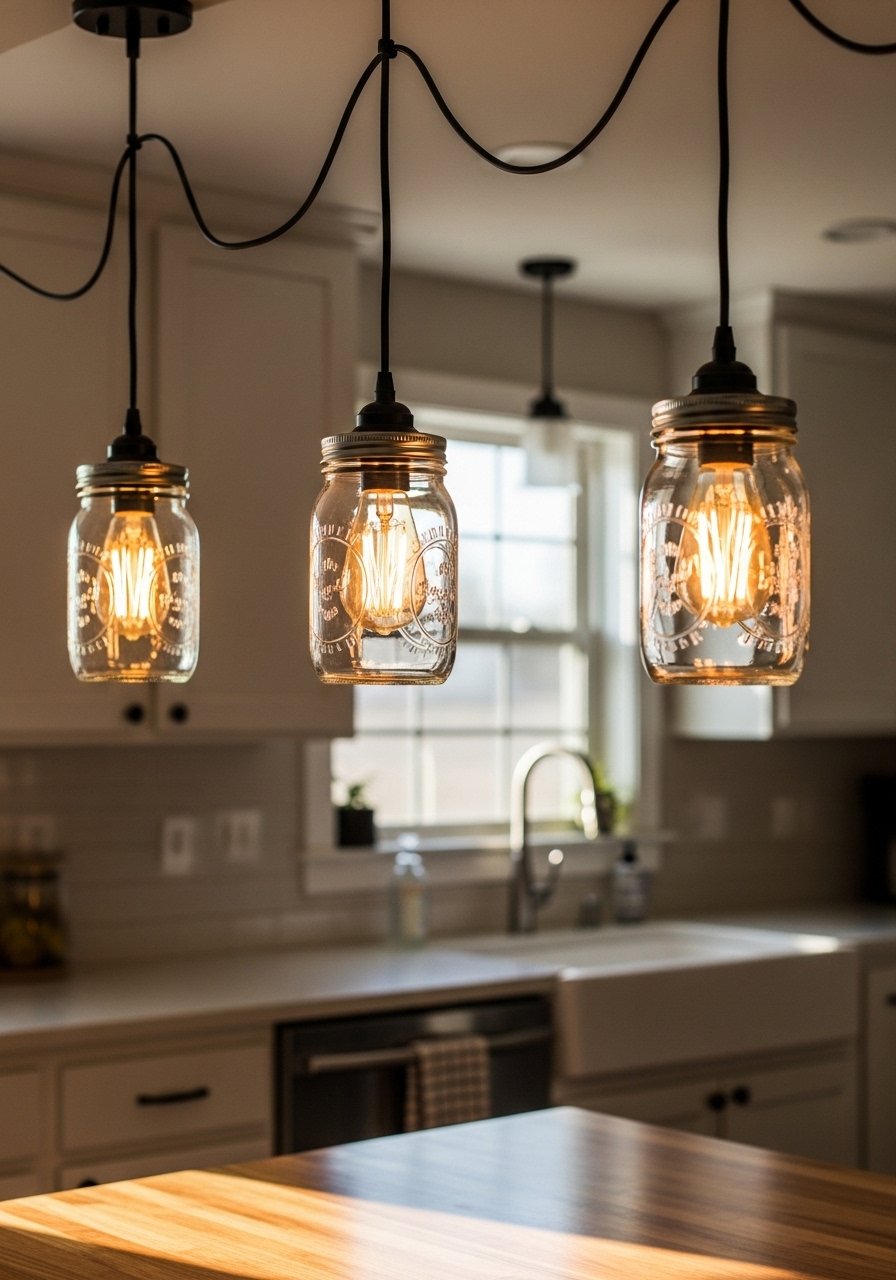
I made farmhouse-style pendants using mason jars and LED filament bulbs for warm charm without the heat. Drill a small hole in the jar lid and use a plug-in pendant kit so a landlord-friendly swap is easy. Use 2200K to 2700K LED filament bulbs for that amber glow. A frequent mistake is choosing oversized jars that swallow the bulb. For proportion, jars around 4 to 5 inches wide work over kitchen islands. I bought led-filament-bulbs and plug-in kits so no hardwiring was necessary.
Color-Changing Reading Nook Lamp for Mood and Function
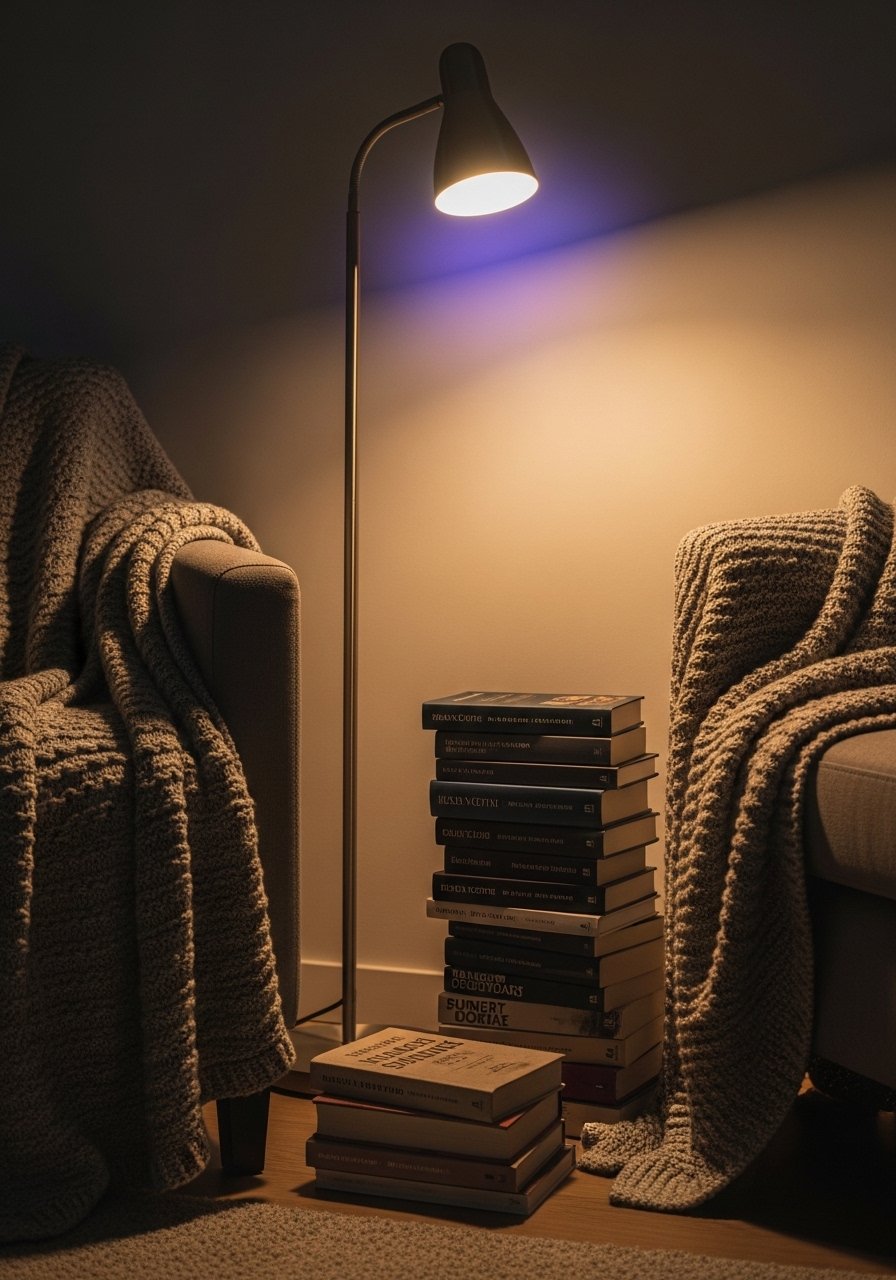
A single color-changing bulb solved my problem of wanting both warm reading light and an ambient cool evening hue. Use a lamp with a smart LED bulb so you can set scenes by voice or app. I keep the reading color at warm 3000K and switch to muted blues for late-night ambiance. Many people forget to layer with a warm bulb when sitting close to a cold-toned lamp and end up feeling harsh. I use smart-led-bulbs and group them with a dimmer button for easy control.
Patio Step and Pathway LEDs for Safe Entertaining
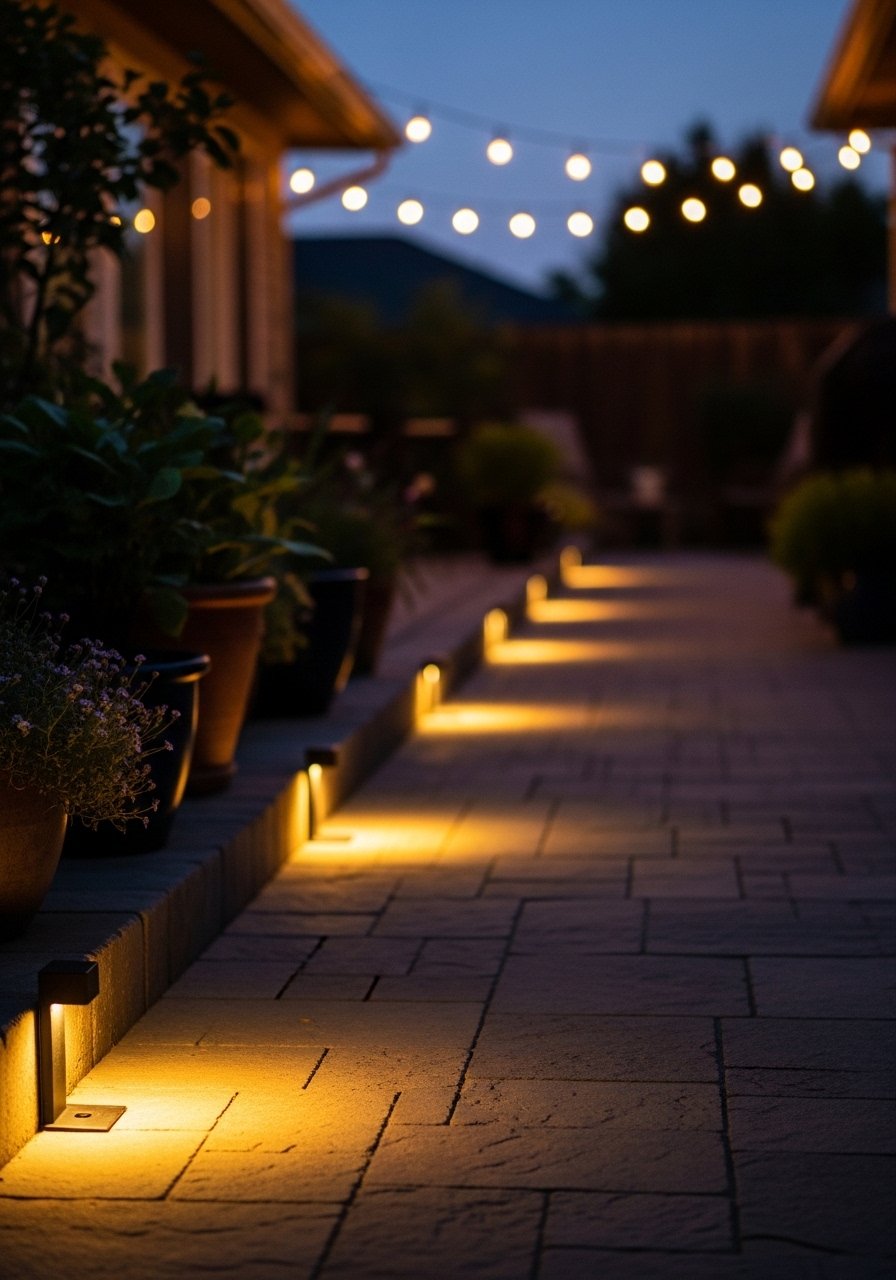
Outdoor pathway LEDs make a backyard feel finished and keep guests safe. Choose weatherproof LED strip or pathway fixtures and space them every 4 to 6 feet for even coverage. Common mistakes are using indoor-rated strips outside or spacing too widely. I used outdoor-led-pathway-lights with solar options for the walkway and low-voltage wired LEDs for the patio steps. If you add string lights above, keep the pathway temp consistent so everything reads cohesive.
DIY Neon-Style Acrylic Sign for Personalized Accent Lighting
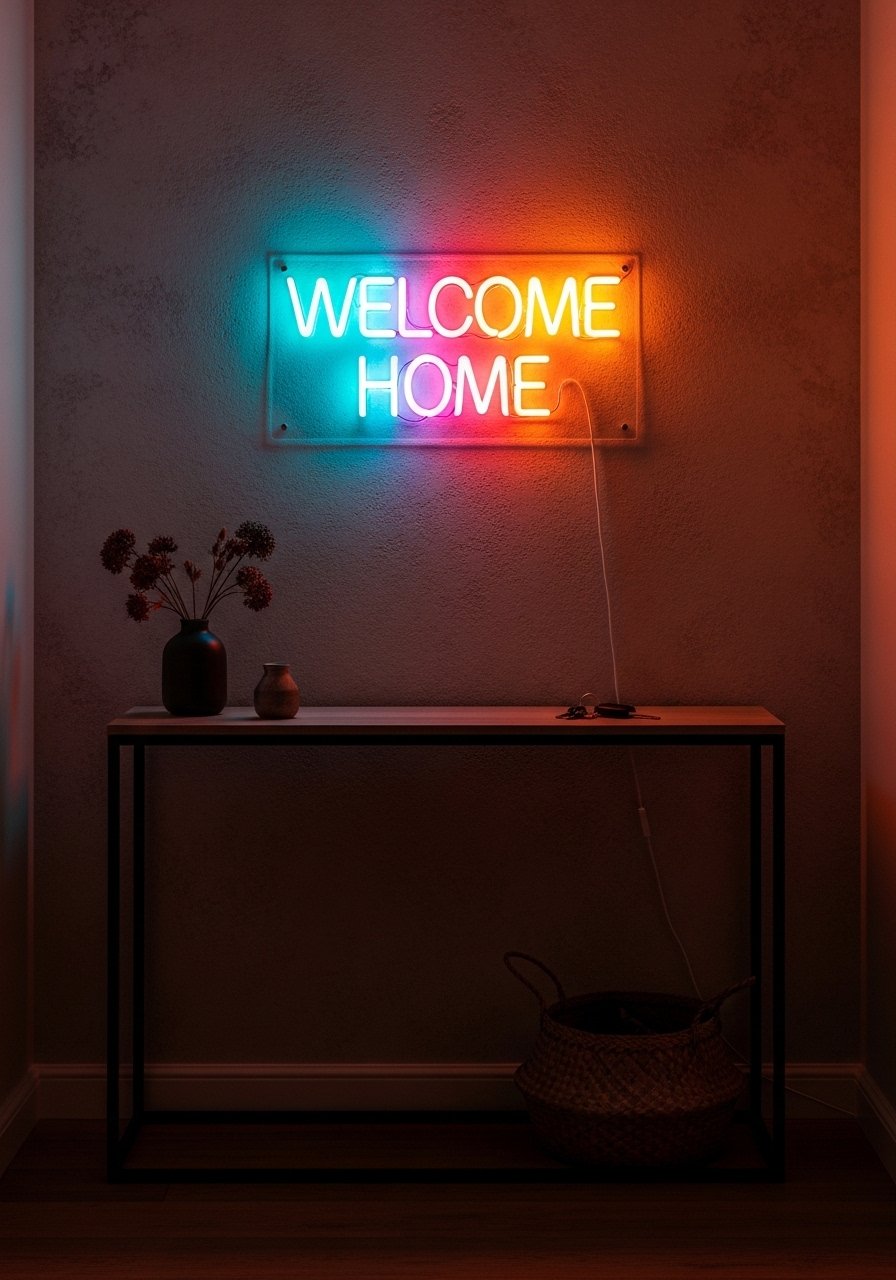
I made a custom sign using LED rope lights glued into a routed acrylic channel and it became the personality piece for my entry. Use frosted acrylic for even diffusion and route a channel about 0.5 inches deep for the rope to sit flush. Many DIY signs look too busy because the rope is exposed. Hiding the rope inside gives a clean neon look. I used led-rope-lights and a small plug-in transformer for easy removal when I move.
Baseboard Cove Lighting for Subtle Ambient Glow
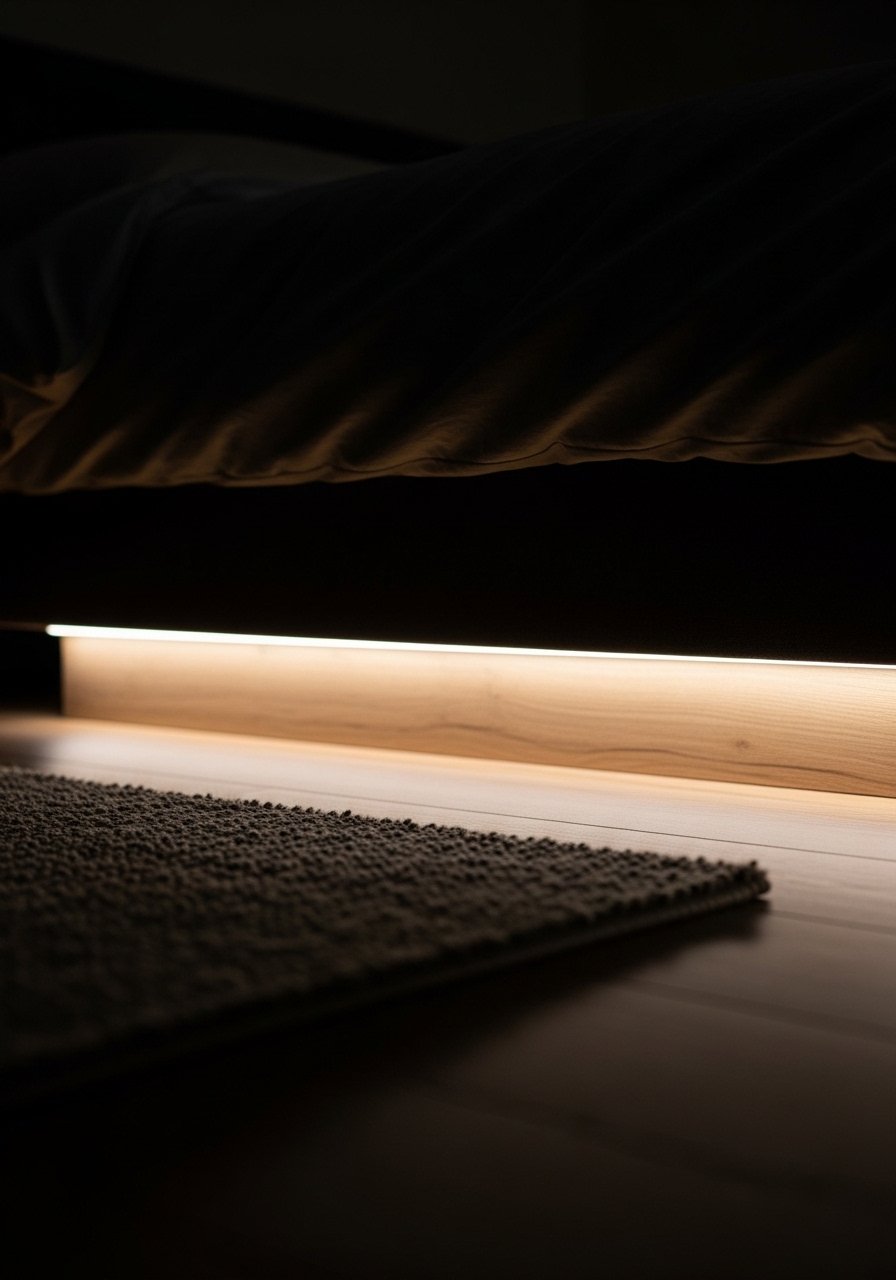
Running LED strips behind baseboards creates a hotel-style ambient glow that reads intentional and not flashy. Place the strip 1 to 2 inches behind the baseboard and aim light toward the wall base so it reflects softly. People sometimes put it facing outward at eye level which becomes distracting. I installed led-baseboard-lights with a motion sensor so nights trips to the bathroom do not require full lights. It is a subtle way to add depth while keeping the 80/20 color ratio of your room textiles.
Bookcase Shelf Lighting with Warm White LEDs for Layered Display
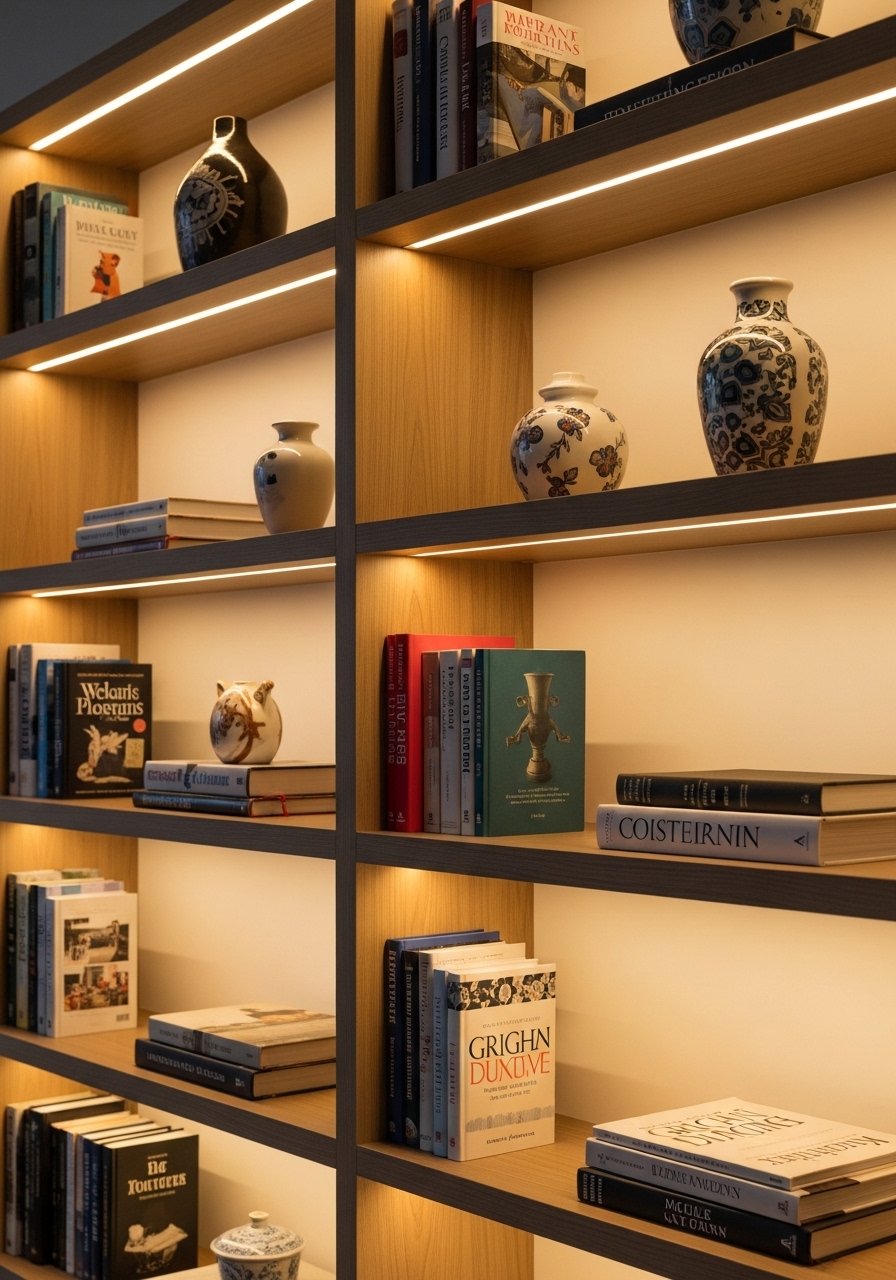
Lighting bookcase shelves changed how my collections read. Use warm white strips and place them at the back of each shelf to avoid glare on glossy books. I use the rule of three when styling shelves and light the three anchor shelves more brightly. A common mistake is lighting only the top shelf which makes the rest disappear. I used warm-led-strip-lights and concealed drivers behind lower cabinets. This technique pairs well with the floating shelf glow earlier.
Under-Bed LED Panel for Soft Night Guidance
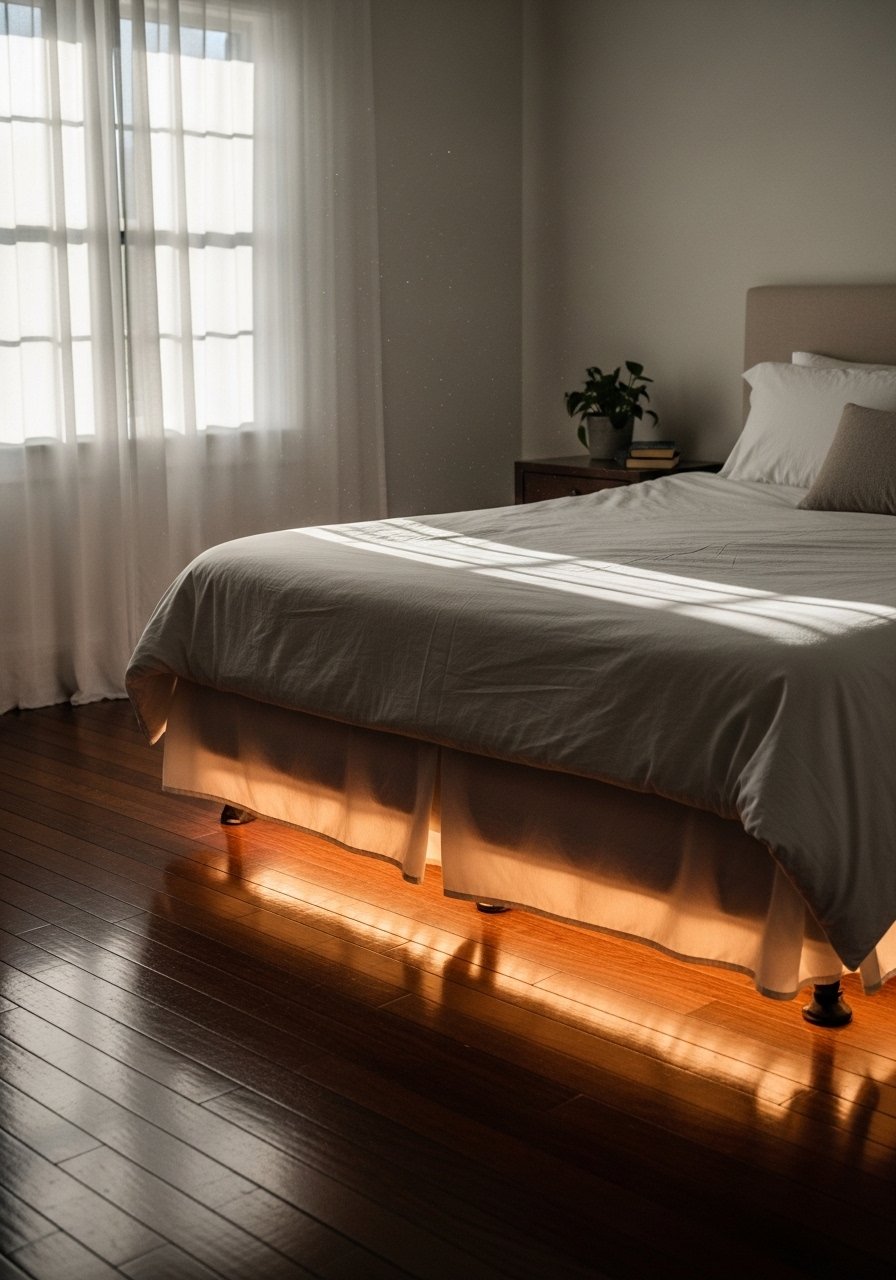
An under-bed LED panel gives enough light for safe midnight navigation without waking the household. I used a thin panel centered under the bed frame, 1.5 inches back from the edge, so the wash reaches the floor. Many night lights are overly bright or placed where they shine into your eyes. Use warm, dimmable LEDs and a touch sensor remote for convenience. I installed a led-under-bed-light that runs on a low-voltage adapter. This was a cheap fix that solved stumbling and made the room feel more considered.
Puck Lights Inside Drawers and Cabinets for Easy Finding
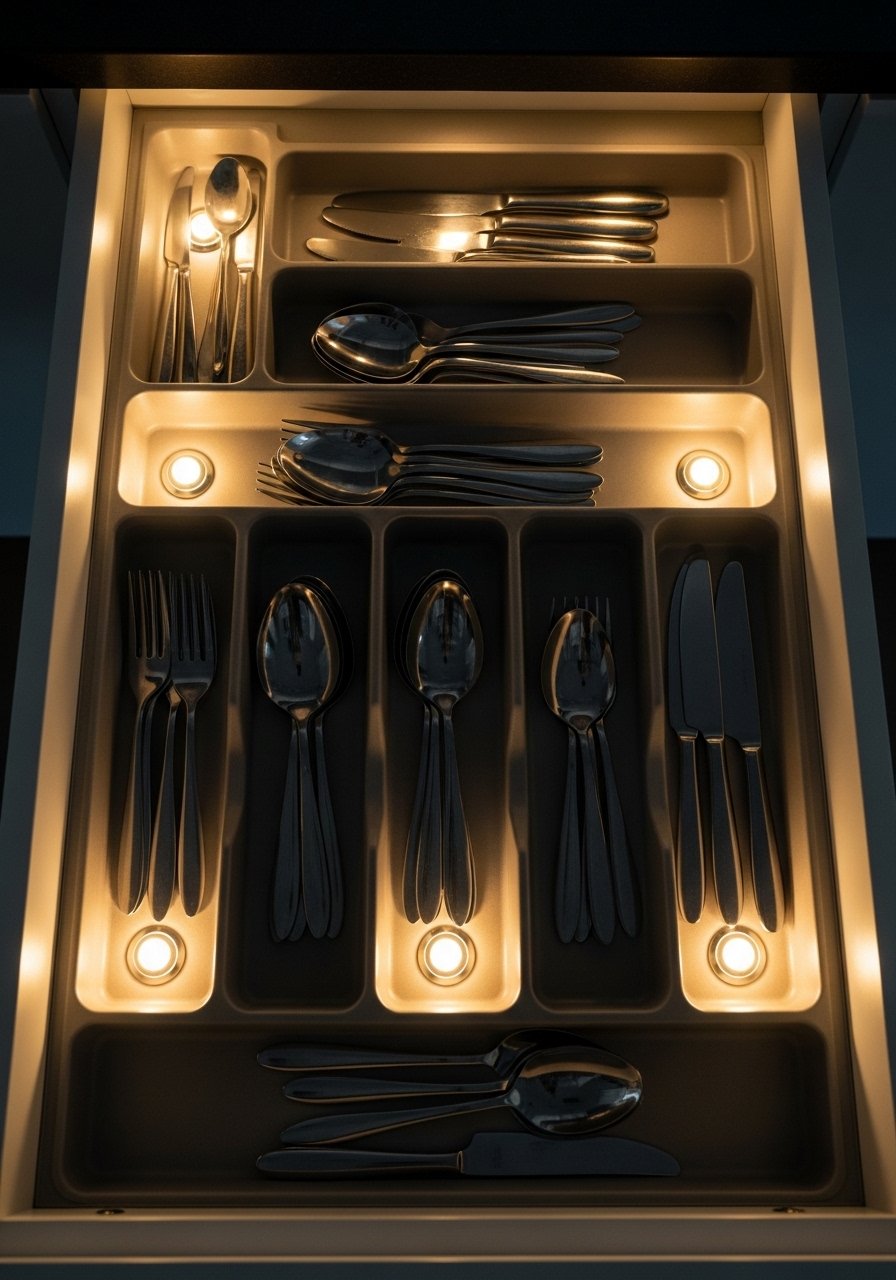
Small puck lights inside drawers are a detail most people skip. Stick rechargeable pucks to the underside of the drawer top or inside drawer boxes so everything is visible when opened. I spaced one puck every 18 to 24 inches for deep drawers. The mistake is using adhesive that leaves residue. Rechargeable led-rechargeable-puck-lights with magnetic mounts make removal quick. This also reduces the irritation of searching in dim kitchen drawers late at night.
Smart Switch Scenes to Coordinate Multiple LED Zones
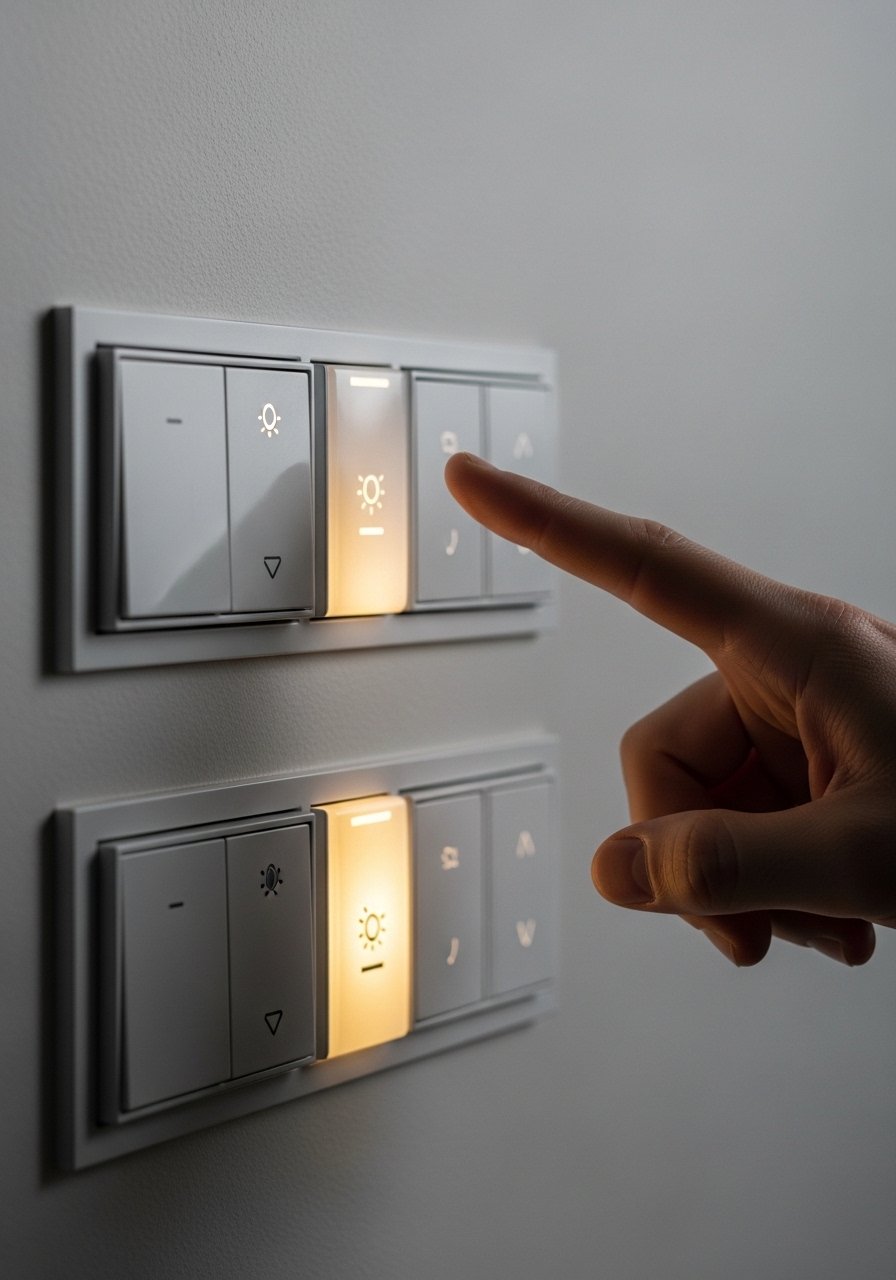
I got tired of adjusting several remotes so I set up smart scenes that control all LED zones at once. Group your TV bias, cove, and shelf lights into a single "Movie" scene and a "Clean" scene for bright tasks. Avoid mixing color temperatures in one scene unless you want contrast. A simple mistake is naming scenes unclearly. I labeled mine "Relax" and "Focus" and it made a big difference. I used smart-light-switches and a voice assistant for hands-free changes. This is a slightly bigger setup but worth it if you have many LED strips.
Staircase Runner Glow with Integrated LED Rope for Style and Safety
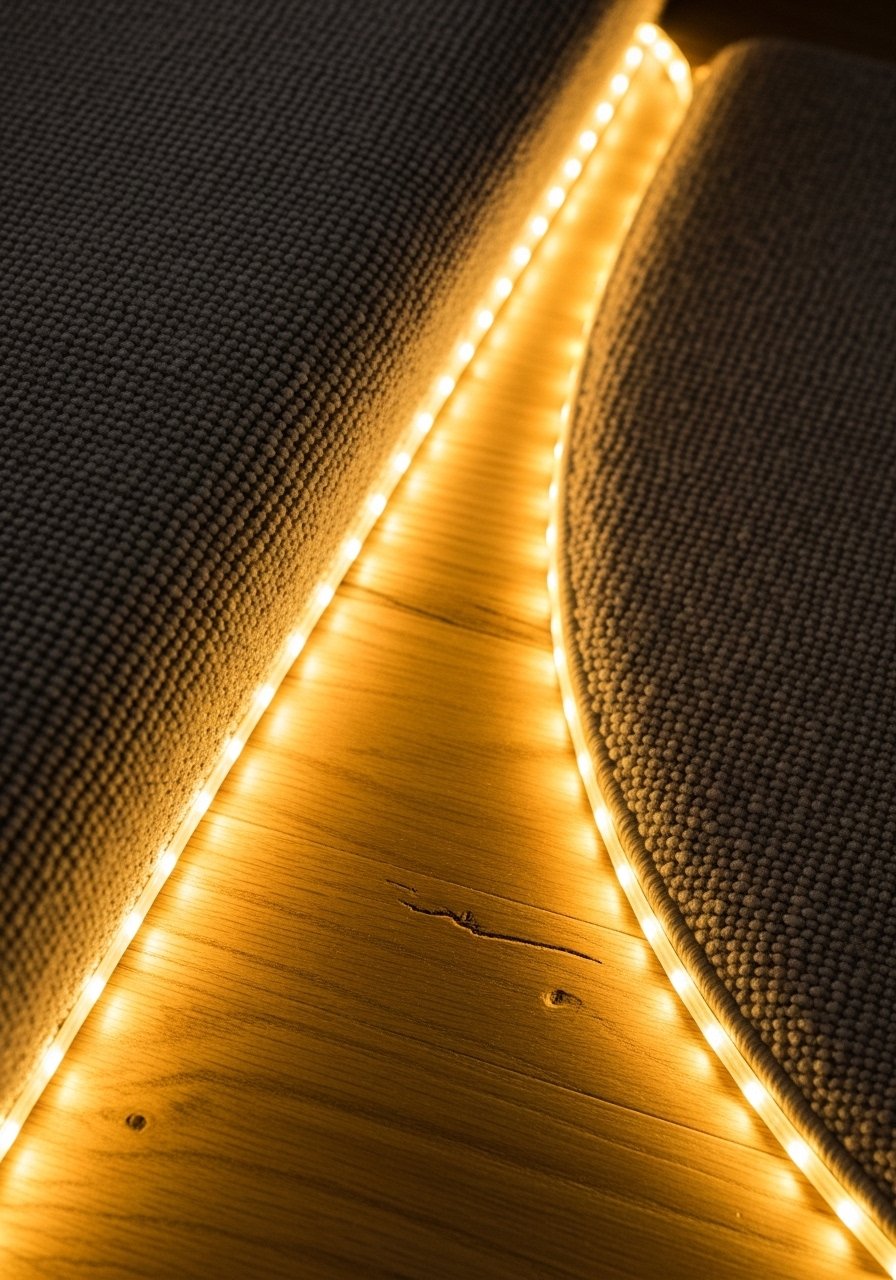
Instead of lighting the risers, I sewed a thin LED rope into the staircase runner edge and it added both safety and a tailored look. Keep the rope ribbon 1 inch from the runner edge so it is visible but protected. The error most people make is too-bright rope that overwhelms the runner texture. I used led-rope-ribbon on low output and combined it with step riser lights for even coverage. This is renter-friendly because the runner can move with you.
Your Decor Shopping List
Lighting
- Honestly the best $25 I have spent. LED strip lights in cool white and warm white options for TV and shelves
- Warm LED puck lights rechargeable, for cabinets and drawers (~$30)
- Smart LED bulbs for color scenes and voice control, A19 size for lamps (~$20 each)
- Plug-in pendant lamp kits for DIY mason jar pendants (~$18)
Textiles
- Chunky knit throw in cream (~$35-55). Drape over the sofa arm for instant warmth
- 22-inch linen pillow covers, set of 2 in muted blue and warm beige
Wall Decor and Display
- Brass picture ledges (~$18-25), lets you swap art without extra holes
- Acrylic sign blanks for DIY neon-style projects
Tools and Helpers
- Cable management raceway kit for hiding TV and shelf wires
- Motion sensor switch for closet and stairway automation
Similar items are usually at Target and HomeGoods if you prefer to see them in person.
Shopping Tips
White oak beats dark wood in 2026. Design feeds have shifted completely. White oak floating shelves look current, not dated.
Grab velvet pillow covers for $12 each. Swap them every season and the whole room feels different.
Curtains should puddle or kiss the floor, never hang halfway up. 96-inch linen curtain panels are right for standard 9-foot ceilings.
Everyone buys five small succulents. One single 6-foot fiddle leaf fig artificial tree has ten times the visual impact.
Frequently Asked Questions
Q: Can LED strip lights be used behind a TV without voiding the warranty?
A: Yes. Most manufacturers allow non-invasive bias lighting since it does not alter the TV hardware. Stick to adhesive strips and avoid drilling into the TV mount. Use a dimmable led-strip-lights kit so you can adjust brightness.
Q: Will under-shelf LEDs make my kitchen look dated?
A: Not if you use warm white around 2700K to 3000K and keep installation hidden. The wrong temperature is the usual mistake. Mount strips 1.5 inches back for a modern wash and pair them with warm vanity lighting for cohesion.
Q: How do I hide cords for floating shelves and backlit frames in a rental?
A: Run cables through a thin cable management channel painted to match the wall or tuck them behind the shelf bracket. Battery-powered strips or plug-in adapters with smart plugs are renter-friendly alternatives. Cable management raceway kits work well.
Q: What color temperature should I choose for bedroom LED backlighting?
A: I keep bedroom accents at 2700K to 3000K for a relaxed feel. Anything cooler feels like an office. If you want a reading task light, add a separate lamp at 3000K rather than changing the overall mood.
Q: Are outdoor LED pathway lights worth the extra cost compared with solar?
A: Wired low-voltage lights are more consistent in brightness and perform better under tree cover. Solar lights are cheaper and install quickly. For a high-traffic area, go wired. Outdoor-led-pathway-lights come in both options.
Q: How many lumens do I need for stair risers or steps?
A: Aim for 100 to 200 lumens per step. That range provides visibility without glare. Place strips or fixtures so light is directed at the riser and not into eyes.
Q: My room still feels flat after adding LEDs. What am I missing?
A: Lighting is one piece. Texture and scale matter. Use the rule of three on shelves, keep an 80/20 color ratio with one bold accent, and layer textiles with warm LEDs. Spent $400 on furniture once, then fixed the feeling with a $35 throw and three candles.
Q: Are smart LED scenes complicated to set up?
A: Not really. Group lights in the app, name scenes clearly, and test in the space. I labeled mine "Relax" and "Focus" and it made routine changes effortless. Use smart-led-bulbs for the easiest start.