


My living room had nice furniture and decent lighting but it still felt like a waiting room. Took me embarrassingly long to figure out it was missing texture. Every surface was smooth, every color was flat, and nothing invited you to actually sit down. A few smart storage moves at the front door fixed the vibe and the clutter at the same time.
These ideas lean modern farmhouse with plenty of eclectic touches. Most builds and buys are under $150, with a few splurges around $200 if you want built-in quality. Works for narrow hallways, wide mudrooms, apartment foyers, and anything that ends up as a shoe pile emergency.
Cozy Farmhouse Cubby Bench for Mudroom
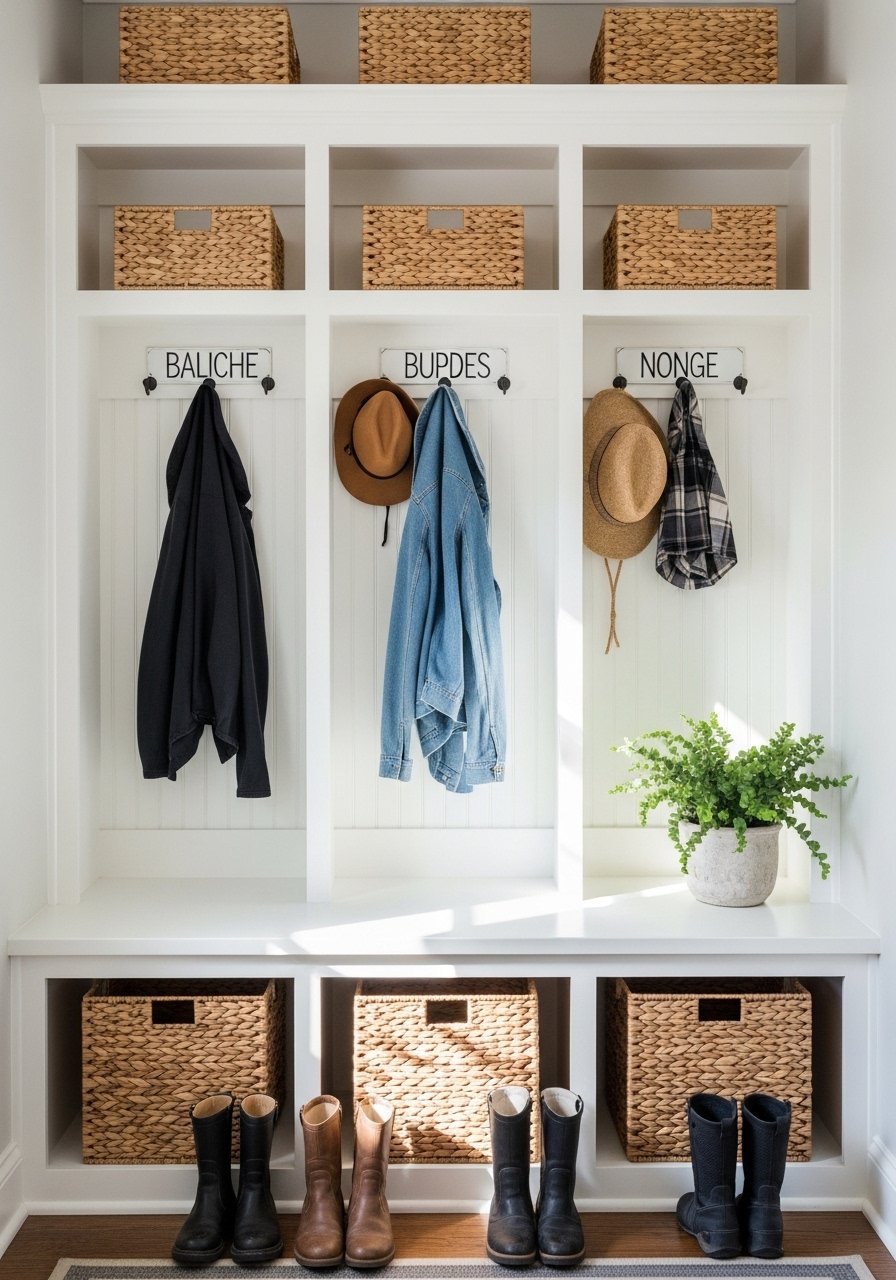
I built a simple cubby bench to hide shoes and save me from the daily shoe avalanche. A 36-inch bench with three 11-inch-wide cubbies keeps things tidy and gives each family member a slot. If you want baskets, woven seagrass baskets are under $30 each and look lived-in, not staged. The common mistake is making the seat too shallow. Aim for 14 to 16 inches deep so people can sit comfortably while tying laces. This style works great in mudrooms and narrow entryways where you need vertical storage without blocking traffic.
Lift-Top Upholstered Bench for Hallways
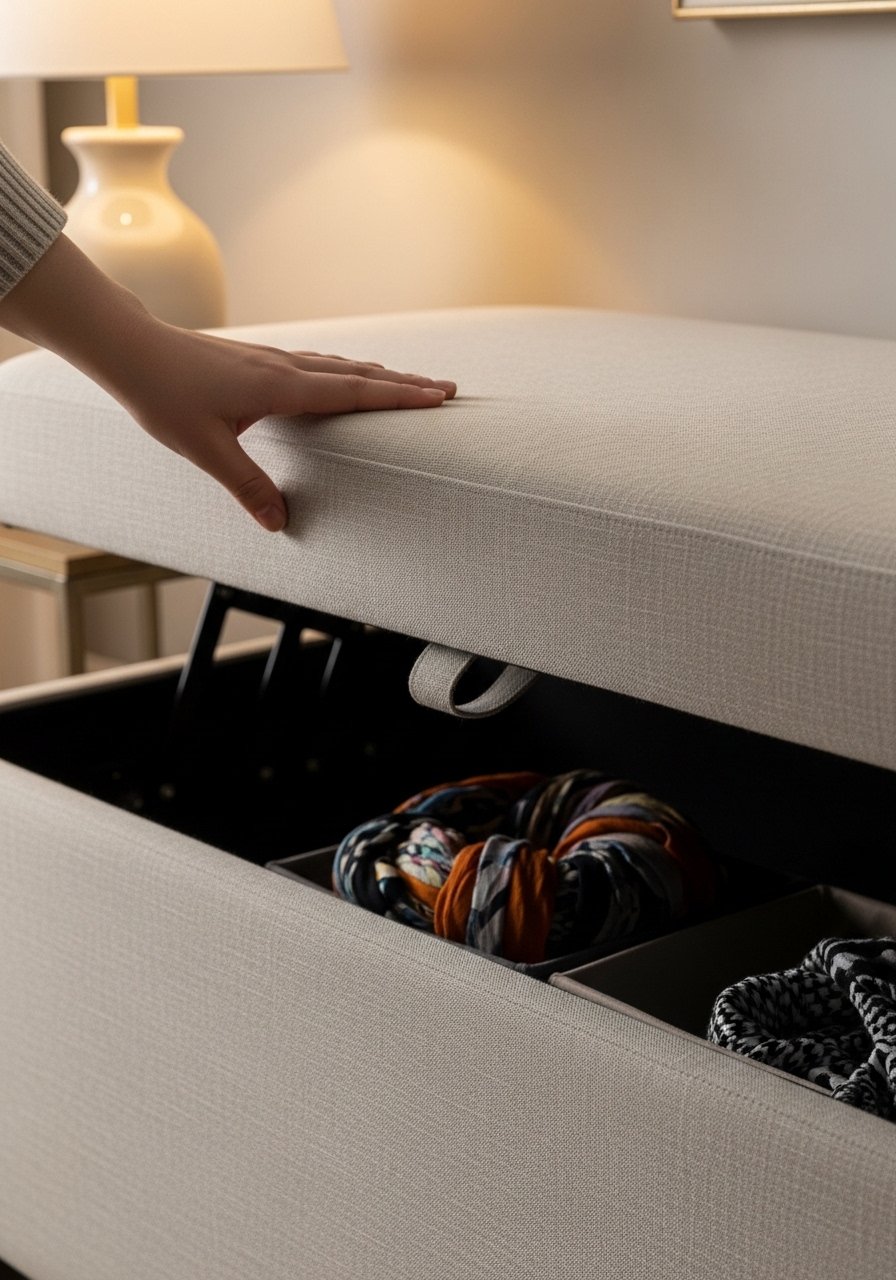
I bought a lift-top bench the week my hallway became a drop zone for scarves and winter hats. A 42-inch bench with a 2-inch foam cushion and a soft linen cover hides seasonal items perfectly. I like lift-top storage benches with reinforced hinges for durability. Mistake people make is choosing a cushion that adds too much height. Keep total seat height around 18 to 20 inches so it reads like seating, not a coffee table. Pair this with the cubby bench idea if you need both hidden and quick-access storage.
Slim Shoe-Organizing Bench for Narrow Entry
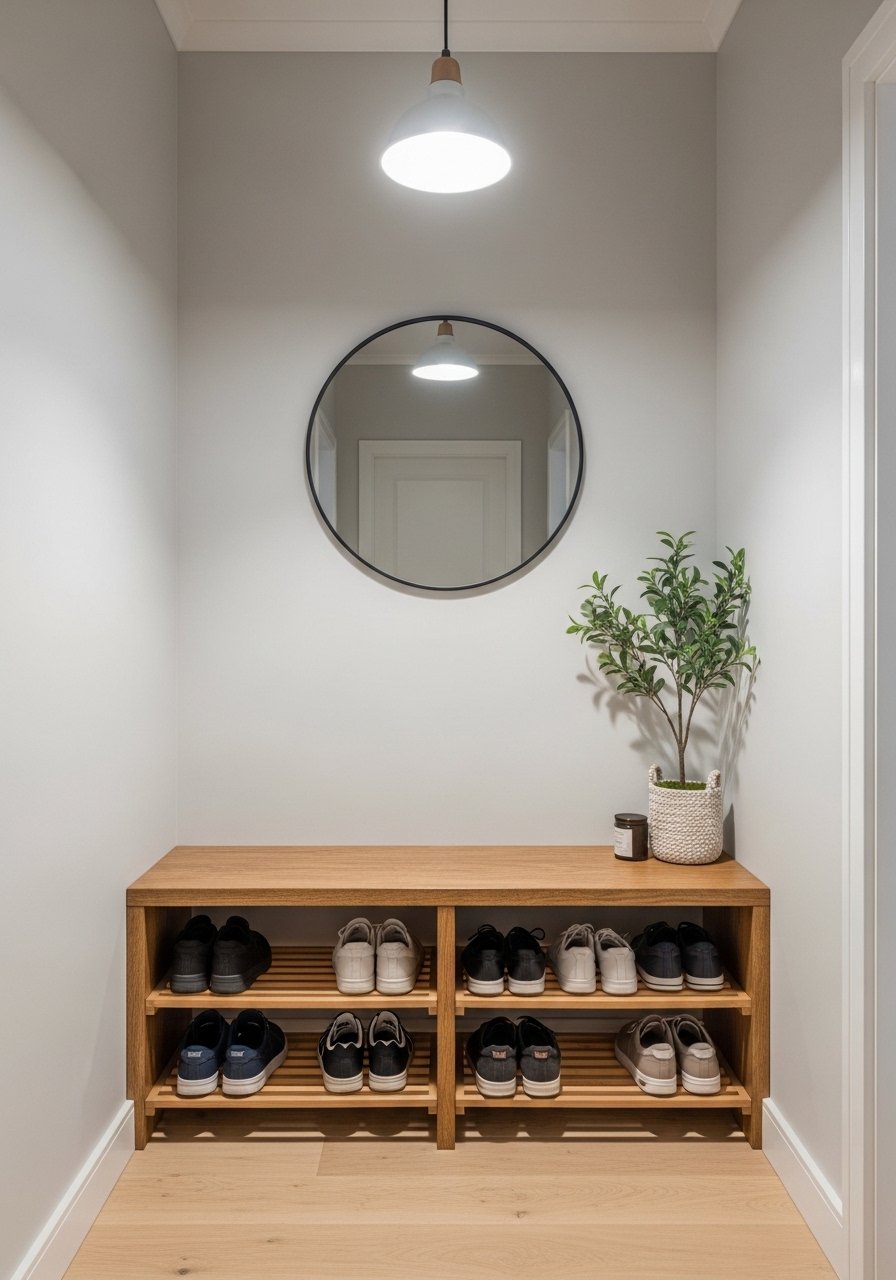
My skinny hall needed a bench that did not swallow the walkway. A 12-inch depth bench with pull-out shoe trays solves the tight space problem. You want the bench seat at 18 inches high and drawers that slide fully so you can grab shoes without kneeling. For a simple find try a slatted wood shoe bench. The mistake is adding a deep cushion that extends into the path. This is ideal for apartment foyers where every inch counts.
Industrial Pipe Bench with Underbaskets for Garage Entry
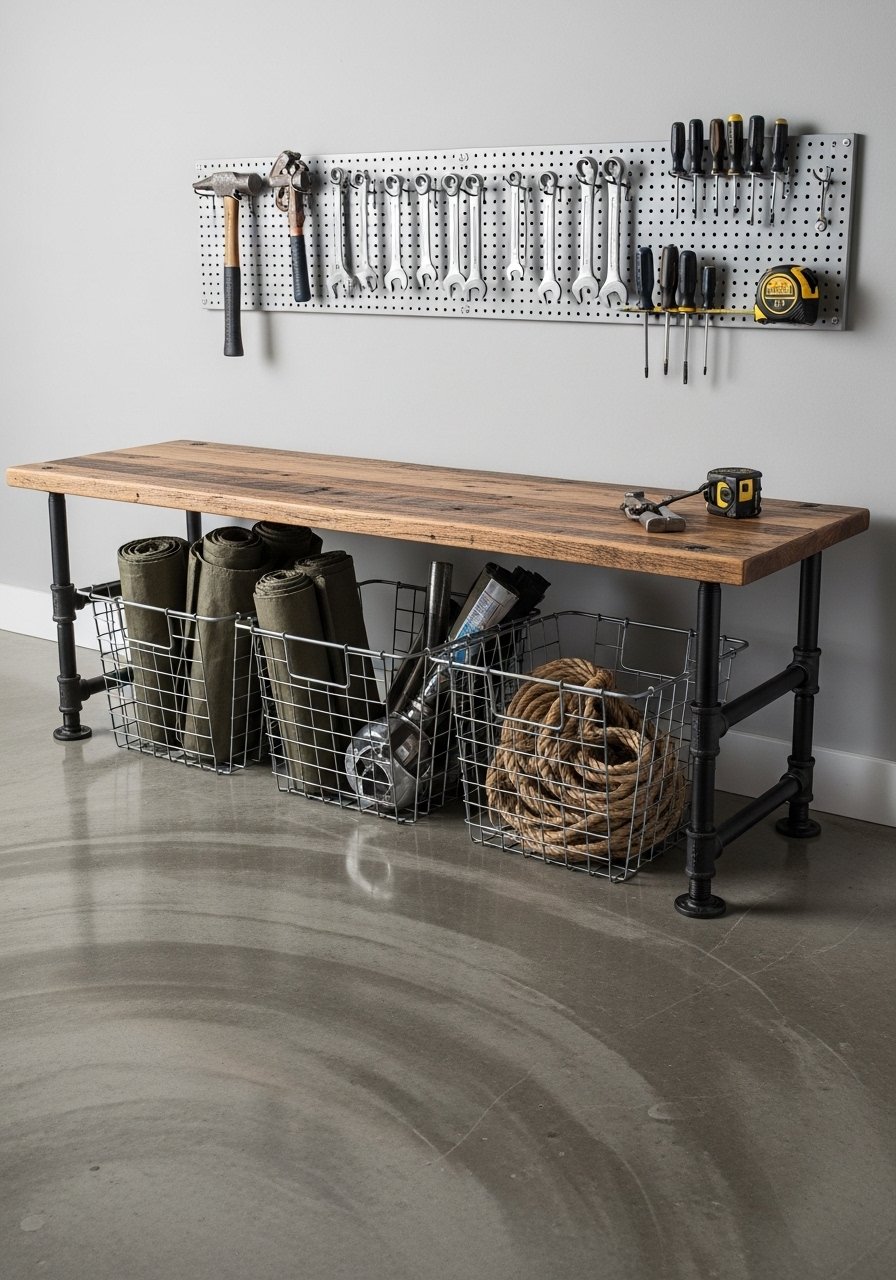
I used pipe fittings and a reclaimed board to make a sturdy bench that survives muddy boots and paint cans. Wire baskets stored under the bench keep dog leashes and cycling gloves handy. If you like the look, industrial pipe bench kits make assembly quick. The visual rule I follow is 80/20 color ratio, meaning keep 80 percent neutral tones and 20 percent accent metal so it feels intentional. Mistake people make is overloading the top with decor. Keep the surface functional by using hooks or a small tray.
Bench With Built-In Charging Station for Tech Clutter
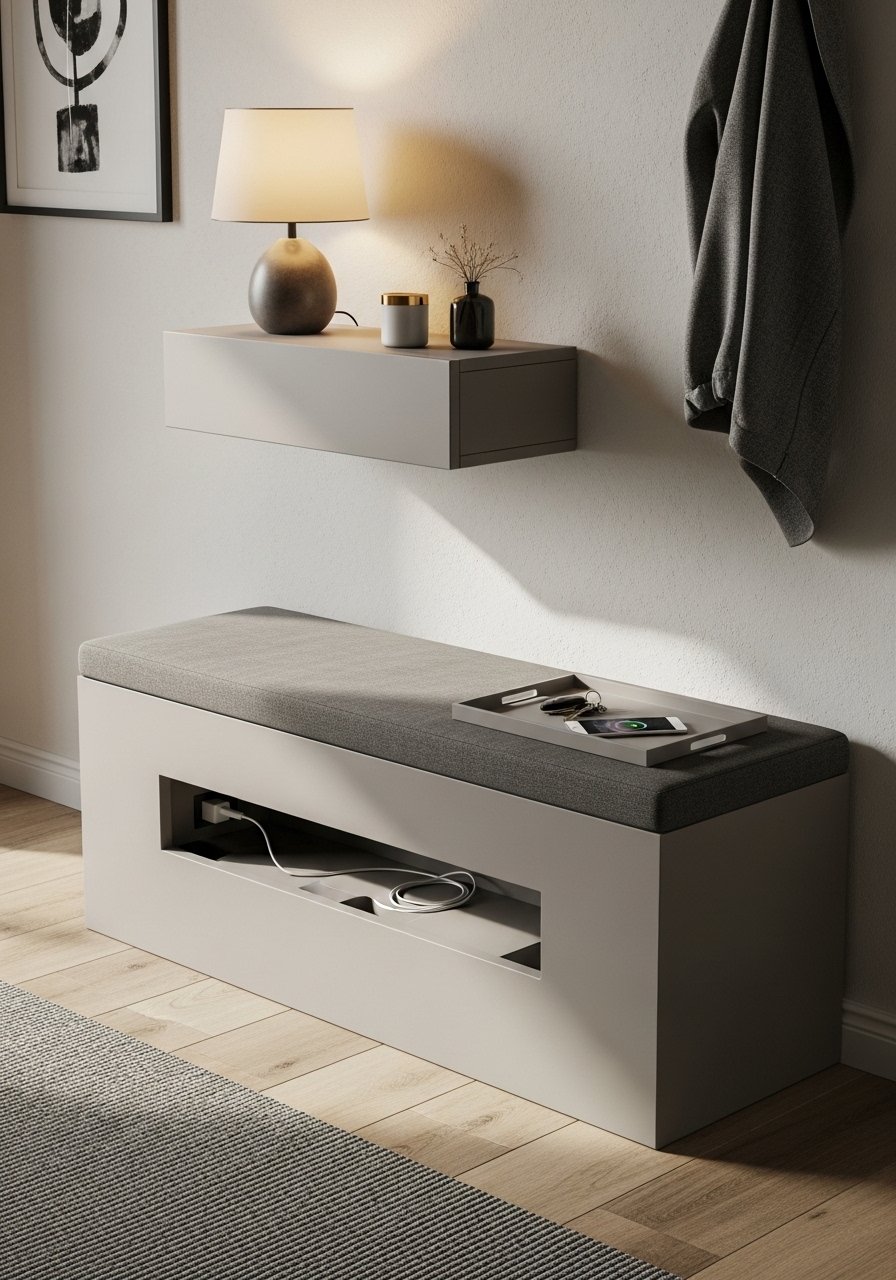
Phones and keys were always scattered until I added a small charging cubby under the bench. I routed a power strip into the compartment and now everything has a home. You can retrofit many benches or buy a bench with built-in charging. A common mistake is not allowing ventilation for chargers. Leave a 1-inch gap and don’t stuff batteries next to warm electronics. This idea fits modern entryways and apartment foyers perfectly.
Painted Vintage Bench With Drawer Fronts for Cottage Charm
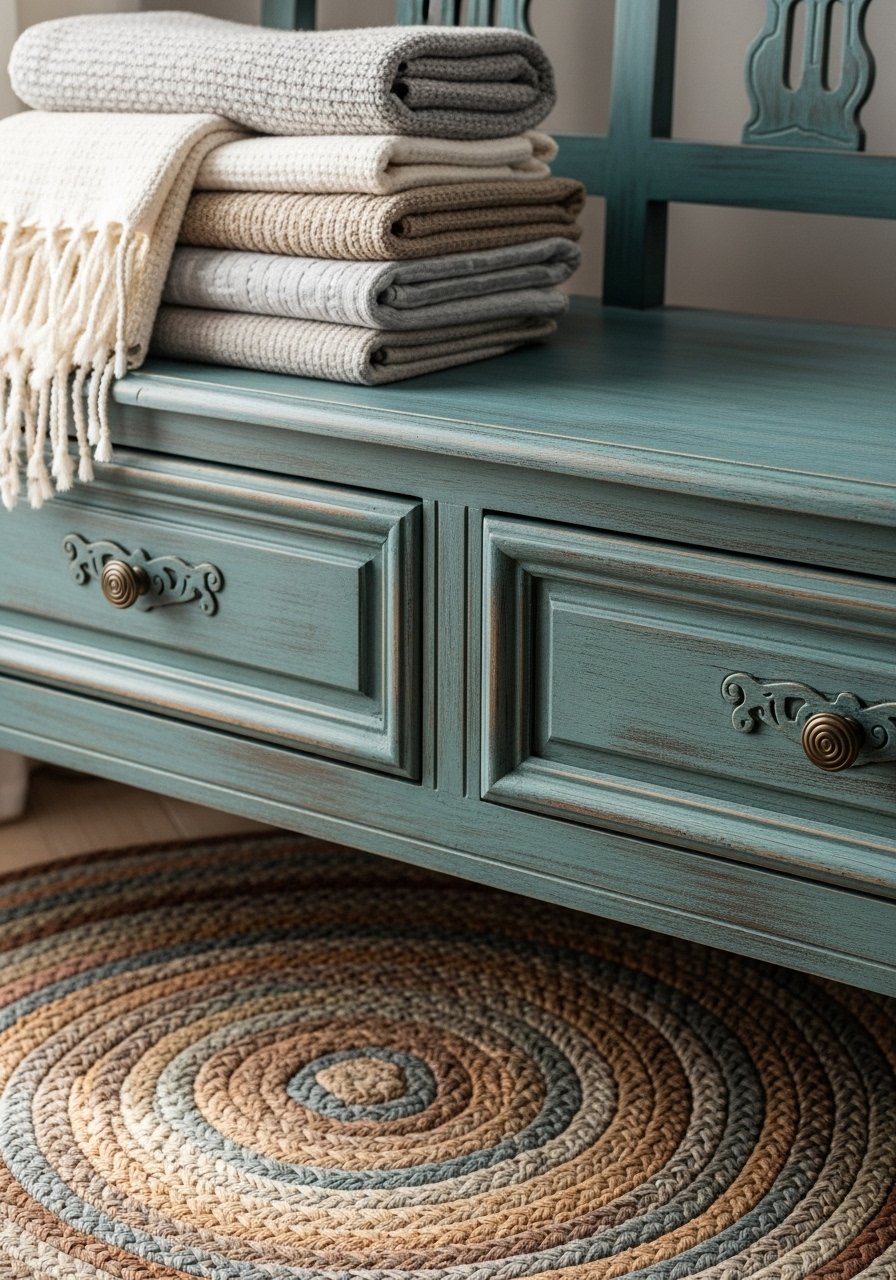
Found an old bench at a flea market and replaced the basket fronts with salvaged drawer faces. A coat of milk paint and some wax made it feel like it belonged. Use 22-inch deep seating if you plan to layer a pillow and a throw. For similar pieces, search vintage-style wooden benches. Mistake people make is choosing bright paint that fights with existing wood tones. Stick to one accent color and use the rule of three when styling the top with a plant, a tray, and a small lamp.
Floating Wall Bench for Small Entryways
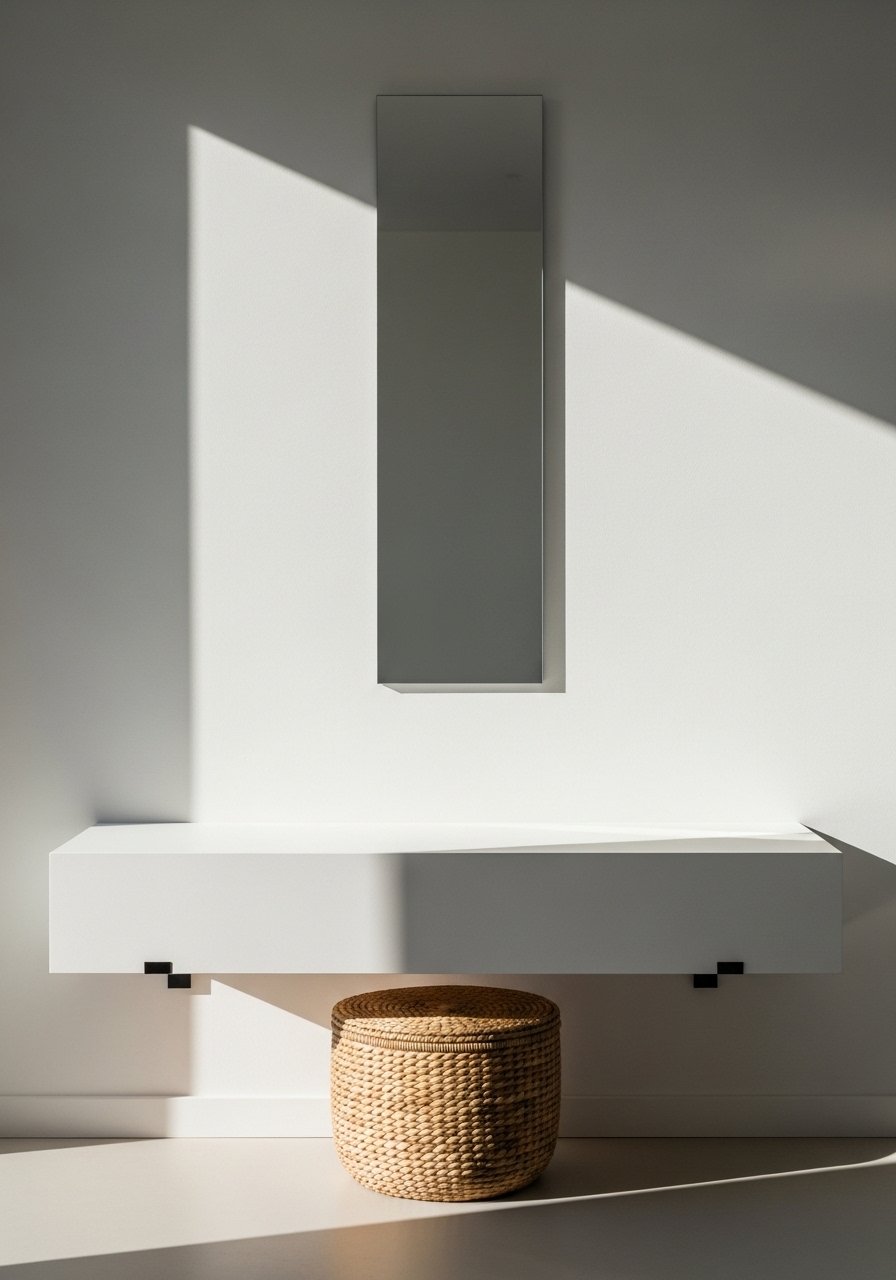
Mounting a bench to the wall is my secret for keeping floors clear in tiny entryways. A floating bench at 16 to 18 inches high looks lighter than a floor model and still holds baskets beneath. Make sure studs are used for mounting and choose a floating entry bench with heavy-duty brackets. People often make the bench too long and it overpowers the wall. Keep it proportional to the mirror above, roughly the same width or two-thirds of the mirror width.
Hairpin-Leg Bench With Stacked Bins for Eclectic Spaces
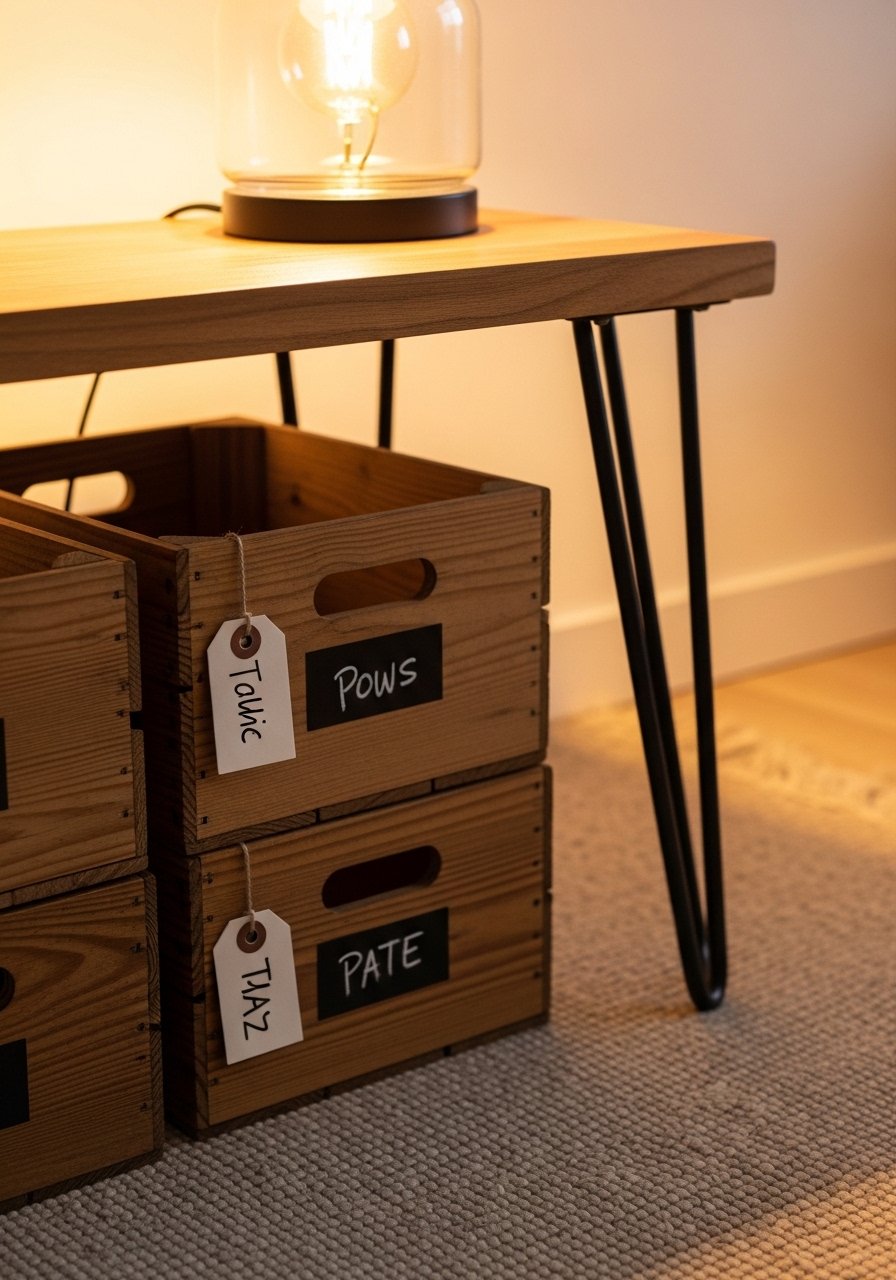
Hairpin legs give a bench a vintage-meets-modern feel without feeling heavy. I stacked two 12×12 crates under mine for quick seasonal swaps. Crates are cheap and flexible. I use wooden crates with chalk labels so I can rotate shoes and hats. Mistake people make is using crates that are too shallow. Aim for 10-inch interior height to fit boots. This approach works well in boho and eclectic homes and pairs nicely with the painted vintage bench idea above.
Built-In Nook Bench for Hallway Alcoves
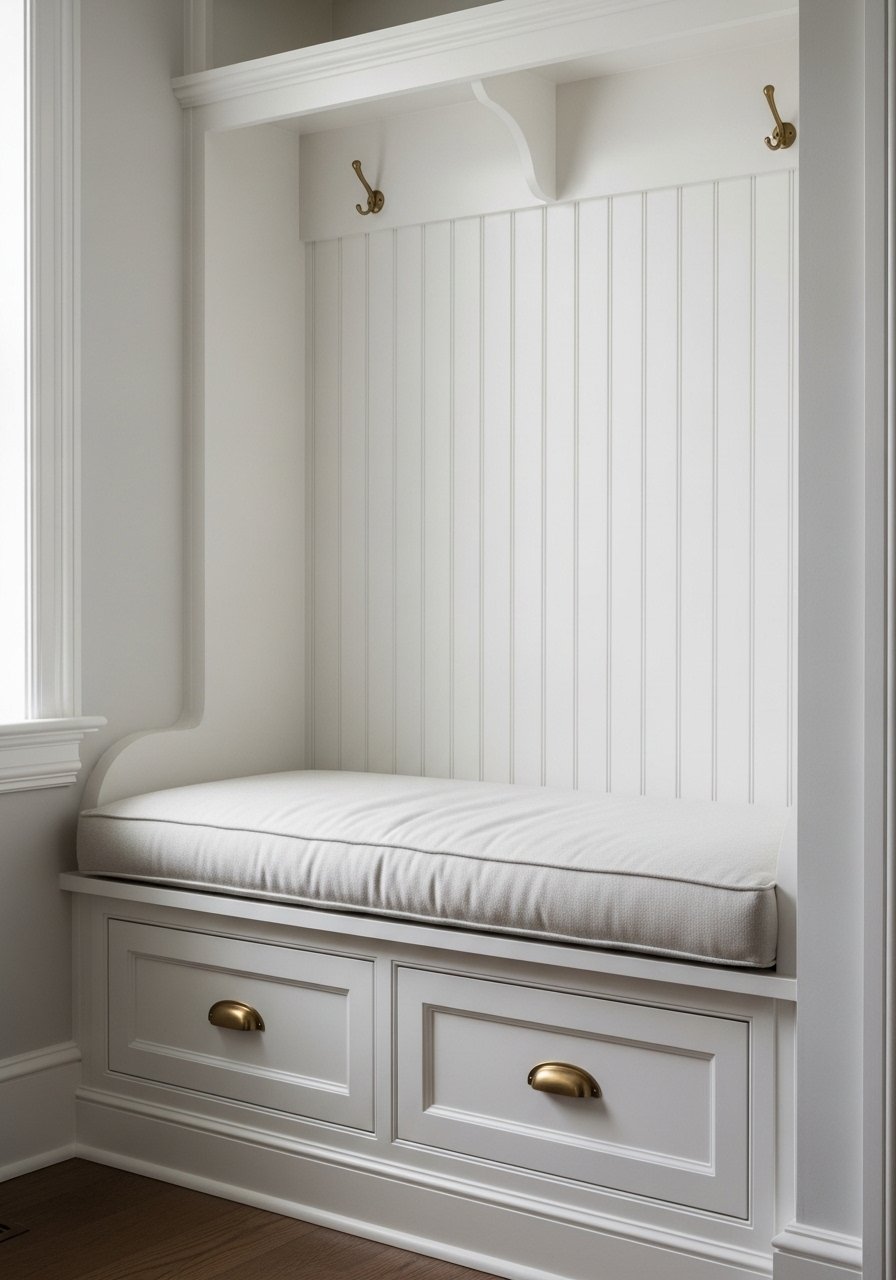
We converted a wasted hallway niche into a bench with two deep drawers. I framed the drawers to be full-extension so I can stash winter gear and rarely used items. If you are handy, basic plywood, a finish coat, and soft-close drawer slides make the build feel custom. A frequent error is ignoring drawer clearance. Leave at least 2 inches behind the drawer for the slide mechanism. This is a splurge DIY that reads built-in even if you’re renting temporarily.
Upholstered Ottoman Bench With Open Baskets for Living Room Entry
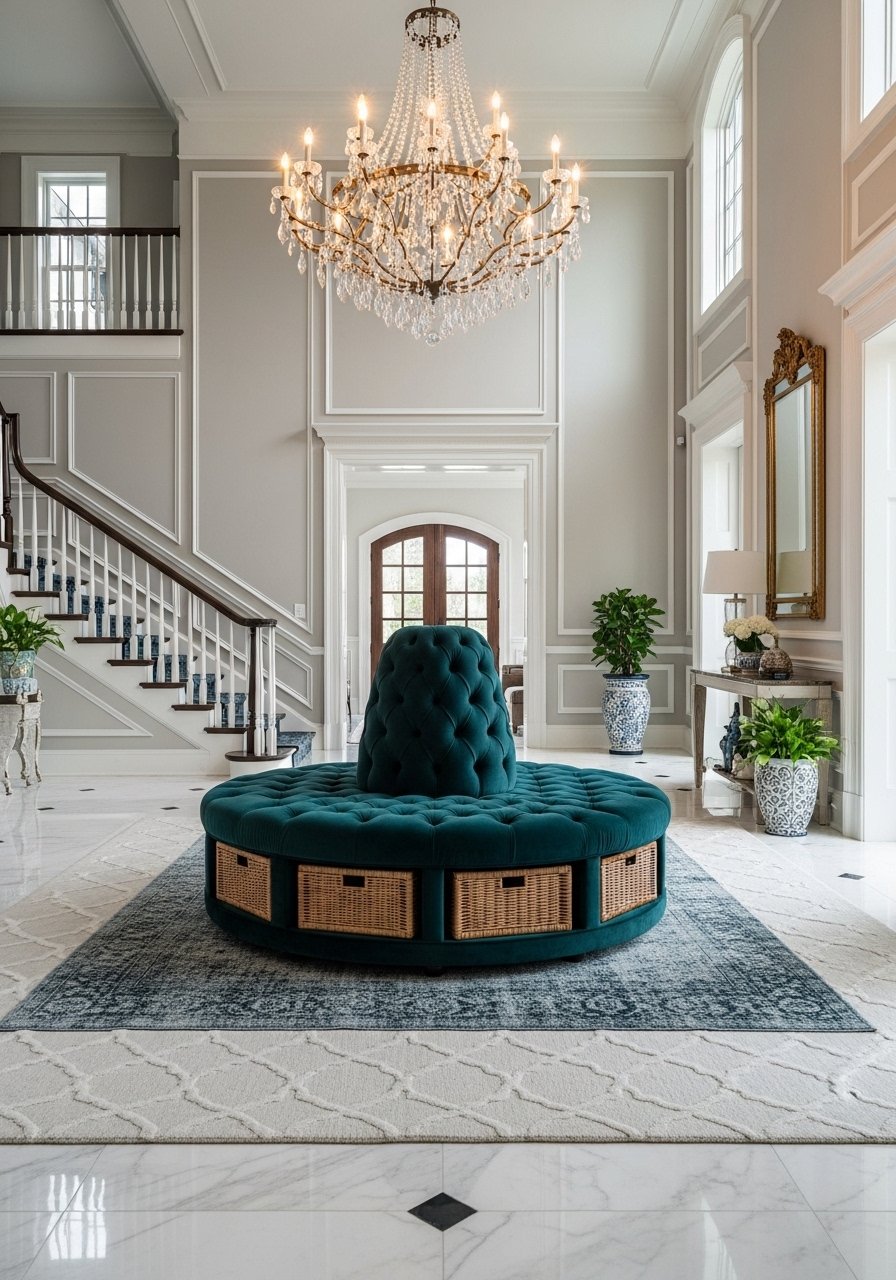
For large entryways I prefer an ottoman bench that doubles as seating and storage. A 36-inch round ottoman with removable skirt reveals open baskets underneath. I bought a round storage ottoman and swapped in seagrass baskets. People often pick a skirt that drags the floor. Keep the bottom 1 inch clear to avoid scuffing and to make baskets slide easily. This suits transitional and modern farmhouse entryways.
Bench With Pull-Out Shoe Trays for Busy Families
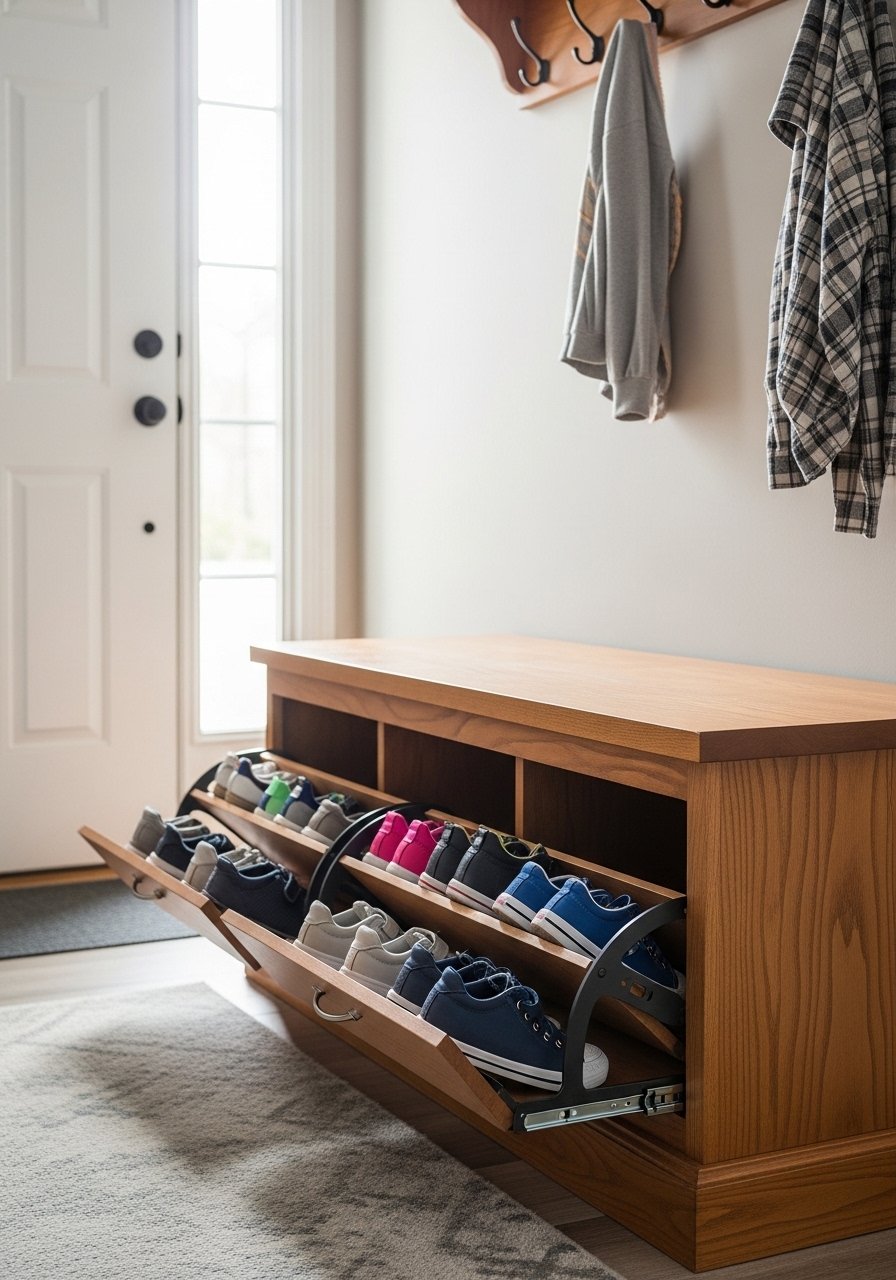
When kids arrived, I installed pull-out trays so morning routines moved faster. Trays are shallow but long, perfect for sneakers and flats. Look for pull-out shoe trays rated for sturdy use. Mistake people make is not securing the trays to the frame, which lets them tilt when half-full. If you have a busy household this style beats open cubbies for keeping pairs paired.
Bench With Built-In Coat Hooks and Top Shelf for Small Spaces
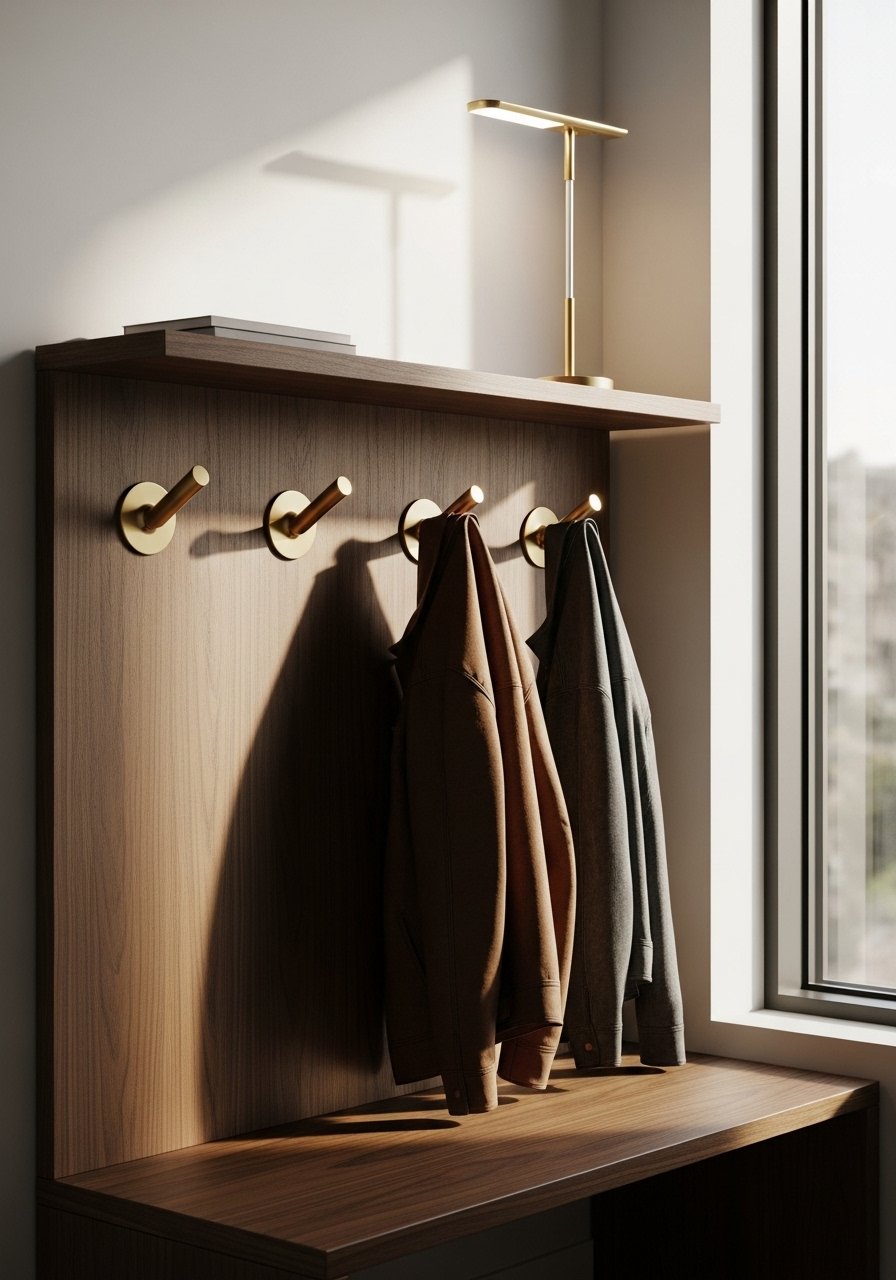
I built a bench with a top shelf to keep hats and sunglasses handy and hooks at eye level. The shelf keeps seasonal baskets above, which is great when floor space is limited. Use heavy-duty coat hooks and mount hooks 60 to 66 inches from the floor to suit most adults. The mistake is placing hooks too low, causing coats to brush the bench cushion. This setup is excellent for entryways that double as a corridor.
Pallet Bench With Sliding Baskets for Budget Builds
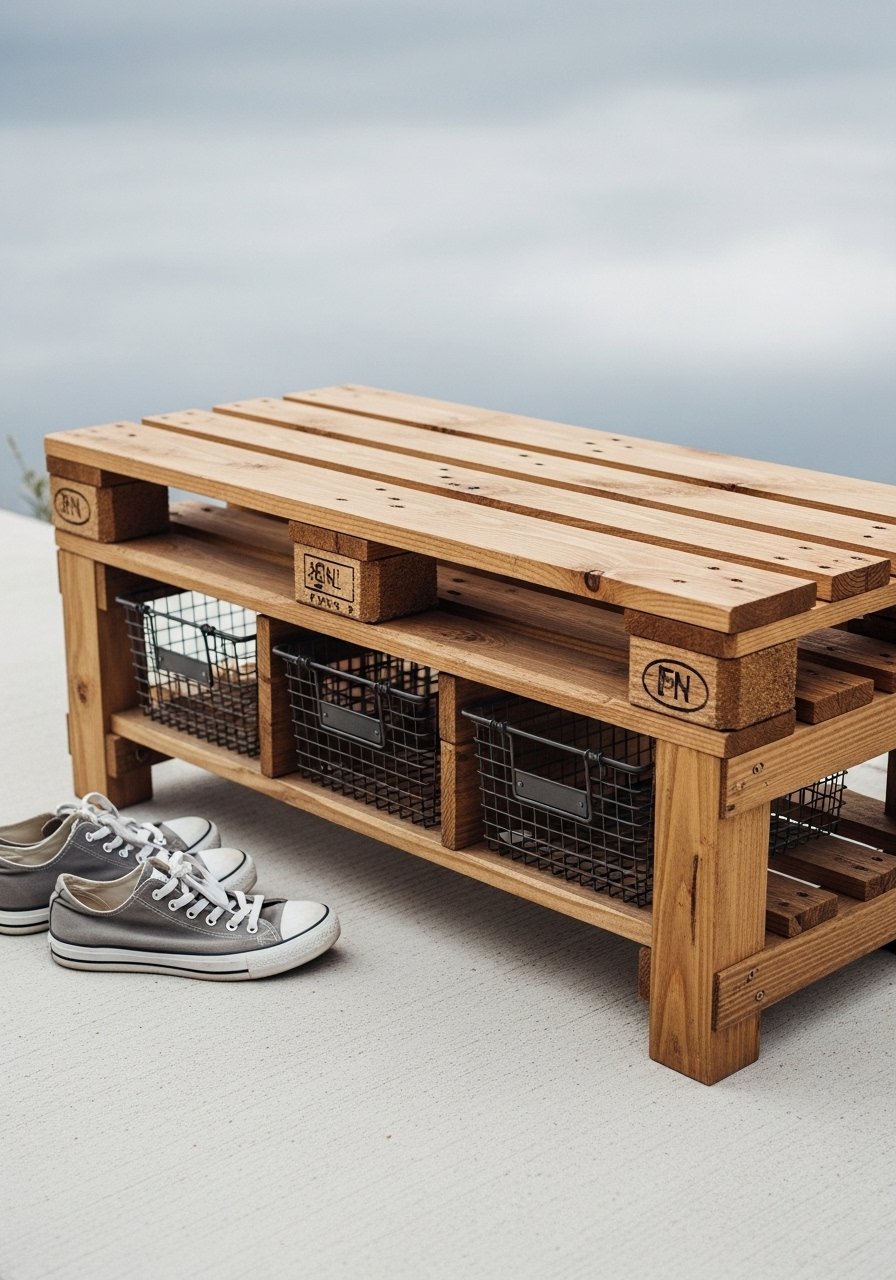
I once made a bench from a pallet and salvaged drawer runners. Sliding baskets glide out, giving quick access to shoes or dog gear. Pallets can be made smooth with a sander and sealed for indoor use. Try a set of sliding basket hardware kits if you want the function without custom drawers. Watch out for splinters and nails. This is a great dorm or apartment weekend project that keeps the budget low.
Minimal Scandinavian Bench With Hidden Cubby for Rental Homes
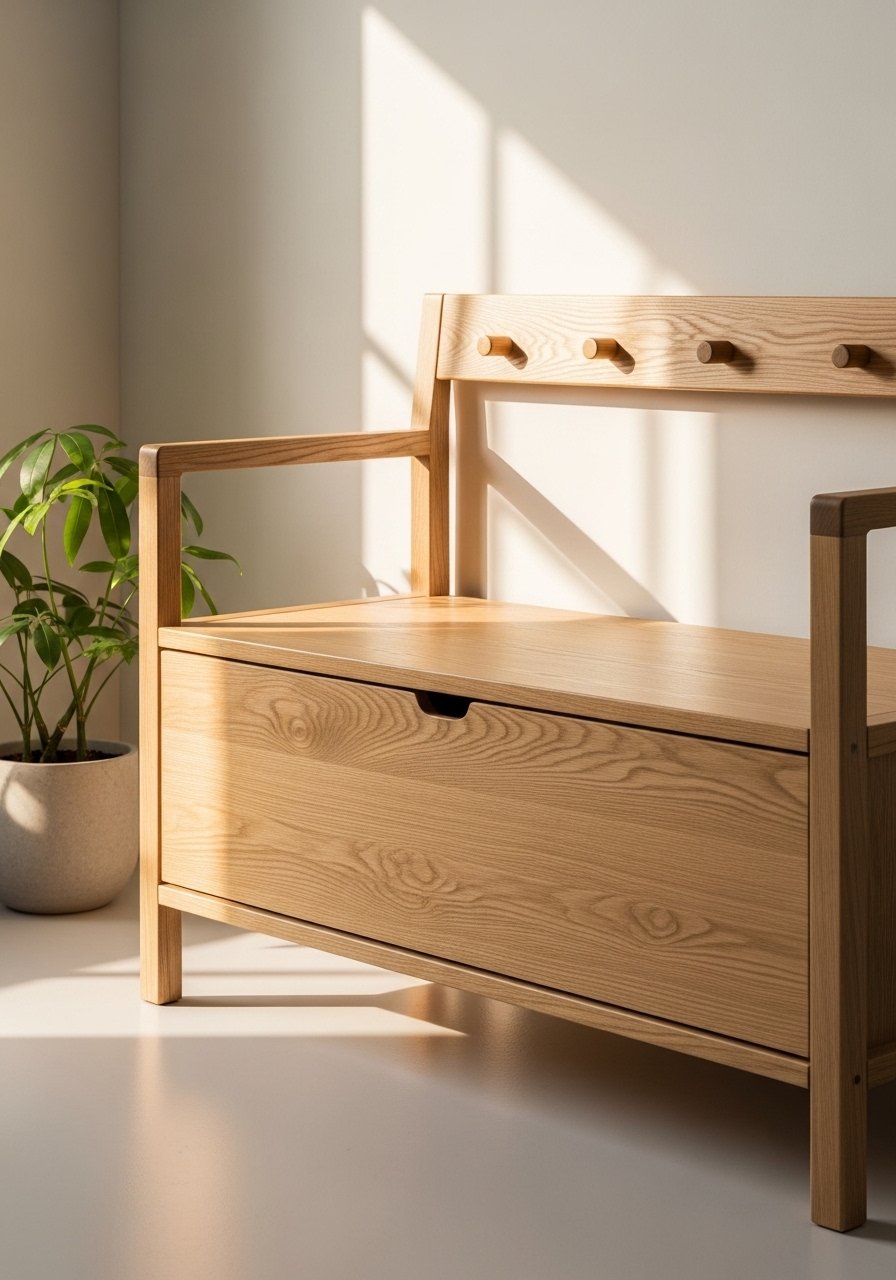
When I moved into a rental, I wanted a bench that looked high-end without permanent changes. A simple oak bench with a front flap gives hidden space and can be moved easily. Look for light oak benches with front storage that are under 40 pounds so landlords will not panic. A common error is making the flap hard to open when the cushion is too thick. Keep cushion thickness to 1.5 to 2 inches for easy access.
Bench With Under-Seat Pet Bed for Multitasking Homes
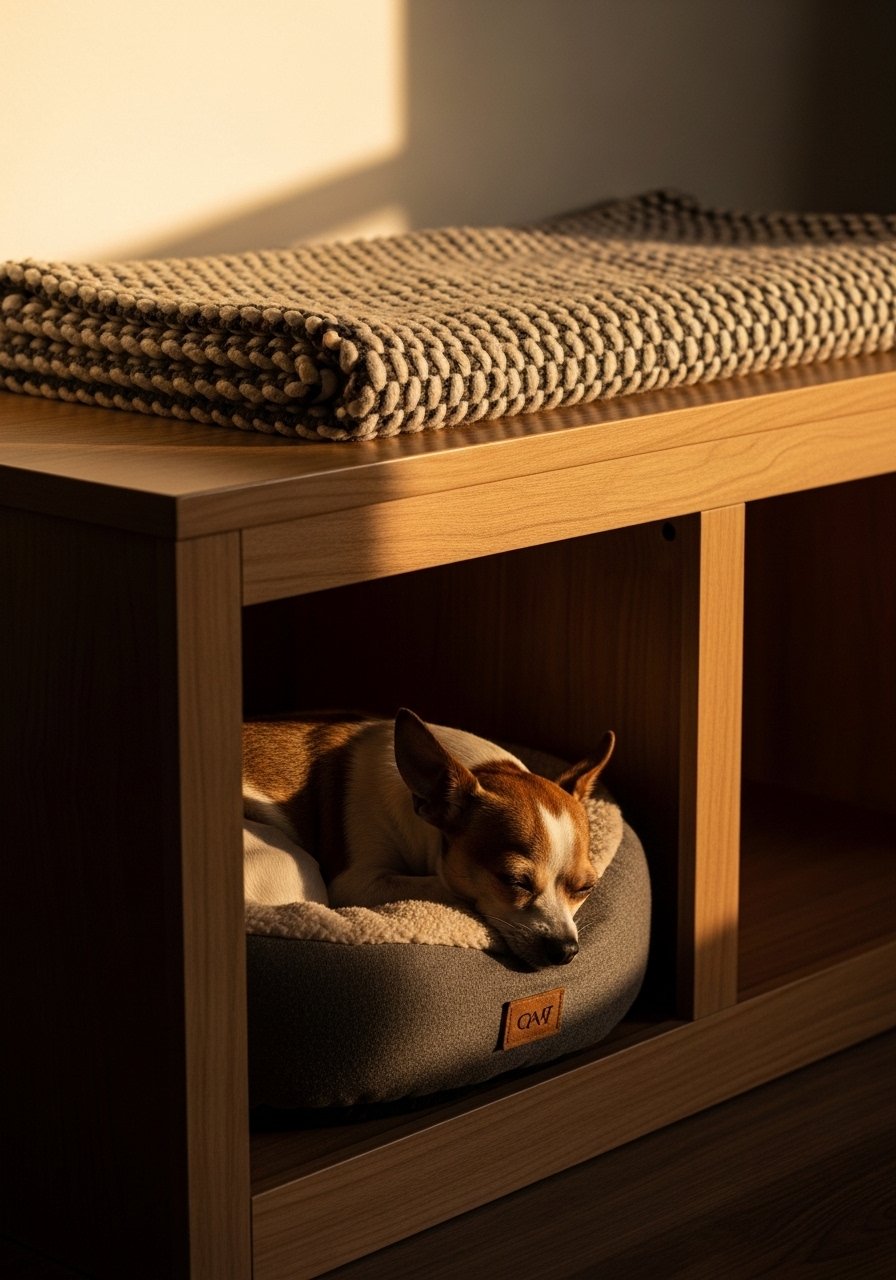
Our dog claimed half the entry until I made a bench with a pet alcove underneath. The cubby fits a 20-inch pet bed and keeps fur out of the main traffic zone. Use washable fabric like canvas for the cushion and consider a small washable pet bed. Mistake people make is making the pet space too cozy without ventilation. Leave a 2-inch gap at the back so air flows and the dog stays comfortable. This solution keeps human and pet storage in one neat footprint.
Bench With Removable Cushion and Seasonal Baskets for Flexibility
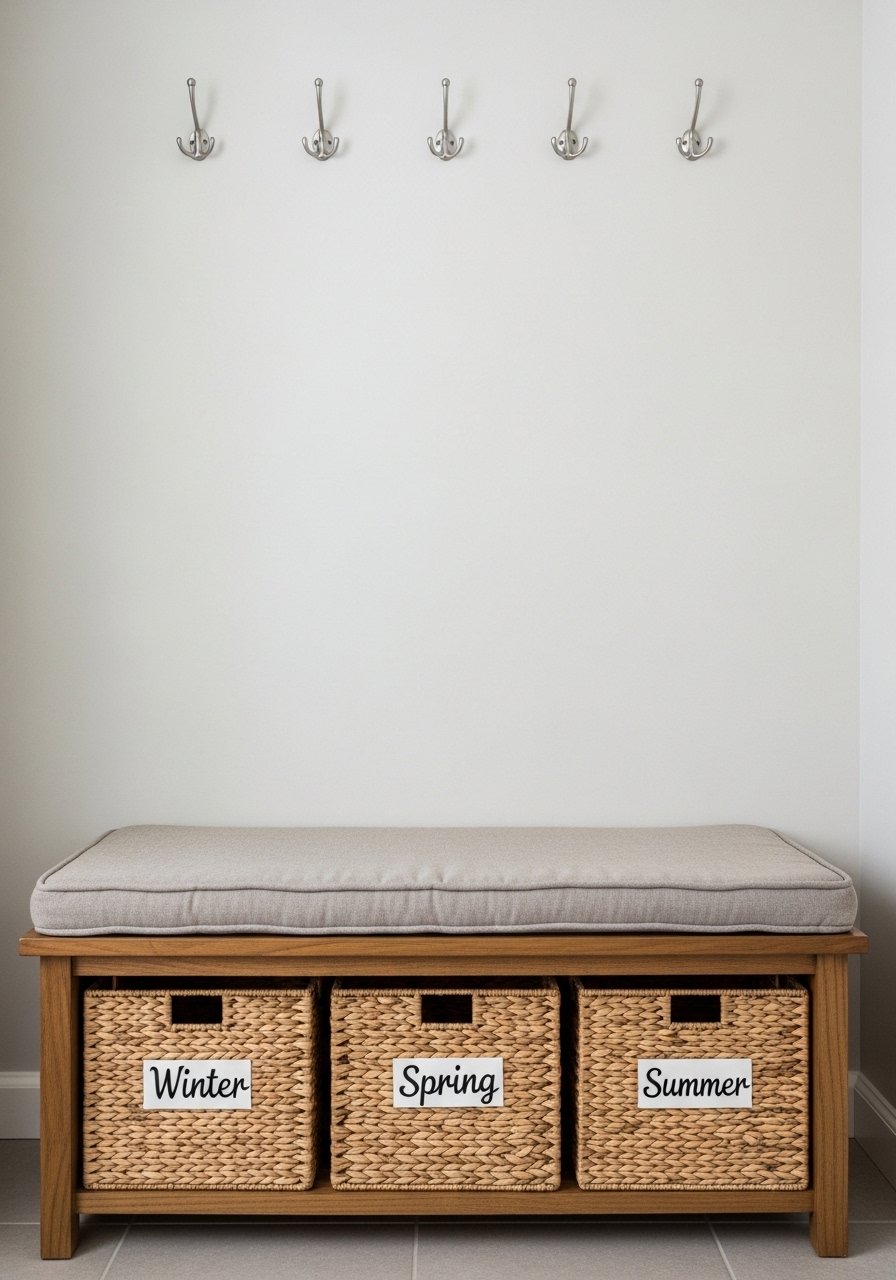
I rotate winter hats and summer hats by swapping baskets under the bench. A removable cushion makes it easy to clean spills and change textiles. I use baskets sized 14×12 inches so they slide in and out without fuss. These rectangular storage baskets are cheap and easy to swap. A common slip is attaching the cushion permanently. Keep it removable and use Velcro strips to stop sliding in high-traffic homes. Pair this with the lift-top bench idea for extra hidden space.
Narrow Console Bench With Mirror-Lined Storage for Visual Depth
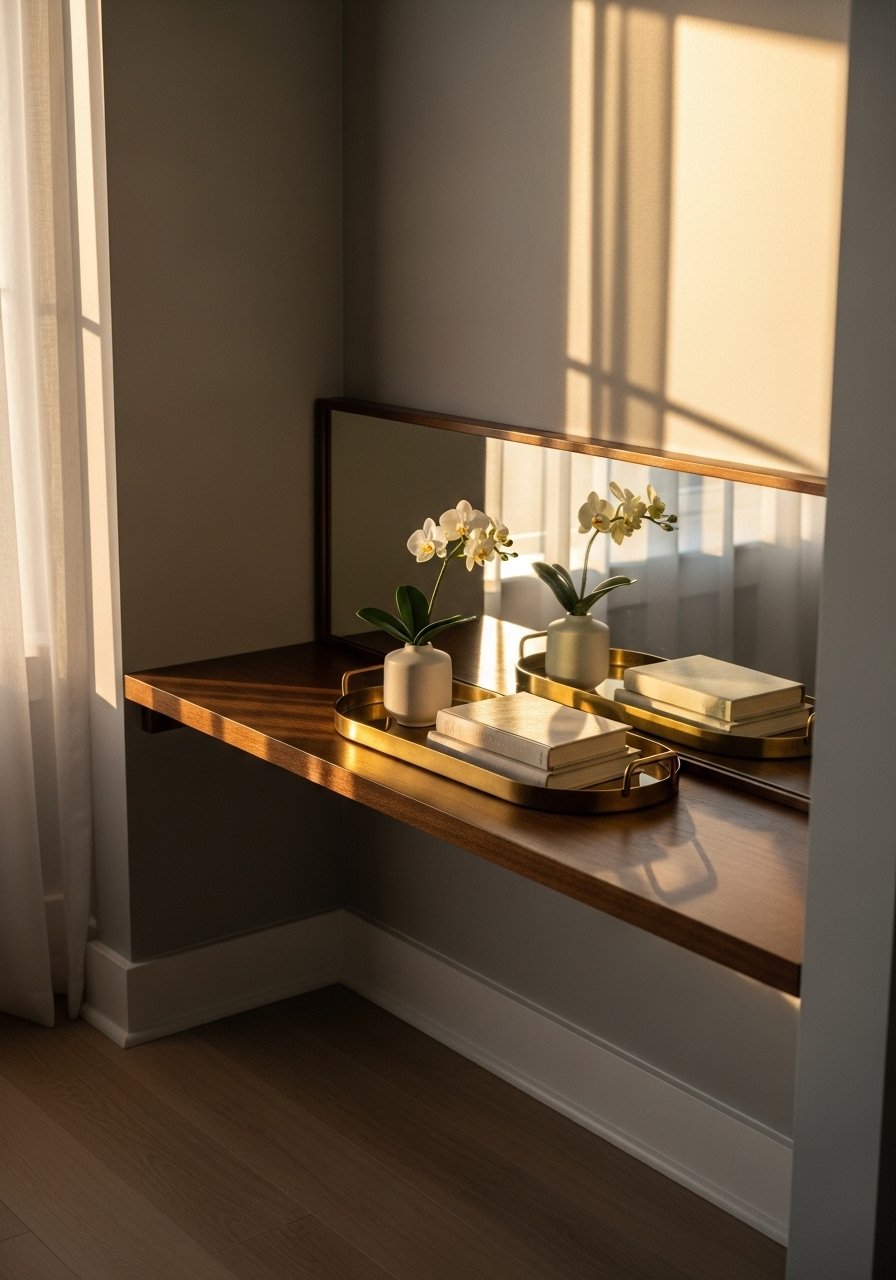
Adding mirror panels inside a storage nook tricks the eye and makes a narrow foyer feel deeper. I installed mirrored backing behind baskets and it brightened the whole entry. Pick a slim bench of 10 to 12 inches depth and use mirror panels cut to size. Mistake people make is using heavy mirror glass that adds weight. Opt for acrylic panels for safety in rental spaces. This idea works well when you have low natural light and need visual amplification.
Bench With Sliding Tray for Keys and Loose Items
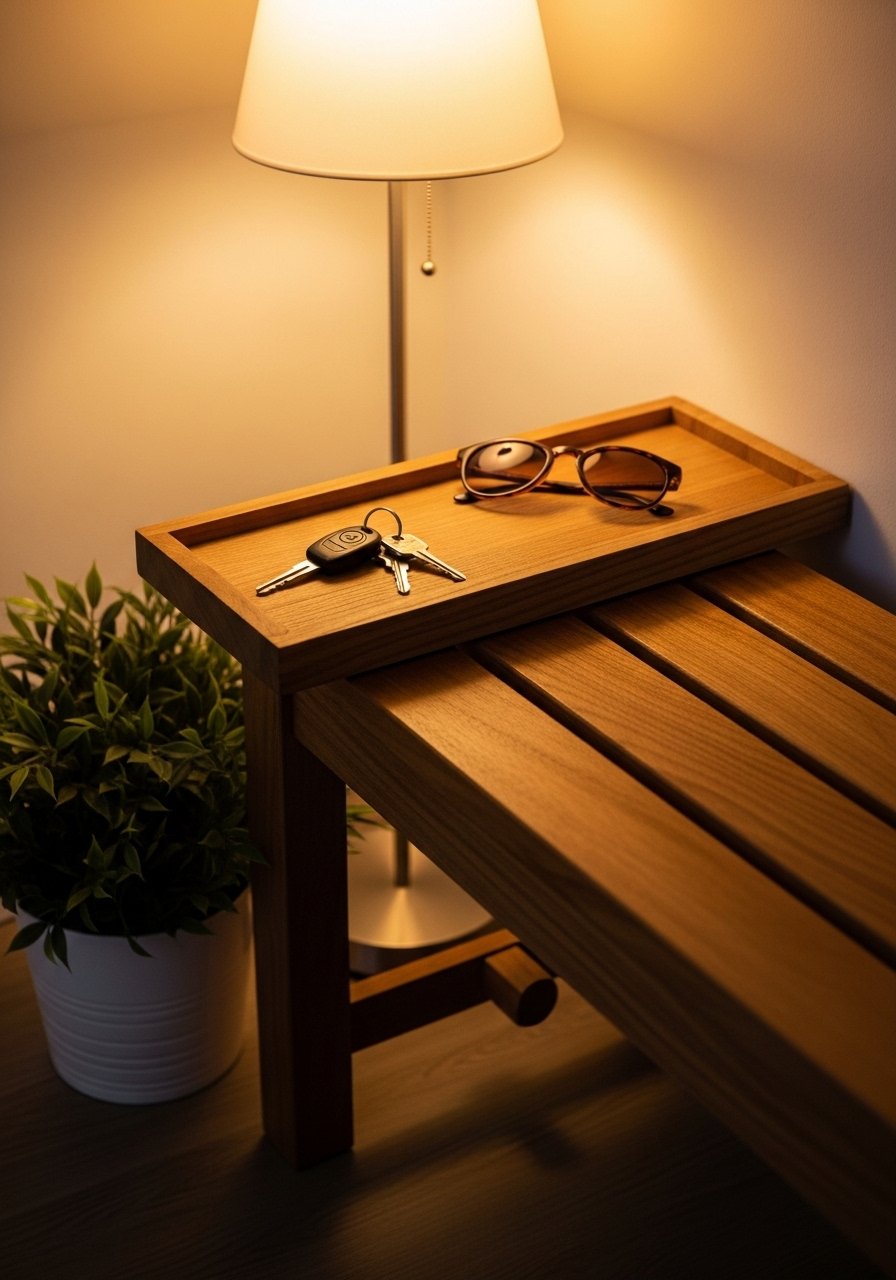
I installed a narrow sliding tray at the bench top for keys, wallets, and stray receipts. It keeps flat items off the cushion and prevents scratches. A 3-inch-wide tray that pulls out 10 inches is all you need. If you want a ready option try a sliding utility tray insert. The common mistake is making the tray too deep so it eats legroom. Keep it slim and within arm’s reach from a sitting position.
Bench With Rotating Storage Bins for Quick Access
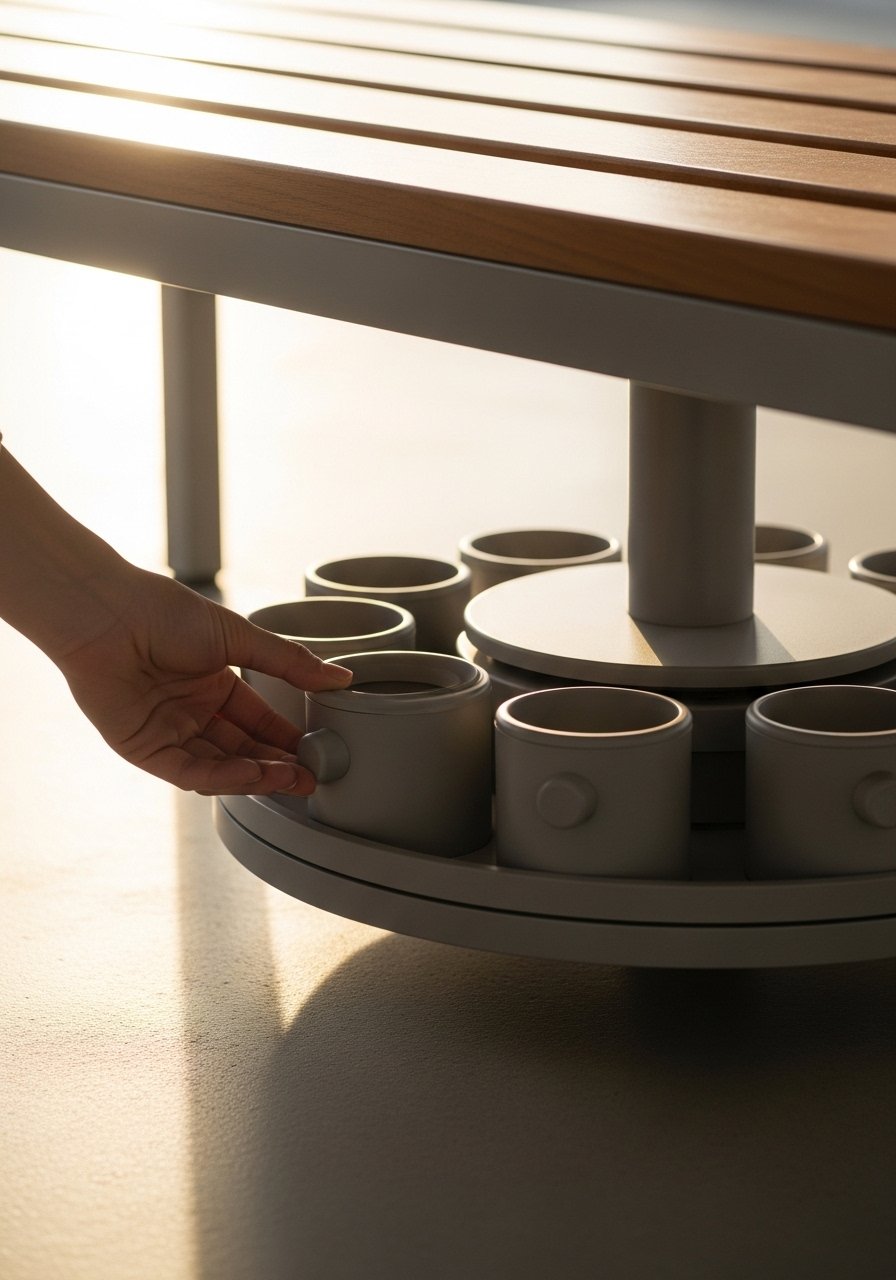
I experimented with a rotating bin system for crafts and small accessories near the front door. It sounds fancy but it is surprisingly practical. A 12-inch diameter carousel with four bins lets you spin to find one set of gloves or a spare leash. Look for rotating storage carousel bins. Mistake people make is choosing bins that are too small. Aim for 4 to 6 liters per compartment to hold real items. This is a fresh angle many people skip when thinking about benches.
Bench With Hidden Tray for Mail Sorting
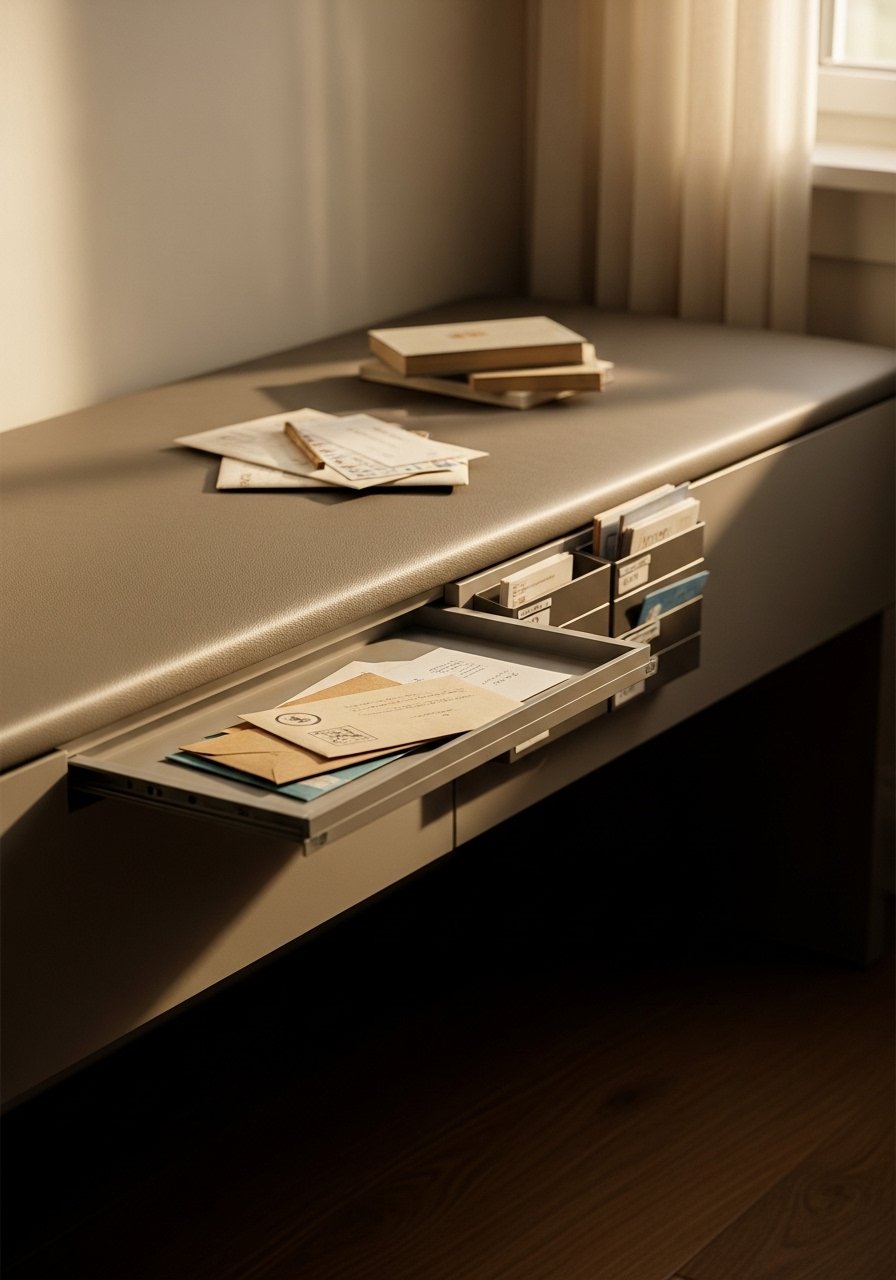
My kitchen counter stopped being the mail graveyard once I added a thin slide-out tray to the bench. It holds envelopes and returns without creating a paper pile. A 2-inch-deep tray that slides under the cushion is perfect. I found slim slide-out trays that fit standard bench widths. People usually forget to label the tray for returns and bills. Add a small tag and the family will know where to drop outgoing mail. Works great next to the door or by the home office.
Your Decor Shopping List
Textiles
- Honestly the best $40 I have spent. Chunky knit throw in cream 50×60 inches, perfect for draping over a bench.
- 22-inch down-filled linen pillow covers in warm gray for layered seating.
Wall Decor
- For the gallery wall idea try mixed metal frames set in 8×10 and 11×14 sizes.
- Found these while looking for something else. Round entry mirror, 30-inch in aged brass.
Storage & Baskets
- Woven seagrass baskets set 12×12 for cubbies.
- Rectangular storage baskets 14×12 for seasonal swaps.
Hardware & Build
- Soft-close drawer slides 16-inch for built-ins.
- Heavy-duty wall hooks, set of 6 for coats and bags.
Budget Finds
- Wooden storage crates, set of 3 for crate-style benches.
- Slim slide-out tray insert for mail and keys.
Many of these have similar options at Target and HomeGoods if you prefer to see them in person.
Shopping Tips
White oak beats dark wood in 2026. Design feeds have shifted completely. These white oak floating shelves look current, not dated.
Grab these velvet pillow covers for $12 each. Swap them every season and the whole room feels different.
Curtains should puddle or kiss the floor, never hang halfway up. These 96-inch linen panels are right for standard 9-foot ceilings.
Lead with a big plant. One single 6-foot fiddle leaf fig has ten times the visual impact compared to five tiny succulents.
If you are building, buy soft-close drawer slides up front. They make cheap plywood feel custom.
Contrast textures. Pair a hard wood bench top with seagrass baskets and a wool throw for depth.
Frequently Asked Questions
Q: What bench height works best for most people?
A: Aim for a seat height of 18 to 20 inches. That fits most adults and keeps the bench feeling like real seating. If kids use it a lot, consider one at 16 inches for easier access.
Q: Can I mix modern and vintage bench styles without it looking messy?
A: Yes, mix them by color and scale. Keep 80 percent neutral tones and 20 percent accent finishes. A modern bench top with vintage drawer fronts reads intentional when the finish ties the two together.
Q: How deep should an entryway bench be for comfortable seating and storage?
A: For seating and storage aim for 14 to 18 inches deep. Shallower benches work in tight halls but may not fit wide boots. If you want both seating and baskets, 16 inches is a good compromise.
Q: My entryway is tiny. Which idea is best for a narrow space?
A: A slim shoe-organizing bench or a floating wall bench will keep the floor clear. Look for models 10 to 12 inches deep. Floating options visually open the space more than floor-standing pieces.
Q: Are built-in benches worth the effort if I might move in a few years?
A: You can build a bench to look built-in without permanent changes by fastening to studs with screws that you can remove later. Use lightweight materials and consider a freestanding option like the minimal Scandinavian bench if you need complete portability.
Q: How do I keep everything from looking cluttered when I add baskets?
A: Use the rule of three when styling the top, and keep 80/20 color balance. Label baskets or use uniform materials like seagrass for cohesion. A single large plant is better than five small ones for entryway scale.
Q: Can I include a pet bed under a bench without making it feel odd?
A: Absolutely. Design a cubby at least 20 inches wide and 10 inches high for small pets. Use washable fabrics like canvas and leave a small ventilation gap behind the cubby so it stays fresh.