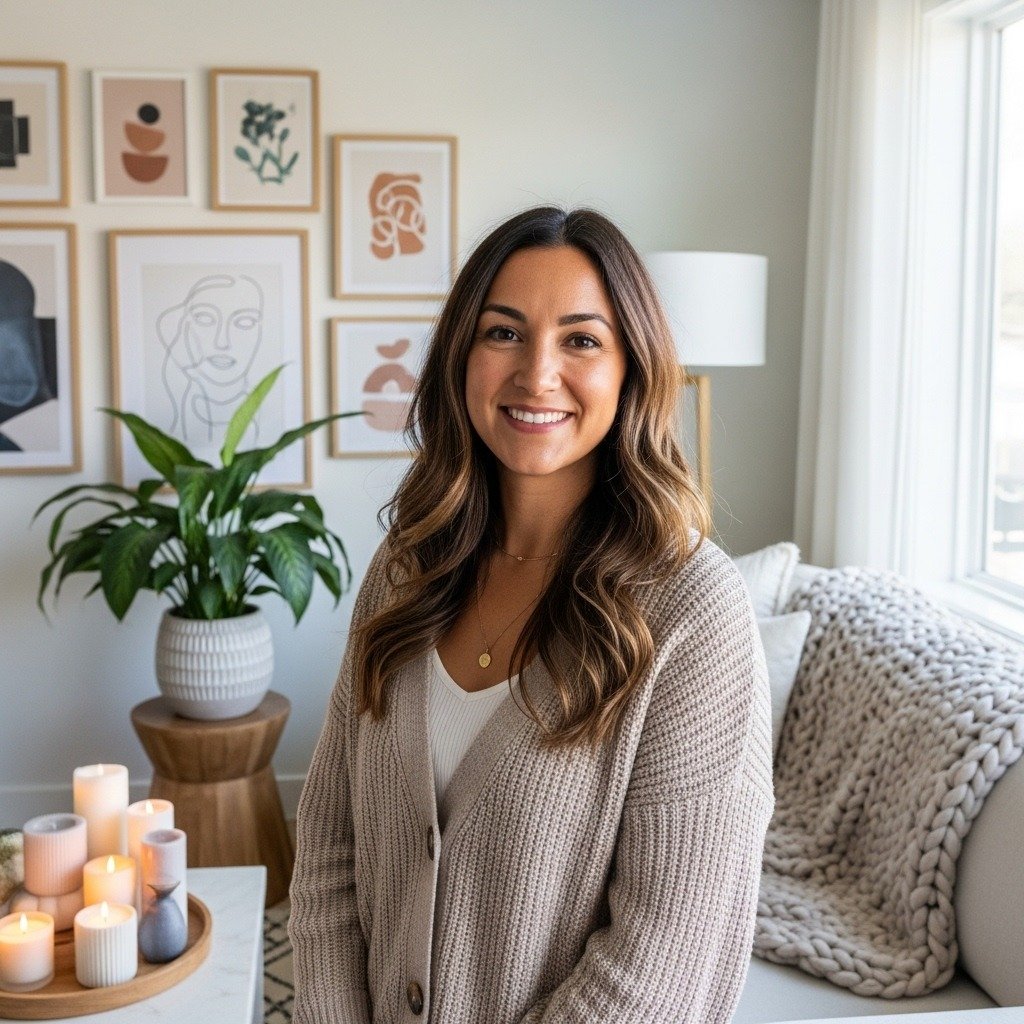

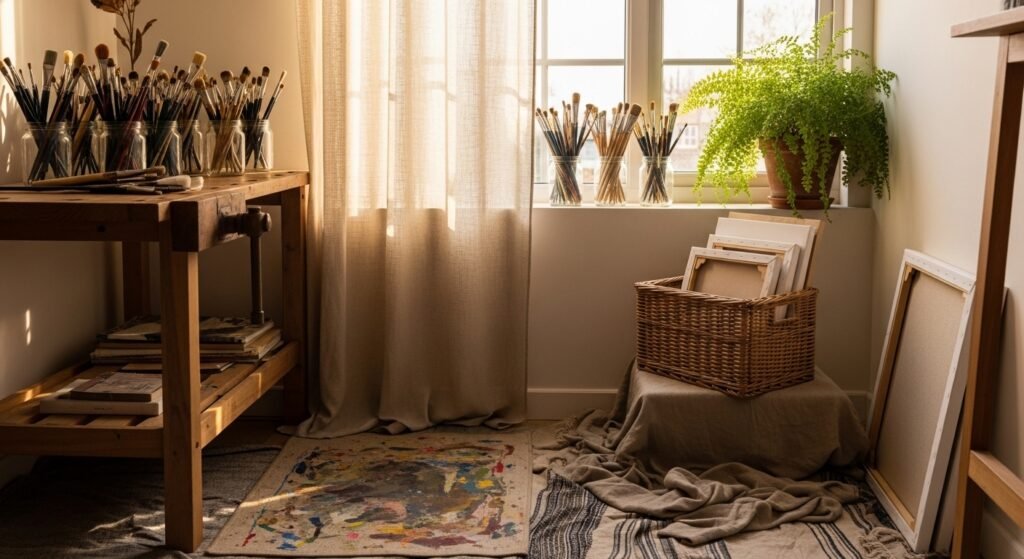
Spent $400 on a coffee table. Room still looked off. Spent $35 on a throw and three candles. Suddenly everything clicked. That exact math is what I use when I plan a cottagecore art studio at home, because small changes yield the most comfort.
These ideas lean toward soft vintage and botanical cottagecore. Most items are under $50, with a few splurge pieces around $100-150. They work for a spare bedroom, a corner of the living room, or a sunny closet you convert into a studio.
Sunlit Workbench With Vintage Jars
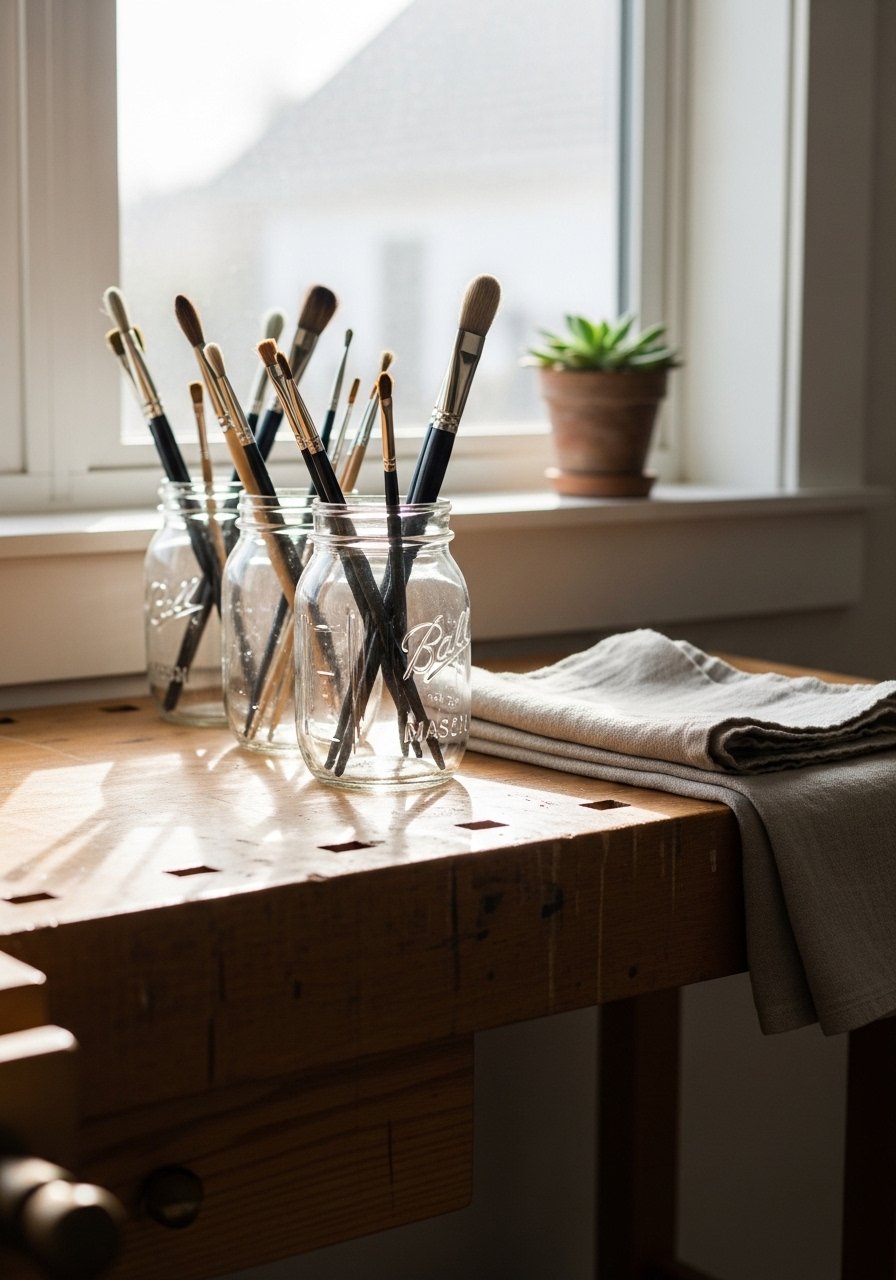
The moment I swapped plastic tubs for glass apothecary jars, my supplies started to look intentional. Using clear jars lets you see color and brush sizes at a glance, which speeds setup when inspiration hits. For a standard workbench keep five to seven jars: one for brushes, one for pencils, one for palette knives, one for ink pens, and one for odds and ends. Budget is under $40 for a set. I use glass apothecary jars so everything feels collected not cluttered. The common mistake is overstuffing jars so you cannot pull a single tool out without a struggle. Leave a thumb-width of free space at the top so tools are easy to grab.
Botanical Inspiration Wall With Pressed Florals
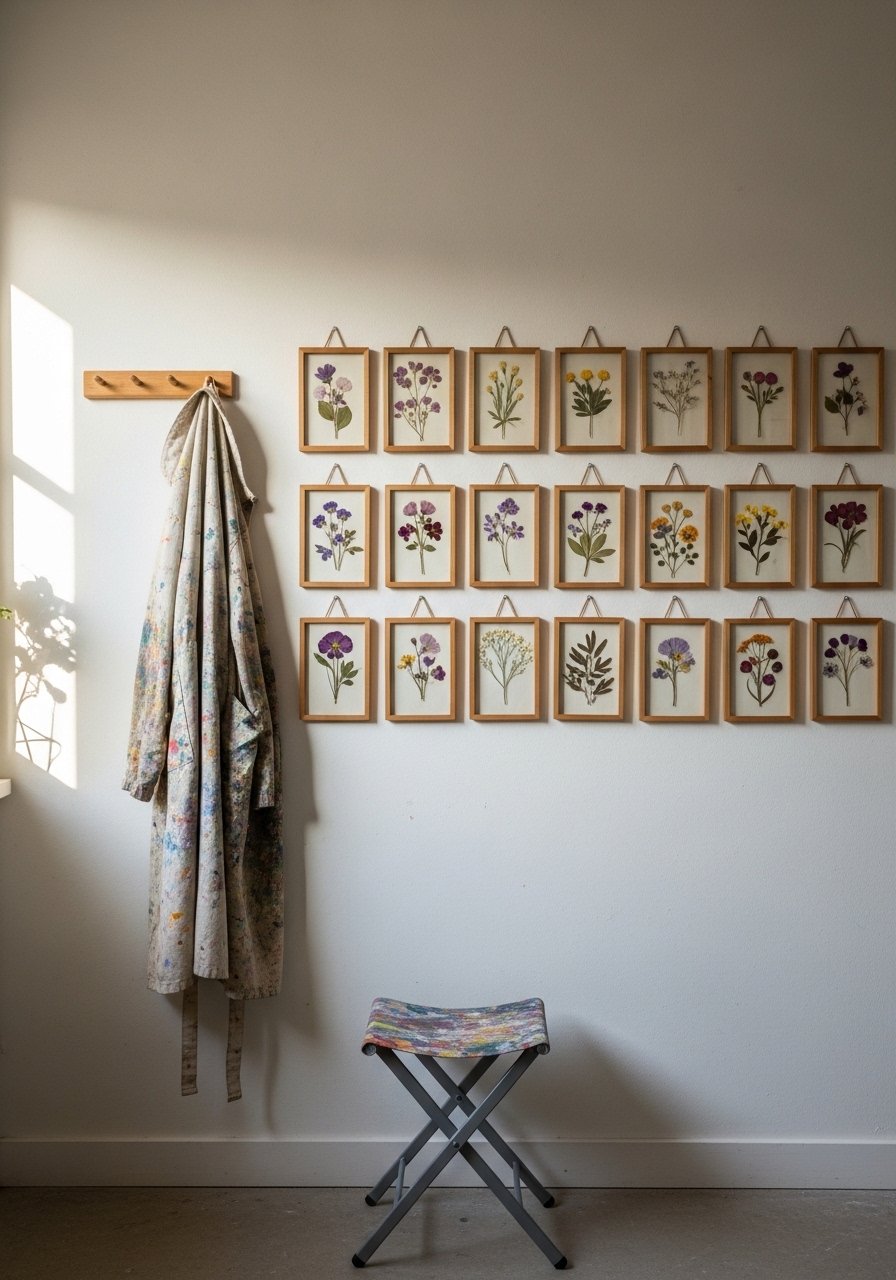
I started saving stems after walks and pressing them between phone books. Framing them makes a mood board that never goes out of season. Use identical 8×10 mats and mix frame finishes for cohesion. Aim for an 80/20 color ratio where 80 percent is neutrals and 20 percent is the greens and faded petal tones. For mats and frames I picked a simple option, like these brass picture ledges set to lean art forward when I want to change pieces. People often cram too many tiny frames close together. Instead hang larger pieces 6 to 8 inches apart so each pressed stem has room to breathe.
Cozy Reading Nook For Sketch Breaks
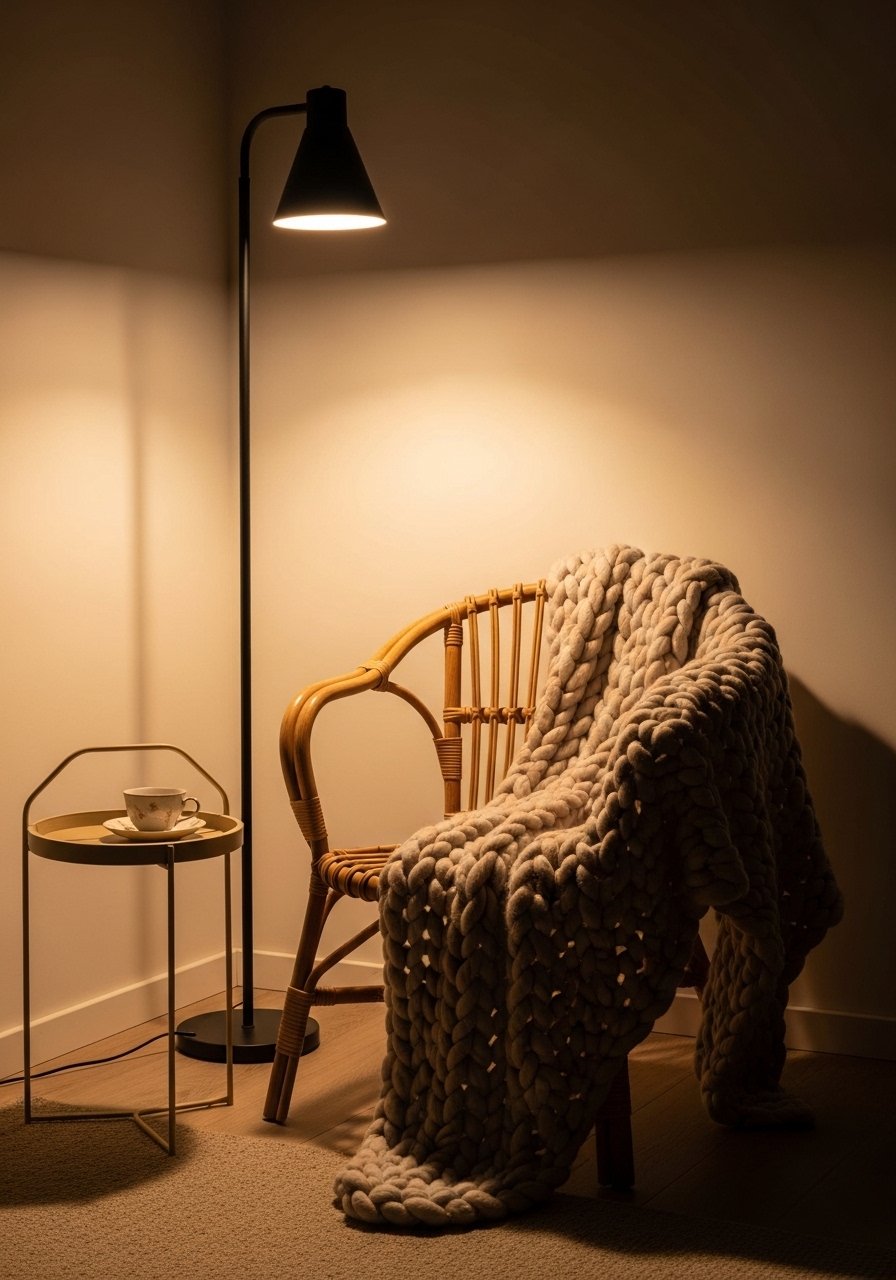
There is something about a reading nook that makes you return to work instead of scrolling. I added a 22-inch down-filled pillow and a chunky knit throw to my studio chair and now I take five-minute sketch breaks that feel restorative. For this setup I like a neutral rug and a chunky knit throw blanket to anchor the spot. Budget is $30 to $70 depending on throw size. The mistake is buying a chair that looks cute but has zero back support. Pick one you can actually sit in for 20 minutes. Pair this with the curtain idea below to keep light soft for reading.
Mixed Vintage Frames Gallery For Finished Work
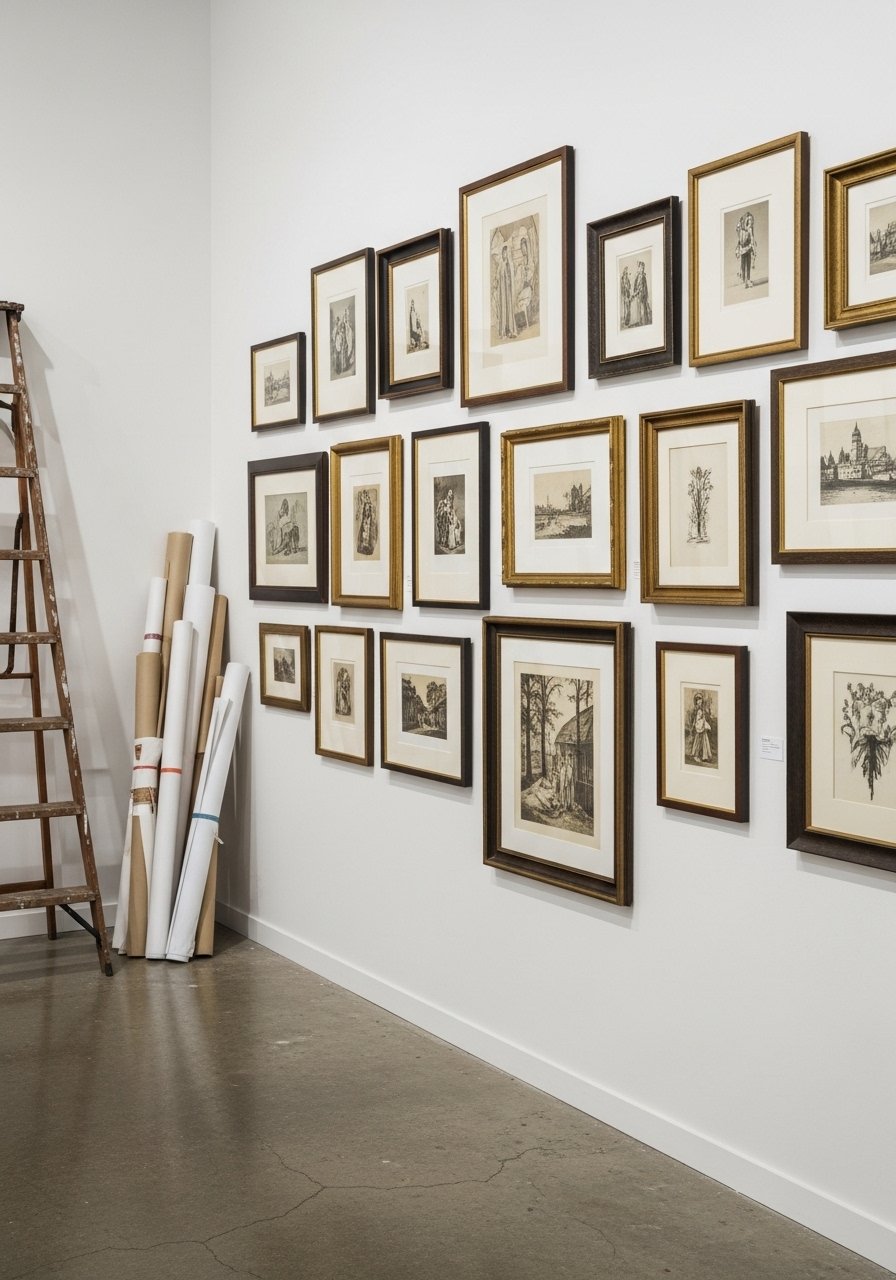
I wanted my finished pieces to read like a small gallery without feeling stiff. The trick was consistent matting. Use 1.5 to 2-inch white mats across different frame styles to visually link them. For quick swaps I installed a single ledge and use brass picture ledges set so the wall can evolve without more holes. Expect to spend $15 to $60 depending on frame quality. A mistake I see is matching frame colors too closely to the art, which makes everything blend. Instead let frames sit in the neutral background so the artwork becomes the star.
Open Shelving For Supplies That Still Looks Tidy
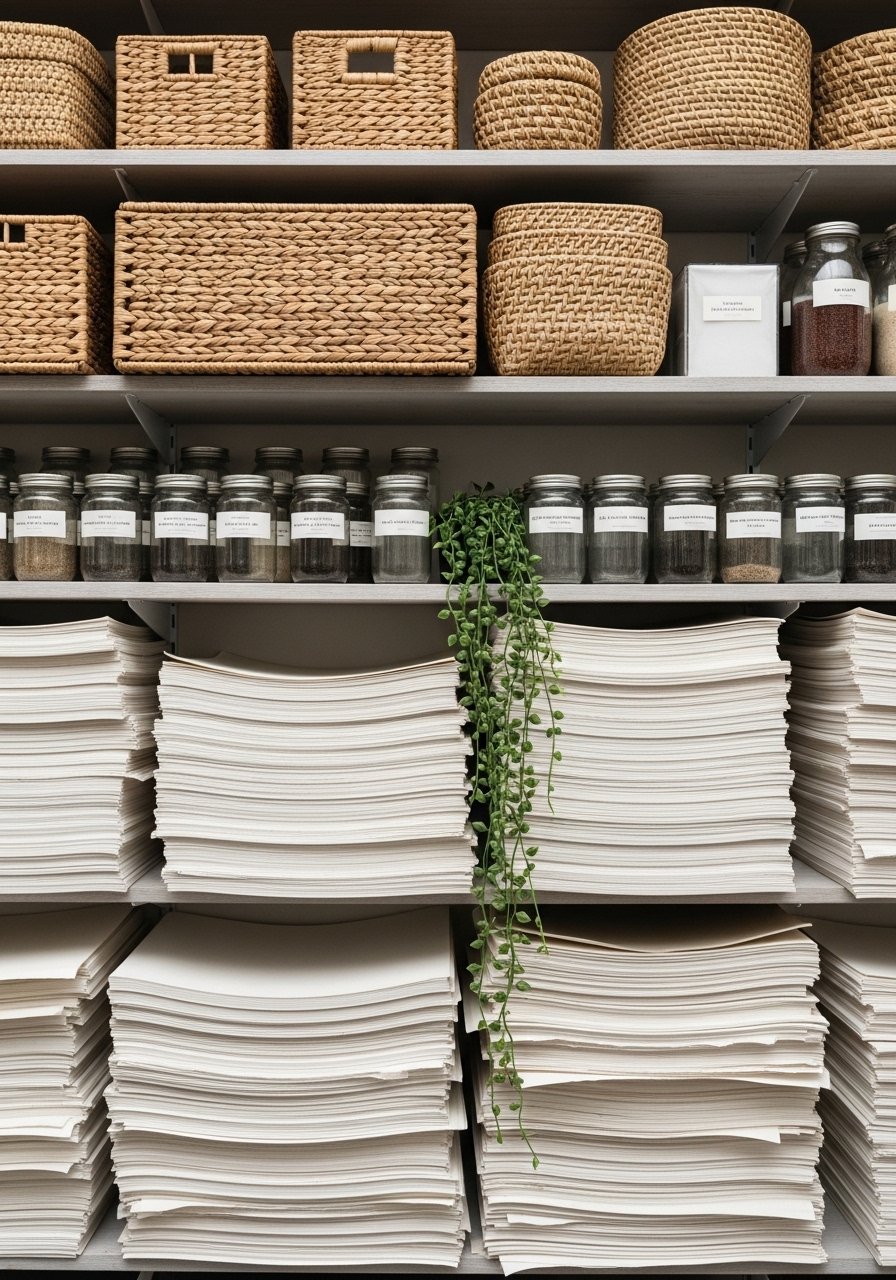
Closed cabinets hide mess at a cost. Open shelves force you to edit, and editing makes a studio feel curated. Use baskets for small odds and ends and keep bulk paper in flat stacks. I measured my shelf spacing at 12 inches between shelves to fit canvases and supply jars. These wood floating shelves are sturdy and look like built in storage, yet cost less than a custom unit. The biggest mistake is packing shelves too deep. Stick to one row forward and leave the back empty so nothing gets buried.
Nature-Infused Color Palette For Calm Creativity
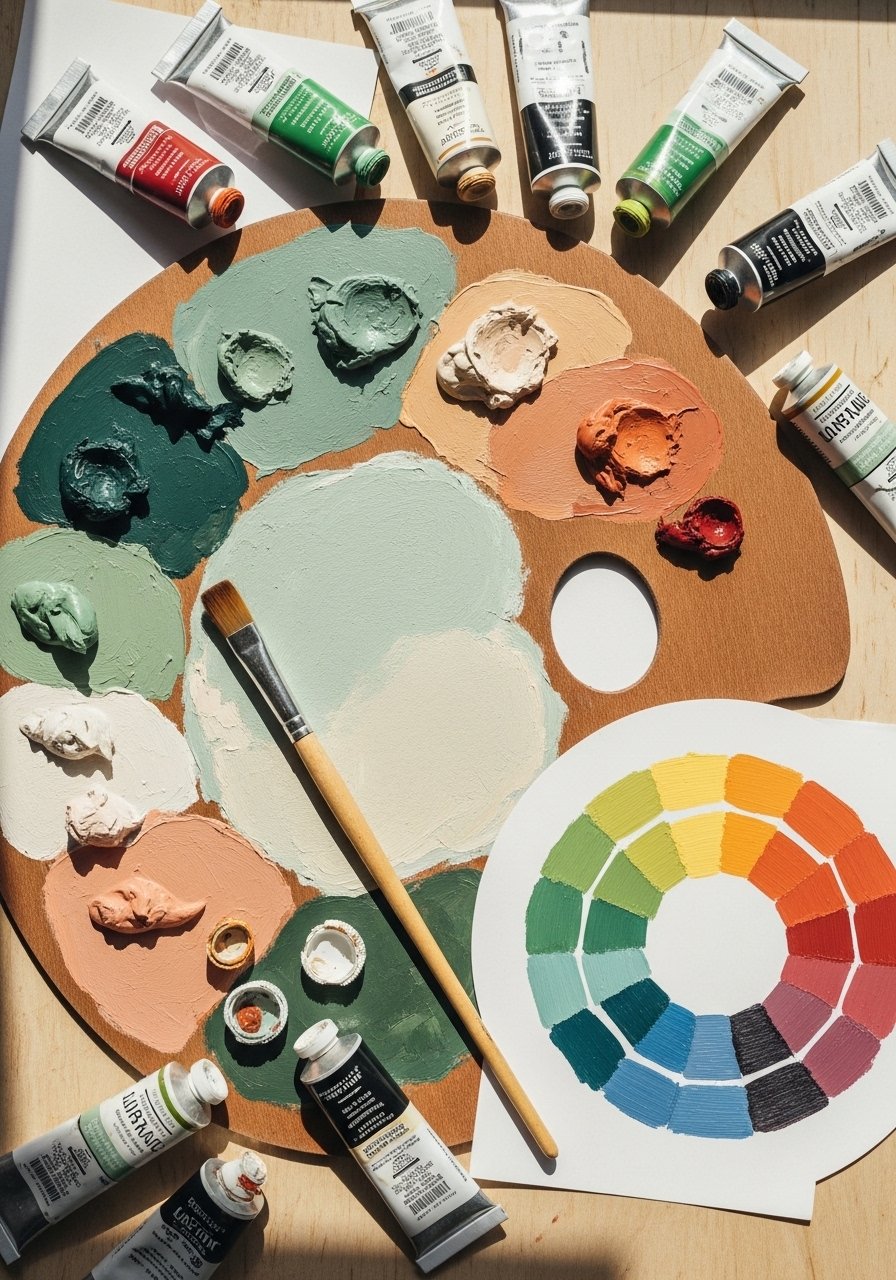
When I limited my palette to three dominant tones it was easier to finish pieces. Try an 80/20 rule: 80 percent neutrals, 20 percent one saturated natural tone such as moss green or terracotta. That keeps the space peaceful and makes new work coordinate with the room. For inspiration, I keep a small tile board of paint chips pinned up. Buying test paints costs under $20 but saves mismatches later. A common misstep is picking too many jewel tones at once. Stick to muted versions for the cottagecore studio aesthetic.
Compact Studio Layout For Tiny Rooms
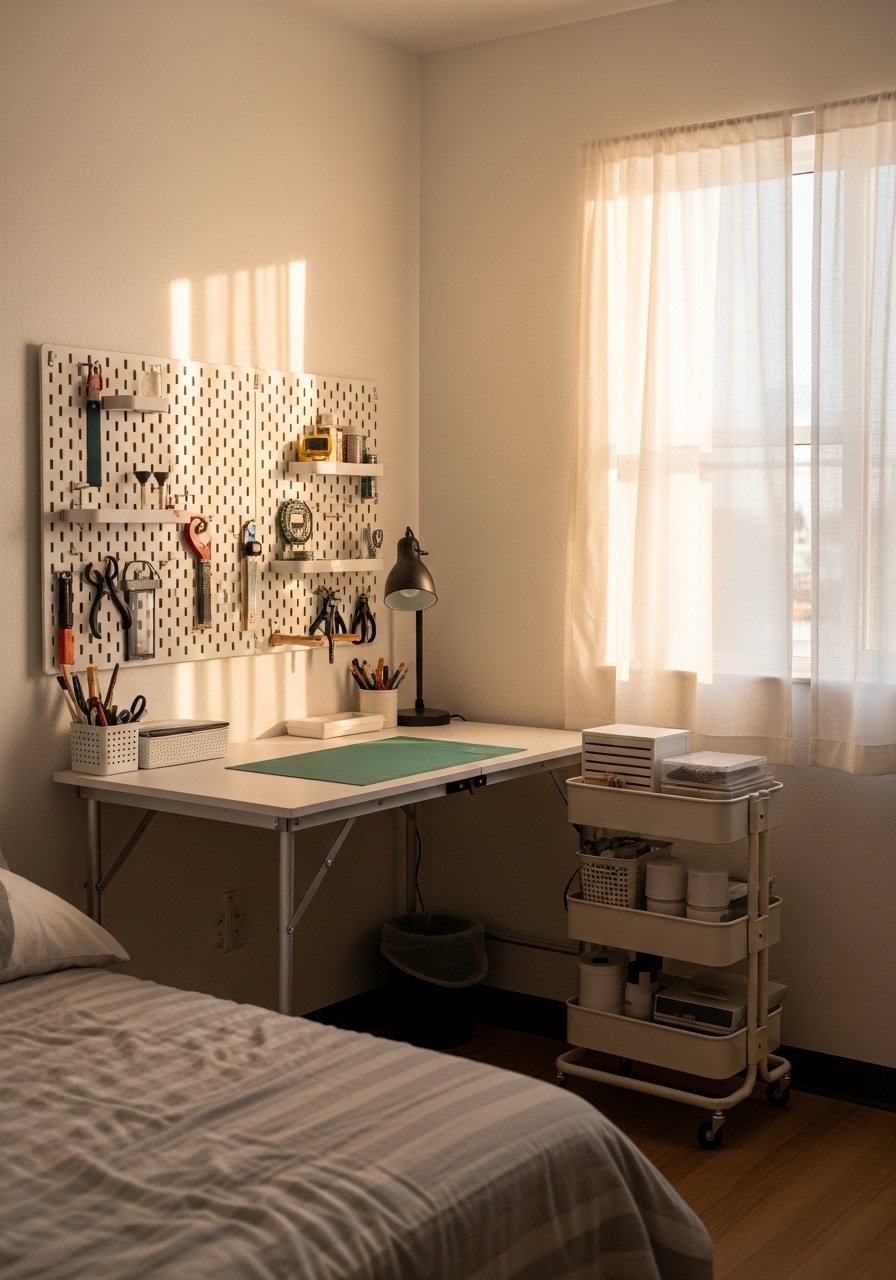
My apartment studio started as a spare closet. A fold-down table and a vertical storage cart gave me a full work area in five square feet. Keep the work surface at 28 to 30 inches for comfortable sitting. I use a wood drafting table for the same flexibility when I have more room. Common mistake is spreading supplies horizontally. Use vertical pegboards and a three-shelf rolling cart to keep tools reachable. If you need a seat that tucks away, a small stool that slides under the fold-down table is the right call.
Layered Textiles To Warm The Space
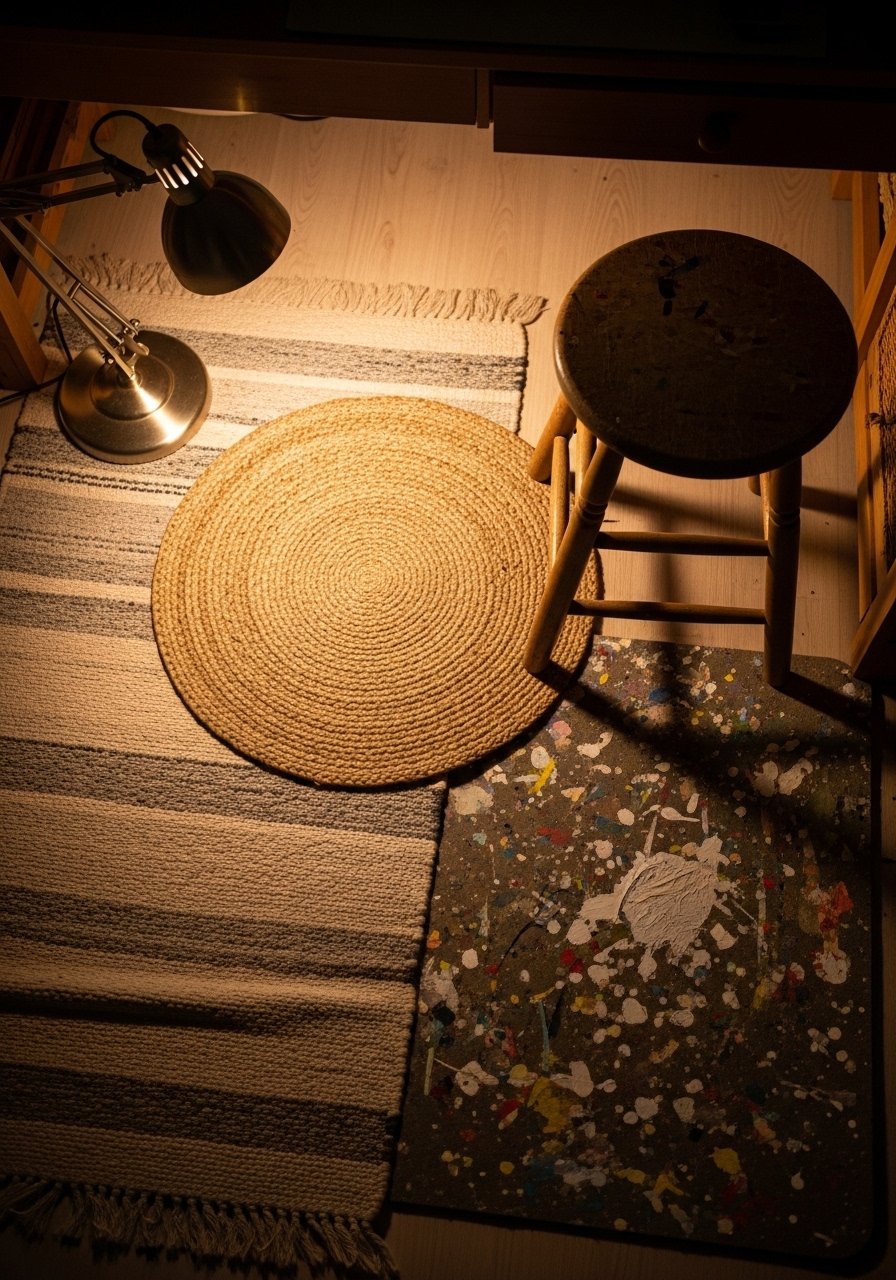
Textiles change how the room feels faster than furniture. I layered a 5×8 jute rug under a softer wool rug to stop the studio from sounding hollow. For a real cottagecore vibe mix linen, wool, and a small braided rug. I used a jute area rug 5×8 as the base and then a softer piece on top. Budget ranges $30 to $200 depending on materials. Mistake to avoid is rugs that are too slippery. Add a thin rug pad under the top layer for traction and to protect the floor.
Warm Ambient Lighting For Evening Sessions
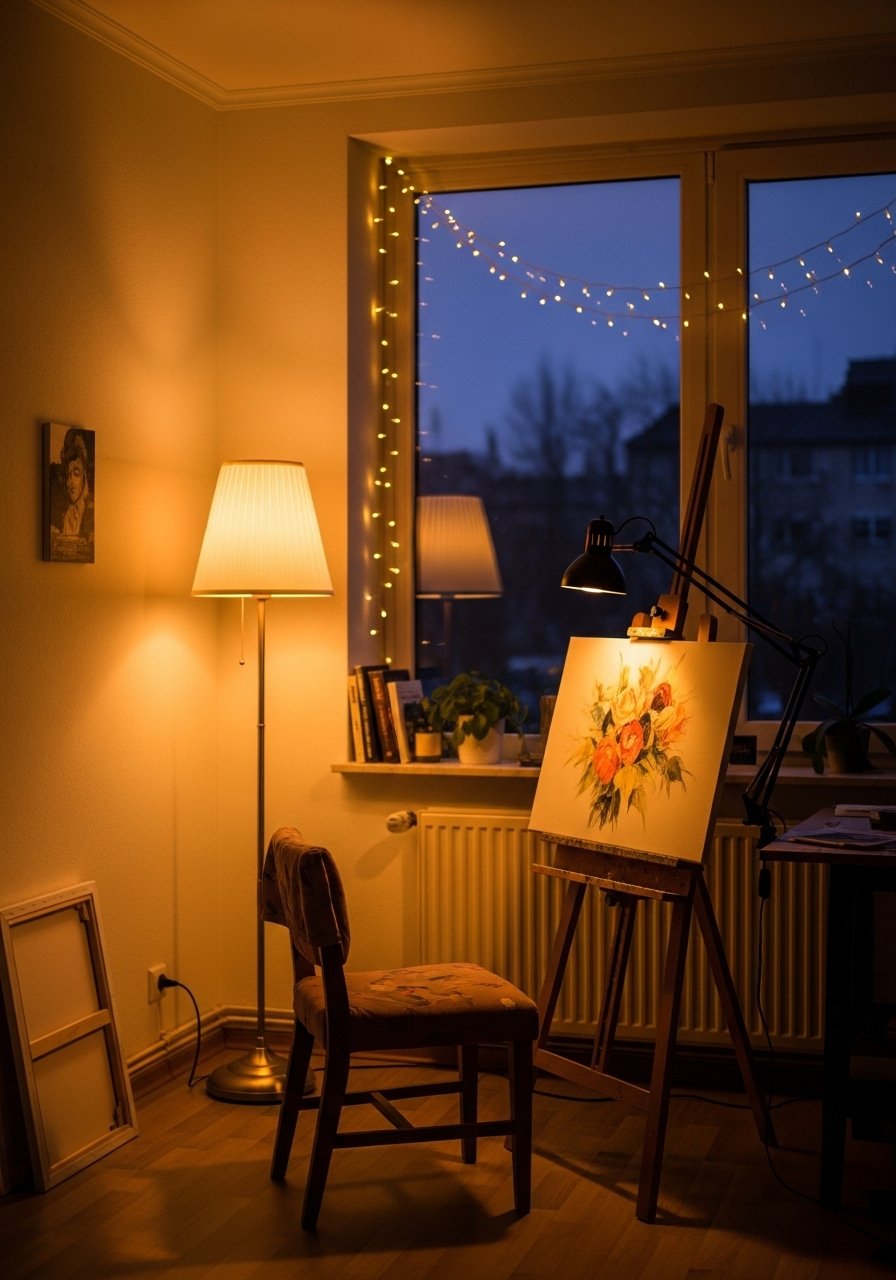
I learned the hard way that overhead fluorescents kill atmosphere. Swap them for a 2700K floor lamp and a daylight-balanced task lamp for color accuracy. I keep a string of warm bulbs for evenings so the room feels welcoming when the main light is off. For task lighting I recommend an adjustable architect lamp so you can direct light without moving your easel. The error most make is using only cool light, which flattens skin tones and paint color. Mix a warm ambient source with a neutral task lamp.
Portable Easel Corner For Flexible Composition
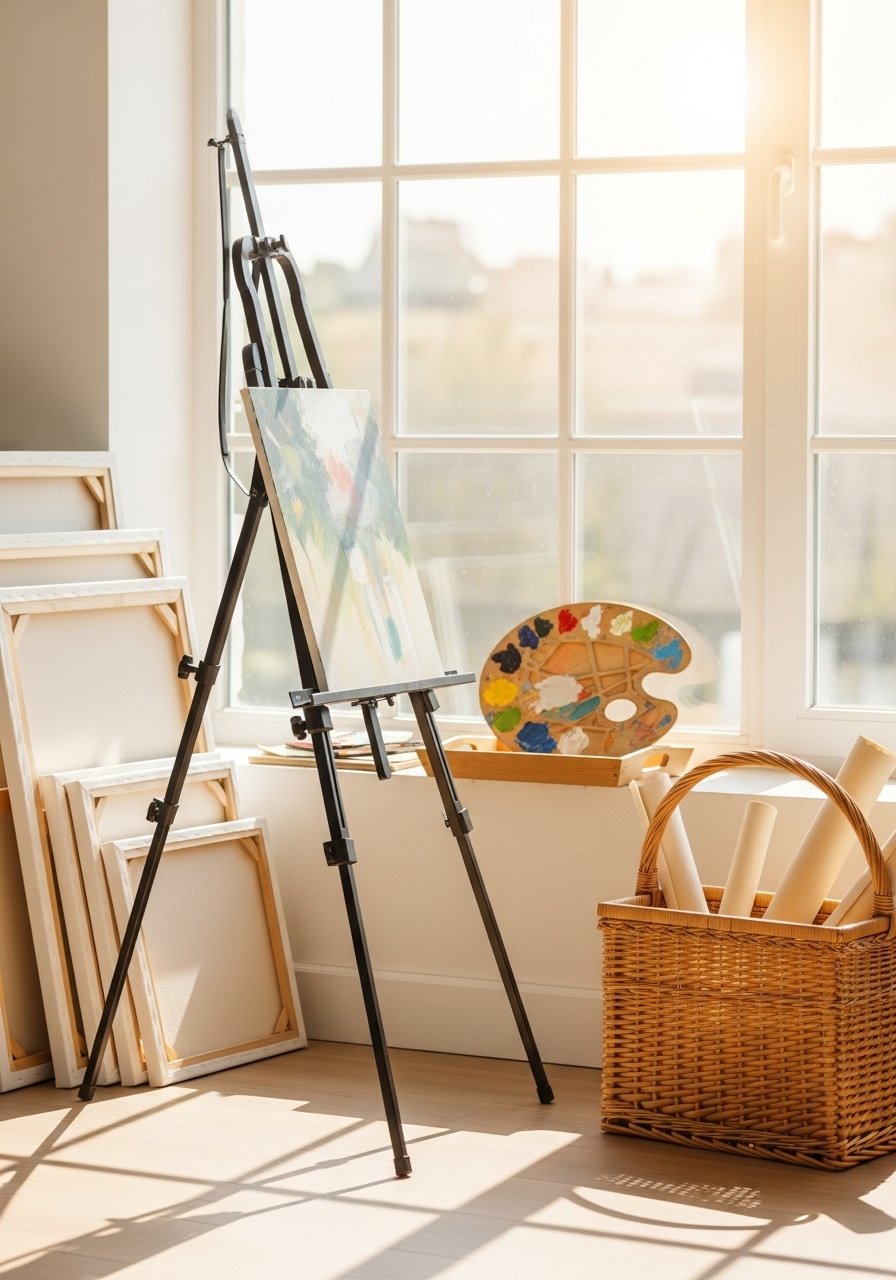
I kept ruining compositions because my easel was in a fixed spot that never caught the right light. A lightweight, collapsible easel lets me chase morning or evening sun across the room. For small spaces look for an easel that folds flat and stands 5 to 6 feet tall when extended. I bought a portable wooden easel that packs away into a closet. The common mistake is picking an easel that wobbles. Test stability by pressing on the top edge before you buy.
Finished Piece Ledger For Rotating Displays
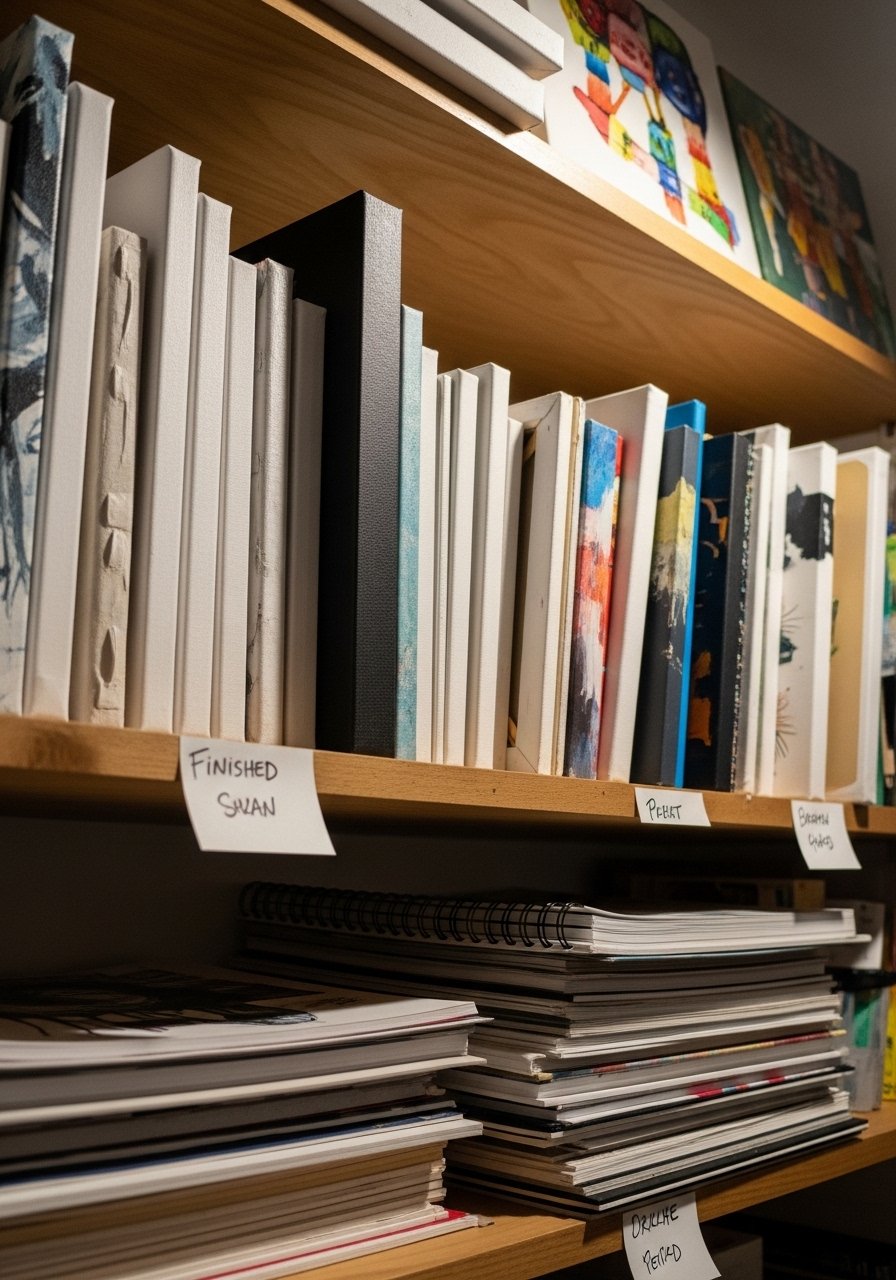
After months of painting I had no way to rotate work without making a mess. A ledger shelf keeps completed pieces accessible and gives the room a gallery feel. Keep the top shelf at eye level and allow 1 inch between canvases so they do not scuff. I label the edge with a small index card noting medium and date. A sturdy option like these wood floating shelves handles multiple canvases. Mistake to avoid is stacking too many frames deep. Keep only the last five to ten visible and store the rest flat.
Your Decor Shopping List
Textiles
- Honestly the best $40 I have spent. Chunky knit throw blanket in cream for layering on chairs and benches
- 22-inch down-filled linen pillow covers in muted green and beige, set of two
- Jute area rug 5×8 as a base layer for textured flooring
Wall Decor
- Brass picture ledges set for easy art swaps, two 24-inch ledges
- 8×10 picture frame set with mats, white mats recommended
Lighting
- Adjustable architect lamp for focused task light
- 3-light floor lamp with warm bulbs for ambient glow
Storage & Supplies
- Wood floating shelves, 12-inch depth for canvases and jars
- Wooden pegboard organizer for brushes and tools
- Glass apothecary jars set for visible supply storage
Budget Finds Note: Similar options are often at Target or HomeGoods if you want to see materials in person before buying.
Shopping Tips
White oak beats dark wood right now. Wood floating shelves in white oak read current and pair well with botanical elements.
Grab velvet pillow covers for $12 each. Swap them seasonally and the whole corner reads different.
Curtains should puddle or kiss the floor, never hang halfway up. Get linen curtains 96-inch for standard 9-foot ceilings.
One single large plant beats five small succulents. Consider a faux fiddle leaf fig 6ft if you need height without care.
Frequently Asked Questions
Q: Can I mix boho textiles with a cottagecore art studio without it looking messy?
A: Yes, if you limit the palette and textures. Stick to three main textures and two colors. For example, linen, wool, and a braided jute rug in complementary tones read intentional rather than cluttered.
Q: What size workspace do I actually need in a tiny room?
A: A fold-down table 30 inches wide is plenty for sketching and small canvases. If you work larger, aim for 48 inches wide. Keep a 28 to 30 inch work surface height for seated comfort.
Q: How should I store wet canvases in a small apartment?
A: Use a vertical drying rack or a simple ledger shelf with 1 inch spacing between canvases. Store finished or drying pieces upright so they do not touch each other. A simple wood floating shelf can double as display and drying space.
Q: Do I need daylight lamps for accurate color?
A: A neutral task lamp around 5000K helps with color matching. Pair it with warm ambient light for evening work. The mix keeps your colors true during setup and cozy during finishing touches.
Q: How do I keep open shelving from looking like clutter?
A: Edit to three types of storage per shelf: one basket, one display jar, and one stack of paper or books. Repeat that pattern across shelves to create rhythm. Labels on baskets help maintain order.
Q: Can I have real and faux plants together?
A: Absolutely. Use low-light real plants like pothos near windows that get some indirect sun. Fill high spots with a faux fiddle leaf fig 6ft so you get the height without fuss.