

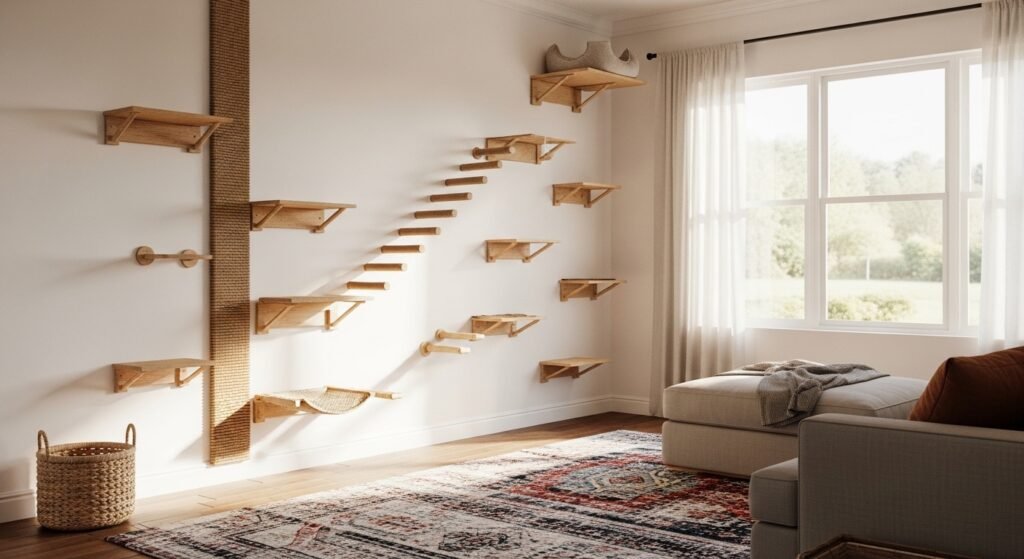
My living room had a sofa and an armchair that matched perfectly. It still felt like a waiting room until I added height and movement on the walls. Cats need vertical territory and people respond to layered walls. Once I built a climbing path for my cat, the room finally felt lived in. The ideas below lean playful-meets-modern, mostly budget friendly, and suitable for living rooms, bedrooms, or a big hallway.
Slim Floating Perches for Small Spaces, Modern Living Room
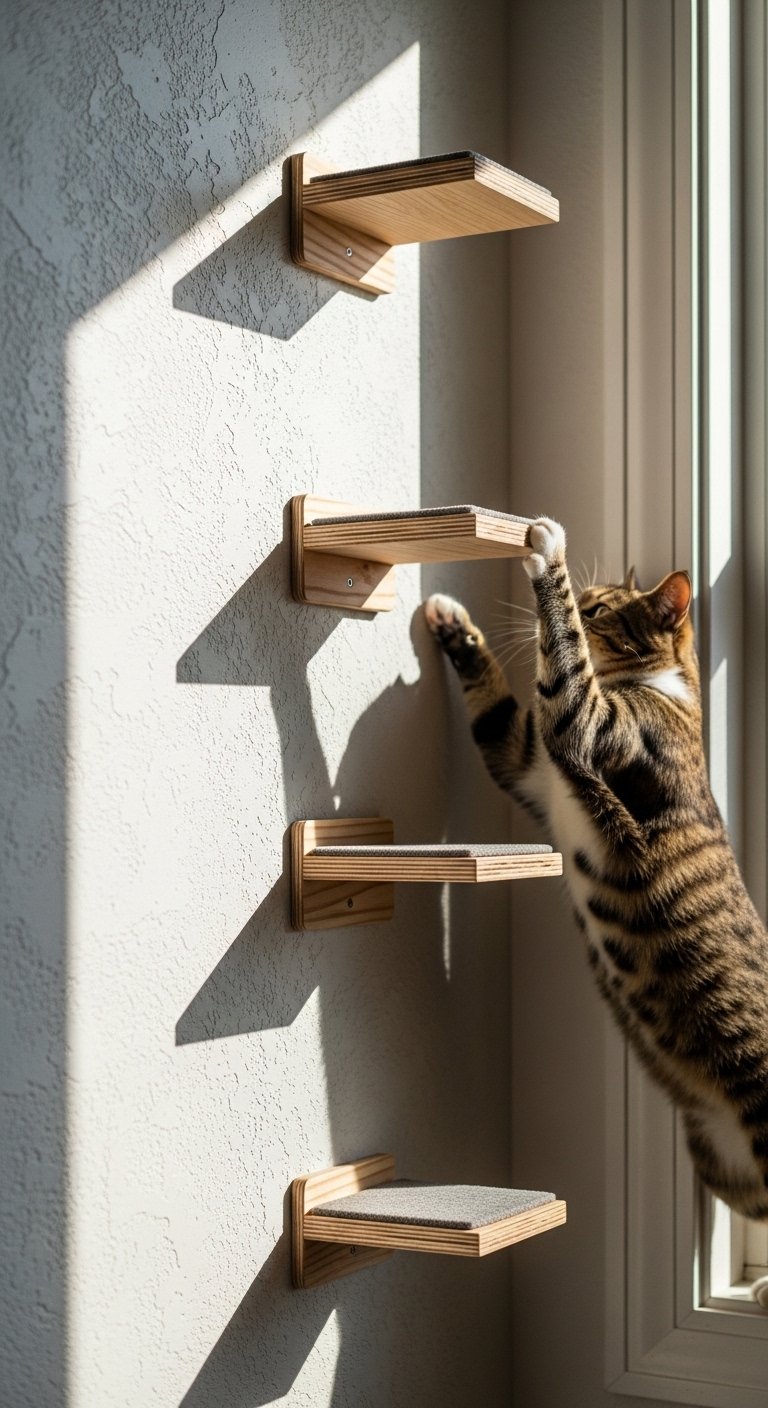
I started with 8-inch deep floating perches to fit a narrow wall behind my sofa and it made the whole room feel taller. What makes it work visually is the stepping rhythm, with 12 to 18 inches between centers to match a cat's stride. It creates a slim climbing wall without bulk, ideal for apartments on a budget, about $15-25 per shelf if you DIY the boards and buy simple brackets. I used white-oak-floating-shelves for a current look. Common mistake is making the treads too deep so they read clunky. For scale, keep shelf depths 8 to 10 inches for adult cats.
Cozy Corner Nest for Afternoon Sun, Boho Bedroom
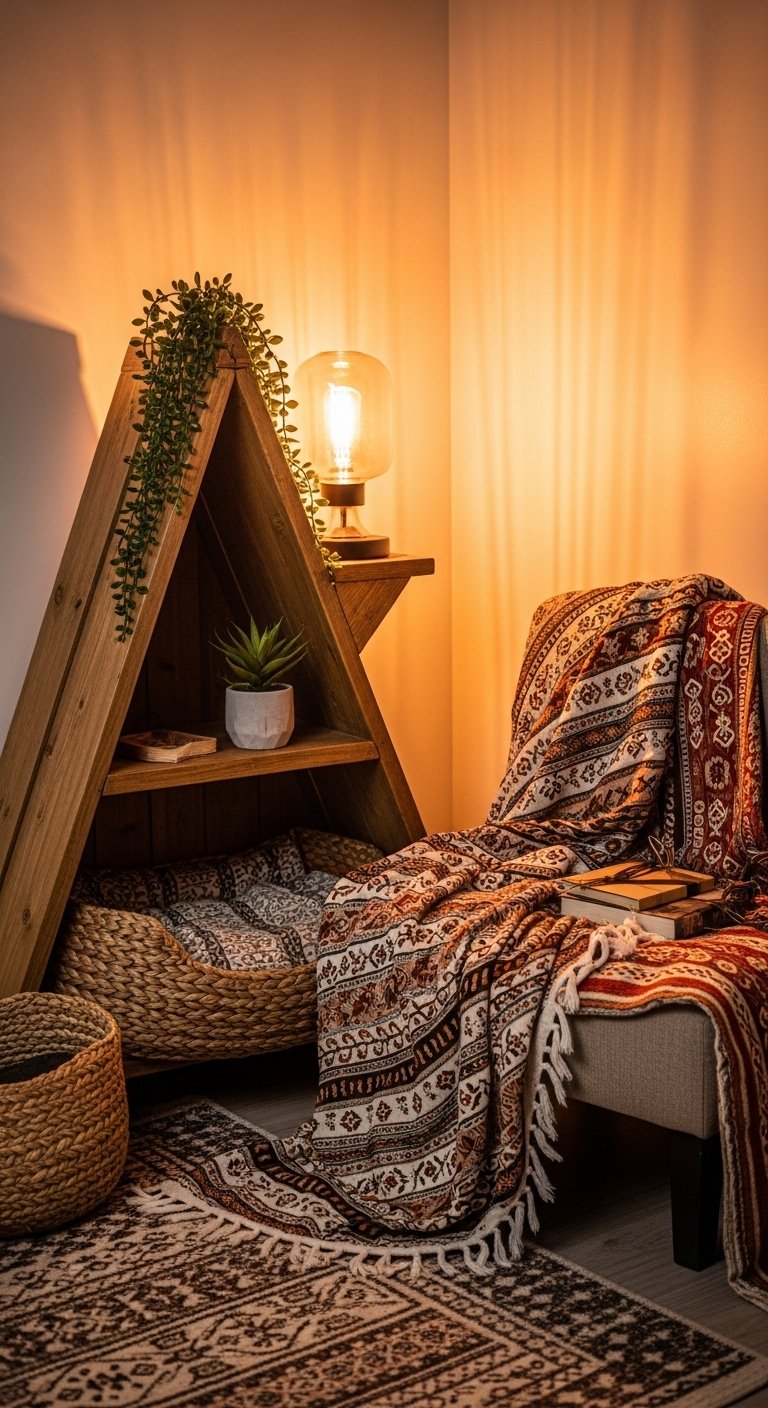
A corner nest took a dead corner in my bedroom and turned it into a daily sunspot. Triangular shelves fitted into the corner save floor space and give a private perch. Budget here is under $40 if you use scrap wood and a thrift pillow. I added a 14-inch round cushion from plush-cat-bed-cushion for comfort. People often mount the shelf too low. Mount the top perch around 60 to 72 inches so the cat can survey the room. This pairs beautifully with the slim perches idea above, creating a vertical loop for short sprints.
Sisal Wrapped Steps for Scratch-Friendly Climbing, Rustic Entryway
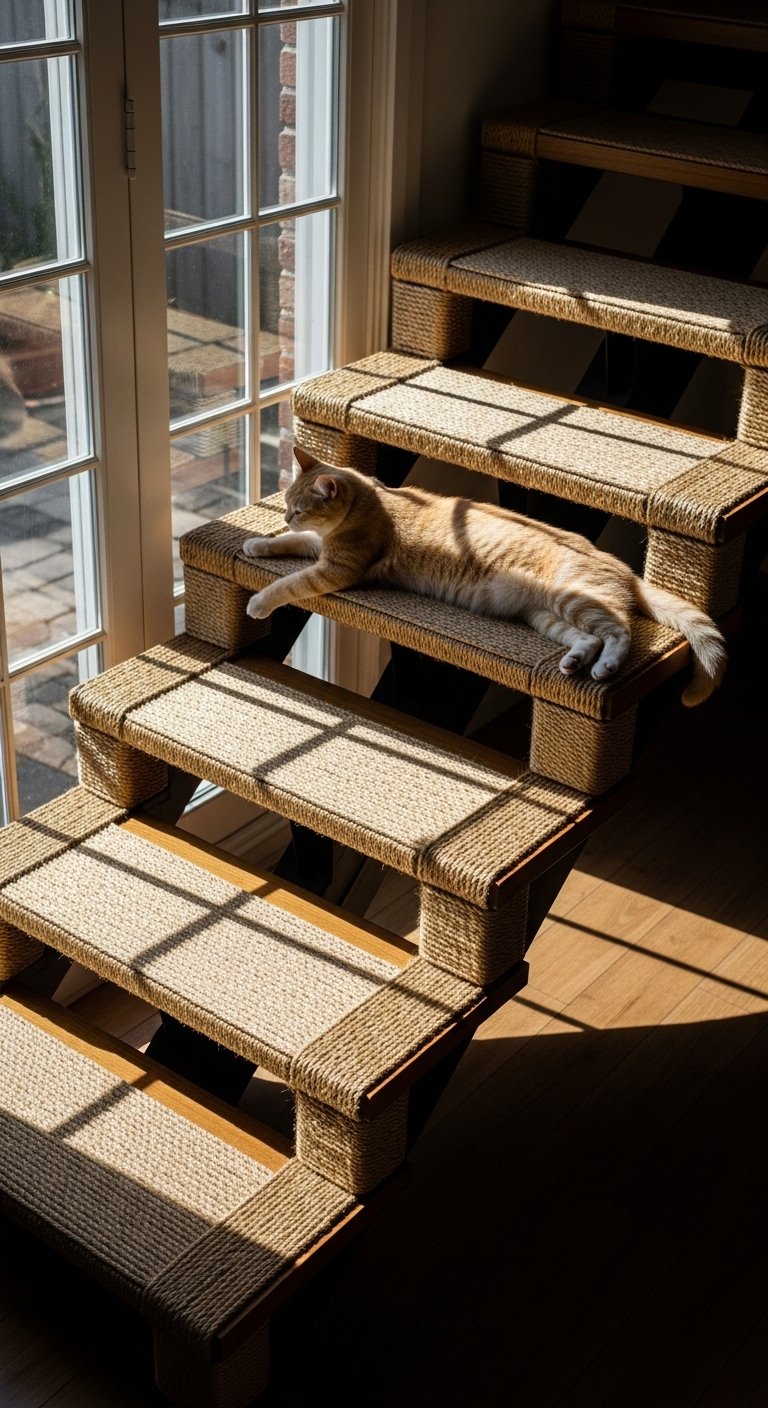
My anxious cat needed surfaces she could scratch safely. Wrapping the fronts of steps in sisal solves that and preserves your upholstery. Use 1/2 inch sisal rope and wrap tightly with construction adhesive. I wrapped four steps, each 10 to 12 inches wide, and it cost about $20 in rope and glue. The mistake most people make is using thin rope that frays. Use the thicker rope and staple the ends under the tread. I bought natural-sisal-rope-50ft to finish multiple shelves without running out.
Gallery-Style Ledge with Rotating Toys, Modern Eclectic Living Room
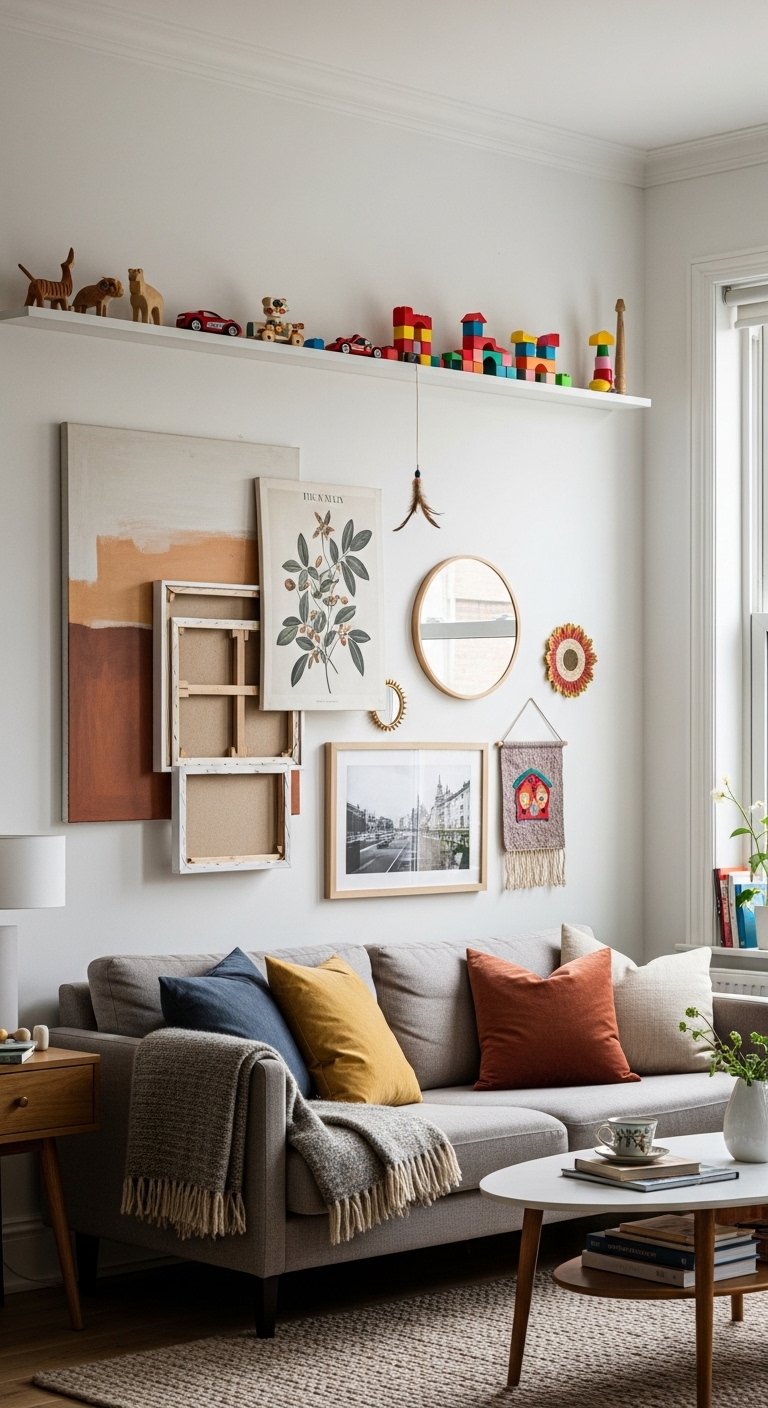
I turned a picture ledge into an interactive gallery for my cat. Place a row of 3 to 4 shallow ledges at varying heights, and rotate small toys or a dangling feather to keep interest. The visual result is tidy vertical art that doubles as play zones. Budget depends on ledge type, $20 to $60 each. A common mistake is placing toys too close to light fixtures. Keep ledges at least 6 inches away from hanging lamps. I use brass-picture-ledges for the look and swap toys weekly.
Staircase Style Array for Athletic Cats, Contemporary Hallway
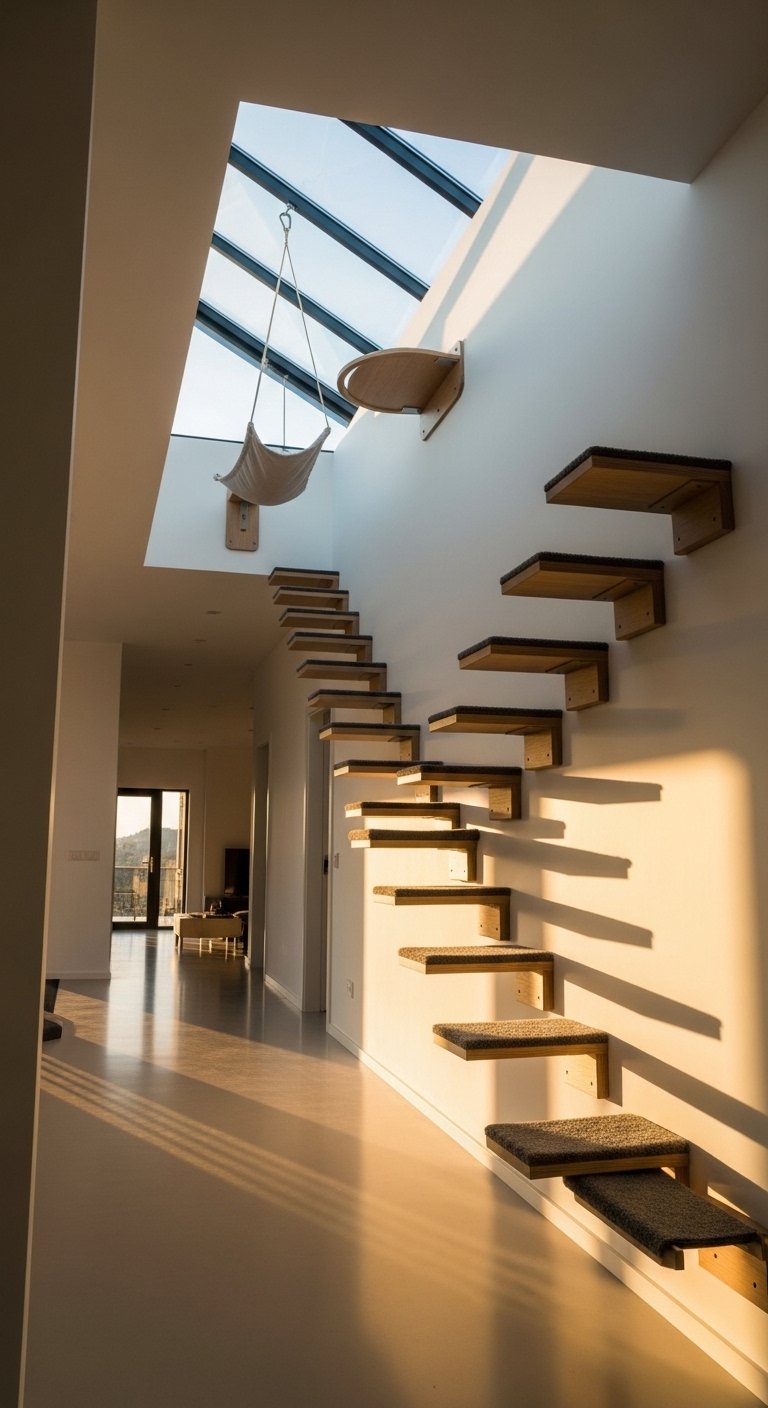
Think of your wall like a mini staircase and lay out platforms in a predictable rhythm. My cat runs this route daily. Use 10 to 14 inch depth shelves with 14 inch vertical spacing for athletic breeds. It creates a flow that reads intentional and keeps furniture safe from fur-laden burglars. This is a mid-budget build, about $80 total with brackets and hammock. People underestimate fastening here. Use at least two studs per long run, or heavy-duty anchors if studs are not available. I grabbed sturdy-float-brackets-set for secure mounts.
Hidden Ledge Behind Plants for Introverted Cats, Cozy Sunroom
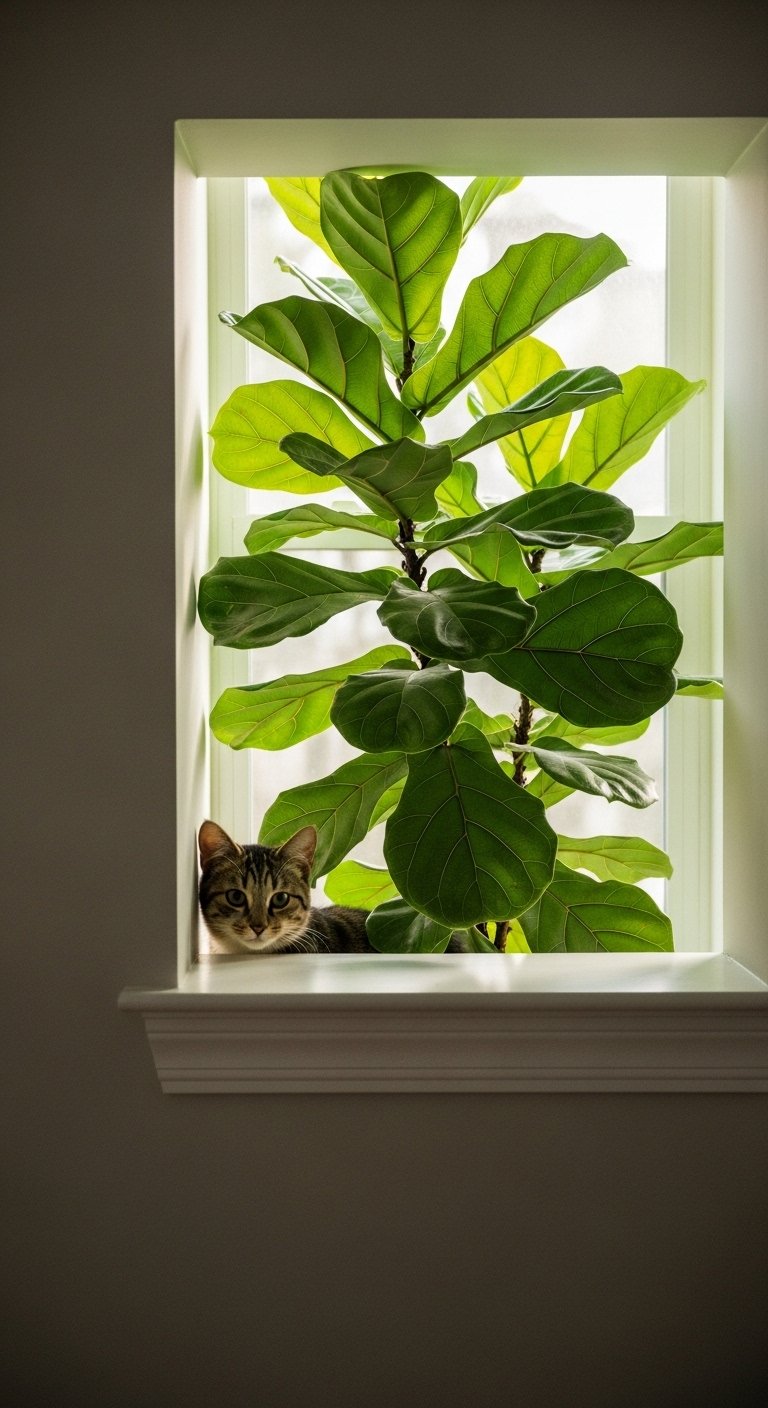
Some cats like privacy. I installed a 6-inch deep ledge behind a tall plant shelf and my shy cat claimed it immediately. The trick is to set the ledge 6 to 8 inches back from the plant edge so leaves act as a canopy. It costs under $30 if you repurpose wood. People make the mistake of crowding the plant and the ledge, so leave a 3-inch gap for air and light. Use faux plants for low-maintenance setups and pair with the corner nest idea if you need more quiet perches.
Ladder Shelf with Built-In Scratching Post, Scandinavian Living Room
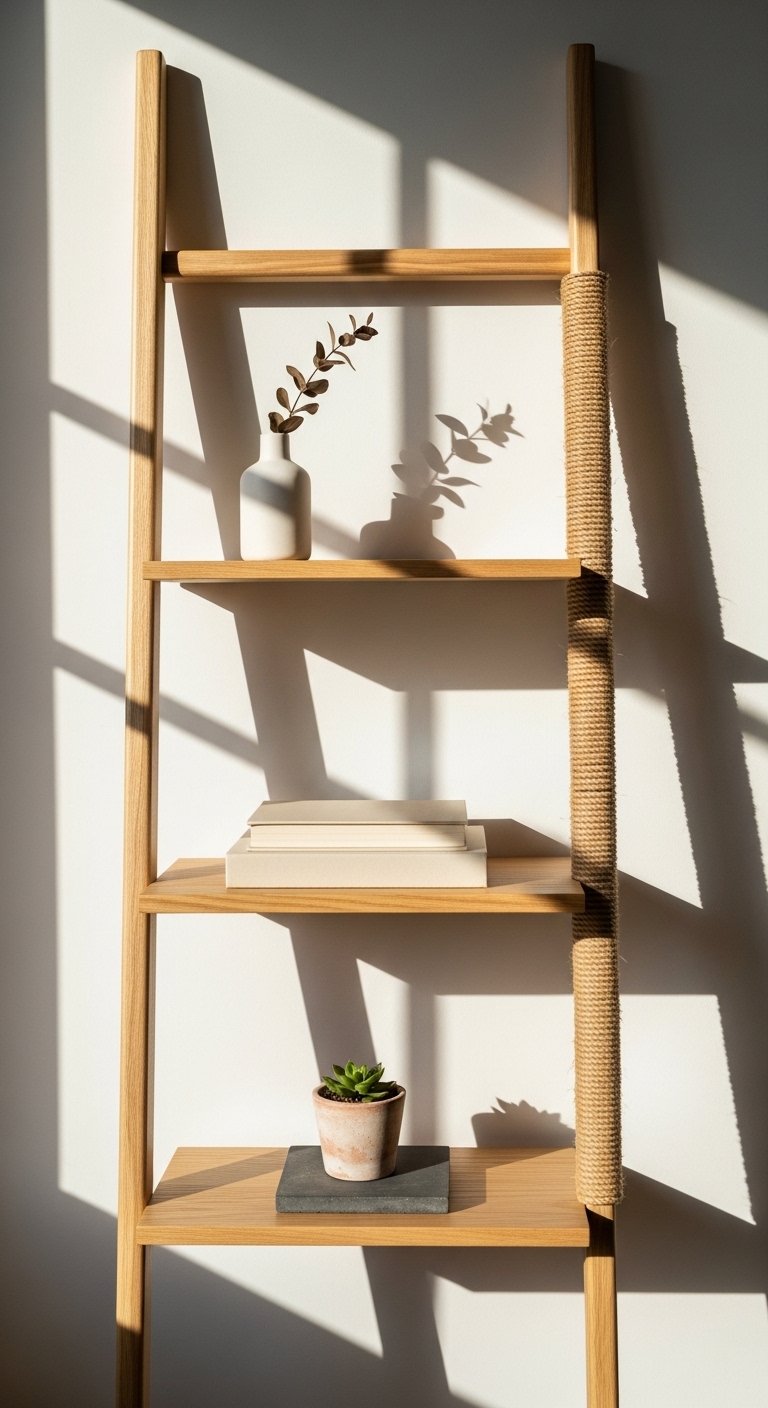
I built a leaning ladder shelf and wrapped one upright in sisal for a combined shelf and scratch post. It reads less like cat furniture and more like a design piece. The ratio I used was one scratch post for every three perches, following the rule of three for balance. Budget runs $60 to $120 depending on materials. A common mistake is making the ladder too steep. Keep the angle gentle and secure the top to the wall. I use leaning-ladder-shelf-wood when I want a premade leaner.
Hammock Perch Above a Window, Minimalist Bedroom
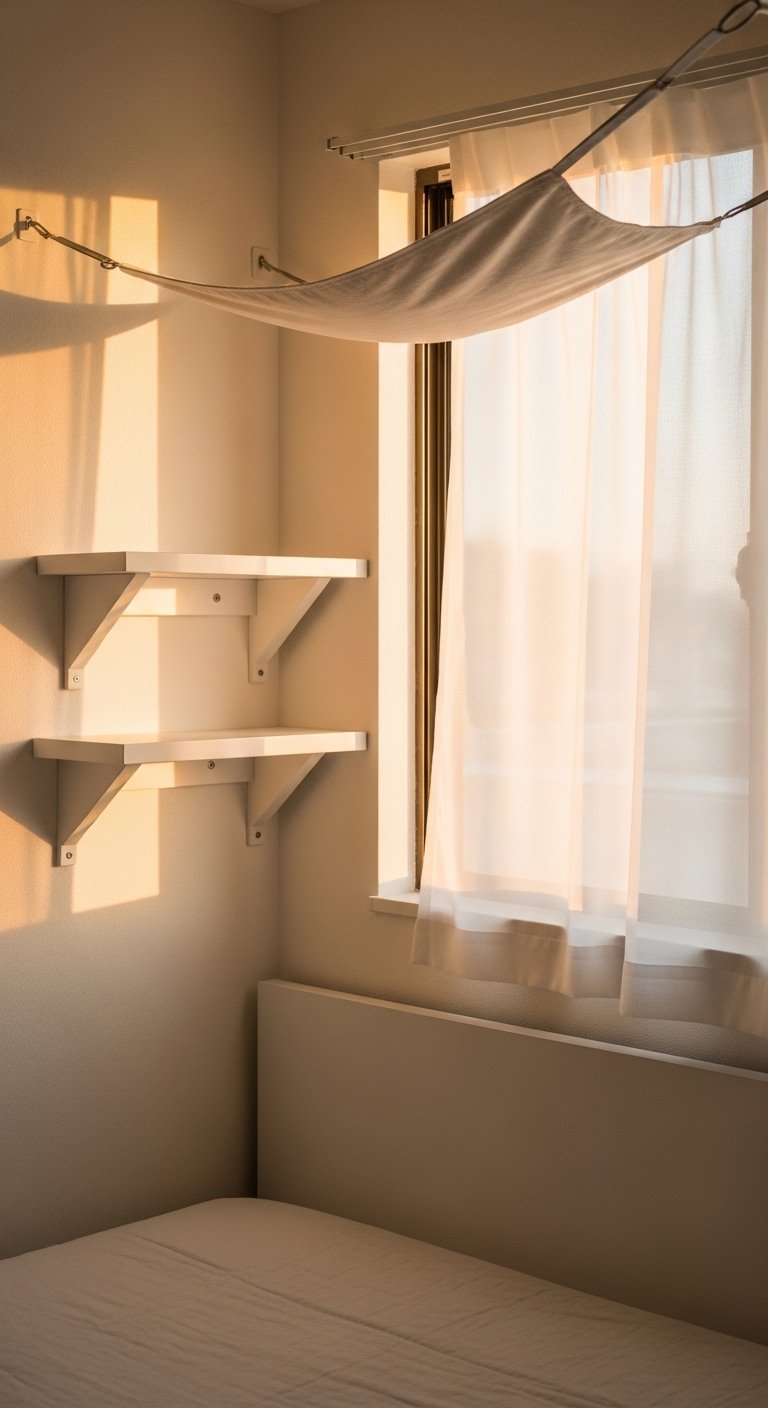
There is something about a hammock in a sunny window that makes a cat celebrate. I mounted small shelves at window height and suspended a hammock between them. The feeling is breezy and calm, and the perch fits small windows where a larger shelf would be awkward. Expect $25 to $45 for materials. People often mount hammock anchors on drywall only. Use studs or heavy anchors. For stability, keep the hammock width to no more than 20 inches. I linked hammock-cat-bed-kit when I needed hardware.
Rustic Crate Platforms for Budget-Friendly Texture, Farmhouse Kitchen
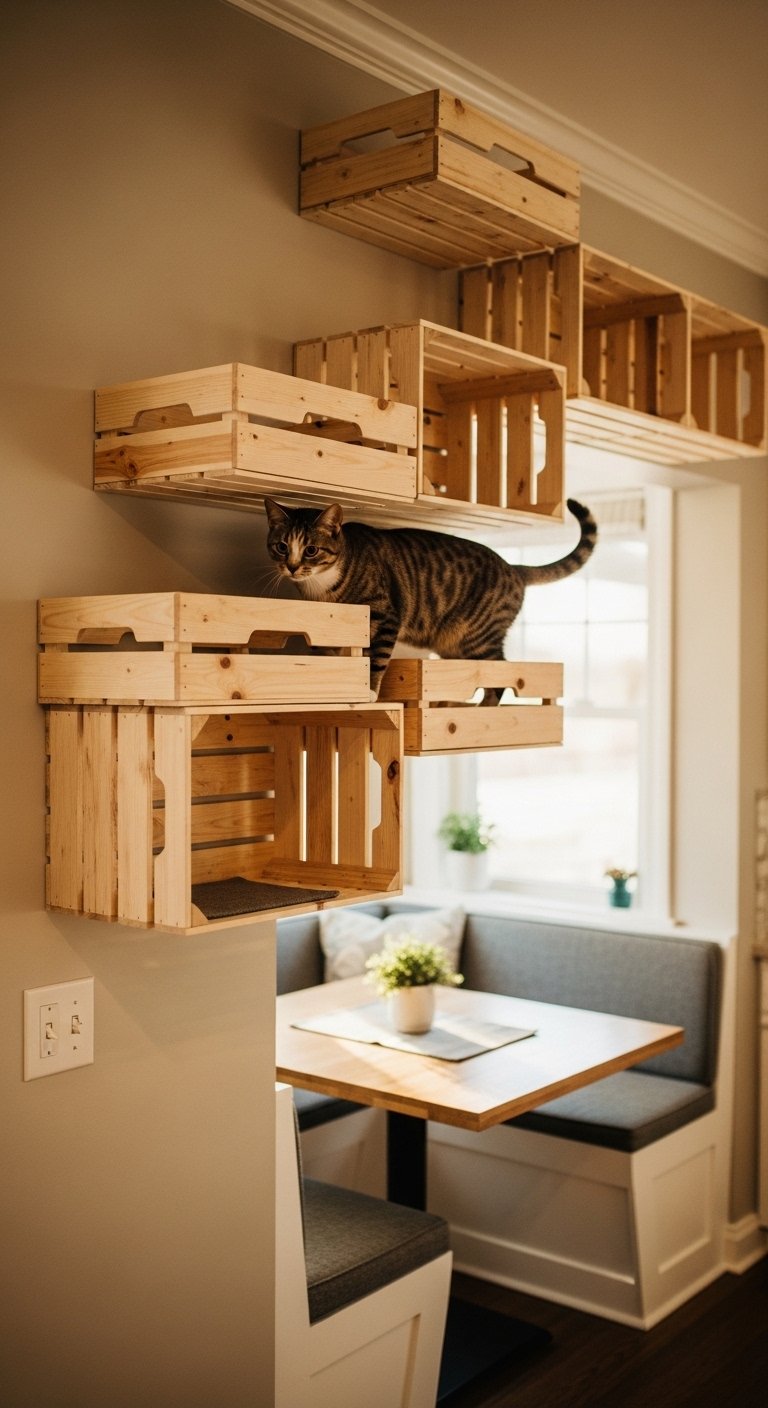
I salvaged two crates and turned them into staggered platforms by mounting them horizontally. The visible grain and gaps give texture and hide cat hair well. This is a cheap fix, about $10 to $30 for secondhand crates and a coat of paint. The mistake to avoid is hanging them with weak screws. Use at least two mounting points per crate and check weight limits. Crate depth of 10 to 12 inches works best for lounging. Pair with sisal spots from idea three so the crates double as scratch zones.
Modular Cubes for Climbing and Storage, Kid-Friendly Den
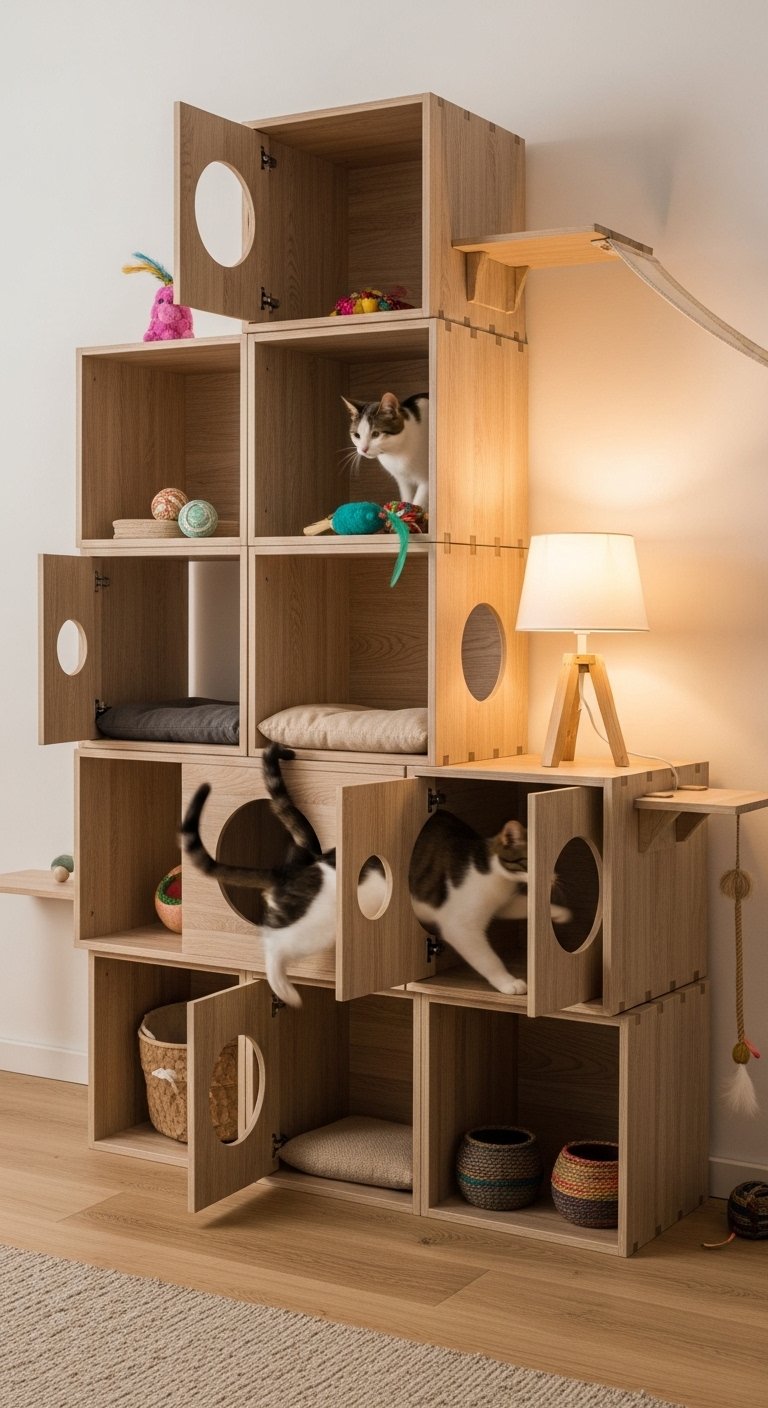
Modular cubes give flexibility. I mixed open cubes for perches with closed ones for toy storage. The visual result is organized chaos that feels homey. Budget varies, $30 to $120 depending on cube quality. A common mistake is placing cubes flush so there is no horizontal path. Leave at least one cube offset for jumping. Use cubes 12 to 14 inches deep for stability. These cubes pair especially well with the gallery ledge idea if you want a walkway between them.
Window-Shelf Combo with Padded Ledge, Sunroom Reading Nook
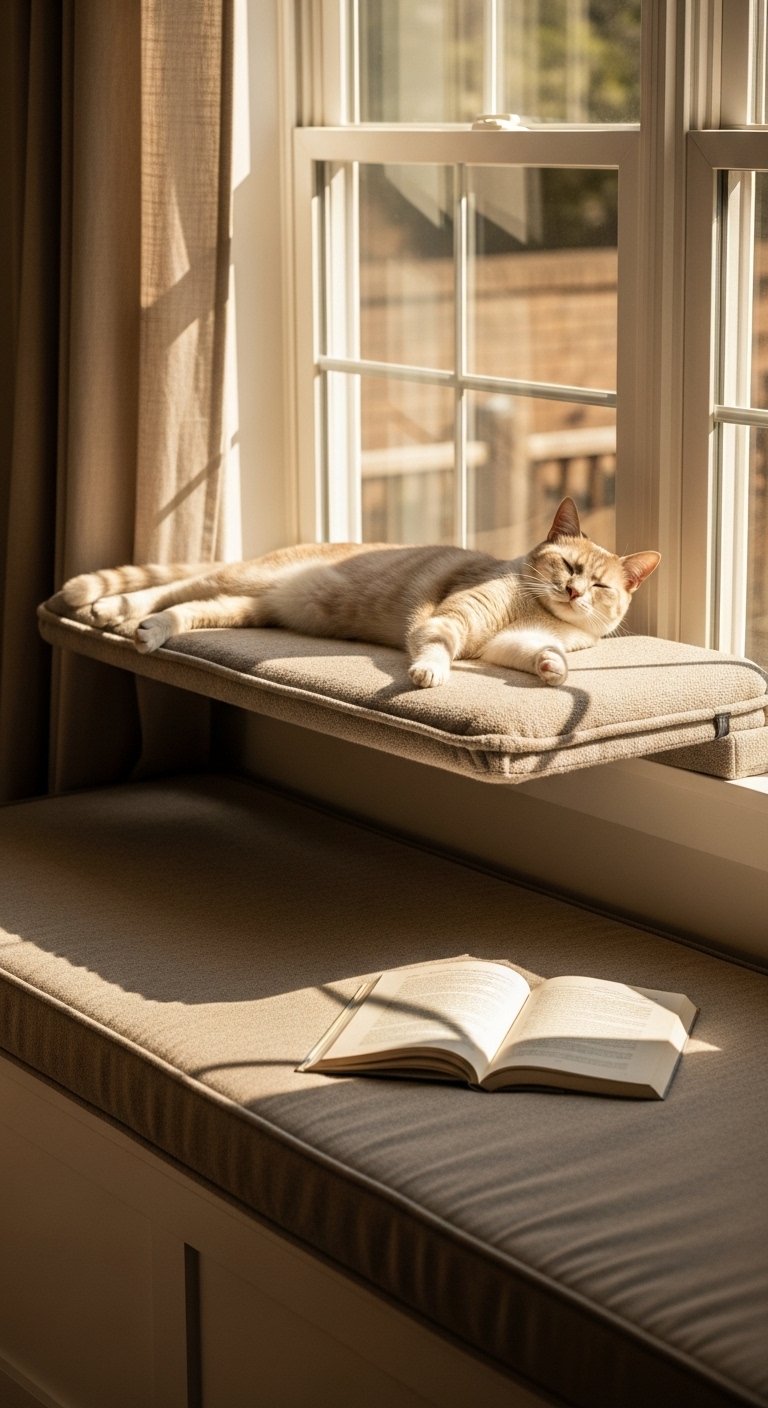
I attached a padded ledge directly to the window sill and my cat naps there most afternoons. The pad is 2 inches thick and covered in washable microsuede. It turns ordinary light into a destination. This is low-cost at around $20 to $40 for padding and cover. Mistake people make is mounting pads with velcro only. Use screws or heavy-duty adhesive if the sill is thin. For proportion, keep the ledge no wider than the window frame, usually 12 to 16 inches.
Floating Tunnel Path for Playful Climbers, Open Plan Living Room
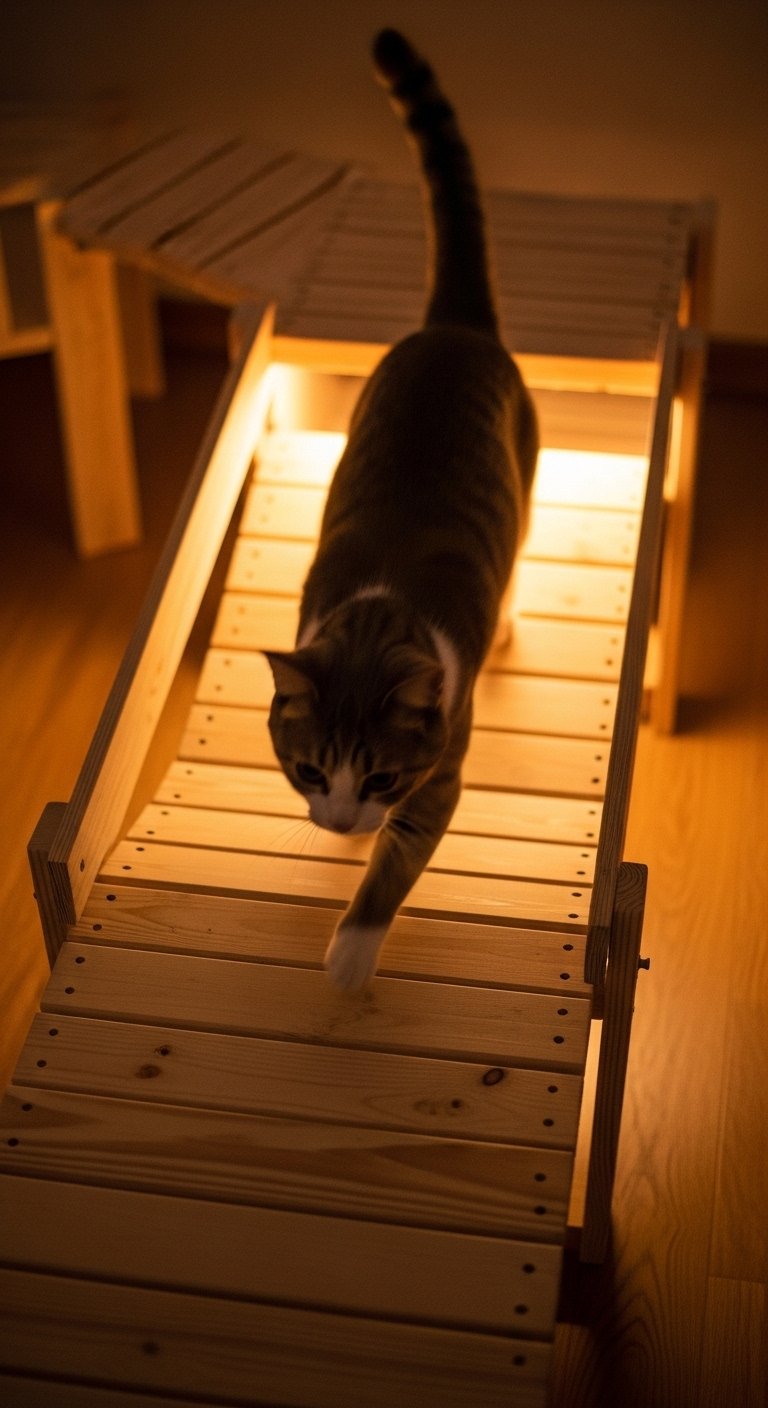
Adding a tunnel gives a playful route and a hiding spot. My cat learned to sprint through this between perches. A 6 to 8 inch diameter tunnel is roomy for most cats. This adds kinetic energy to a room and costs about $40 in materials. A common mistake is making tunnels too long and unsupported. Break long runs into 24 to 36 inch sections. Pair this with the hammock idea for a varied course.
Stair-Step Shelving Above a Console Table, Transitional Entry
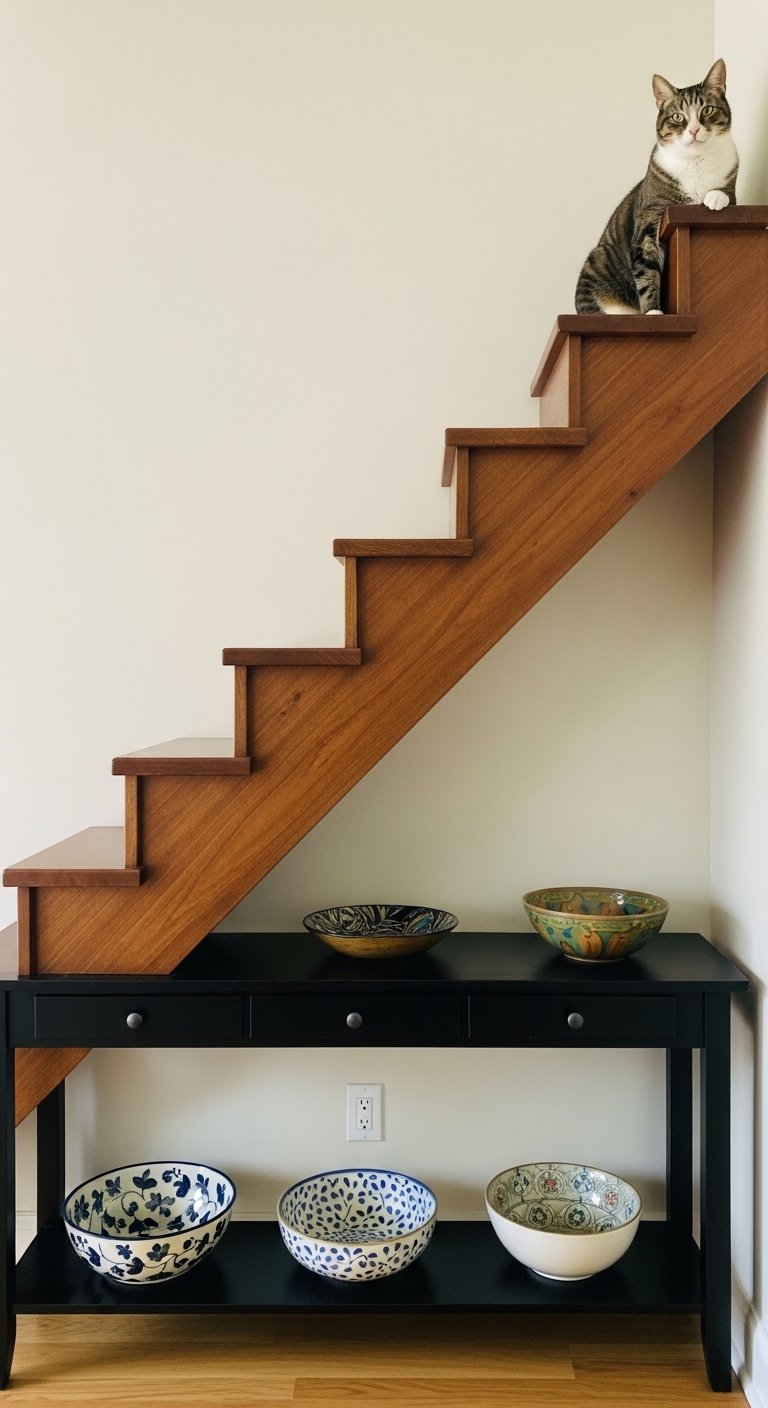
I used stair-step shelves above my entry console, giving vertical interest without losing table surface. The effect is layered texture and a confident focal point when guests arrive. The budget is $50 to $80. People often line shelves symmetrically. Instead, stagger odd numbers and follow the rule of three for a natural look. Shelf heights of 8, 20, and 32 inches above the table top worked for my 30-inch console. I recommend stair-step-floating-shelves for quick installs.
High Perch with Safety Rail for Shy Cats, Quiet Study
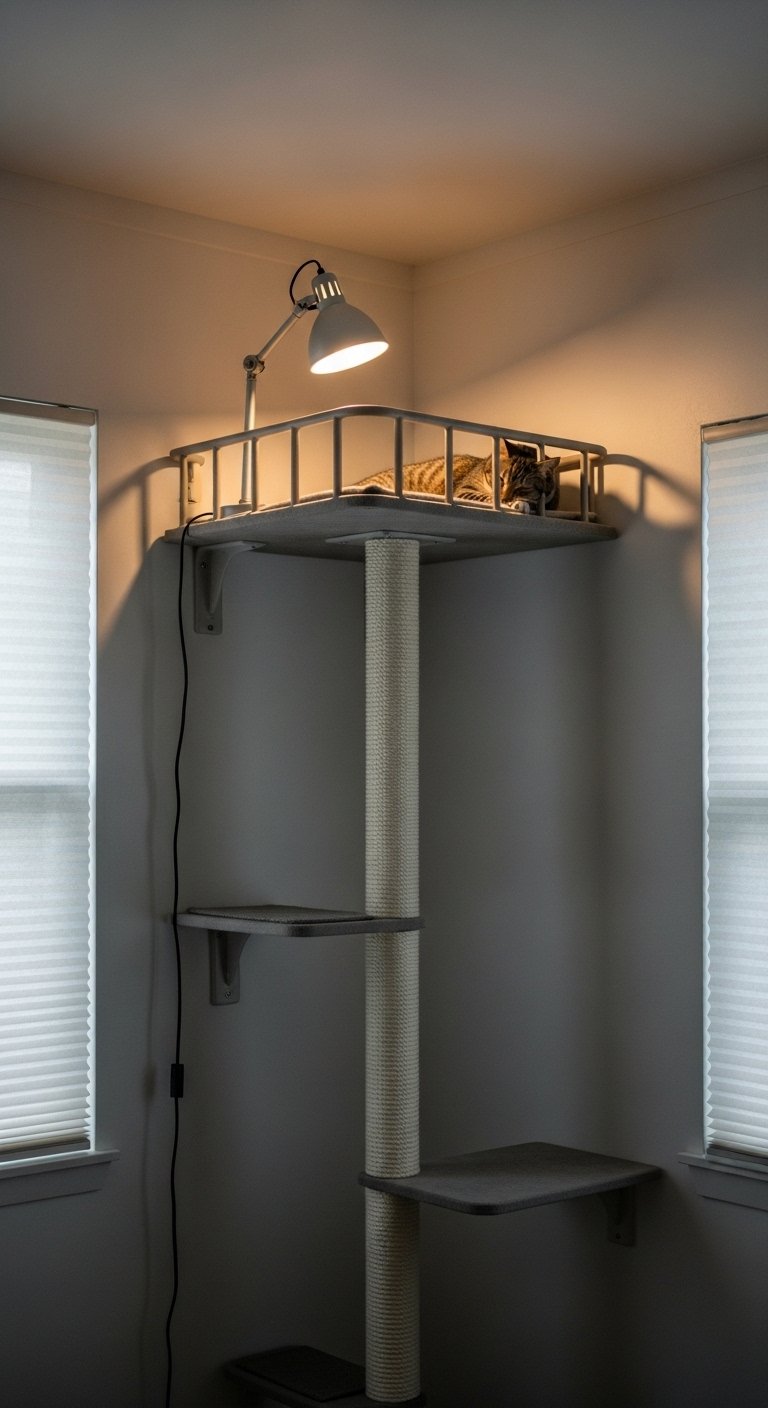
My timid cat prefers being high but can feel exposed. I built a 6 to 8 inch high safety rail around a top platform so she could peek without falling. This creates a secure lookout and looks architectural. It is a medium splurge at $80 to $150 depending on materials. The mistake is making the rail too tall, which blocks view. Keep rails no higher than 6 inches. Mount the top perch around 72 to 84 inches for the full vantage.
Magnetic Play Panels for Wall-Bound Fun, Playroom
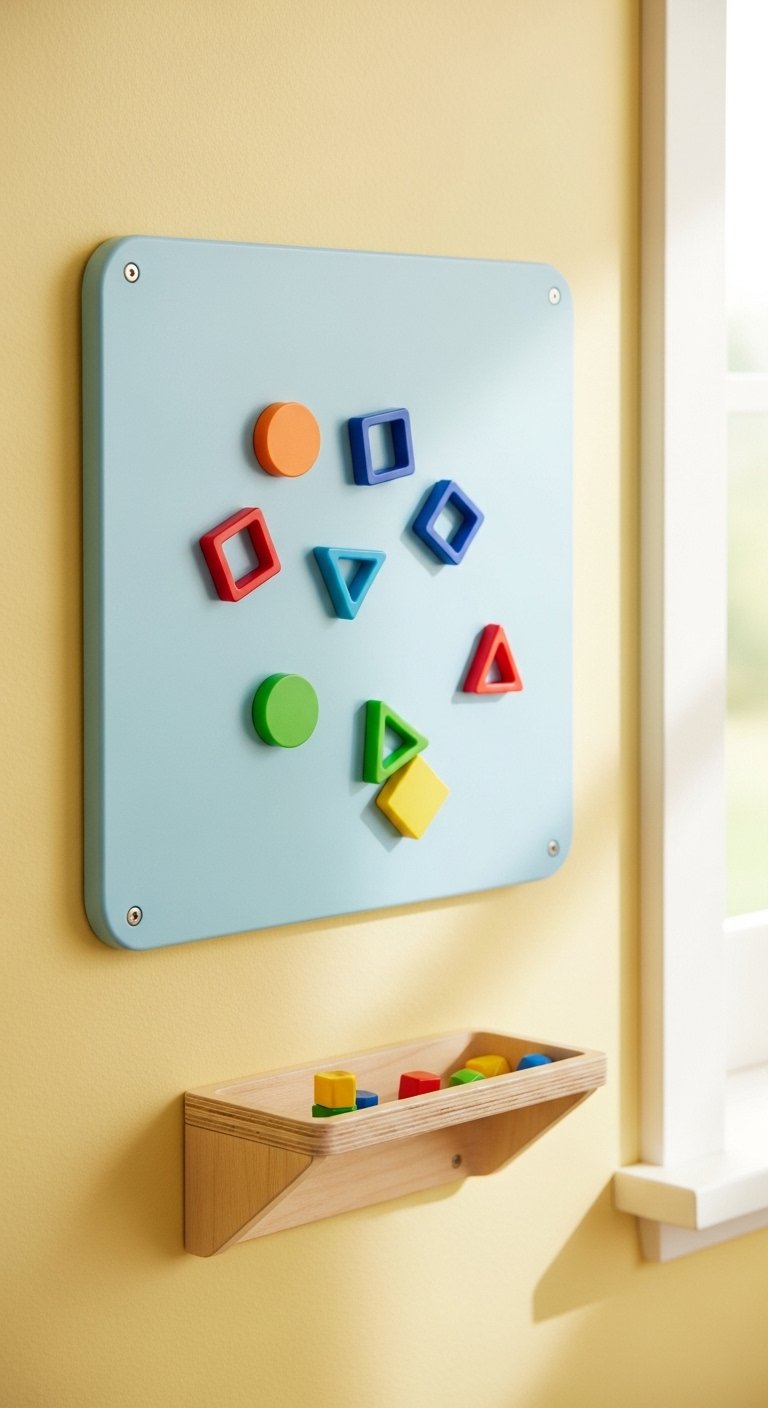
For interactive play, magnetic panels are brilliant. I attach small toys that can be swapped with the same ease I change a photo. The visual result is tidy because everything snaps back to place. This is a low to mid budget project, $30 to $70. Common mistake is using weak magnets. Use neodymium magnets embedded in the panel. Keep perches a few inches below panels to catch toys. I linked a sturdy magnetic-play-wall-panel that I used for toy rotation.
Book-Ledged Perches for Reader Households, Library Nook
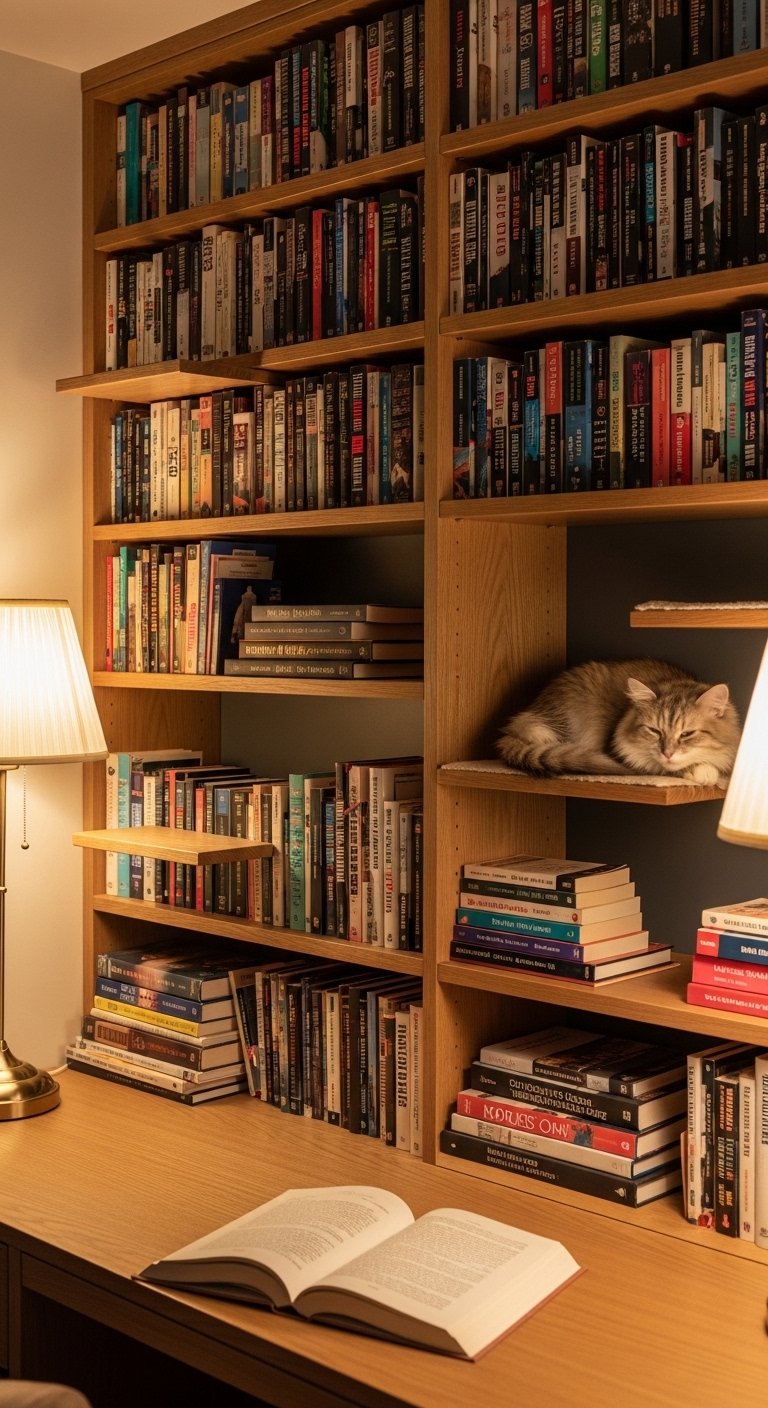
If you read near your books, integrate narrow perches at the ends of bookcases. My cat now curls right beside my stack of novels. Use 6 to 8 inch deep perches so books do not crowd them. This keeps the wall functional for people while giving cats vertical territory. Budget varies with built-ins. Don’t crowd toys and books on the same shelf. Leave a 3-inch buffer between books and the perch edge. For dusty homes, consider washable perch pads.
Patterned Backboards for Visual Interest, Mid-Century Living Room
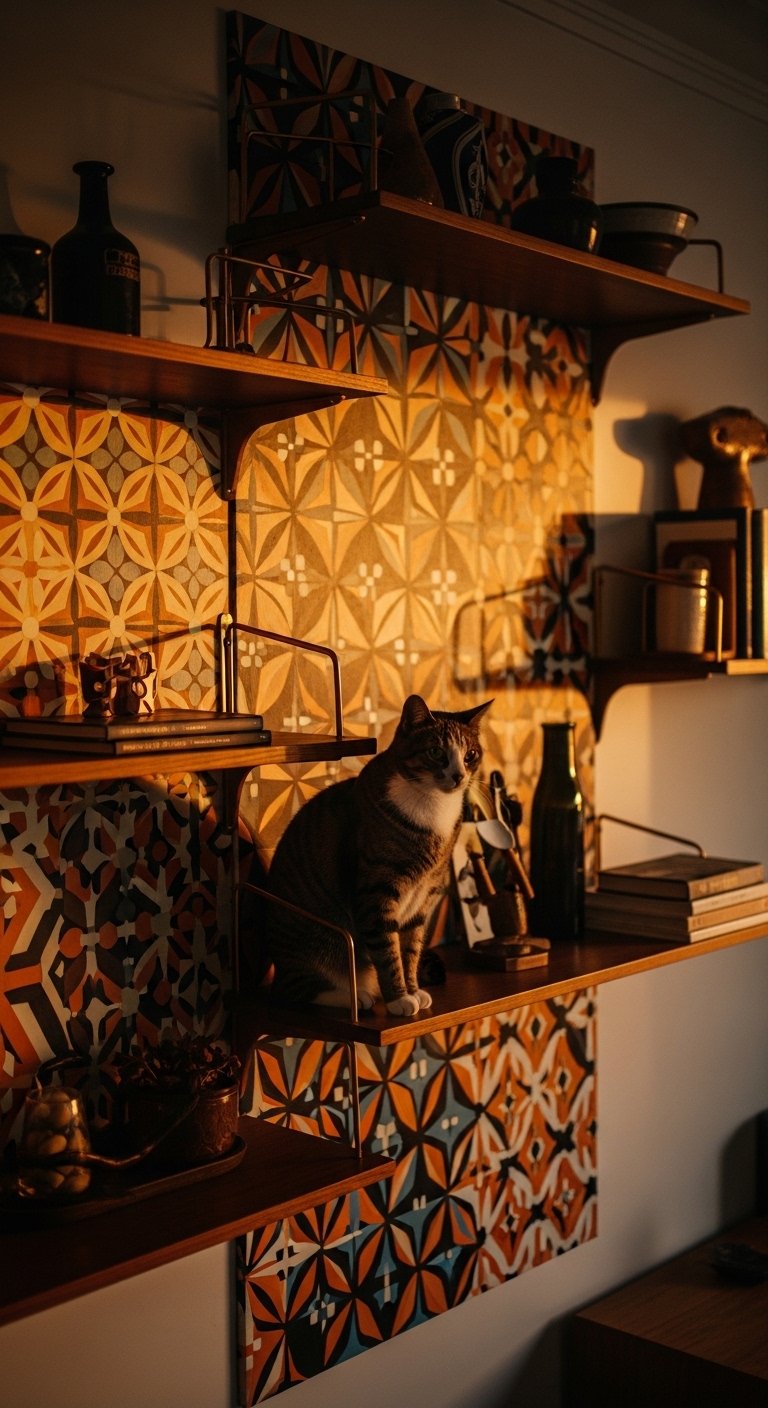
I painted geometric backboards behind shelves to make them read like art. A simple 2:3 ratio of painted panel to negative wall space makes everything feel intentional. It cost about $15 in paint. The common mistake is using a busy pattern that competes with decor. Choose one or two signature colors. This trick pairs well with floating perches and the gallery-ledge idea, tying the shelf arrangement into the room palette.
Double-Use Shelf with Hidden Toy Storage, Family Room
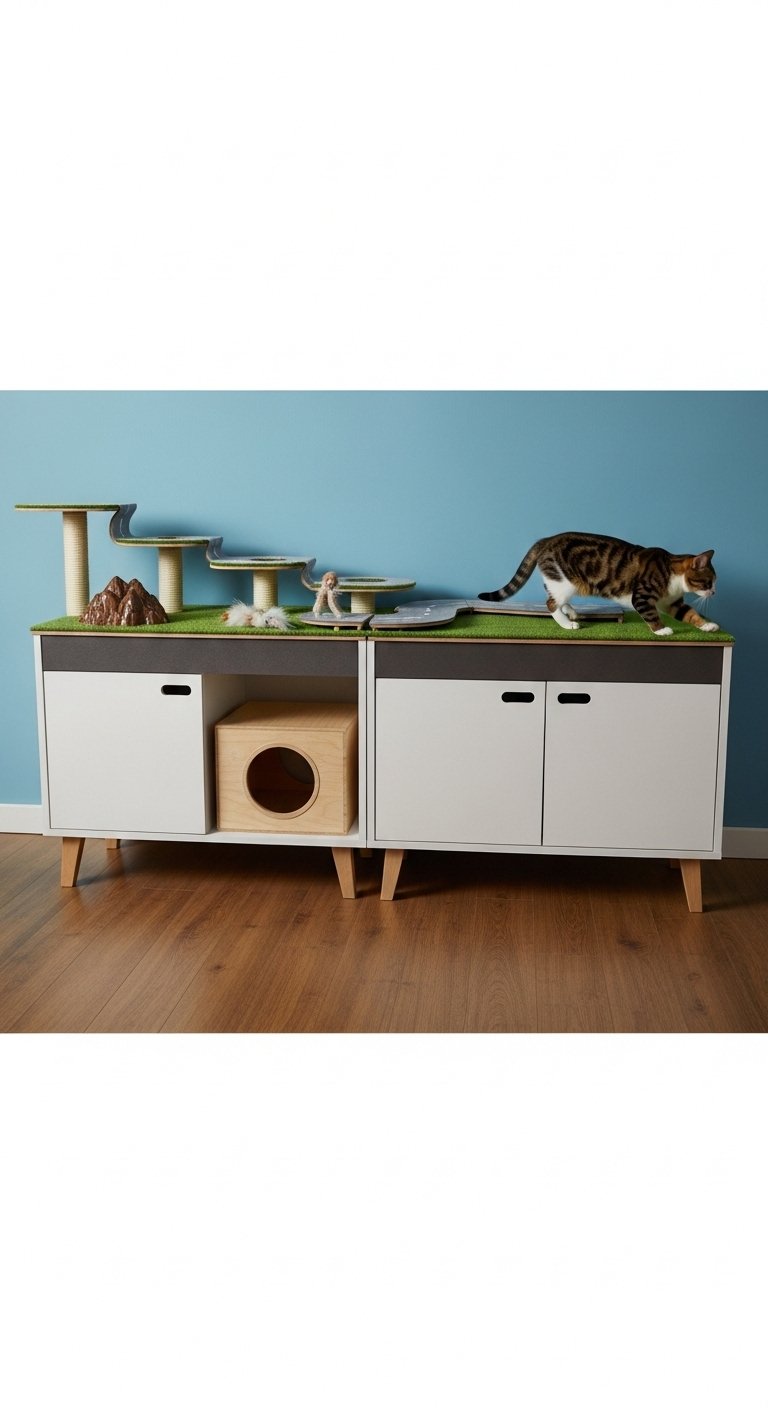
I converted a low console into a double-use shelf: top platforms for climbing and lower cabinets for toy storage. It keeps living rooms tidy and keeps the toy rotation frequent. Budget is moderate depending on cabinet refit, around $100 to $200 if you modify existing furniture. People forget about ventilation when storing cat blankets. Leave a small gap for airflow. This solves the clutter pain point and works well next to the stair-step array idea.
Color-Blocked Steps for a Playful Pop, Kids Room
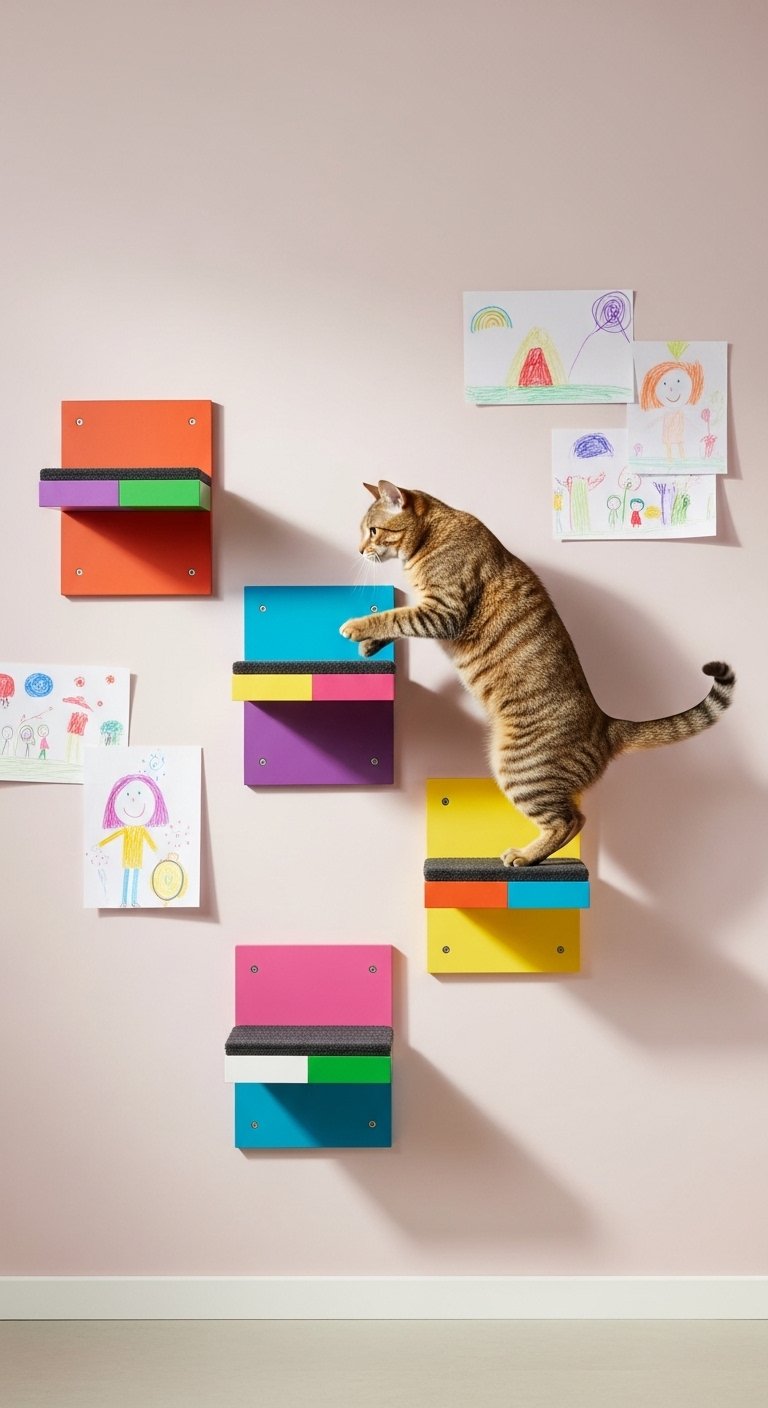
Adding color makes the wall read as planned play. I painted each step a different hue using an 80/20 color rule, where 80 percent is neutral and 20 percent is the pop. This is inexpensive at $20 to $60 for paint and boards. The mistake is too many colors not tied to the room. Use two related shades and a neutral. These steps are playful and perfect if you want the shelves to feel integrated with kids’ decor.
Low Flight Path for Older Cats, Ground-Floor Bedroom
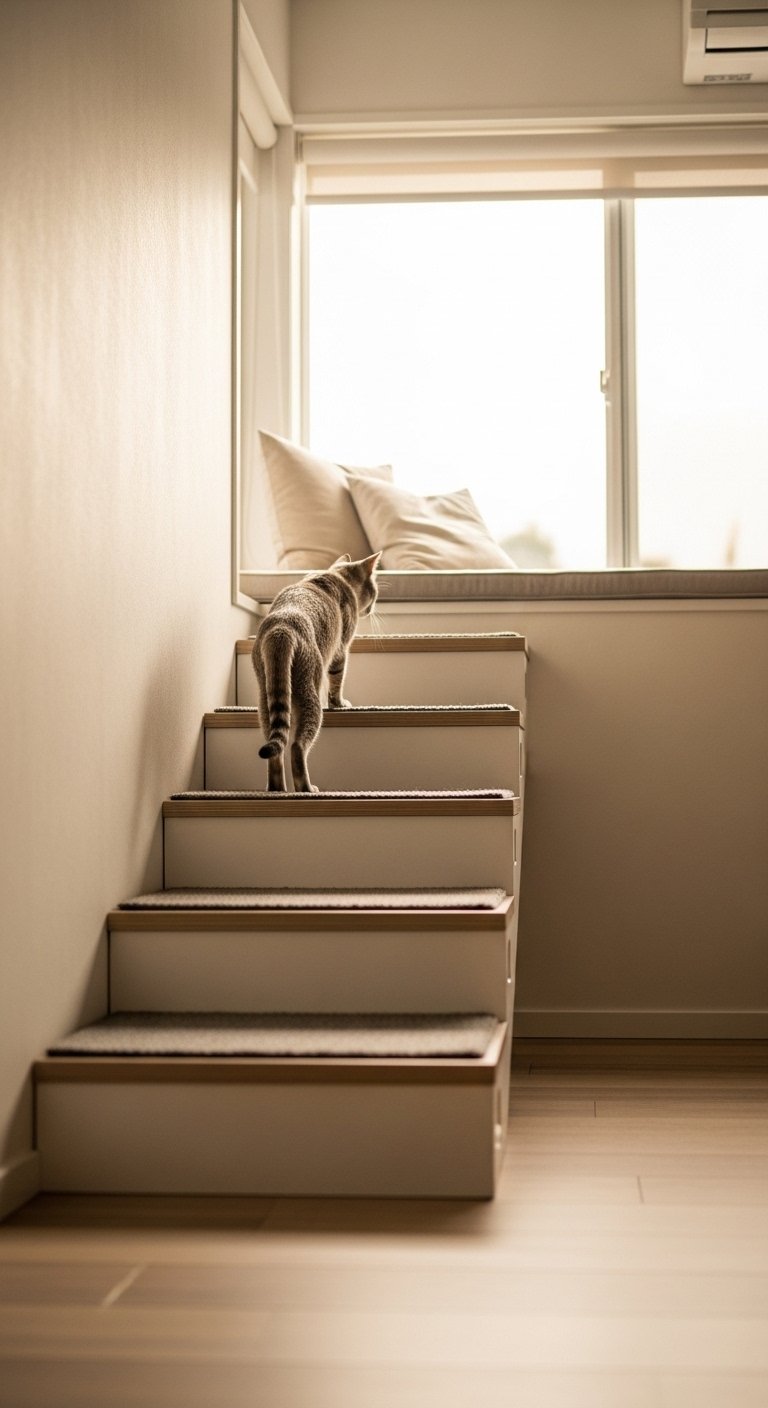
My senior cat needed a gentle path. I dropped platform heights to 6 to 8 inches and made them wider for stability. The result is dignity preserved and safe access to favorite spots. This costs about $40 in materials. A common mistake is keeping steps high for aesthetics. Prioritize comfort over style here. These low steps also serve as a second surface for plants or books.
Hidden Wall Cubby to Keep Clawing At Bay, Small Apartment
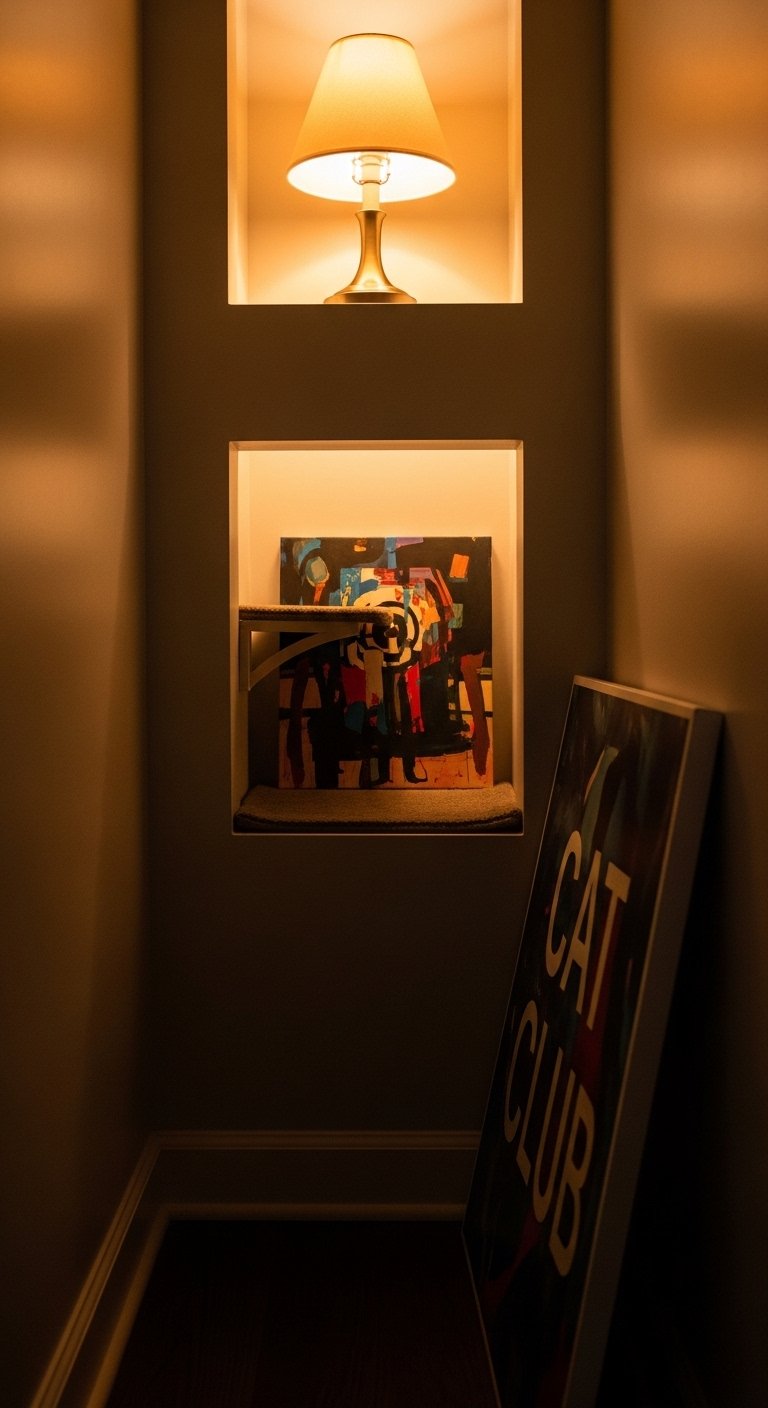
Finally, I built a recessed cubby behind a piece of art so the perch disappears when guests arrive. It keeps the setup discreet for renters or shared spaces. The budget is low if you repurpose an existing recess. People misjudge the depth and make it too shallow. Aim for 10 to 12 inches of usable depth. This idea solves the renter pain point about visible pet gear and pairs nicely with the gallery-ledge and modular cube ideas.
Your Decor Shopping List
Textiles
- Honestly the best $40 I have spent. Plush cat bed cushion, 14-inch round in neutral tones
- Chunky knit throw in cream, 50×60 inches (~$35). Drape over a lower shelf for warmth
Wall Decor & Hardware
- White oak floating shelves, 8-inch depth (~$20-40)
- Sturdy float brackets set, heavy-duty for long runs
Play & Scratching
- Natural sisal rope, 50 ft for wrapping steps (~$12)
- Hammock cat bed kit (~$25-45)
Storage & Modular
- Modular cube shelf, 12×12 inches for climbing and storage
- Magnetic play wall panel, 24×18 inches for interactive setups
Budget Finds
- Brass picture ledges, set of 2 (~$18-30)
- Lean ladder shelf, wood (~$60-120)
Similar at Target or HomeGoods for frames, baskets, and small pillows.
Shopping Tips
White oak beats dark wood in 2026. Design feeds have shifted completely. These white oak floating shelves look current and help cat perches read like built-in decor.
Grab natural sisal rope, 50 ft for $12 and wrap multiple treads. It lasts longer than thinner ropes and looks intentional.
Curtains should puddle or kiss the floor, never hang halfway up. These 96-inch linen panels are right for standard 9-foot ceilings and keep window perches framed.
Lead with safety hardware. Use sturdy float brackets set on runs over 4 feet. Cats take off from shelves unpredictably and anchors matter.
One tall plant beats five small succulents for presence. If you need a low-maintenance option try artificial fiddle leaf fig, 6 ft where you need height without upkeep.
Swap rotating toys weekly. Magnetic play wall panel makes rotation easy and keeps interest high.
Frequently Asked Questions
Q: How far apart should cat shelves be for comfortable climbing?
A: Aim for 12 to 18 inches horizontally and 10 to 14 inches vertically for most adult cats. Athletic cats can handle slightly larger gaps. If you have an older cat, drop vertical spacing to 6 to 8 inches.
Q: Can I install shelves in a rental without damaging walls?
A: Yes. Use heavy-duty removable anchors on drywall for light shelves and keep heavier runs to studs. Consider freestanding leaning units as a no-drill option. Small mistakes are easy to patch with matching paint.
Q: What shelf depth actually works for lounging versus jumping?
A: For lounging, 10 to 14 inches is comfortable. For running and brief perches, 6 to 8 inches is enough. I use 8-inch perches in narrow walls and 12-inch treads where they might double as a bed.
Q: How do I make cat shelves look intentional, not an afterthought?
A: Use a consistent material and a pattern. Try the rule of three and repeat one accent color from the room across shelves. Add one plant or visual element every three shelves to make them read like design, not clutter.
Q: Will my cat use a high shelf if there is no easy route?
A: Not always. Cats prefer continuous paths. Build a sequence of steps or a ramp that connects ground level to the high perch. The staircase-style array and ladder shelf ideas solve this problem.
Q: Are faux plants okay near shelves?
A: Yes. Faux fiddle leaf figs and tall grasses give privacy and height without shedding. Use faux where light is low or plant care is a burden. Real plants work too if you need the air quality boost and have a cat-safe selection.
Q: How do I keep toys from falling into hard-to-reach places?
A: Use shallow ledges and magnetic or Velcro-based toys that attach to a play panel. Position perches a few inches away from corners or tall furniture to prevent lost items.
Q: Can I combine storage with cat shelves without it looking messy?
A: Absolutely. Modular cubes and closed cabinets under climb paths keep toys and litter supplies out of sight. Keep a 3-inch buffer between storage and perches so cats have clear takeoff space.