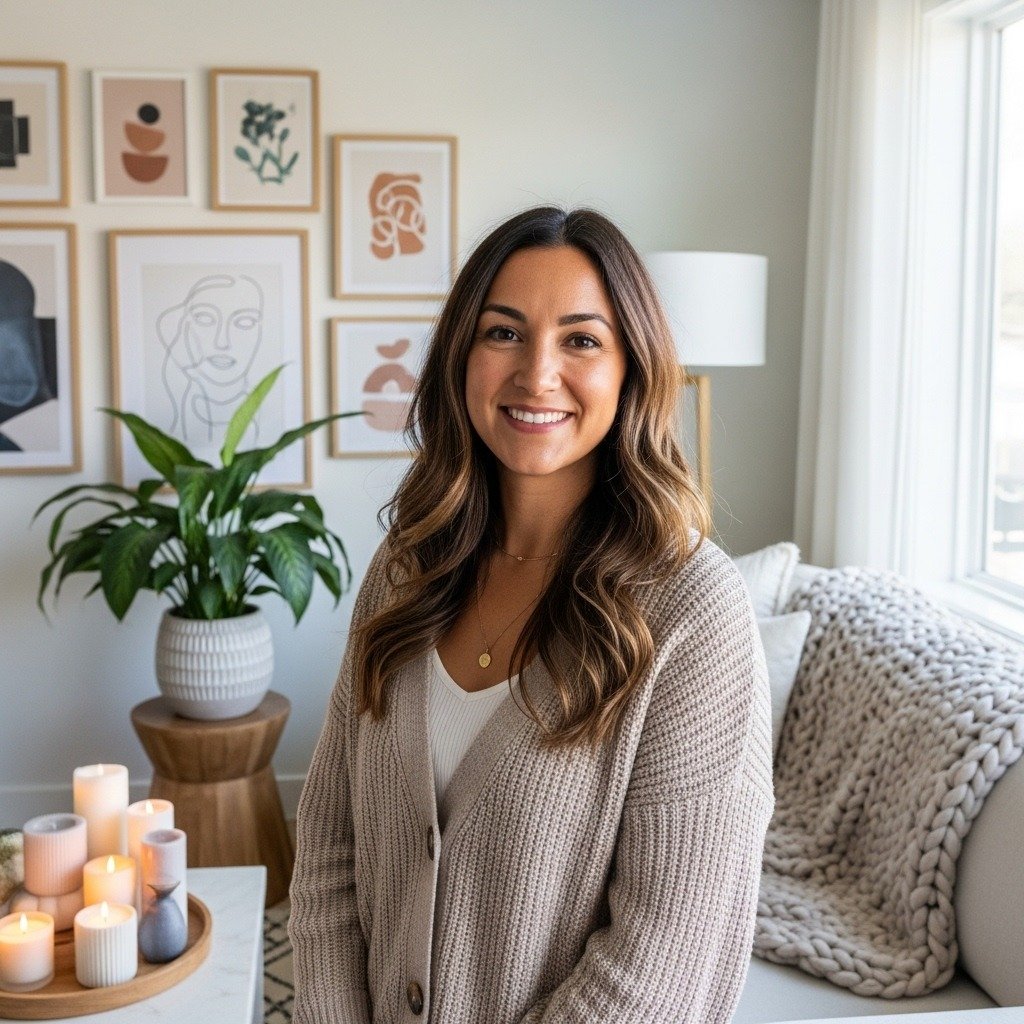

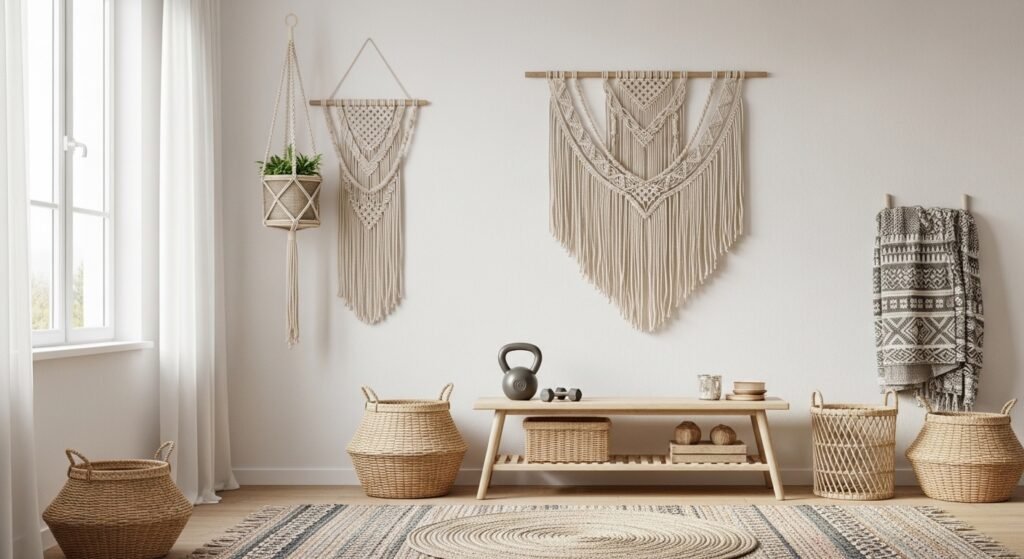
My first attempt at a home workout corner looked like a physiotherapy clinic. All white mats, chrome weights, and zero personality. I added a patterned rug, a plant, and a low woven shelf and suddenly I wanted to use the space. Small decor swaps made the room feel lived in, and that made me actually show up for the workouts.
These ideas lean bohemian and relaxed, mixing natural materials with colorful textiles. Budgets run from under $30 for small touches to $150 for bigger anchors. They work in spare bedrooms, a living room corner, or even a sunny balcony that needs a little warmth.
Layered Rugs to Define Workout Zones and Add Grip
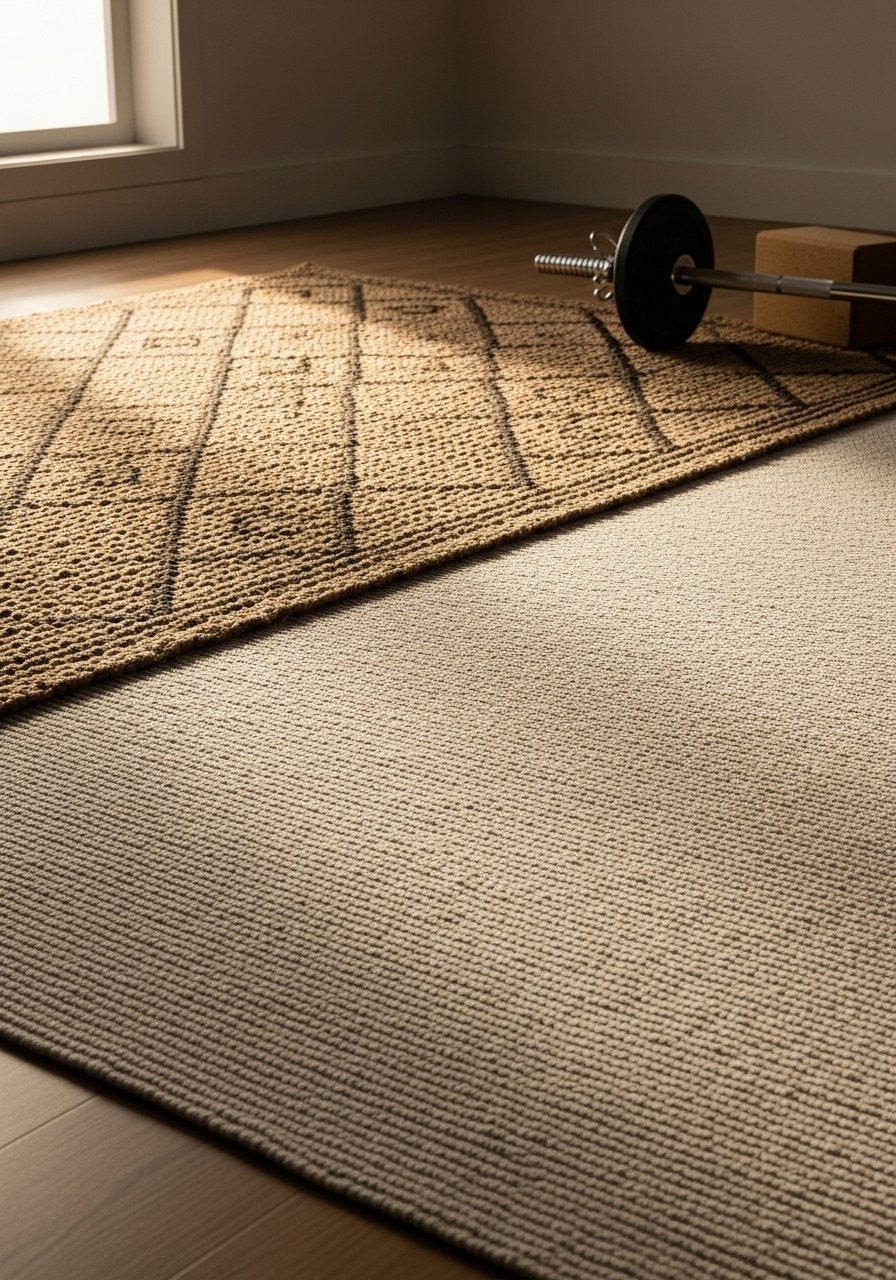
The moment I layered a printed 5×8 jute over my plain 6×9 rug, the floor stopped feeling like an afterthought. Layering creates a soft landing for yoga and keeps equipment from sliding. Aim for the top rug to be about 60 to 75 percent the size of the base rug so the border still shows. This look works in a spare bedroom or living room corner. Budget is usually $40 to $150 depending on material. I use a neutral jute base and a small patterned layer for interest. Try 5×8 jute area rug in natural for an anchored base. Common mistake is using rugs that are too small, which makes the space feel disjointed. If you want extra grip, add a thin rug pad under both layers so they do not shift during workouts.
Woven Storage That Hides Dumbbells and Keeps the Room Calm
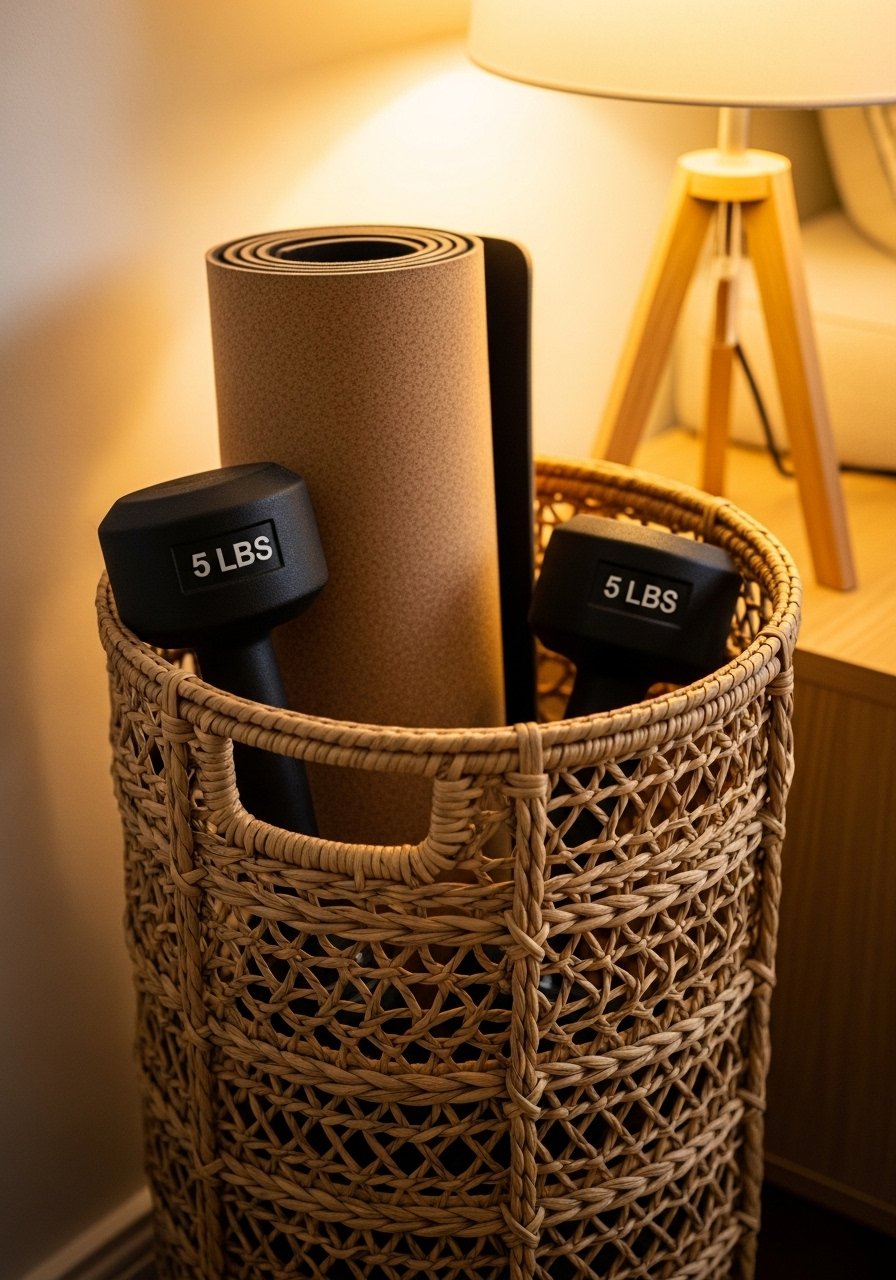
Most home gyms get chaotic because gear has nowhere to live. A single woven basket 18 to 24 inches wide tucks yoga mats, straps, and light weights out of sight while keeping the boho vibe. I use a rattan basket next to my shelf and it makes the whole room read as intentional. Budget for a good basket is $30 to $80. I bought large rattan storage basket with lid and it holds three rolled mats plus a jump rope. People often cram equipment into awkward corners. Measure the mat diameter first, then pick a basket that leaves at least two inches all around so handles fit easily. Pair this with a narrow metal rack for heavier weights to keep visual balance.
Macrame and Textiles for Warmth and Sound Dampening
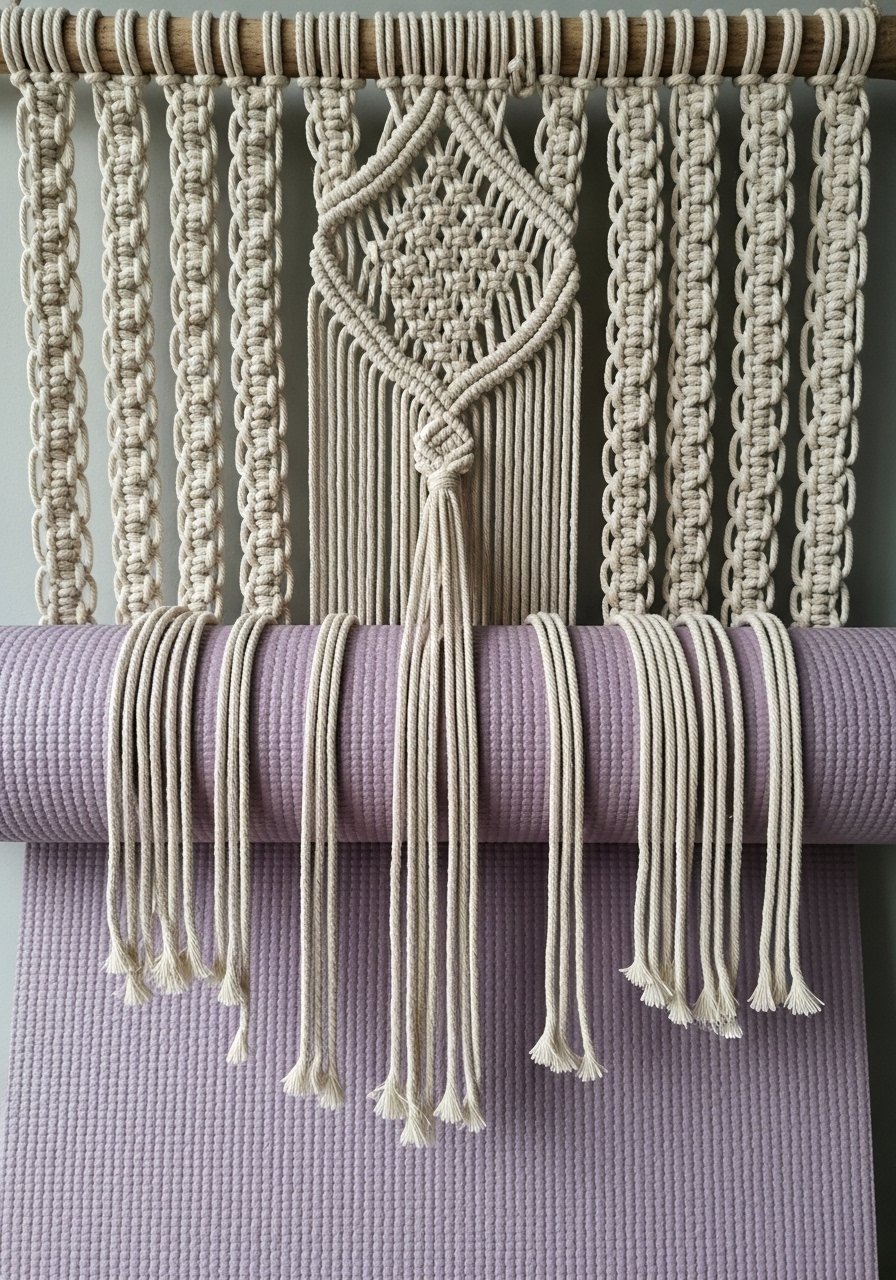
There is a sound difference when you add textiles. A cotton macrame or a thick wall tapestry cuts echo and makes jumping jacks feel less loud to the rest of the house. I hung a 36 by 24 inch macrame piece behind my mat and it softened the room both visually and acoustically. This approach costs $20 to $80 depending on size and material. I recommend cotton macrame wall hanging medium. A common mistake is mixing too many bold patterns. To avoid chaos, keep an 80/20 color ratio where 80 percent of the room is neutral and 20 percent is patterned. One specific tip most guides miss is to mount textiles so the bottom sits about 12 inches above the floor to protect them from dusty shoe scuffs while keeping the visual anchor low.
Full-Length Mirror to Check Form and Brighten the Space
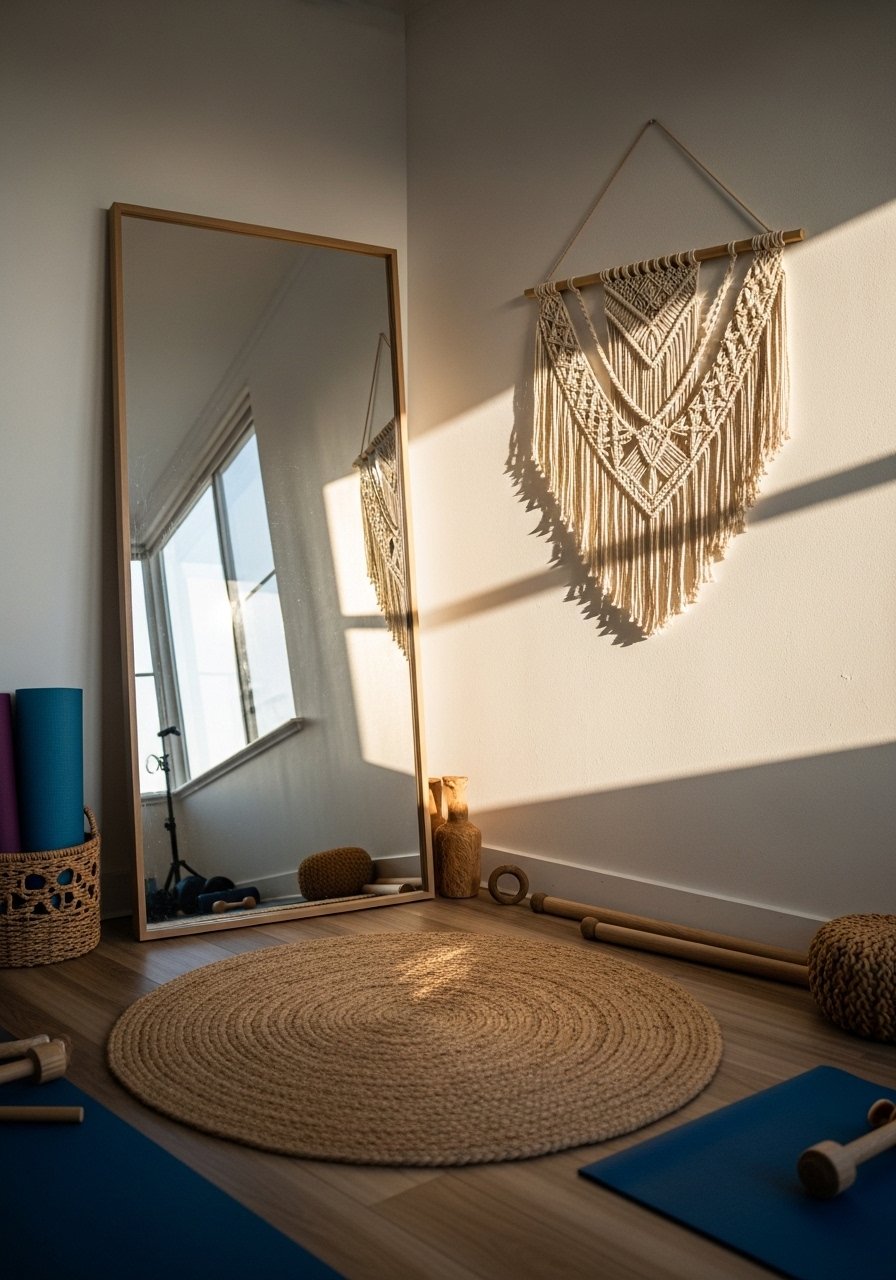
I bought a full-length leaning mirror and my at-home form checks improved overnight. Mirrors also make the room feel twice as bright when placed opposite a window. For a single-user home gym, go for at least 24 by 70 inches so you can see head to toe. Leaning full-length mirror in natural wood is affordable and renter-friendly since it does not require wall anchors. A common error is hanging a mirror too high which crops the feet during squats. Angle the mirror slightly forward if you want the reflection to catch more ceiling light. If you teach or take virtual classes, place the mirror so it frames your camera shot for a more professional look.
A Plant Corner That Improves Air and Focus
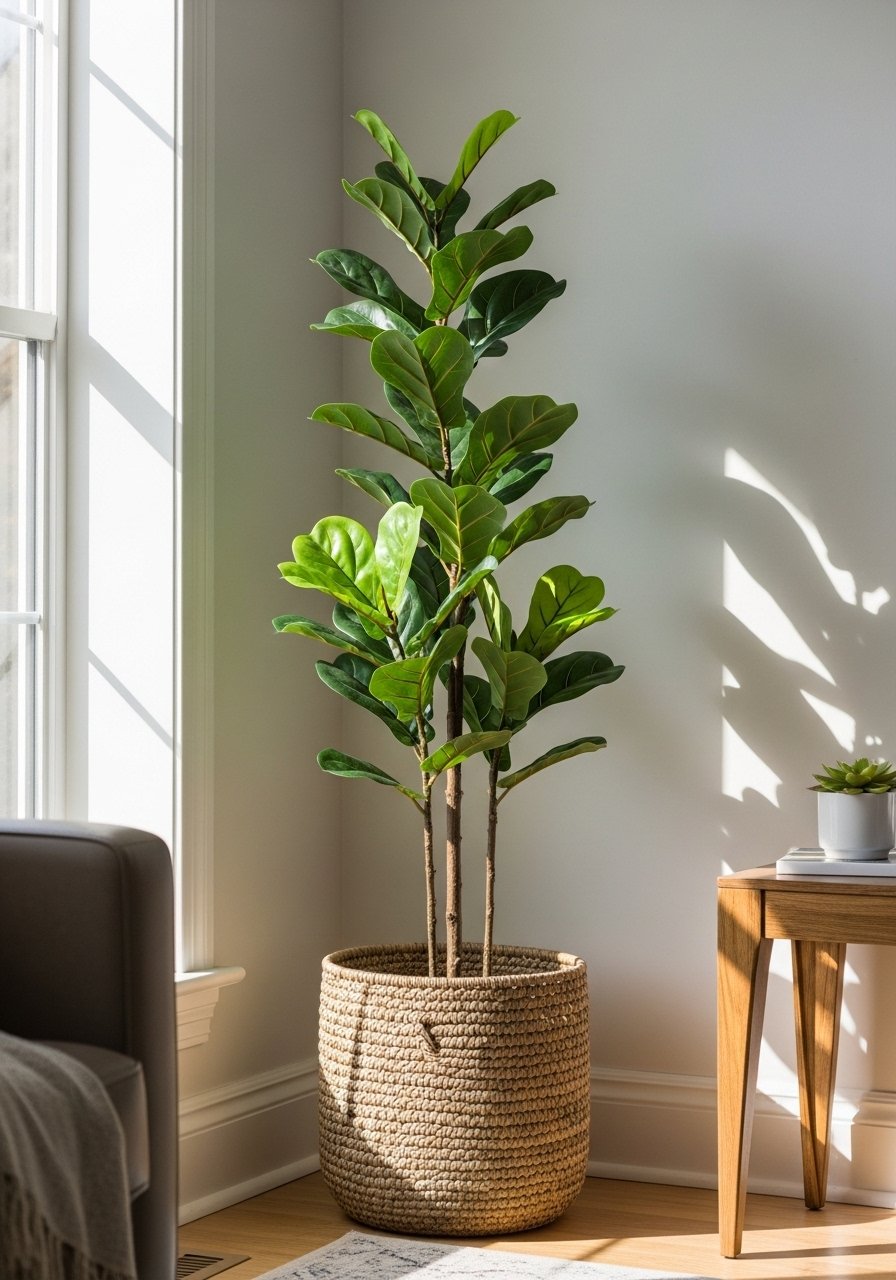
Plants make a room feel alive and less like a workout studio. Bigger is better for impact. I swapped five tiny succulents for a single 6-foot fiddle leaf fig and suddenly the corner felt like part of the room, not an afterthought. Use a weighted planter so tall plants do not tip during vigorous movement. Budget varies from $40 for a faux option to $120 for a live plant and pot. 6-foot artificial fiddle leaf fig in woven basket is low maintenance. A frequent mistake is scattering several small plants. Instead, pick one statement plant to anchor the space, then add a small trailing plant on a shelf for softness. If you do live plants, keep the tallest at least 2 feet from heavy equipment to avoid accidental knocks.
Sheer Curtains to Soften Light and Add Privacy
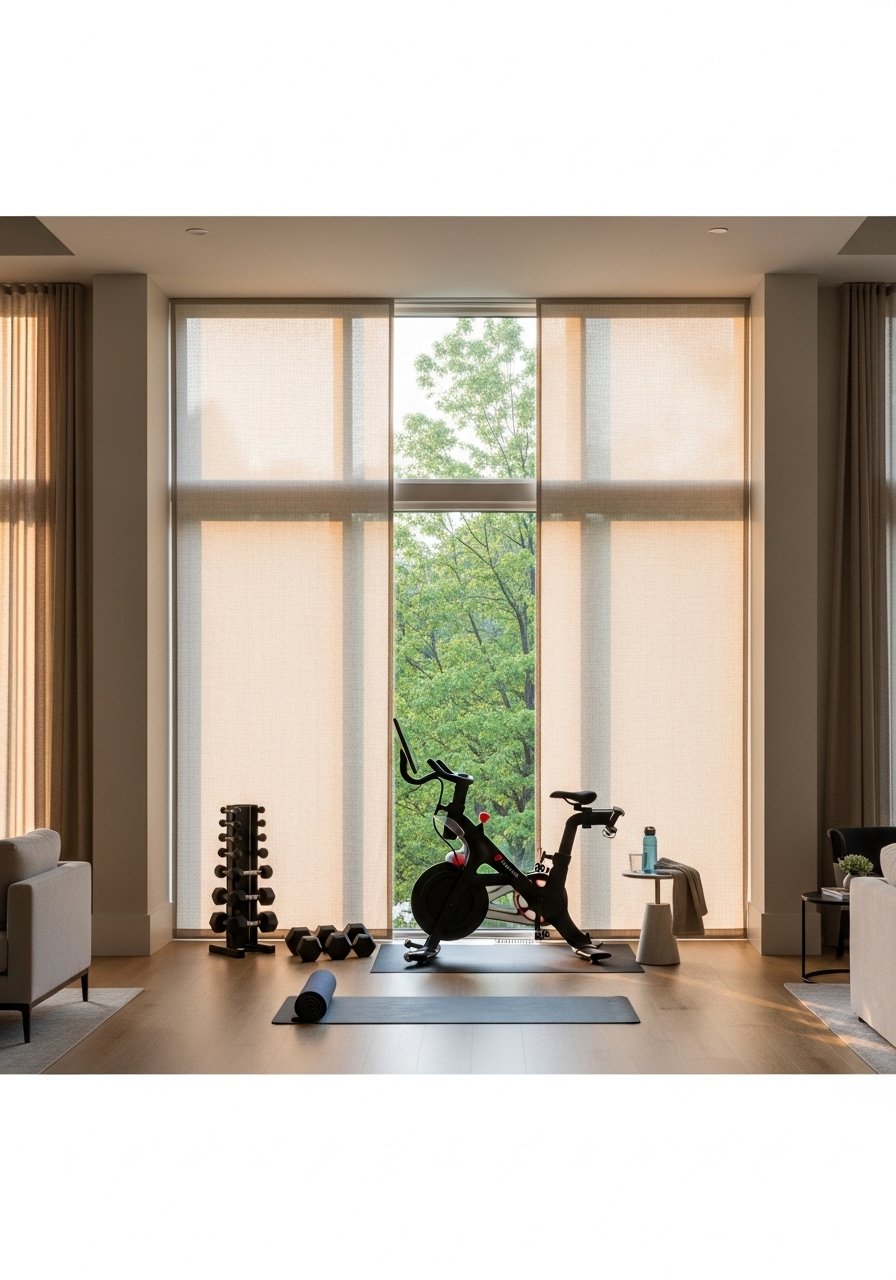
Most people hang curtains at the window frame which makes rooms look squat. I moved my rod 8 to 12 inches above the frame and the ceiling felt higher instantly. Sheer linen panels soften midday glare without making the room dark, which is important for morning workouts. For 8 to 9 foot ceilings, 96-inch panels are a great fit. Try linen-look 96-inch curtain panels in natural. Budget is usually $25 to $60 per panel. A mistake is choosing blackout panels for small spaces, which kills the airy feel. For actual privacy at night, layer a thicker panel behind the sheers that you can close when needed.
Layered Lighting for Late Night Sessions
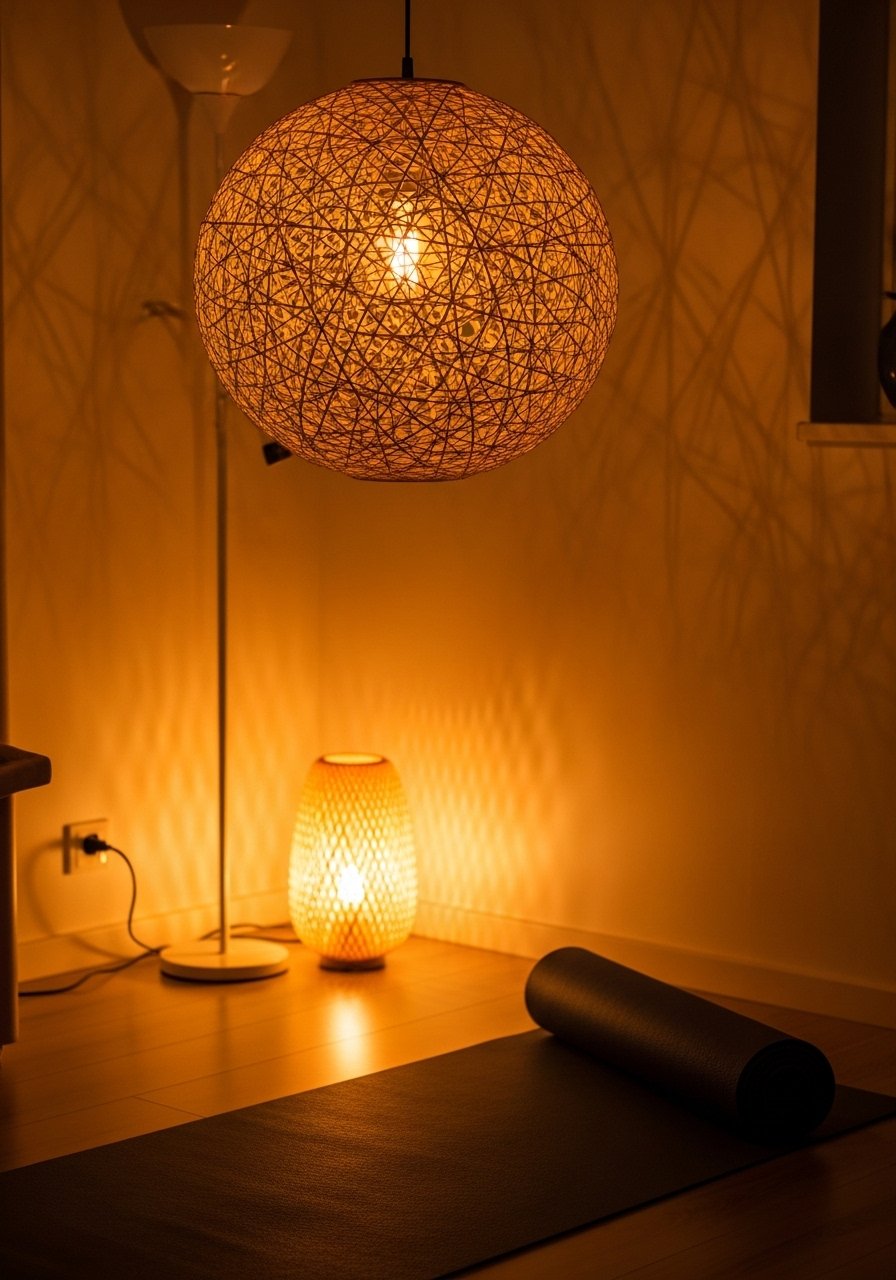
I used to only rely on harsh overhead lights and I hated evening workouts. Adding a floor lamp and a small pendant on separate circuits created three light sources and made the room feel welcoming. Aim for bulbs around 2700K to 3000K for warm light and pick dimmable fixtures when possible. Rattan pendant lamp small pairs well with mid-century floor lamp in brass finish. Expect $40 to $180 depending on the fixtures. A common misstep is relying on a single bright bulb. Use the rule of three for lighting: overhead, task, and accent. Also, avoid glaring bulbs in front of your camera if you take online classes.
Vintage Textile Backdrop for a Meditative Corner
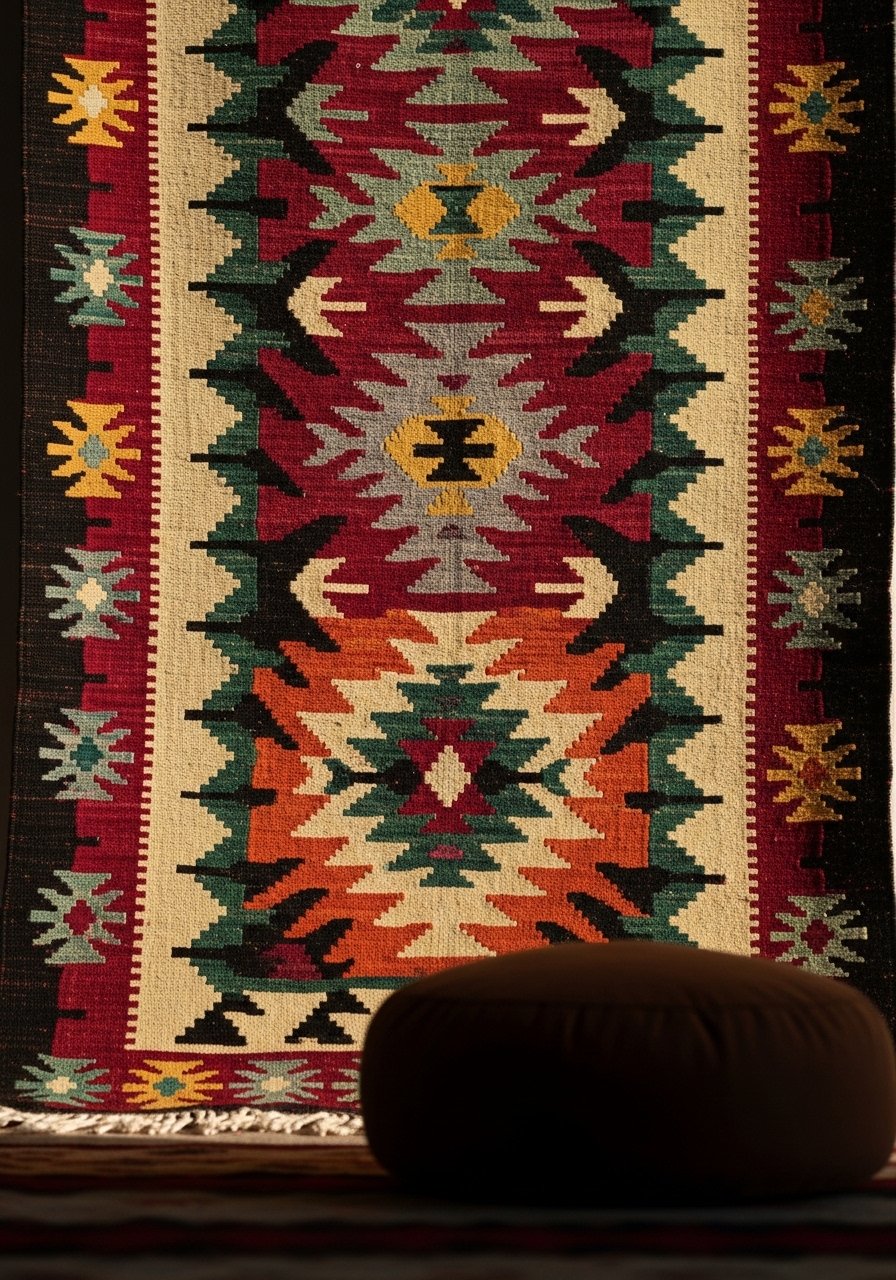
I hung a small kilim as a backdrop for my meditation and it changed how I used the space. A vertical textile creates a focal point and gives you a dedicated spot to sit without visual clutter. For wall coverage, aim for the tapestry to take up about 60 to 70 percent of the wall height where you place it. A 4 by 6 foot rug works well as a vertical piece over a bench or mat. Vintage-style kilim wall tapestry 4×6 looks lived in without the price of an heirloom. Budget can be $40 to $200. People often pick pieces that are too small which reads like a patch. Make sure your textile scale matches the furniture or the human figure using the area.
Display-Friendly Equipment That Feels Like Decor
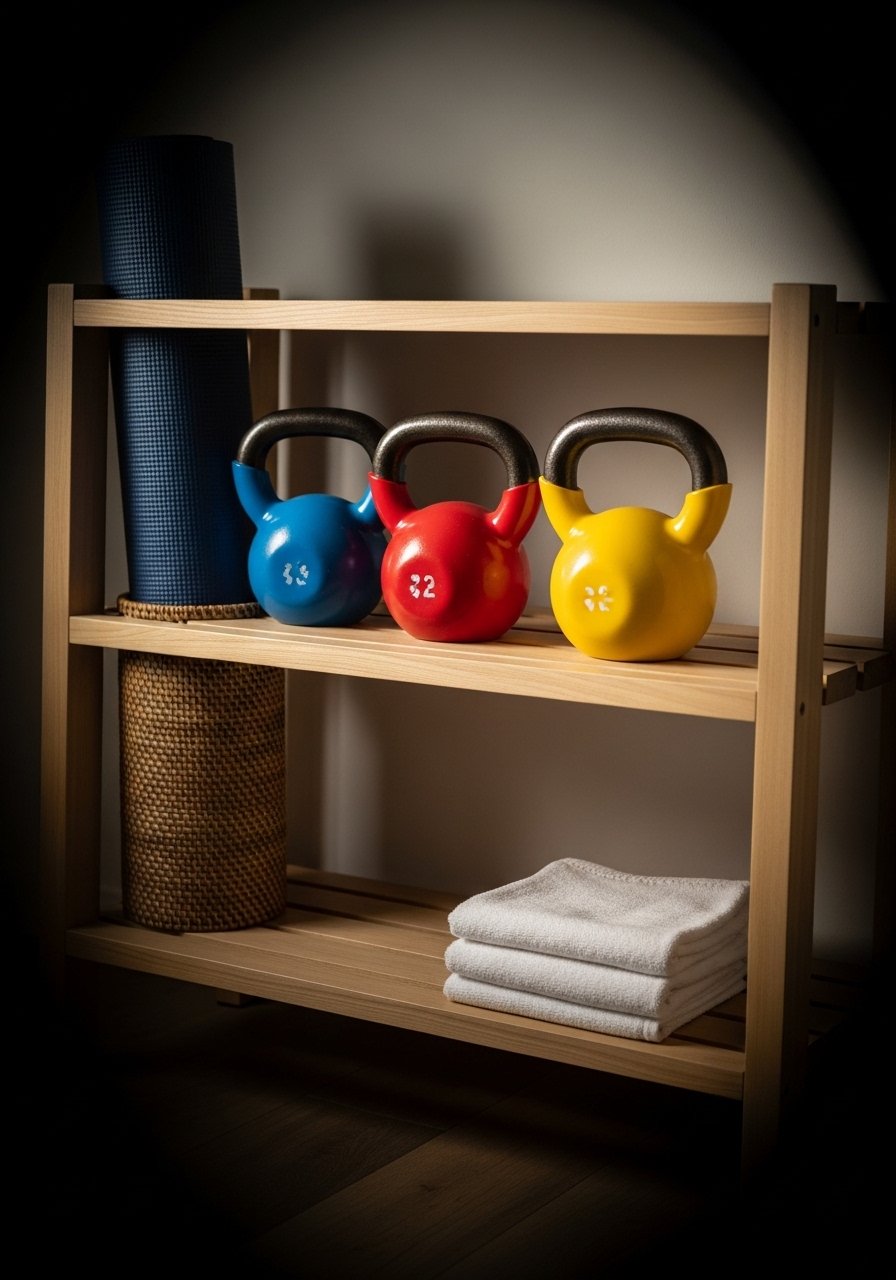
I stopped hiding my kettlebells in a closet and started styling them on a low shelf. Color-coordinated weights double as decor and remind me to pick them up. Use odd numbers for displays, like three kettlebells in a row, to give a natural rhythm. Keep heavier items on the bottom shelf and leave at least six inches of clearance from the wall so you can clean easily. Color neoprene kettlebell set and woven yoga mat carrier make the setup look intentional. A common mistake is mixing too many neon colors. Stick to a palette of two neutrals and one accent color for cohesion. This approach works especially well in an open living room gym where equipment is on show.
Your Decor Shopping List
- Honestly the best $45 I have spent. 5×8 jute area rug in natural for a textured base
- For hiding mats, large rattan storage basket with lid 20-inch (~$50), similar at Target
- Found this while hunting for wall art. Cotton macrame wall hanging 36×24 (~$35)
- For the curtain trick, linen-look curtains 96-inch panels (~$30-45 per panel)
- Leaning full-length mirror 24×70 in light wood (~$120)
- 6-foot artificial fiddle leaf fig in woven basket ($40-90)
- Rattan pendant lamp small (~$60)
- Color neoprene kettlebell set 3-piece (~$70), check HomeGoods for similar finds
Shopping Tips
Grab linen-look curtains 96-inch panels and hang the rod 8 to 12 inches above the frame for instant height.
Buy large rattan storage basket with lid 20-inch for $50. Use it to hide mats and keep the floor tidy.
Keep lighting warm. Mid-century floor lamp in brass finish with a dimmer makes evenings inviting.
If you want greenery without fuss, pick 6-foot artificial fiddle leaf fig in woven basket. One big plant beats five tiny ones in impact.
Go for textiles with scale contrast. Vintage-style kilim wall tapestry 4×6 is a good size for a vertical backdrop.
Frequently Asked Questions
Q: Can I mix boho textiles with sleek cardio equipment without it looking messy?
A: Yes, if you keep an 80/20 color ratio and limit bold patterns to one or two pieces. Use neutral storage and a single patterned rug or tapestry to anchor the look.
Q: What rug size do I actually need for a small home gym?
A: Bigger than you think. For a corner gym, a 6×9 base rug with a 5×8 patterned layer works well. Leave 3 to 6 inches of base rug visible around the top layer.
Q: How do I prevent my equipment from making the room feel cluttered?
A: Store small gear in a single large woven basket and display heavier items on a low shelf. Use odd-number groupings like three kettlebells for a styled look.
Q: Should I use real or faux plants in a workout space?
A: Both work. Real plants improve air if you can care for them. Faux plants like 6-foot artificial fiddle leaf fig in woven basket give the same visual anchor with zero maintenance.
Q: Where should I place a mirror for virtual classes?
A: Position the mirror opposite or adjacent to the camera so you can see your form without glare. A 24×70 mirror gives full-body coverage for most people.