
Small apartment decor is all about making limited square footage feel open, comfortable, and practical. When space is tight, every choice matters—from furniture size to wall color to how light moves through the room. The good news is you don’t need major changes or big spending to see a real difference. With renter-safe ideas, clever layouts, and smart styling, even the smallest apartment can feel calm and functional. Below are 22 smart small apartment decor ideas that focus on real-life solutions you can use right away.
1. Light Neutral Walls That Open Up the Room
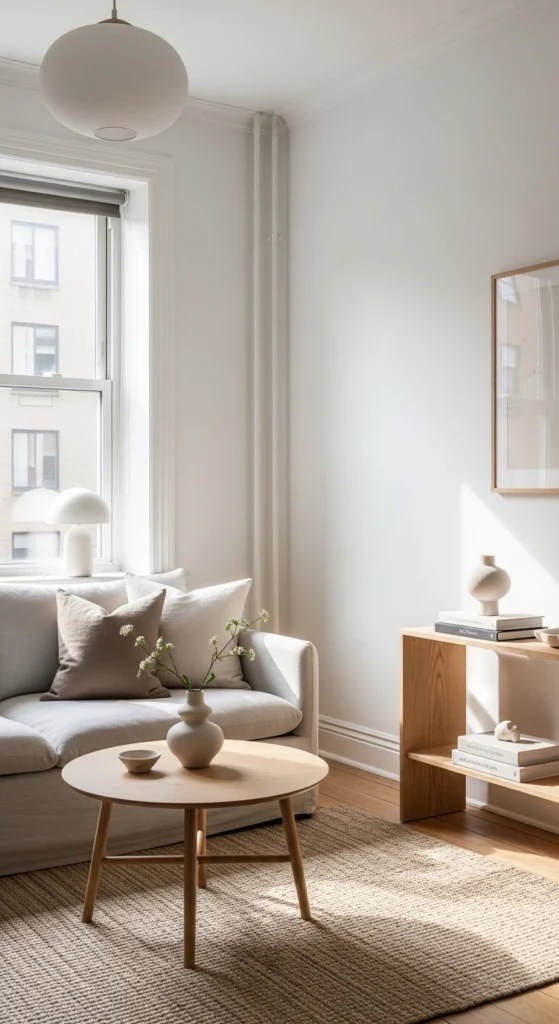
Light colors help small apartments feel open and calm. White, beige, and soft greige reflect natural light instead of absorbing it. This makes walls feel farther apart. You don’t have to repaint the whole apartment. Even one light accent wall behind a sofa or bed can change how the room feels.
If painting isn’t allowed, use peel-and-stick wallpaper in light tones. Choose subtle textures instead of bold prints. Keep trim and doors close to the wall color for a smooth look. This reduces visual breaks.
Budget tip: Sample-size paint cans are enough for small walls. For rentals, removable wallpaper panels can cover worn areas without damage. Pair light walls with light curtains and neutral rugs to keep the space feeling calm and open.
2. Mirrors Placed Across From Windows
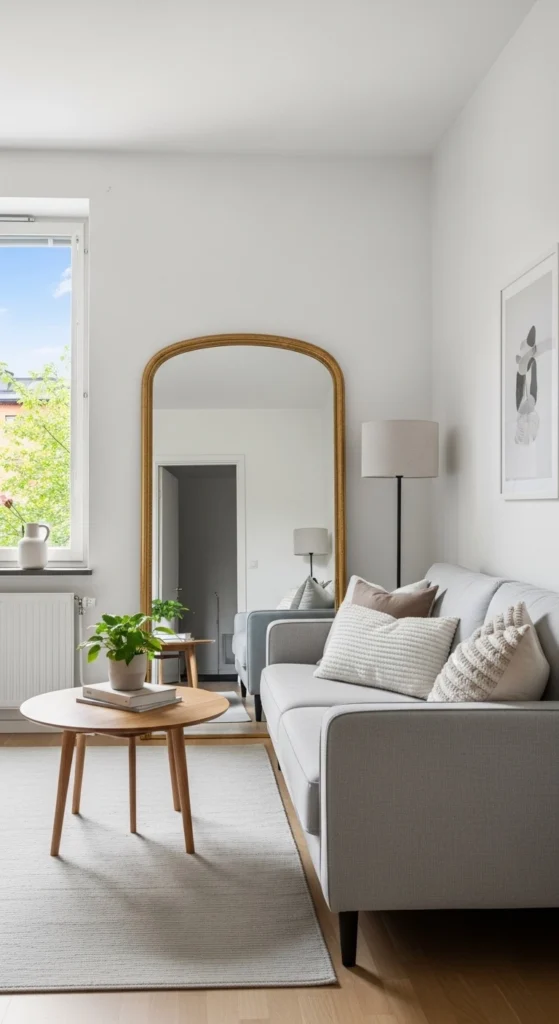
Mirrors help small spaces feel deeper. When placed across from a window, they bounce light around the room. This simple trick makes dark apartments feel brighter without new lighting.
Choose a mirror with a thin frame or no frame at all. Large mirrors work better than small ones. Leaning mirrors are renter-friendly and easy to move. In dining areas, mirrors also help the room feel wider.
Budget tip: Thrift stores often have oversized mirrors at low prices. Remove heavy frames if needed. Even mirrored closet doors can be styled by keeping the area around them clean and minimal.
3. Sofa Beds for Dual-Purpose Living
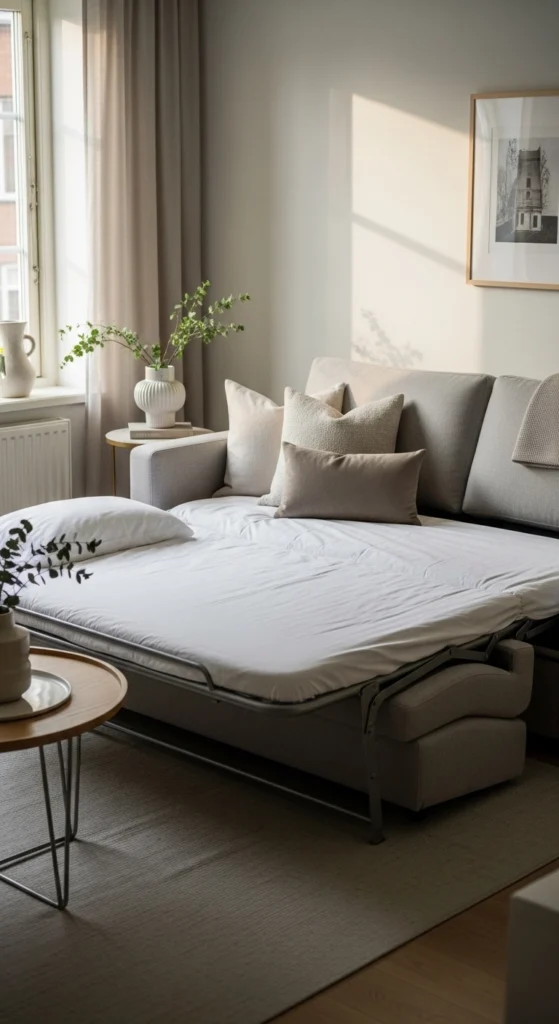
A sofa bed turns one room into two. During the day, it works as seating. At night, it becomes a sleeping space. This is ideal for studios or one-bedroom apartments.
Look for clean-lined designs with slim arms. Bulky sofas eat up floor space. Neutral fabric keeps the room from feeling busy. Add throw pillows instead of large accent chairs.
Budget tip: Many sofa beds now come in flat-pack designs that cost less and fit through narrow doors. Use a storage bench nearby to hold extra bedding.
4. Storage Ottomans That Hide Clutter
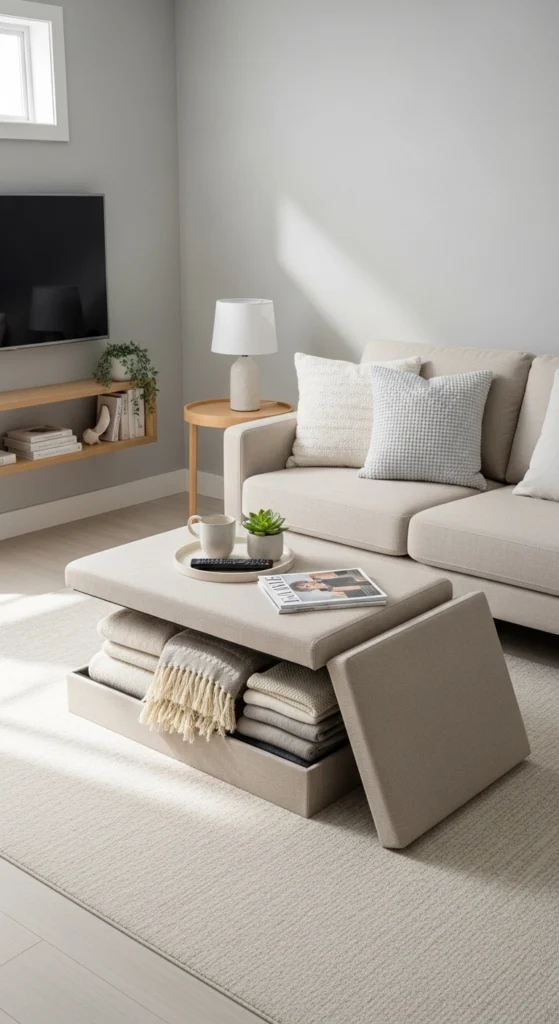
Storage ottomans work hard in small apartments. They hold blankets, books, or daily clutter while acting as seating or a coffee table. This keeps surfaces clear.
Choose square or rectangular shapes for better storage. Stick to neutral colors so they blend with other furniture. Trays on top can hold cups or remotes.
Budget tip: Fabric storage cubes cost less and work the same way. Place two side by side for a longer coffee table look.
5. Floating Shelves for Vertical Storage
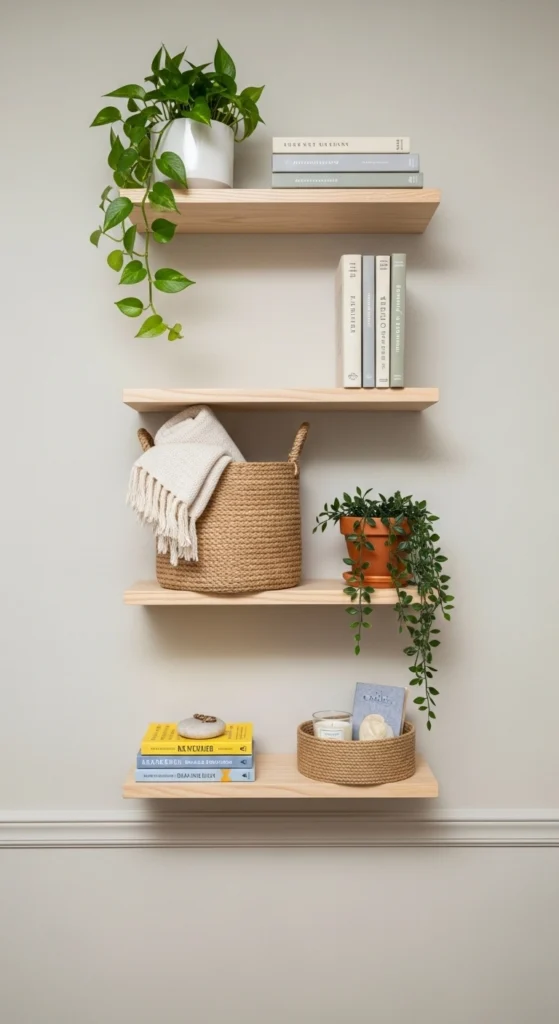
Floating shelves use wall space without taking floor space. They are great for books, baskets, and decor. Keeping items off the floor makes rooms feel larger.
Install shelves higher on the wall to draw the eye upward. Leave space between shelves to avoid a crowded look. Use matching baskets for storage.
Budget tip: Peel-and-stick shelf brackets are renter-safe. Lightweight shelves work best. Keep styling simple with a mix of useful and decorative items.
6. Area Rugs to Define Zones
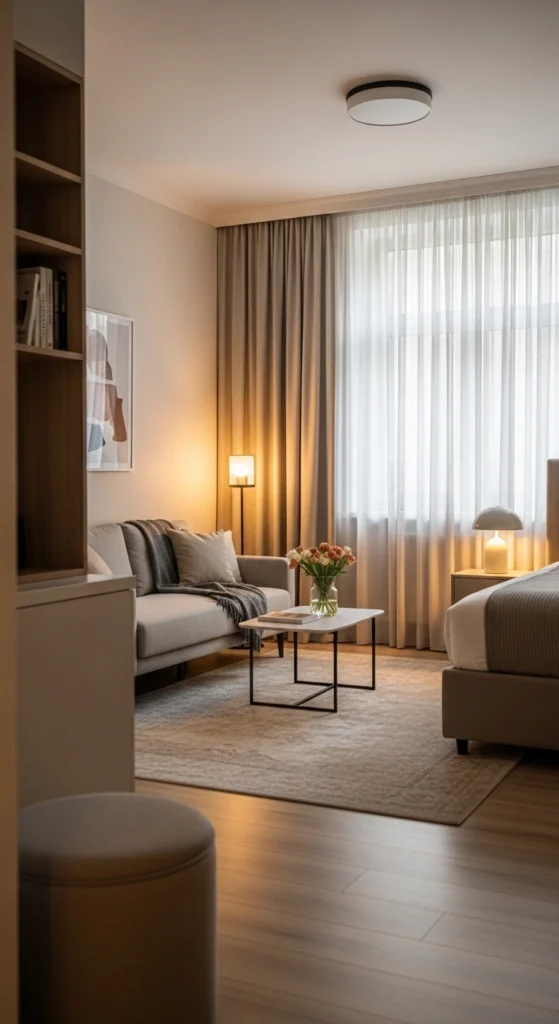
Area rugs help divide open layouts. In studios, rugs separate sleeping, living, and dining areas without walls. This makes the space feel organized.
Choose rugs that fit the furniture instead of floating in the middle. Light colors with subtle patterns work best. Avoid tiny rugs that break up the room.
Budget tip: Flat-weave rugs are affordable and easy to clean. Layer a smaller rug over a neutral base for warmth without clutter.
7. Plants That Add Life Without Bulk
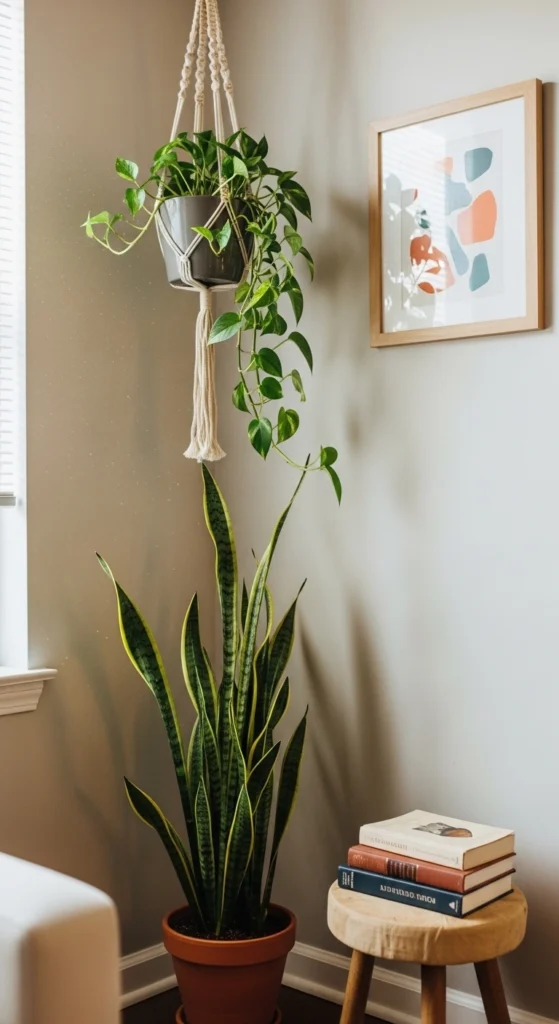
Plants add color and softness to small apartments. They help rooms feel calm without filling space. Tall plants work better than wide ones.
Place plants near windows or corners. Hanging planters free up surfaces. Stick to easy-care options like snake plants or pothos.
Budget tip: Start with small plants and let them grow. Simple terracotta pots are low-cost and fit most styles.
8. Gallery Walls That Draw the Eye Up
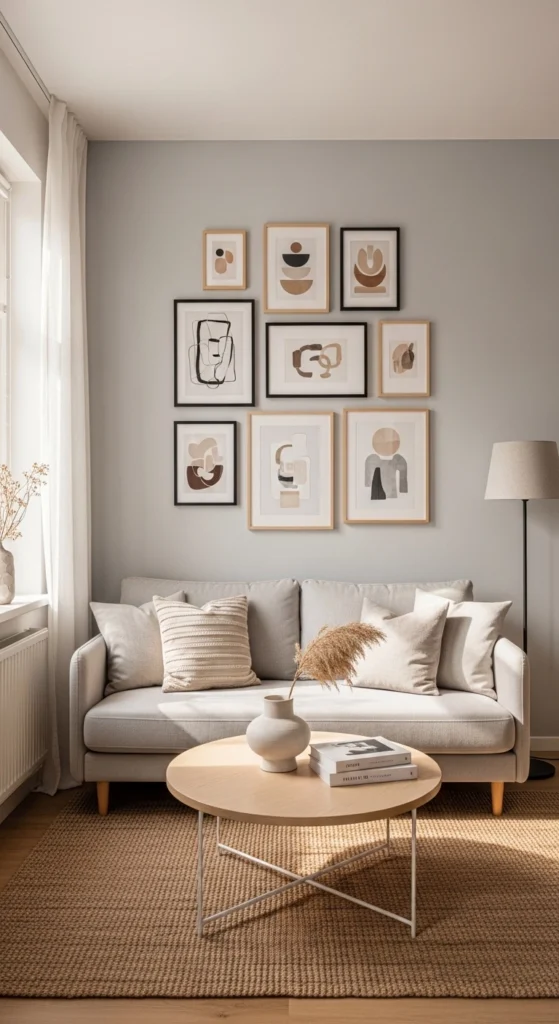
Gallery walls add personality while drawing attention upward. Vertical layouts help ceilings feel taller. Keep frames similar in color for a clean look.
Plan the layout on the floor first. Stick to a limited color palette. Avoid overcrowding the wall.
Budget tip: Use printable art or personal photos. Lightweight frames with adhesive hooks are renter-safe.
9. Peel-and-Stick Wallpaper for Quick Change
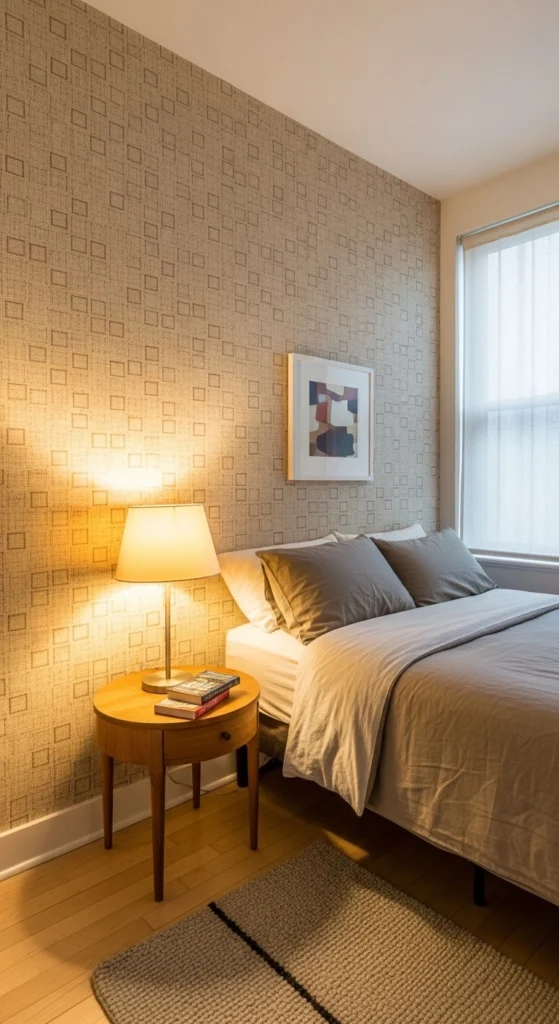
Peel-and-stick wallpaper adds style without long-term commitment. It works well on one wall or in small areas like entryways.
Choose light patterns or textures. Avoid dark, busy prints that shrink the room. Smooth application keeps it looking neat.
Budget tip: Use leftover rolls on shelves or closet walls for a finished look.
10. Modular Furniture That Adapts
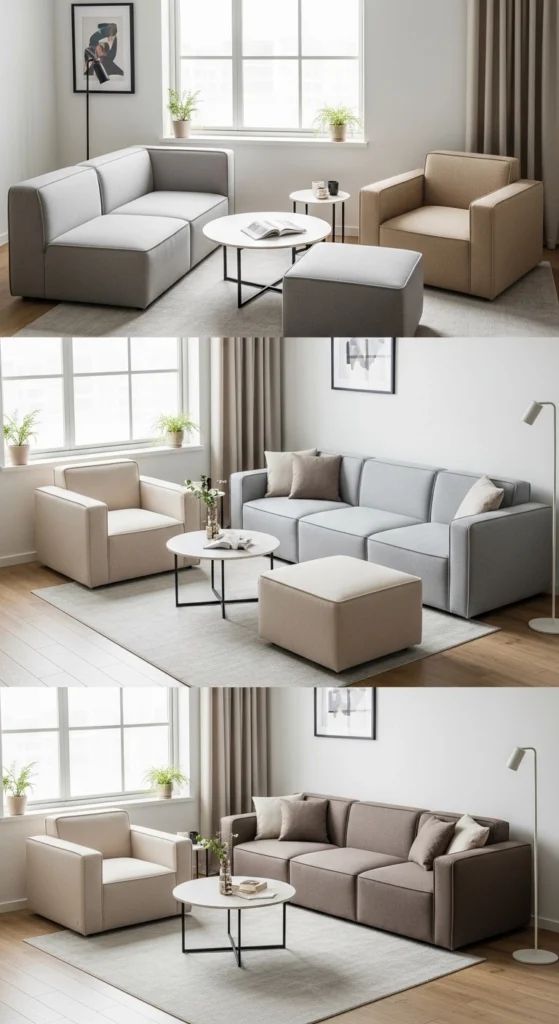
Modular furniture adjusts as your routine changes. Sections can be moved or removed as needed. This works well in growing households or rentals.
Look for simple shapes. Neutral colors help pieces mix easily. Keep layouts open.
Budget tip: Start with one or two modules and add later. Floor cushions can act as extra seating.
11. Wall Sconces to Free Floor Space
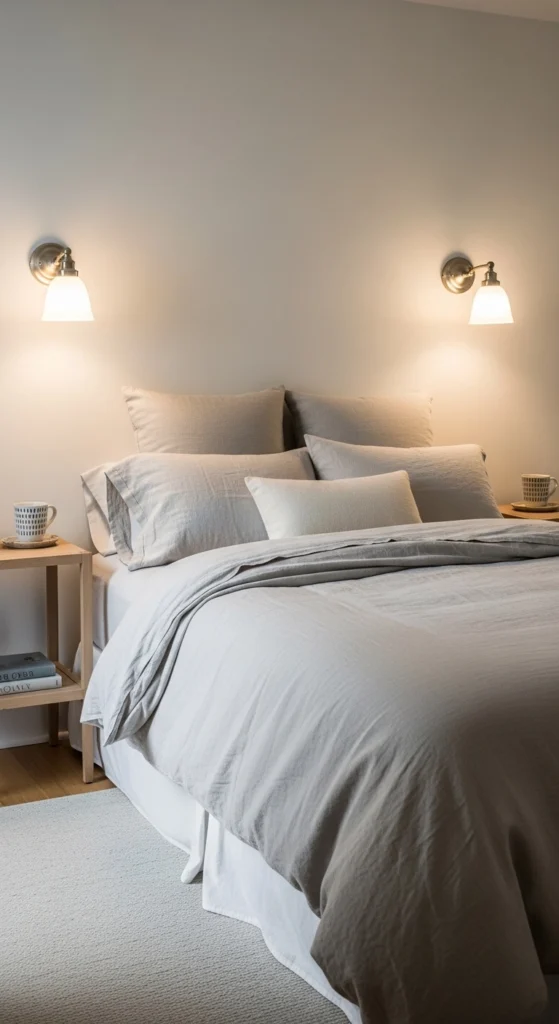
Wall sconces replace table lamps and clear nightstands. This frees space for daily items and keeps the room tidy.
Plug-in sconces are renter-friendly. Place them slightly above eye level for comfort.
Budget tip: Simple metal sconces cost less and match many styles.
12. Hidden Storage Under the Bed
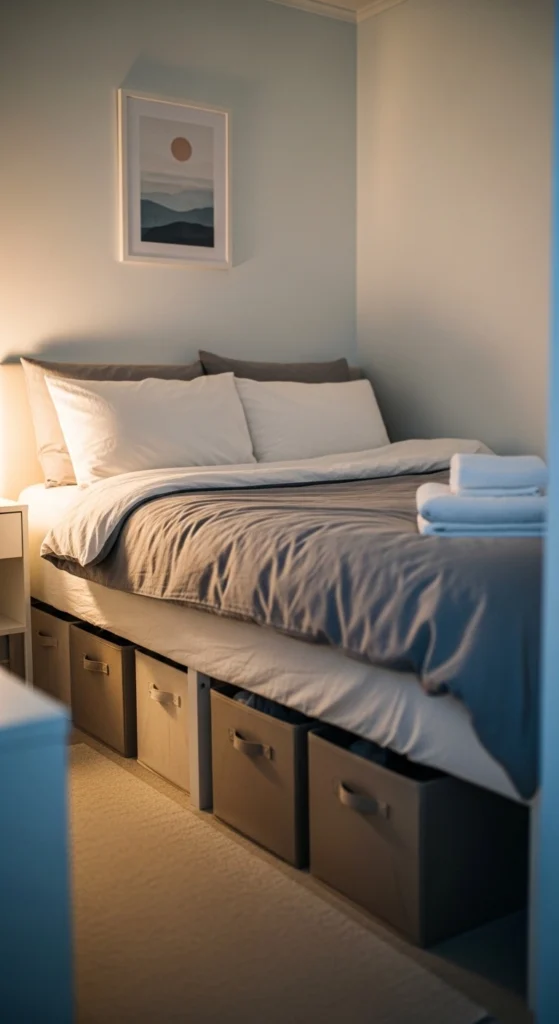
Under-bed storage keeps seasonal items out of sight. Use low-profile bins with wheels for easy access.
Choose bins in matching colors. This keeps things organized and quiet visually.
Budget tip: Fabric storage bags cost less and slide easily under beds.
13. Zoning With Room Dividers
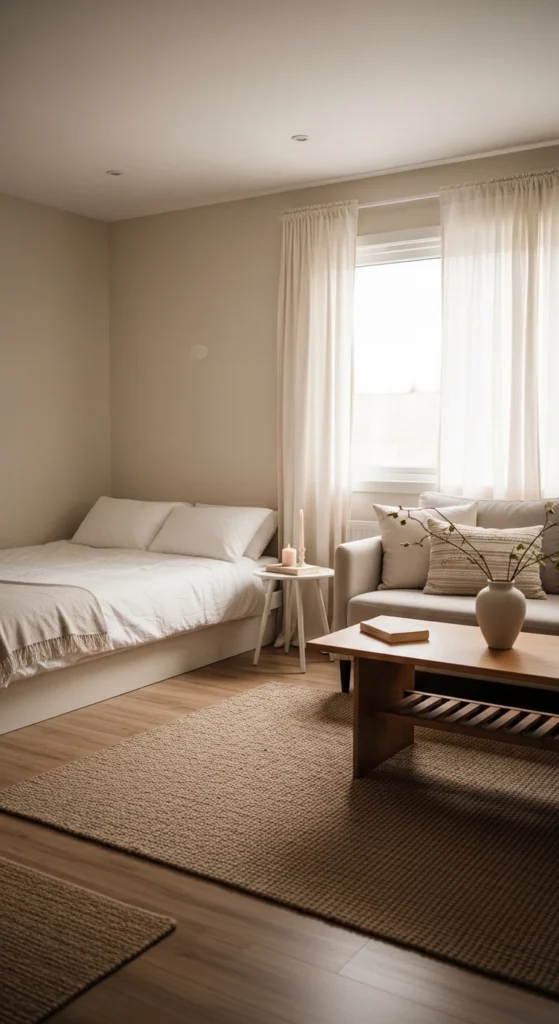
Room dividers help create privacy without walls. Open dividers keep light flowing.
Use folding screens, shelves, or curtains. Avoid solid panels that block light.
Budget tip: Curtain rods and sheer panels cost little and are easy to remove.
14. Earth Tones for Warmth
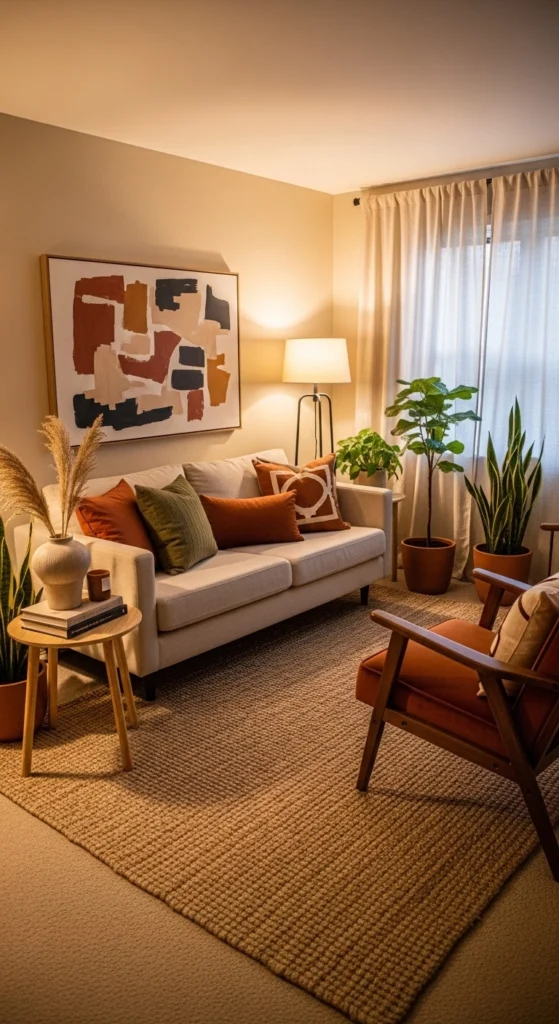
Earth tones bring warmth without closing in the space. Think clay, sand, and soft brown shades.
Use them in textiles like pillows or throws. Balance with light walls.
Budget tip: Swap pillow covers instead of buying new furniture.
15. Murphy Beds for Flexible Rooms

Murphy beds turn bedrooms into workspaces. When folded, the room feels open.
Modern designs blend into cabinetry. Use nearby storage to keep bedding organized.
Budget tip: Wall-mounted fold beds are cheaper than full cabinetry systems.
16. Benches Instead of Chairs

Benches take up less visual space than chairs. They tuck under tables easily.
Use benches with storage for extra function. Keep designs simple.
Budget tip: Wooden benches are affordable and easy to style.
17. High Storage in Entryways
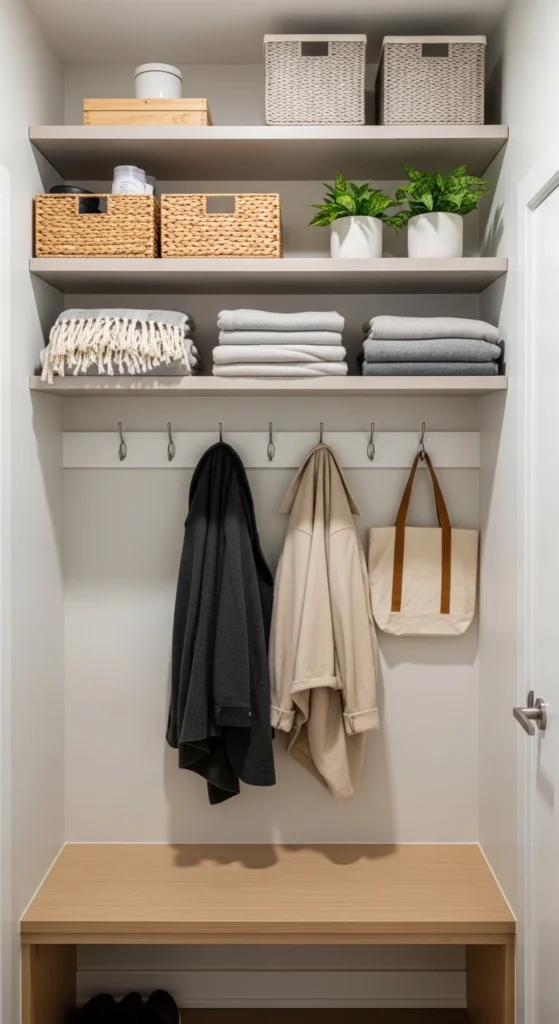
High storage keeps floors clear. Use shelves above doors or hooks high on walls.
This works well for bags, hats, or shoes in baskets.
Budget tip: Basic wall hooks cost little and install quickly.
18. Color Zoning With Paint
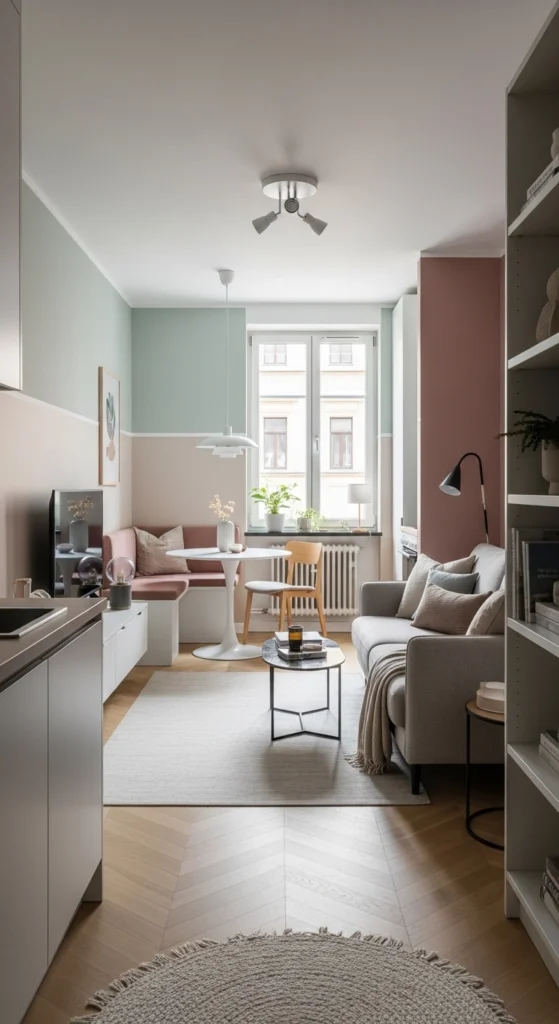
Color zoning separates areas without walls. Soft shades work best.
Paint half-walls or corners. Keep colors light and related.
Budget tip: Use leftover paint samples for small sections.
19. Sustainable Decor Choices

Sustainable decor saves money and space. Reused furniture often fits small rooms better.
Choose wood, cotton, and metal items. Keep finishes simple.
Budget tip: Secondhand furniture stores offer solid pieces at low cost.
20. Textured Walls Without Construction
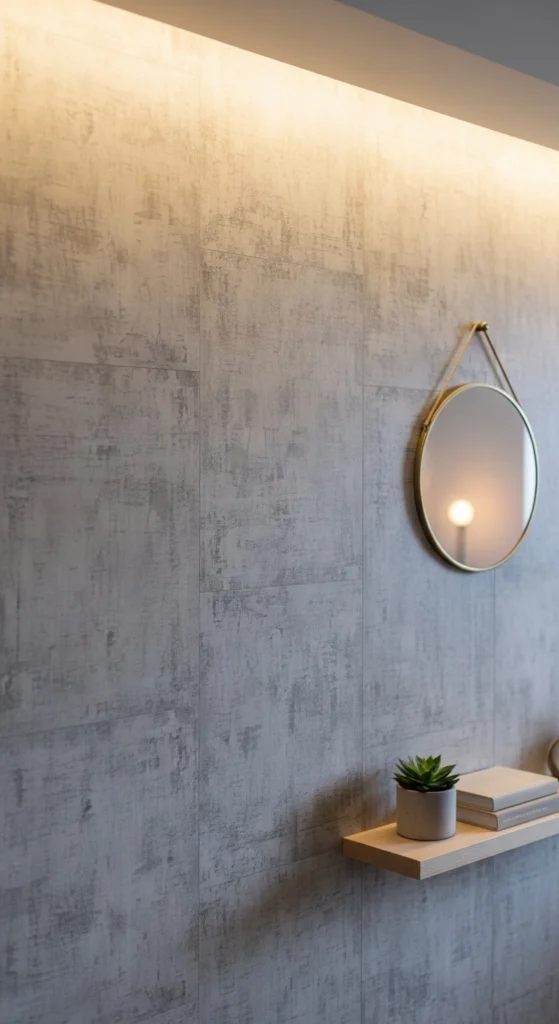
Textured walls add interest. Peel-and-stick panels work well.
Stick to light textures. Avoid heavy patterns.
Budget tip: Use panels behind beds or sofas only.
21. Floor Cushions for Flexible Seating
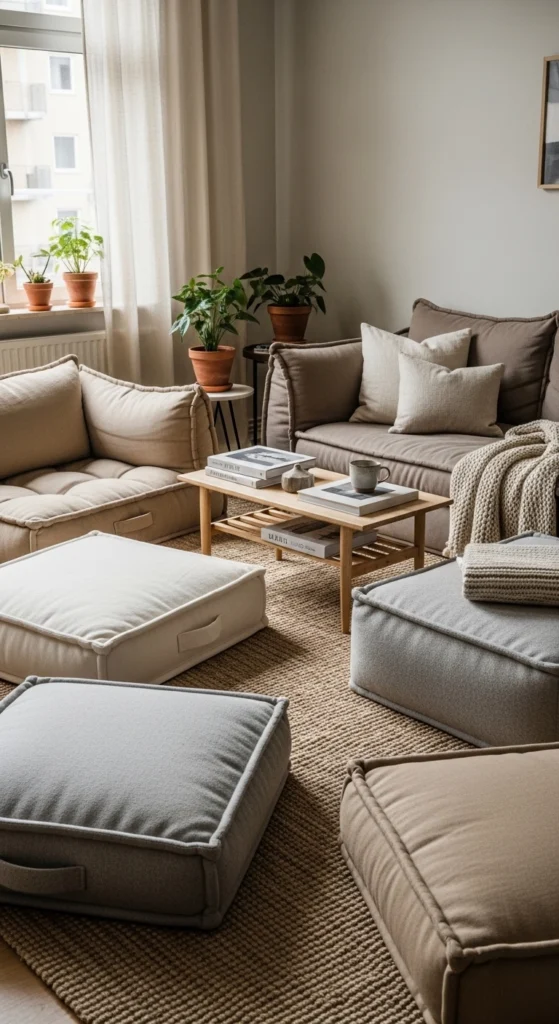
Floor cushions add seating without crowding. They store easily.
Choose firm cushions in neutral tones.
Budget tip: Use outdoor cushions indoors for durability.
22. Minimal Decor With Purpose
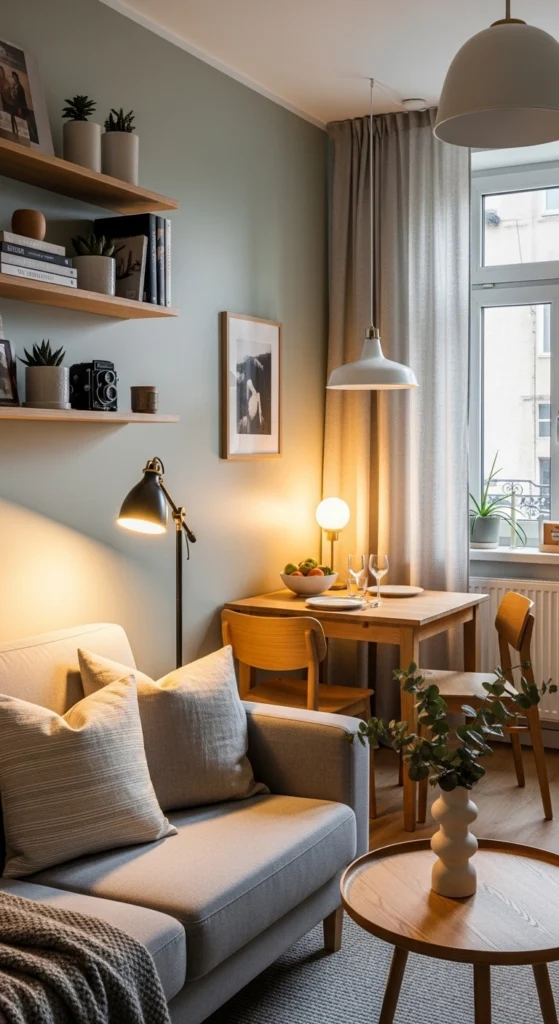
Less decor makes rooms feel larger. Choose pieces that serve a role.
Keep surfaces clear. Rotate decor seasonally.
Budget tip: Store extras in bins and swap when needed.
Conclusion
Small apartments work best when every item earns its place. Light colors, smart storage, and flexible furniture can change how your home feels without heavy spending. Focus on vertical space, simple layouts, and renter-safe updates. Try one or two ideas first, then build slowly. Even small changes can make daily life feel calmer and more comfortable.
