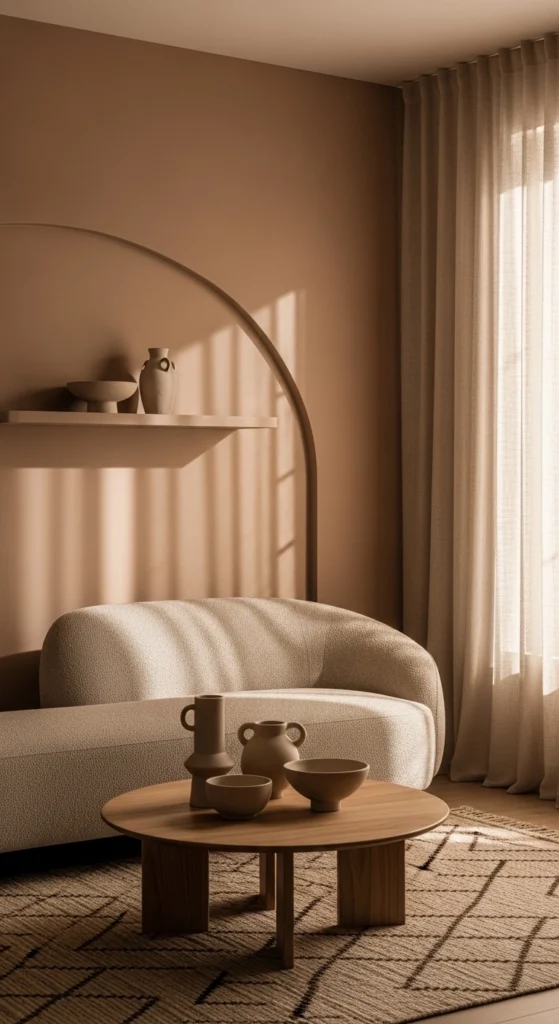
Minimalist decor is no longer about stark rooms and icy whites. Today, it’s about creating calm through warmth, intention, and restraint. People searching for minimalist decor ideas want spaces that feel grounded, easy to live in, and visually quiet—especially in small apartments. This list focuses on simple changes that reduce visual clutter without stripping personality away. Each idea is practical, affordable, and designed for real homes, not showrooms. You don’t need renovations or designer furniture. Small choices, repeated consistently, can make a space feel calmer and more livable.
1. Choose Warm Neutral Color Palettes
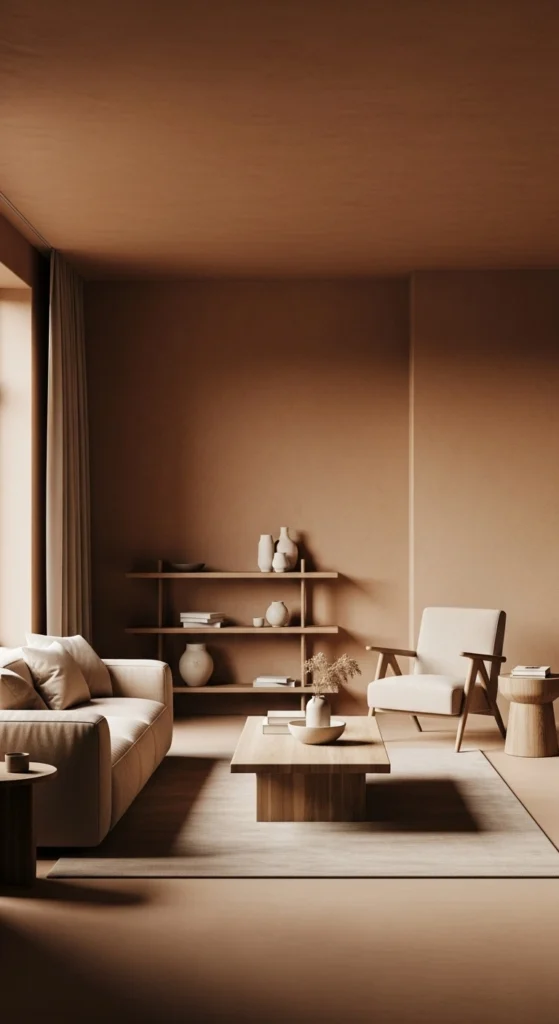
Warm neutrals calm a room without draining personality. Shades like mocha, clay, sand, and soft beige reduce harsh contrast. They allow the eye to rest. Start with paint or removable wallpaper if renting. Even one warm-toned wall can shift the mood.
Stick to two or three tones only. Walls, furniture, and textiles should stay in the same family. This limits visual noise. Use affordable paint testers first. For furniture you already own, add warm slipcovers or throws.
DIY tip: Mix white paint with a small amount of beige to soften bright walls. Thrifted frames painted in matching tones help unify decor. The goal is consistency, not perfection.
2. Replace Sharp Furniture With Soft Curves
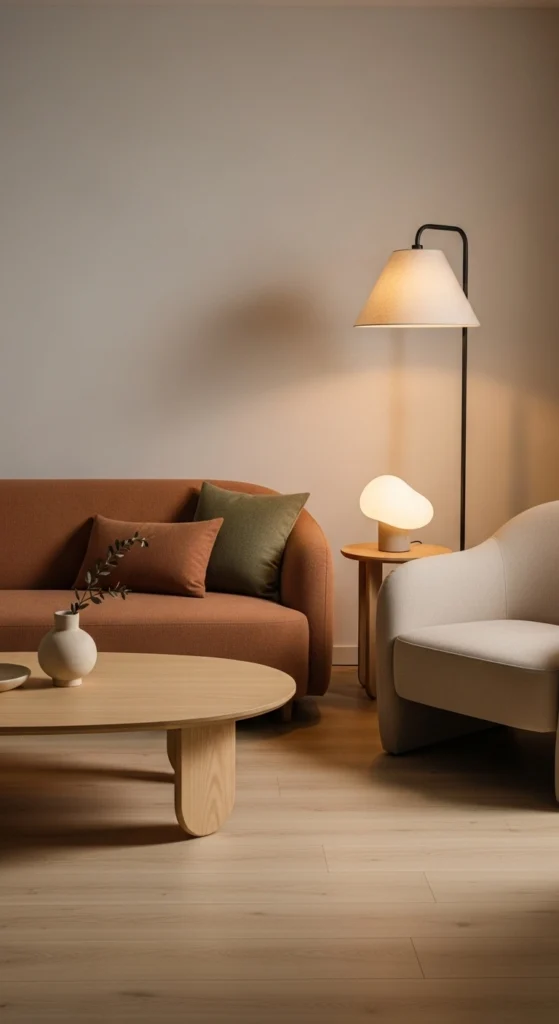
Hard edges create visual tension. Curved furniture slows the eye. Rounded sofas, oval tables, and arched floor lamps feel calmer in small spaces.
You don’t need all new furniture. Add one curved piece as an anchor. Even a round mirror or arched lamp helps. Balance it with simple straight pieces so the room stays grounded.
Budget tip: Look for secondhand rounded tables or DIY sharp edges with fabric poufs. Foam corner covers under slipcovers soften existing furniture without tools.
3. Limit Each Room to One Main Texture
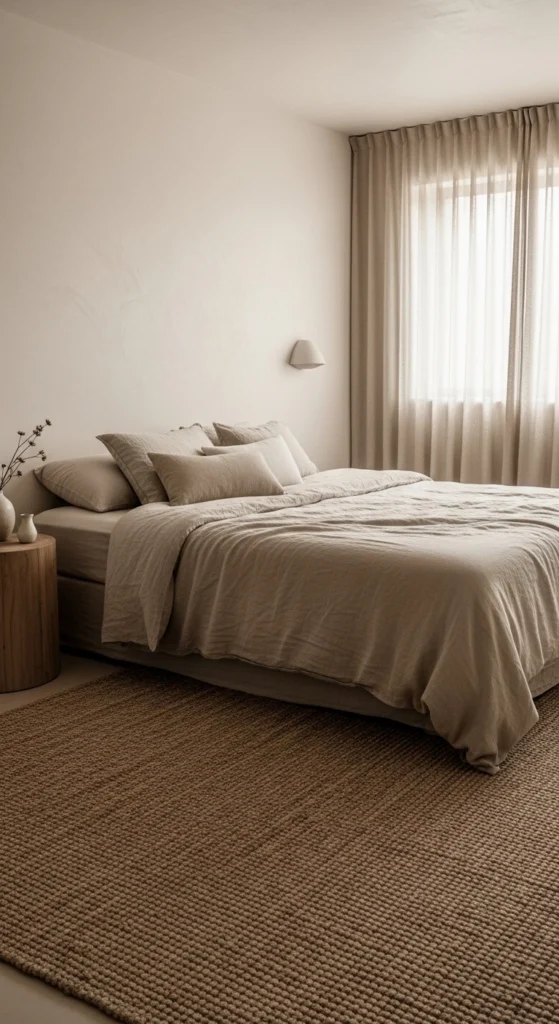
Too many textures create visual clutter. Choose one main texture per room—linen, wood, or woven fibers. Let everything else stay smooth.
In a bedroom, linen bedding can be the hero. Keep furniture matte and simple. In a living room, wood grain may lead while textiles stay plain.
DIY tip: Replace mixed throw pillows with matching covers. Store extras out of sight. This small step instantly quiets the space.
4. Create Clear Zones in Small Apartments
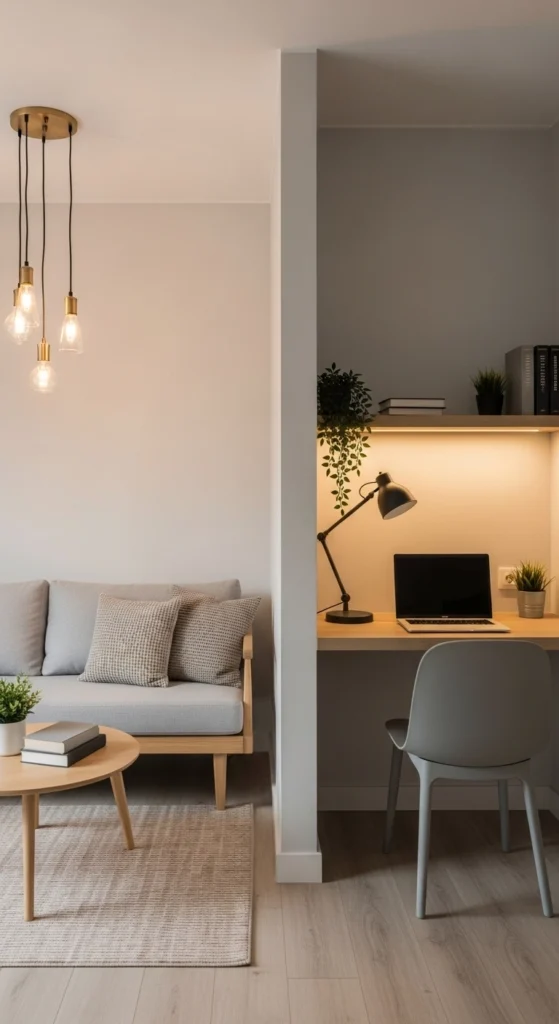
Multifunctional rooms feel chaotic without boundaries. Define zones visually. Use rugs, lighting, or furniture placement instead of walls.
A desk facing away from the sofa creates separation. A floor lamp can signal a reading corner. Keep each zone limited to its purpose.
Budget idea: Use a neutral rug under each zone. Thrift stores often have affordable options. Stick to similar tones so zones feel connected.
5. Hide Storage Wherever Possible
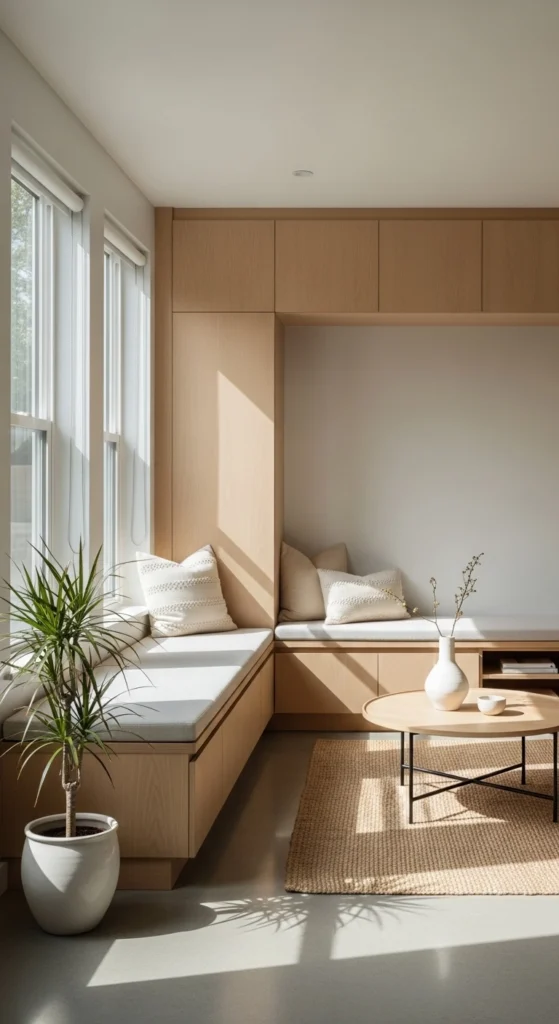
Visual clutter often comes from exposed storage. Closed cabinets and hidden bins calm a room instantly.
If built-ins aren’t possible, use storage ottomans or under-bed boxes. Choose colors that match walls or floors.
DIY fix: Add fabric skirts to open shelving or beds. It hides items while keeping access easy.
6. Use Biomorphic Shapes to Slow the Eye

Organic shapes feel natural. They reduce visual tension. Think pebble-shaped trays, curved vases, or wavy mirrors.
Limit these shapes to accents. Too many feel busy. One or two per room is enough.
Budget tip: DIY clay trays or thrift rounded pottery. Imperfect shapes add softness without clutter.
7. Ditch All-White Rooms
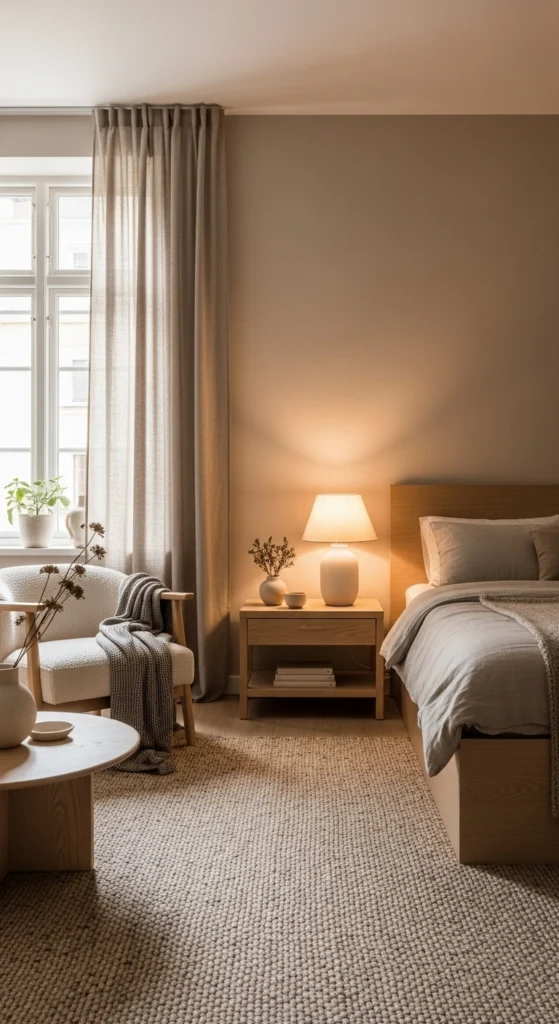
All-white rooms show every object. They feel unfinished. Add warmth through off-white, cream, or sand tones.
Paint trims slightly darker than walls. It adds depth without adding objects.
Small change: Swap white cushions for beige. The room instantly feels calmer.
8. Balance Curves With Simple Lines
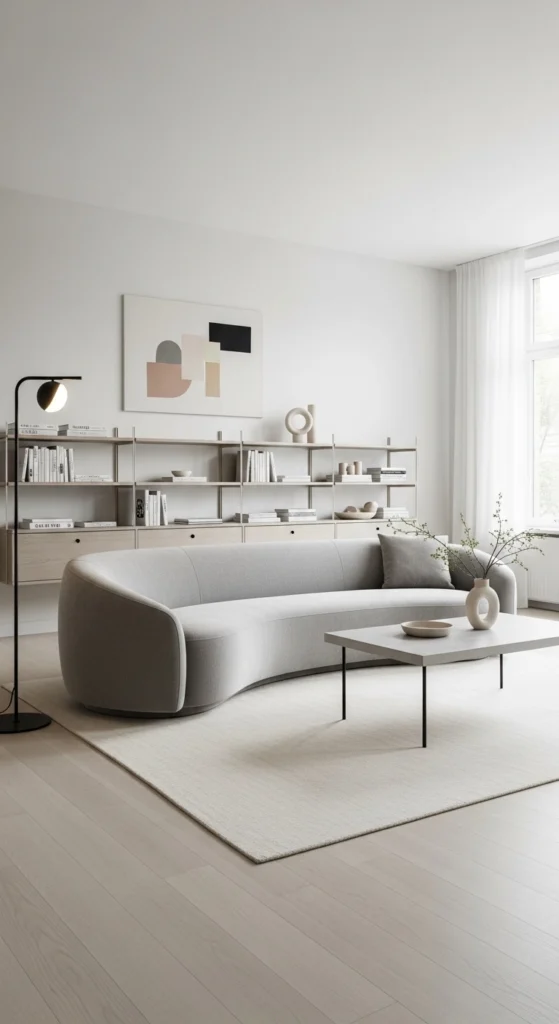
Curves work best when balanced. Pair a rounded sofa with a straight shelf. This keeps the room grounded.
Avoid mixing too many shapes. Pick one focus piece.
DIY tip: Square baskets paired with round mirrors create balance without cost.
9. Layer Materials, Not Decor

Instead of adding objects, layer materials. A wood table, linen sofa, and ceramic lamp feel rich without clutter.
Remove extra decor. Let materials speak.
Budget-friendly swap: Replace glossy items with matte finishes using spray paint.
10. Add One Maximal Touch Only
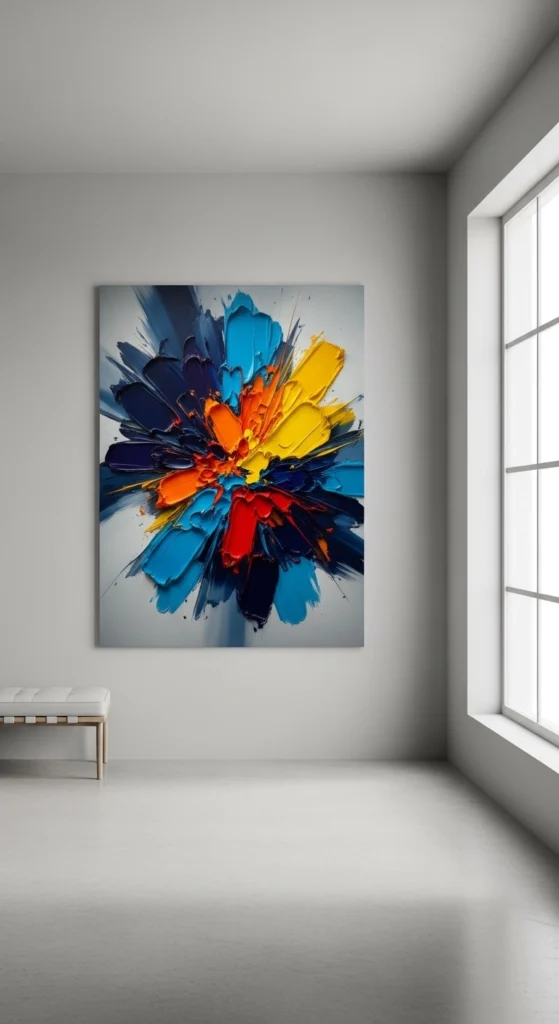
Minimalism doesn’t mean boring. One bold piece adds character. Keep everything else quiet.
This could be art, a patterned rug, or a sculptural chair.
DIY idea: Frame fabric or wallpaper samples as art.
11. Use Real Plants Sparingly
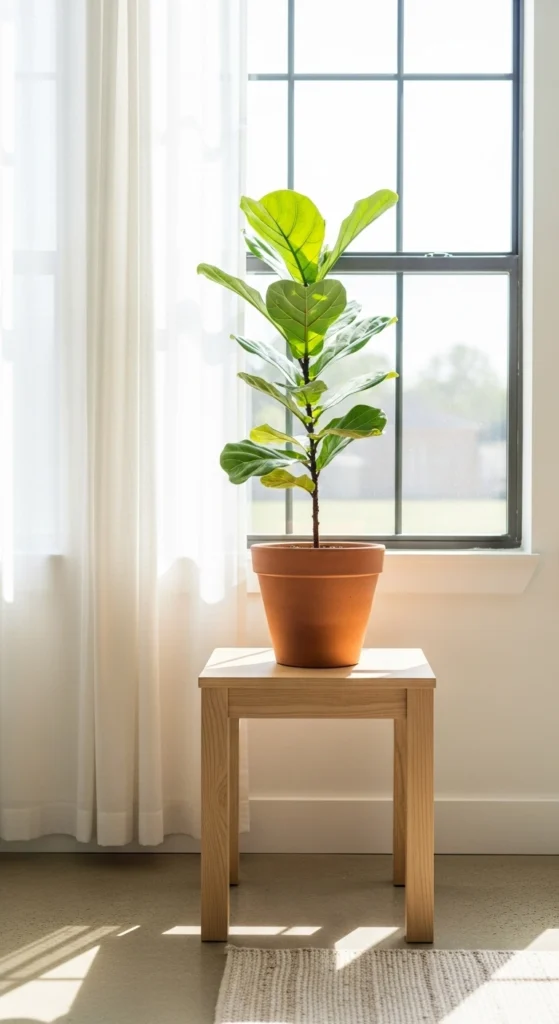
One healthy plant beats five fake ones. Plants add life without clutter.
Choose easy-care plants. Place them where light already exists.
Budget tip: Propagate from friends or local swaps.
12. Skip Mass-Produced Wall Art
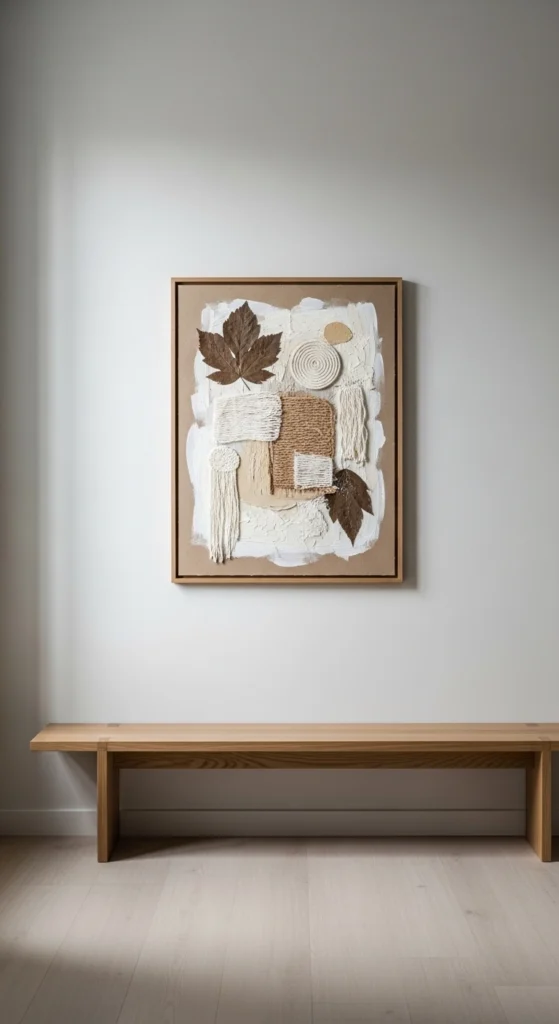
Generic art adds noise. One meaningful piece calms the space.
DIY: Frame children’s drawings, fabric scraps, or sketches.
Keep frames simple and matching.
13. Remove Decorative Beads and Chains
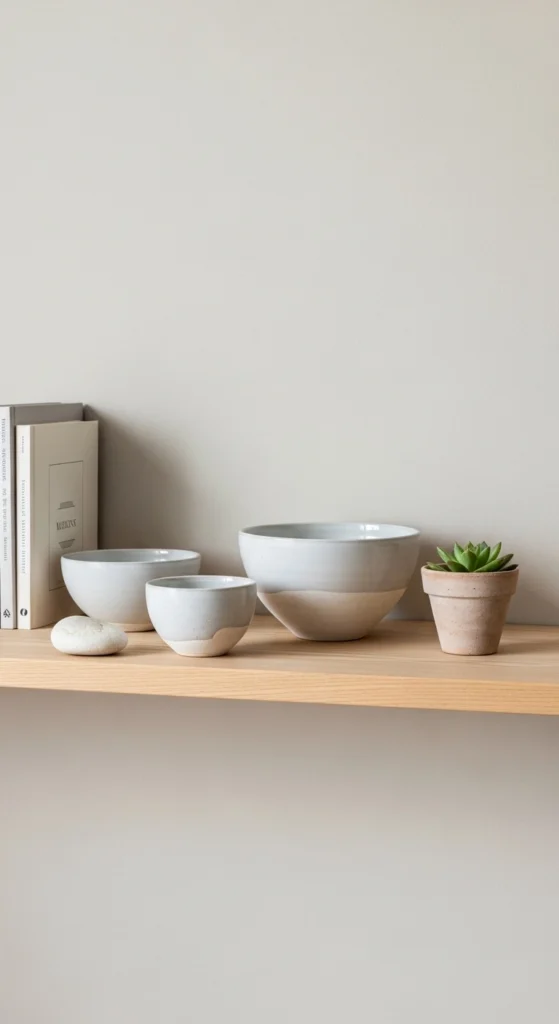
Overused decor dates a room fast. Replace with simple ceramics or wood.
Fewer items feel calmer.
DIY: Use bowls to store keys instead of decor chains.
14. Lean Into Earthy Browns
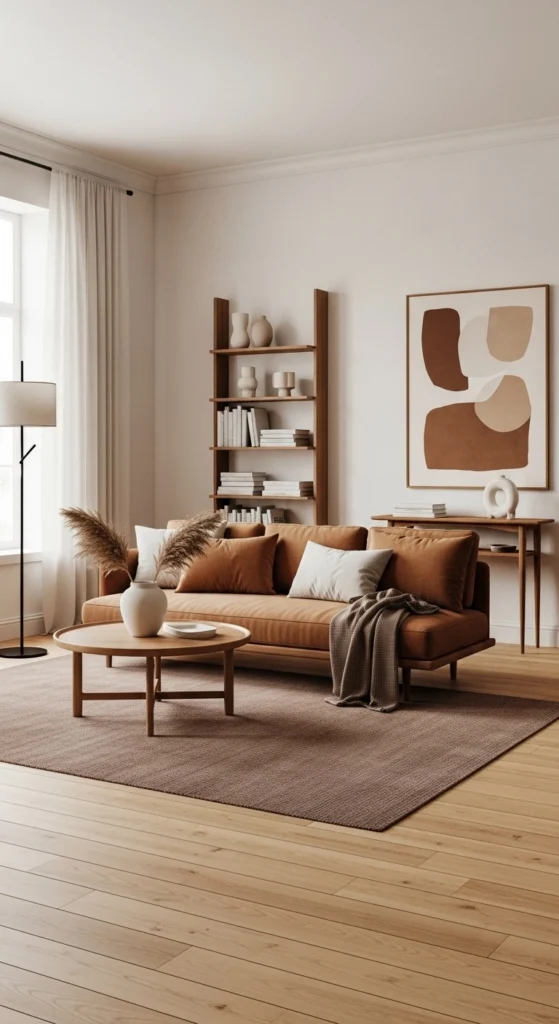
Brown tones ground a room. They hide wear and feel natural.
Add through cushions, throws, or furniture legs.
Budget fix: Use wood stain on light furniture.
15. Protect Negative Space

Empty space is part of decor. Don’t fill every corner.
Leave at least one surface clear in every room.
Habit tip: Remove one item weekly.
16. Buy Anchor Furniture First

Start with core pieces. Sofa, bed, table. Accessories come later.
This prevents clutter purchases.
Budget plan: Save for one solid piece instead of many small ones.
17. Add Sensory Layers for Seasons
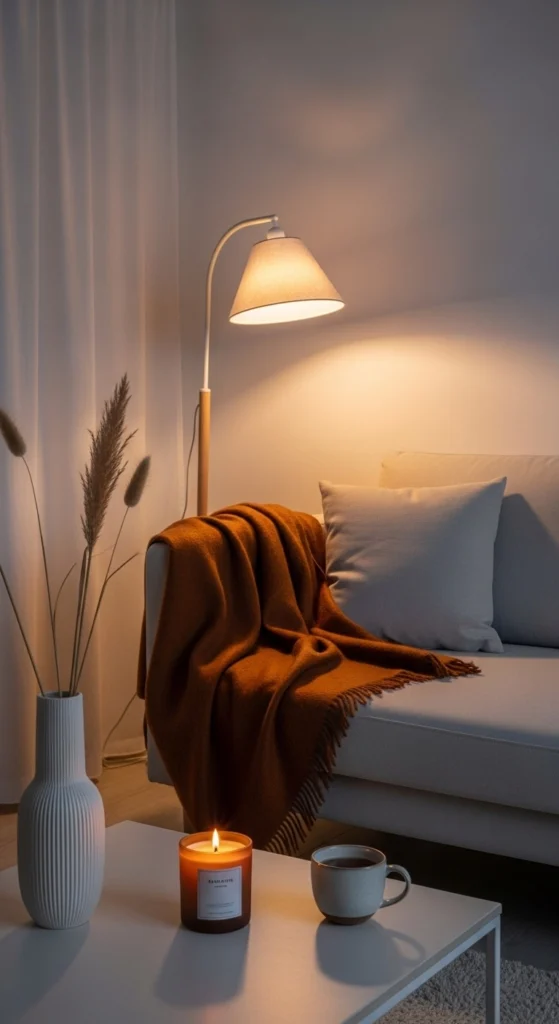
Seasonal shifts don’t need decor overload. Swap textures instead.
Use heavier fabrics in cooler months.
DIY: Rotate throws and cushion covers only.
18. Use Subtle Patterns Carefully

Patterns add interest when muted. Keep colors low-contrast.
Limit to one patterned item per room.
Budget idea: Use patterned pillowcases only.
19. Personalize Without Overstyling
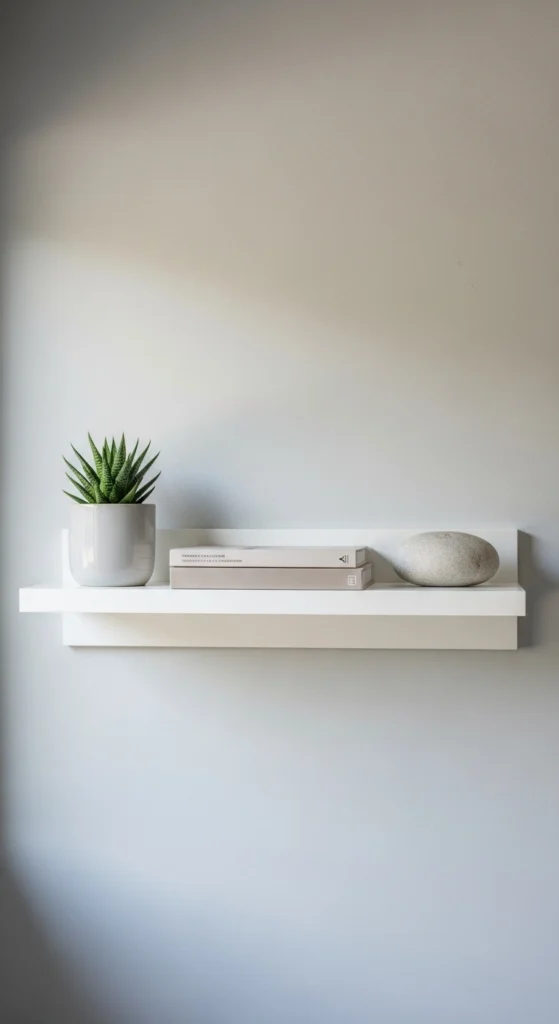
Personal items matter. Display fewer, with space.
Rotate items instead of crowding shelves.
DIY habit: Store half your decor and swap quarterly.
20. Use an 80/20 Minimalist Mix

Keep 80% simple. Allow 20% personality.
This keeps rooms calm but human.
Budget win: Use existing items thoughtfully.
21. Keep One Clear Visual Line
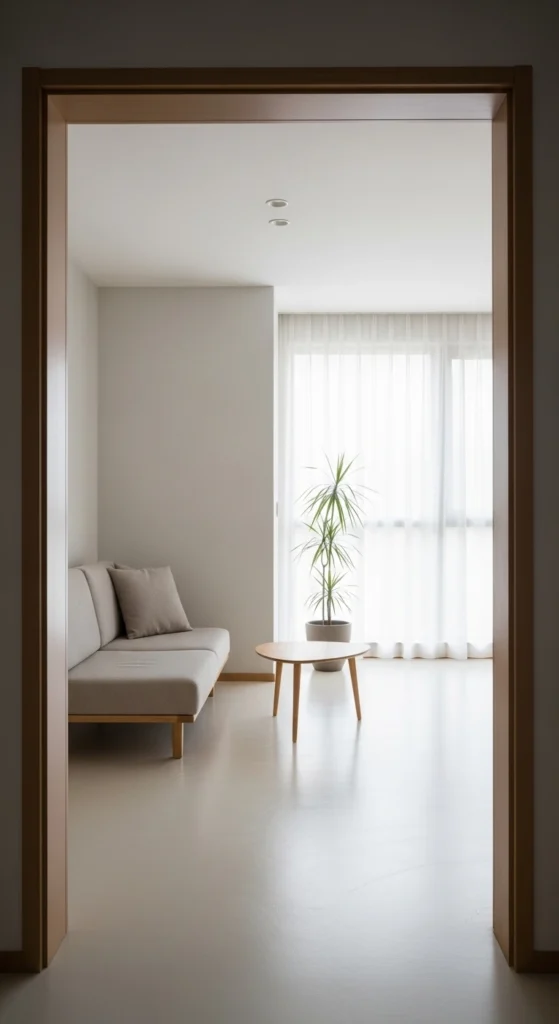
When you enter a room, your eye should travel easily. Avoid blocking sightlines with clutter.
Move tall items to corners.
Small shift, big calm.
Conclusion
Minimalist decor works best when it supports daily life. Warm tones, fewer objects, and intentional choices reduce visual clutter without making spaces feel empty. Start small. Remove before adding. Focus on comfort, flow, and clarity. Each step in this list is designed to be affordable, realistic, and easy to apply. Calm rooms aren’t built all at once—they grow through consistent, thoughtful edits.
