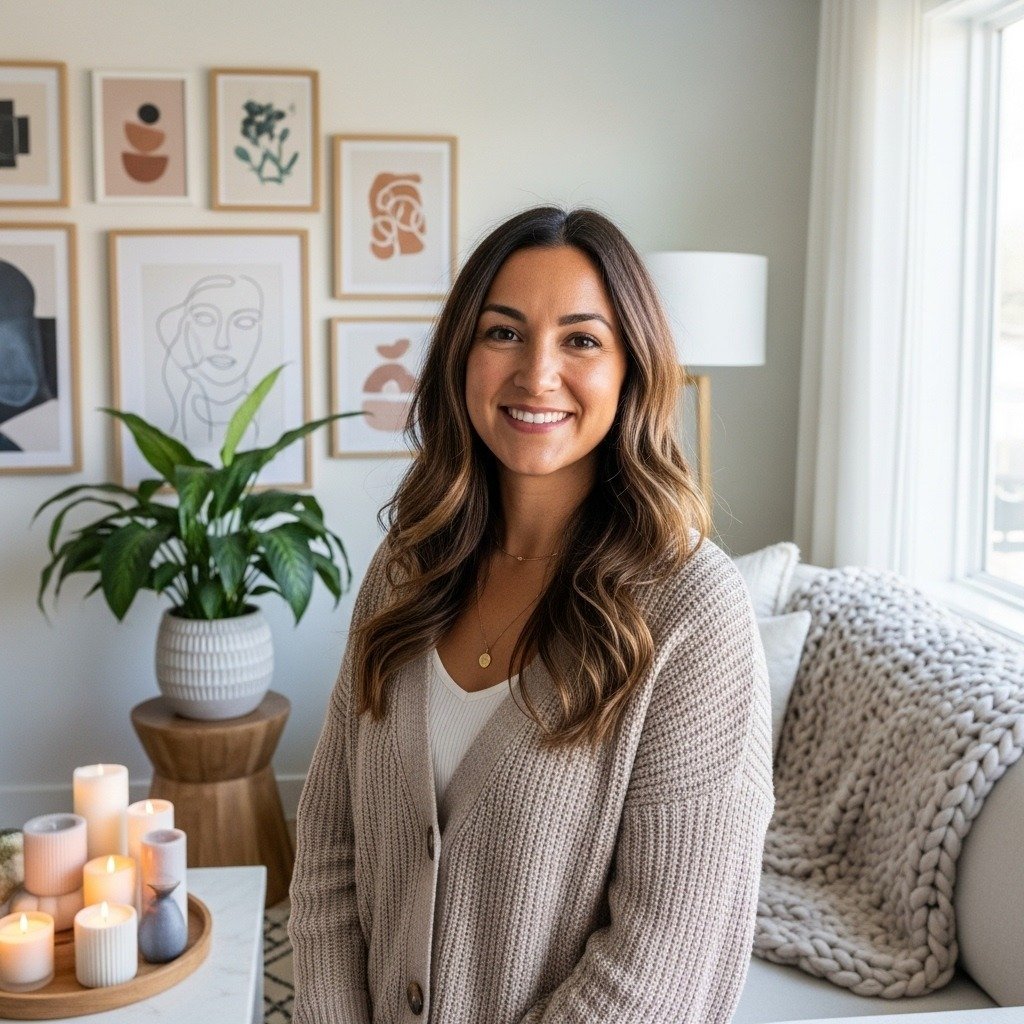
Kitchen walls are tricky. You want them to look styled and intentional—but not so full that the space feels chaotic, cramped, or visually loud. The secret isn’t less décor; it’s better decisions. When every element has a job (function, balance, or warmth), your kitchen can feel elevated and calm at the same time.
Let’s break it down step by step, with practical ideas that work in small kitchens, rentals, and real family homes—not showroom kitchens.
1. Choose One Wall to Be the Hero
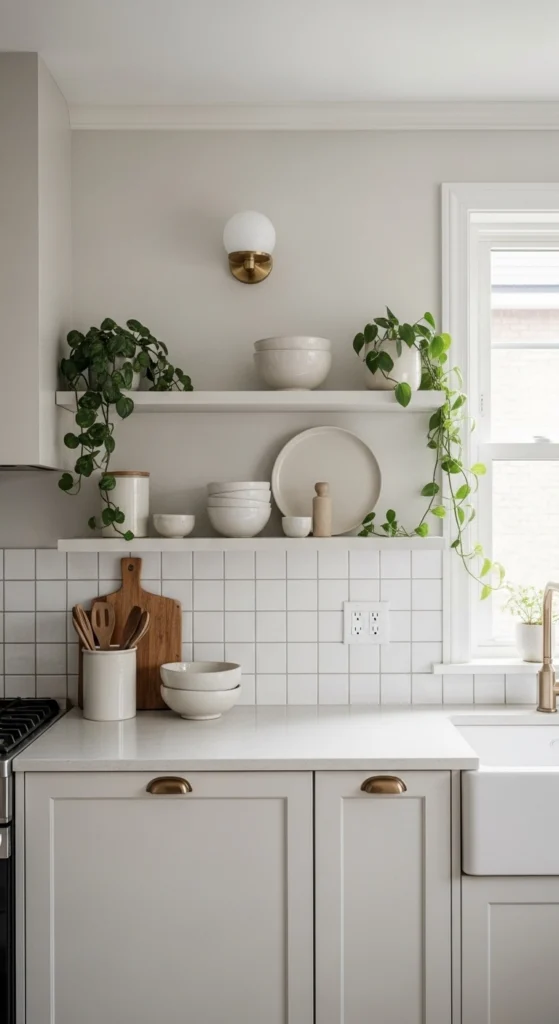
The fastest way to make kitchen walls feel busy is trying to decorate all of them. Instead, pick one focal wall and let the others breathe.
Great options for a hero wall:
- The backsplash area behind the stove or sink
- A short wall near the dining nook
- The wall above lower cabinets where open shelving fits naturally
Once you commit to one feature wall, everything else becomes supporting background. This instantly creates calm.
Rule of thumb:
One statement wall > four mildly decorated walls.
2. Keep the Color Palette Tight
Color overload is a silent clutter creator. Even beautiful pieces can feel messy if too many colors compete.
To keep things clean:
- Stick to 2–3 main colors
- Add 1 soft accent (wood tone, brass, or greenery)
- Repeat colors subtly across the kitchen
Earth tones, warm whites, muted greens, and soft blues work especially well for kitchens because they feel fresh without being loud.
3. Let the Backsplash Do the Heavy Lifting
If your backsplash has personality, your walls don’t need much else.
Clean but interesting backsplash choices:
- Simple subway tiles with contrasting grout
- Soft geometric or mosaic tiles in one color family
- Textured stone or matte finishes
When the backsplash already adds texture and rhythm, skip extra wall art nearby. This keeps the visual flow smooth instead of crowded.
Less above the counter = more impact overall.
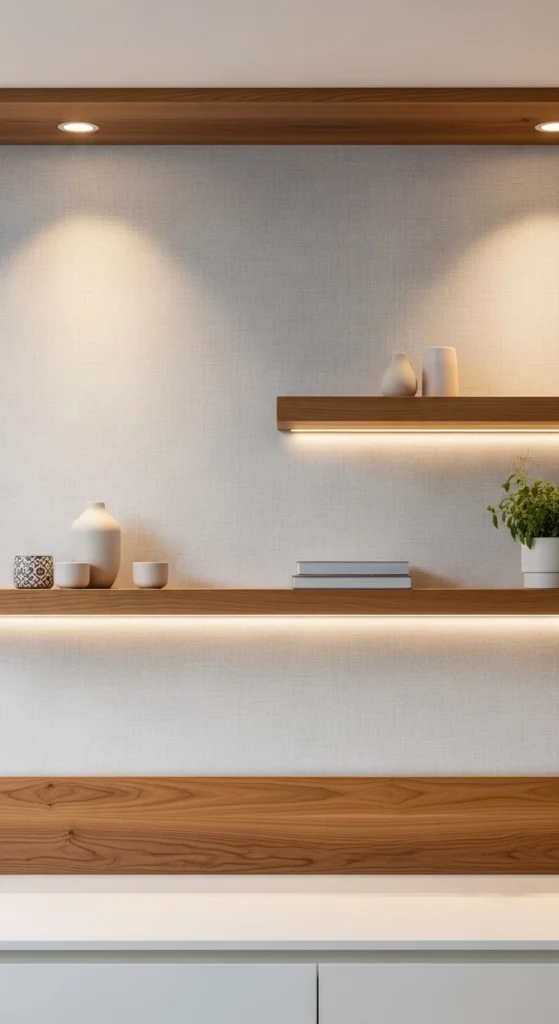
4. Use Open Shelves—But Edit Ruthlessly
Open shelves can look stunning or completely overwhelming—depending on how you style them.
To avoid the “busy shelf” look:
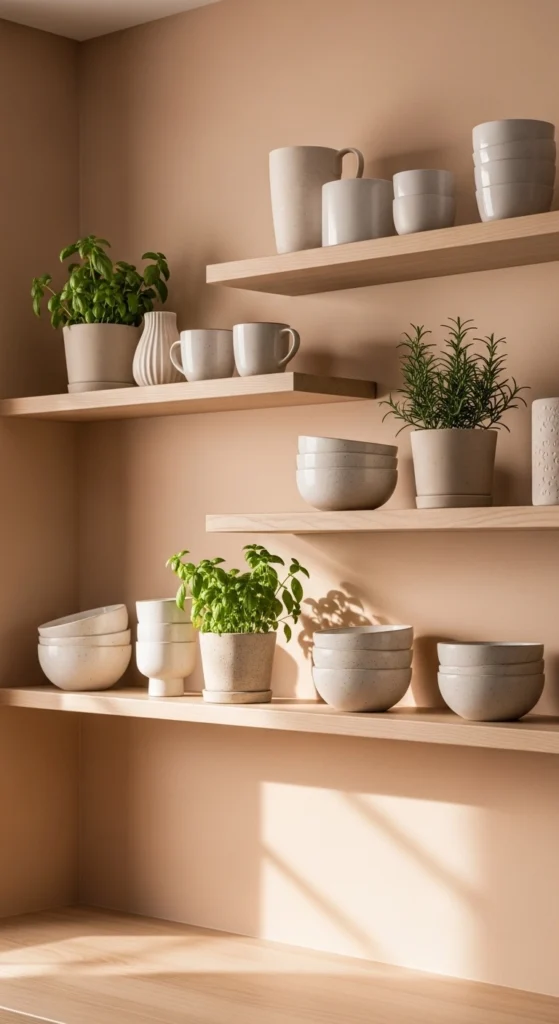
- Leave 30–40% empty space
- Group items in odd numbers (3 or 5)
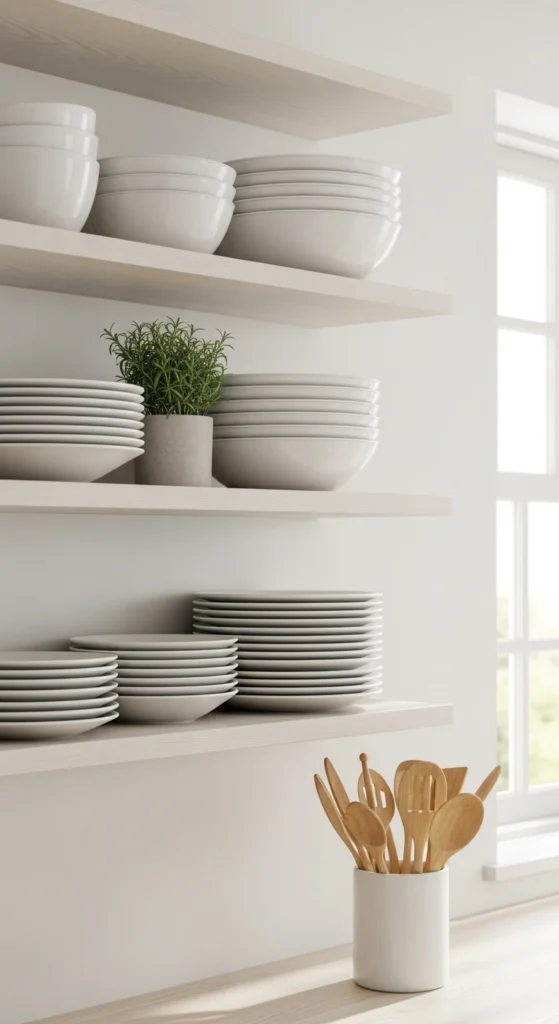
- Mix functional items (plates, bowls) with one decorative element
Plants, wooden utensils, or a single framed print work better than lots of small objects.
5. Swap Wall Art for Functional Decor
Functional décor feels lighter because it earns its place.
Smart wall décor ideas:
- Hanging cutting boards
- Decorative hooks with matching utensils
- Chalkboard paint for recipes or notes
- A small wall-mounted herb rack
When décor is also useful, the kitchen feels intentional—not staged.
Ask yourself:
“Would I still keep this if it wasn’t decorative?”
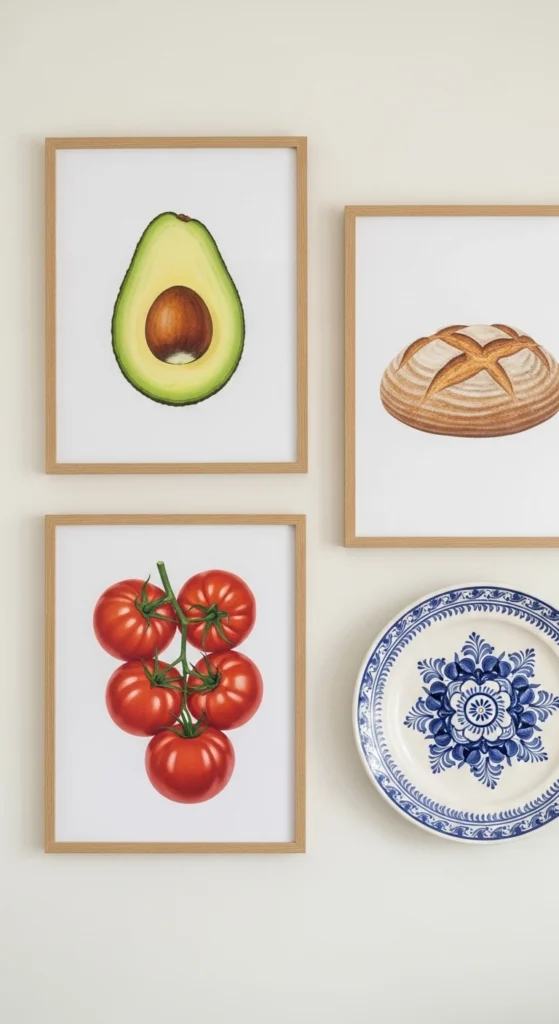
6. Create Calm Gallery Walls (Yes, It’s Possible)
Gallery walls don’t have to be chaotic. In kitchens, simpler is always better.
To keep it calm:
- Use frames in one color or material
- Keep all art within a single theme (food, typography, botanicals)
- Limit to 3–5 pieces max
Plates, framed towels, or food-inspired prints work beautifully when they share a visual rhythm.
7. Add Texture Instead of More Objects
When a wall feels boring, the instinct is to add things. A better move is to add texture.
Low-visual-noise texture ideas:
- Washable wallpaper in subtle patterns
- Limewash or textured paint
- Brick or stone accents on one section
- Warm wood panels or slats
Texture adds depth without adding clutter—which is exactly what calm kitchens need.
Final Takeaway: Calm Kitchens Are Curated, Not Empty
A non-busy kitchen wall isn’t about having nothing—it’s about choosing what earns attention. When you:
- Limit focal points
- Control color
- Prioritize function
- Use texture thoughtfully
Your kitchen starts to feel spacious, stylish, and effortless—even on busy mornings.
✨ Save this guide for your next kitchen refresh—and decorate with confidence, not clutter.
