
I kept moving my coffee gear from counter to counter until the kitchen felt cluttered and cold. Mugs everywhere. Beans in a bag. The morning routine felt like a scavenger hunt.
I learned to treat a small corner like a tiny café: one anchor appliance, a couple of shallow shelves, a place for daily things, and a way to hide the rest.
How to Decorate a Kitchen Coffee Corner
This is the method I use when a kitchen corner feels unfinished. You’ll learn how to pick the exact spot, choose the right appliance scale, and style shallow shelving so the area looks curated—not cluttered. The result is a cozy, functional coffee nook that fits small kitchens and busy mornings.
What You'll Need
- Gooseneck electric kettle, stainless steel, 1L (~$50–120)
- Countertop single-serve coffee machine, compact (~$80–200)
- Fluted white ceramic mug set, 4-pack (~$20–40)
- Glass storage jars with bamboo lids, 3-piece set (~$15–35)
- Shallow floating shelf set, wood, 12–18" depth (~$50–120)
- Smeg-style retro toaster, 2-slice (~$200–250)
- Compact mini fridge, 1.7–3.2 cu ft (~$100–250)
- Small brass serving tray, round (~$20–60)
Step 1: Choose and define the exact spot
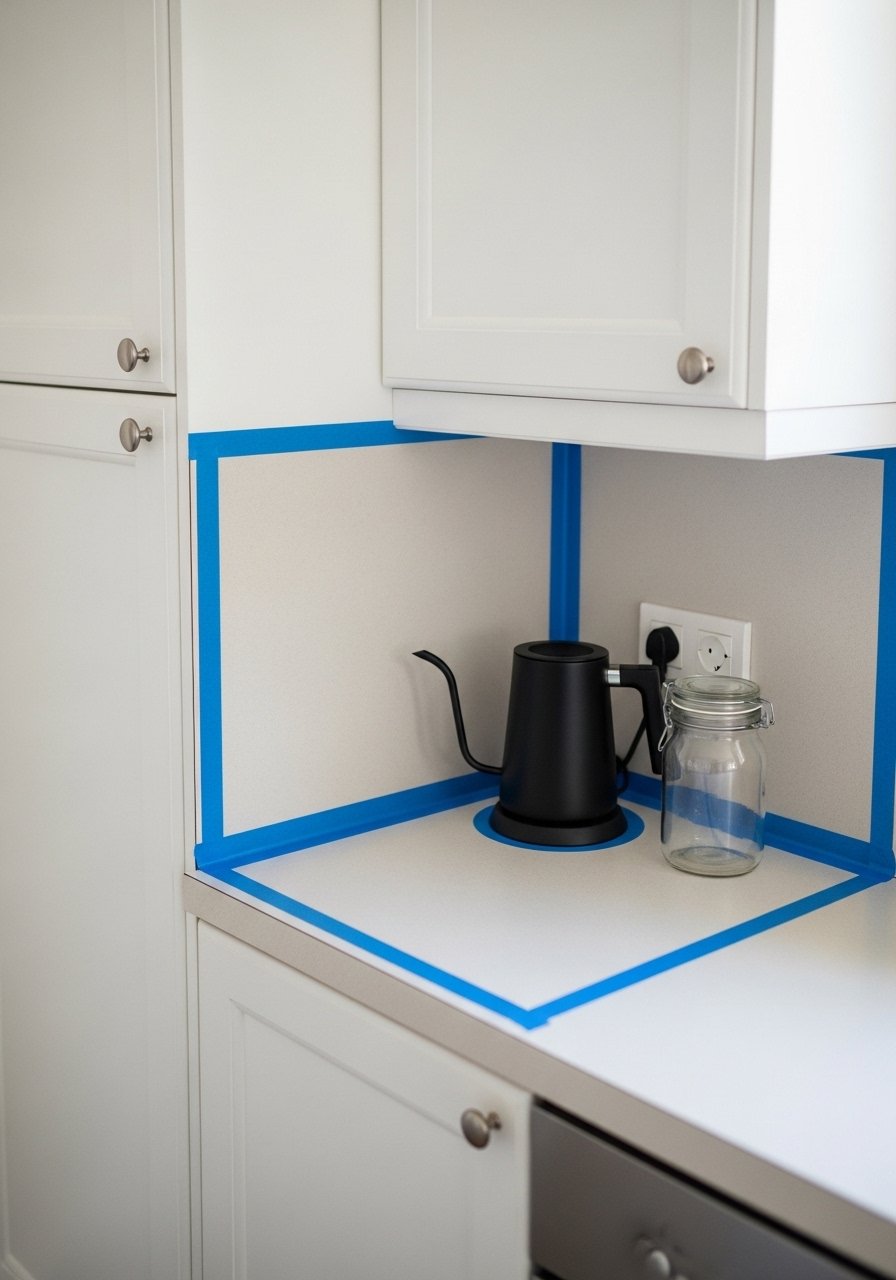
I start by standing in the kitchen with a mug in my hand. I look for a corner near a plug and away from the main prep zone. That keeps mornings flowing and prevents the coffee area from crowding dinner prep.
Visually define the spot with one small change: paint the back of a shallow niche a soft neutral, line the inside with warm wood, or drop in a shallow floating shelf. People forget to set a boundary; without one the corner reads as “leftover counter,” not a station. Mistake to avoid: picking a place that interrupts your main work triangle.
Step 2: Anchor the corner with one primary appliance
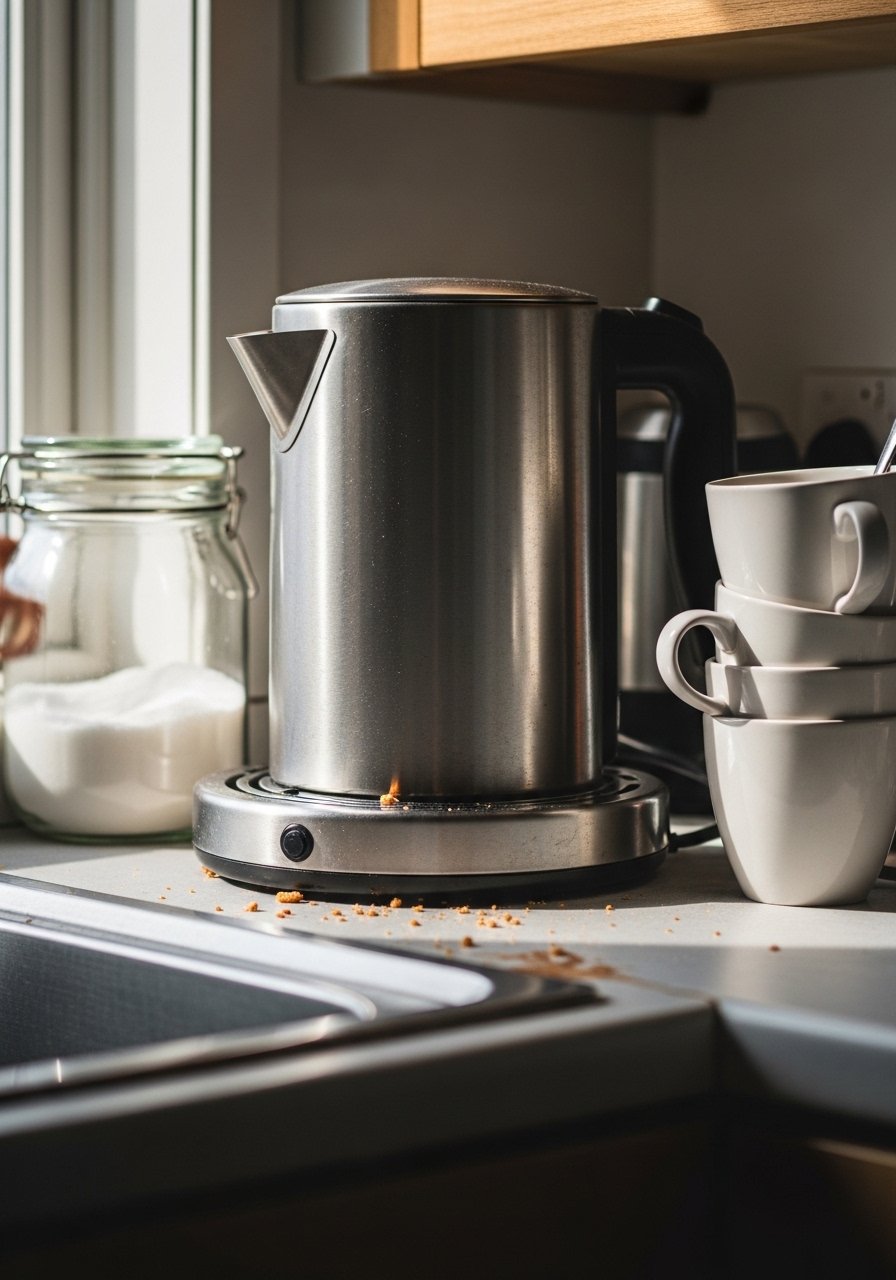
I always pick one appliance to be the anchor—a compact coffee machine or a gooseneck kettle if you do pour-over. Center it so the eye lands there first. Everything else layers around that anchor.
This single choice sets scale. If your machine is oversized, the whole corner looks cramped. If it’s too small, the area feels unfinished. One insight people miss: let the anchor breathe—leave 3–4 inches on each side for a jar or tray. Mistake to avoid: plumbing the machine against a high-traffic edge where it gets knocked or splashed.
Step 3: Add shallow, staggered shelving for mugs and jars
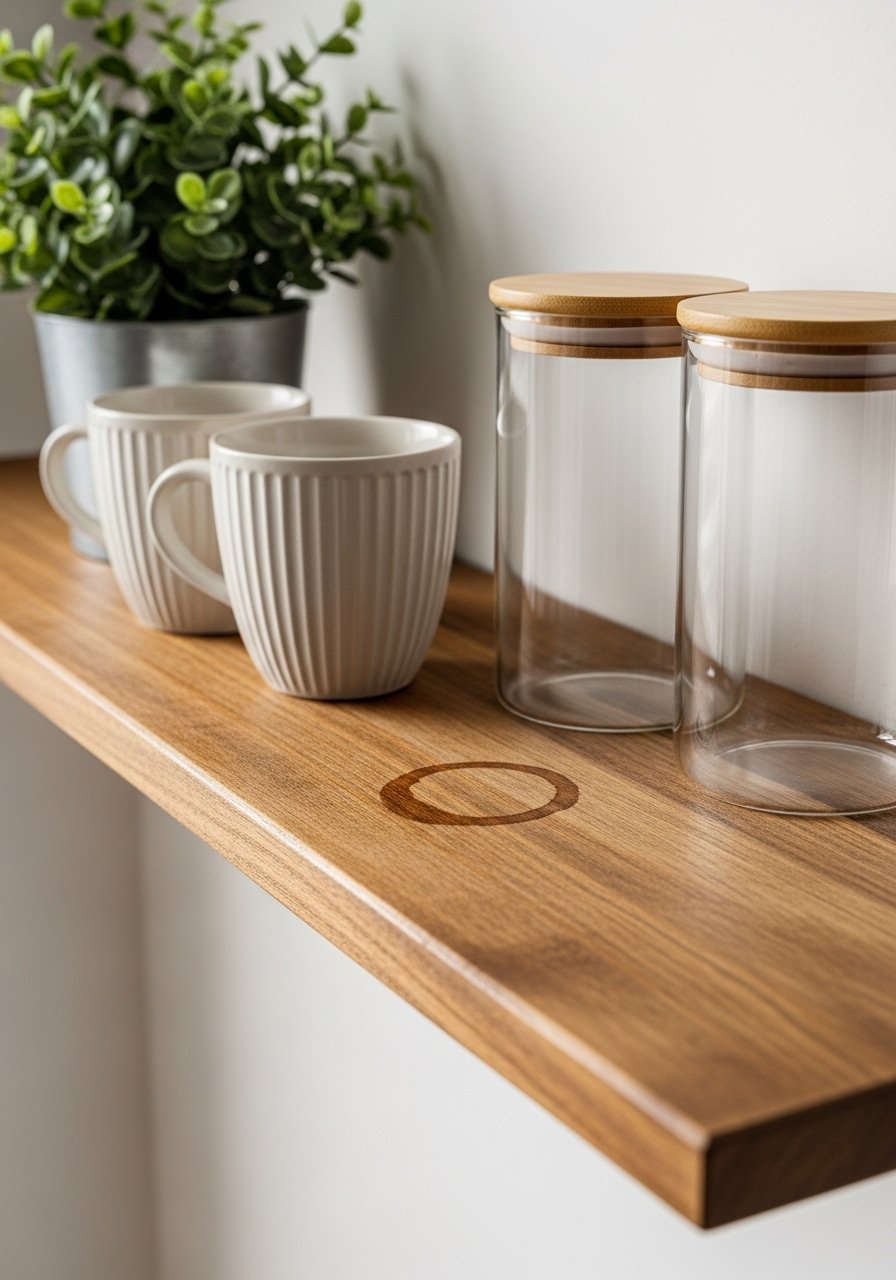
Shallow shelves keep the coffee corner feeling light while giving you practical storage. I install one or two 10–14 inch-deep shelves staggered vertically so mugs and jars sit casually, not stacked like a store display.
What visually changes: the wall turns into a curated backdrop, not dead space. One insight: shallow depth forces you to curate, which keeps clutter down. Mistake to avoid: deep shelving that swallows the corner and hides visibility of what you use every day.
Step 4: Curate daily items into purposeful groupings
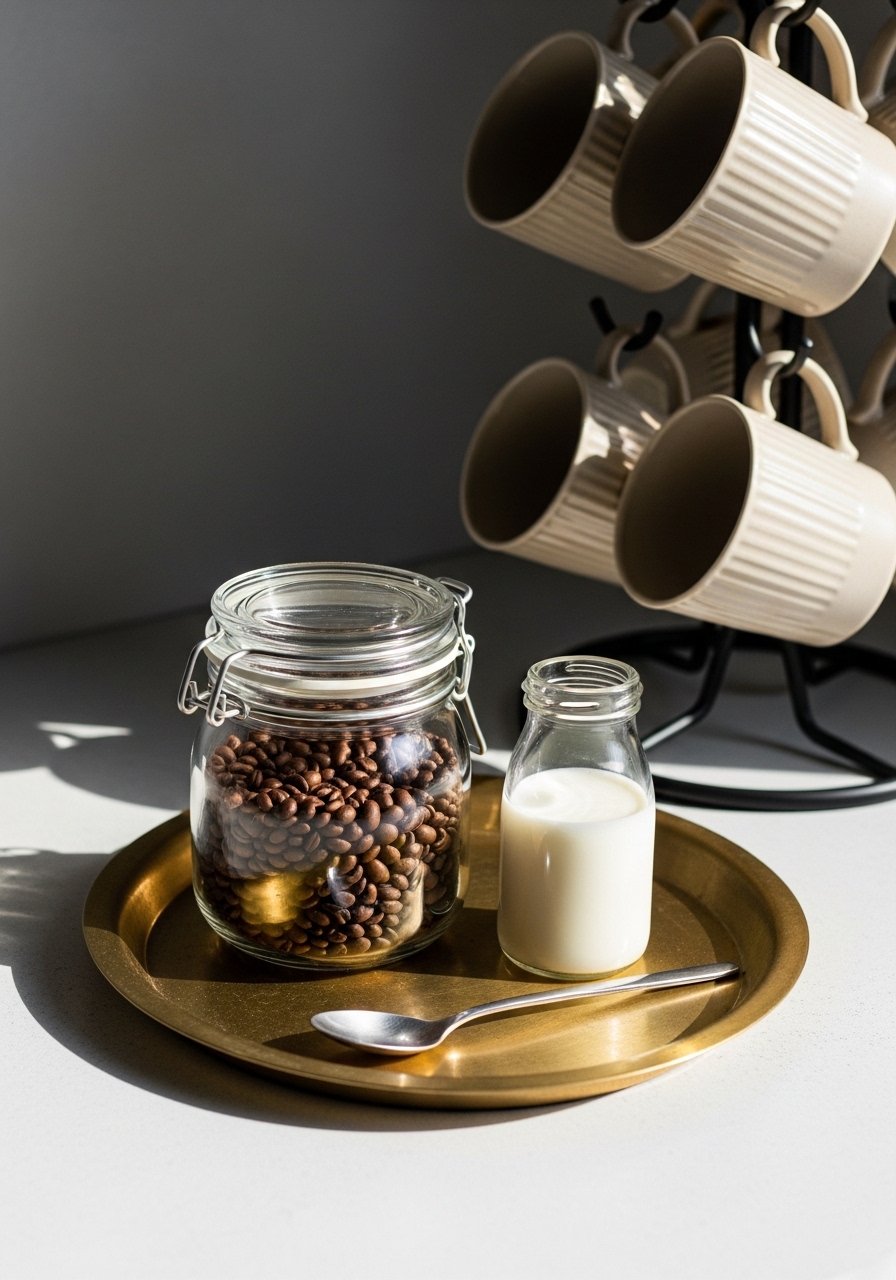
I group daily things—mugs, beans, spoons—into small vignettes. A brass tray or a small cutting board becomes a landing pad for the kettle and a jar. The grouped items read as intentional and are easy to grab.
People often spread things out; that looks messy. One insight: repeat a material or color (white mugs + bamboo lids + warm wood) to make different pieces read as a set. Mistake to avoid: mixing too many metals—pick one accent (I like brass) and stick with it.
Step 5: Layer light and warm materials for a cozy feel
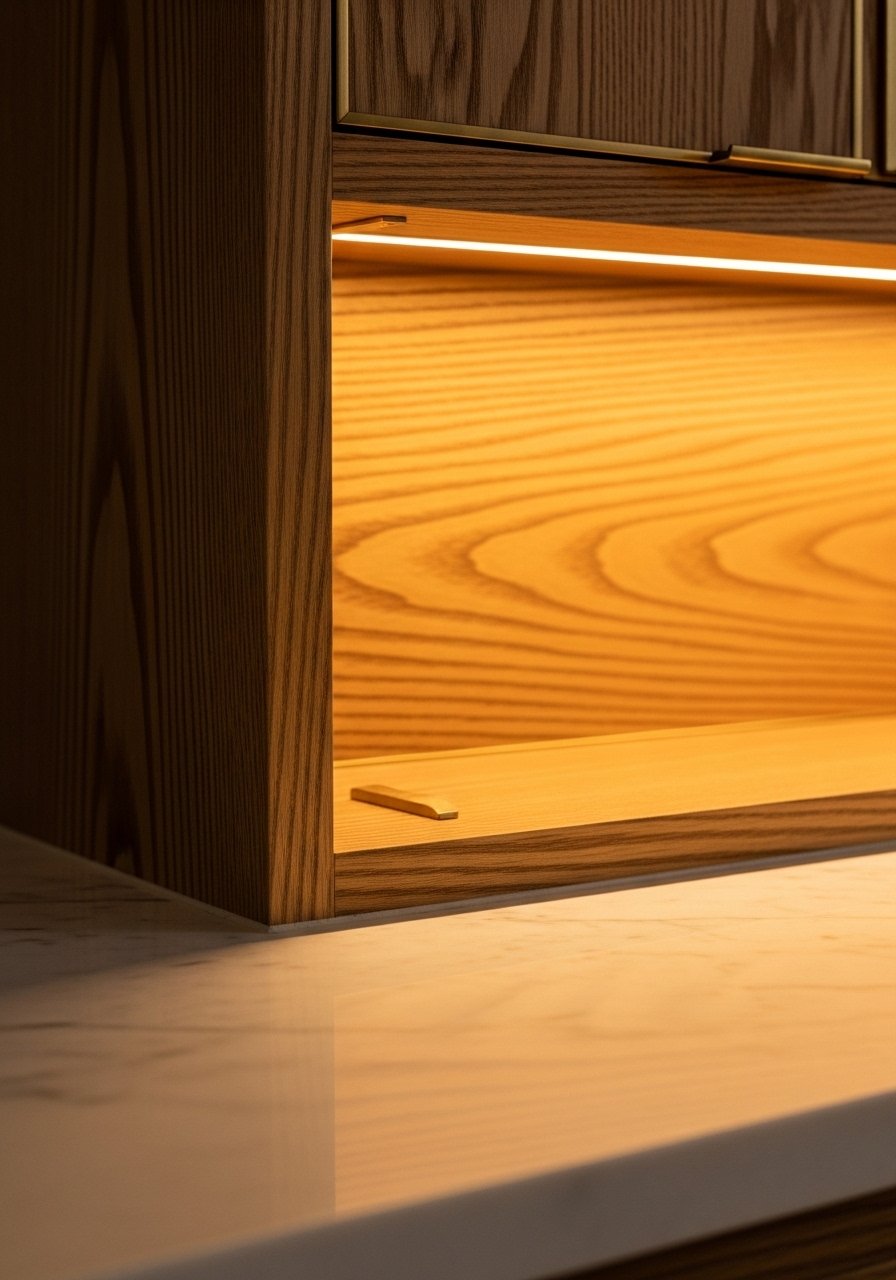
Light changes everything. I add a warm under-shelf strip or a small puck light so the nook reads cozy at any hour. Warm wood lining or a neutral painted back instantly softens the area against white cabinetry.
What visually changes: the corner feels purposeful and welcoming, not cold. One insight: lighting should be warm, not clinical—choose 2700–3000K. Mistake to avoid: harsh overhead lights that flatten the textures you worked to add.
Step 6: Conceal extras and plan for daily cleanup
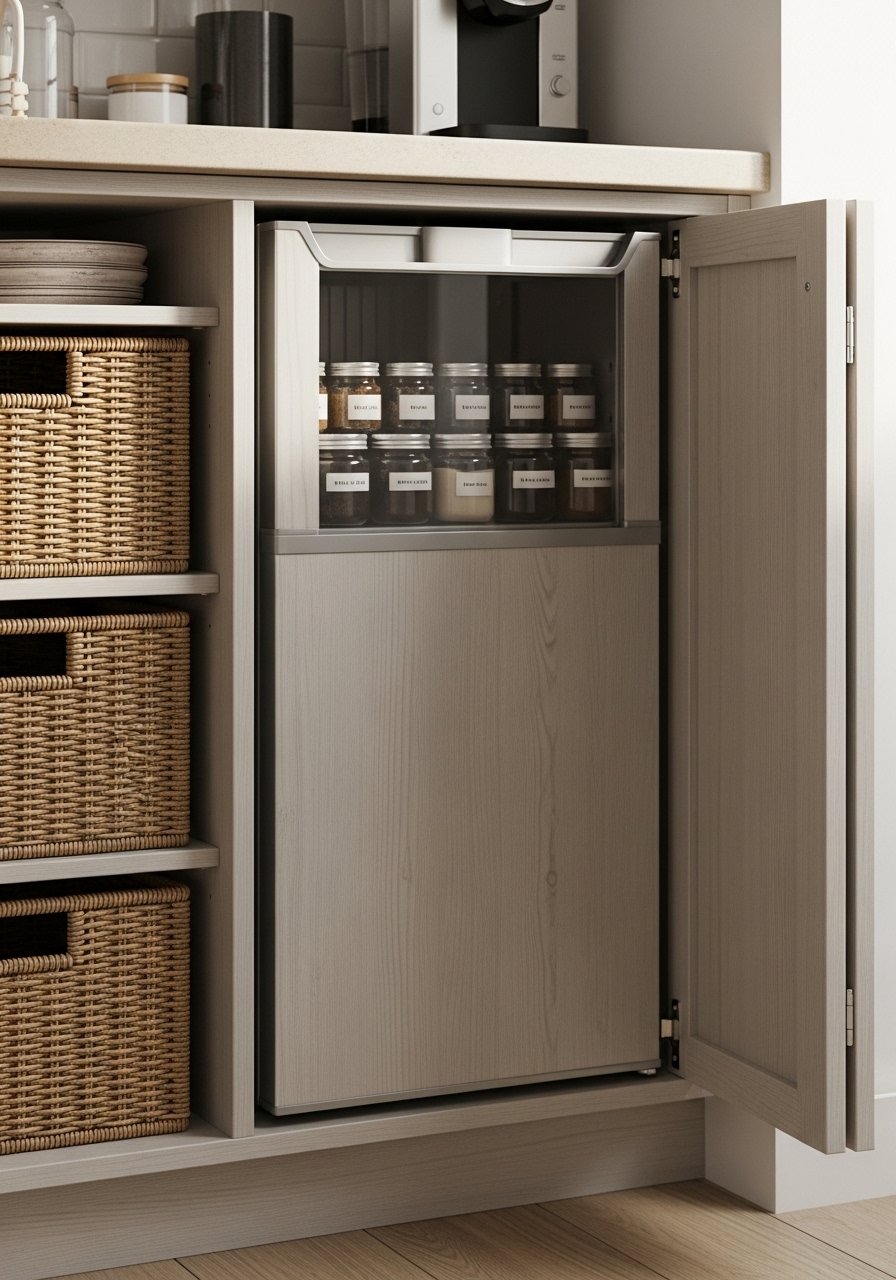
I keep only what I use daily out. Extras—filters, pods, backup beans—live in a lower drawer or a basket. If you use milk alternatives often, tuck a compact mini fridge under the counter. This keeps the top plane calm.
People think open means accessible, but open clutter becomes visual noise. One insight: a single closed drawer or door keeps the whole corner breathing. Mistake to avoid: leaving used cups and grounds on the counter; schedule a quick wipe after each use so the nook always invites you in.
Common mistakes I see (and how I fix them)
I see three repeat problems: wrong scale, no boundary, and too many finishes. I fix them by choosing one appliance as the hero, defining the zone with paint or wood, and limiting accents to one metal (brass is warm and forgiving).
Quick fixes:
- Wrong appliance size → swap for a compact model or move toaster to another shelf.
- No boundary → paint the back wall or add a shallow shelf.
- Too many metals → remove one metallic accent until the space feels cohesive.
Adapting this look for small kitchens and rentals
I work within constraints by thinking vertical and reversible. Use narrow floating shelves, a standing bar cart, or a slim freestanding cabinet with open top shelves. For renters, peel-and-stick backsplash, removable hooks for mugs, and a freestanding bar cart give the same “defined nook” without permanent changes.
Budget swaps that still feel curated:
- Use thrifted bowls or flea-market finds for texture.
- Choose simple glass jars with bamboo lids instead of custom canisters.
- Skip built-ins; a compact mini fridge or cart can do the job.
Mixing styles and seasonal refreshes
I usually keep the base neutral and change smaller accents seasonally. A Smeg-style toaster or retro kettle reads like a design piece against a soft neutral niche. In winter I bring in deeper tones and a magnolia sprig; in summer I swap in light ceramics and a small green plant.
Simple seasonal swaps:
- Swap tray items (candles, small bowls) for seasonal decor.
- Change textiles—tea towels or a small runner—without reworking the nook.
- Rotate a decorative bowl from the flea market for fresh texture.
Final Thoughts
Start with one small change: pick the spot and add a shallow shelf. That single move gives the corner purpose and makes the next steps easy.
You don’t need everything at once. A set of glass jars with bamboo lids is an inexpensive, low-commitment piece that instantly reads curated and helps keep things tidy. Small choices add up.