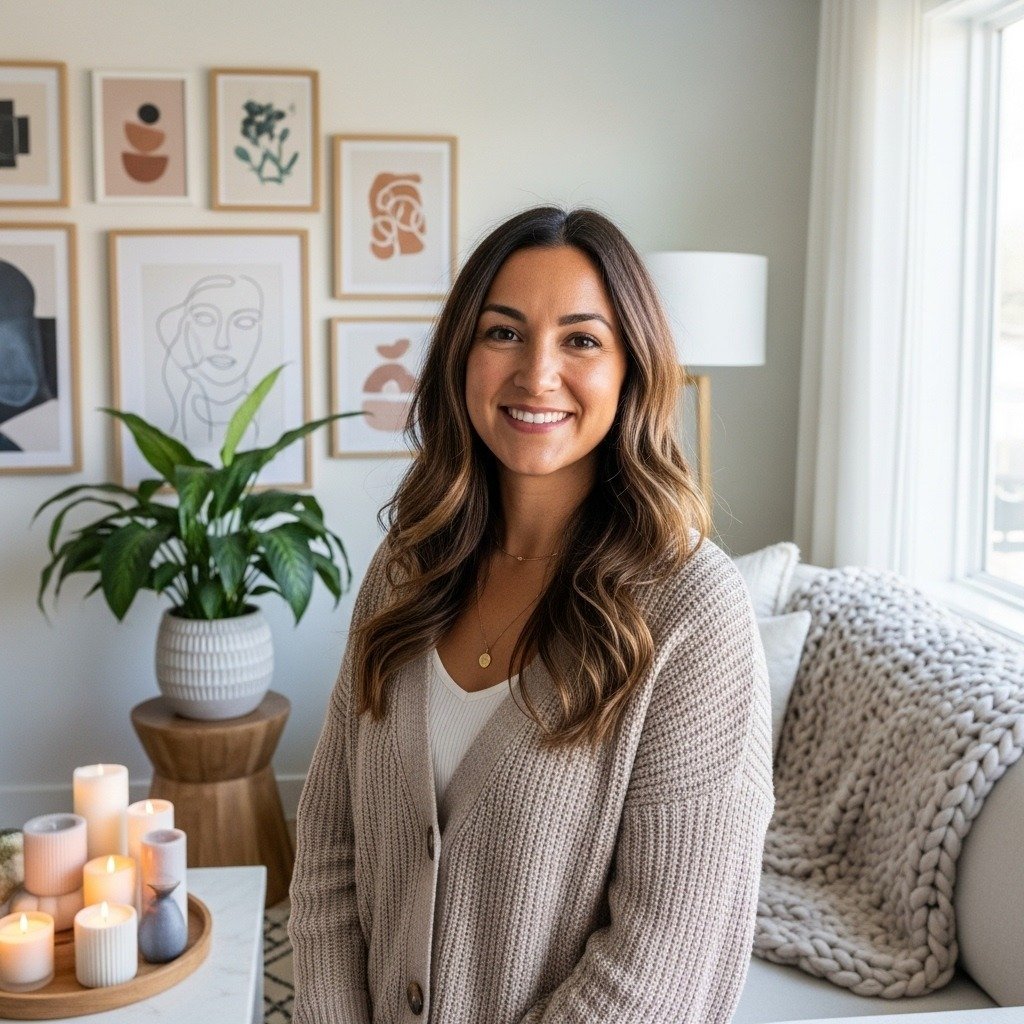
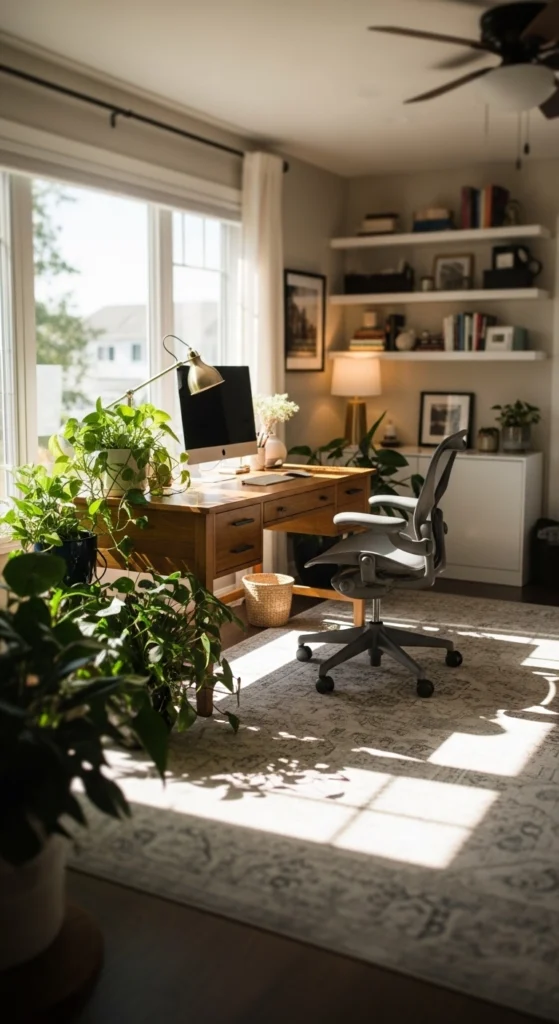
A productive home office is not about expensive furniture or magazine-style rooms. It’s about shaping a space that feels calm, personal, and easy to work in every day. Small decor choices affect how long you can sit comfortably, how clearly you think, and how motivated you feel during long hours at home. From lighting and layout to color and texture, the right setup can quietly support better work habits without draining your wallet. These ideas focus on simple upgrades you can apply in real homes, including apartments, shared rooms, and compact corners.
1. Desk Placement That Faces Natural Light
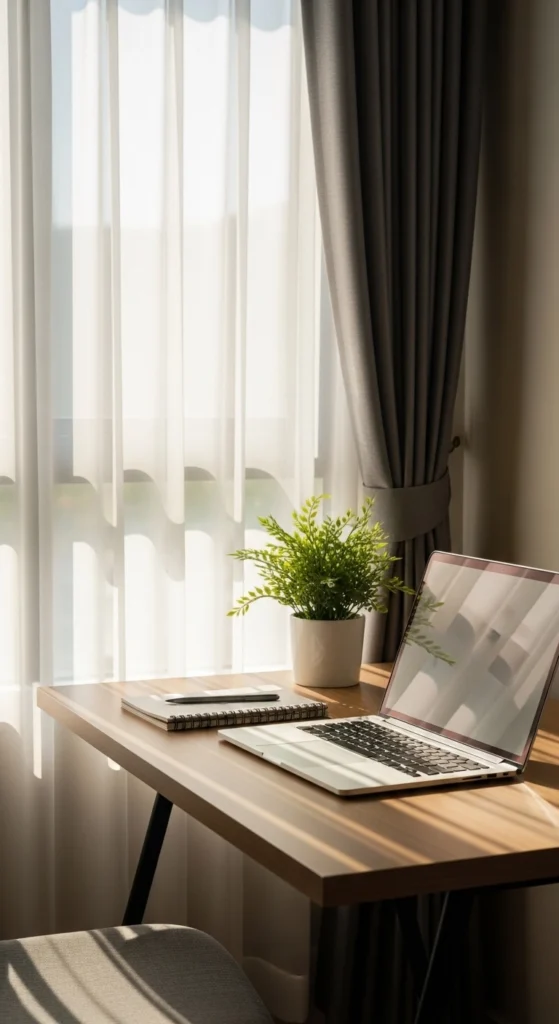
Placing your desk near a window changes how the room feels during work hours. Natural light reduces eye strain and helps you stay alert longer. You don’t need floor-to-ceiling windows. Even a small side window can help if your desk faces it at an angle. Avoid sitting with your back to the window, as screen glare can cause fatigue.
If the light feels harsh, sheer curtains soften it without darkening the space. Budget tip: tension rods and lightweight curtains cost very little and install in minutes. If windows are limited, add a mirror opposite the light source to bounce brightness across the room. This setup works well in bedrooms and living room corners where light is shared.
2. Ergonomic Chair With Simple Adjustments
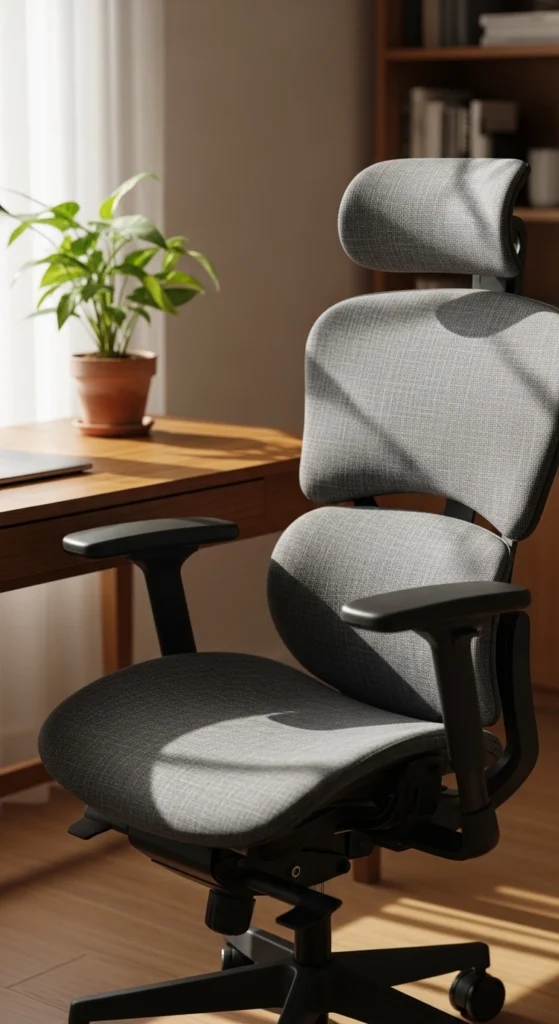
A chair affects your work day more than decor accents. Look for adjustable seat height, armrests, and back support. You don’t need a designer brand. Many mid-range chairs offer solid comfort. If replacing your chair isn’t an option, add a lumbar pillow or rolled towel for lower-back support.
DIY fix: place a firm cushion under your seat to raise height or reduce pressure. Armrests should allow relaxed shoulders while typing. Proper seating helps you work longer without stiffness or distraction, especially during screen-heavy tasks.
3. Indoor Plants for Calm Energy
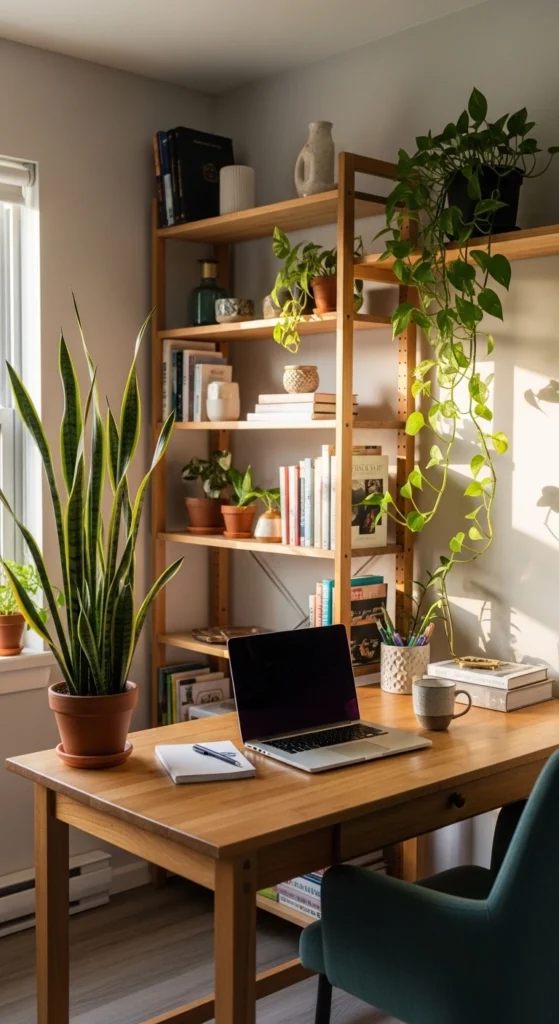
Plants bring life into workspaces and soften hard surfaces. Low-maintenance plants like snake plants, pothos, or succulents work well for busy schedules. Even one plant on your desk adds visual relief during long focus periods.
Budget tip: propagate cuttings from friends or local plant swaps. Place plants near light sources or shelves to avoid cluttering your desk. If natural plants aren’t practical, high-quality faux plants still add texture and color.
4. Neutral Color Palette With Warm Undertones
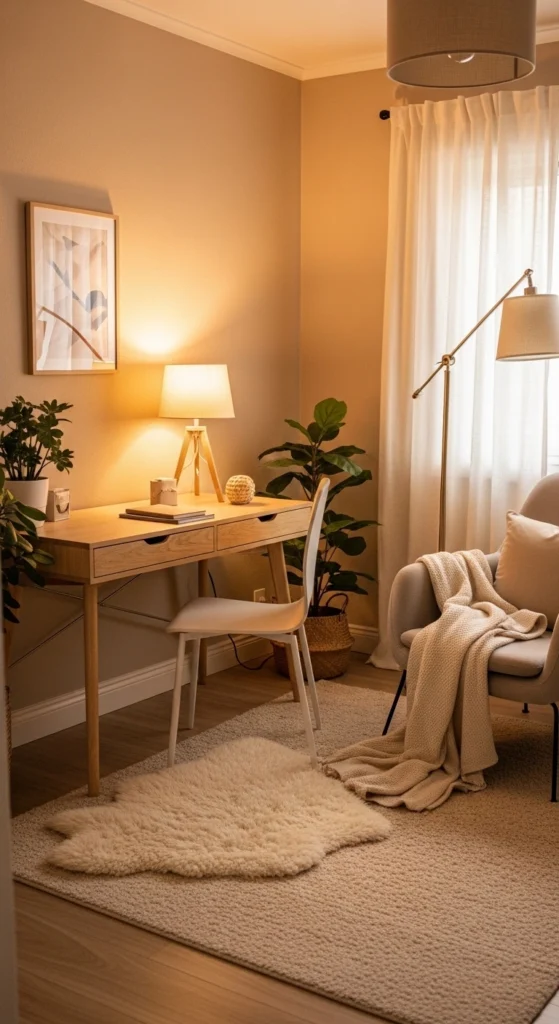
Neutral colors help reduce visual noise. Soft beige, warm gray, and muted taupe keep the space grounded. Avoid stark white everywhere, which can feel harsh over time. Add warmth through wood finishes or woven textures.
Paint is one of the lowest-cost upgrades. Test samples first and observe them throughout the day. Lighting changes color perception more than people expect.
5. Wall-Mounted Shelves for Vertical Storage
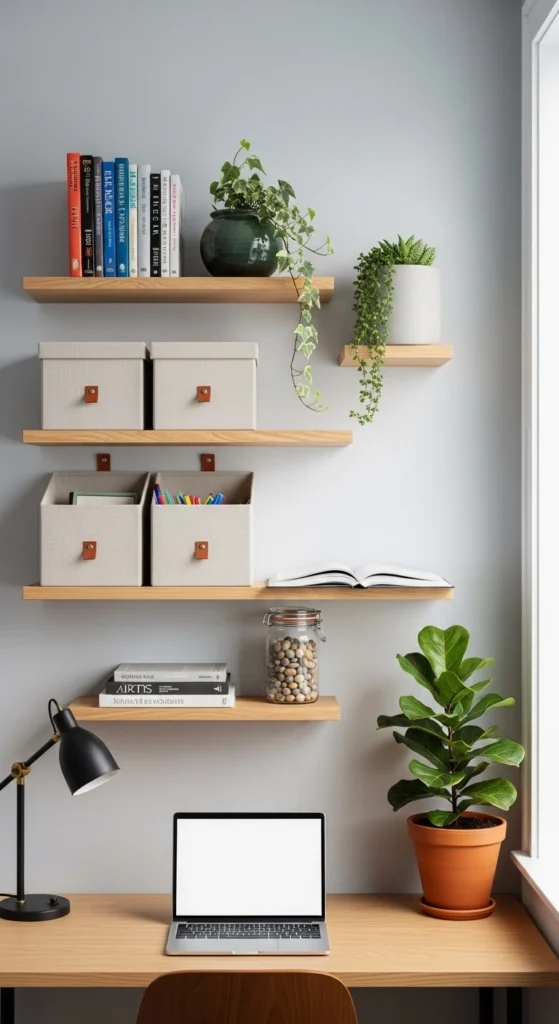
Shelves free up desk space while keeping essentials within reach. Wall-mounted options work well in small rooms or shared spaces. Store items you use daily on lower shelves and decor higher up.
DIY option: use simple brackets and pine boards stained or painted to match your room. This keeps supplies organized without adding bulky furniture.
6. Cable Control That Stays Hidden
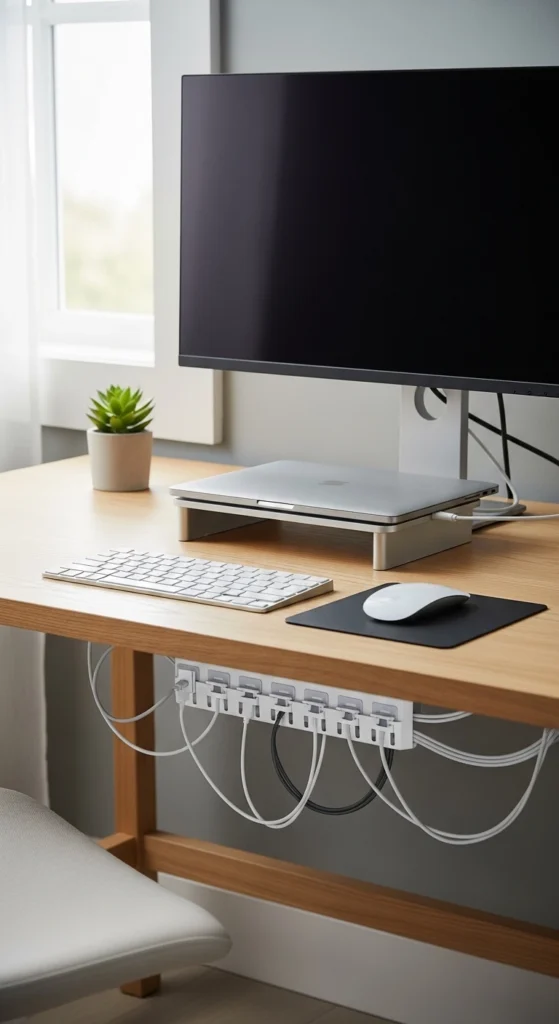
Loose cables create visual stress. Use adhesive clips, cable sleeves, or small trays under the desk to keep cords out of sight. Label chargers with tape if you share devices.
Budget fix: binder clips work as cable holders when attached to desk edges. Small changes like this keep the workspace calm and easier to clean.
7. Desk Lamp With Warm Task Lighting
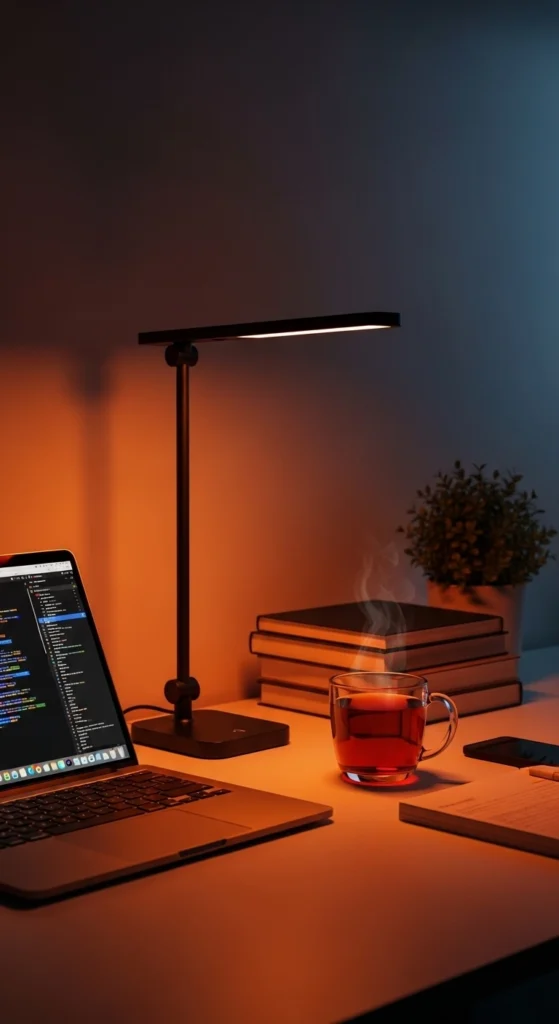
Overhead lighting alone rarely works well for focused tasks. A desk lamp adds direct light where you need it. Warm bulbs reduce harsh contrast during long sessions.
Look for adjustable arms so you can move light as needed. Clamp lamps save space and work well on narrow desks.
8. Area Rug to Ground the Space
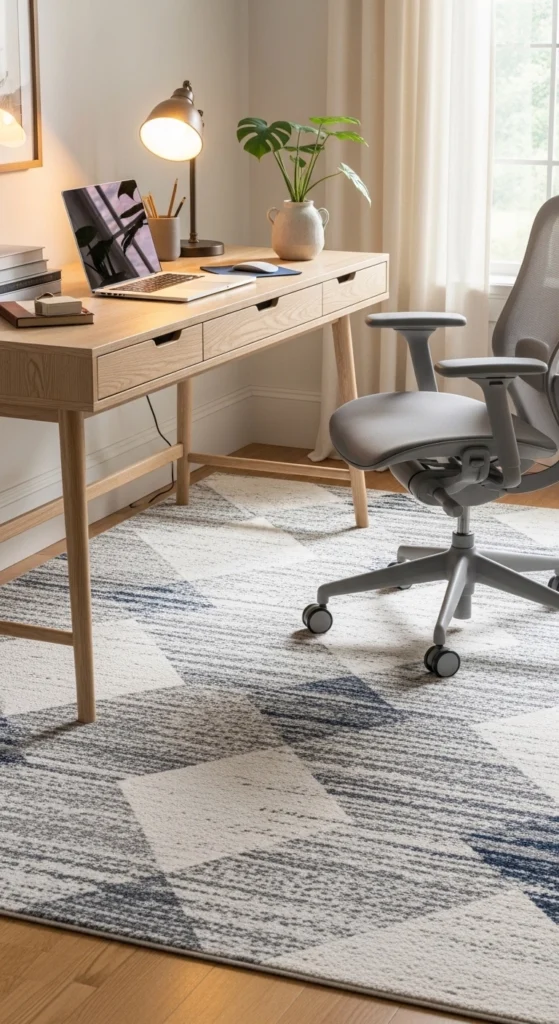
A rug defines your work zone, especially in multi-use rooms. It also reduces noise and adds comfort underfoot. Flat-weave rugs are easier to roll chairs over.
Budget tip: indoor-outdoor rugs are durable and often cheaper. Choose patterns that hide wear over time.
9. Minimal Desk Decor Only
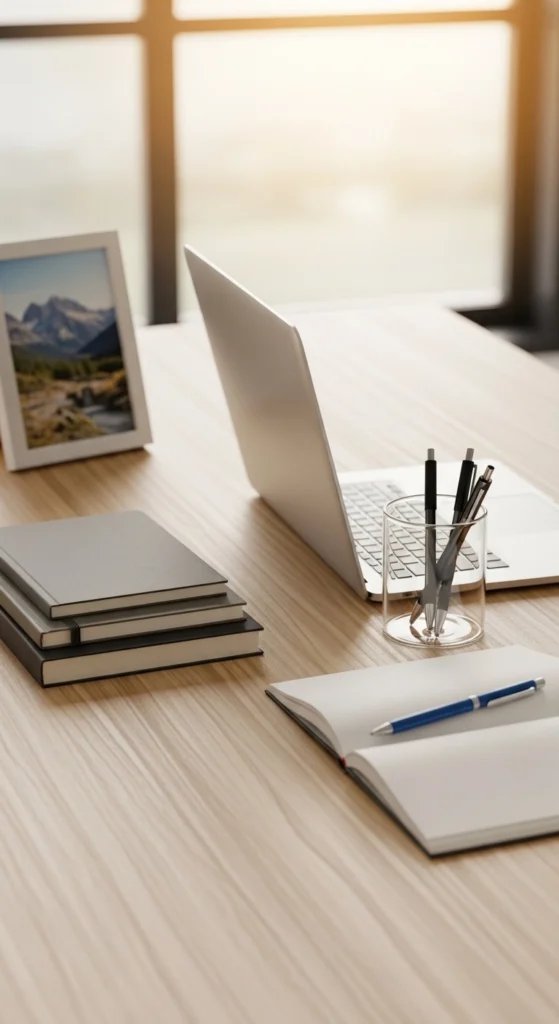
Limit desk decor to a few meaningful items. Too many objects distract your eyes during work. Keep frequently used tools visible and store the rest away.
A simple pen holder and tray keep surfaces clear while still feeling personal.
10. Gallery Wall With Purpose
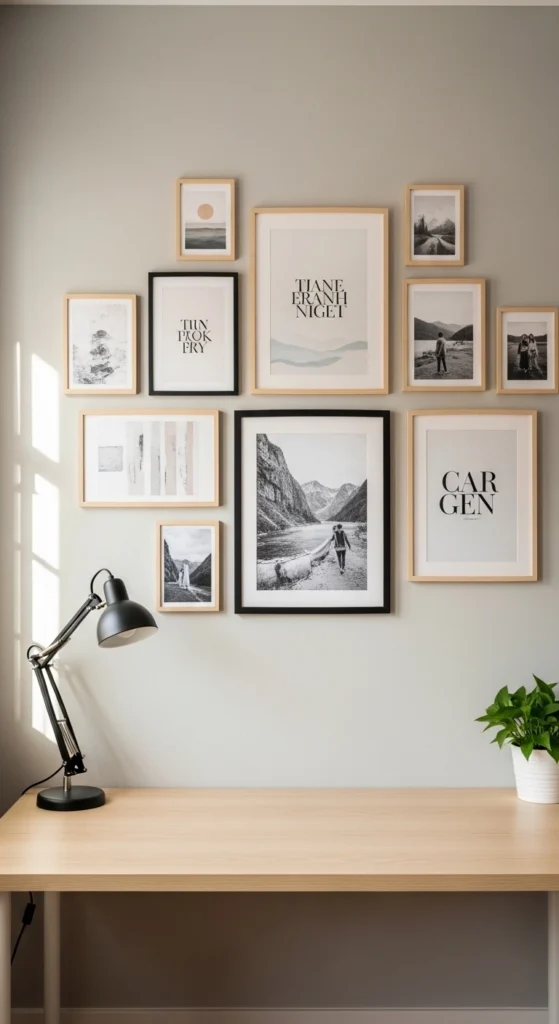
A gallery wall adds personality without cluttering surfaces. Keep frames similar in color for cohesion. Rotate art seasonally to keep the space feeling new.
DIY tip: print artwork at home and use affordable frames or clip rails.
11. Warm Wood Accents
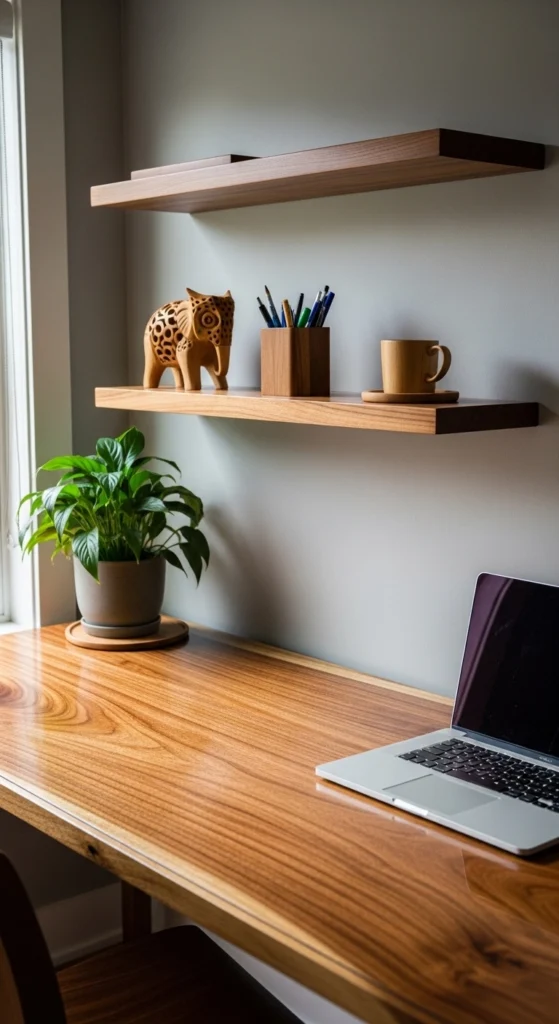
Wood tones add warmth and visual comfort. Even small accents like a wooden tray or monitor stand make a difference. Mix light and medium woods for depth.
12. Adjustable Desk Setup
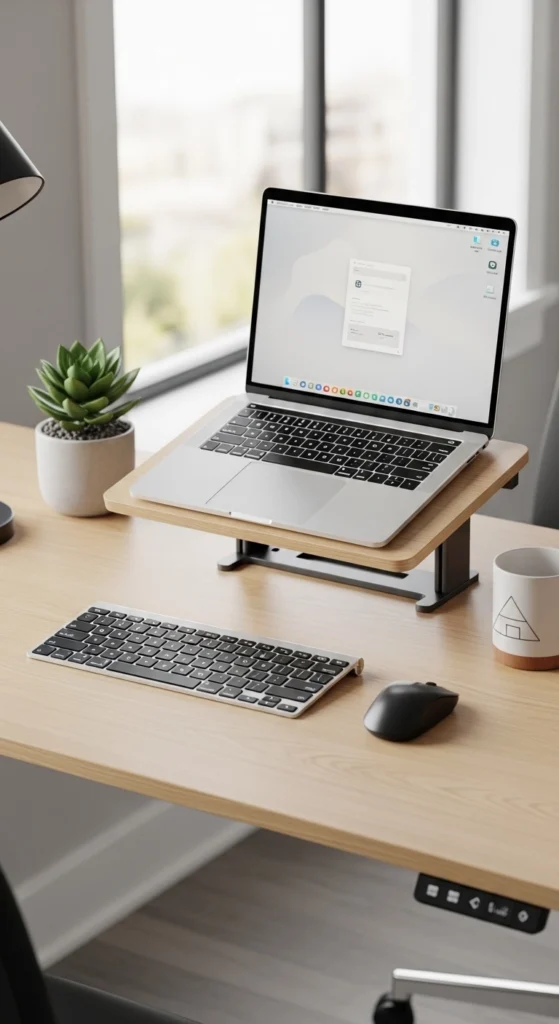
If full sit-stand desks are costly, try risers or stackable boxes to lift your screen occasionally. Changing posture during the day helps comfort.
13. Soft Window Treatments
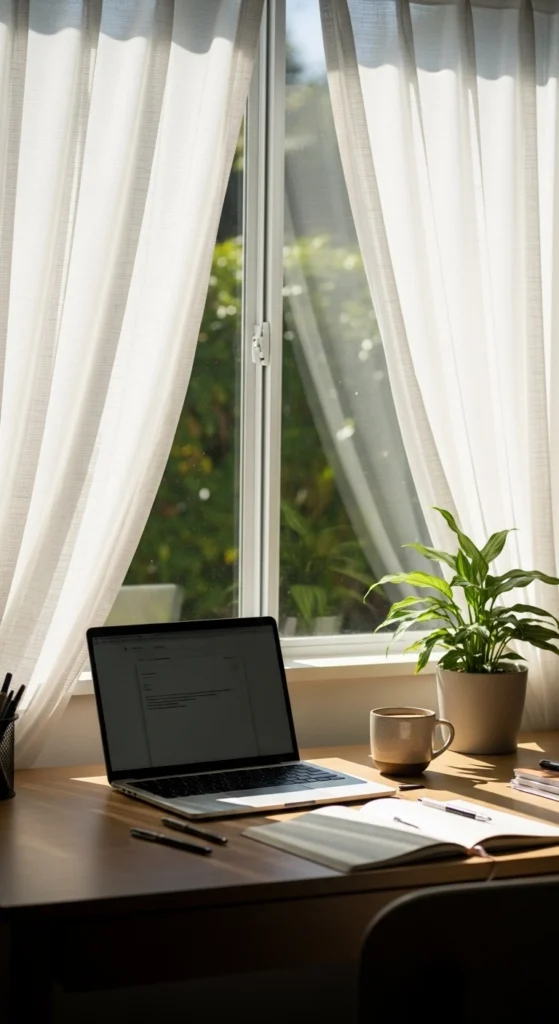
Curtains soften light and improve acoustics. Choose breathable fabrics that allow airflow and light.
14. Storage Boxes That Match Decor
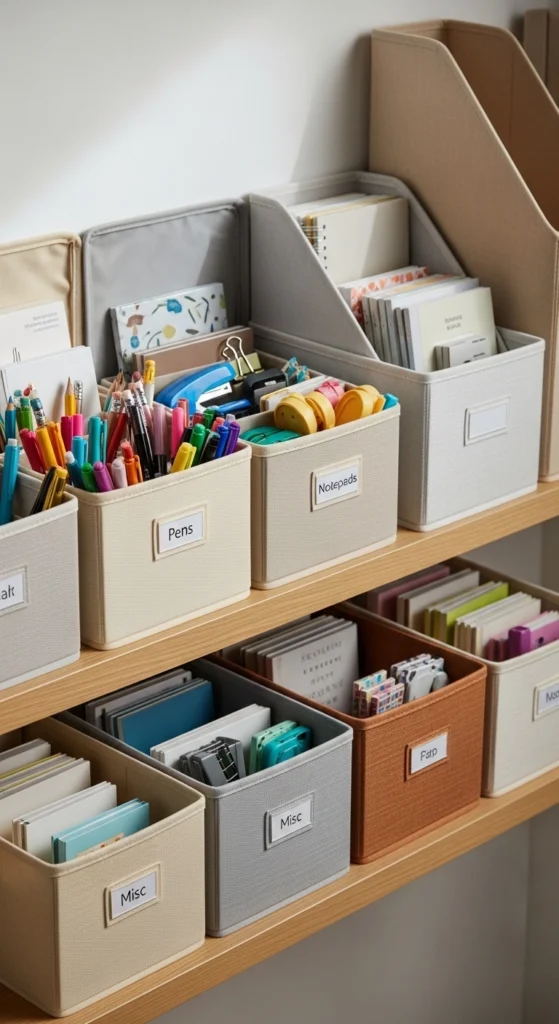
Matching storage reduces visual clutter. Label discreetly on the inside for quick access.
15. Scent Corner for Work Hours
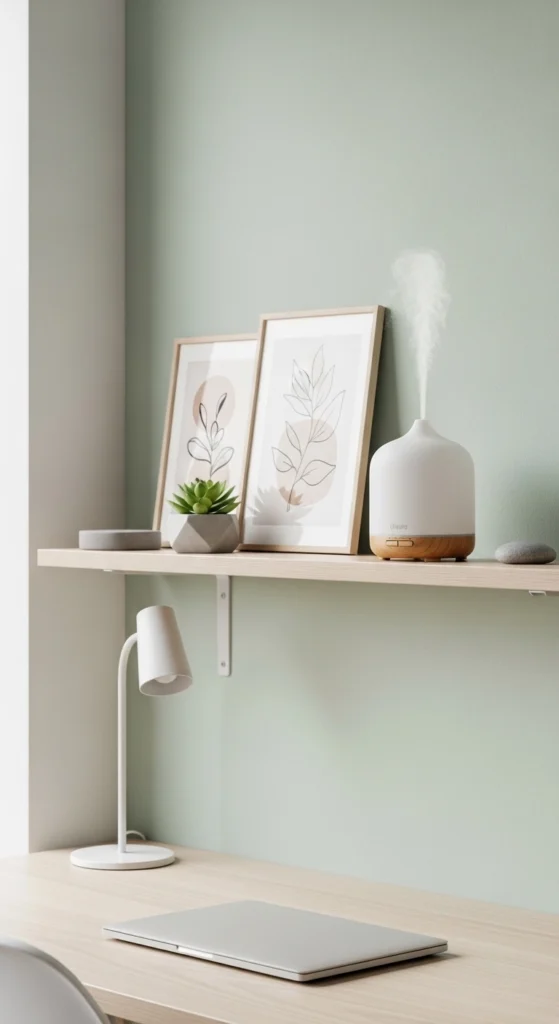
Use one scent only during work time to create routine. Citrus or herbal notes work well. Essential oils last longer than candles.
16. Compact Wall Desk for Small Rooms
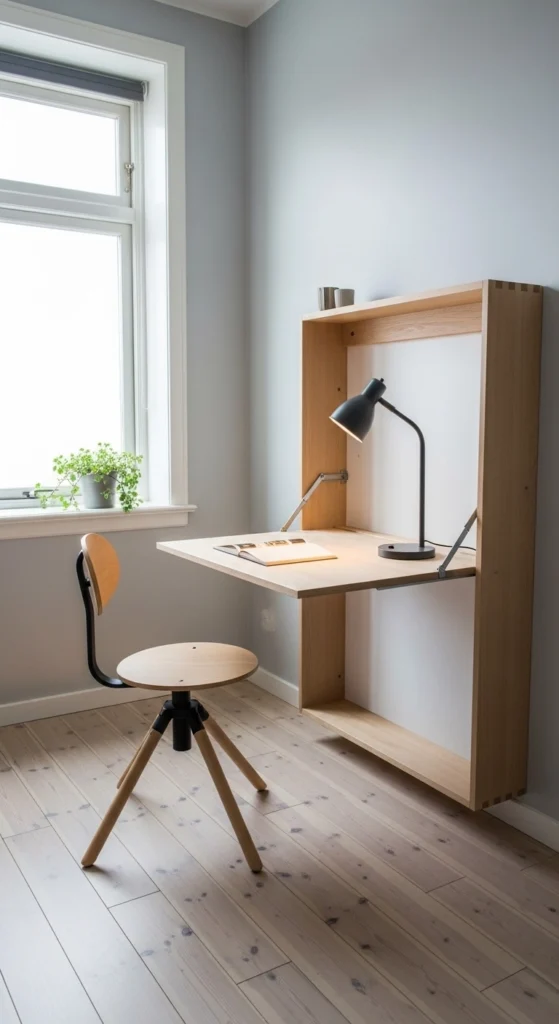
Wall desks save space and close when not in use. Great for bedrooms and apartments.
17. Comfortable Foot Support
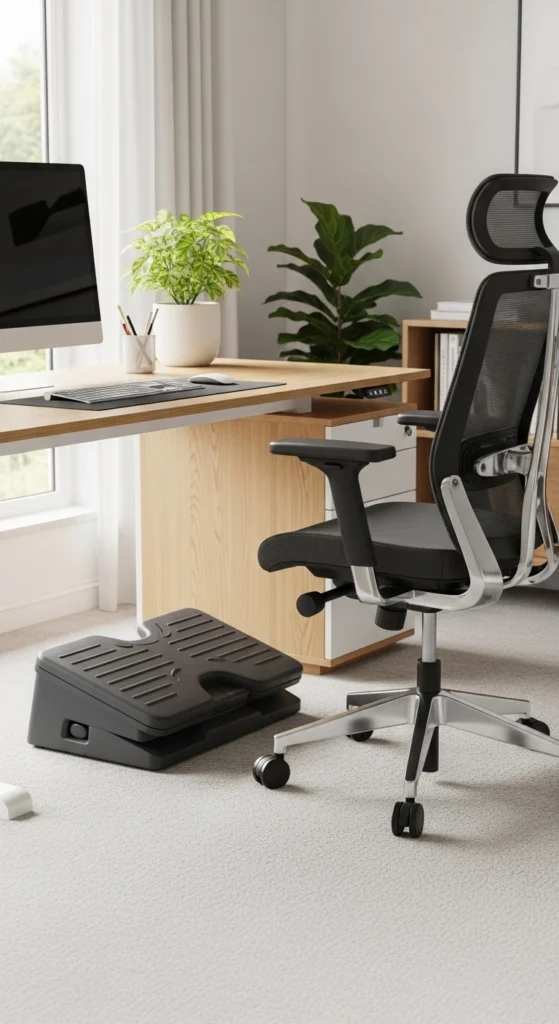
A footrest improves posture. Use a sturdy box or yoga block if needed.
18. Personal Books Within Reach
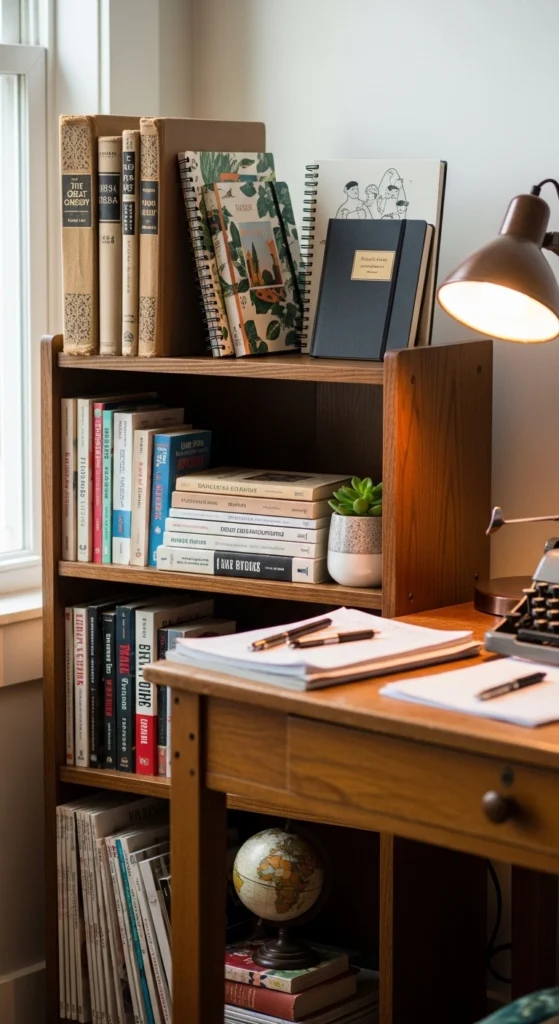
Keep reference books close but limit quantity. Rotate titles monthly.
19. Neutral Bulletin Board
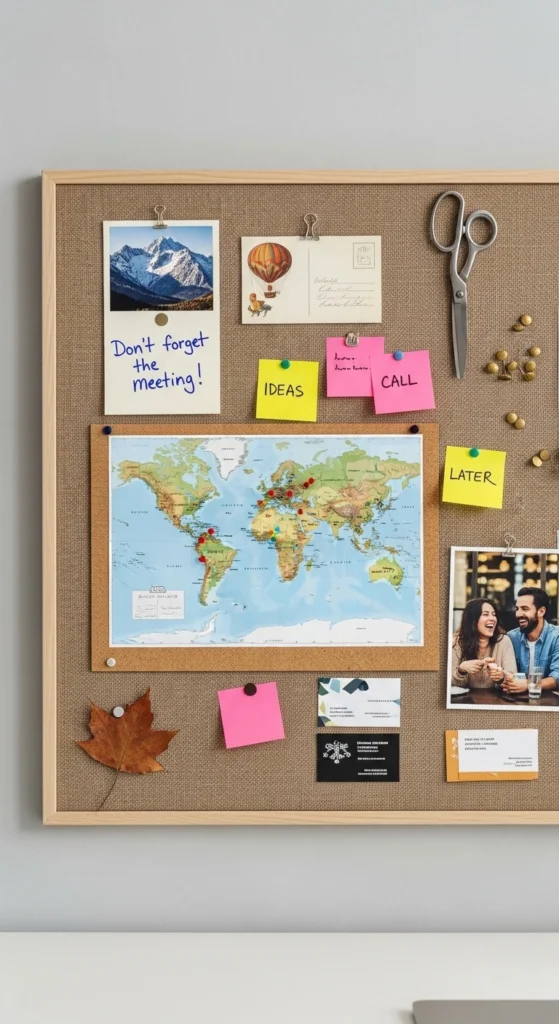
Fabric boards absorb sound and organize reminders. Choose neutral tones to keep focus steady.
20. Layered Lighting Setup
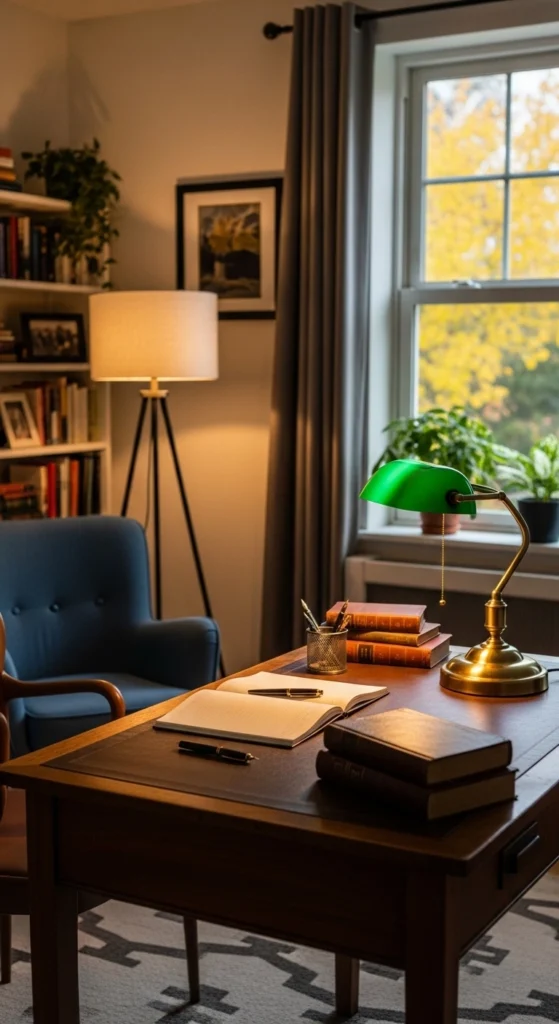
Multiple light sources reduce eye strain. Combine ambient and task lighting.
21. Desk Tray for Daily Items
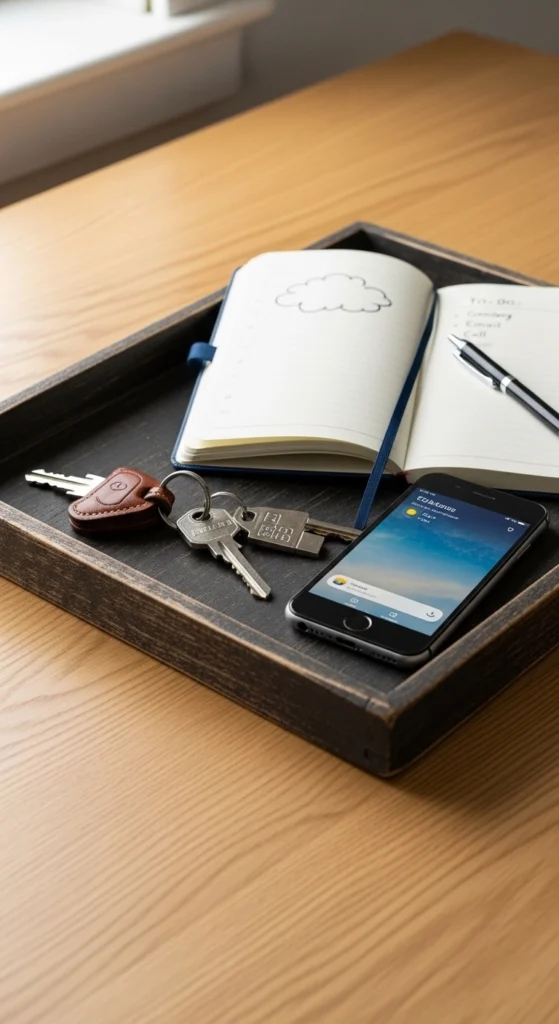
A tray keeps essentials from spreading across the desk. Wood or metal works well.
22. Textured Throw for Comfort
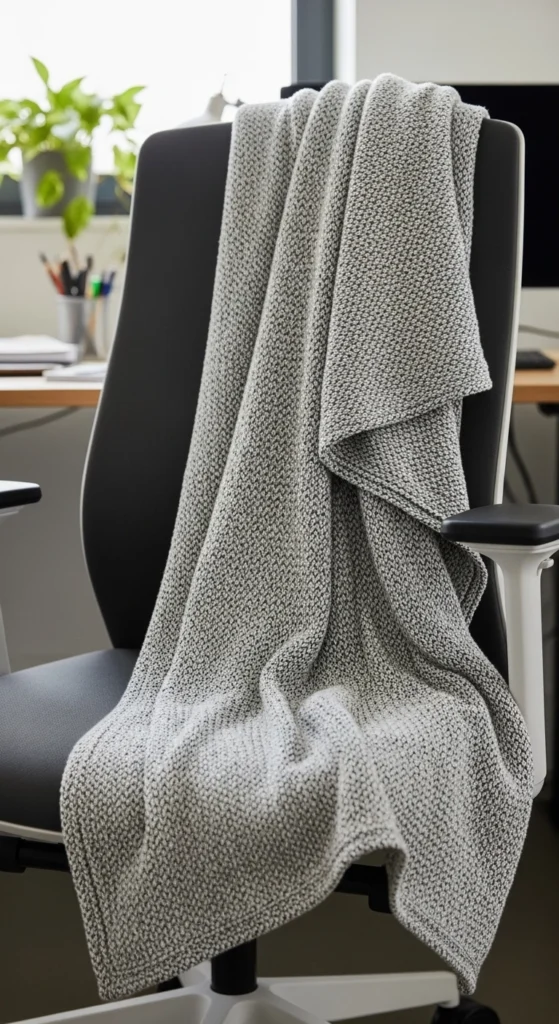
A throw adds warmth during cooler hours and softens the look of chairs.
23. Neutral Wall Art With Simple Shapes
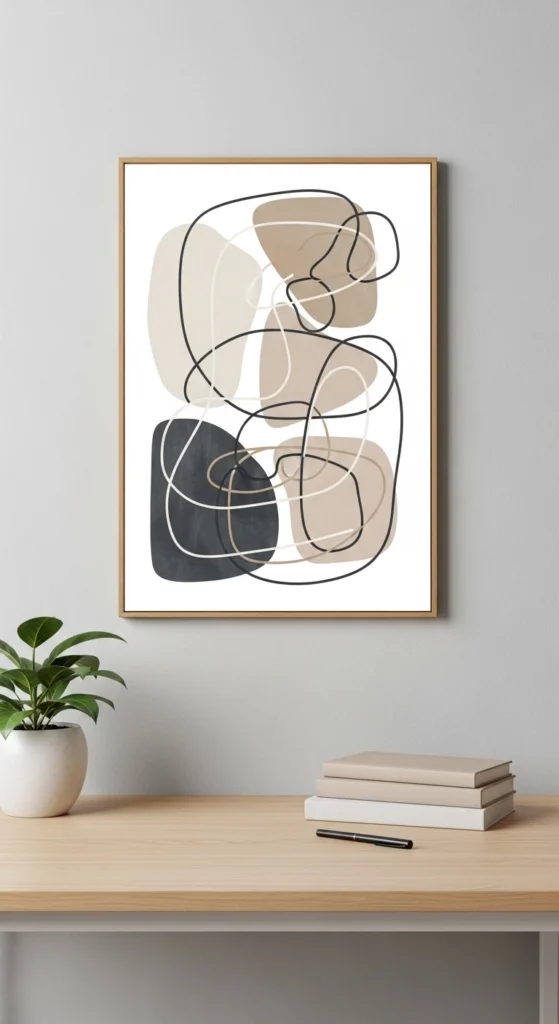
Simple art supports calm thinking. Avoid busy patterns.
24. Hidden Printer Station
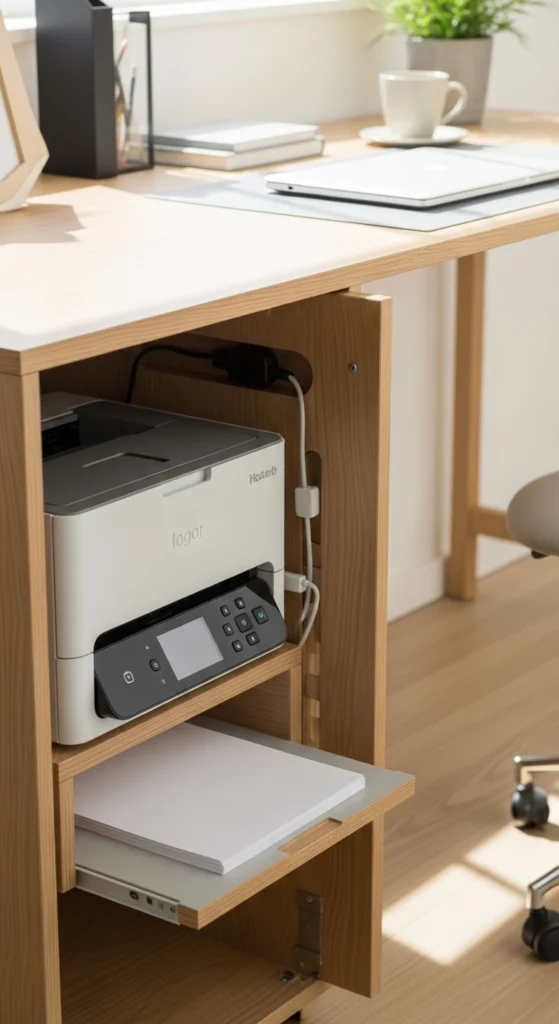
Hide bulky equipment to keep visual space clear.
25. Closet Office Conversion
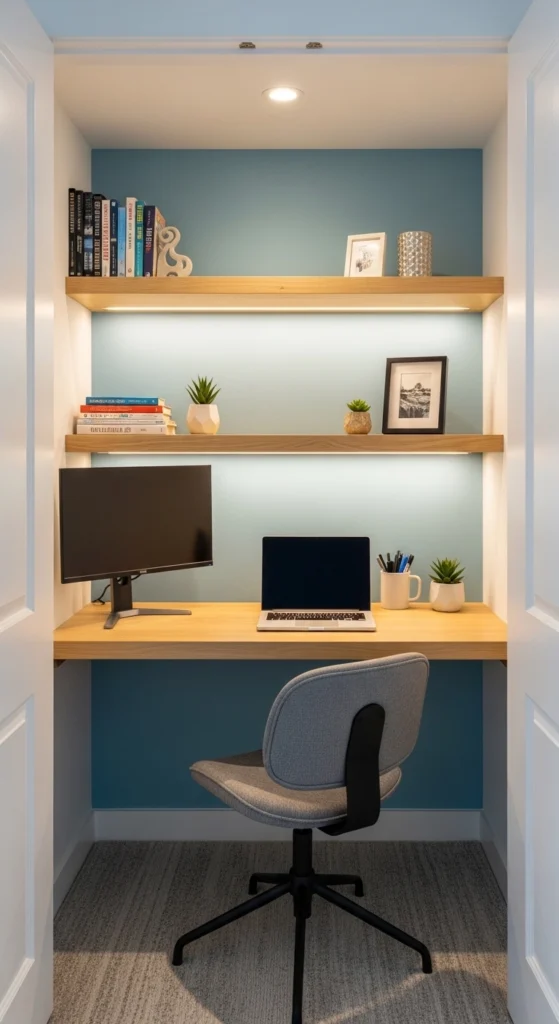
Closets offer quiet zones. Add lighting and shallow shelves.
26. Weekly Reset Routine Area
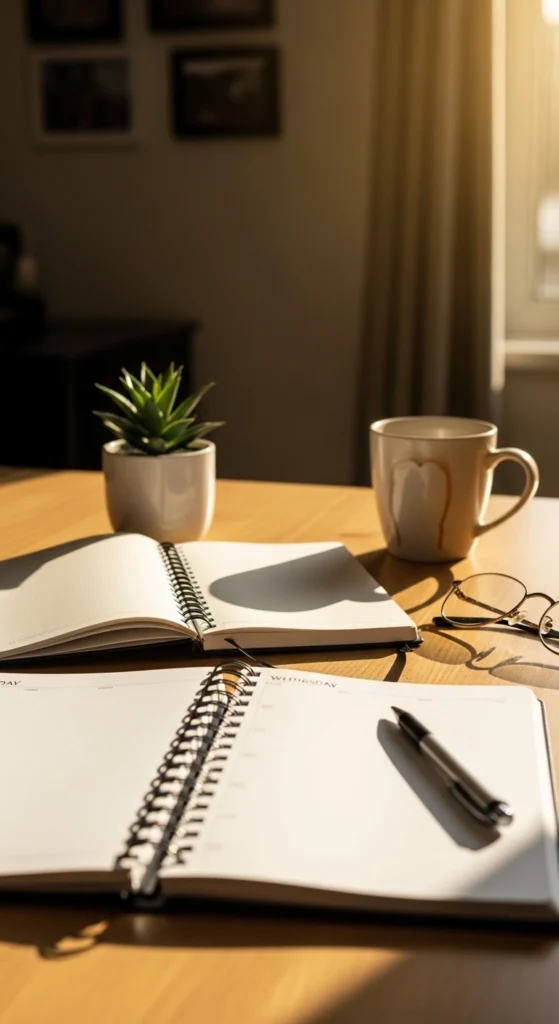
Designate a small space for weekly resets. Clearing surfaces helps start fresh.
Conclusion
A productive home office doesn’t rely on trends or expensive furniture. It grows from thoughtful choices that support comfort, clarity, and consistency. By adjusting light, layout, and storage while adding warmth through texture and personal details, your workspace can feel easier to use every day. Pick one or two ideas and apply them this week. Small changes often create the biggest difference over time.
