
Dining rooms are having a real moment in 2026. People are reclaiming them as places for connection, creativity, and daily use rather than formal, rarely touched rooms. The focus has shifted toward warmth, comfort, and personality. Think rich colors, tactile materials, flexible layouts, and details that feel personal instead of staged. These ideas show how small, realistic changes can shape a dining room that feels intentional and guest-ready without feeling stiff or expensive.
1. Moody Wall Colors That Set the Tone
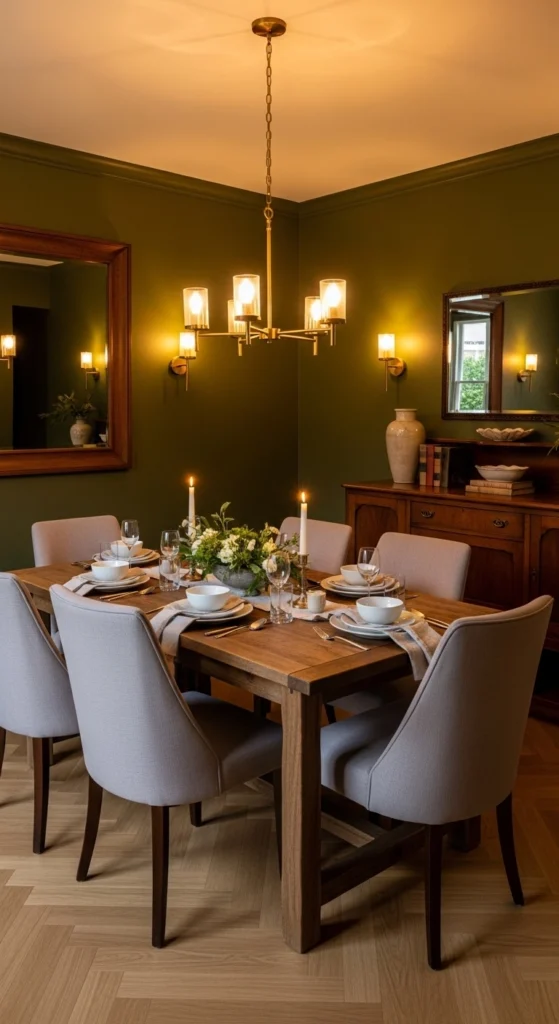
Dark walls bring instant character. Olive, navy, or charcoal wraps the room and makes gatherings feel relaxed. Paint is one of the lowest-cost changes you can make. Try one accent wall if a full room feels bold. Pair darker walls with light wood furniture to keep balance. Add simple frames or mirrors to break up large areas of color. Matte finishes hide wall flaws better than gloss. Even rental-friendly peel-and-stick paint options now exist. The result feels cozy and intentional without buying new furniture.
2. Round Dining Tables for Better Flow

Round tables make conversation easier. Everyone faces each other. They also soften boxy rooms. If buying new feels pricey, look for secondhand tables and refinish them. Sanding and staining can change the look in a weekend. Add a round rug underneath to echo the shape. This setup works well in smaller rooms since sharp corners disappear. Guests naturally linger longer when seating feels open and relaxed.
3. Mix-and-Match Dining Chairs

Matching sets feel dated. Mixing chairs adds personality fast. Start with two styles in the same color family. Thrift stores are perfect for this. Paint wooden chairs one tone to unify them. Add seat cushions for comfort. This approach saves money and looks collected over time. Guests notice the charm without thinking it looks planned.
4. Statement Pendant Lighting

Lighting changes everything. A large pendant draws the eye down to the table. It sets mood without clutter. Look for woven, ceramic, or metal shades. Budget options exist online and at lighting outlets. Install a dimmer switch for flexibility. Even simple meals feel special under soft lighting.
5. Banquette Seating for Cozy Corners
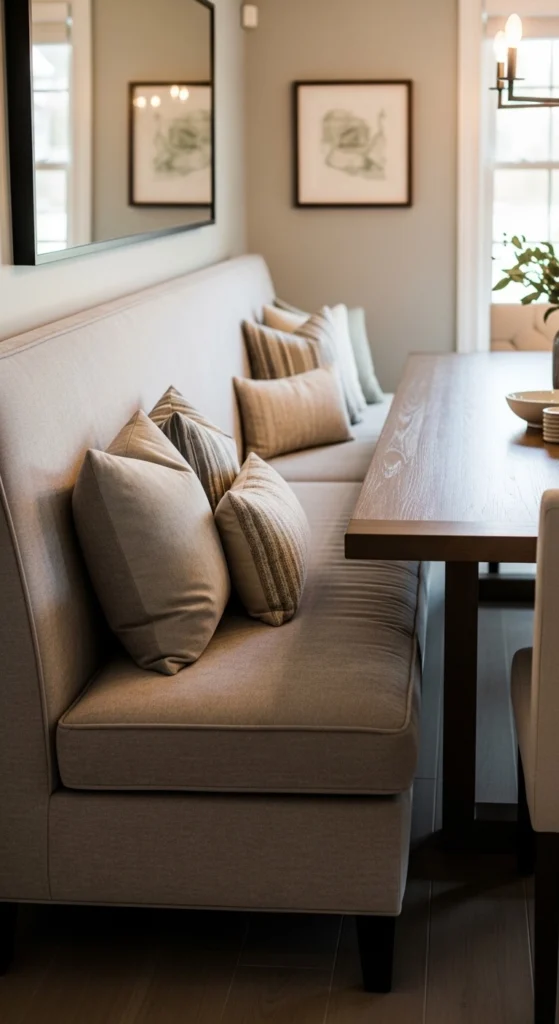
Banquettes save space and feel inviting. You can DIY one using a bench, wall brackets, and cushions. Add storage bins underneath for linens. This setup works well in apartments or open layouts. Guests love sinking into padded seating. It feels relaxed and practical at the same time.
6. Wood-Drenched Accents
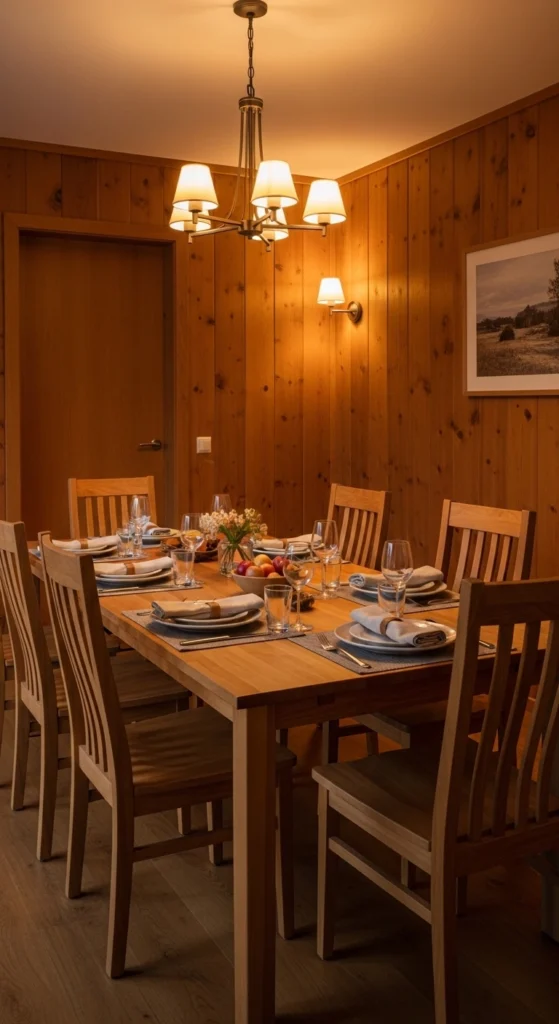
Wood brings warmth instantly. Full paneling looks bold, but smaller touches work too. Try wood trim, a sideboard, or open shelves. Even peel-and-stick wood panels create impact. Darker stains feel especially current. Pair wood with simple textiles to avoid heaviness.
7. Oversized Art as a Focal Point

One large piece works better than many small ones. It anchors the room. You can DIY art using canvas and leftover paint. Abstract shapes hide mistakes well. Hang art lower than you think so it connects to the table. This trick adds depth without clutter.
8. Layered Rugs for Comfort
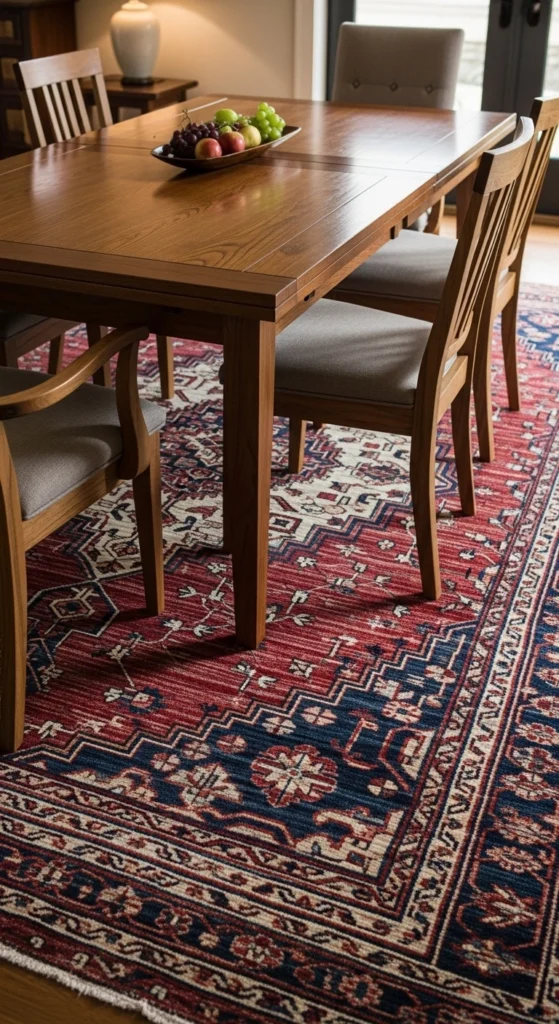
Rugs define the dining zone. Choose one large enough for chairs to slide easily. Flat weaves clean easily and cost less. Layering a smaller textured rug on top adds interest. This also helps with sound in echo-prone rooms.
9. Curved Furniture Details
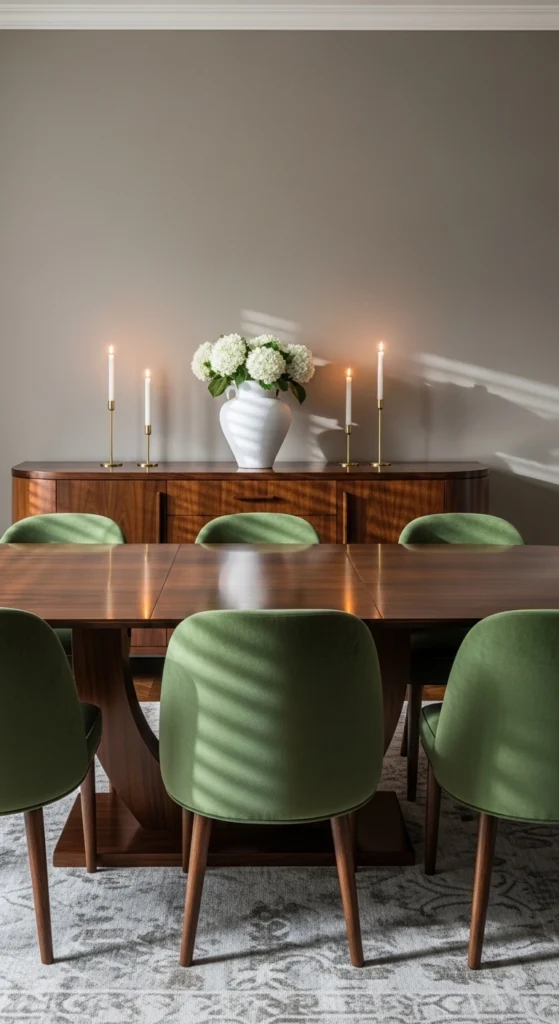
Curves soften sharp layouts. Look for rounded chair backs or oval tables. Even a curved mirror helps. Thrifted pieces often have these shapes. Mixing curves with straight lines keeps the room balanced and welcoming.
10. Built-In Bar or Serving Zone

A serving area makes hosting easier. Use a small cabinet or console table. Add trays for organization. This keeps the dining table clear and makes guests feel comfortable serving themselves.
11. Textured Wall Finishes
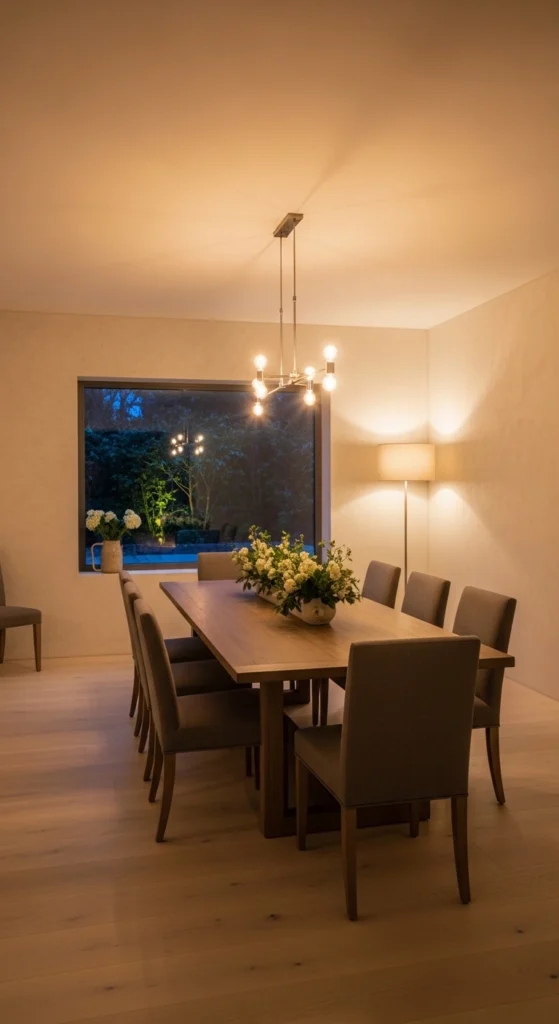
Texture adds depth even in neutral colors. Limewash paint gives a soft, aged look. DIY kits are widely available. Apply with a brush for variation. Walls feel richer without adding decor.
12. Dark Wood Furniture Revival

Dark wood feels grounded and timeless. Older furniture often comes in these tones. Light sanding refreshes worn spots. Pair with light walls for contrast. This look feels rich without being flashy.
13. Upholstered Dining Chairs
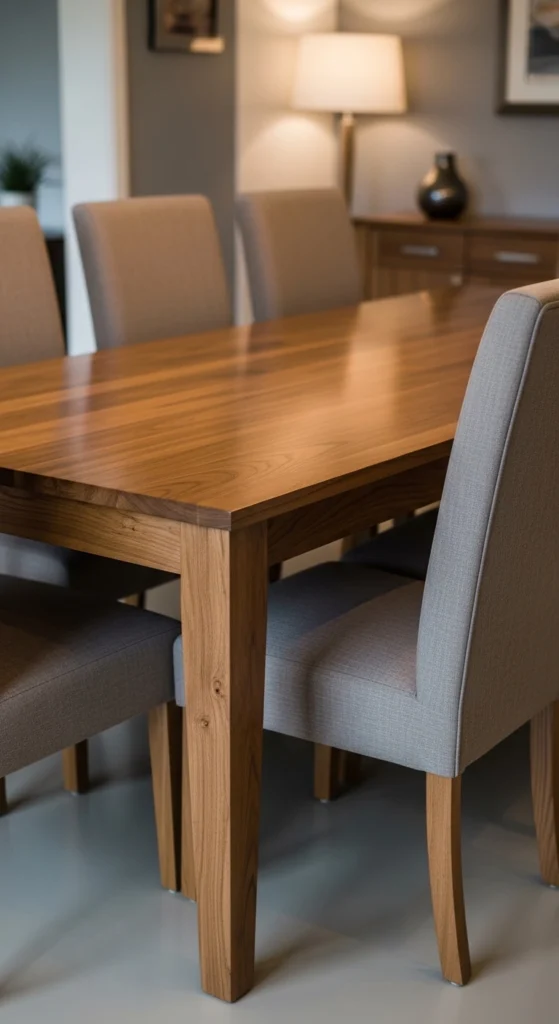
Fabric chairs invite people to sit longer. Performance fabrics resist stains and cost less than expected. Slipcovers are another option. They wash easily and change the look seasonally.
14. Wallpaper Feature Walls
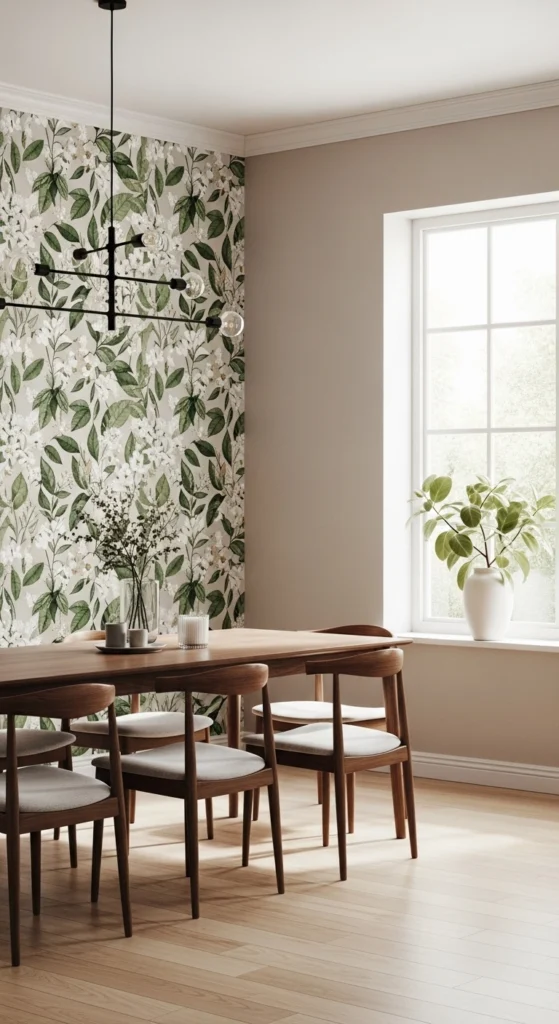
Wallpaper adds personality fast. Use it on one wall to control cost. Peel-and-stick styles are renter-friendly. Botanical patterns feel calm and social. Keep furniture simple so walls shine.
15. Sideboards for Storage and Style
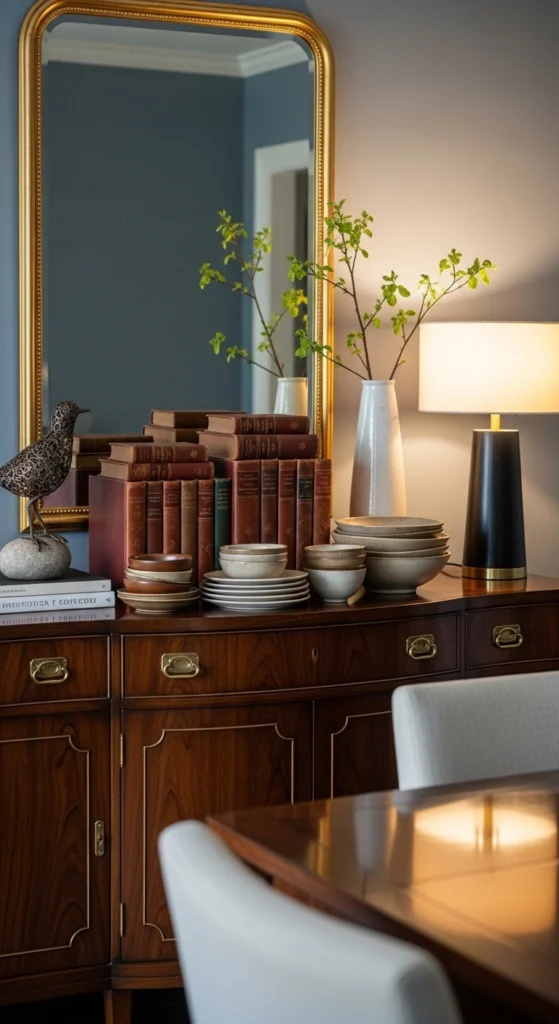
Sideboards hold serving items and decor. Vintage ones are affordable secondhand. Style the top with stacked plates, a lamp, and art. This adds function without crowding the table.
16. Ceiling Details That Surprise

Ceilings are often ignored. Paint them a deeper shade or add wallpaper. Even faux beams change the feel. This draws the eye upward and makes the room feel intentional.
17. Natural Fiber Accents

Natural fibers feel relaxed. Use jute rugs, linen runners, or woven shades. These items cost less than hard finishes. They also layer well with darker colors.
18. Gallery Lighting on Walls

Wall lights add glow without taking table space. Plug-in sconces avoid wiring costs. Place them near art or mirrors. This soft lighting flatters food and faces.
19. Library-Dining Hybrids
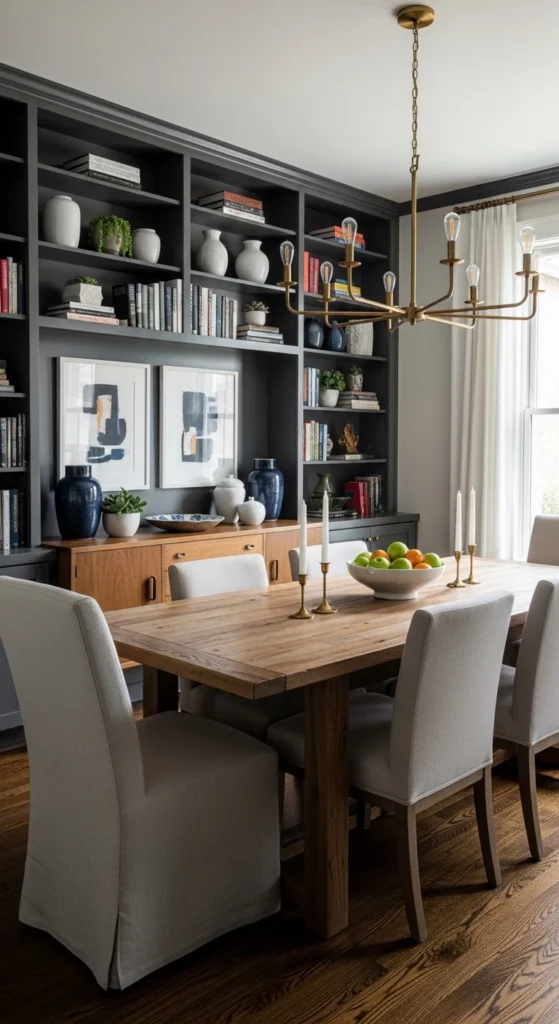
Books add warmth. A shelf wall turns dining into a lived-in space. Use inexpensive shelving units and paint them one color. Style with books and simple objects. Guests feel at ease in rooms that show real life.
20. Sculptural Centerpieces

Skip busy centerpieces. One sculptural object works better. Handmade ceramics or thrifted bowls cost less than floral arrangements. Keep height low so conversation flows easily.
21. Earth-Tone Color Palettes
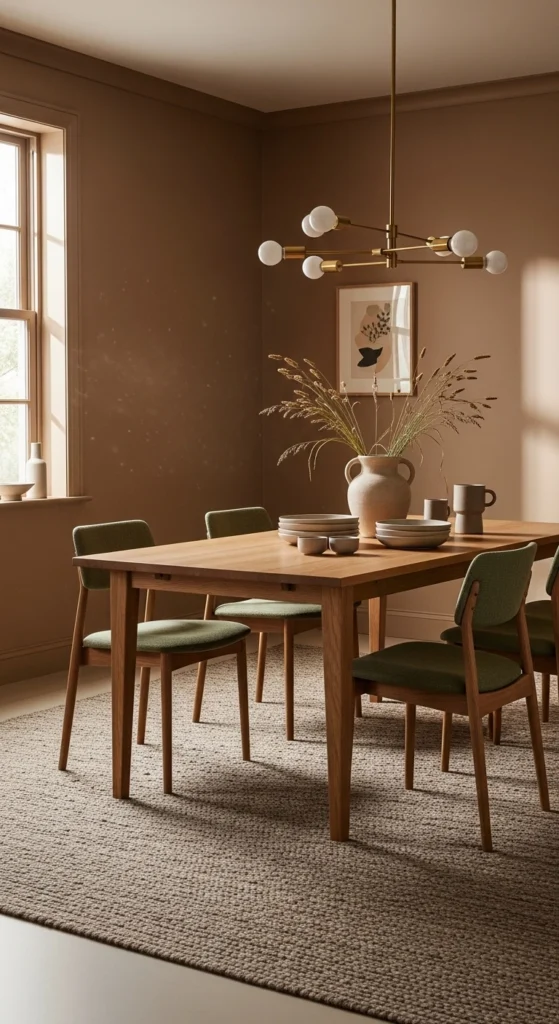
Earth tones calm the space. Use them in paint, textiles, or chairs. These colors hide wear better than white. Small updates like cushions or runners shift the mood quickly.
22. Open Shelving for Display

Open shelves make everyday items decorative. Install basic brackets and wood boards. Display plates vertically for interest. Rotate items seasonally to keep things feeling updated.
23. Thoughtful Table Styling

Simple table settings make guests feel welcome. Use placemats instead of full cloths for easy care. Cloth napkins feel special and wash well. Keep colors neutral so pieces mix easily.
Conclusion
A dining room does not need big renovations to feel impressive. Small choices like lighting, color, texture, and seating shape how people experience the space. Focus on comfort and personality rather than perfection. When a room feels warm and usable, guests notice. Start with one idea that fits your home and build from there.
