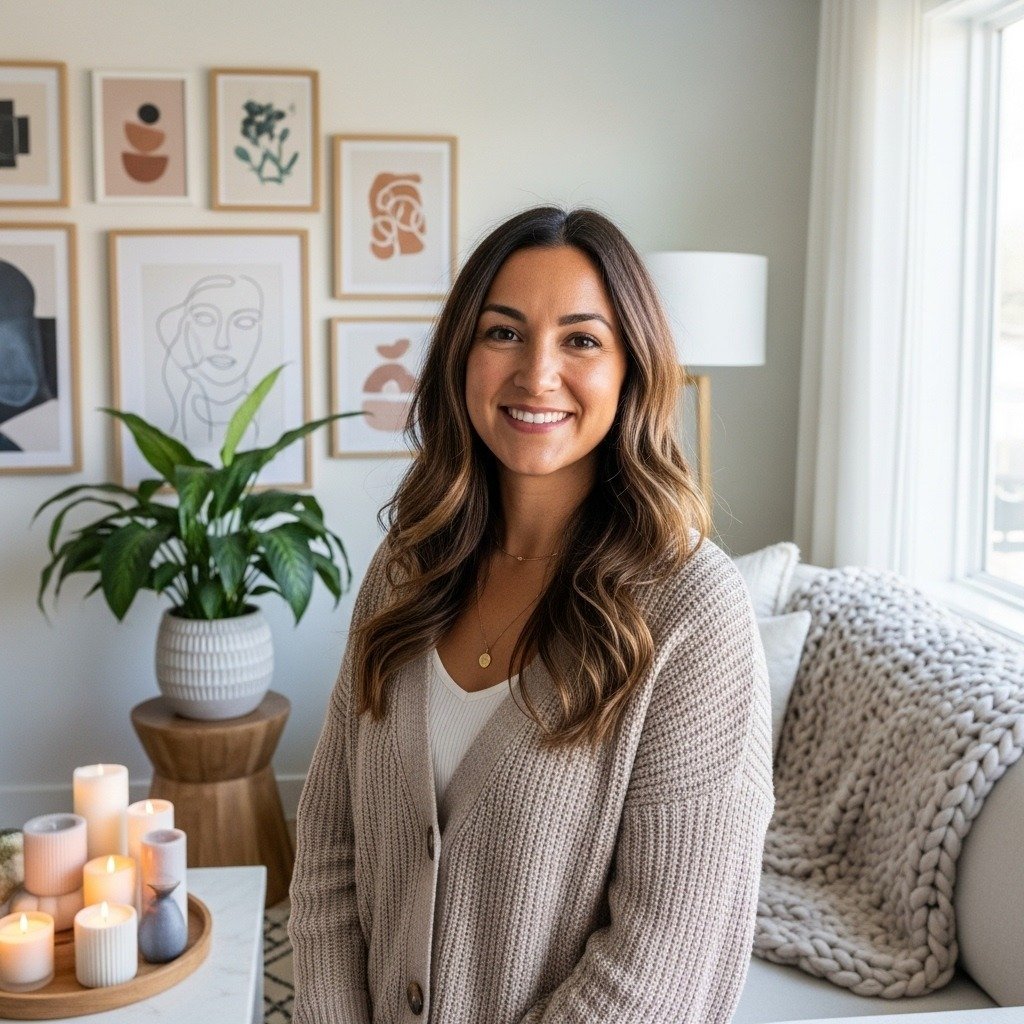
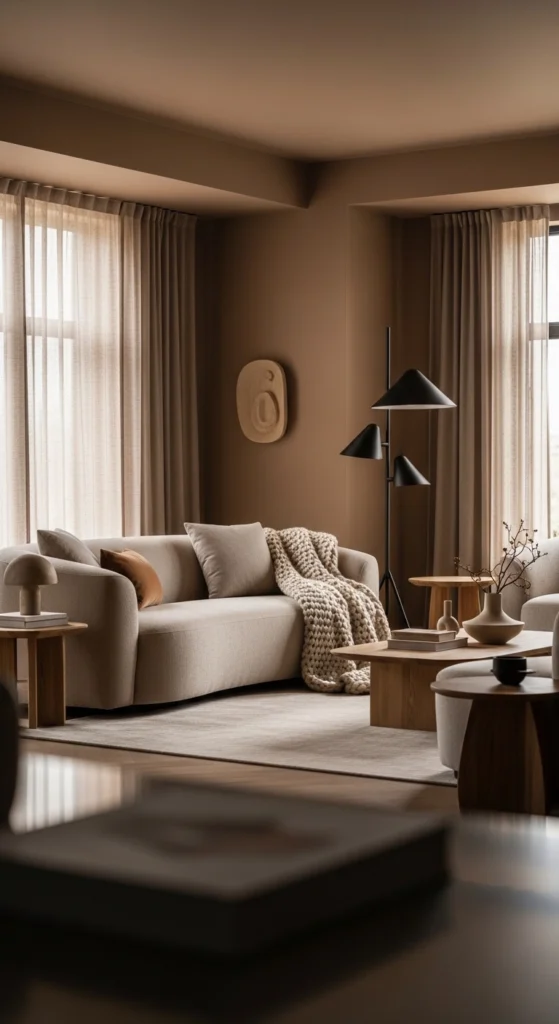
Modern contemporary decor today leans warm, personal, and practical. Clean lines still matter, but comfort and character now take center stage. Rich tones replace stark whites. Texture replaces flat finishes. Rooms feel lived in, not staged. This guide focuses on ideas that work in real homes, on real budgets. Each concept is simple to try, easy to adapt, and friendly for renters and homeowners alike.
1. Edible Brown Color Palettes
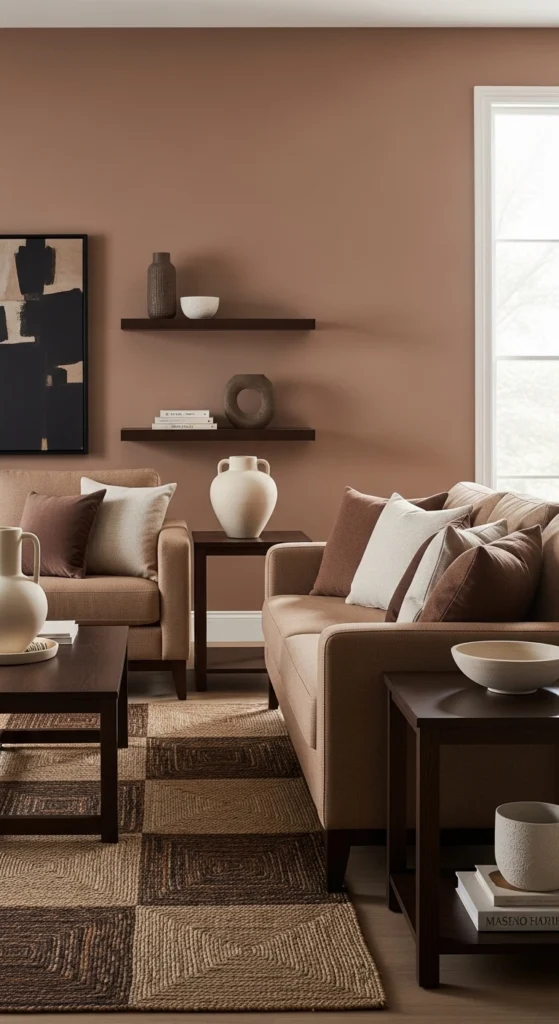
Brown shades bring warmth without feeling heavy. Start small. Paint one wall in a cocoa or chestnut tone. Keep the rest light. Pair it with cream cushions and pale wood furniture. If paint feels like too much, use brown through pillows, throws, or a rug. Thrift stores often have neutral textiles that fit right in. For DIY art, frame fabric swatches in chocolate and caramel tones. Kitchens also welcome brown through wood cutting boards or ceramic bowls. These shades feel calm and grounding while staying easy to live with.
2. Statement Stone Surfaces
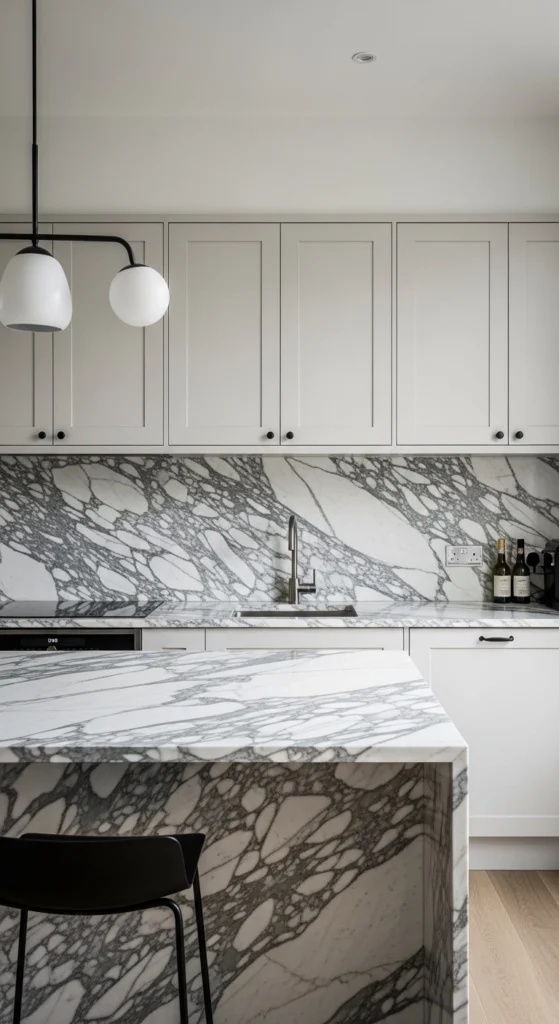
Natural stone patterns add movement to simple rooms. Full countertops can be costly, so think smaller. Use marble-look contact paper on a coffee table or shelf top. Stone trays work well on consoles or vanities. Even a single slab-style cutting board adds impact. Keep surrounding decor simple so the stone stands out. This approach gives drama without large renovations.
3. Curved Sofas for Soft Flow
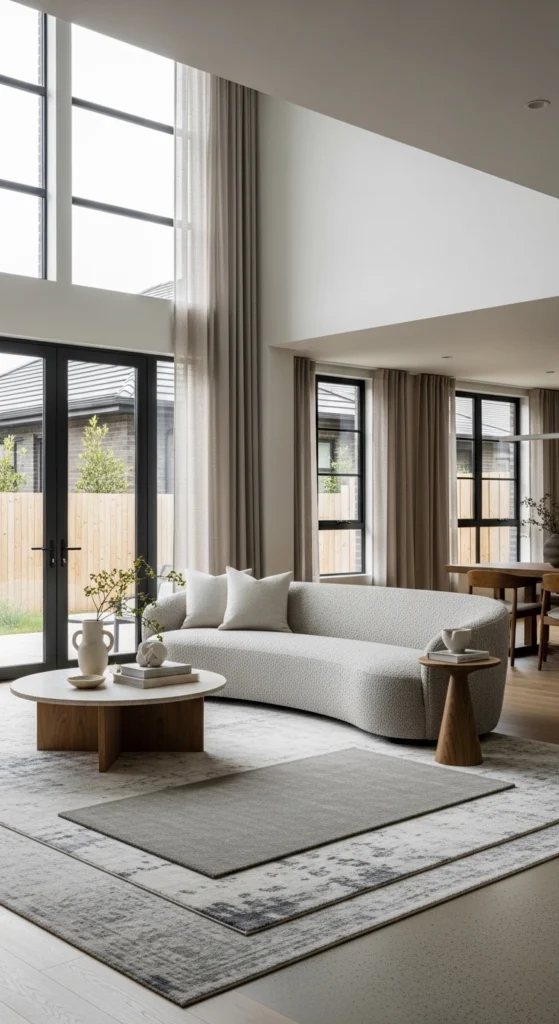
Curved seating changes how a room feels. It invites conversation and softens sharp corners. If a new sofa isn’t an option, try curved elements nearby. A rounded chair, oval table, or arched mirror helps. DIY option: rearrange furniture into gentle arcs instead of straight lines. Even small changes make open spaces feel more welcoming.
4. Sculptural Lighting as Decor
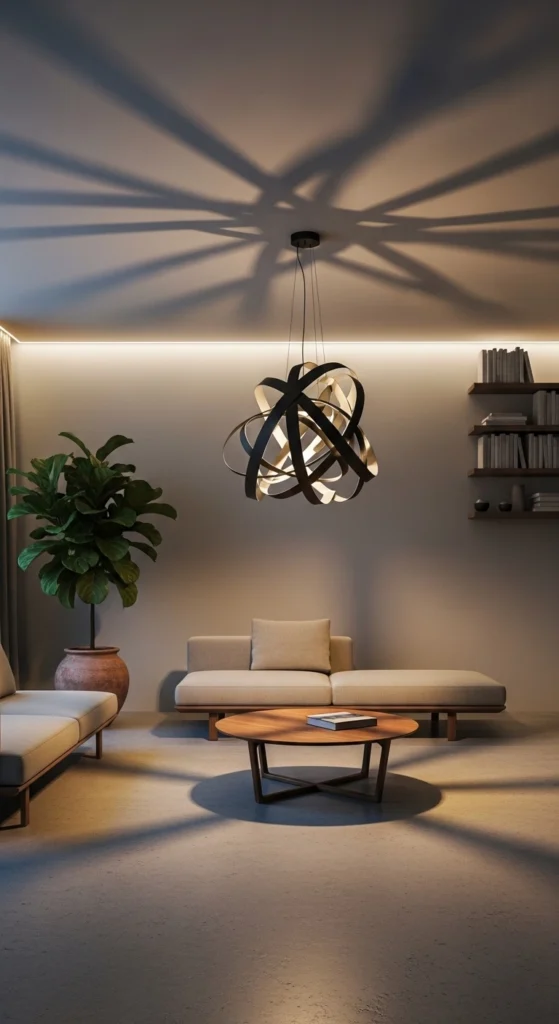
Lighting now acts like wall art. Look for lamps with bold shapes or oversized shades. Thrifted lamps can be updated with spray paint or a linen shade. Floor lamps work well when ceiling fixtures aren’t possible. Keep bulbs warm to avoid harsh light. One standout piece is enough to shift the mood.
5. Pattern Drenched Rooms
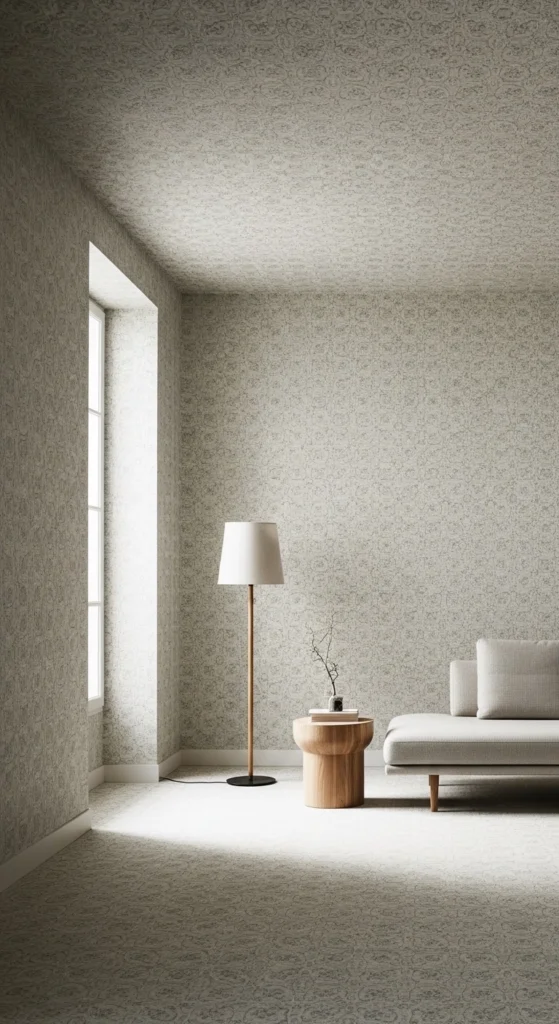
Pattern on all surfaces feels bold yet cozy. Start with a powder room or small bedroom. Peel-and-stick wallpaper keeps it budget friendly. Choose one pattern and repeat it. Balance with plain furniture and simple flooring. This approach works best when the palette stays tight.
6. Layered Textures for Lived-In Comfort
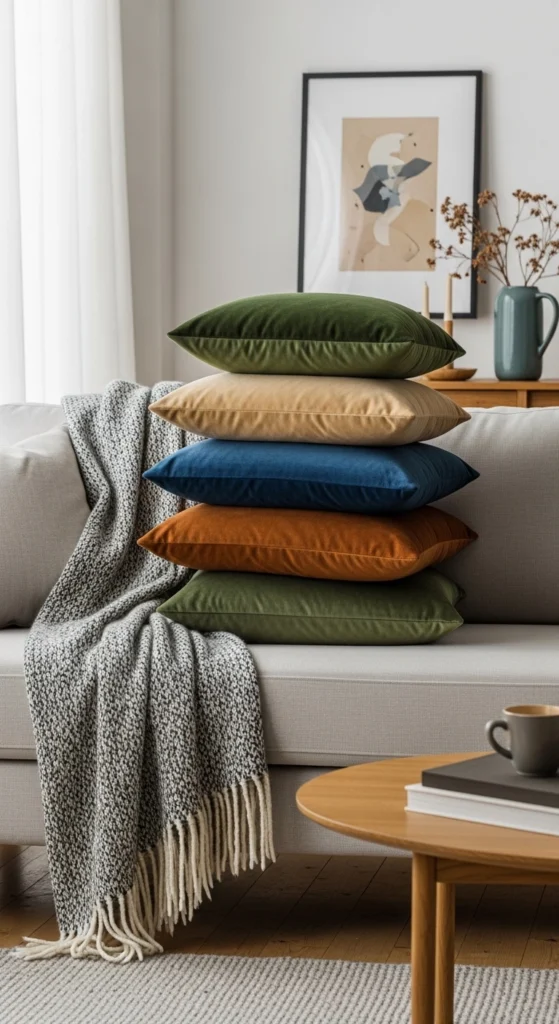
Texture adds comfort fast. Mix soft and rough surfaces. Think wool throws, linen curtains, ceramic lamps, and wood stools. Many pieces already exist at home. Swap pillow covers seasonally. Use blankets as sofa covers. Texture helps rooms feel complete without new furniture.
7. Decorative Wall Paneling
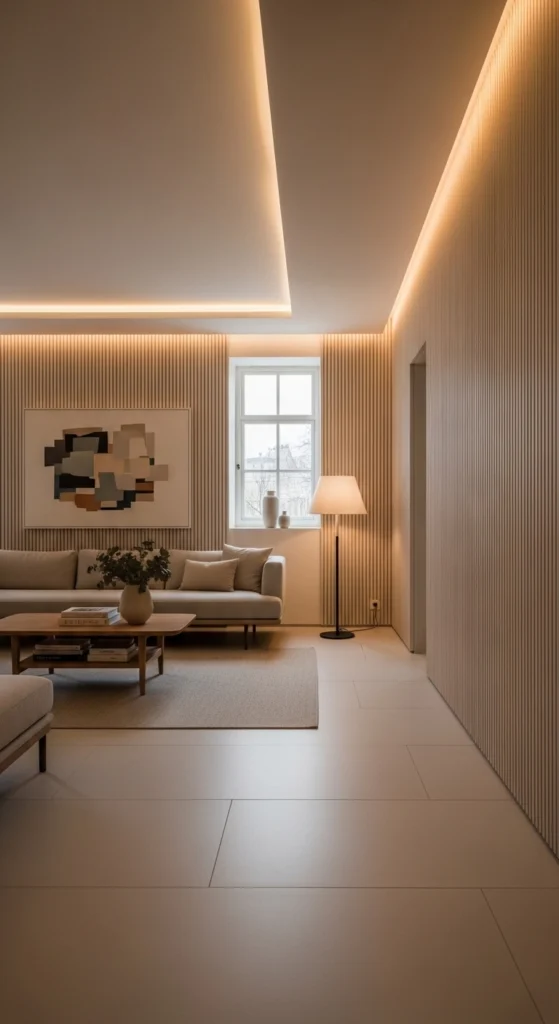
Wall details add depth. Try DIY paneling using thin MDF strips. Paint everything one color for a clean look. This works well behind beds or sofas. Even renters can mimic the look using removable molding or tape layouts.
8. Chrome and Polished Metal Touches
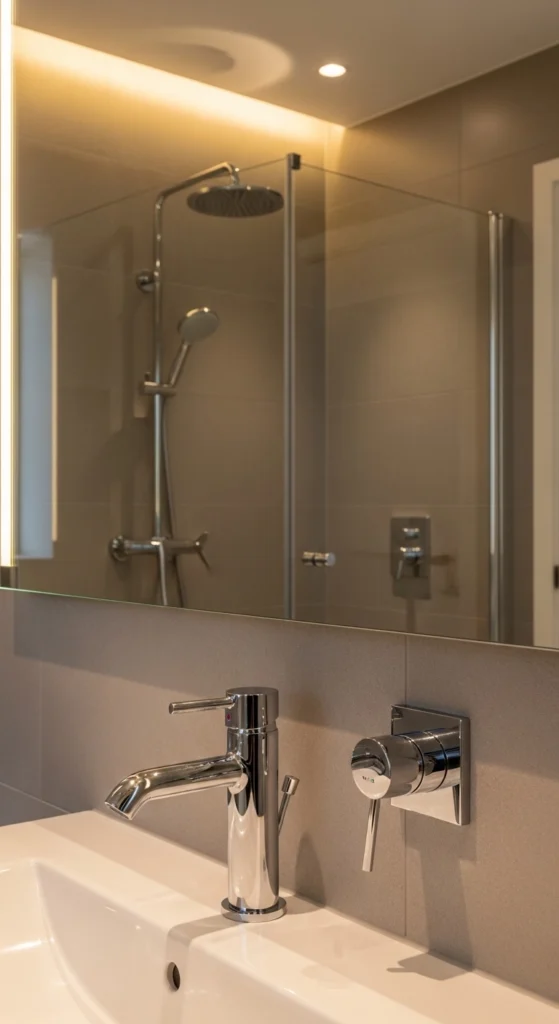
Shiny metals bring light into a space. Swap cabinet pulls or faucet handles. Look for chrome trays or lamps at resale shops. Keep it limited so it doesn’t feel cold. Mixing chrome with wood balances the look.
9. Pocket Retreat Corners

Small corners deserve attention. Add a chair, lamp, and side table. This creates a place to pause. Use what you own first. Even a floor cushion works. These spaces help break up open layouts without walls.
10. Ceiling Details Beyond Paint
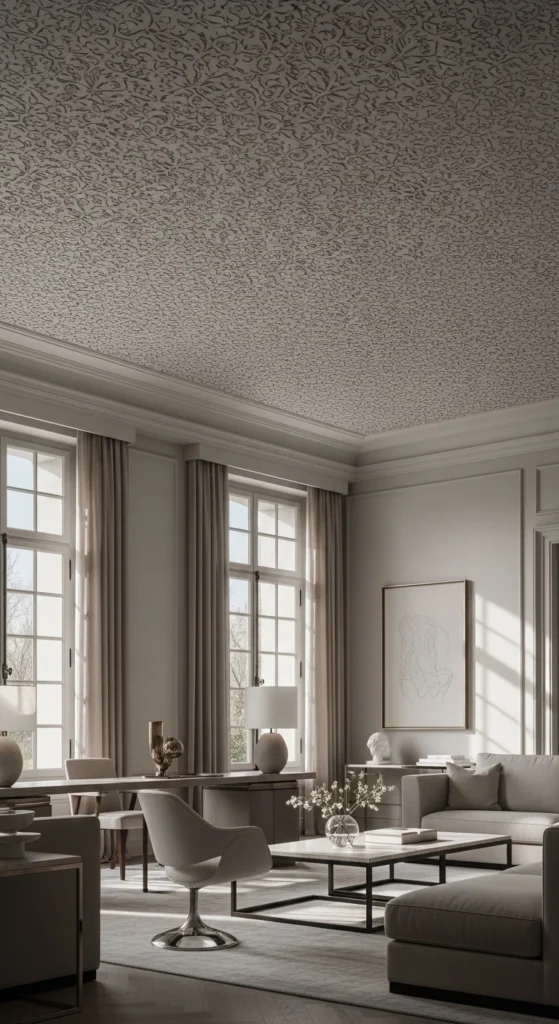
Ceilings matter more now. Try wood slats, fabric panels, or wallpaper overhead. For budget ideas, paint the ceiling a soft shade darker than the walls. This adds interest while staying simple.
11. Natural Materials Over Stark Whites

Replace glossy surfaces with wood, clay, or stone. Swap plastic decor for ceramic. Use woven baskets for storage. These materials add depth and warmth without extra cost.
12. Controlled Clutter Displays
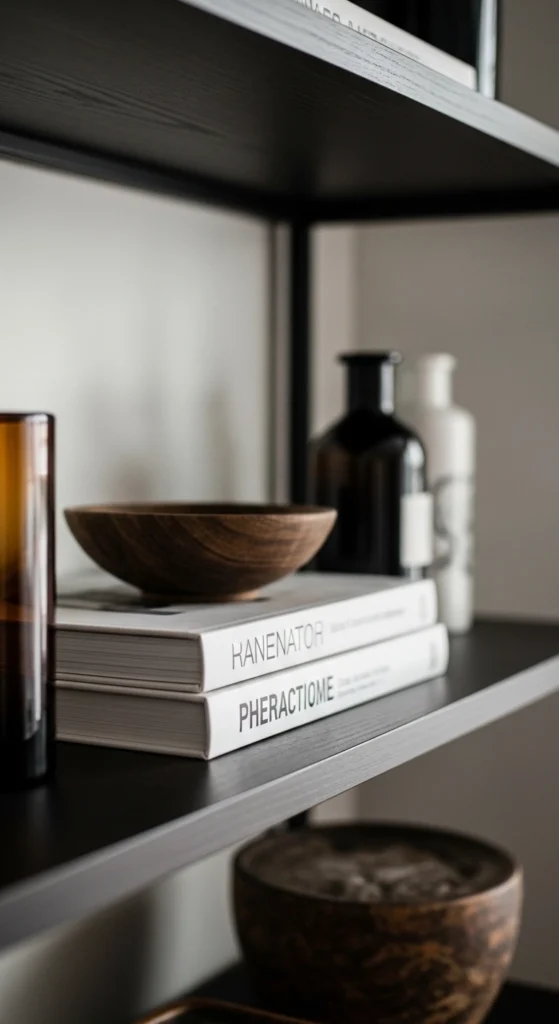
Display items with meaning. Group them in odd numbers. Leave space between clusters. Use trays to contain smaller pieces. This keeps shelves expressive without feeling messy.
13. Decorative Glass Accents
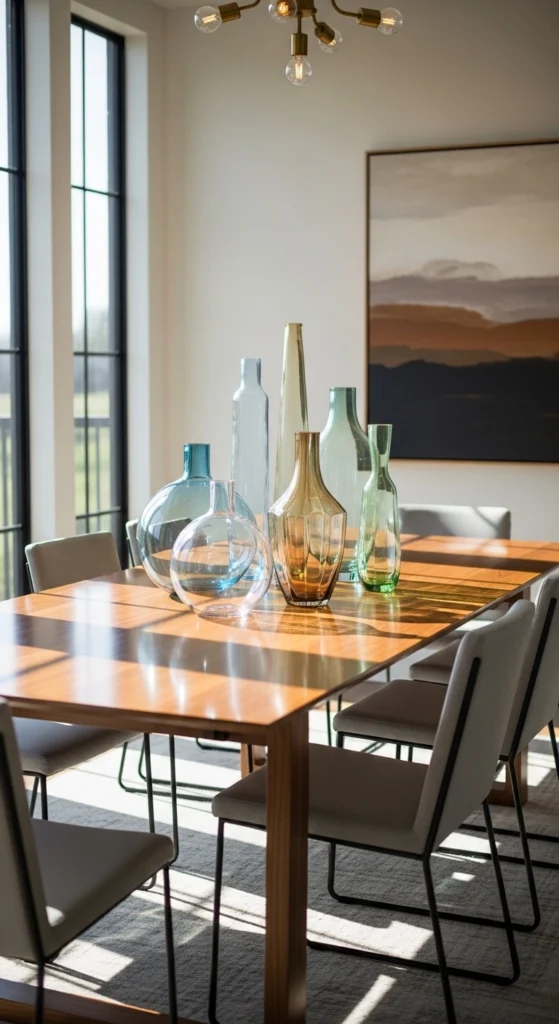
Glass adds shine and softness. Look for colored vases or bowls. Thrift stores often carry them. Place near windows to catch light. One or two pieces are enough.
14. Zoned Open Spaces
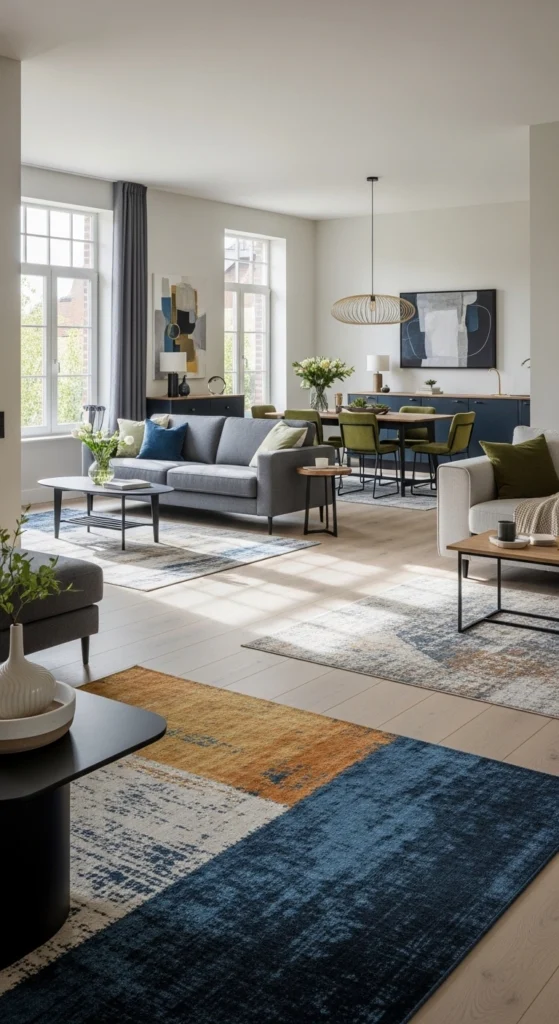
Use rugs, lighting, and furniture placement to define areas. A sofa back can act as a divider. A floor lamp marks a reading area. This makes large rooms easier to use.
15. Handcrafted Decor Details

Handmade items add character. Look for local markets or online makers. DIY pottery-style bowls with air-dry clay. These small details reward closer looks.
16. Color-Drenched Mood Rooms
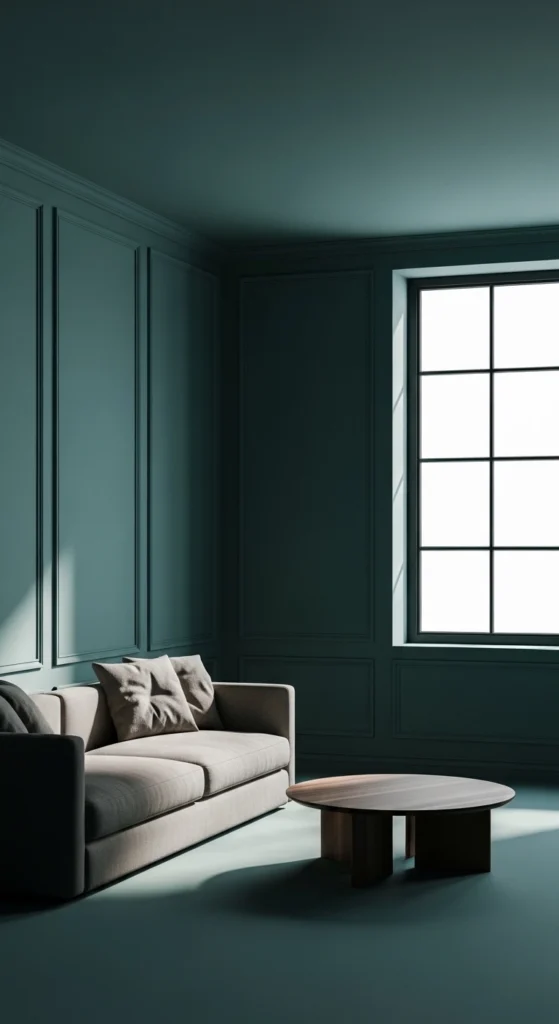
Painting walls, trim, and doors the same shade creates calm. Choose earthy tones for balance. This works well in bedrooms or offices. Keep decor simple so the color leads.
17. Custom-Style Shelving
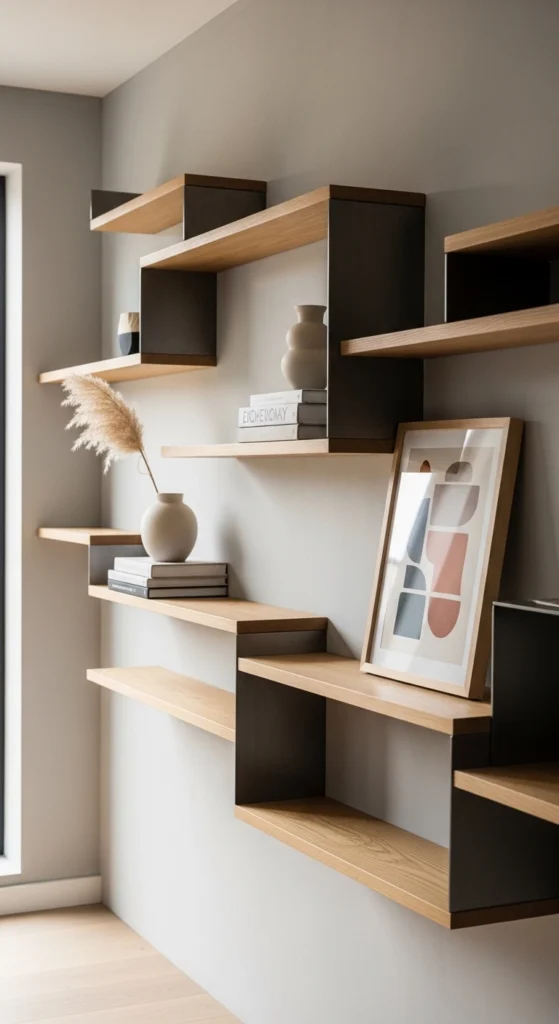
Shelves don’t need to match perfectly. Mix brackets and boards. Paint them the wall color. This adds interest and storage without custom costs.
18. Matte Plaster and Wood Finishes
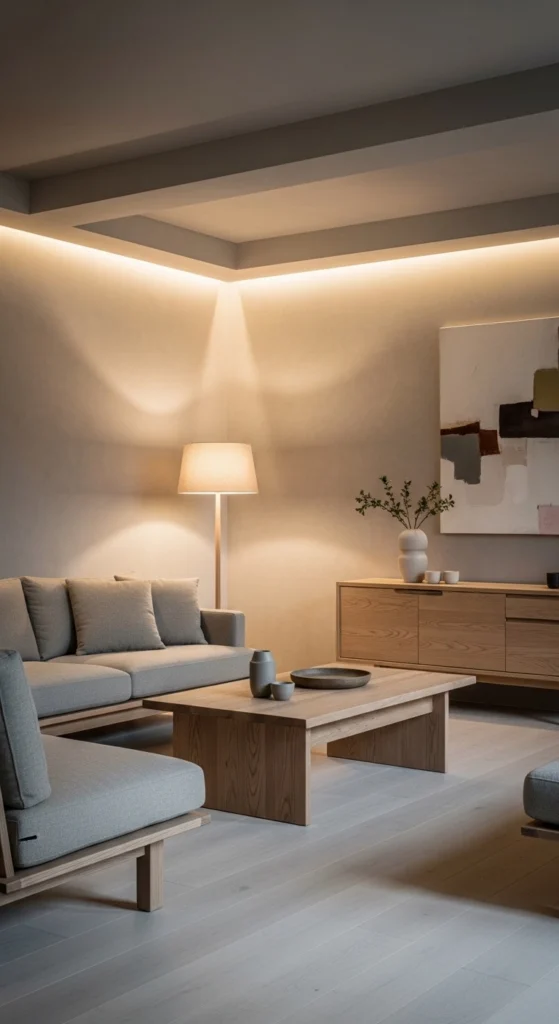
Matte surfaces feel calm. Use limewash paint or textured rollers. Sand wood lightly and seal with matte finish. These updates are subtle but effective.
19. Arched Doorways and Decor

Arches soften spaces. Add arched mirrors or shelves. DIY an arch headboard with plywood and paint. Even small curves change the feel of a room.
20. Dramatic Kitchen Backsplashes
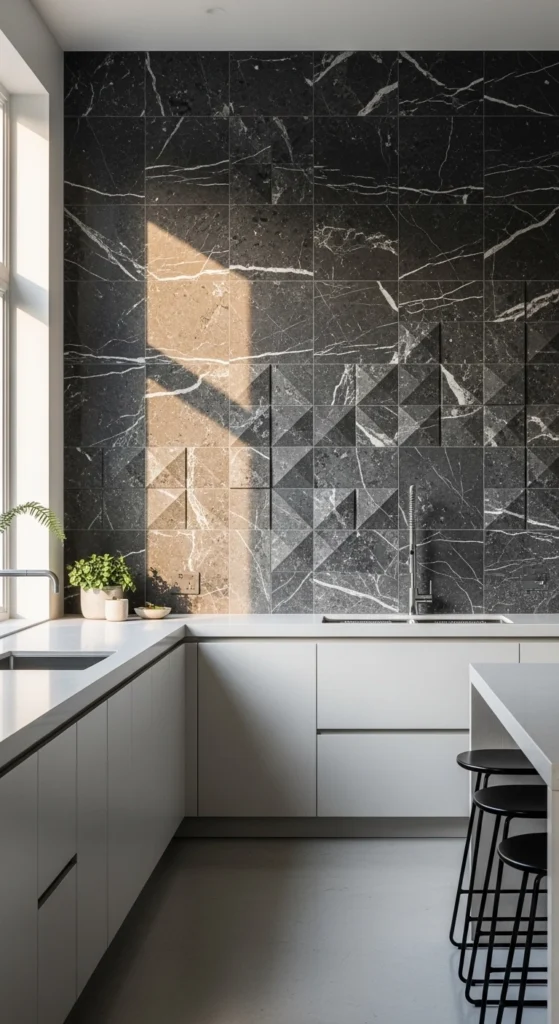
Focus drama on one surface. Use peel-and-stick tiles for easy updates. Keep counters clear so the backsplash stands out.
21. Warm Minimal Furniture Layouts
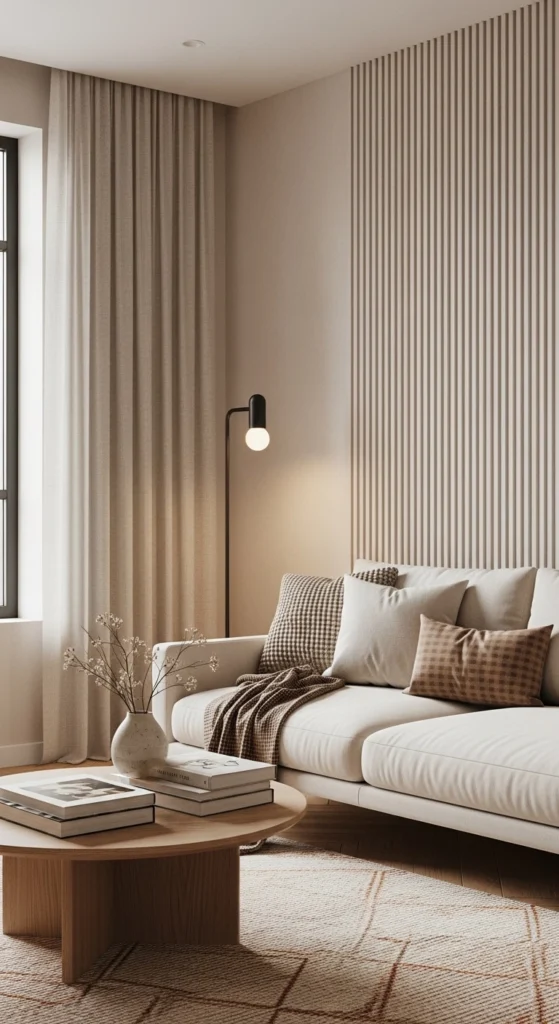
Minimal doesn’t mean empty. Choose fewer pieces with warmth. Wood, fabric, and soft lighting keep rooms inviting.
22. Personal Art Moments
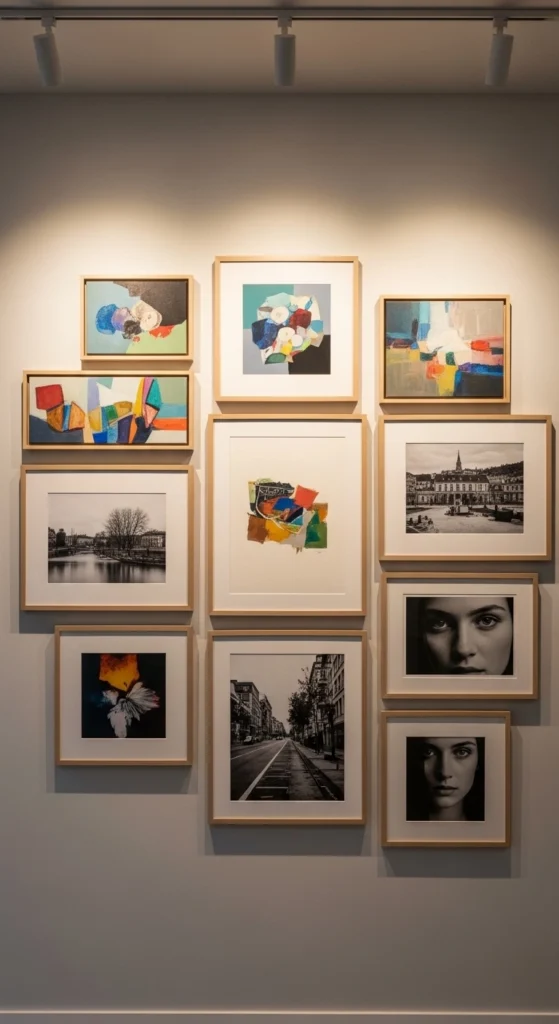
Art tells stories. Frame postcards, sketches, or photos. Keep frames consistent for cohesion. This approach costs little and feels personal.
Conclusion
Modern contemporary decor works best when it feels human and usable. Warm colors, texture, and thoughtful details shape rooms that support daily life. Try one idea at a time. Use what you already own. Small changes often make the biggest difference.
