

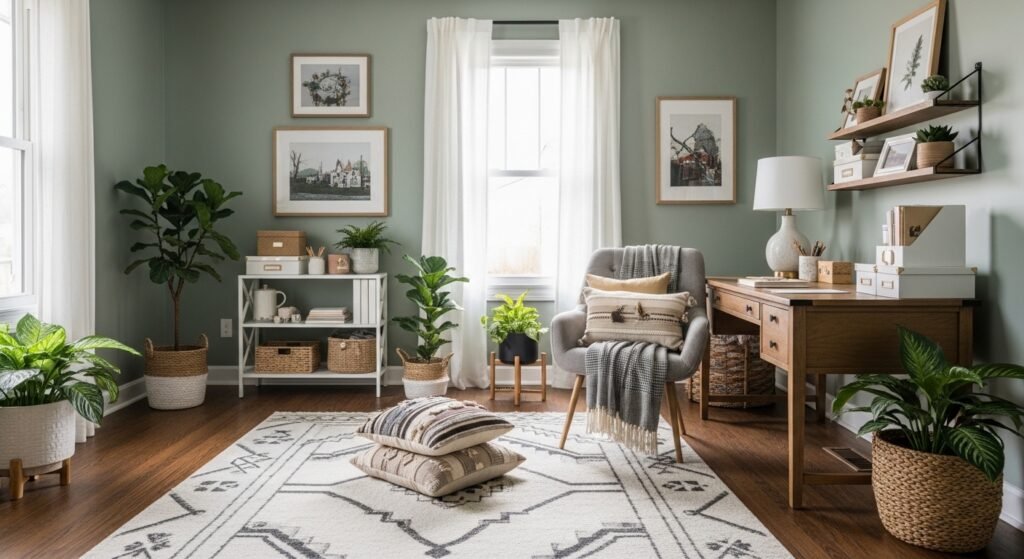
Spent $400 on a desk and still my corner looked like a showroom sample, not a place I wanted to sit. I solved it with small changes: warm wood, one chunky throw, and a plant that actually made the space feel lived in. Below are the 13 changes that took my sad desk to a sage green cozy home office I actually enjoy working in.
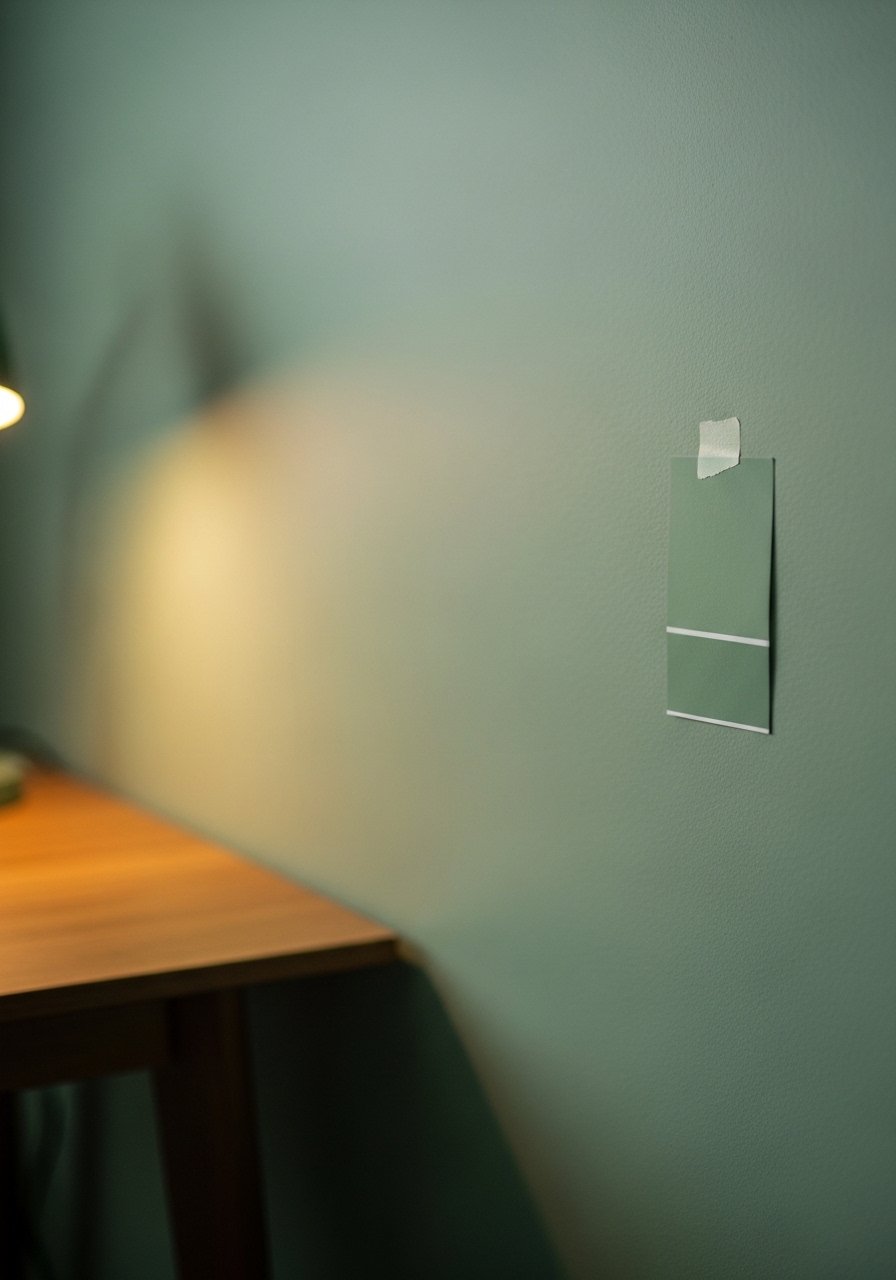
Cozy Sage Accent Wall Behind Desk
The moment I painted one wall sage instead of the whole room, the desk had a backdrop that felt intentional. A single sage accent wall pulls focus without swallowing a small room and it works on a budget. Paint a 6-foot-wide section behind the desk so your monitor sits in front of color, not against bland white. Pair with a white oak desk to keep the scheme warm. Try white oak floating shelves above at eye level, about 12-14 inches above the desk, for storage that reads as styling. Common mistake is painting the whole room and losing contrast. A narrower accent saves money and keeps the space cozy.
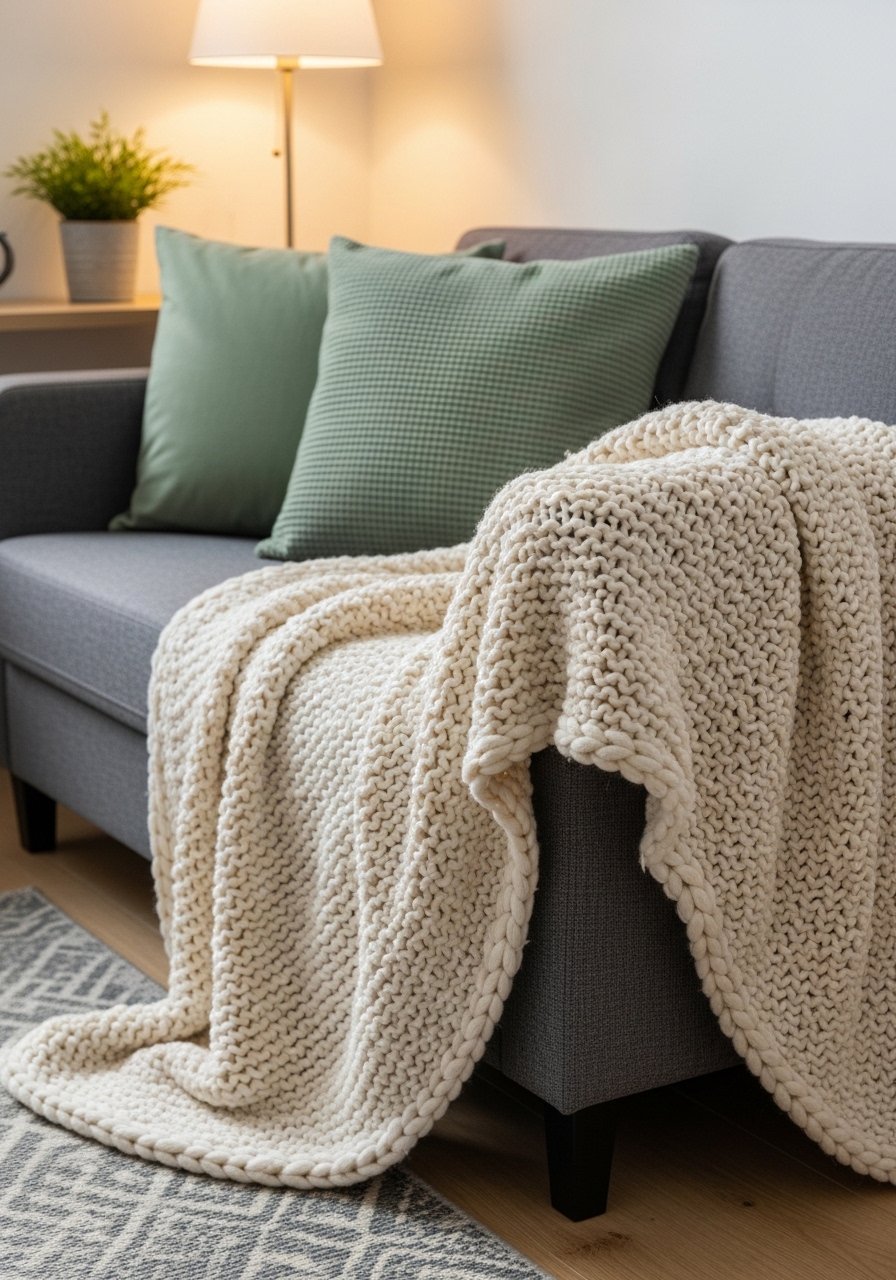
Layered Textiles for a Warm Work Nook
The moment I draped a chunky knit throw over the desk chair the whole corner stopped looking flat. Textiles are what make a workspace feel like a place you want to be. Use a 22-inch linen pillow on a reading chair and a 50×60 chunky throw on the back for proportion. Mix a velvet pillow in a deeper green for depth. I like chunky knit throw in cream because it brightens the sage without clashing. Budget for this trick is under $80. People forget to match pillow scale to the chair. Too-small pillows look like accessories, not furniture.
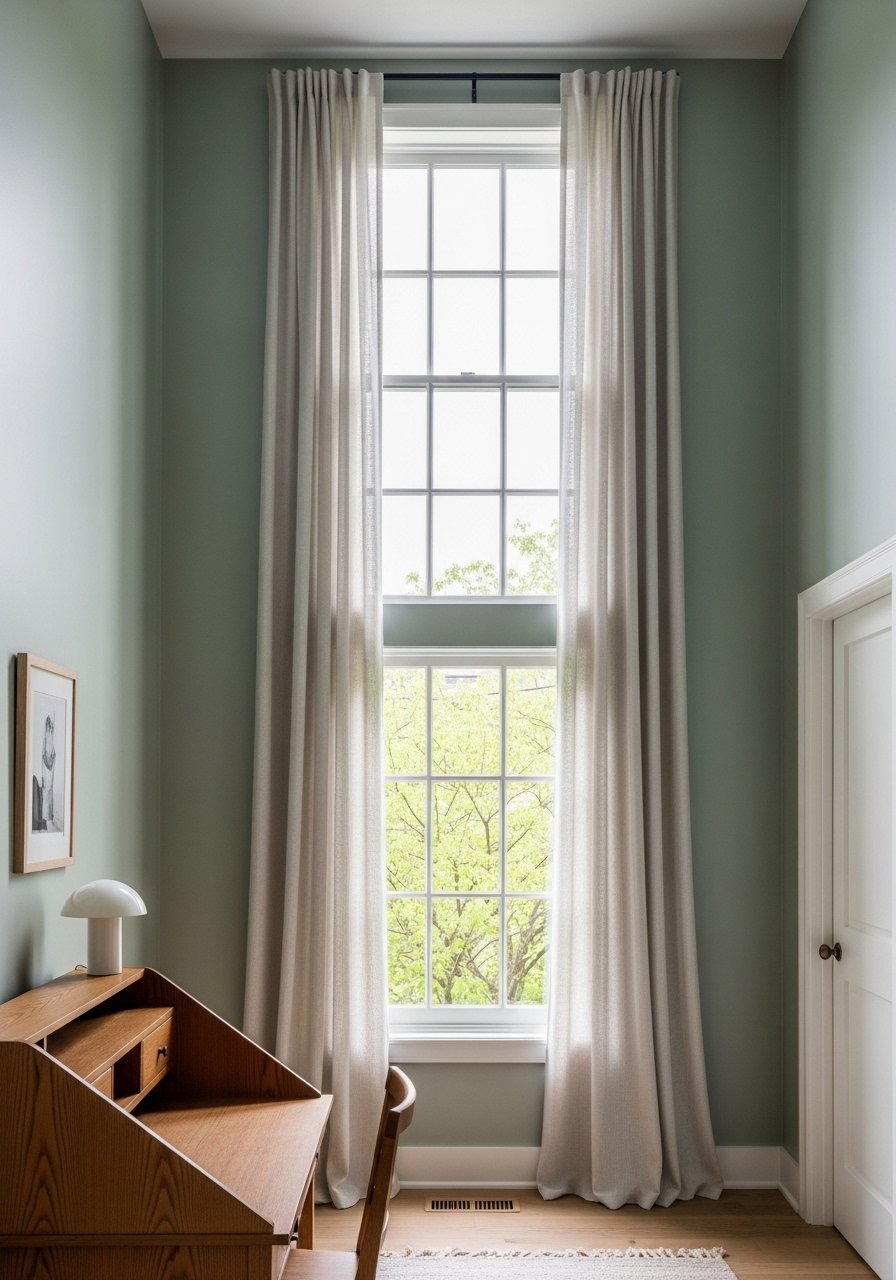
Floor to Ceiling Curtains to Add Height
Most people hang curtains right at the window frame. That is why their rooms look shorter than they are. Raise the rod 4-6 inches above the window and go with 96-inch or 108-inch panels depending on your ceiling height. Curtains should puddle or kiss the floor, never hang halfway up. I used linen curtain panels and it made an 8-foot ceiling feel airier. This trick is inexpensive, usually under $100 for panels, and it stretches a small home office visually. It also softens the acoustic harshness that kills focus.
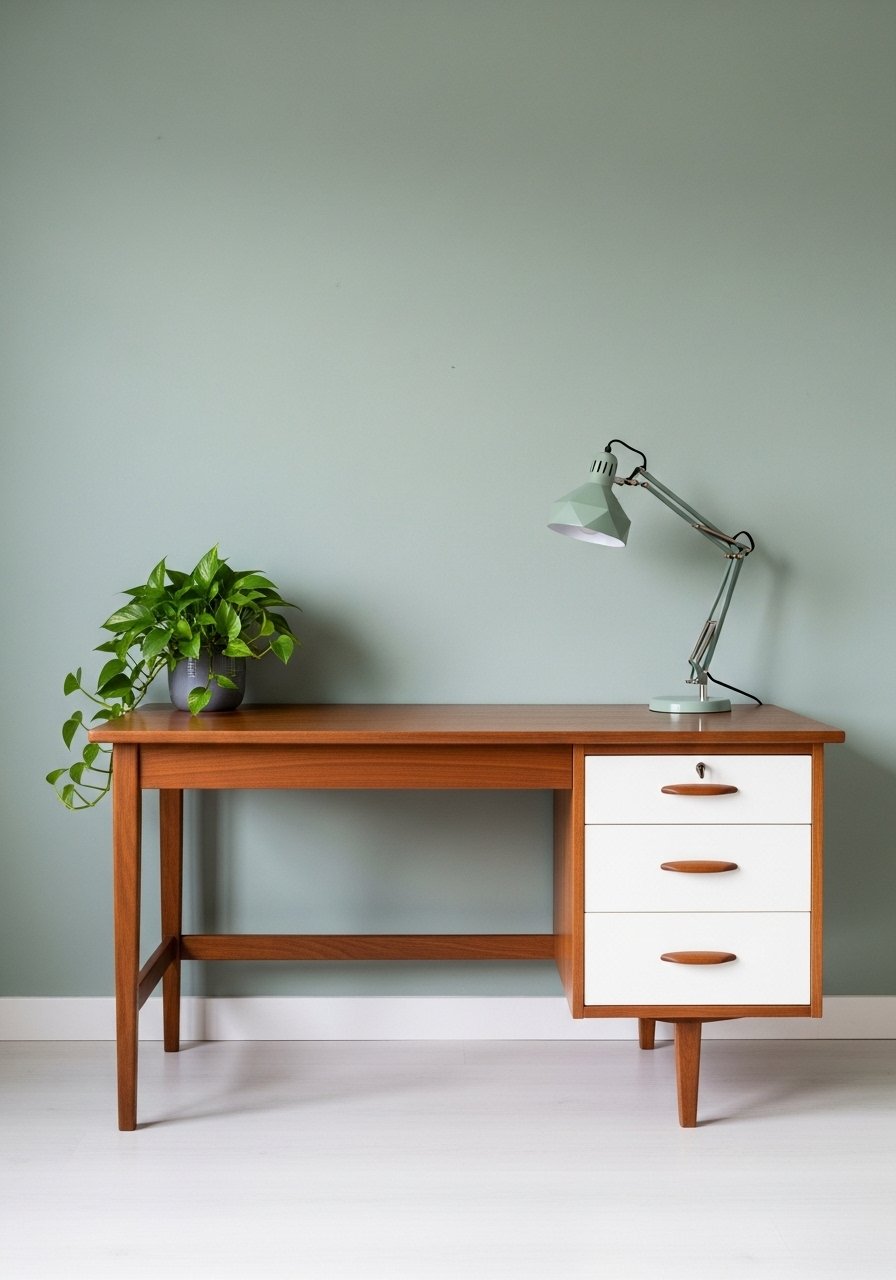
Warm Wood Desk with White Accents
I found a wood desk with white drawer fronts and the room finally felt friendly. Warm wood tempers sage green so the space reads cozy rather than cold. Aim for a desk depth of 24-30 inches so you can place a lamp and still have working space. The combination works in small home offices, guest-room desks, or apartment corners. Try a wood desk with white accents if you want the look without custom woodworking. Common mistake is buying a desk too deep that floods the room. Measure first and keep at least 30 inches from the desk to the nearest furniture.
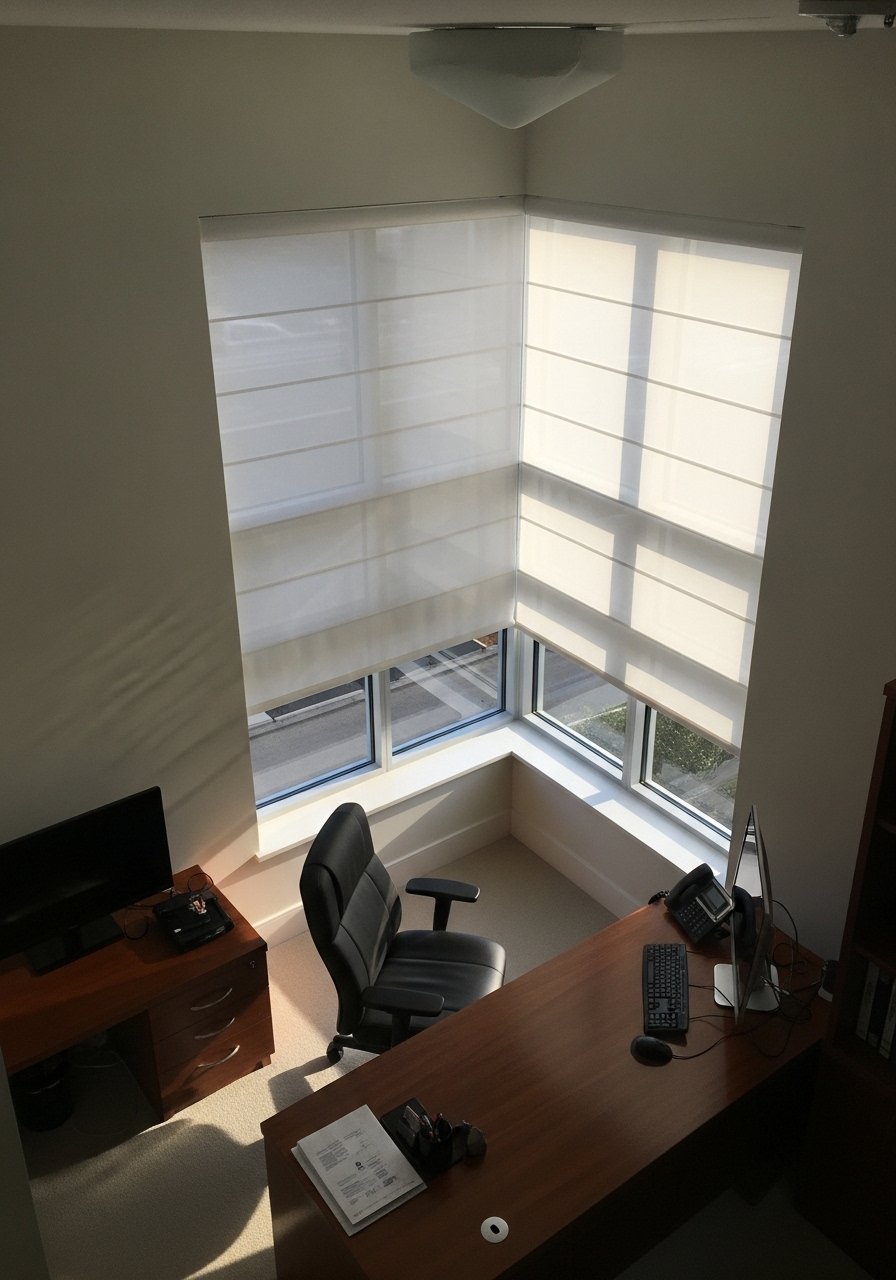
Natural Light Corner with Sheer Roman Shades
There is something about a sunny desk that keeps me at my work longer. If direct sun causes glare, swap full curtains for sheer roman shades that diffuse light but still show the sage wall color. Shades keep glare off screens and make long afternoons less intense. I installed the shade about three inches outside the frame so the whole window reads larger. Sheer roman shades are usually a midrange spend but worth it if you work by the window. A mistake is blocking light with a tall bookcase. Keep the immediate window area low and open.
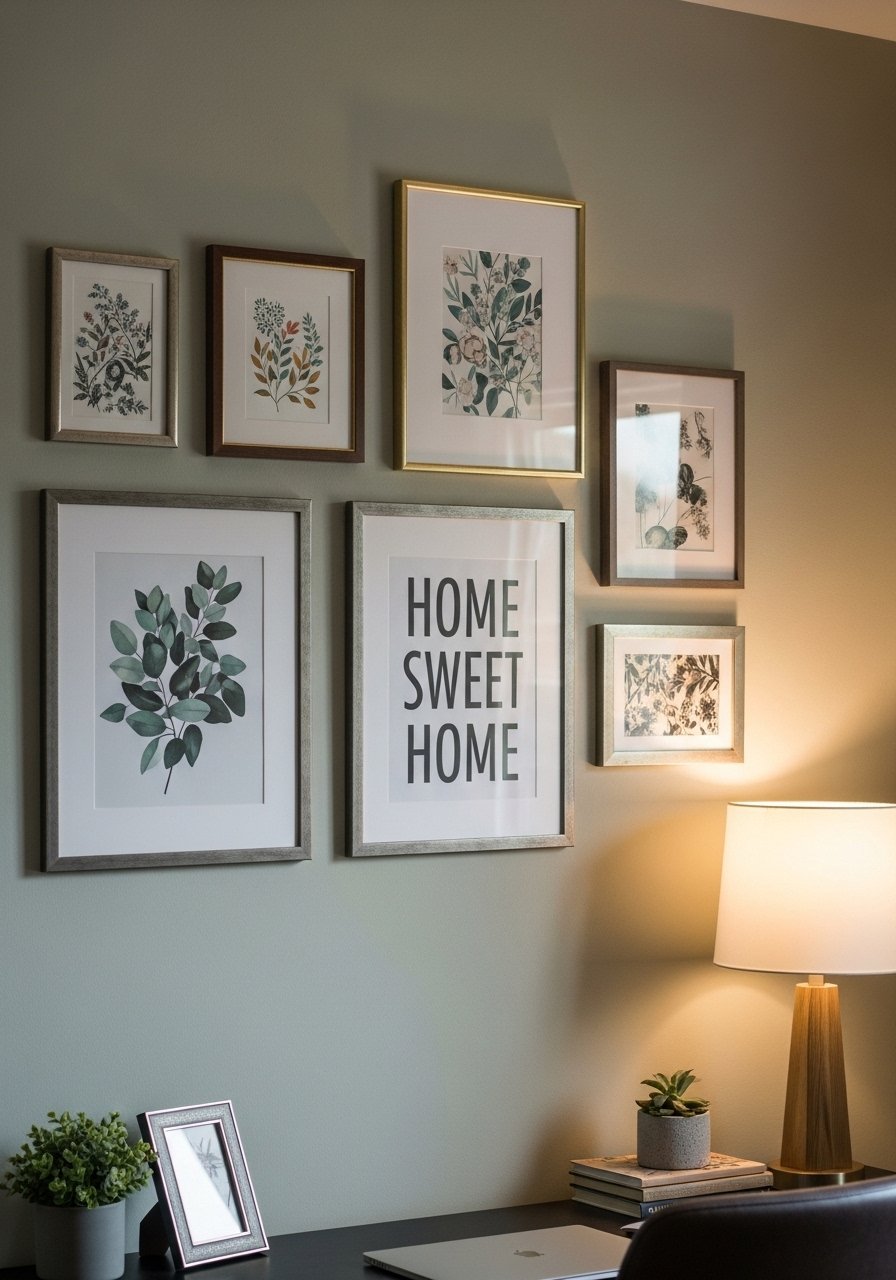
Gallery Wall in Mixed Frames for Personality
I used mixed metal frames instead of a matching set and the gallery suddenly felt curated, not staged. Start with one central piece at eye level, then arrange around it using groups of three. The rule of three applies here: odd groupings read more natural. Use picture ledges if you want to swap art without extra holes. I solved commitment by using brass picture ledges so the collection can change with my mood. Budget depends on frames. A common mistake is hanging pieces too high. Keep the center at roughly 57 inches from the floor.
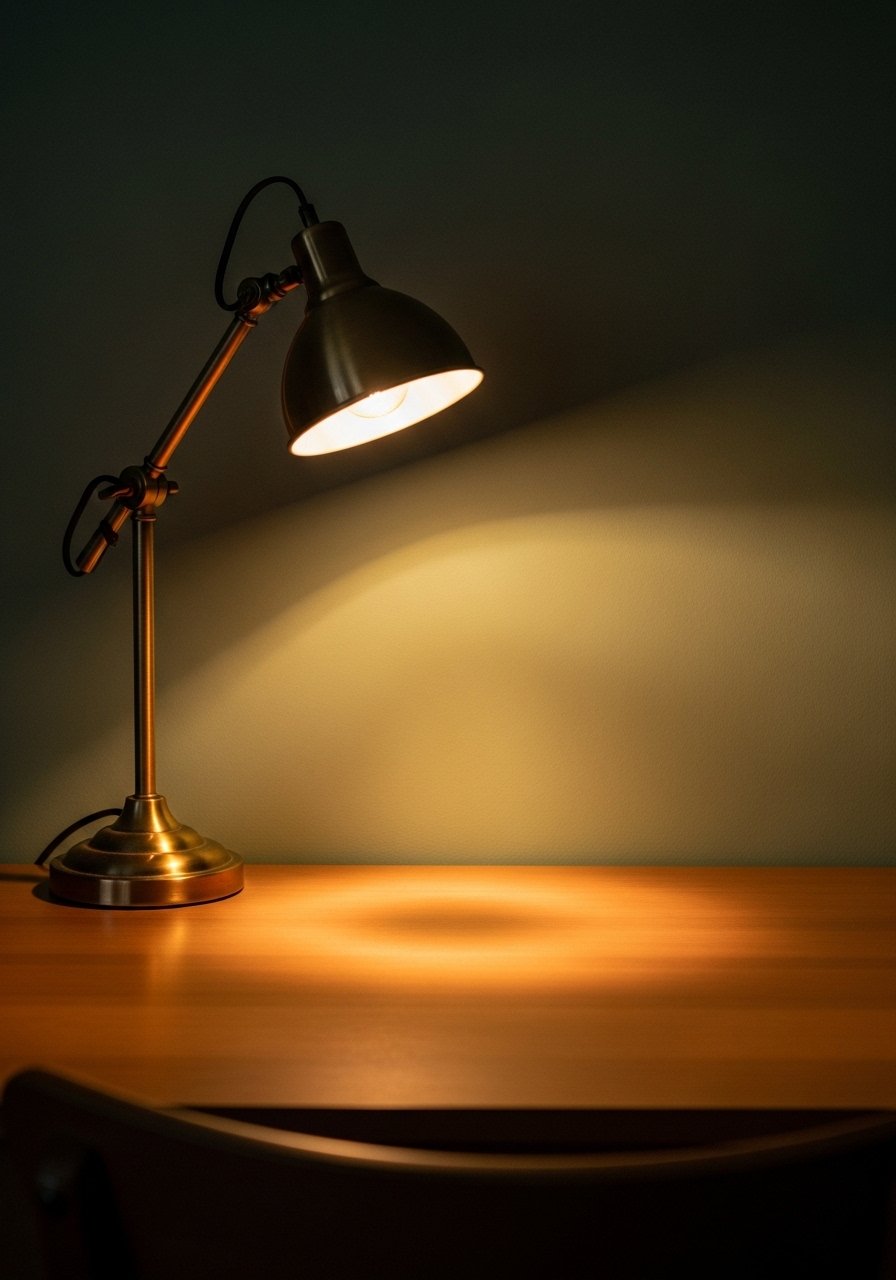
Task Lighting with Soft Amber Bulbs
Good lighting stops eye strain and prevents the whole room from feeling sterile. I prefer an adjustable table lamp with a warm 2700K bulb for task light and a soft amber bulb for mood. Position the lamp so the center of the shade sits at about 60 inches from the floor when seated. Task table lamp plus soft amber bulbs is a low-cost upgrade under $70. People often use a single overhead and call it a day. Layered lighting is what makes a sage green cozy home office actually feel inviting.
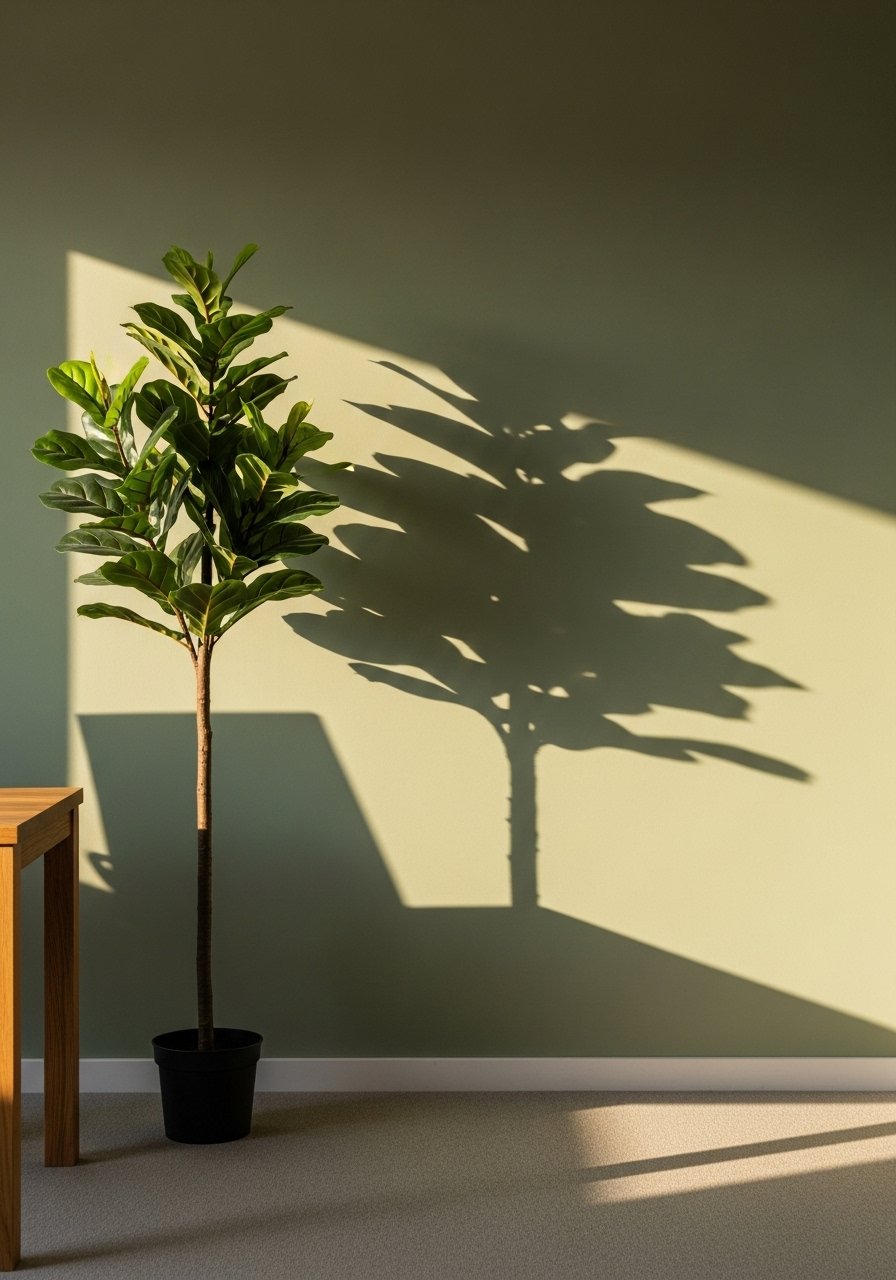
Greenery Focus with One Tall Plant
Everyone buys five small succulents. One single 6-foot fiddle leaf fig has ten times the visual impact. A tall plant adds vertical interest and hides ugly corners. If you worry about maintenance, pick a realistic faux option or a low-care real plant like a snake plant. Position it 18-24 inches from the desk so it frames the workspace without brushing your elbow. I linked a faux fiddle leaf fig that looks believable in low-light rooms. This trick is cheap compared to art and reads like intentional design.
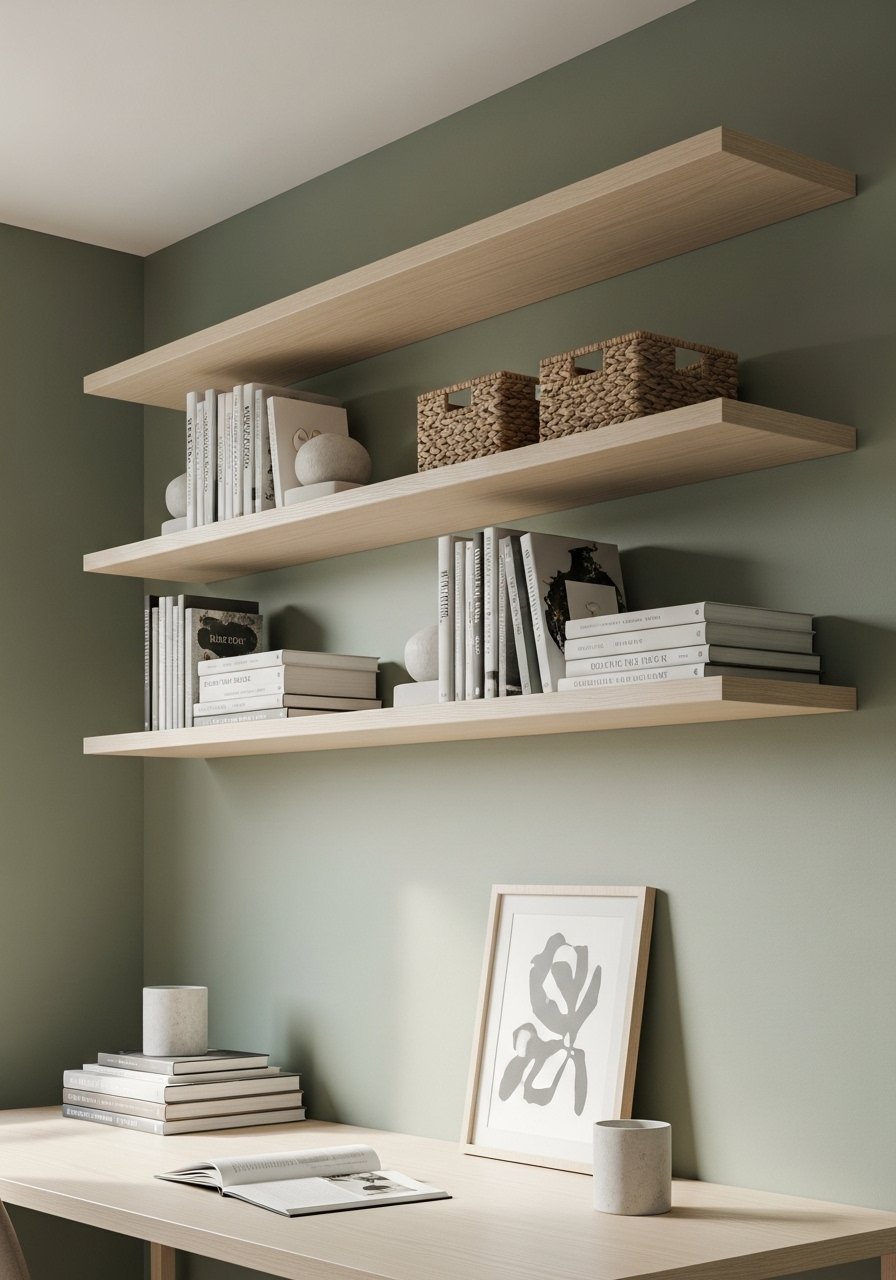
Floating Shelves in White Oak for Storage
Open shelves keep things accessible and force you to edit, which is good for small work areas. I leave three inches between the top shelf and ceiling to avoid a cramped look. Use baskets on the lower shelf for cords and paper. White oak keeps the palette fresh next to sage, and the natural grain hides dust. White oak floating shelves are an affordable alternative to built-ins. Common mistake is overloading shelves. Limit to three styled items per shelf to avoid visual clutter.
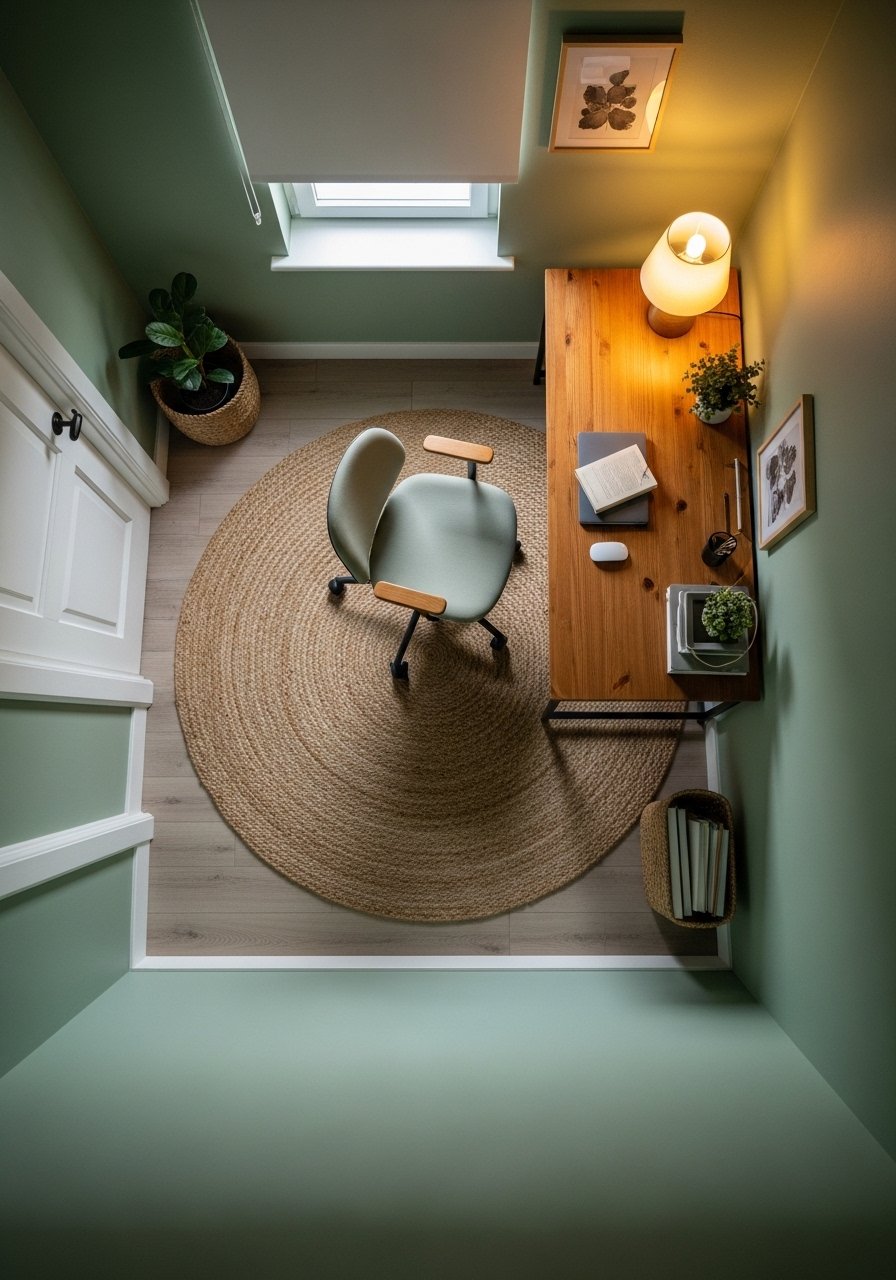
Textured Rug to Define the Workspace
Adding a jute rug under a desk anchored the area and reduced echo in my small apartment. For a desk chair, aim for a 5×8 rug so the chair stays on the rug even when pulled back. A textured natural rug plays nicely with sage and wood tones. I used a rug 5×8 jute that cost less than a fancy carpet but reads high-end. Mistake people make is buying too-small rugs that float. Bigger is usually better for defining a cozy home office corner.
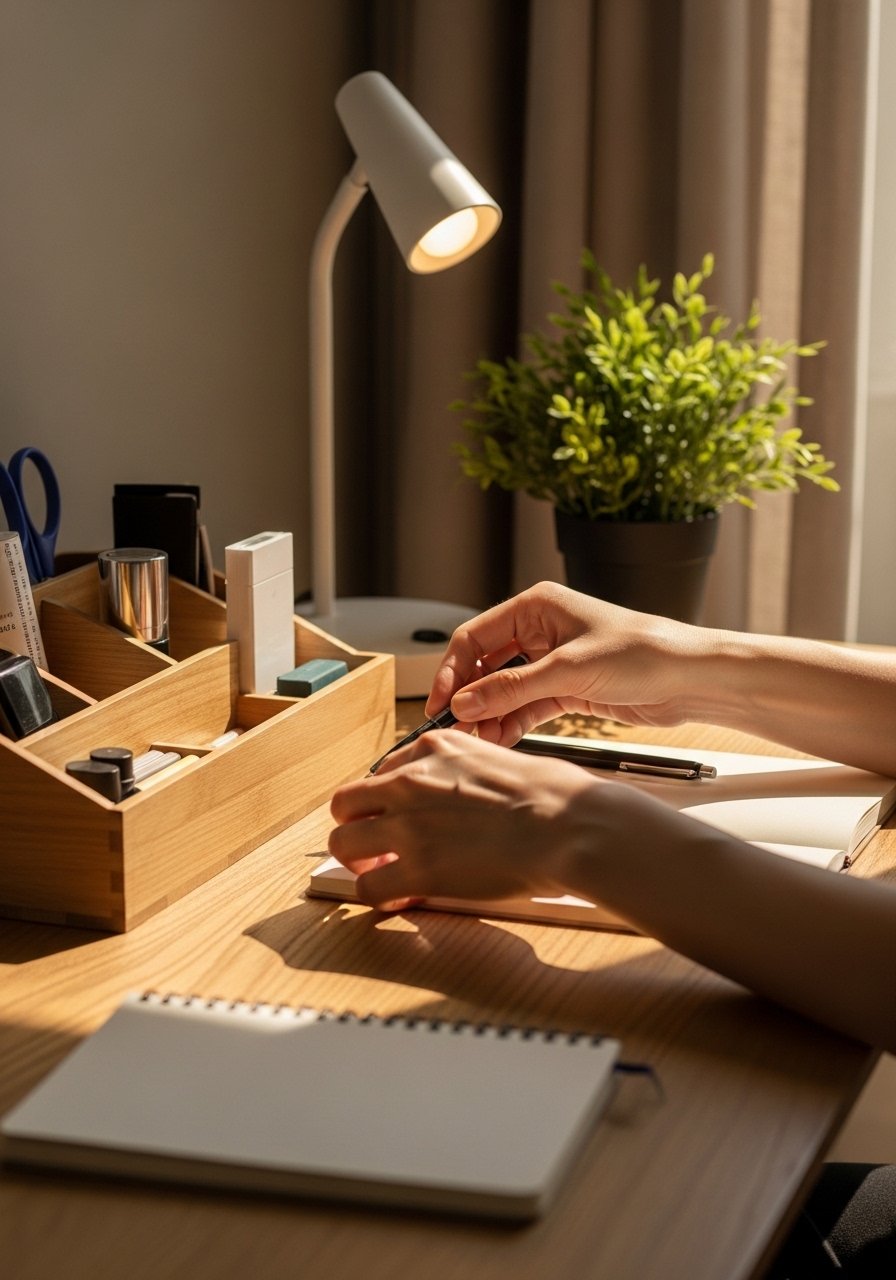
Curated Desktop Vignettes with Rule of Three
A messy desktop kills focus. I use a wood tray, a lamp, and one small plant as a trio and suddenly the desk feels calm. The rule of three works for vignettes because odd numbers are easier on the eye. Keep the tallest item at the back, medium in the middle, and a low item in front. I keep a desk organizer tray for papers and chargers. The mistake is trying to display everything. Edit to three to five meaningful objects and move the rest into a basket.
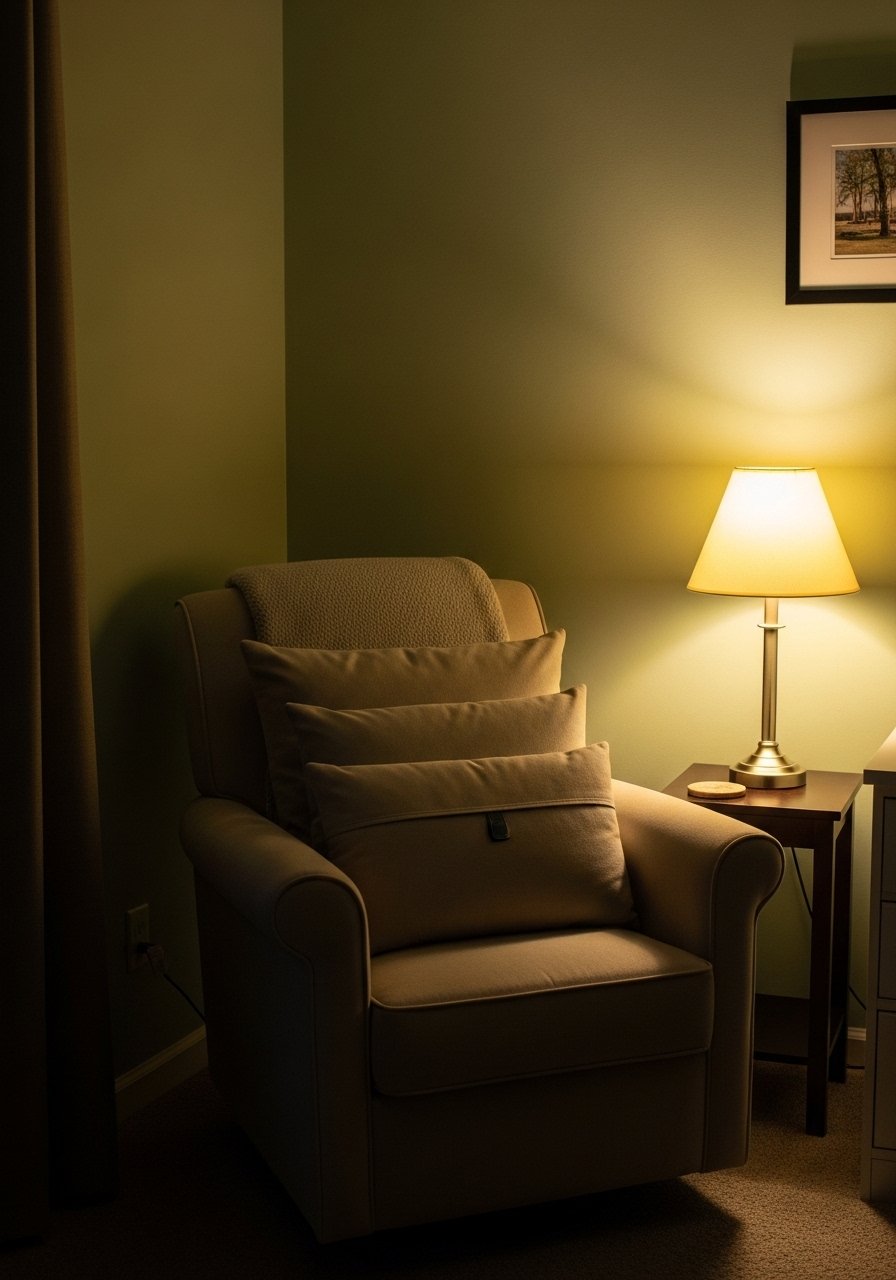
Cozy Reading Chair for Breaks
There is something about a reading nook with layered pillows that makes you want to cancel your plans. A small upholstered chair in cream or warm gray balances the sage wall and gives you a non-desk spot for thinking. Choose a chair depth of about 36 inches so it fits in a corner but is still roomy. Add a floor lamp and a side table for coffee. I used velvet pillow covers for the seat and a chunky knit throw to soften the look. Common mistake is picking a chair too big that blocks circulation.
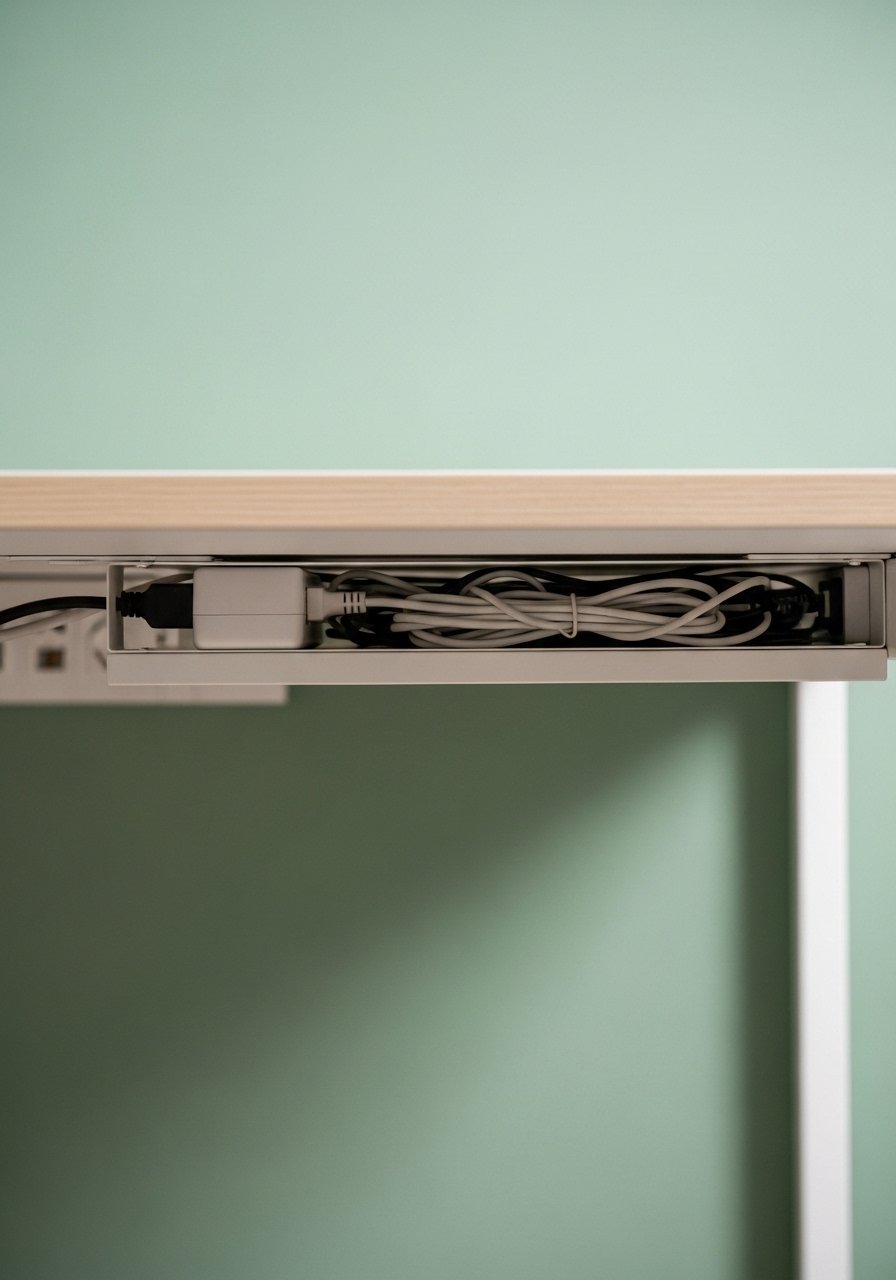
Hidden Cords and Clutter-Free Surfaces
I used a cable tray under the desk and the chaos disappeared. Hiding cables keeps the focus on styling and makes a small office feel intentional. Anchor a power strip to the underside of the desk and route cords into a basket or tray. A monitor arm mount frees desk real estate and improves ergonomics. Budget for these helpers is modest, usually under $80 together. People often hide chargers in drawers where heat can be a problem. Keep airflow around adapters and only tuck away what stays cool.
Your Decor Shopping List
Textiles
- Honestly the best $40 I have spent. Velvet pillow covers in deep green and cream for layering
- Chunky knit throw in cream (~$35-55). Drape over the chair for instant warmth
Wall Decor
- Found these while looking for something else. Brass picture ledges (~$18-25) let you swap art without new nail holes
- Mixed metal frames set for the gallery wall
Lighting
- For task work, go with an adjustable option. Task table lamp (~$40-90)
- Soft amber bulbs for mood lighting
Storage & Surfaces
- White oak floating shelves in a 24-inch depth for balanced scale
- Wicker storage baskets set to hide paper piles
Plants & Rugs
- Faux fiddle leaf fig if light is an issue
- Rug 5×8 jute to anchor the workspace
Shopping Tips
Curtains should puddle or kiss the floor, never hang halfway up. Linen curtain panels in 96 or 108 inches fit most rooms.
Grab velvet pillow covers for $12 each. Swap colors seasonally to refresh without spending much.
For small rooms, choose one tall plant over several tiny ones. Faux fiddle leaf fig provides scale and drama.
Measure first. For most desks a 5×8 rug works. Rug 5×8 jute feels natural and handles chair traffic.
Mix metals in frames and hardware. Mixed metal frames set makes mixing feel deliberate not chaotic.
Frequently Asked Questions
Q: What paint finish works best for a sage green office wall?
A: Go with eggshell or low-sheen for a home office. It hides fingerprints better than flat and still reads soft. Use the accent wall approach if you want color without committing to the whole room.
Q: Can I mix boho textiles with a modern desk without it looking messy?
A: Yes. Keep scale consistent and stick to three repeating colors. Use one natural fiber like jute plus a velvet and a knit. The contrast looks intentional when you repeat a color, such as cream, across pieces.
Q: How high should I hang shelves above the desk?
A: About 12-14 inches above the desk surface leaves room for a task lamp and stacked books. If you have tall monitors, add an extra inch or two. Keep the bottom shelf below eye level when seated so shelving does not feel top-heavy.
Q: Should I pick real plants or faux for a low-light home office?
A: Both work. If you cannot provide indirect light, choose a quality faux like a faux fiddle leaf fig. For real plants, snake plants and pothos handle neglect and low light.
Q: What rug size should I get for a desk and chair setup?
A: Bigger than you think. For a single desk and chair a 5×8 rug is a safe bet. The chair should stay on the rug even when pulled back. If the rug is too small the area will look fragmented.