
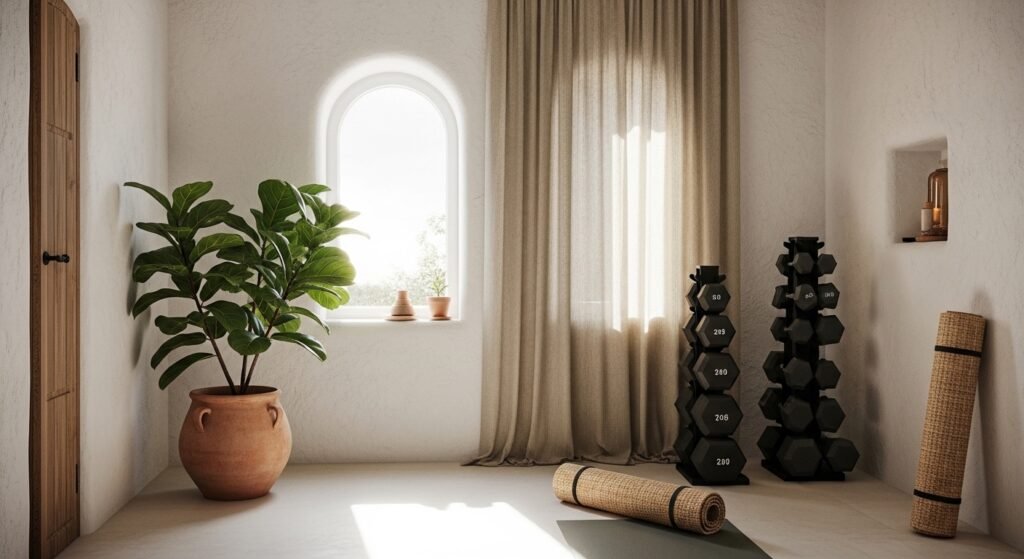
My living room had nice furniture and decent lighting but it still felt like a waiting room. Took me embarrassingly long to figure out it was missing texture. Every surface was smooth, every color was flat, and nothing invited you to actually use the space. Turning a spare room into a Mediterranean home gym at home fixed that by mixing useful gear with materials that actually made me want to work out there.
These ideas lean warm Mediterranean, think white plaster, olive and terracotta accents, and natural textures. Most folks kick off with under $500 and add from there. The suggestions work for garages, spare bedrooms, or an apartment corner where you want equipment to feel intentional, not invasive.
Mediterranean Neutrals With Terracotta Accent For A Home Gym
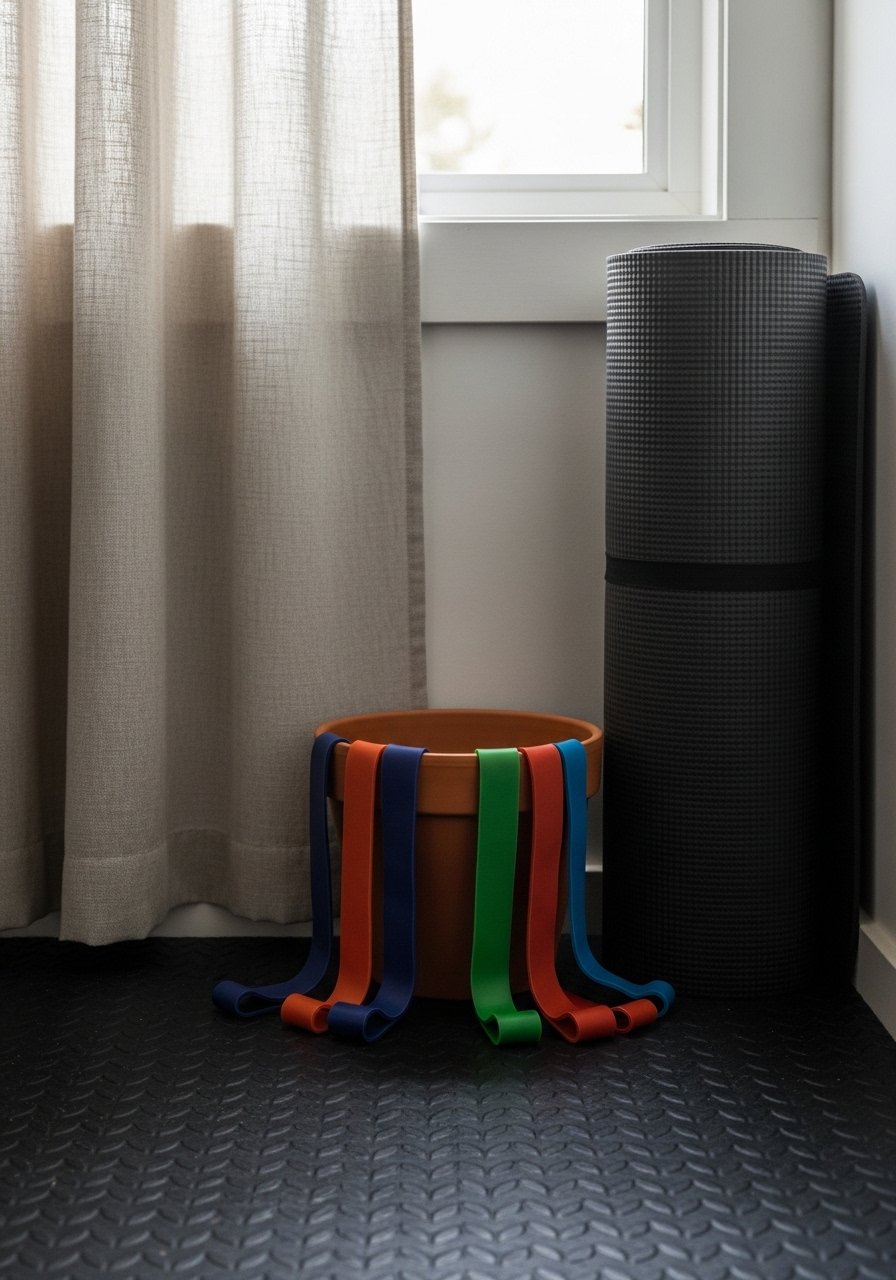
I started by swapping cold black rubber for warm neutrals, which made my weights stop looking like trash in the corner. Use a 24×68 inch yoga mat layered over a 4×6 foot horse stall mat for protection and visual warmth. The trick is to keep equipment colors within the palette, olive bands and rust kettlebells. I grabbed neoprene dumbbells for $50 and they blend into the scene more than chrome. A common mistake is buying all shiny metal and expecting it to warm up. Measure first so the mat sits flush with your bench. Pair this with the rattan storage idea below for a tidy look that still feels like a real room.
Sunlit Corner Nook With Olive Green Gear
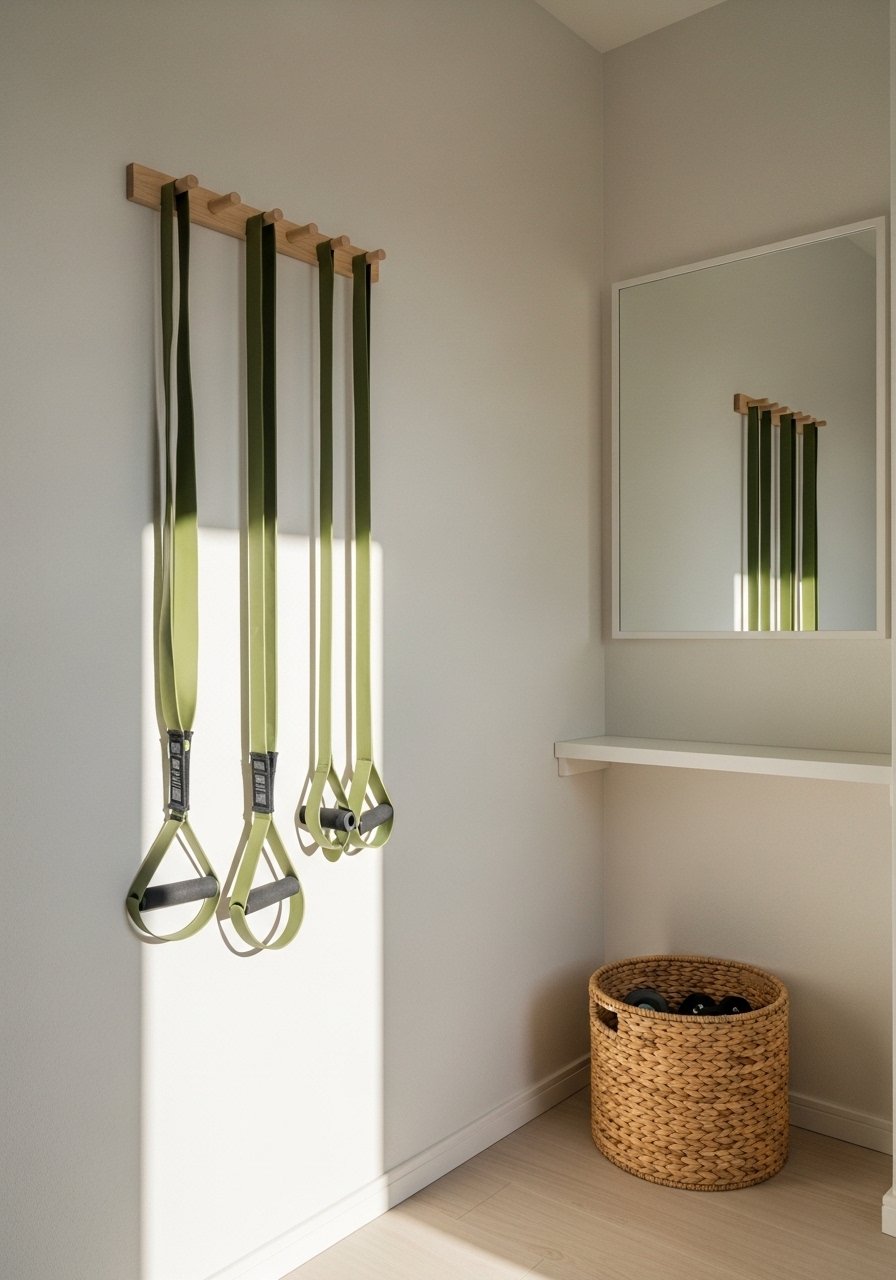
My best at-home workouts started when I carved a sunlit corner and made it intentional. Put a mirror at eye level for form checks and hang fabric resistance bands on wooden peg hooks so they look like part of the decor. Fabric bands avoid that painful pinch from thin rubber, and they look better draped. I use wide fabric resistance loops that wash easily. A mistake is hanging bands on nails that pull out. Use furniture-grade hooks and place the mirror no lower than 48 inches from the floor for squats and presses. This corner works in apartments and garages, and Four in ten turn the garage into gym central.
Rattan Storage And Wicker Bins To Hide Gear
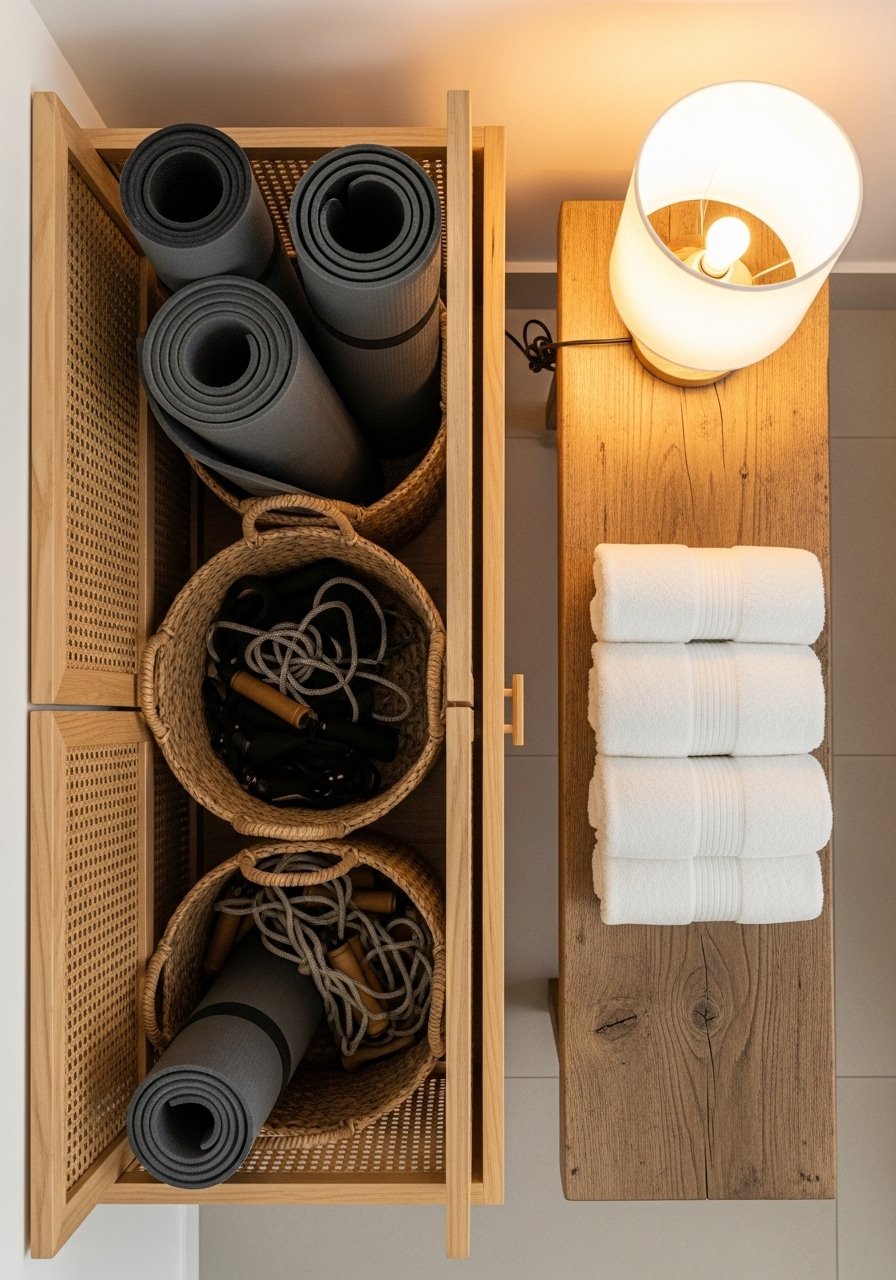
Hiding gear without making it invisible is an art. I swapped plastic tubs for a narrow rattan cabinet and two wicker bins to hold bands, towels, and small plates. It keeps the apartment vibe intact and solves the "I have no clue where to put all this gear" problem. For mats that get used daily, I keep a 24×68 inch yoga mat folded inside one basket so it stays dust-free. Avoid cramming heavy plates into woven bins or they deform. Tip: use a shallow shelf inside the cabinet for a charger, Bluetooth speaker, and magazines. This looks purposeful next to the pendant lamp idea below.
Warm Plaster Wall With An Arched Mirror For Form Checks
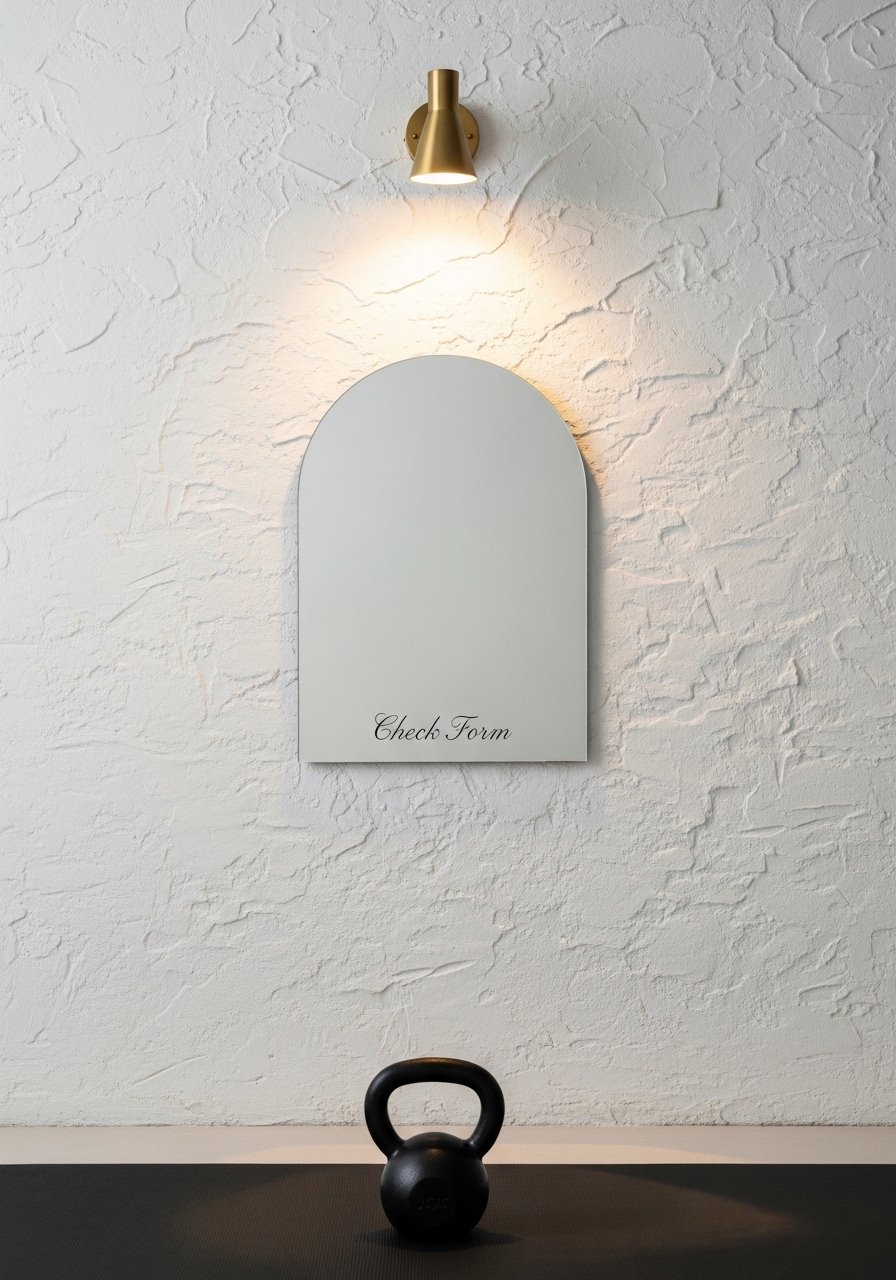
Putting a round or arched mirror on a warm plaster wall changed how I used the space. I stopped guessing at depth and started fixing posture mid-set. Aim to get an 18 to 24 inch wide mirror if your workout zone is under 6 feet wide. I mounted a floating shelf underneath for water and chalk. One thing few articles mention is the glare from overhead bulbs when checking form. Swap to a warm lamp and angle the mirror slightly. I keep a 20 lb kettlebell nearby so the mirror becomes part of the workout flow, not a decorative afterthought.
Handpainted Blue Tile Accent Behind The Weight Zone
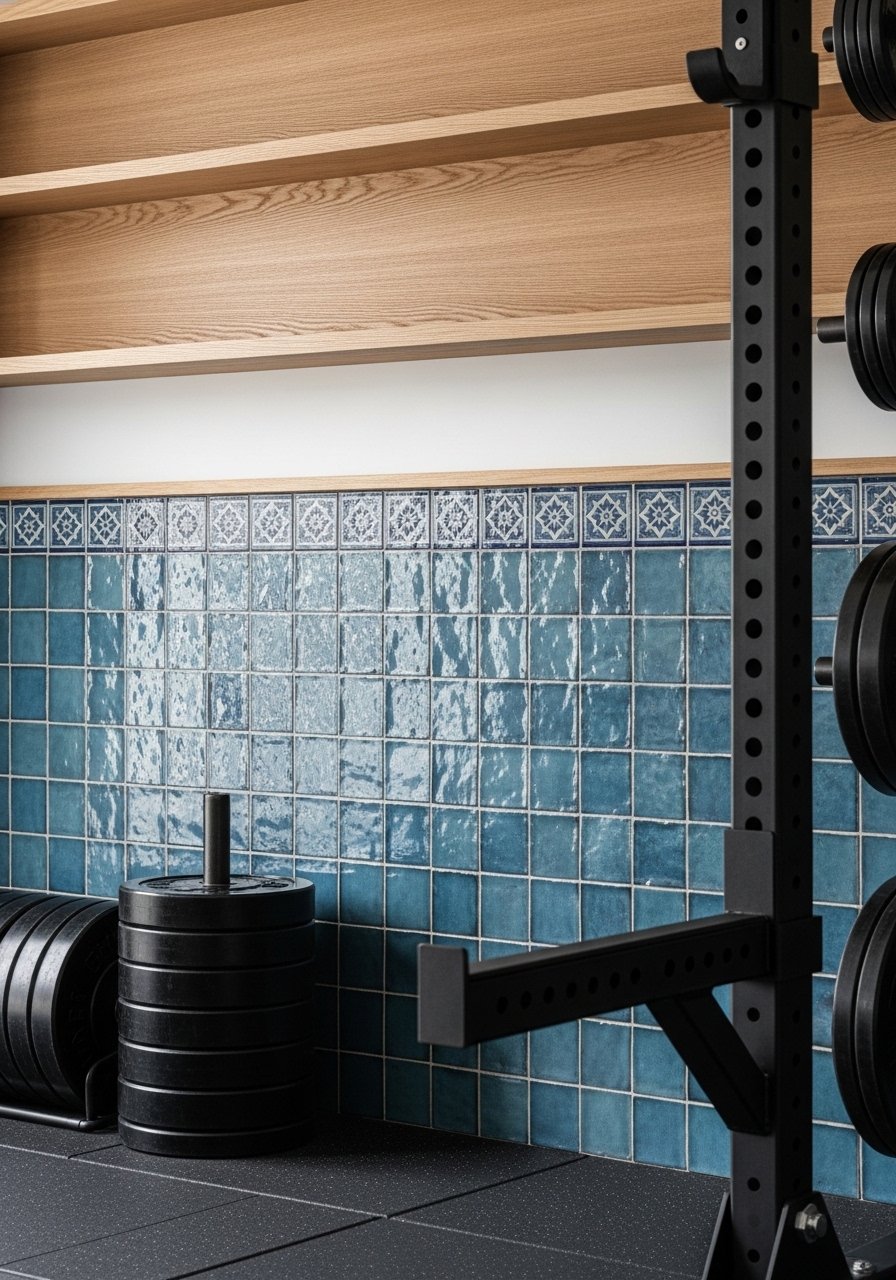
I painted a small accent stripe and then covered it with a handful of patterned blue tiles behind my weight corner. It reads Mediterranean without being a full renovation. Keep the tiled area to the footprint of the rack, roughly 48 by 30 inches, and use grout that hides chalk dust. The visual anchor makes the rack look planned instead of plopped in. People often tile the whole wall and regret the intensity. This focused approach pairs well with a flat-foot rack and a set of bumper plates stored on a nearby shelf for easy reach.
Plywood Deadlift Platform Over Horse Stall Mats For Drops
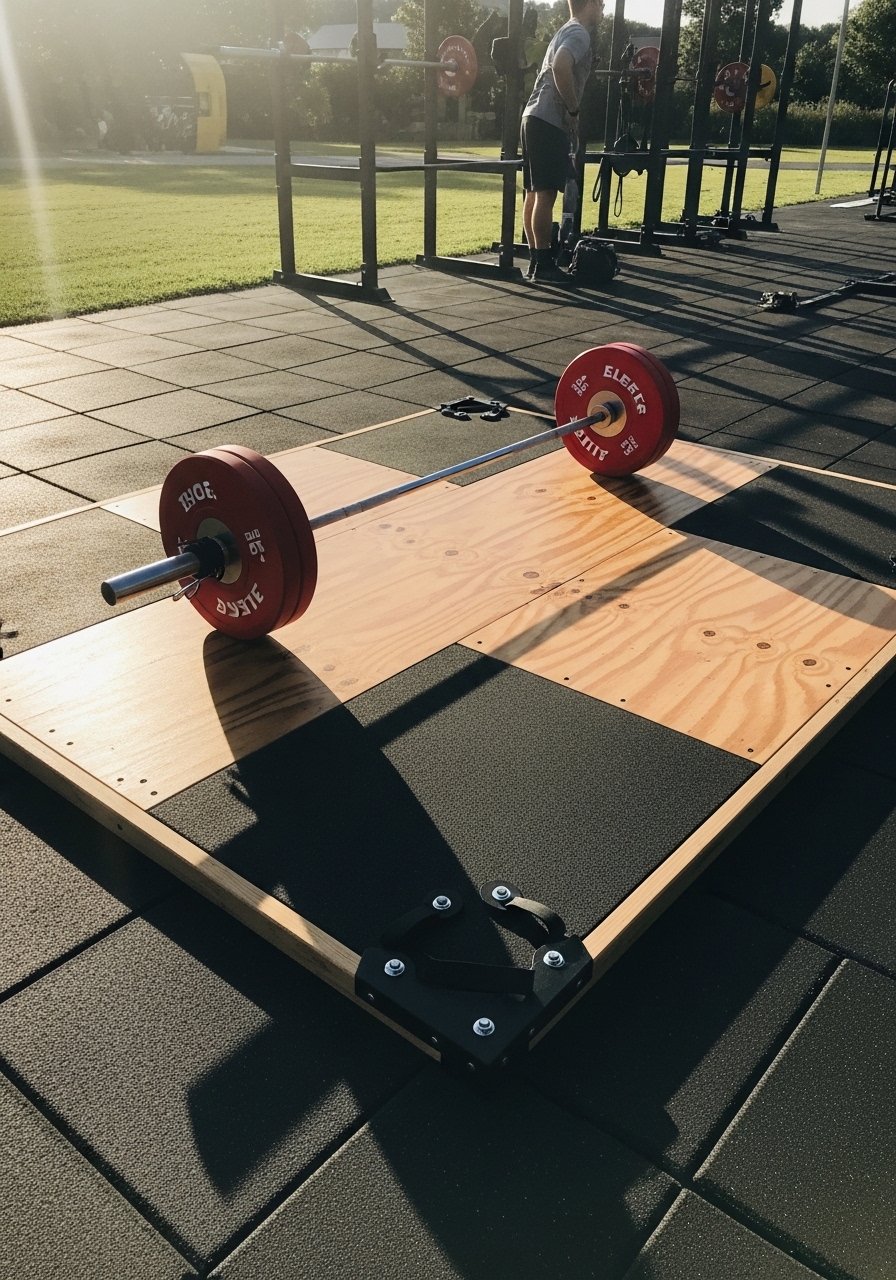
If you drop bars, protect the floor and your patience. I built a plywood platform over horse stall mats, which keeps the bounce down and prevents ruined concrete. Use two sheets of 3/4 inch plywood on top of 4×6 mat segments and bolt mending plates underneath to lock seams. People skip mending plates and then the mats separate mid-session. For a starter bar setup get a 5 ft bar and a couple of light bumper plates so you can practice form without a full rack. I keep a small set of band pegs attached for anchored rows. This is not perfect for renters, but it is the most durable approach.
Compact Flat-Foot Squat Rack Styled As A Niche
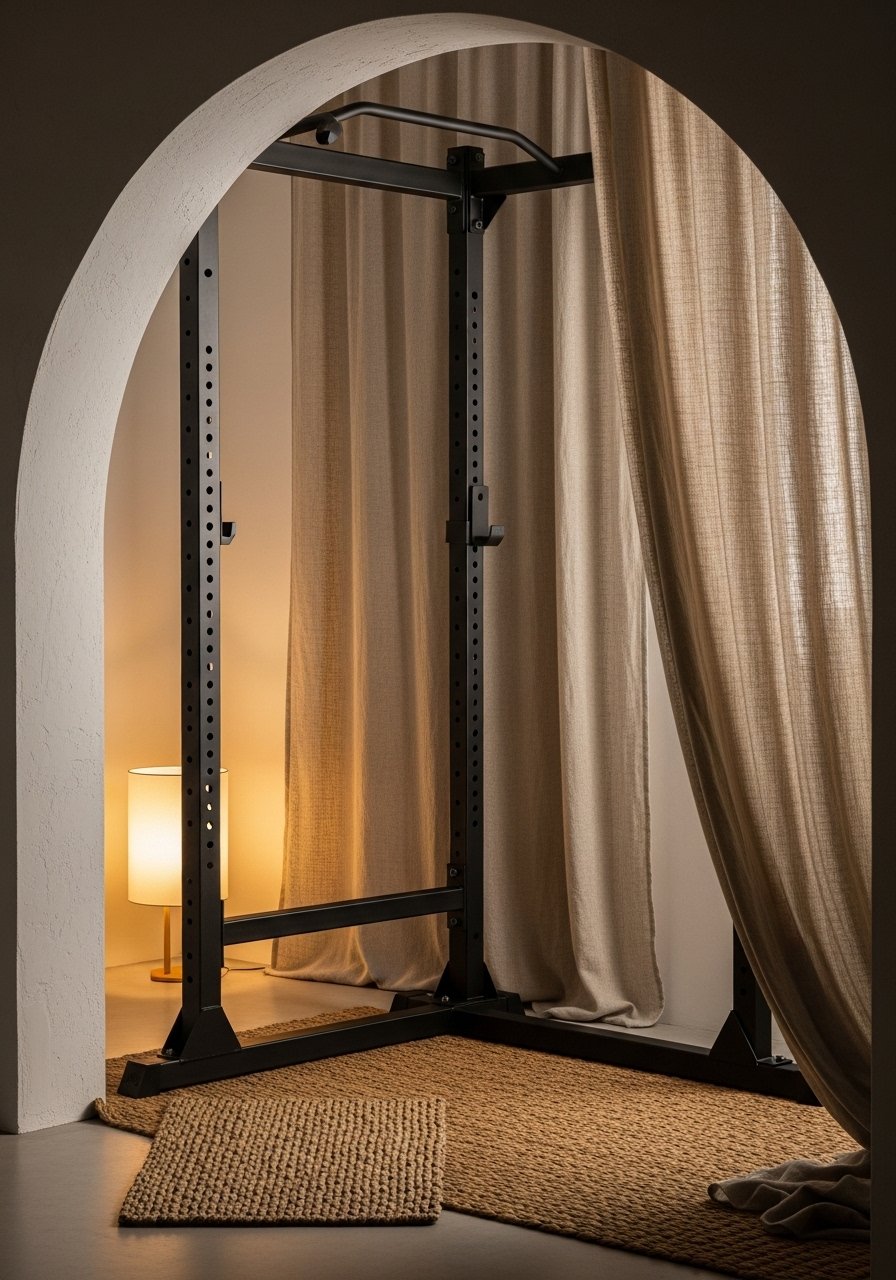
A flat-foot rack lets you have pull-ups and squats without drilling into the floor. I slid mine into a shallow niche and put linen curtains on a ceiling-mounted rod to hide it when guests come by. The rack needs roughly a 48×49 inch footprint and 8 feet of overhead for pull-ups or rings. I made sure to measure ceiling height first because overhead moves hit the ceiling easily. A common mistake is buying a rack too wide for the alcove. Pair it with an adjustable bench and a flat-foot rack mat under the front legs for traction.
Fabric Resistance Band Station With Woven Wall Hooks
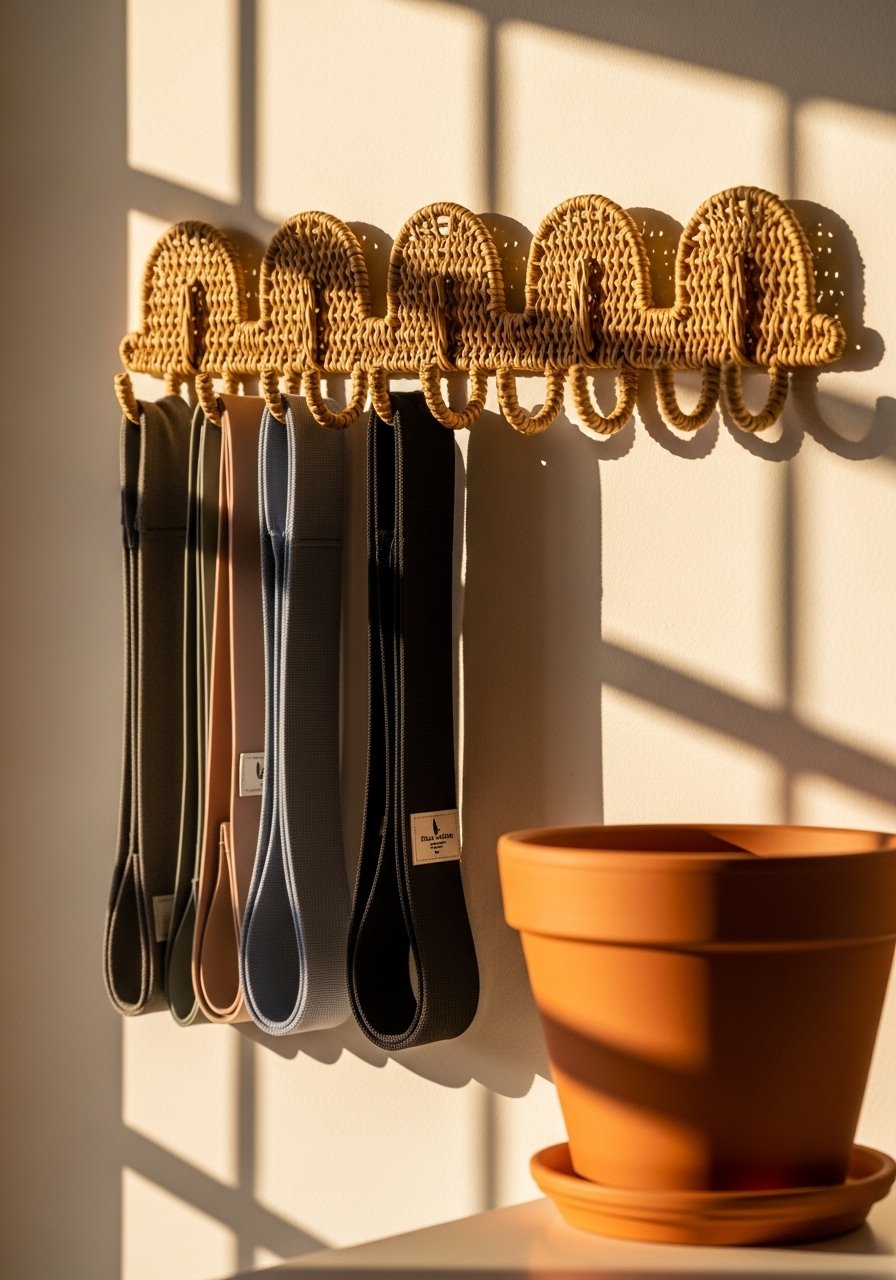
I ditched thin rubber bands after one set pinched the inside of my thigh mid-rep. Fabric bands are wider, wash quicker, and look better hanging like textiles. Install woven wall hooks at shoulder height and leave two inches between hooks so bands don't rub each other. Fabric bands also make assisted pull-ups kinder on the shoulders. I keep a set of fabric resistance loops in olive and rust to match the room. This idea is apartment friendly and solves the "cheap bands break fast" complaint I kept hearing from friends.
Rolling TV Stand And Bluetooth Speaker For Guided Sessions
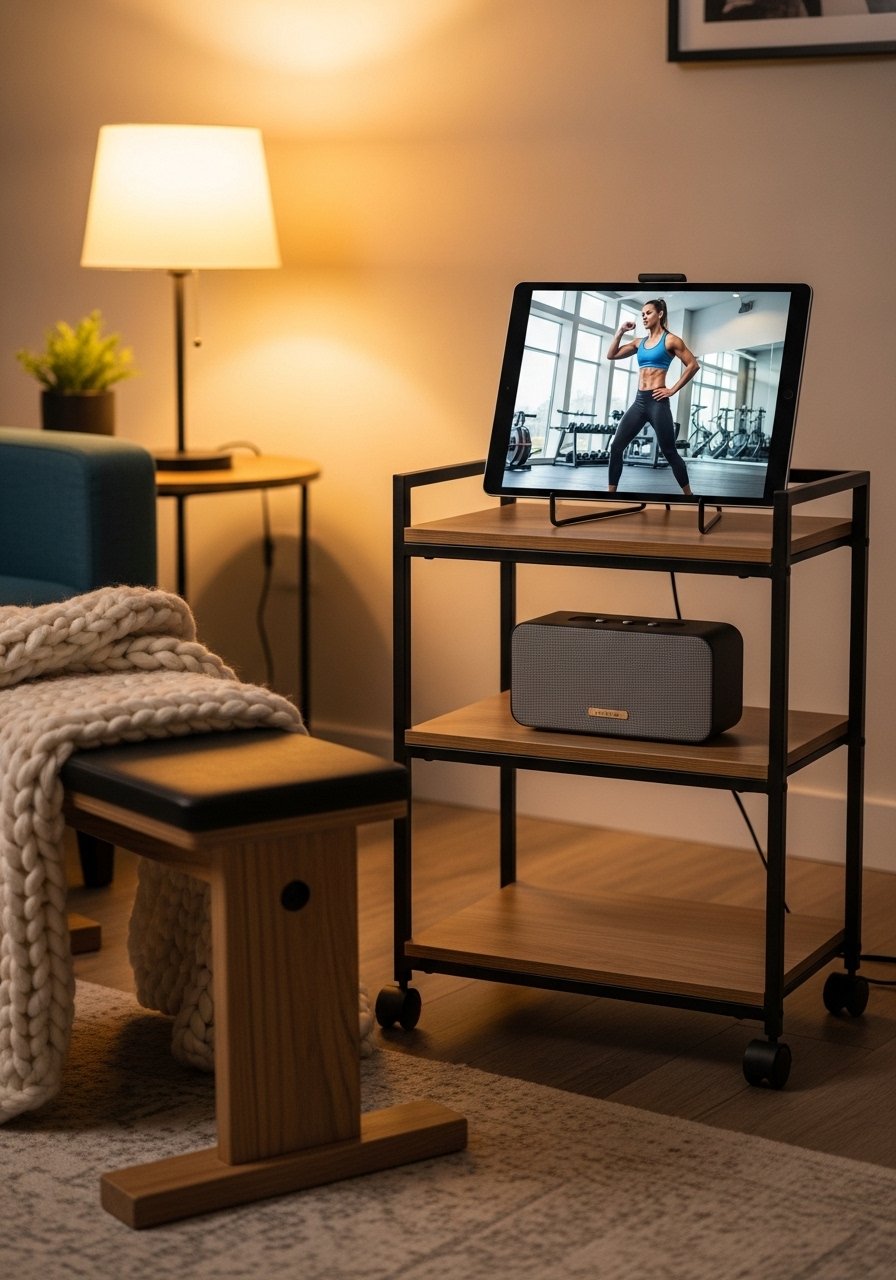
Streaming on a tablet propped on the floor works, but a rolling TV stand changes how you use the room. I put mine on wheels so it slides out for classes and tucks away behind a curtain after. Add a Bluetooth speaker for clear cues. I use a mid-size stand so the screen sits at eye height for both standing and seated moves. People forget to test speaker placement and end up craning their necks. Grab a rolling TV stand and place it about 6 to 8 feet from the mat to avoid echo in garages.
Vertical Dumbbell Rack Styled Like A Narrow Shelf
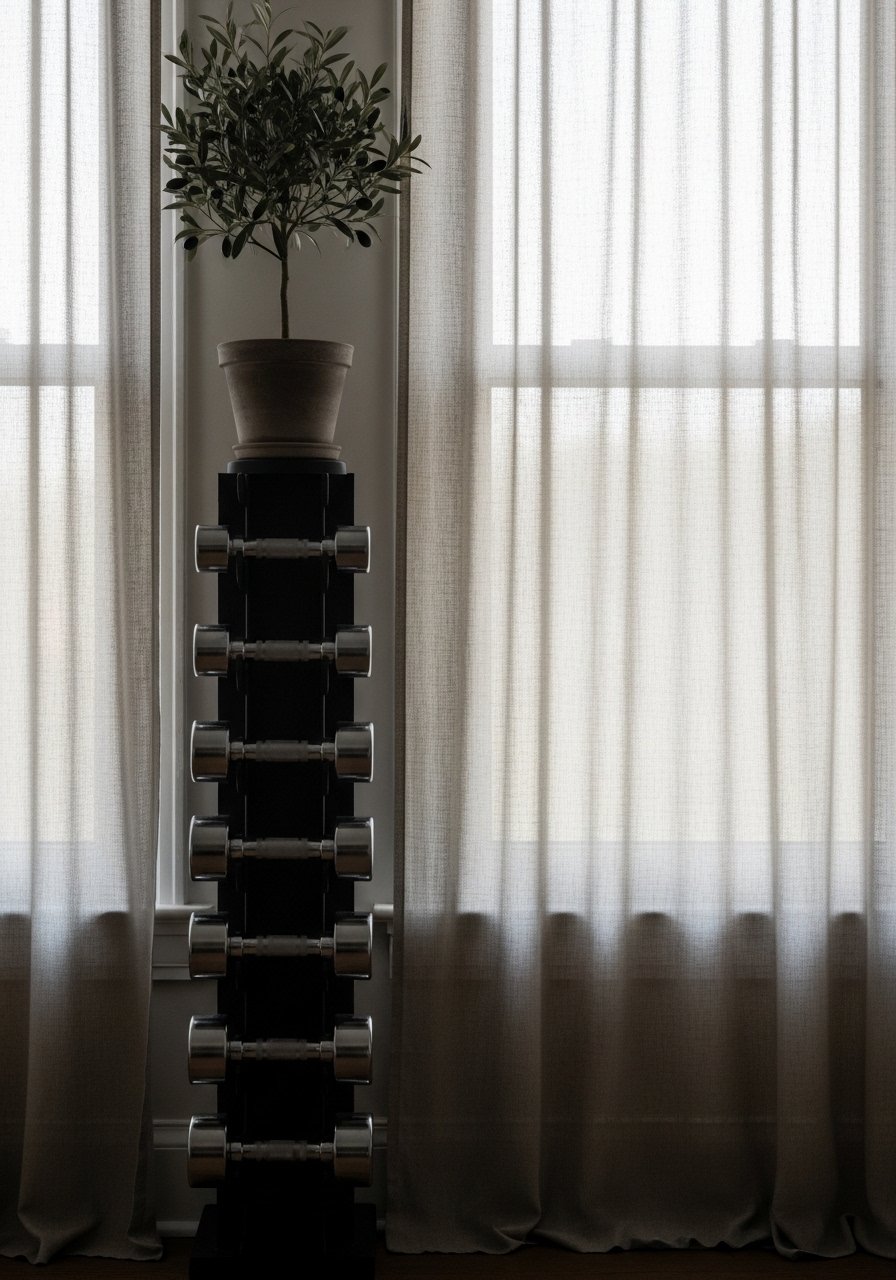
My floor felt spacious again once I swapped a handful of stray dumbbells for a slim vertical rack. It stacks 5 to 20 pound weights in a narrow line so the room reads less like storage and more like a gym corner. Look for a model under 18 inches wide so it fits in tight spots. A lot of people keep dumbbells on the floor and trip over them. I use a vertical dumbbell rack that holds my 5, 8, and 10 pound sets and keeps the floor clean. This pairs nicely with the rattan cabinet from earlier.
Recovery Corner With Plants, Linen Curtains, And Soft Lighting
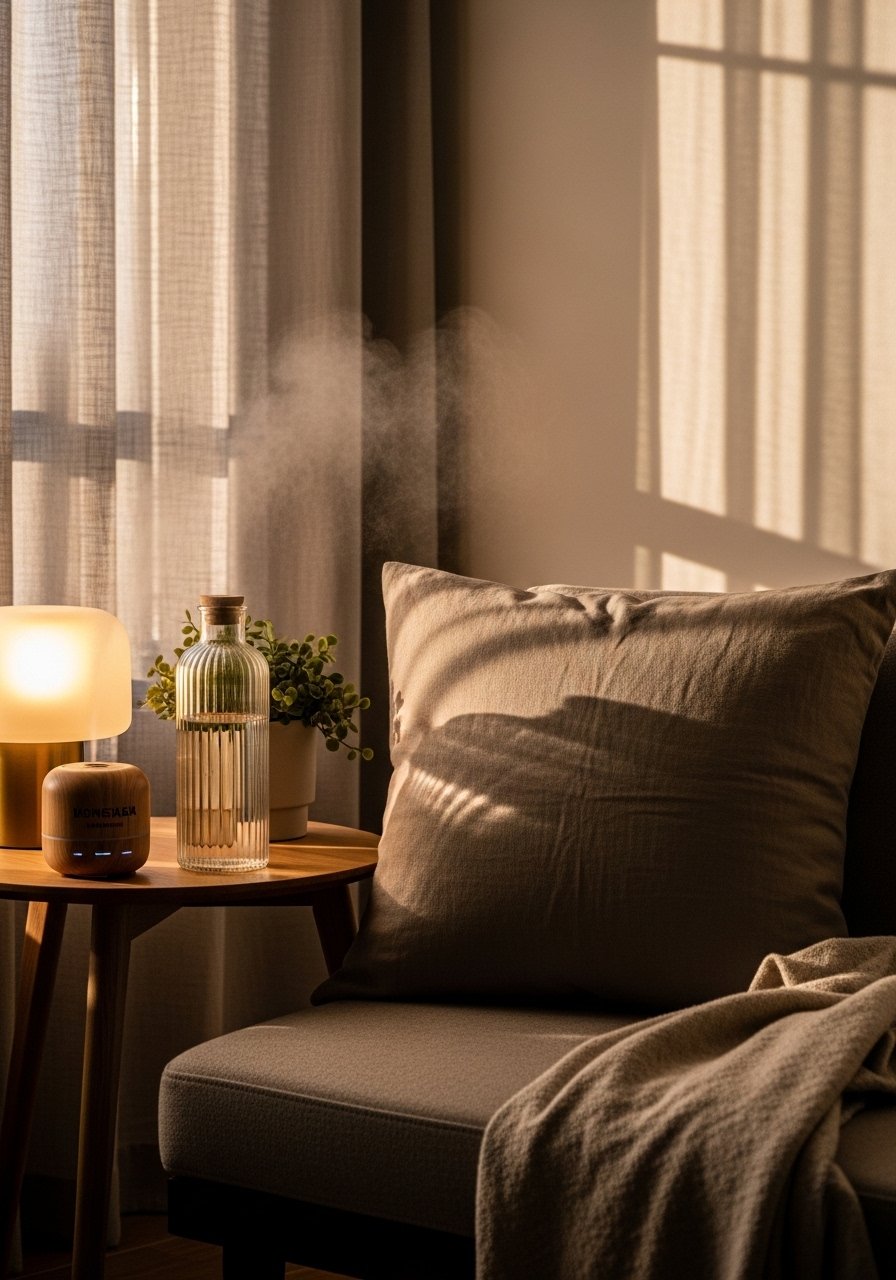
People forget that recovery needs a place too. I made a small nook with a 22-inch down-filled linen pillow, a soft throw, and a floor lamp so I actually spend five minutes stretching after workouts. Natural plants help the room feel alive without stealing space. I use a faux fiddle leaf fig where I need height and a couple of pothos in hanging pots. One overlooked detail is curtain length. Curtains that kiss the floor make the room feel taller. I keep a 22-inch linen pillow cover on rotation so the recovery corner always looks fresh.
Your Decor Shopping List
- Honestly the best $40 I have spent. Neoprene dumbbells, set of three in muted tones, small space friendly
- For the floor base, go with durability. Horse stall mats, 4×6 foot (3/4 inch)
- For bands that do not pinch, fabric resistance bands set in olive and rust
- Functional and decorative. Vertical dumbbell rack, narrow model (~18 inches wide)
- A compact screen that moves. Rolling TV stand on wheels for streaming classes. Similar at Target
- Textiles that age well. 22-inch linen pillow covers in natural colors (~$20 each)
- For the deadlift zone, band pegs for plywood platform and two 5ft plywood sheets from Home Depot as a pairing suggestion
- For atmosphere, faux fiddle leaf fig 6ft where real plants would struggle
Shopping Tips
- White oak beats dark wood in 2026. Design feeds have shifted completely. White oak floating shelves look current, not dated.
- Grab fabric resistance loops for $25. Swap them every year and the whole routine feels refreshed.
- Curtains should puddle or kiss the floor, never hang halfway up. 96-inch linen panels are right for standard 9-foot ceilings.
- Use mending plates under your horse stall mats so seams do not drift apart. Steel mending plates are cheap insurance.
- One single tall plant gives more impact than five small succulents. Faux fiddle leaf fig is low maintenance and visually effective.
Frequently Asked Questions
Q: Can I get a Mediterranean look in a small apartment gym?
A: Yes. Keep a simple palette of whites, olive, and terracotta accents. Use narrow vertical storage and a single tiled accent behind your rack. Most folks kick off with under $500 and add from there. Use fold-flat benches and rattan baskets to hide gear.
Q: What ceiling height do I need for pull-ups or rings?
A: Aim for at least 8 feet. Anything shorter risks hitting the ceiling when you clear the bar. If you have 7.5 feet, skip full pull-ups and use bands for assisted moves or strap rings to the rack instead.
Q: How do I stop mats from sliding or separating?
A: Put mats on a clean, dry floor and bolt mending plates underneath seams. Front legs of benches should sit on the mat edge for stability. Horse stall mats, 4×6 foot with plates hold up best for heavy drops.
Q: I rent and cannot drill walls. What are renter-friendly options?
A: Go with flat-foot racks, rolling TV stands, and freestanding storage. Use tension rods for lightweight curtains and drop-in hooks over room dividers for bands. A vertical dumbbell rack and baskets solve most storage problems without drilling.
Q: Should I choose adjustable weights or individual dumbbells?
A: Over half go adjustable to save room. Adjustable sets are space savers for apartments. If you want the Mediterranean look, pick a compact adjustable set with muted finishes so they blend into the decor.