

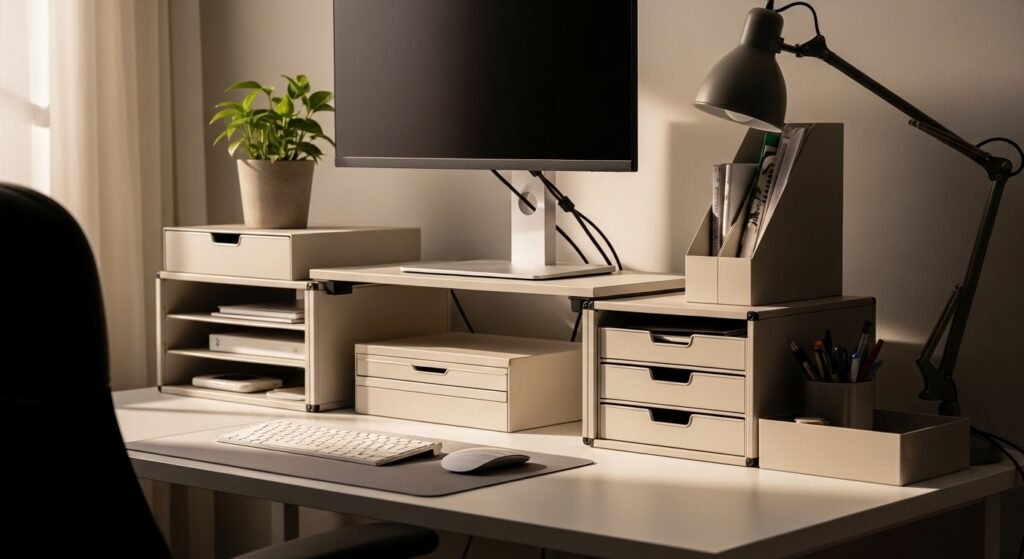
My living room had nice furniture and decent lighting but it still felt like a waiting room. Took me embarrassingly long to figure out it was missing texture. For my desk I made similar small swaps that stopped the pileup of pens, papers, and cords. These are easy projects I actually built and use, the kind you finish in an evening and still love three months later.
These ideas lean toward modern and practical. Most projects cost under $50, with a few $75 splurges for better materials. They work for tiny apartment desks, a wide home office, or a bedroom workstation that tends to attract clutter.
Minimalist Magnetic Pen Strip For a Clean Desktop
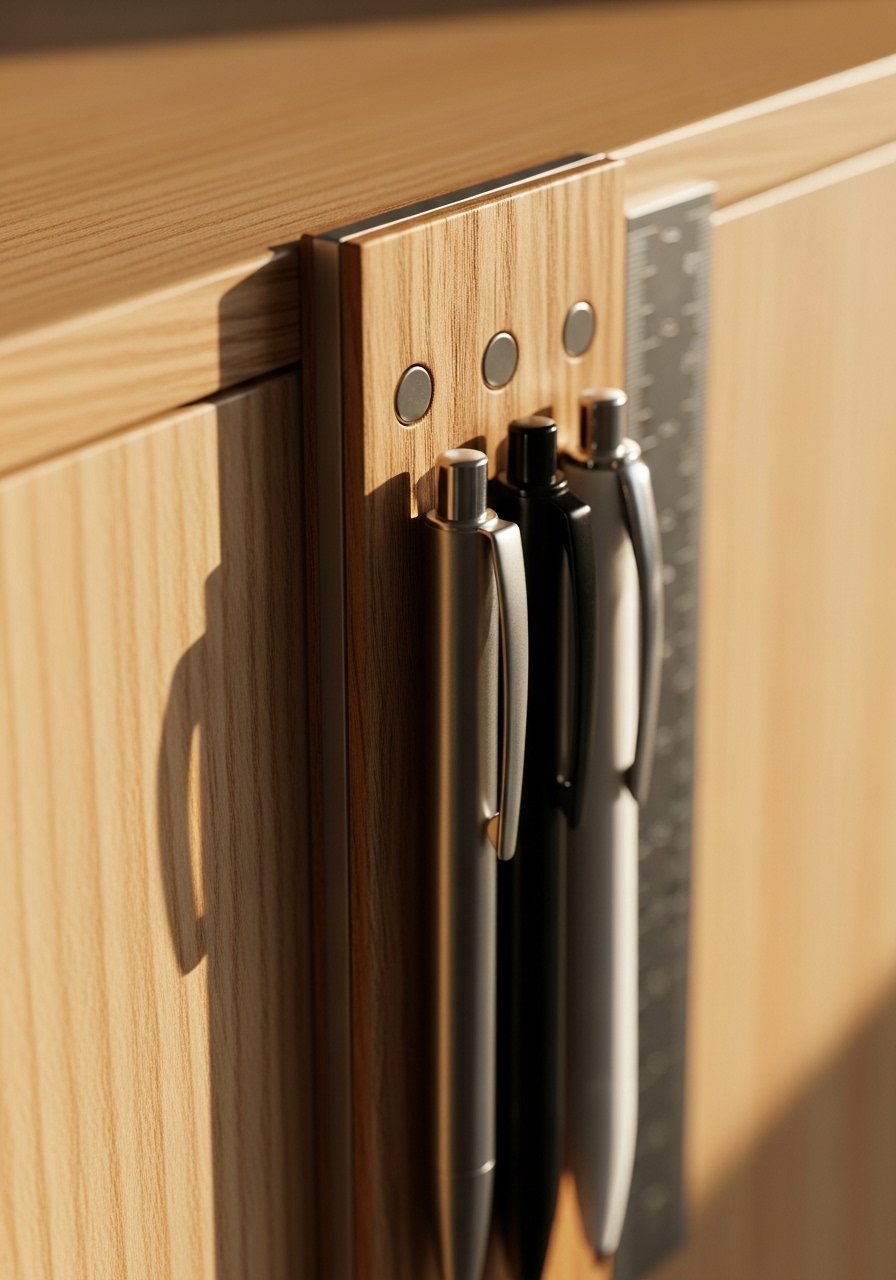
A magnetic pen strip clears the desktop without hiding tools you use every day. Mount it to the desk edge or the wall at a 4-6 inch reach so you can grab a pen without shifting your chair. I used a 12-inch strip and grouped pens by color using the rule of three to keep it tidy and not too matchy. Common mistake, people place it too high. If it is above eye level you will ignore it. Try a bamboo desk tray nearby to catch loose clips and sticky notes.
Repurposed Drawer Dividers For Stationery Order
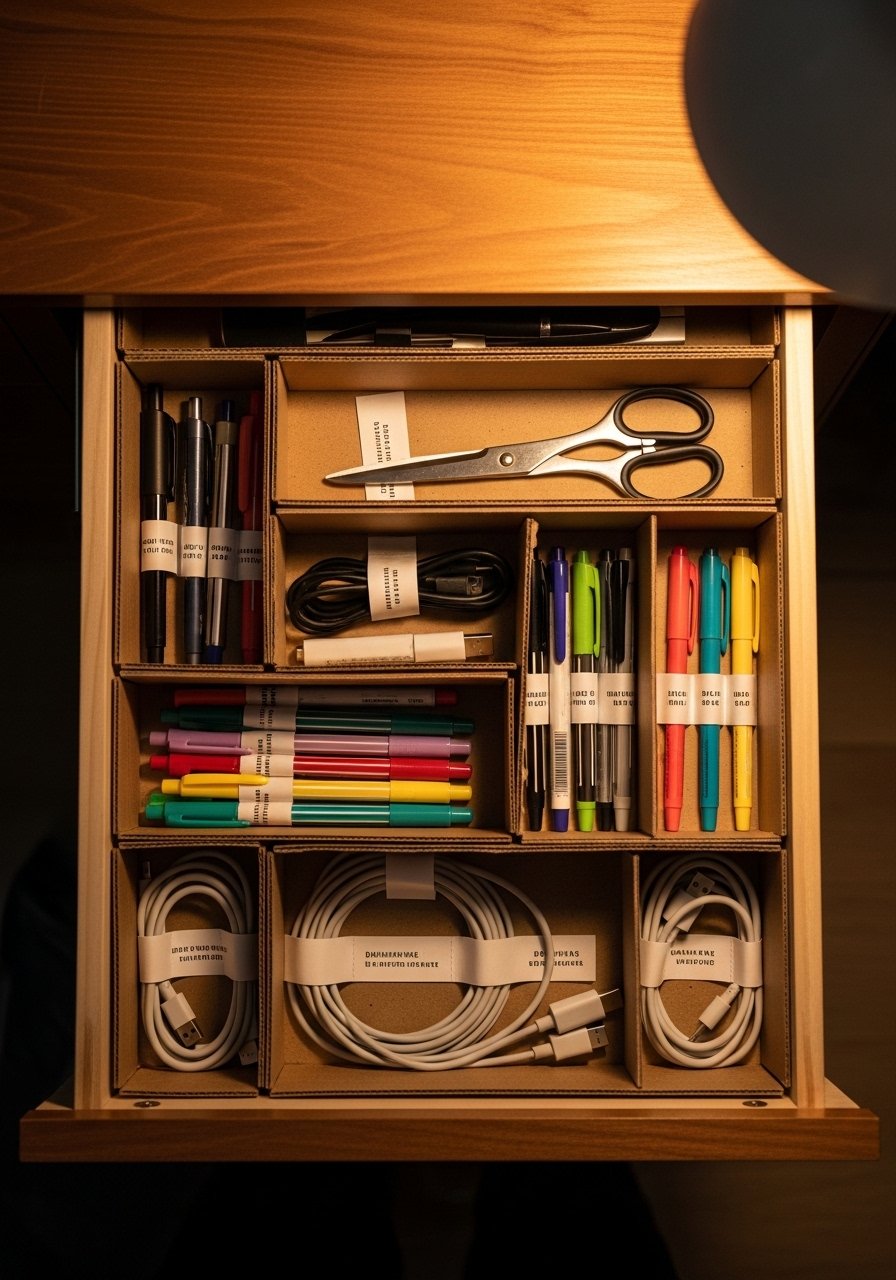
I stopped losing scissors when I built simple dividers from cereal boxes covered in contact paper. Use 1.5 to 2-inch compartments for pens and a 3.5-inch slot for a stapler. The visual result is calm and approachable, and this suits small desks or shared workstations. A common mistake is making every compartment the same size. Mix sizes so small things do not spill into big ones. Instead of custom wood, you can use an inexpensive bamboo drawer organizer for about $20 and cover it to match your desk.
Vertical Pegboard For Creative Home Offices
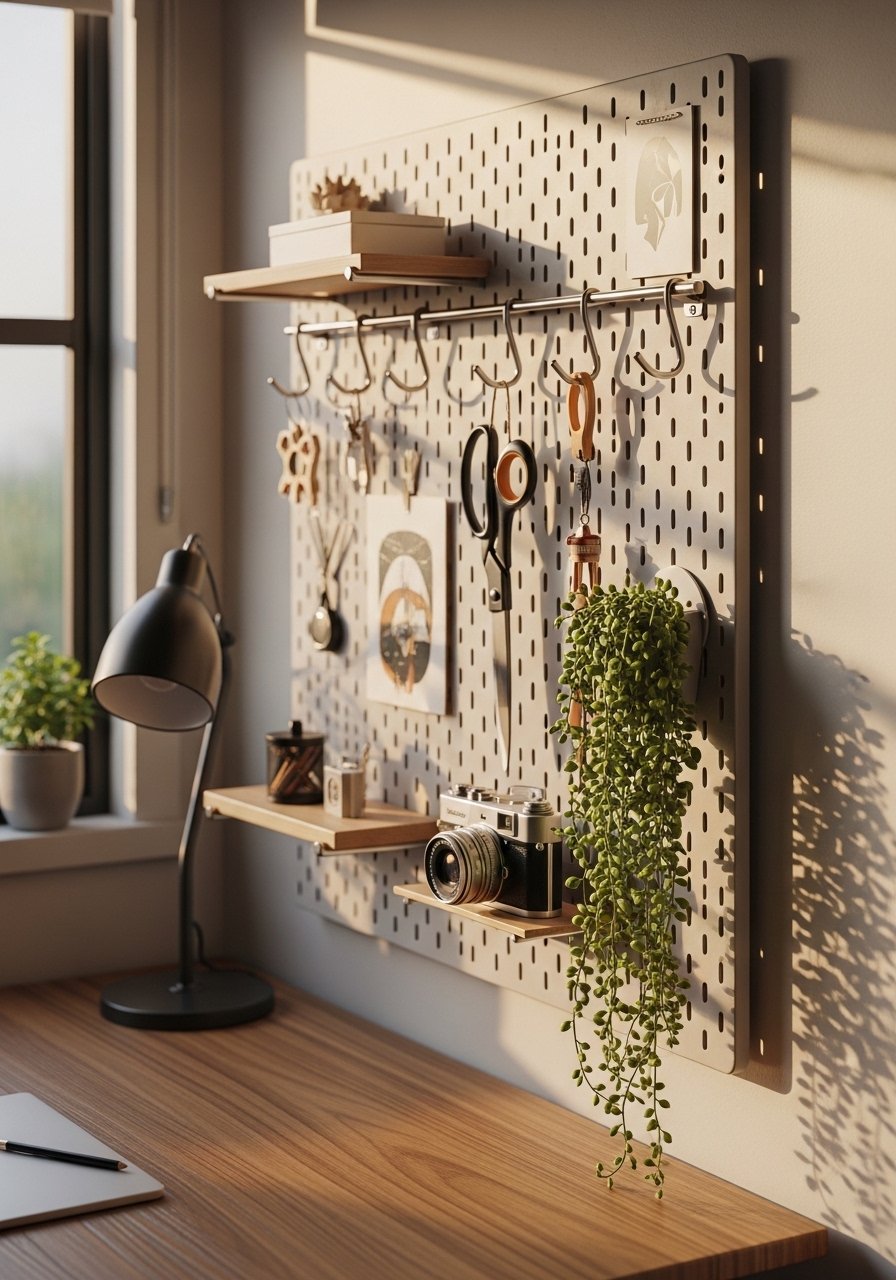
Pegboard gives vertical breathing room for tools, notes, and small bins. Mount it 6-8 inches above your desk surface so the bottom row clears the monitor. I prefer a painted pegboard in a neutral tone and use three small bins grouped together to respect the rule of three. The feeling is organized but lively, perfect for craft tables or writer desks. People stack everything on the lowest hooks and it becomes messy. Rotate items seasonally and keep only daily-use things within arm’s reach. I keep a pegboard hook kit on hand to rearrange as projects change.
Cable Management Raceways For a Tidy Workstation
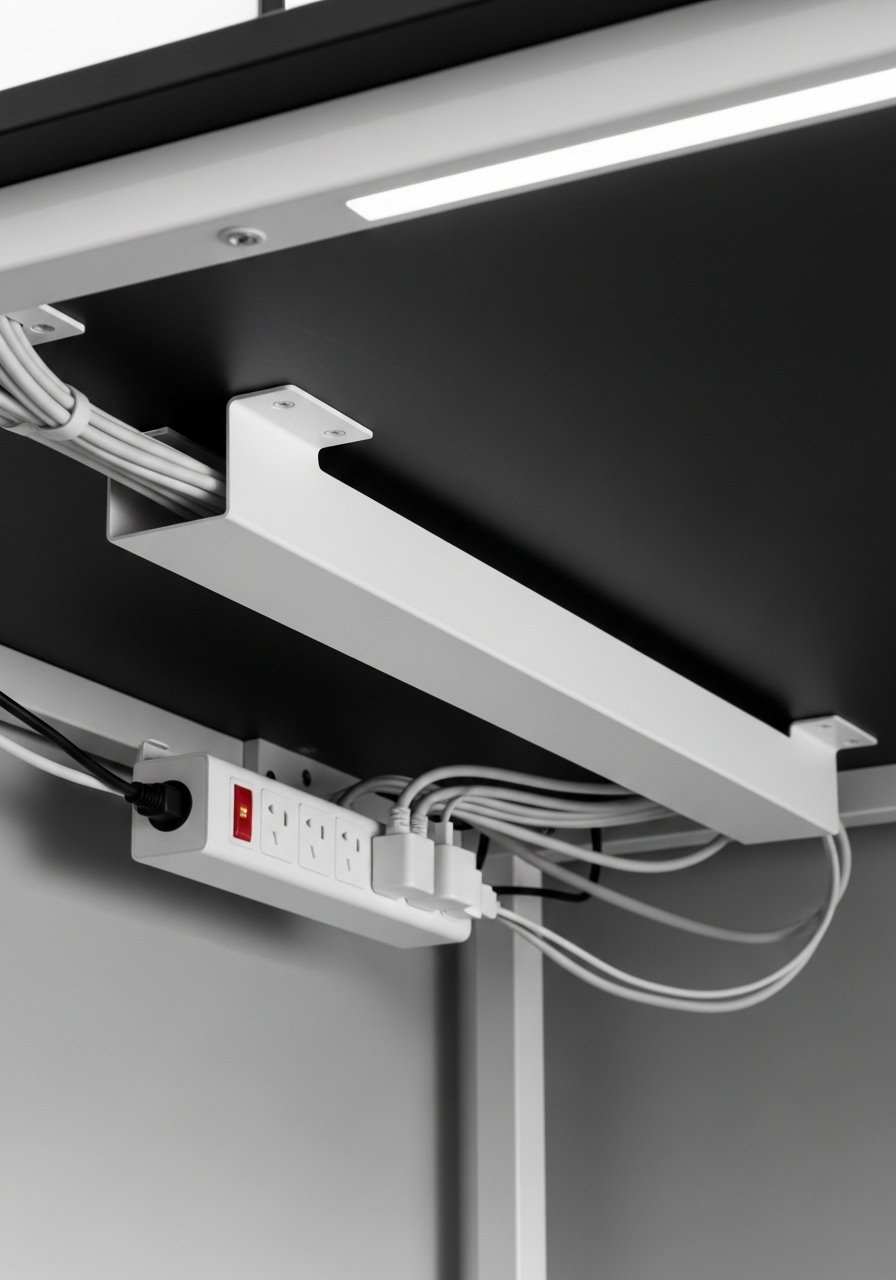
Nothing ruins a clean desk faster than a spaghetti of cables. An under-desk cable tray and adhesive clips tame power bricks and chargers. Mount the tray centered under the desk and run cables along the back edge to stay out of sight. A common mistake is taping cables to the desktop edge where they peel and look sloppy. I use a under-desk cable tray and adhesive cable clips to guide cords, and it makes vacuuming faster too. Pair this with the monitor stand idea below to free more surface area.
Crate Hutch For Small Space Storage With Vintage Vibe
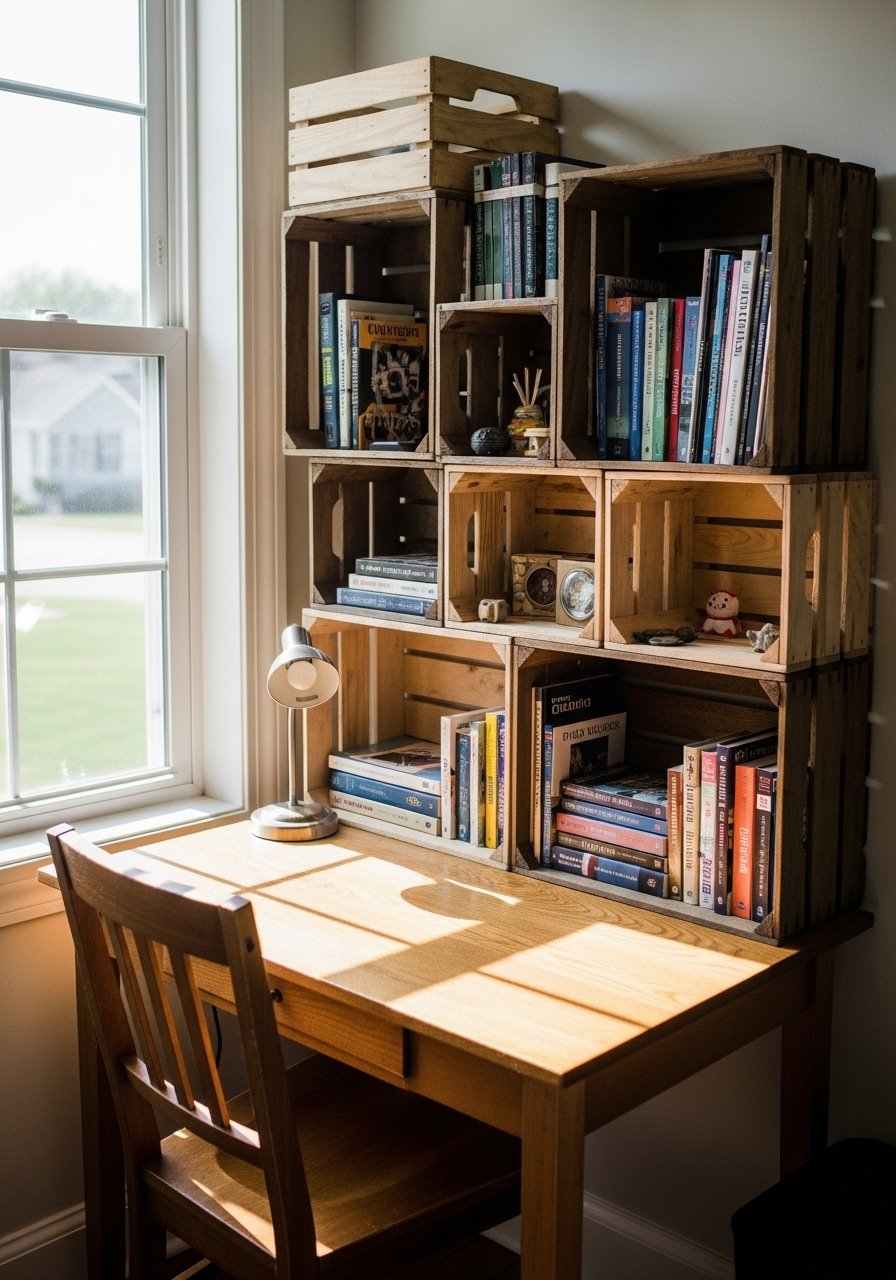
If your desk backs to a wall, stacking two shallow crates creates instant vertical storage without wall anchors. Paint them to match your trim, leave 2 inches between crates for airflow, and add a tiny tray on top for keys. The result reads intentional in a farmhouse or modern mix room. The mistake is screwing crates directly to the wall without supports, which can sag. Use L-brackets and a wood crate set to keep everything stable. This trick works well in bedrooms and living room work nooks.
Clipboard Project Wall For Active Papers
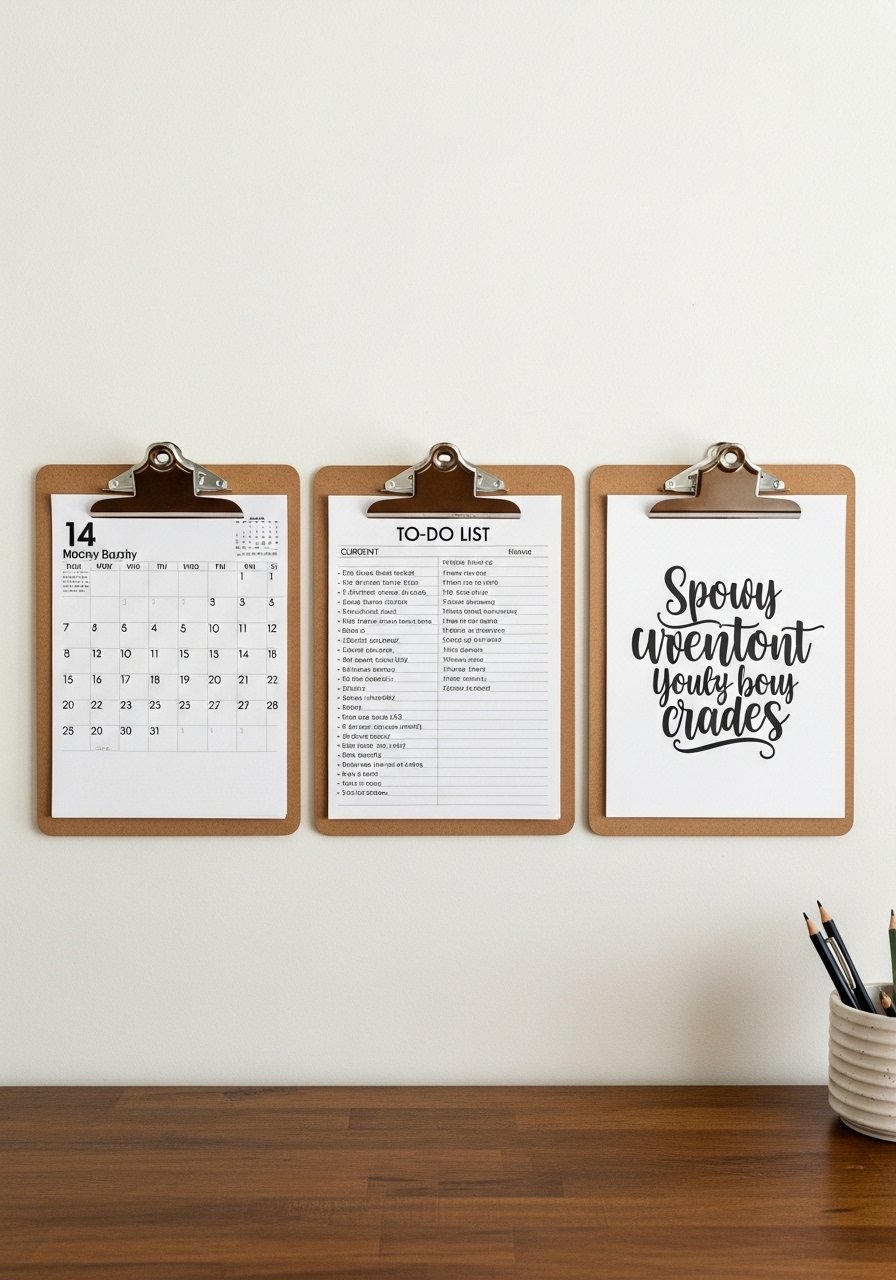
Most of my piles cleared up when I moved active pages to a clipboard wall. Hang three clipboards in a column. Use the top for a calendar, the middle for to-dos, and the bottom for incoming mail. Grouping in threes keeps visual balance and makes decisions faster. The usual error is pinning too many things to one clipboard, which re-creates the mess. Use thin cardboard clipboards or try decorative clipboards set to keep the look tidy and reusable.
Rotating Caddy For Art And Office Supplies
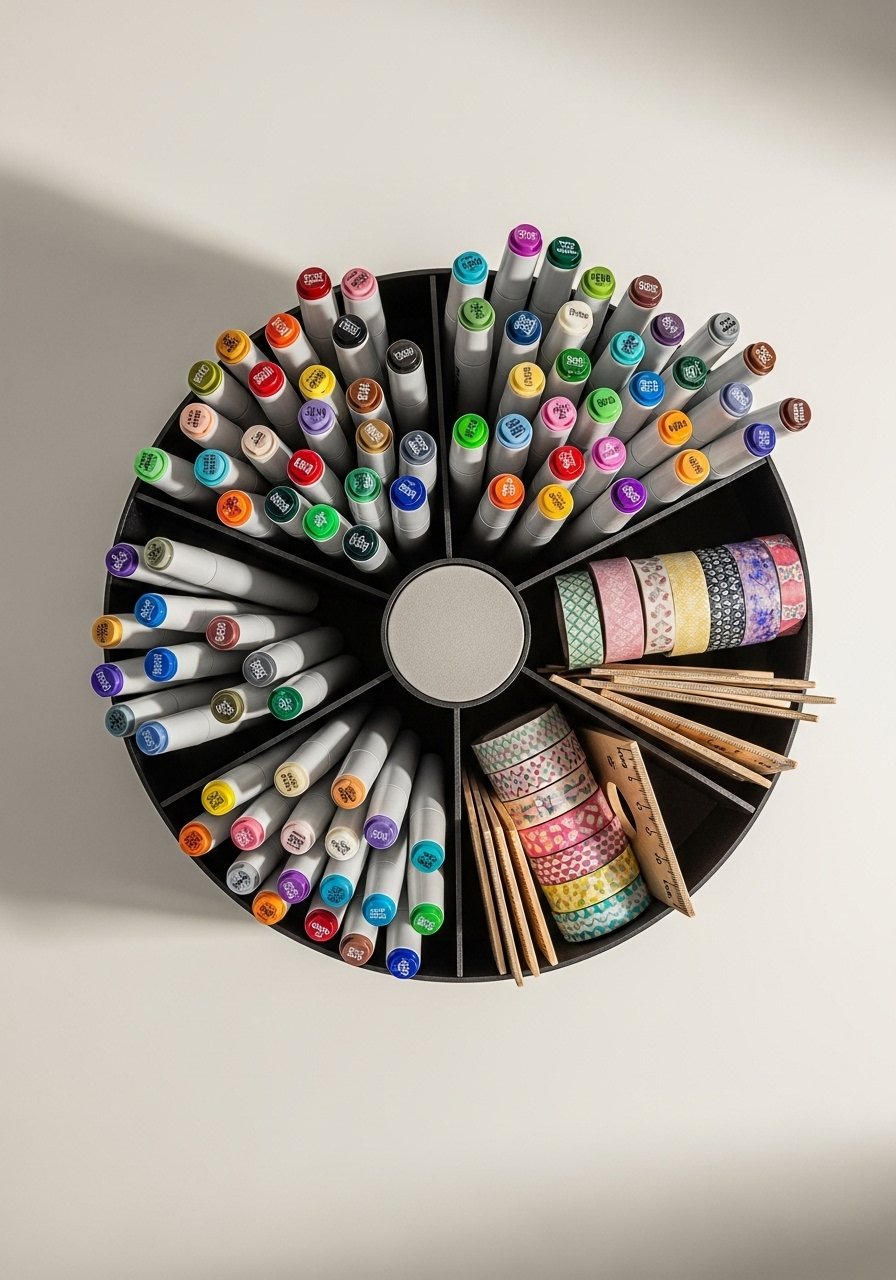
A small lazy Susan-style caddy is perfect for shared desks or craft nights. I split mine with cups and small boxes so every tool has a home. Keep the caddy off to one side, not in the center. People put it in the middle and it becomes a visual anchor that cuts your workspace. Choose a 9-12 inch diameter so it does not crowd your arms. I recommend rotating desk organizer options that are easy to disassemble for cleaning.
Floating Shelf With Slotted File Dividers
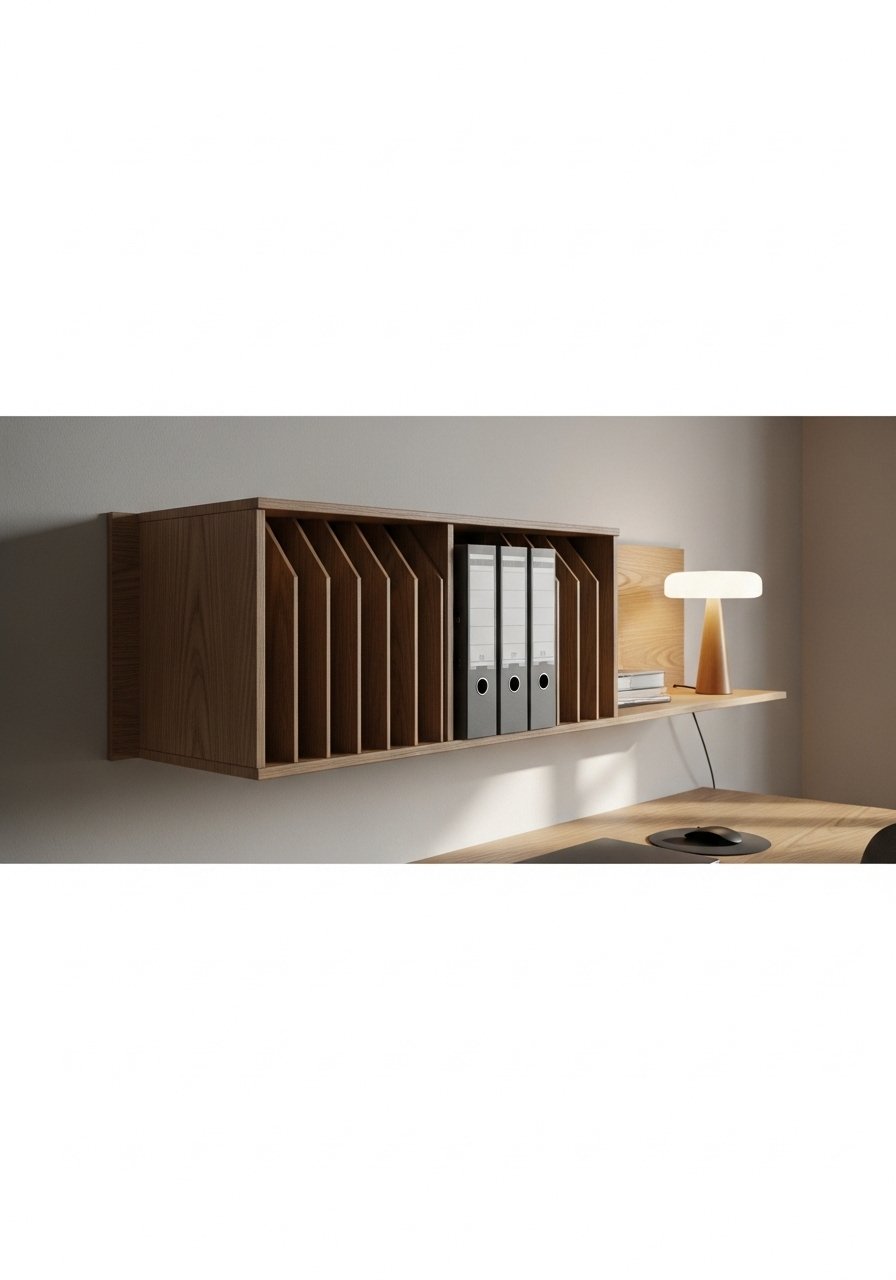
If paper piles are your enemy, build a floating shelf with three vertical file slots underneath for current projects. Make each slot 10-12 inches wide to hold letter-size folders and notebooks. The visual result is neat and professional, perfect for home offices and study corners. A common mistake is shallow slots that tip folders forward. Deeper slots avoid that. I used floating shelf brackets and file dividers to build a system that keeps urgent work visible but off the desk.
DIY Monitor Stand With Drawer Storage
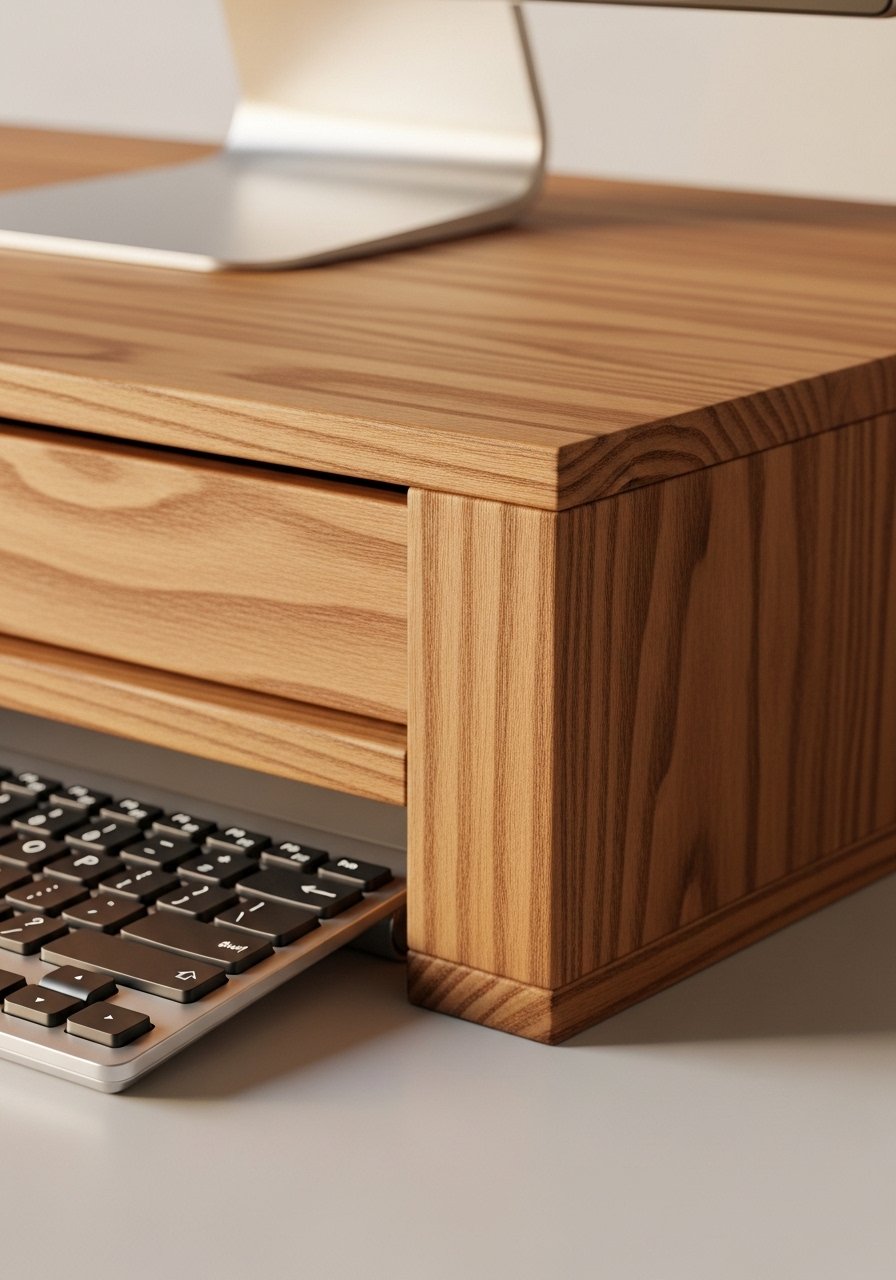
Raising the monitor to eye level cleared my neck and created hidden storage underneath. Build a riser 6-7 inches high with a 2-inch deep drawer for post-it pads and USB sticks. The result is ergonomically friendly and surface-clutter free. People often make stands too tall which forces you to look upward. Keep the top of the monitor at or slightly below eye line. For a ready-made option try wood monitor stand with drawer.
Drawer Charging Station To Hide Devices
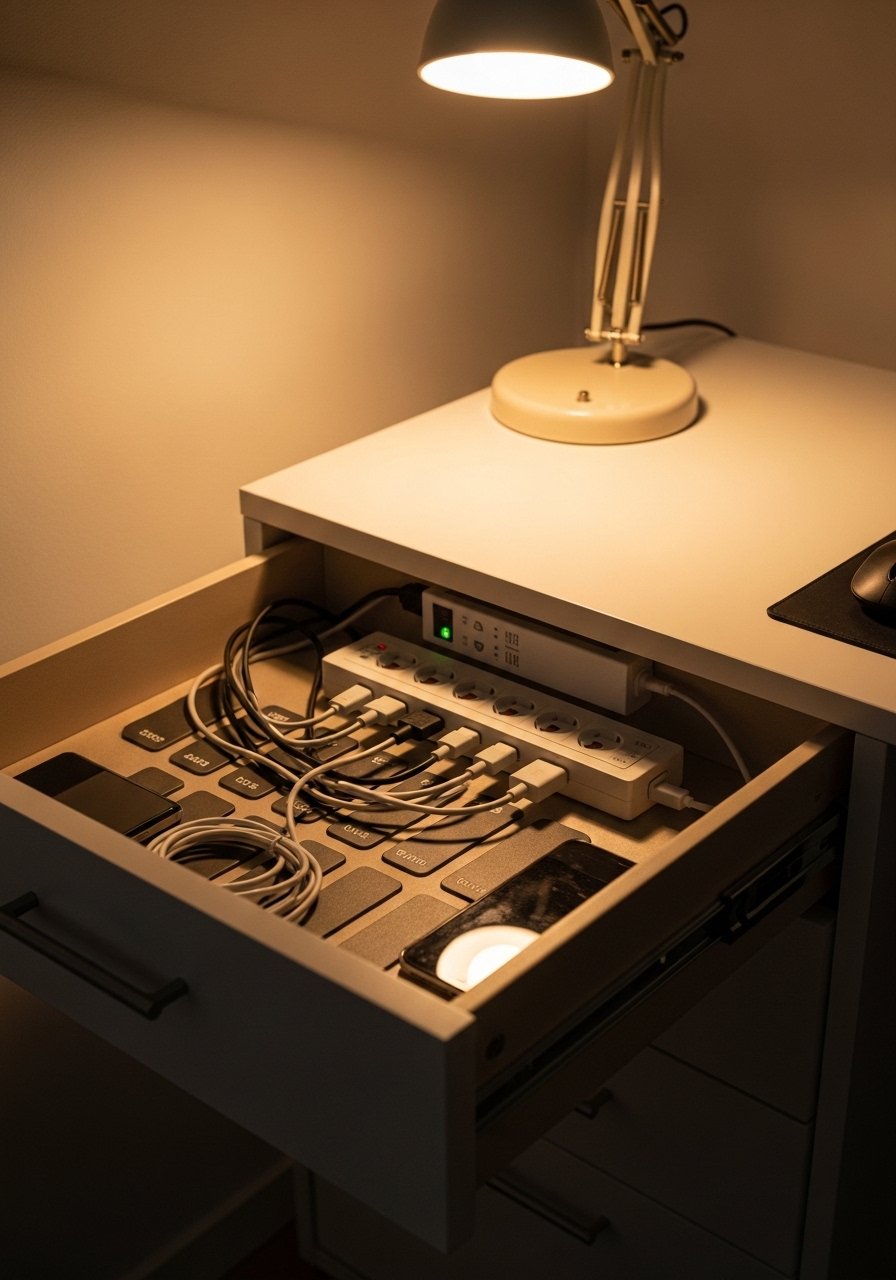
Turn a deep drawer into a charging hub by running one power strip inside and drilling a single cable grommet in the back. Label slots for phone, tablet, and earbuds so everyone returns devices to the same place. The feeling is tidy and discreet. A common misstep is using multiple chargers that overload one outlet. Use a small surge protector and route cables through a cable grommet kit for a clean pass-through.
Mason Jar Wall Organizer For Craft or Writing Desks
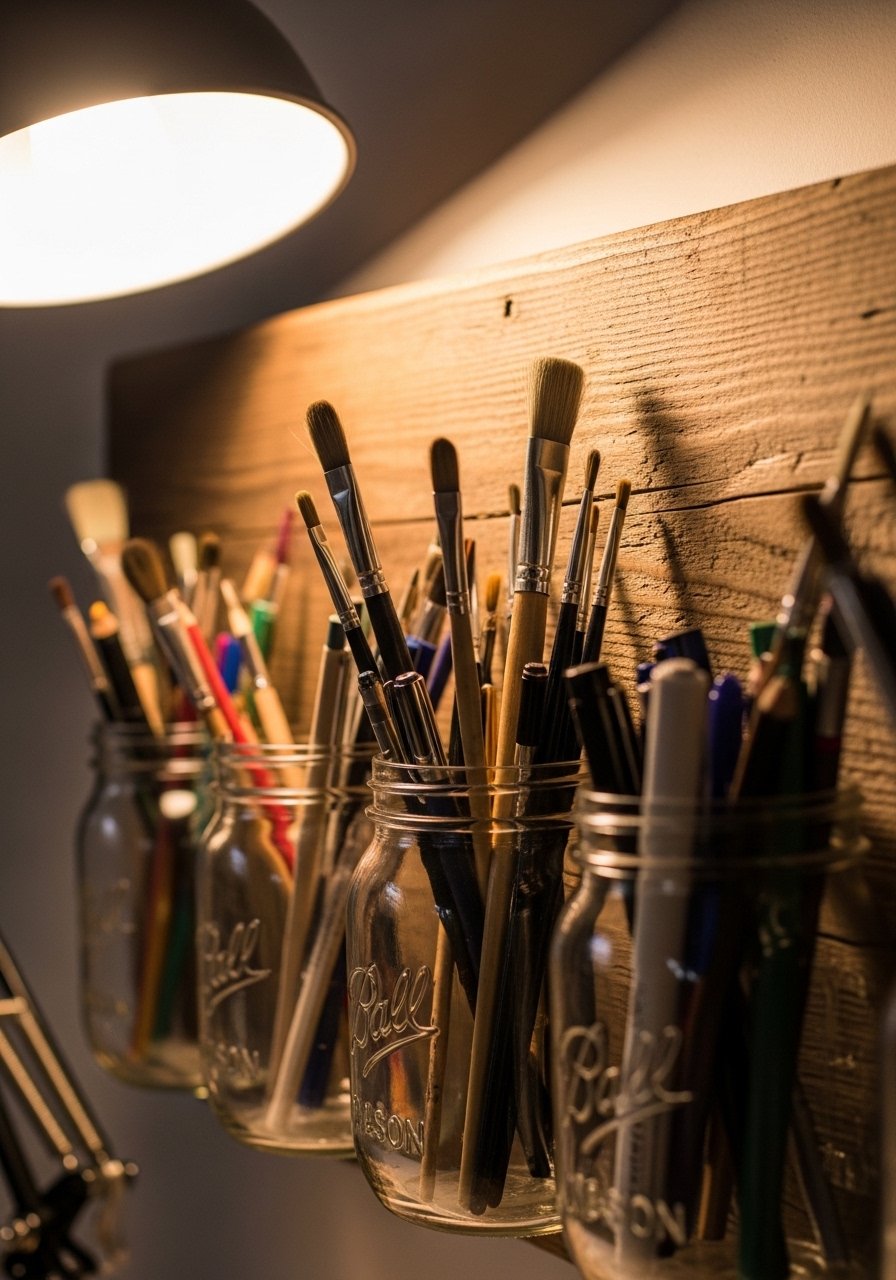
This was my first project and it still works. Mount three jars on a board and stagger them so brushes and pens sit upright without tipping. The jar mouths should be 2.5 to 3 inches for most utensils. It keeps small items visible and avoids drawer black holes. A mistake is mounting jars too low, so they obstruct the desk surface. If you want a readymade twist, use mason jar holders with lids for easy removal and cleaning.
Labeled Pouches For Paper And Receipt Control
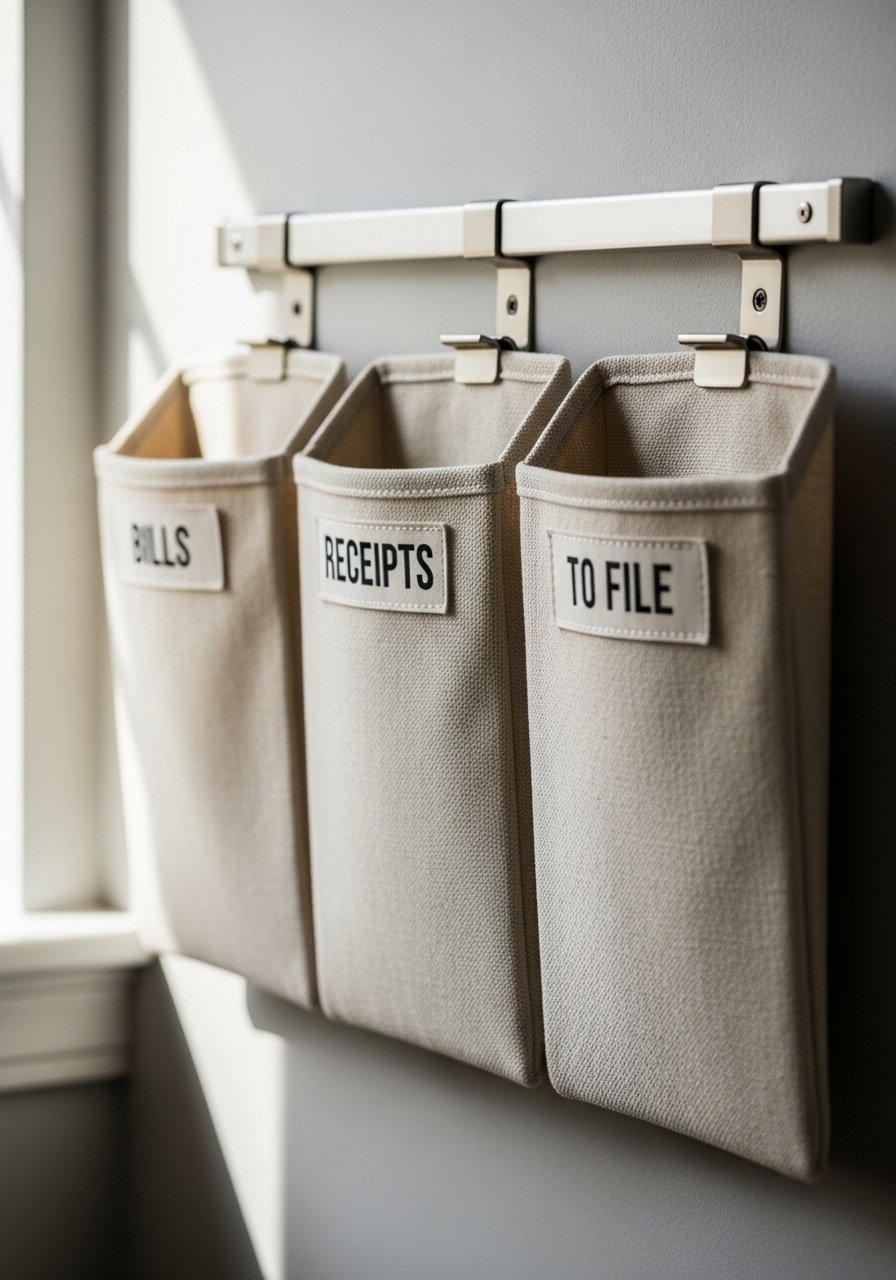
Paper piles melt away when you force them into labeled pouches. Use three pouch sizes, one for bills, one for receipts, one for things to file. The tactile act of sliding a receipt into a pouch reduces decision fatigue. A common error is using clear plastic that looks utilitarian. Choose linen or cotton in a muted color to stay in an 80/20 color ratio with your desk surfaces. I use a wall pouch organizer clipped to a simple rail to keep everything accessible.
Narrow Keyboard Tray To Maximize Surface Area
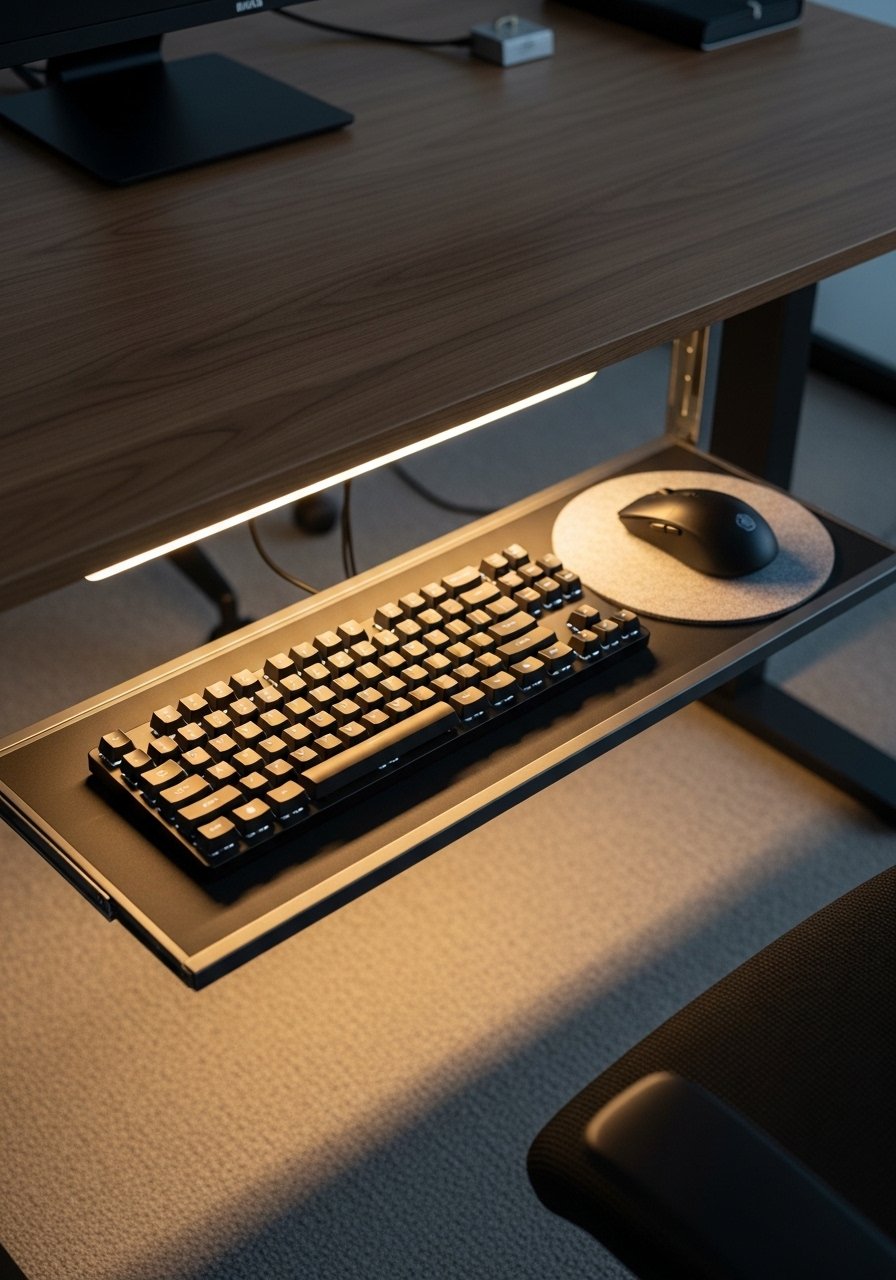
If your desk surface feels crowded, a retractable keyboard tray frees up 6-12 inches of space. Look for a tray that slides smoothly and is 26-30 inches wide for a full keyboard with a small mouse. The result is a cleaner work surface with room for a notebook or a cup of coffee. A mistake is installing it too close to the edge which forces you into an awkward posture. Pair this with the monitor riser idea for correct ergonomics. I like a compact keyboard tray kit that fits shallow desks.
Entry Tray Setup For Keys, Mail, And Daily Carry
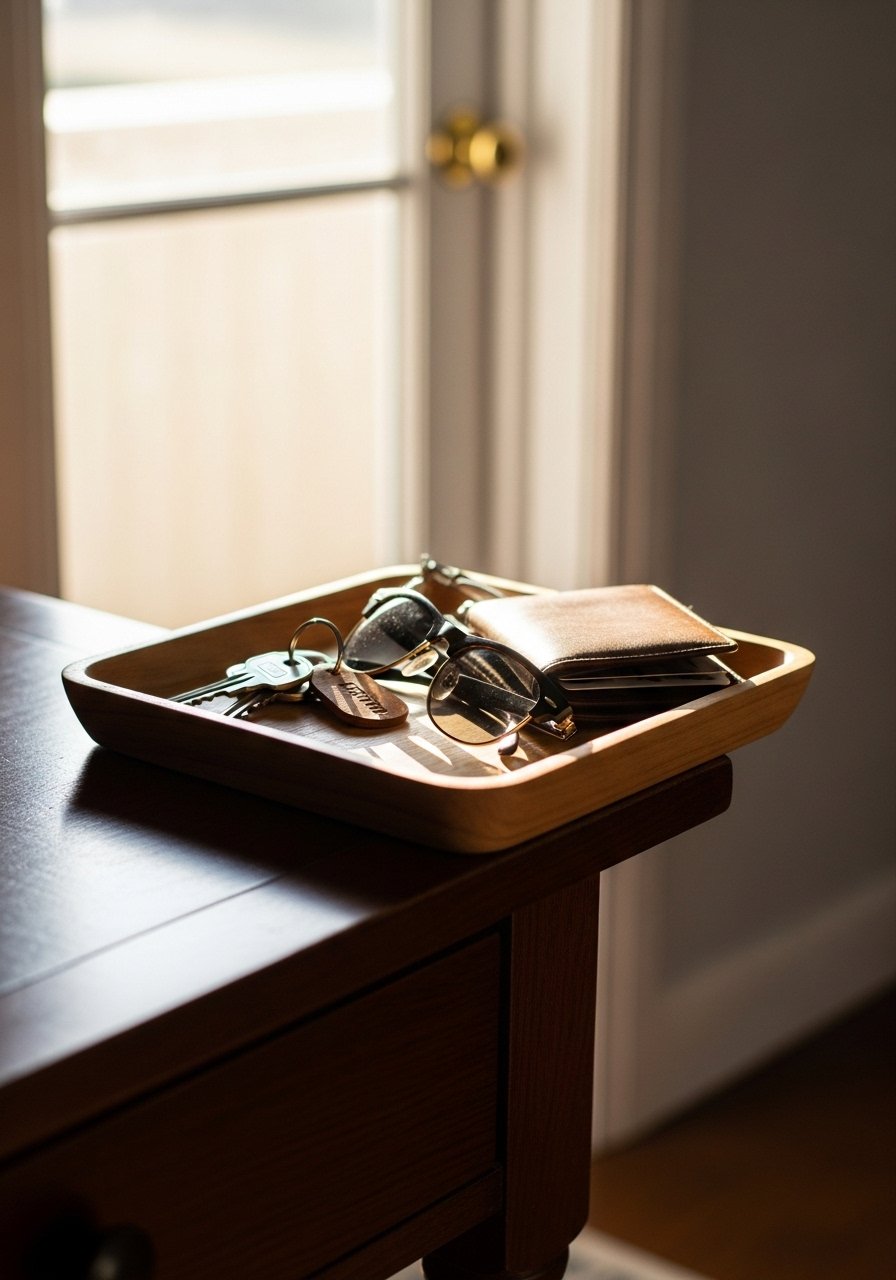
If your desk doubles as a landing spot, a simple tray by the door solves daily pileup. Use a 10×6 inch tray with a small divider for small change and a hook nearby for bags. The visual effect is intentional and tidy. People leave mail in a stack and never sort it. Make sorting a two-step habit: quick sort every evening, file or recycle in the morning. I recommend a divided entry tray that fits on narrow consoles and desks.
Compact Whiteboard Panel For Quick Brain Dumps
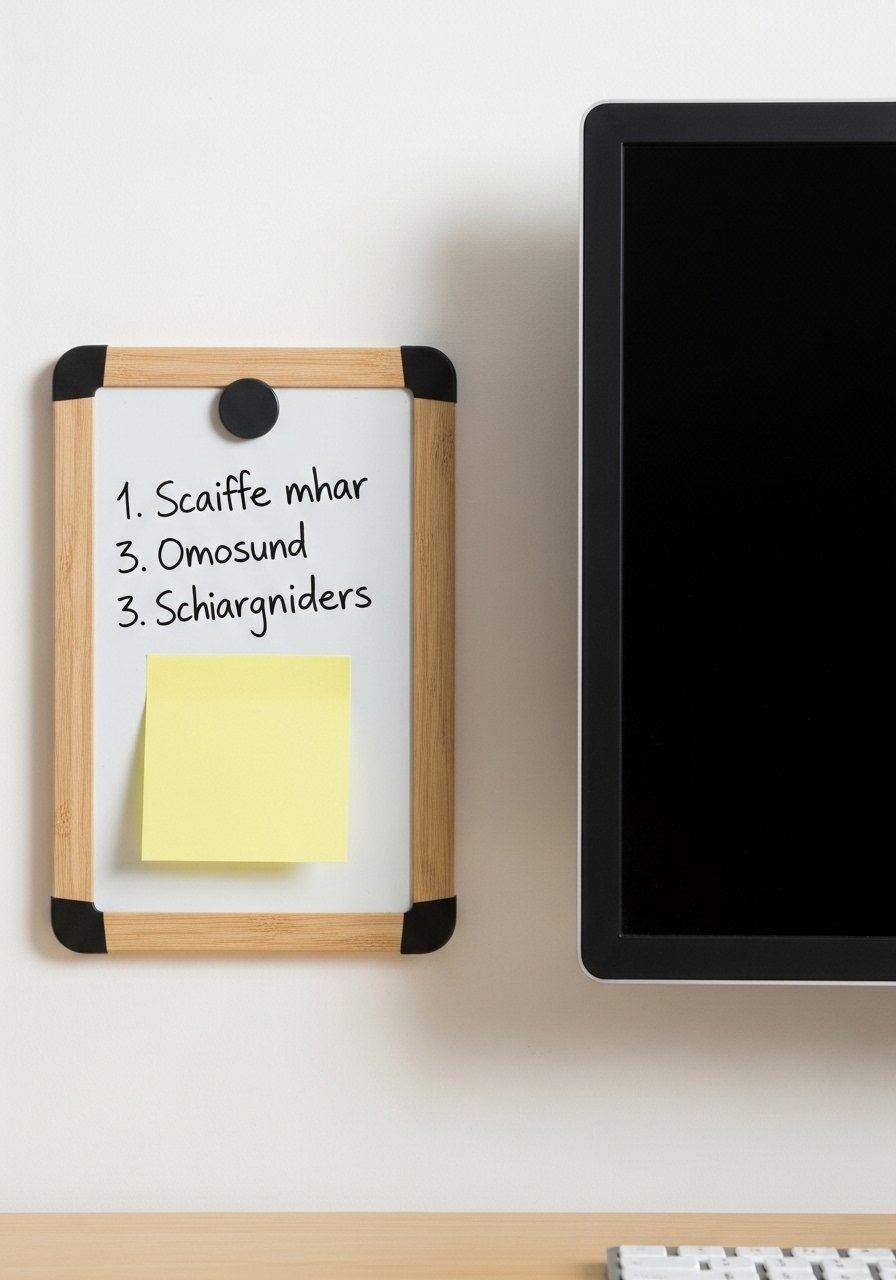
A 12×18 whiteboard mounted within arm’s reach replaces sticky notes and paper scraps. Keep one for daily priorities and wipe it every evening. The board reduces visual noise and helps you focus on three tasks per day. The mistake is making it too large and filling it with micro-lists. Limit it to immediate action items only. For a polished look try framed dry erase board 12×18.
Your Decor Shopping List
Textiles
- Honestly the best $35 I have spent, chunky knit throw in cream (~22×60 inches) to soften a chair beside the desk
- Linen pillow covers, 18-inch set of 2, neutral tones
Wall Decor
- Pegboard kit, 24×16 inches with hooks for tools and bins
- Framed dry erase board 12×18 for quick lists
Storage & Organizers
- Bamboo drawer organizer 3-compartment for pens and clips
- Under-desk cable tray for power strips and chargers
- Wood monitor stand with drawer to raise screen and hide supplies
Budget Finds
- Rotating desk organizer 9-inch for markers and tapes
- Mason jar holders with lids, set of 3 for brushes and pens
- Adhesive cable clips, pack of 20
Notes: Similar items often appear at Target or HomeGoods, but I link to specific sizes and materials so you get the right fit.
Shopping Tips
White oak beats dark wood in 2026. Design feeds have shifted completely. These white oak floating shelves look current, not dated.
Grab these adhesive cable clips for $7. Stick them under the desk and you will stop tripping on cords.
Curtains should puddle or kiss the floor, never hang halfway up. These 96-inch linen panels are right for standard 9-foot ceilings.
Everyone buys five small succulents. One single 6-foot fiddle leaf fig has ten times the visual impact.
If you need a multipurpose storage piece, choose boxes that stack in thirds. Stackable wood crates set gives flexibility without custom carpentry.
Frequently Asked Questions
Q: How do I keep cables hidden without drilling into the wall?
A: Use adhesive raceways and under-desk trays that stick to the underside of your desk. Route cables along the back edge and secure with adhesive cable clips. That avoids wall holes and keeps everything reachable.
Q: Can I mix fabric pouches with a modern desk without it looking messy?
A: Yes. Stick to an 80/20 color ratio where 80 percent is neutral and 20 percent is your accent color. Linen pouches in beige or gray read modern next to metal or glass desks and keep mail visually contained.
Q: What size pegboard and spacing should I use above my desk?
A: A 24×16 inch pegboard is a good starting point for a single-person desk. Mount it 6-8 inches above the desk surface so the bottom row of hooks clears monitors and papers. Keep bins in sets of three for balance.
Q: How do I store incoming mail without creating a permanent stack?
A: Use labeled pouches or a clipboard wall with three slots labeled Action, File, Recycle. Make a nightly five-minute sort a habit and the pile never forms. A simple wall pouch organizer works well for this system.
Q: Is a faux plant okay for a desk or do I need live plants?
A: Both are fine. If you want low maintenance, a realistic faux fiddle leaf gives height without care. If you choose live plants, go for hardier options like a snake plant or pothos that tolerate low light.
Q: What is the quickest DIY to reduce desk clutter tonight?
A: Clear one small zone and give each item a home. Build a simple tray for keys, phone, and wallet, and mount a 12×18 whiteboard for daily tasks. Try a divided entry tray and a framed dry erase board 12×18.