
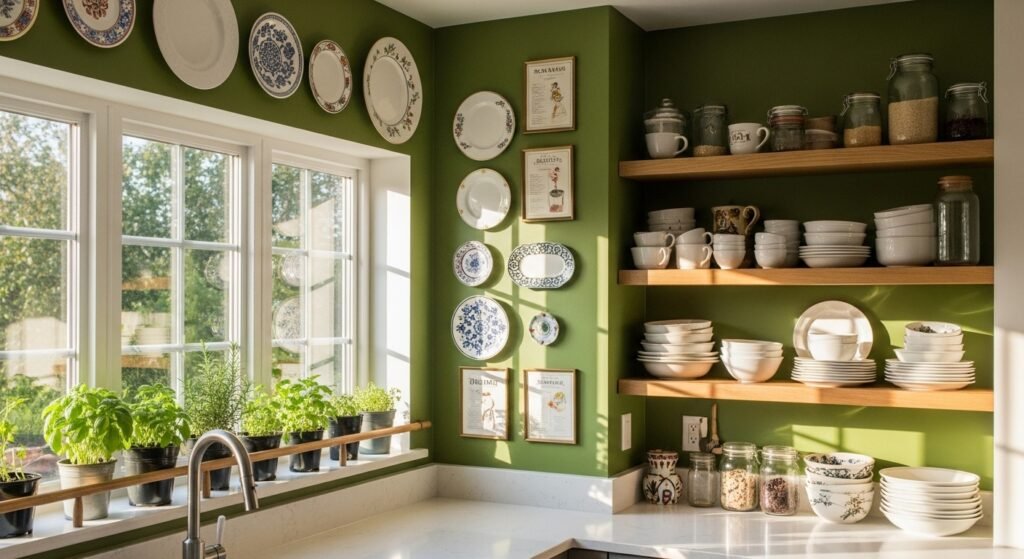
My living room had nice furniture and decent lighting but it still felt like a waiting room. Took me embarrassingly long to figure out it was missing texture. Every surface was smooth, every color was flat, and nothing invited you to actually sit down. In the kitchen I learned the same lesson, but faster. A few low-cost tweaks to the walls made the whole space feel used and loved, not staged.
These ideas lean modern farmhouse with a few eclectic touches. Most projects are under $50, with a couple of splurges around $100. Works for small kitchens, galley layouts, breakfast nooks, and the empty wall over a stove or sink.
Painted Chalkboard Wall for Notes and Menus
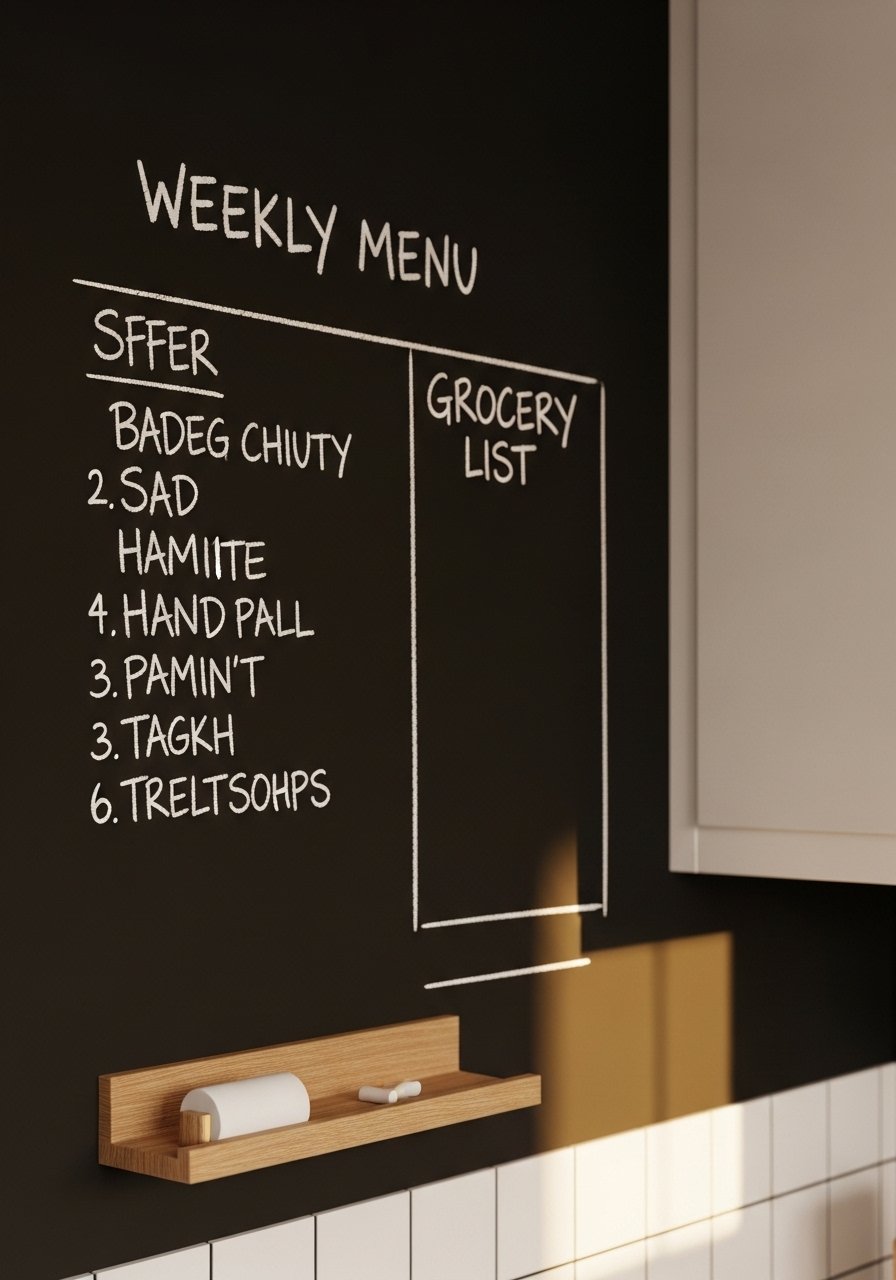
A chalkboard wall is the fastest way to make a kitchen feel like it actually gets used. I painted a 3-foot-wide strip behind my counter and started writing menus, kid doodles, and quick timers. What makes it work is function and scale, not full-wall black. I recommend keeping the chalkboard to about one third of the wall width so it reads intentional, not overwhelming. Common mistake, painting right to the edge of trim. Leave 2 to 3 inches of white space for a framed look. Try black chalkboard paint for a true matte finish.
Floating White Oak Shelves for Open Storage
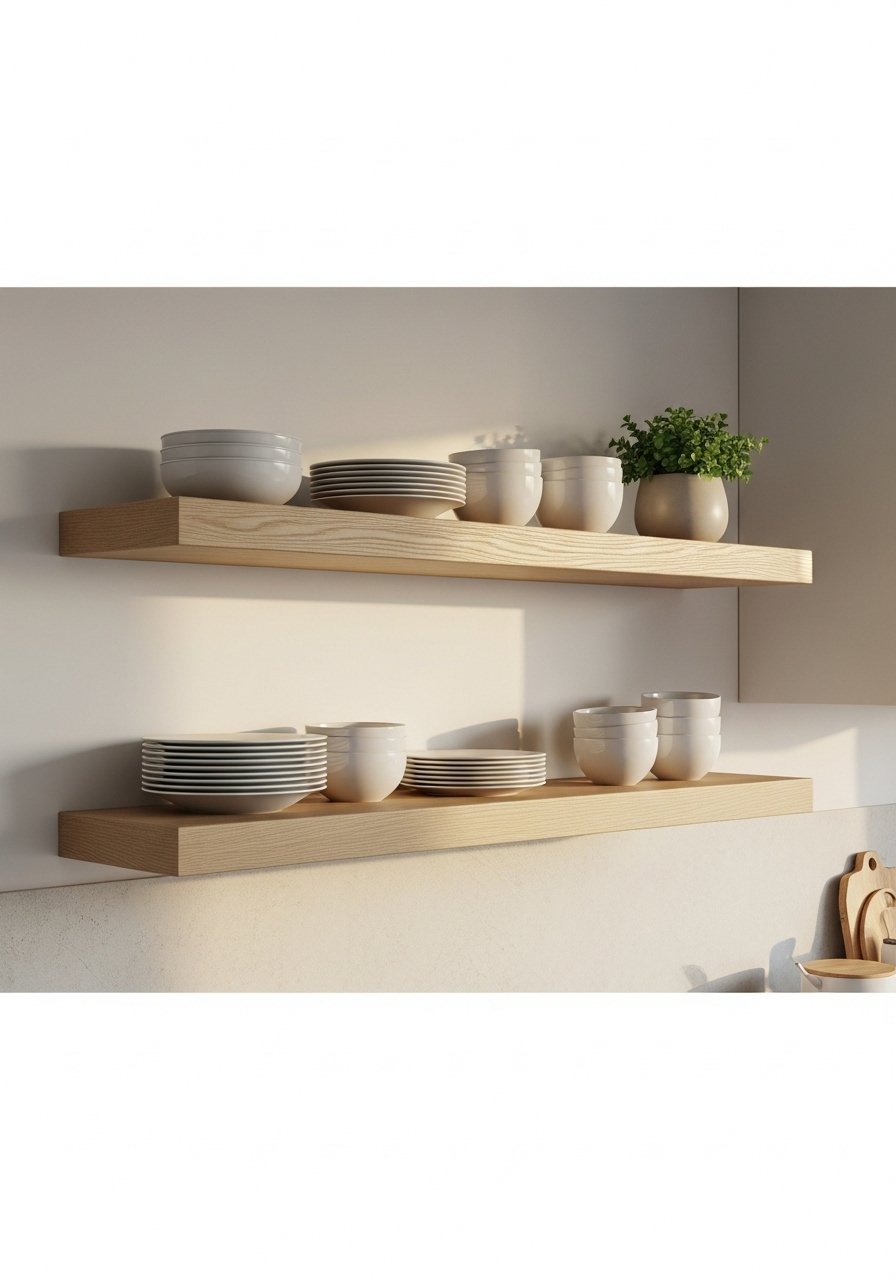
White oak beats dark wood in 2026. Design feeds have shifted completely. I swapped in two 36-inch white oak floating shelves above my counters and everything felt lighter. Shelves that are 10 to 12 inches deep hold plates and bowls without looking cluttered. The styling trick is the 80/20 color ratio, 80 percent neutrals and 20 percent one accent color for dishes or vases. A common mistake is overstuffing every shelf. Leave breathing room and alternate horizontal stacks with vertical objects. These white oak floating shelves are a solid place to start.
Vintage Cutting Board Gallery with Grain Contrast
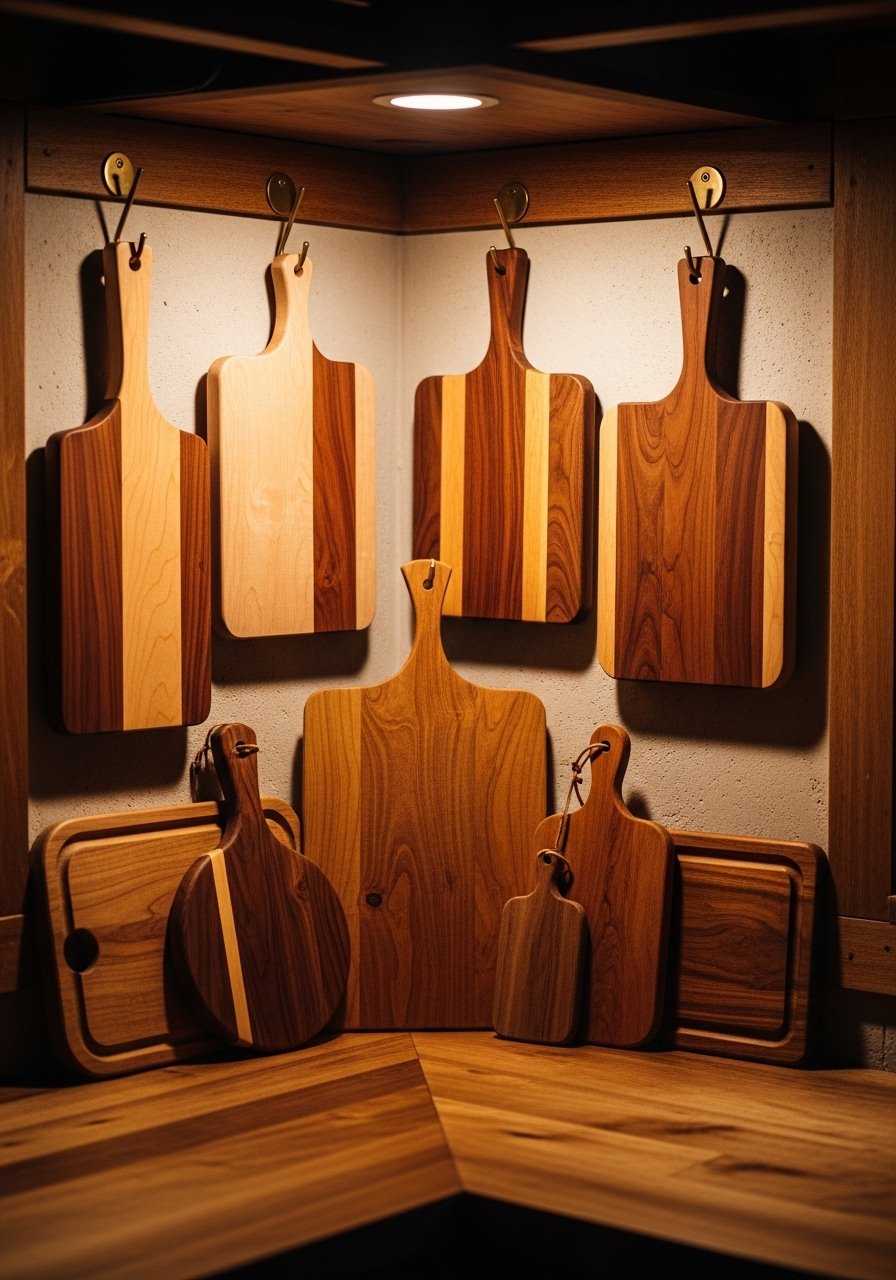
I turned a mismatched set of old cutting boards into wall art, and it made the kitchen feel personal overnight. Use 3 sizes for the rule of three, hang the largest center-left, and space pieces about 2 inches apart. The visual result is warm and tactile because wood grain varies. A rookie mistake is nailing through the board. Instead, use removable brass picture hooks or saw-tooth hangers screwed into the back. Pair this with open shelves from earlier for contrast. I used a wood cutting board set to fill gaps without breaking the bank.
Magnetic Spice Wall for Function and Color
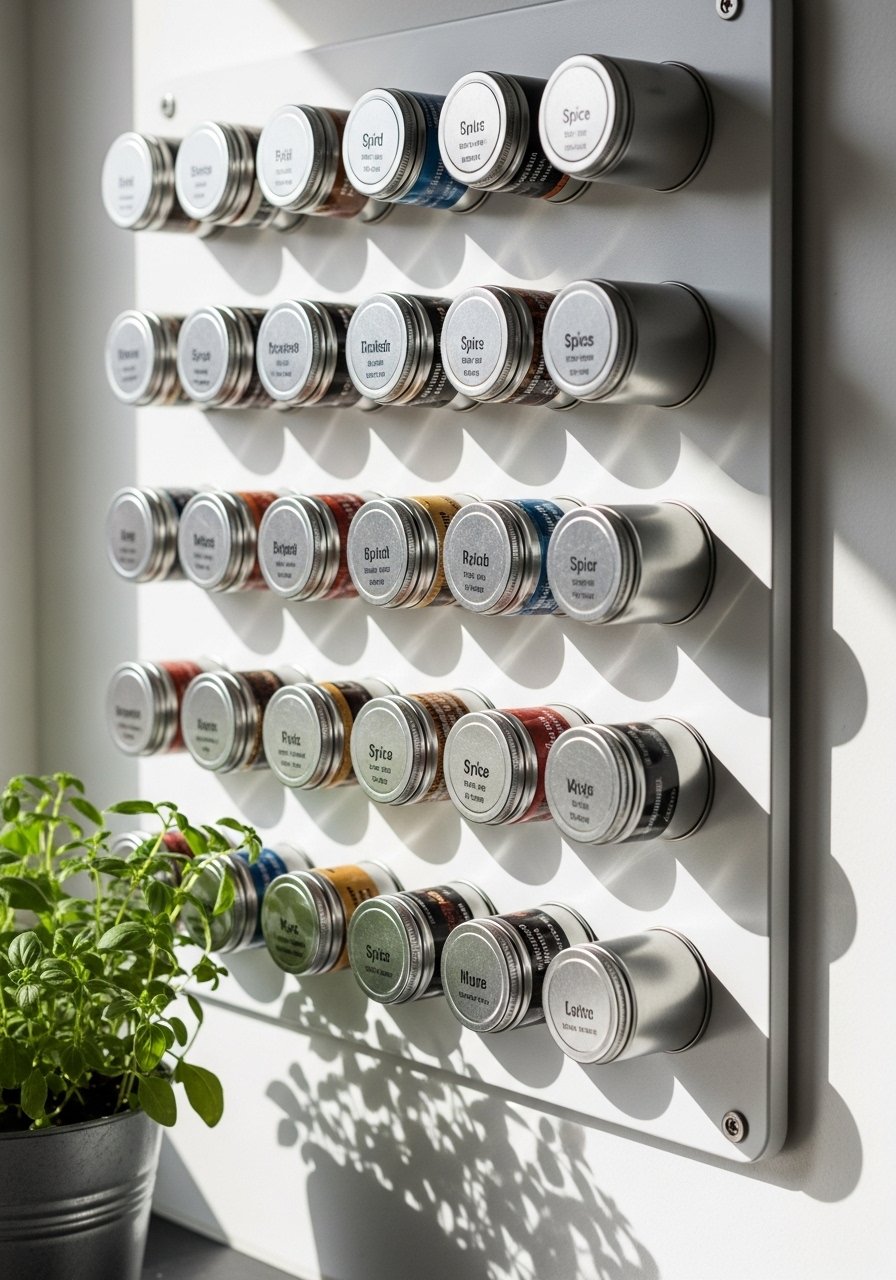
If you need storage and a focal point, a magnetic spice wall is oddly satisfying. I mounted a steel sheet 24 by 36 inches and arranged uniform spice tins in a grid. The result was both colorful and organized. The spacing matters, three rows look tidy in a 24-inch panel. Mistake people make, mixing tin sizes. Buy one consistent set to keep the line clean. It also doubles as a visual recipe tool when you group spices by cuisine. For a ready option try magnetic spice tins set.
Plate Display with Mixed Patterns
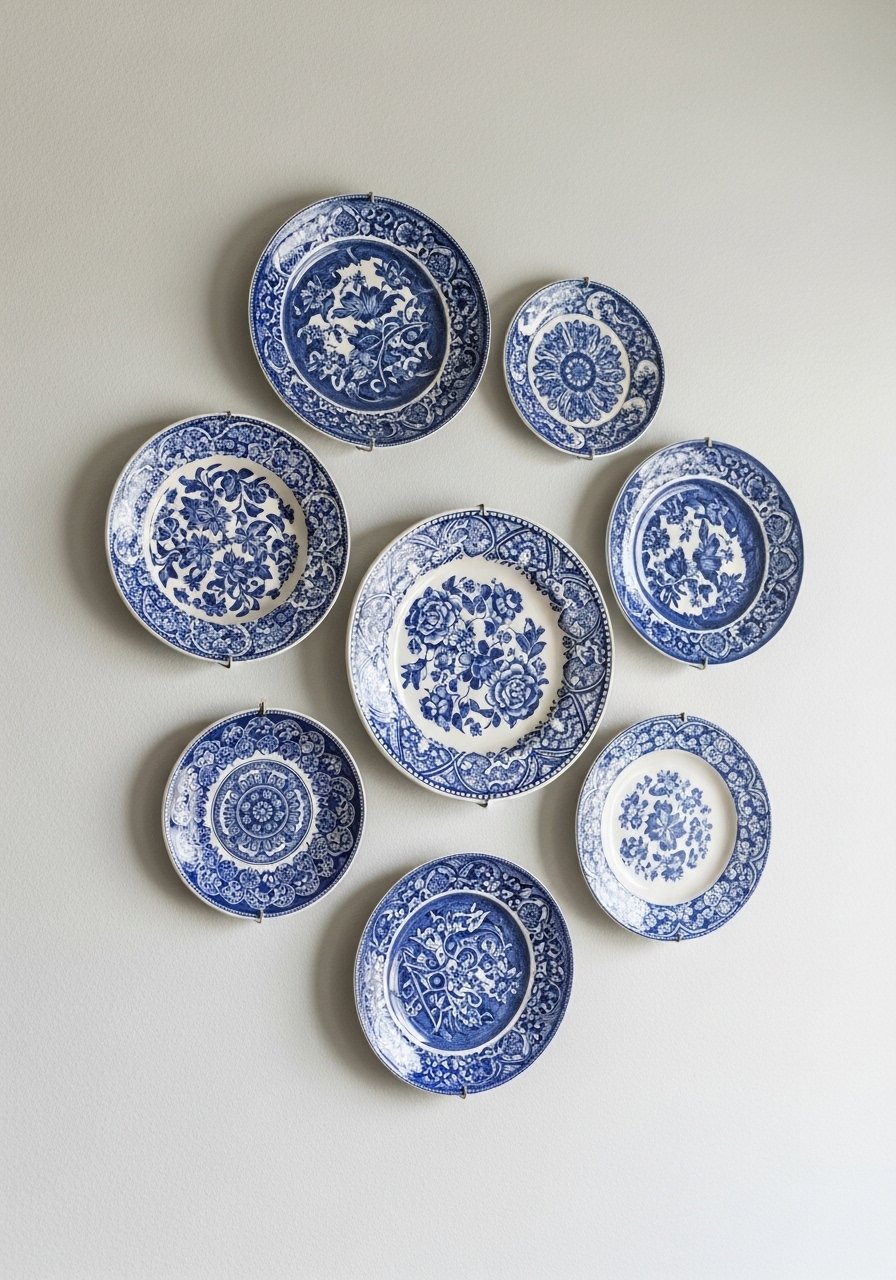
A plate wall reads like collected, not staged, when you mix patterns and one color family. I grouped blue and white plates over my breakfast bench, using a loose semi-circle that follows the bench curve. Aim for plates that together cover about two thirds of the wall width so proportion feels intentional. Common mistake, hanging plates too high above seating. Keep the lowest plate 6 to 8 inches above the top of the bench. Use ceramic plate hangers so plates sit snug and safe.
Herb Planter Rail to Add Life and Smell
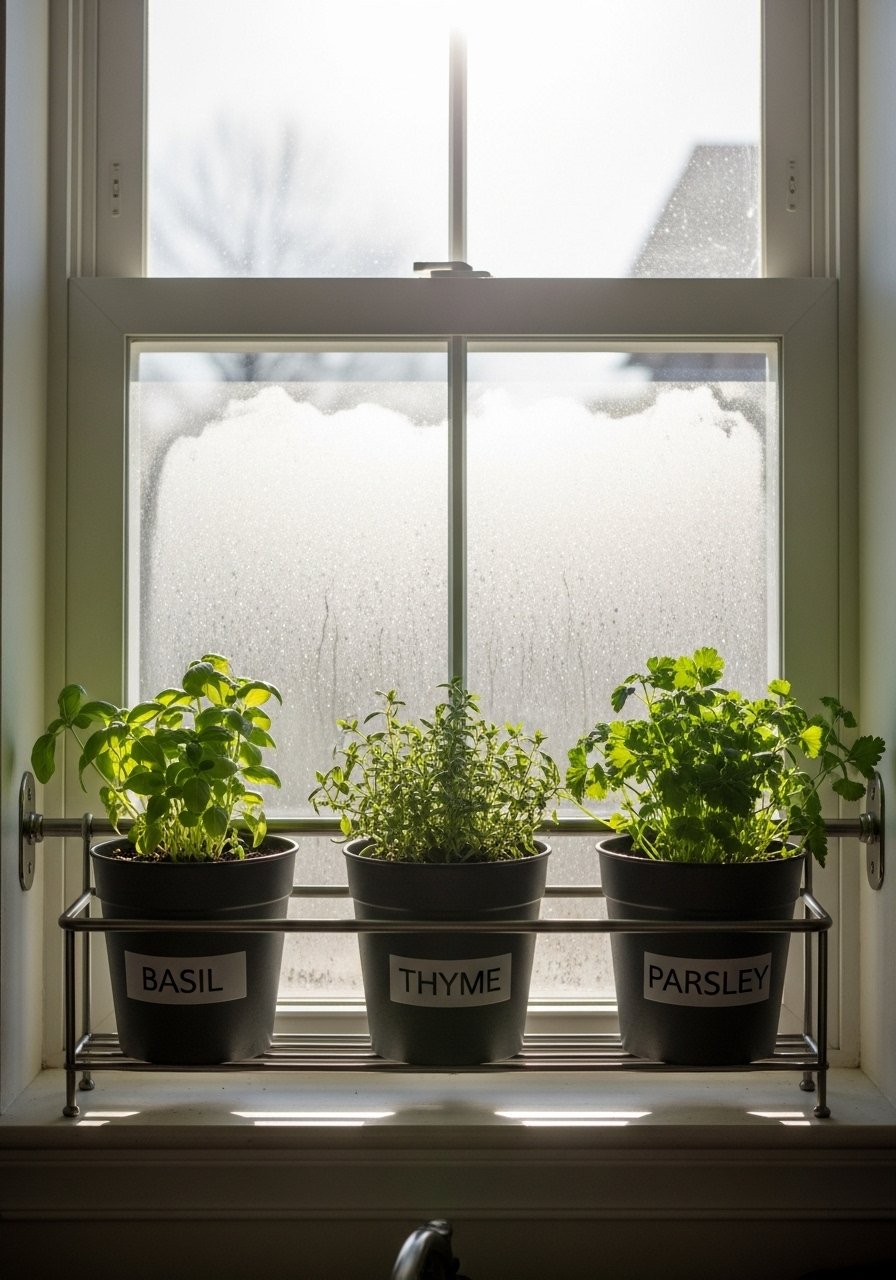
A living herb rail makes the kitchen smell like dinner before you even cook. I installed a 30-inch rail under my window and hung three 3-inch pots. The secret is pot spacing of 6 inches so each plant gets light. A typical mistake is too-big pots that shade neighbors. Keep pots small, rotate them weekly, and use a removable rail for renters. If you want low fuss, these wall-mounted-herb-planters are what I would choose for a starter setup.
Oversized Clock in a Sunny Breakfast Corner
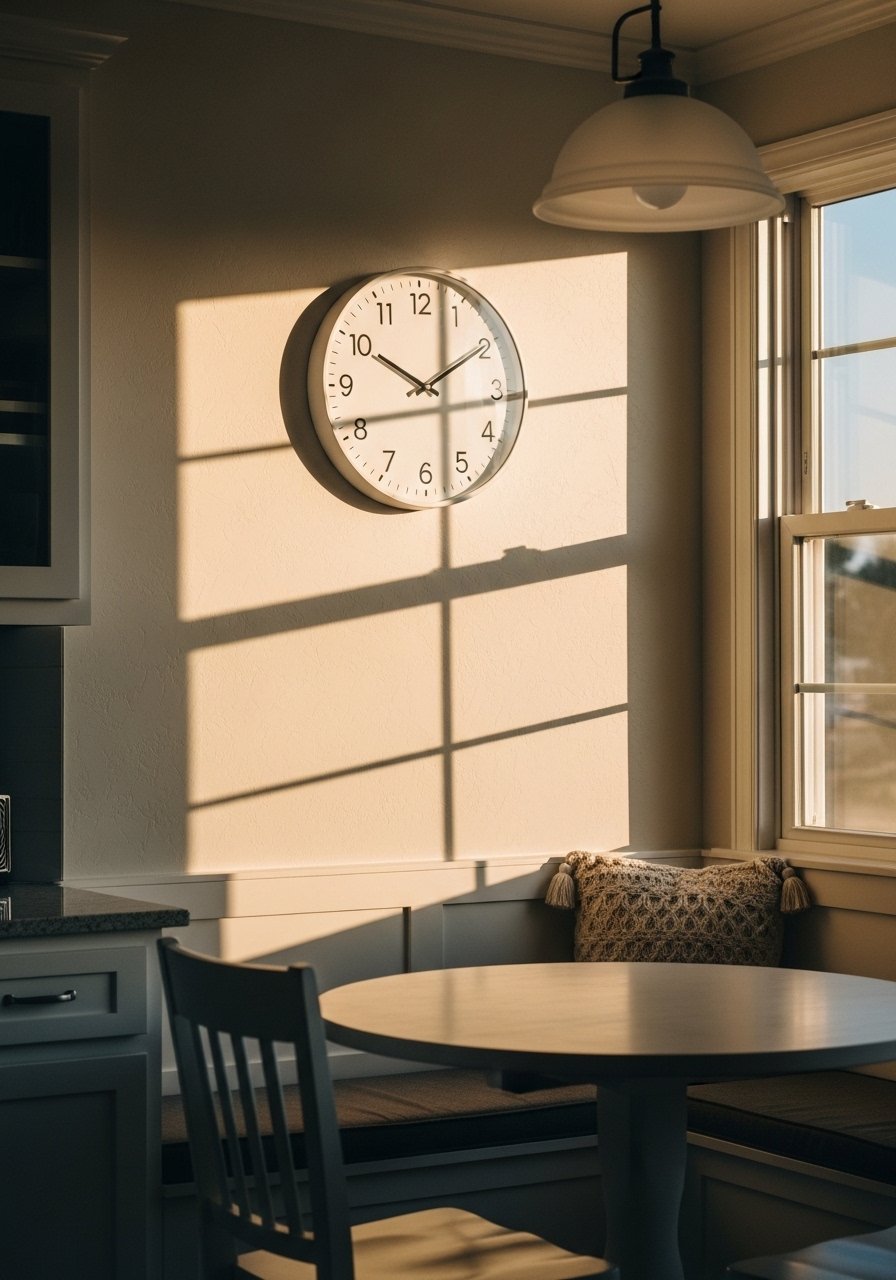
I put a large clock above my little breakfast table and suddenly the corner stopped feeling like wasted space. An oversized clock anchors small tables, and a 24 to 30-inch diameter works for most nooks. The visual effect is calm and purposeful, like a focal point that does not demand more styling. A common error is picking a tiny clock for a big wall. Size matters. Choose one with a simple face so it reads from across the room. I linked an oversized kitchen wall clock that fits a 10-foot sightline.
Reclaimed Wood Peg Rail for Utensils and Towels
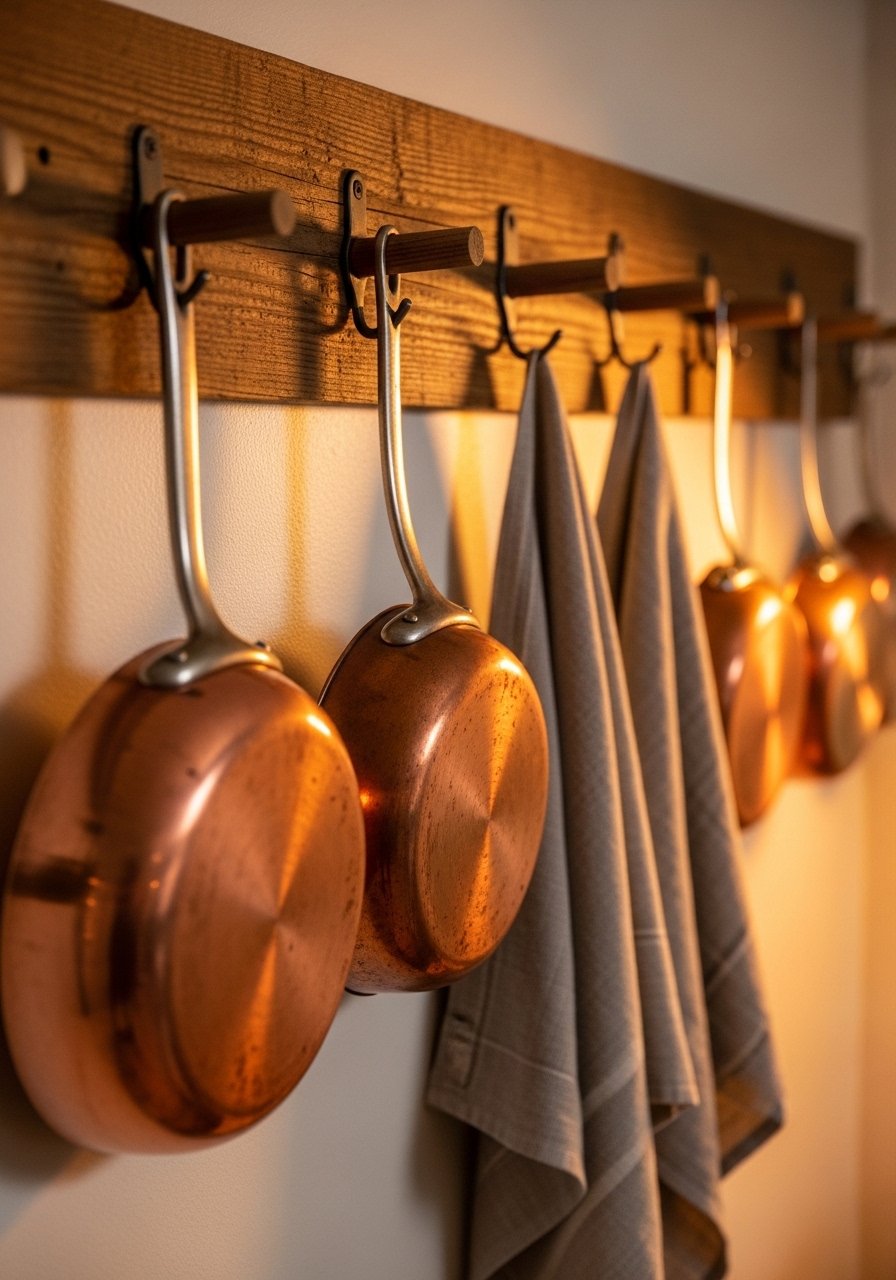
A peg rail is both storage and decor. I installed reclaimed wood 4 inches above countertop level and hung copper pans, spatulas, and a linen towel. It cleans up clutter and keeps tools easy to grab. The useful rule, peg spacing of 6 to 8 inches holds most utensils without crowding. Mistake, mounting too high so handles bang when you open cabinet doors. Test the height with the tallest item before drilling. For a ready option try this reclaimed wood peg rail.
Framed Recipe Art from Family Cards
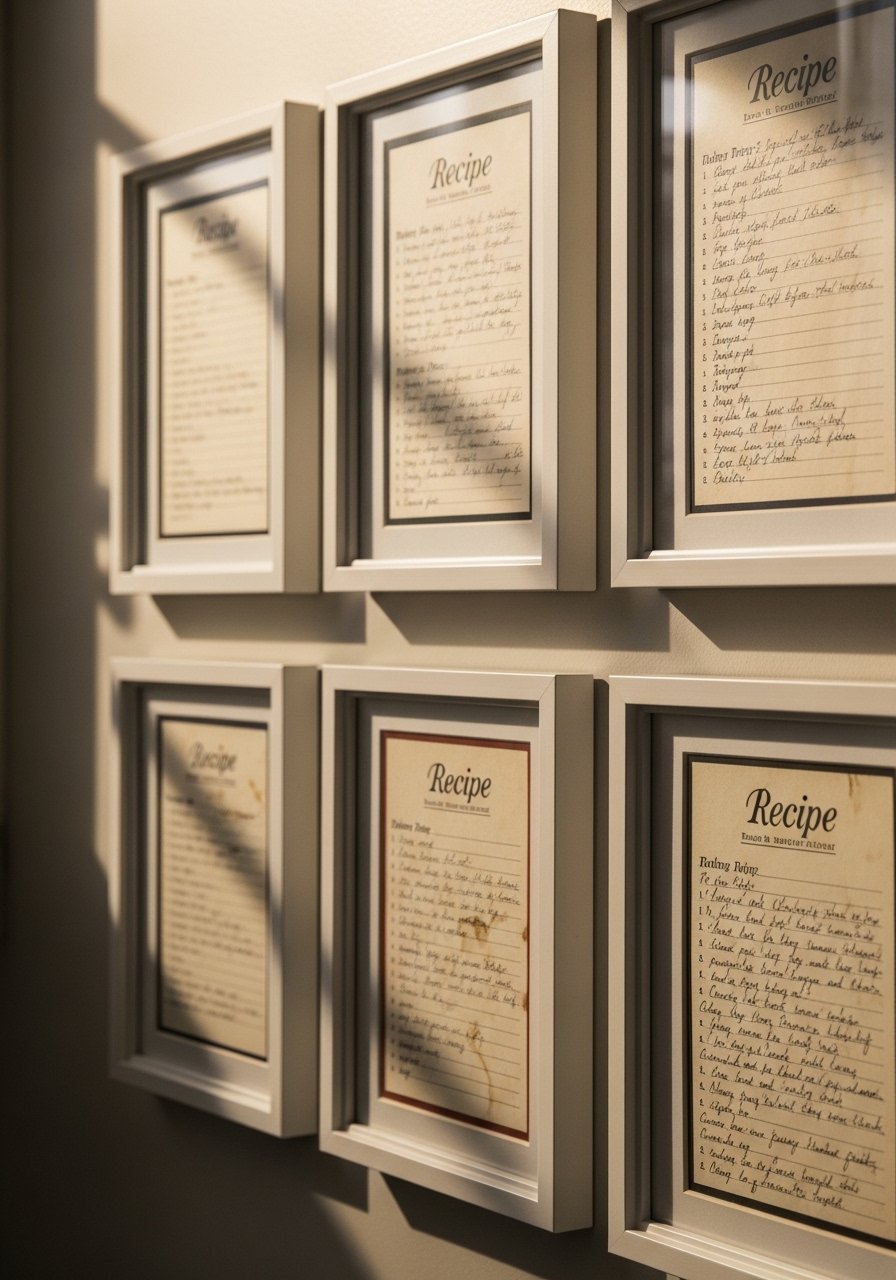
Framed family recipes are the easiest way to make kitchen walls meaningful. I photographed my grandmother’s stained cards, printed them at 5 by 7, and used uniform frames for a clean gallery. What makes it feel honest is the small imperfections, the smudged ink and grease marks. A common mistake is framing cards too large. Keep them scaled to 5 by 7 or 8 by 10 so the handwriting stays readable. I like these gallery picture frames set because they make a cohesive display without fuss.
Tiled Peel-and-Stick Decal as Wall Art
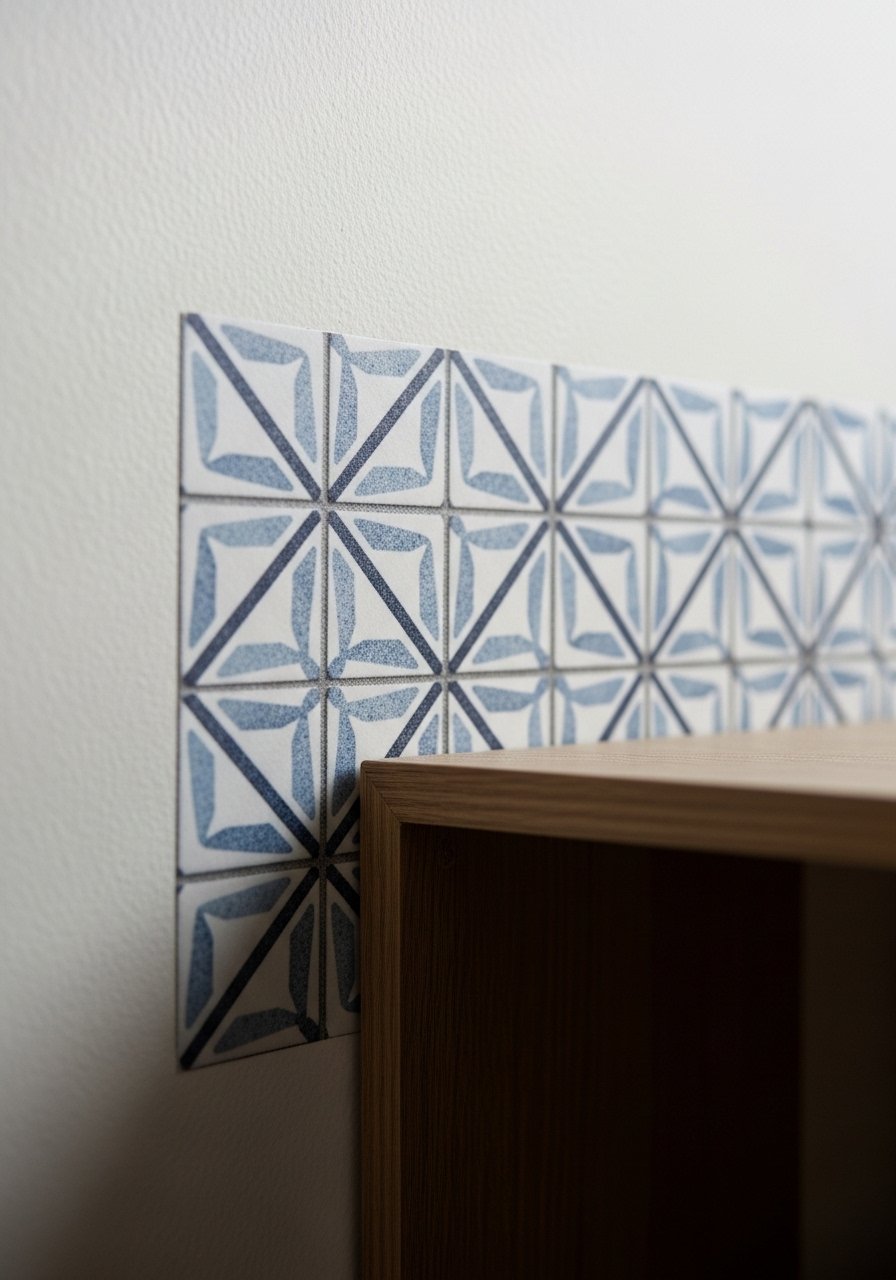
Peel-and-stick tile decals give tile texture without a mess. I used a 24-inch square behind my kettle to create a focal splash. Pick a pattern that repeats every 12 to 16 inches so seams stay invisible. A common mistake is using decals next to heat sources without checking manufacturer heat tolerance. Always test one tile in a low-heat area first. For a quick fix try these peel-and-stick-kitchen-tiles that mimic ceramic without the grout work.
Hanging Rail with Cast Iron Skillets as Art
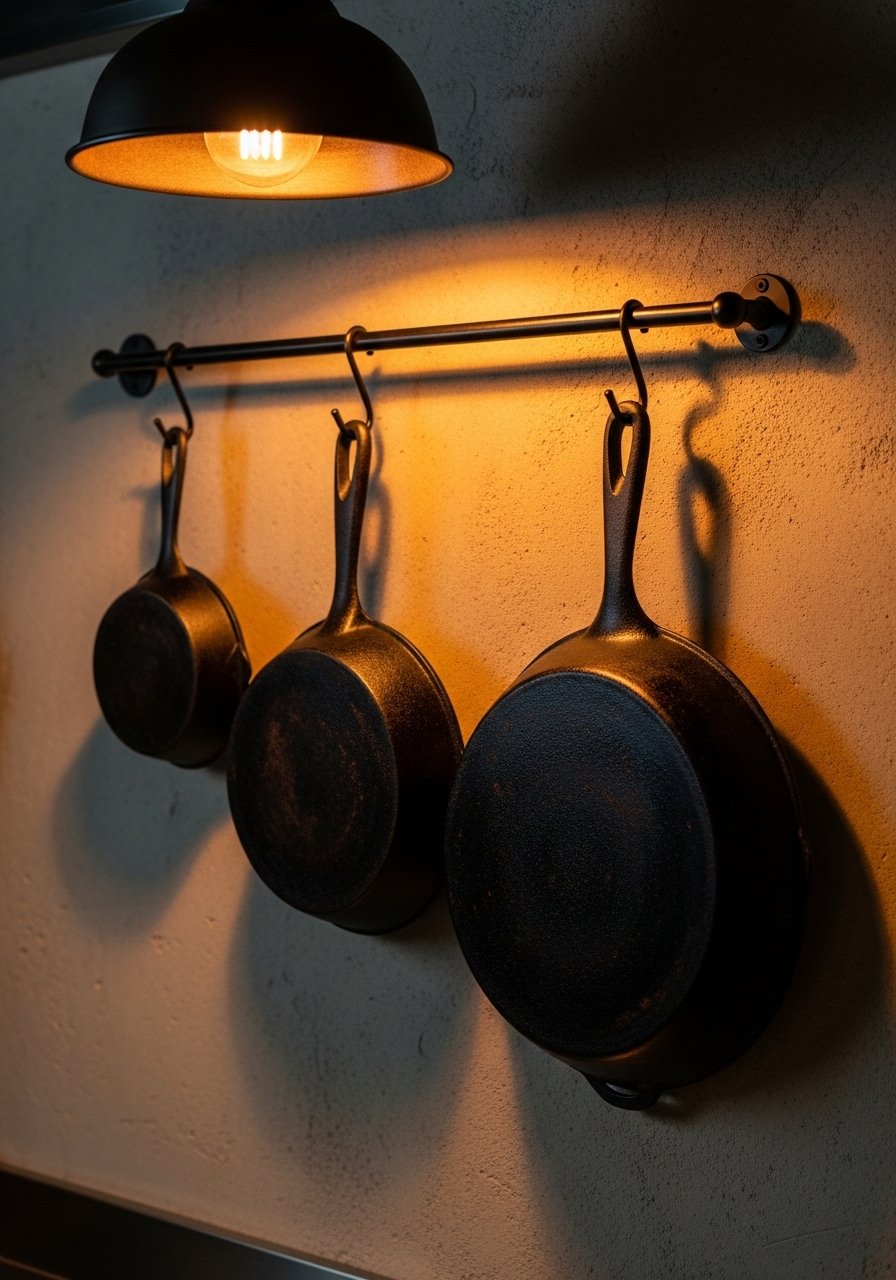
Cast iron pans double as wall art when hung on a sturdy rail. I installed a matte black rail and staggered three skillets for rhythm. The trick is to balance one heavy skillet with two lighter ones to avoid visual tipping. A mistake is using drywall anchors that are not rated for weight. Use anchors rated to 50 pounds at minimum and space mounts at studs if possible. I used heavy-duty skillet-hanging-hooks so everything stayed secure yet easy to remove for cooking.
Mini Gallery of Tea Towels and Linens
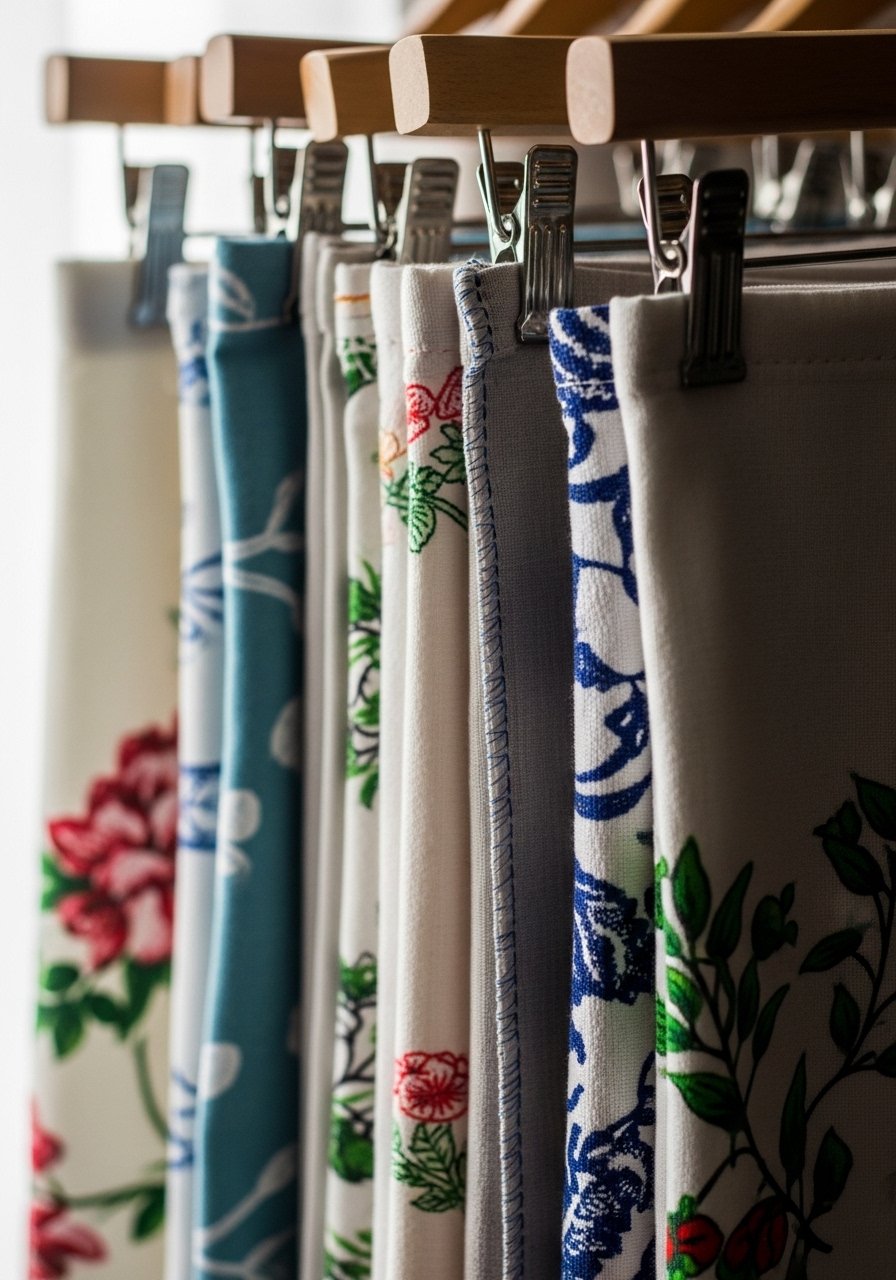
Tea towels are free art if you display them right. I clipped three tea towels to a slim wooden bar and rotated them seasonally. The visual win is pattern and texture at eye level. Keep width near the bar width so towels don’t billow. A mistake, using too many towels in one spot. Stick to three to five for the rule of three with a small accent. These decorative tea towel hangers make swapping simple.
Woven Wall Hanging for Texture Near Stove
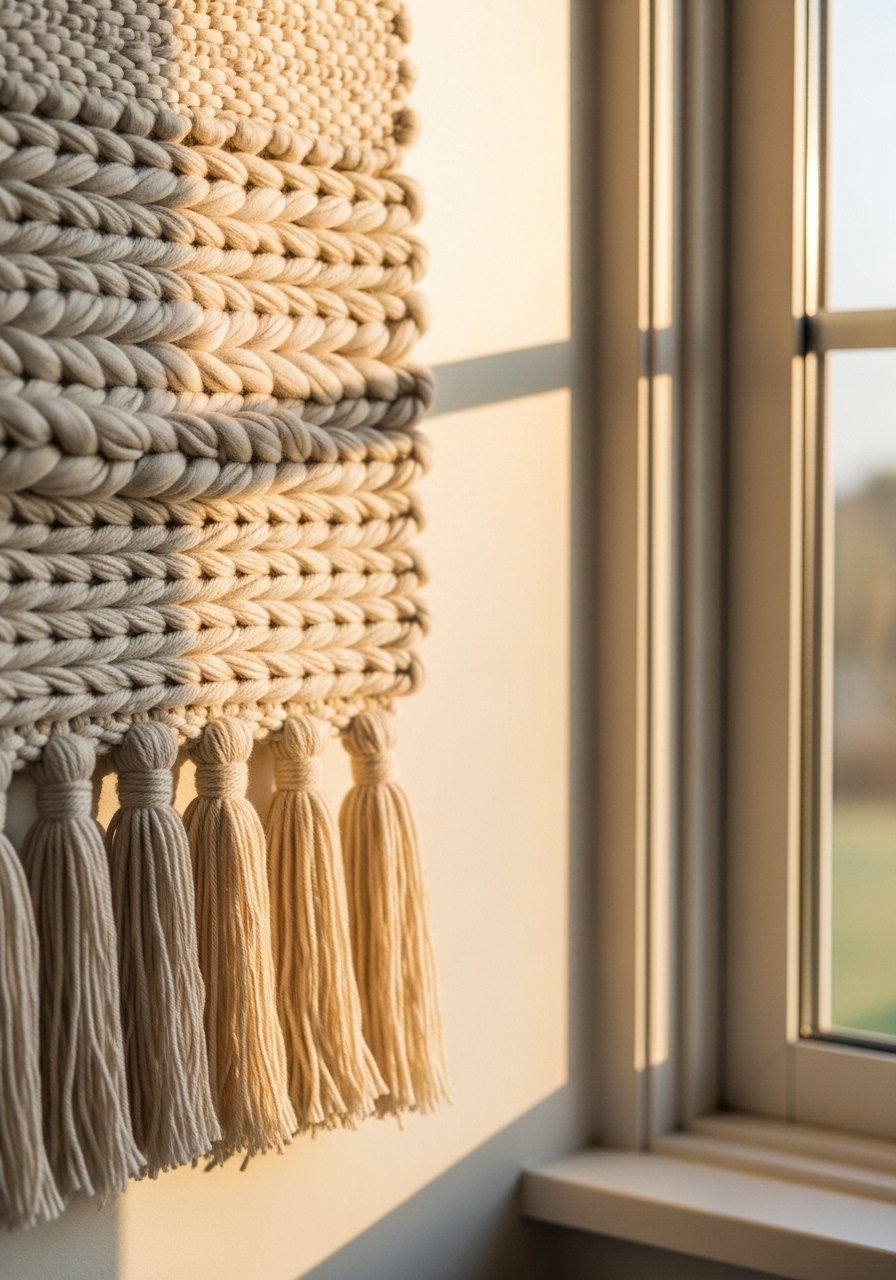
There is something about a reading nook with layered pillows that makes you want to cancel your plans, and the same applies to kitchen texture. A woven wall hanging adds softness near a hard surface kitchen. I used an 18 by 30-inch piece next to my stove hood to soften the metal. Keep it at least 6 inches away from any heat source. A common error is choosing too bright a color that conflicts with dishware. Stick to neutral fibers and one accent thread. This handwoven wall hanging was a quick win.
Layered Mirrors to Bounce Light in Galley Kitchen
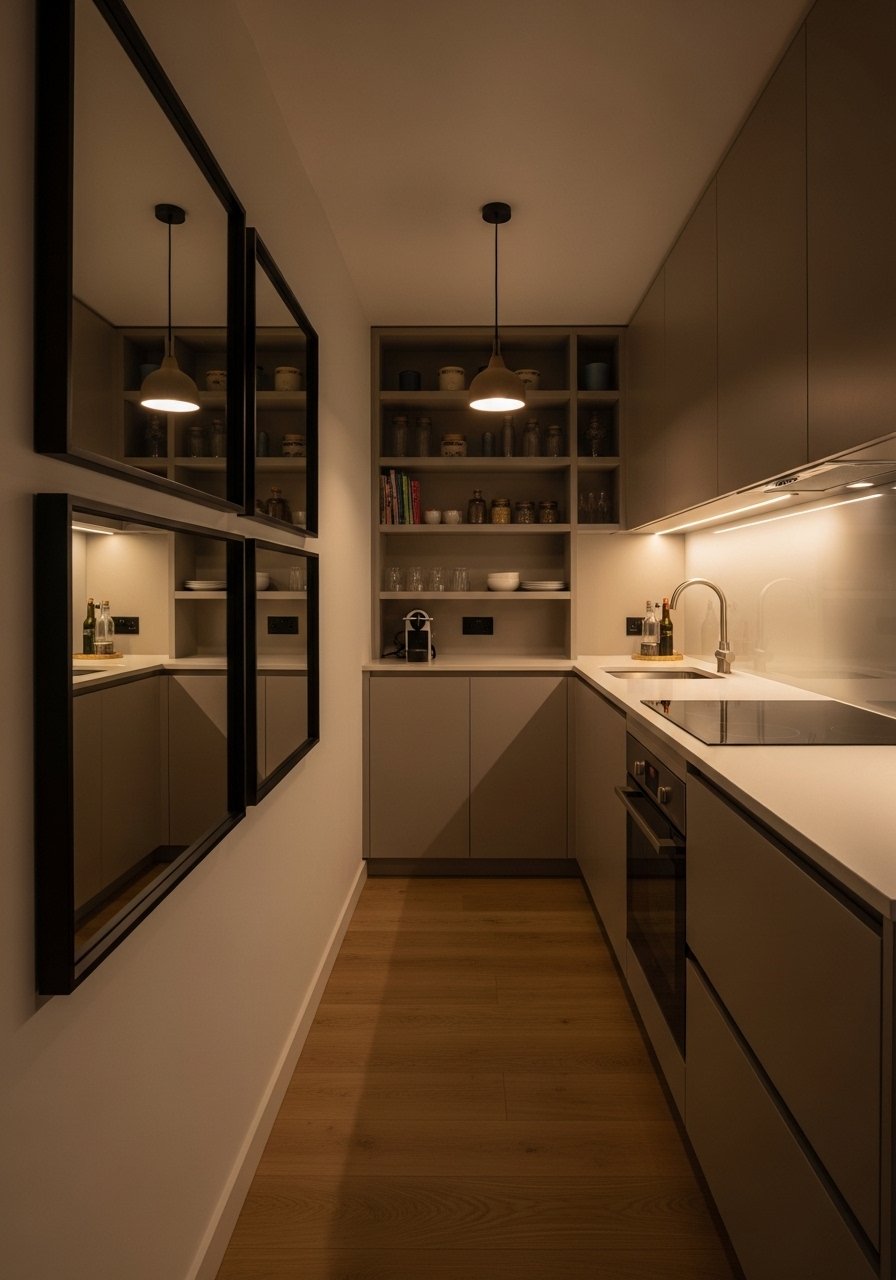
In a galley kitchen extra light makes the whole space breathe. I layered a 16-inch round mirror over a slimmer rectangular mirror to catch light from the window and reflect it down the corridor. Mirrors should cover about one third of the wall for balance. Mistake, hanging them too high. Aim for the center of the mirror at eye level, about 57 to 60 inches from the floor. For an easy pick try this round decorative mirror 24-inch in a thin frame.
Simple Wallpaper Accent Strip Behind Open Shelves
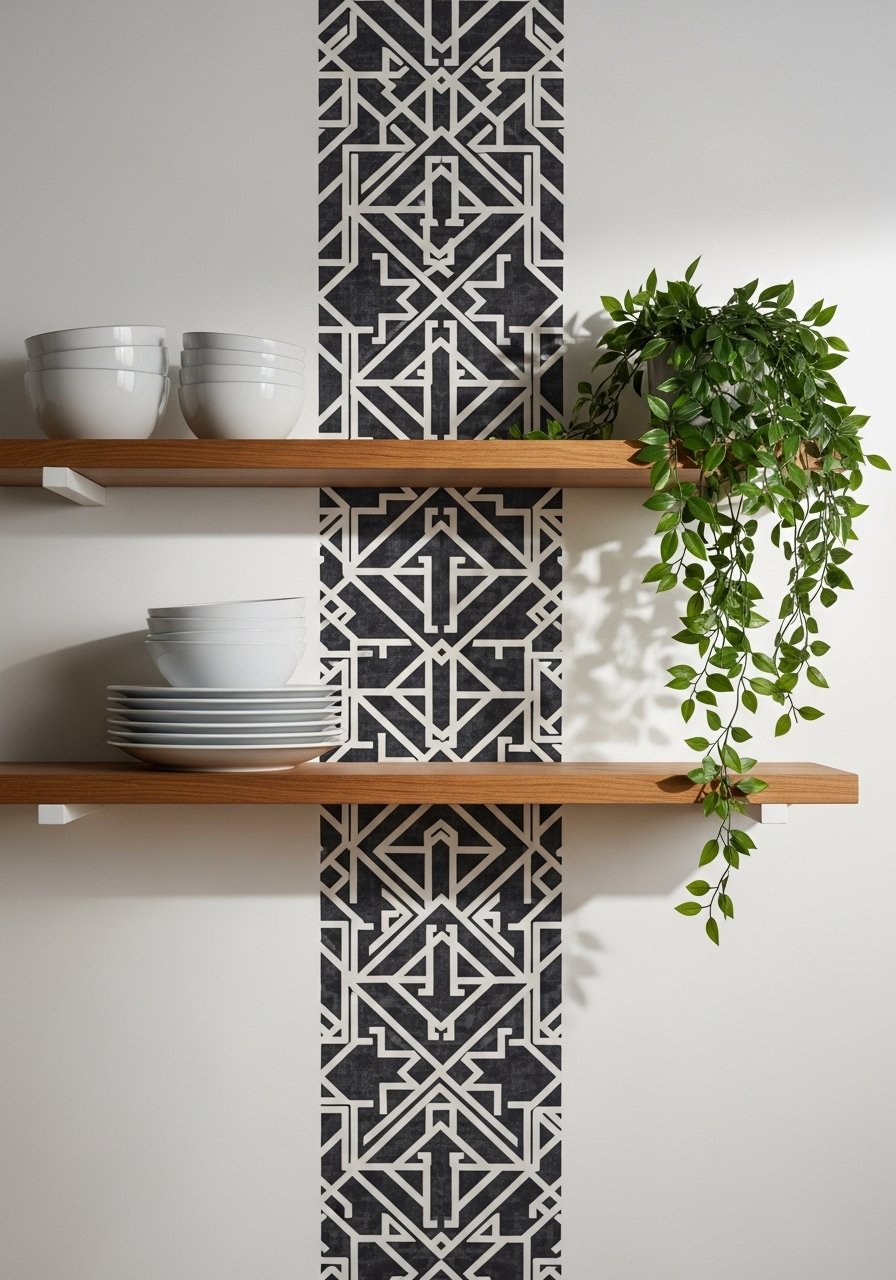
A narrow wallpaper strip behind open shelving reads intentional and adds pattern without commitment. I applied a 16-inch strip centered on the wall behind my shelves and it became the background for everything I styled. Keep the strip width to the shelf length or two thirds of the wall for proportion. A common mistake is full-wall wallpaper in small kitchens. If you want change, peel-and-stick wallpaper peel-and-stick-wallpaper-accent makes a temporary but impactful statement. Pair this with white oak shelves from earlier for a modern look.
Your Decor Shopping List
Textiles
- Honestly the best $40 I have spent, Chunky knit throw in cream 50 by 60 inches. Drape over a bench or chair.
- Set of 22-inch linen pillow covers in warm gray, down-filled inserts separate at Target or HomeGoods.
Wall Decor
- White oak floating shelves 36-inch pair in natural finish.
- Round decorative mirror 24-inch in thin black frame for narrow spaces.
- Gallery picture frames set 5×7 for recipe cards and prints.
Functional Art
- Magnetic spice tins set with labels, 24-piece.
- Wall-mounted-herb-planters 3-pack ceramic pots with hooks.
Budget Finds
- Peel-and-stick-kitchen-tiles 12×12 sheet in patterned finish, easy to trim.
- Peel-and-stick-wallpaper-accent roll 20 by 300 inches for a narrow strip.
Extras
- Skillet-hanging-hooks set heavy duty.
- Handwoven-wall-hanging small tonal cotton.
Shopping Tips
White oak beats dark wood in 2026. Design feeds have shifted completely. These white oak floating shelves look current, not dated.
Grab black chalkboard paint for around $15. Paint a strip instead of a whole wall and you will still get the menu vibe without making the room feel smaller.
Curtains should puddle or kiss the floor, never hang halfway up. These 96-inch linen panels are right for standard 9-foot ceilings.
Everyone buys five small succulents. One single 6-foot fiddle leaf fig has ten times the visual impact. If you need height without maintenance, this artificial fiddle leaf fig 6ft fills corners.
Frequently Asked Questions
Q: What height should I hang art above a kitchen counter?
A: Aim for 6 to 8 inches above the countertop so the art reads connected to the work surface, not floating too high.
Q: Can I mix metal finishes on my wall hooks and frames?
A: Yes, mix brass, black, and copper for a collected look. Use one dominant finish and two accents so it does not feel random.
Q: How do I keep a plate wall from looking fussy?
A: Stick to one color family and vary patterns and sizes. Space plates 2 to 3 inches apart and keep the lowest plate 6 to 8 inches above seating.
Q: Are peel-and-stick tiles durable behind a stove?
A: Use only heat-tolerant products near active burners. For a splash area, test a single tile and check the manufacturer heat rating before committing.
Q: How do I make a small galley kitchen feel larger?
A: Add a mirror or a reflective surface that covers about one third of a wall, and keep shelf styling minimal to avoid visual clutter.
Q: What common mistake should renters avoid when decorating kitchen walls?
A: Drilling too many holes. Use removable rails, command hooks rated for kitchen use, and peel-and-stick options when possible.
Q: How should I style open shelves so they look curated, not cluttered?
A: Follow the rule of three with groupings, leave one third of each shelf empty, and rotate one accent color across shelves for cohesion.
Q: Which is better for the kitchen, real herbs or faux?
A: Both. Real herbs smell and cook well, but if light is limited or you travel, a high-quality faux like an artificial herb topiary keeps the look without the care.