
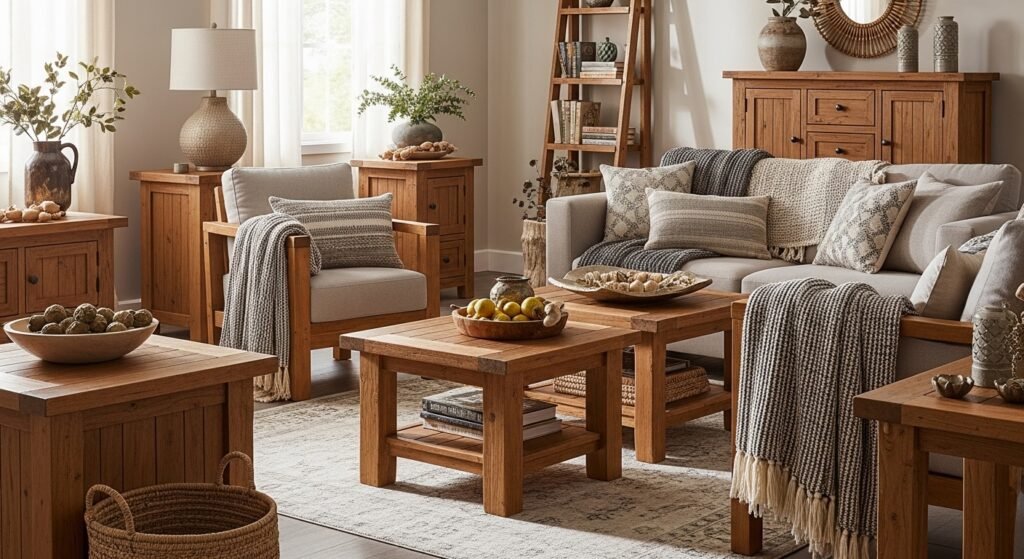
My living room had nice furniture but it still felt like a waiting room. Took me embarrassingly long to figure out it was missing texture. Every surface was smooth, every color was flat, and nothing invited you to actually sit down. That led me to build and tweak a handful of simple wood pieces that made the space feel lived in. These projects lean warm-modern with a few rustic notes, most cost $20 to $200, and they work in living rooms, bedrooms, small kitchens, or entryways.
These ideas sit between modern and casual. Budgets skew low, $20-80 for most, with a couple around $100-200. They fit small apartments and houses alike, and work best in living rooms, entryways, bedrooms, and patios when you need something sturdy, useful, and not precious.
Floating Shelf with Invisible Brackets for a Clean Modern Look
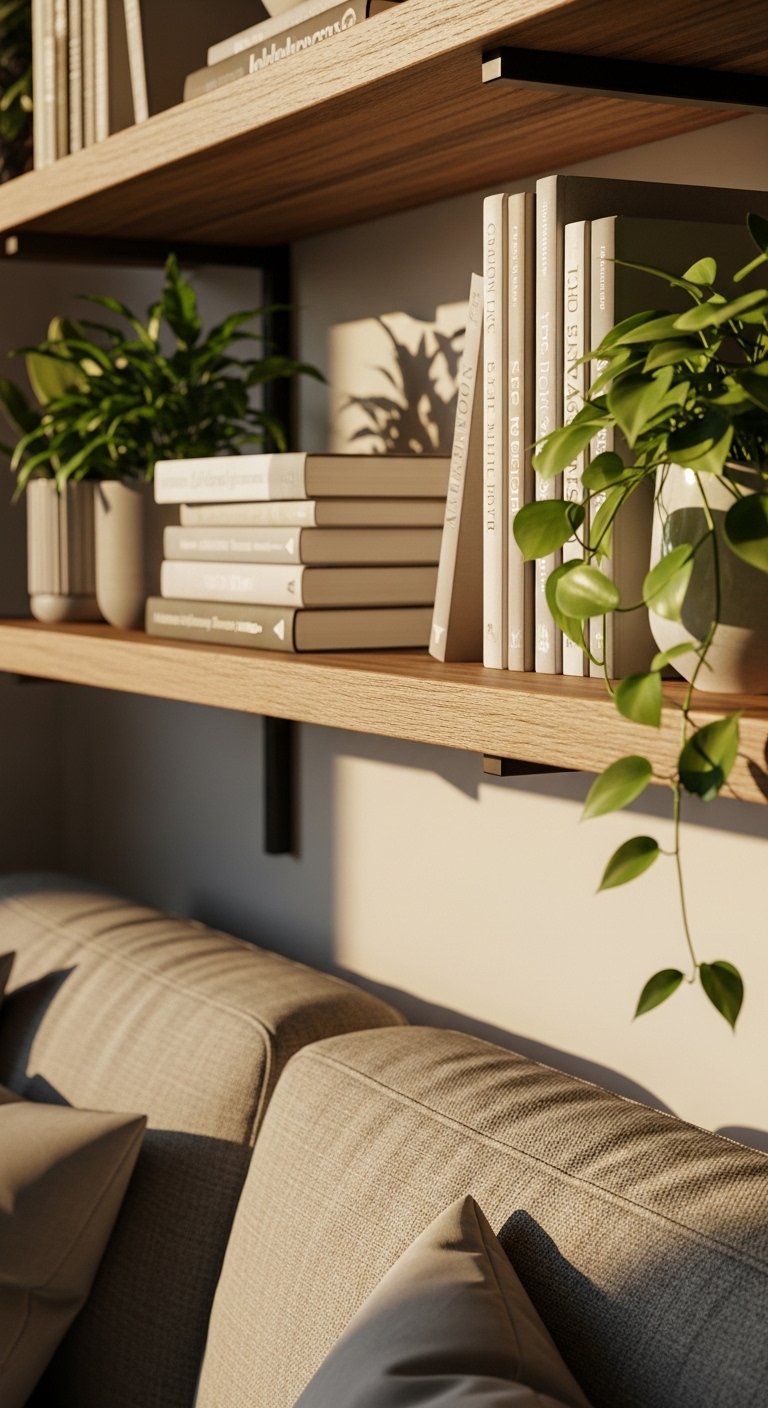
The trick with floating shelves is depth and spacing. I make mine 10-12 inches deep so they hold books and a small plant. They read modern when built from white oak or pine and stained light. A common mistake is screwing into drywall alone. Use a 16-inch stud spacing and 3-inch screws, or buy a heavy-duty bracket. For tools try wall-mounting-shelf-brackets and seal with clear-wood-finish. Budget $25-60 per shelf. Pair these with the media console idea below for a matched look.
Pallet Coffee Table with Hairpin Legs for Casual Living Rooms
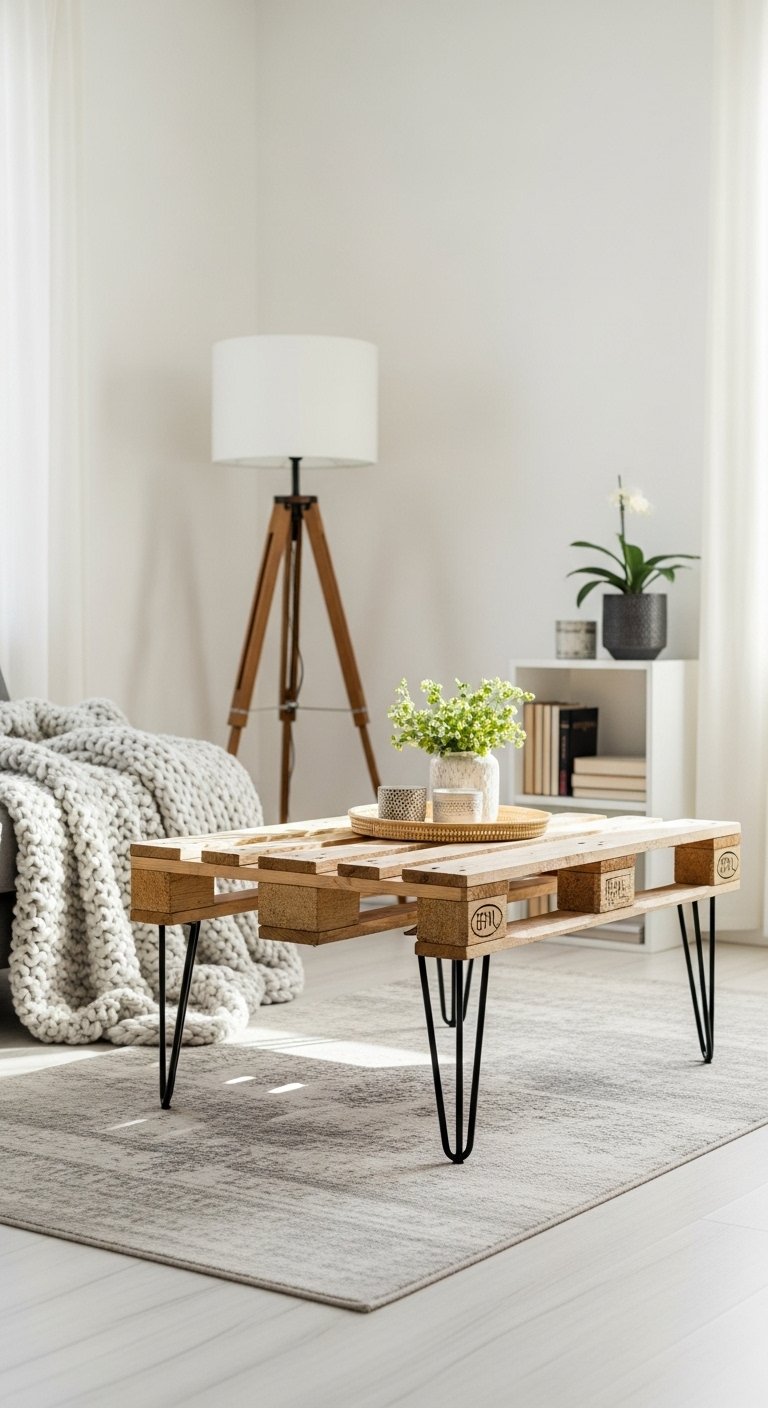
I built a coffee table from two pallet planks and 1×4 battens for support, finished with a 220-grit sand and a matte polyurethane. Most people make the table too short, which throws the room off. Aim for 16-18 inches tall so the coffee table aligns with sofa cushions. Use hairpin-legs-16-inch for a mid-century vibe, and wood-glue-extra-strong to secure joints. Cost was under $50 when I sourced free pallet boards. The result reads relaxed and lived-in, perfect for casual modern or farmhouse rooms.
Platform Bed With Integrated Nightstands for Small Bedrooms
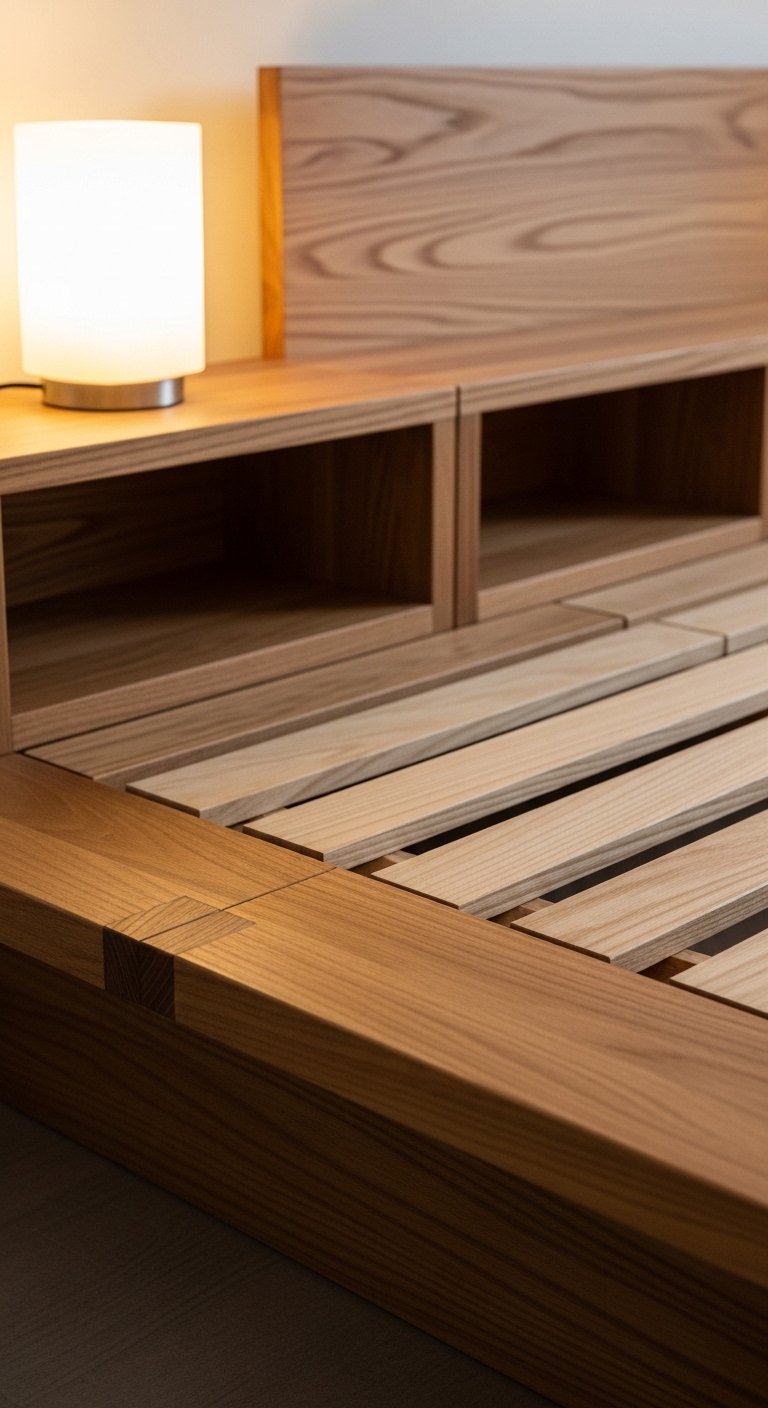
Building a platform bed with built-in nightstands saved floor space and kept the room tidy. Cut a 60-inch by 80-inch plywood base for a queen and add 8-10 slats for mattress support. A common mistake is skipping the center support beam, which makes the bed sag. Add a 2×6 center beam every 24 inches. I used plywood-3-4-inch-birch for a smooth finish and matte-wood-stain-walnut. Budget $120-300 depending on mattress and finish. This gives bedrooms a low, cozy feel that invites you to actually stay.
Mid-Century Console With Hairpin Legs for Entryways
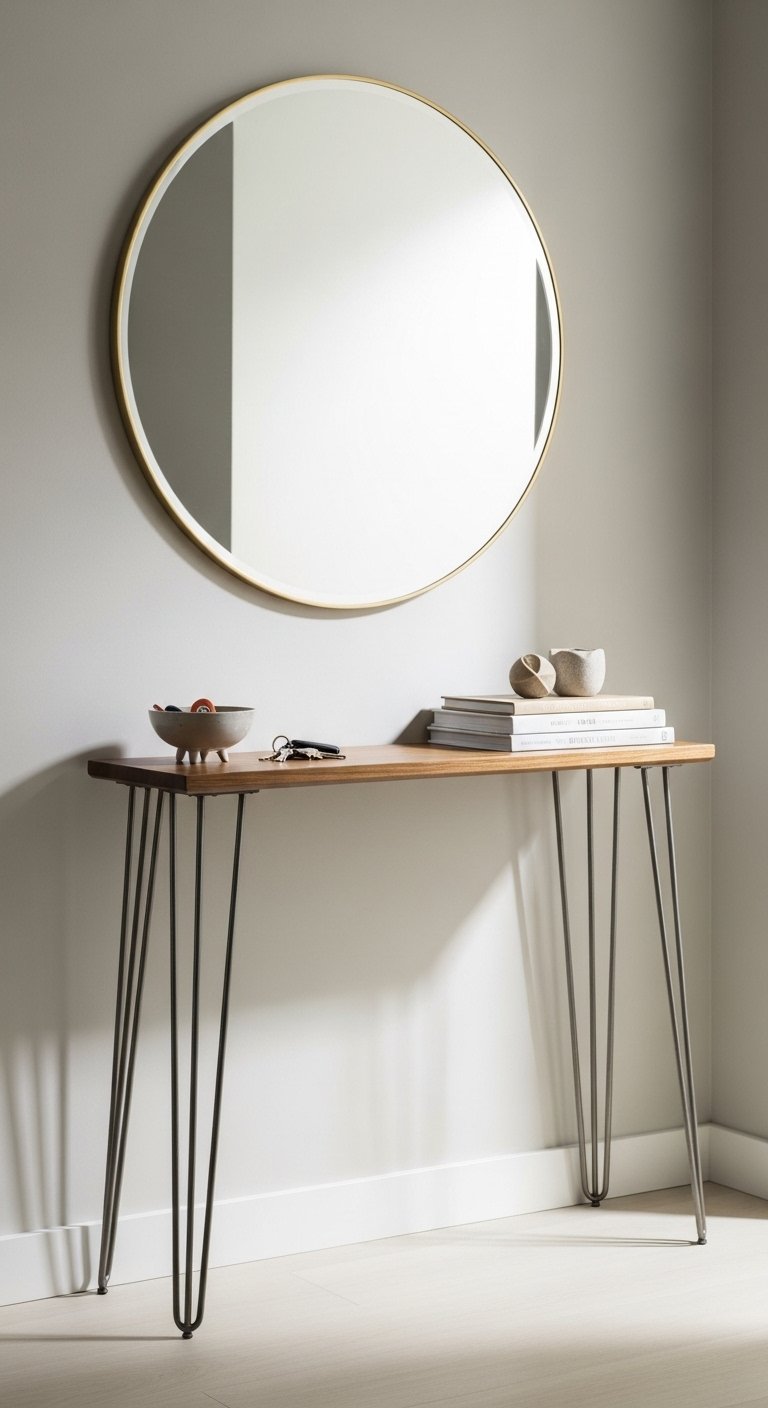
A narrow console is the easiest statement piece in an entry. Use a 12-14 inch depth and 36-48 inch width so it does not swallow a hallway. Most people build them too deep and then they block traffic. I used a single board of solid oak, sanded to 180 grit and finished in oil. Add hairpin-legs-28-inch for an airy silhouette. Expect $60-150 depending on hardwood choice. It feels grown-up and practical, and it hides keys, mail, and a shoe basket underneath.
Reclaimed Dining Table Top With Steel Base for Rustic Modern
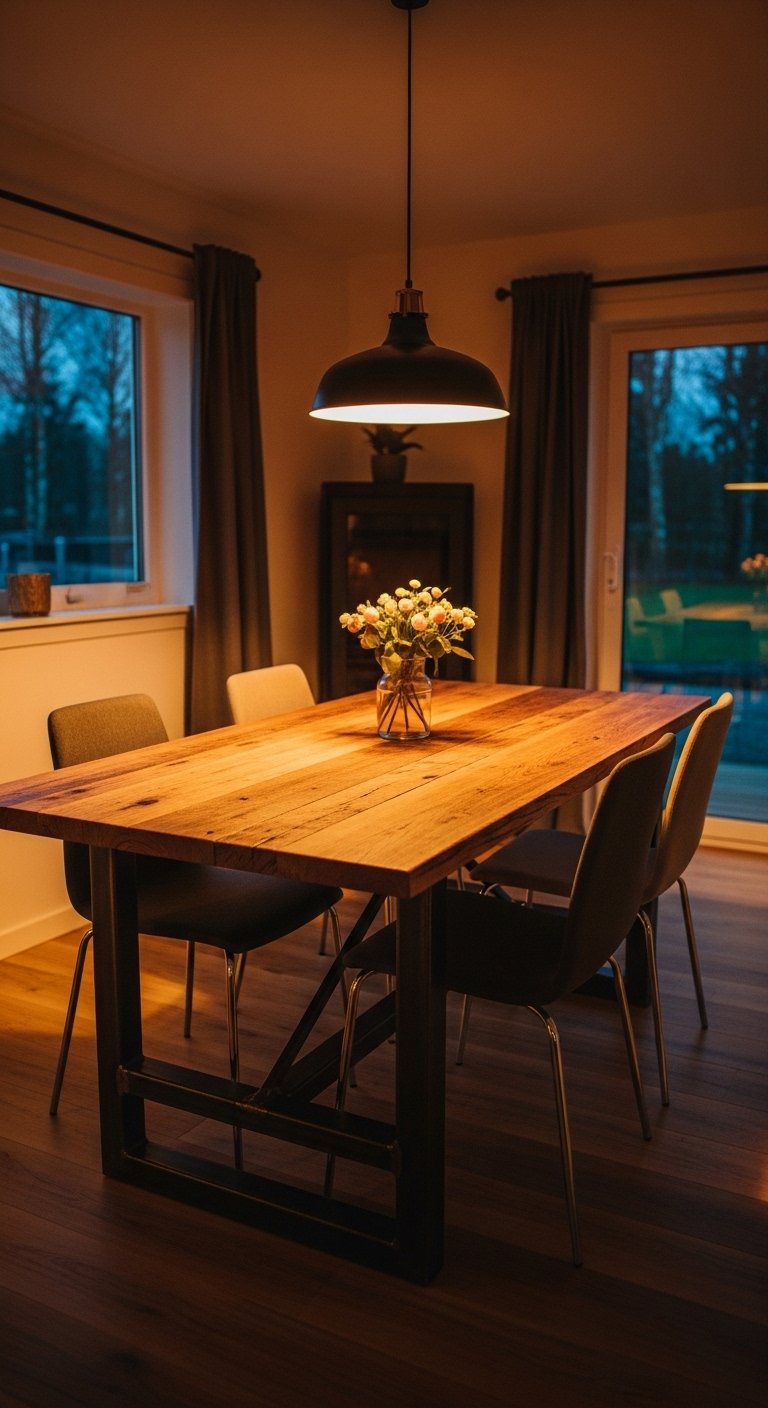
If you have a wider dining area, build a 30-inch deep tabletop and give it a 2-inch overhang. A common wrong move is using unflattened planks and then fighting cupping. Joint and plane the wood first, or laminate three boards edge-to-edge with biscuits every 12 inches. I paired the top with a black metal trestle base and finished the surface with satin polyurethane. For hardware, I use wood-biscuit-joiner-kit and polyurethane-satin-1qt. Budget $150-400. Swap dark walnut for white oak if you want a lighter, more current look.
Entryway Bench With Hidden Storage for Small Homes
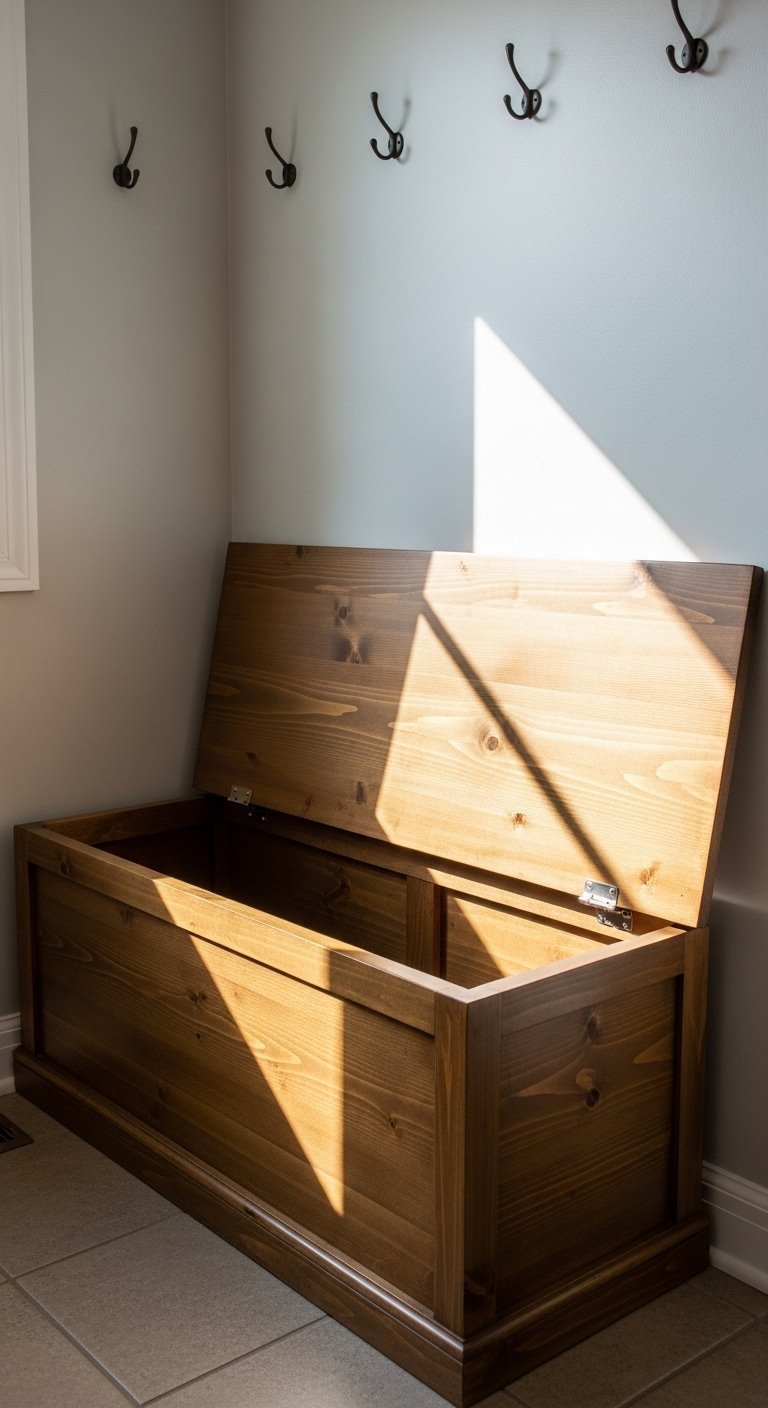
A storage bench hides shoes and seasonal items and anchors a wall. I build mine 18 inches tall so it aligns with standard chair height and is comfortable for sitting to put shoes on. People make lids flimsy or forget to add a stay. Add two piano hinges and a soft-close stay. Use piano-hinges-24-inch and soft-close-lid-stay. Budget $40-120 depending on wood. Pair with the mirror idea later to make the entry feel balanced.
Wall-Mounted Drop-Leaf Desk for Tiny Home Offices
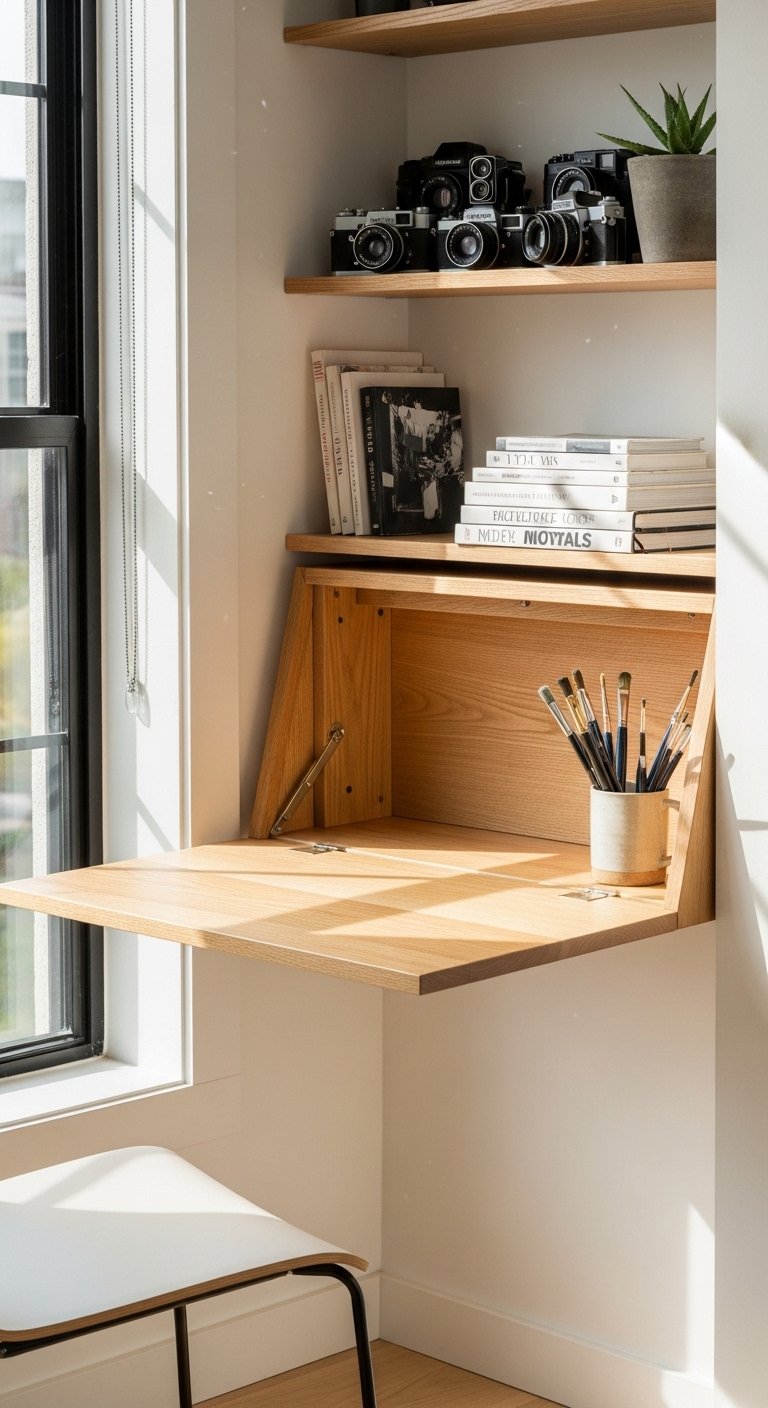
If you work from a tiny corner, a drop-leaf desk saves space and looks custom. Build the top 20 inches deep and 36 inches wide when open. A frequent mistake is using flimsy brackets that wobble under typing. Install folding shelf brackets rated 100 pounds and add a 1×2 support cleat against the wall. I used folding-shelf-brackets-100lb and wood-screws-3-inch. Budget $30-90. This works great in a bedroom nook or kitchen wall and pairs well with the floating shelf idea above.
Simple Nightstand Using a Single Board for Minimalist Bedrooms
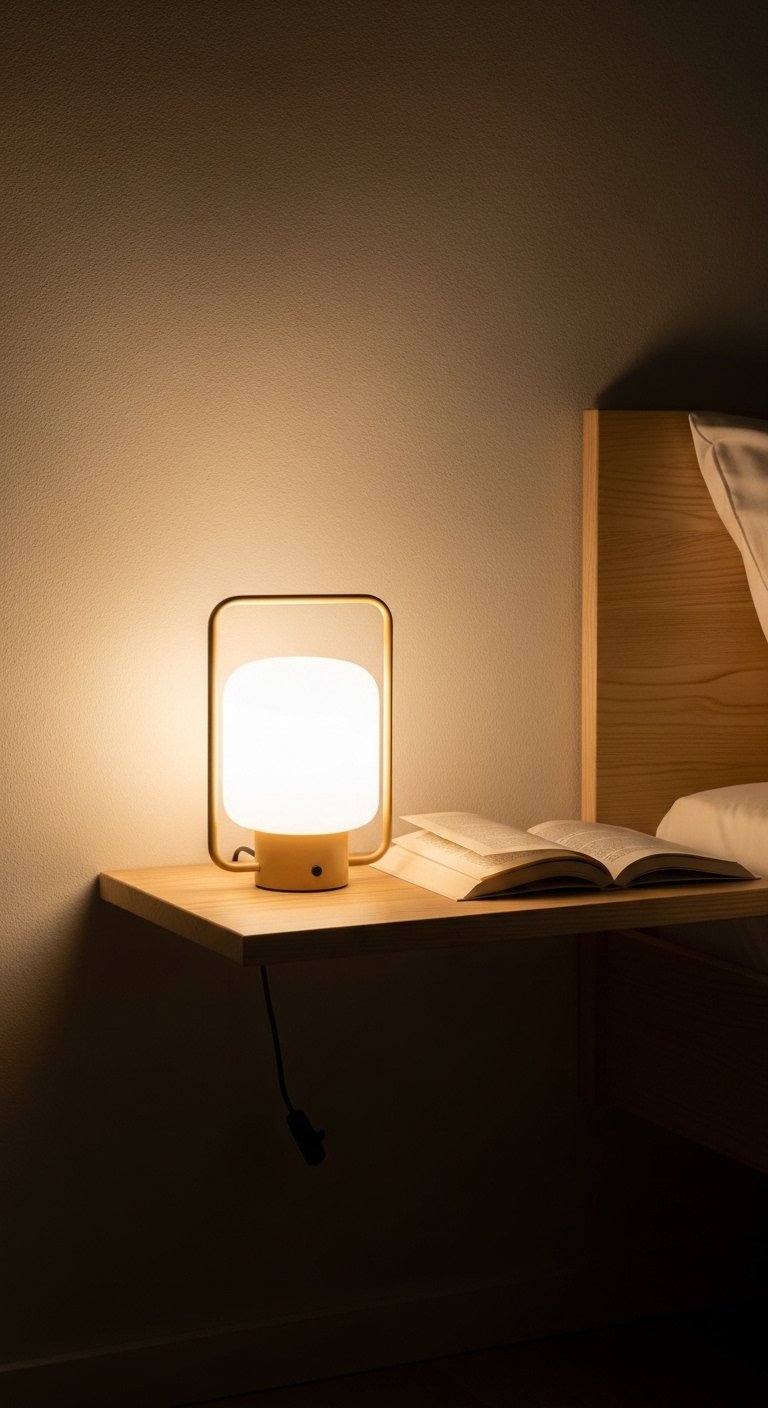
A single-board nightstand feels light and modern. Cut a 12×14 inch board, round the corners, and mount it at 22 inches from the floor so the top sits level with a mattress. People make them too large so they look clunky. I finish mine with a wipe-on oil and add a recessed cable hole for a lamp. Try wipe-on-wood-oil and grommet-cable-hole. Budget $20-60. Use this for a minimalist or Scandinavian bedroom.
White Oak Kitchen Open Shelves for a Clean Contemporary Kitchen
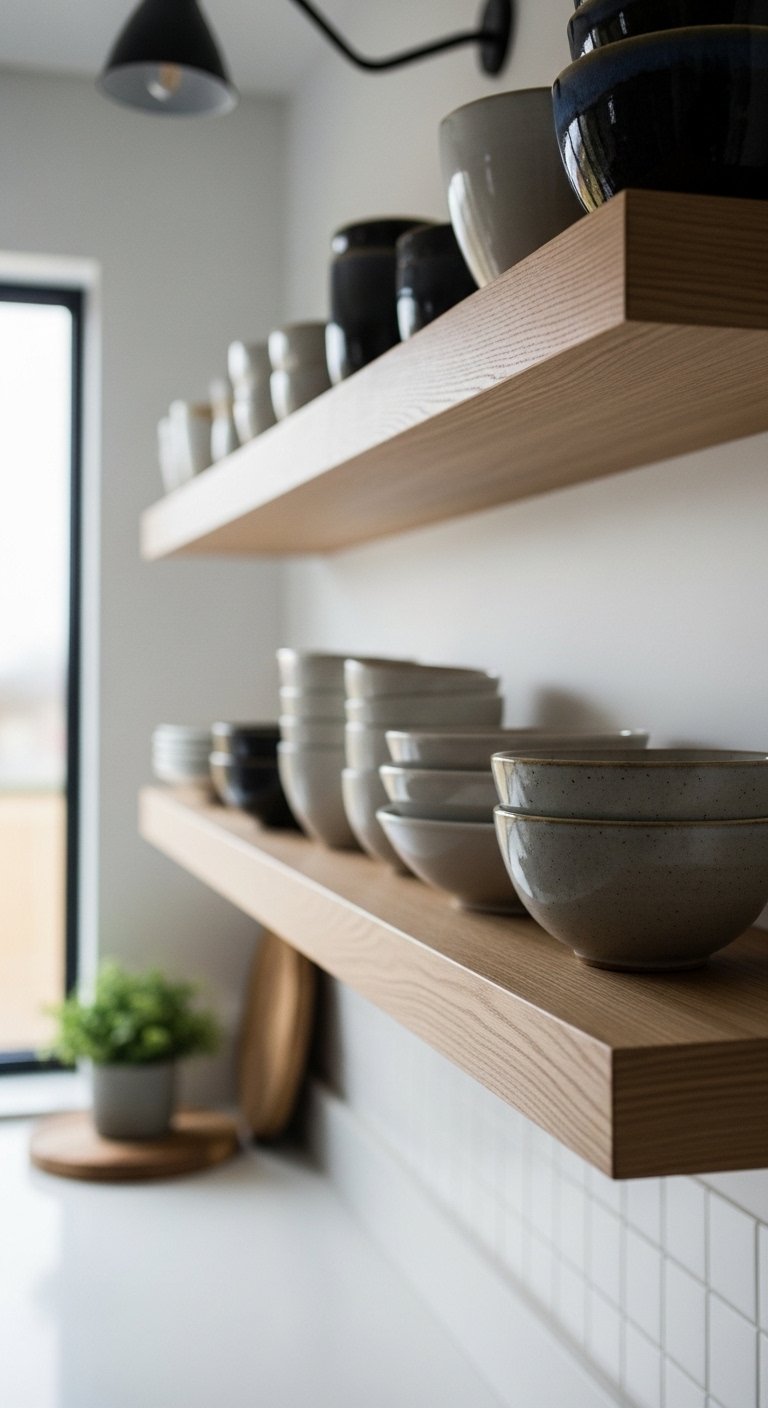
White oak beats dark wood in current kitchens. Use 10-12 inch-deep shelves and space them every 12-14 inches for dishes. A mistake is overloading them with heavy cookware. Keep heavier items on lower shelves and use hidden steel brackets. I suggest white-oak-floating-shelves-36-inch and hidden-shelf-brackets-heavy-duty. Budget $60-200 for a set. These look current and photograph well next to subway tile.
Media Console With Cable Management for Real-World Living Rooms
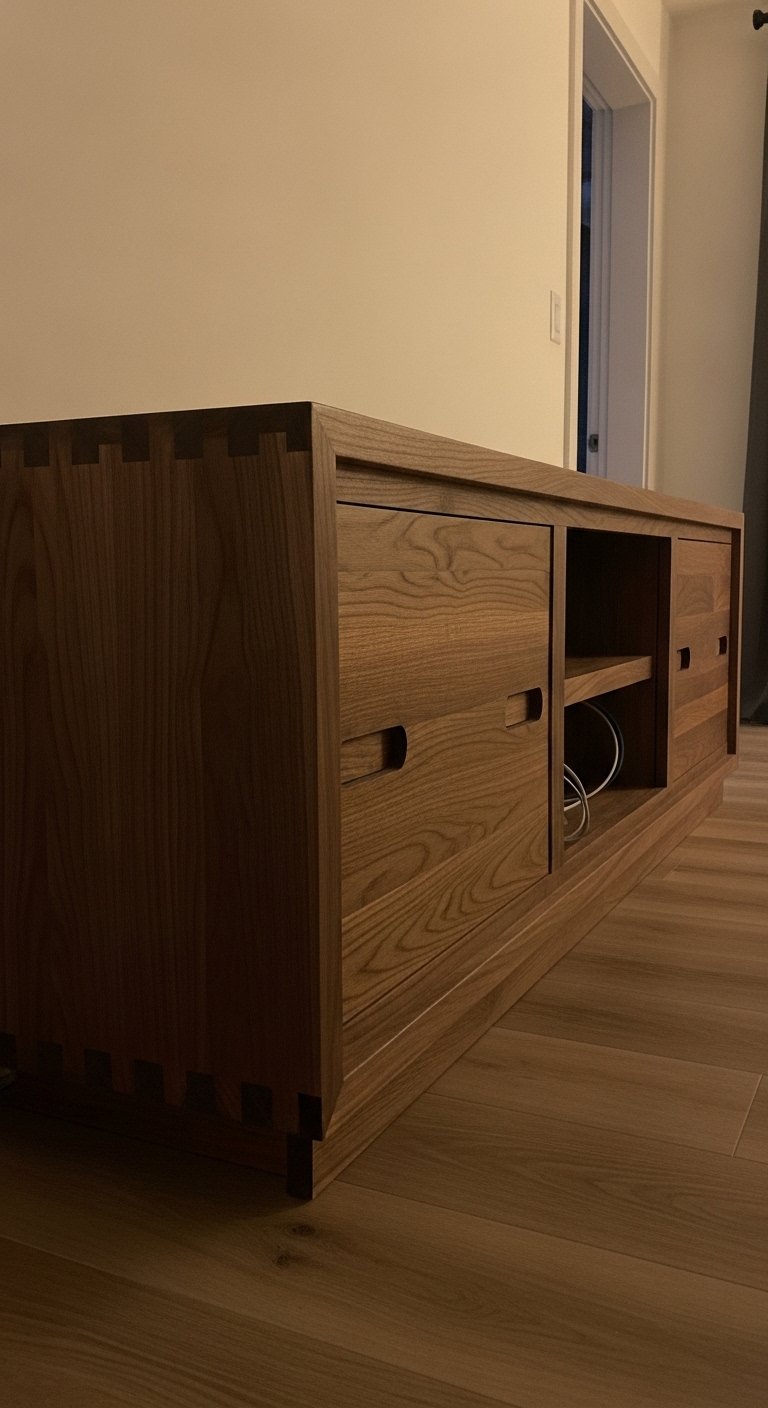
A media console has to hide more than the TV. I routed a 2-inch cable channel down the back and added a removable panel for power strips. A common error is placing consoles too low to the TV. Aim for the center of the TV to sit 30-36 inches from the floor for comfortable viewing. Tools I used include a corded-jigsaw-6-amp and cable-management-box. Budget $80-250. Pair this with floating shelves or a floor plant to soften the media wall.
Ladder Bookshelf From Dowels and Planks for a Light Display
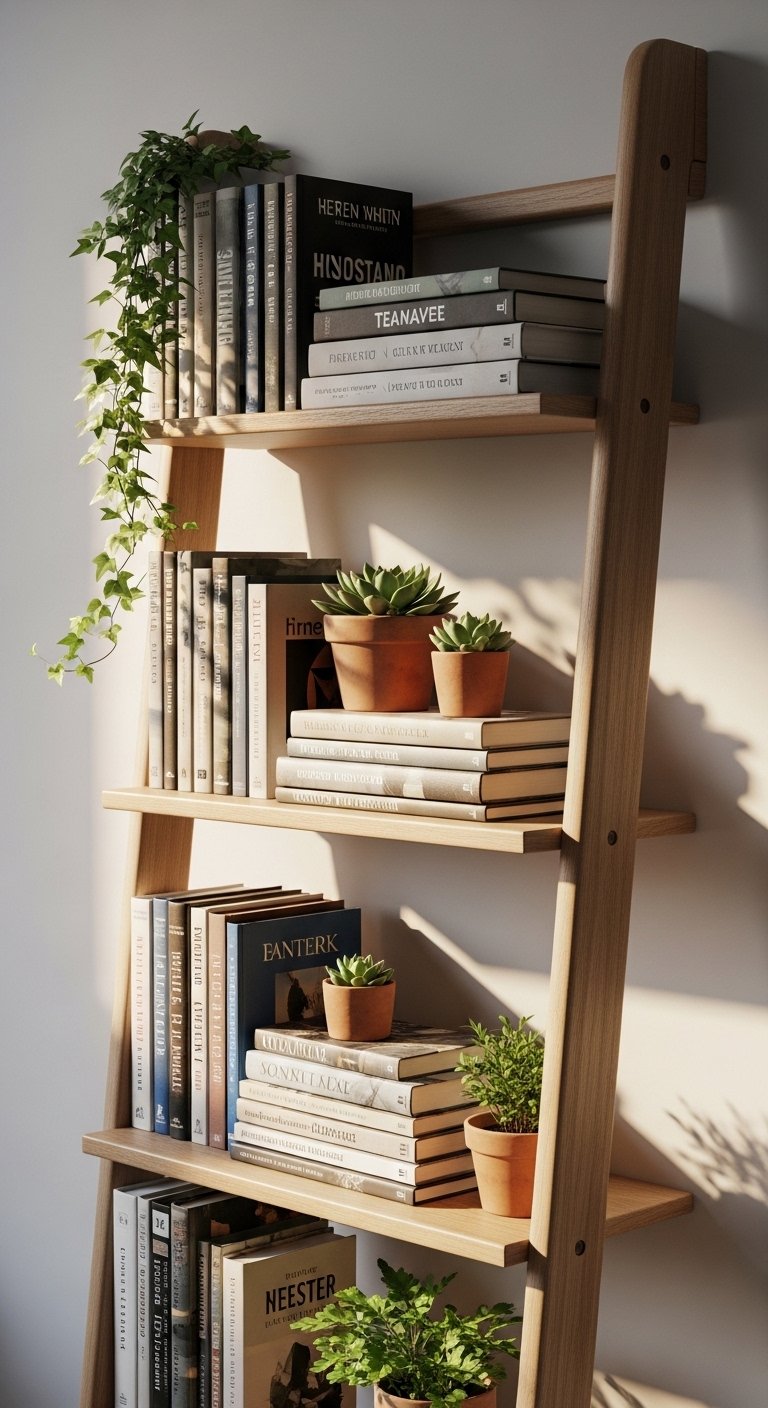
A leaning ladder shelf is easy and gives vertical storage without heavy construction. Angle the top rails at about 75 degrees so it leans safely without touching the wall too low. People forget to anchor the top to the wall, which is risky. Secure it with a small bracket and use dowel joinery every 12 inches. I used wood-dowel-3-8-inch-set and small-shelf-bracket. Budget $40-120. It works great in living rooms or bathrooms for towels.
Tiered Plant Stand From Scrap Wood for Indoor Greenery
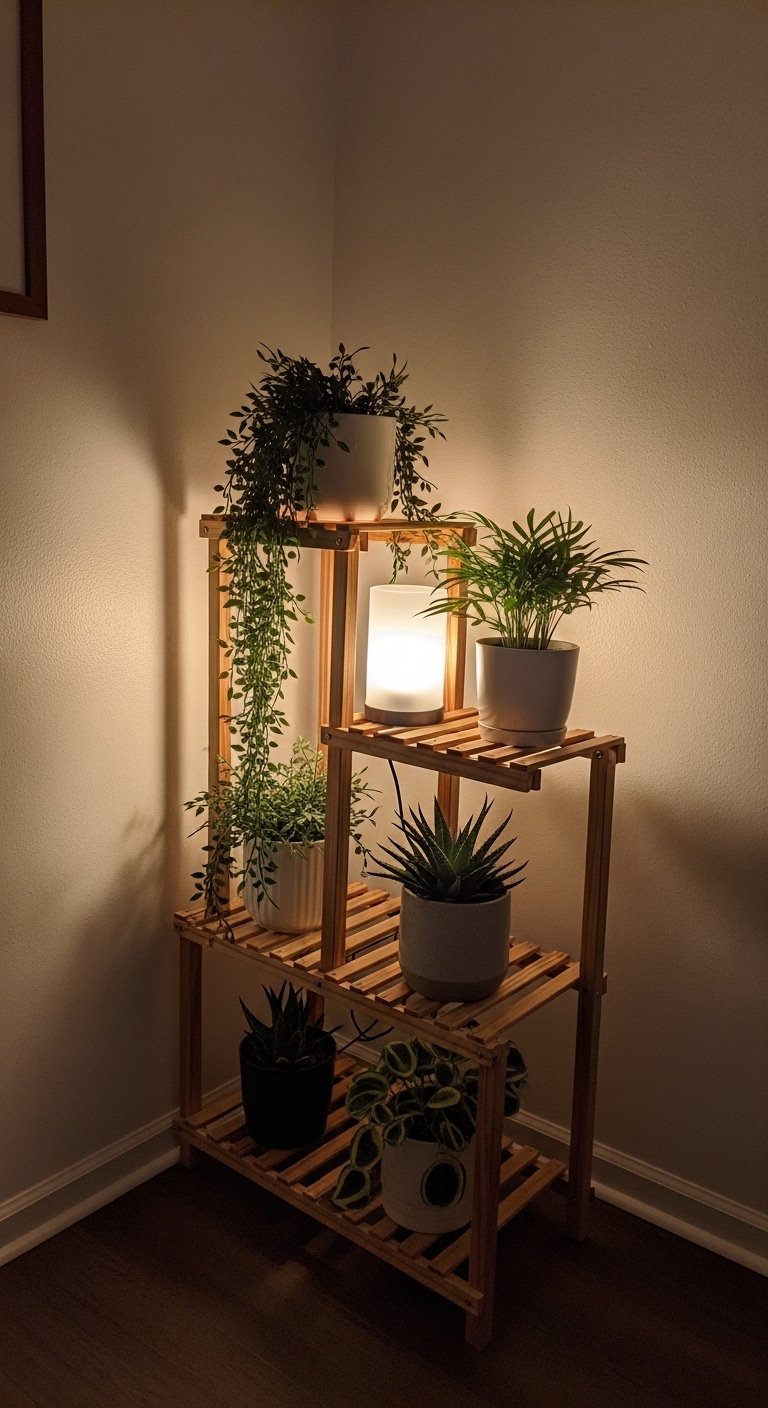
One big plant beats five small ones for impact. A tiered plant stand uses three shelf heights at 6, 18, and 30 inches for scale. A mistake is making shelves too shallow for pots. I build mine with 8-10 inch-deep shelves and use cedar for damp rooms. For protection try outdoor-wood-sealant. Budget $20-70 from scraps. This pairs well with the ladder shelf if you want a plant-heavy corner.
Teak Bathroom Vanity Shelf for Moisture-Prone Spaces
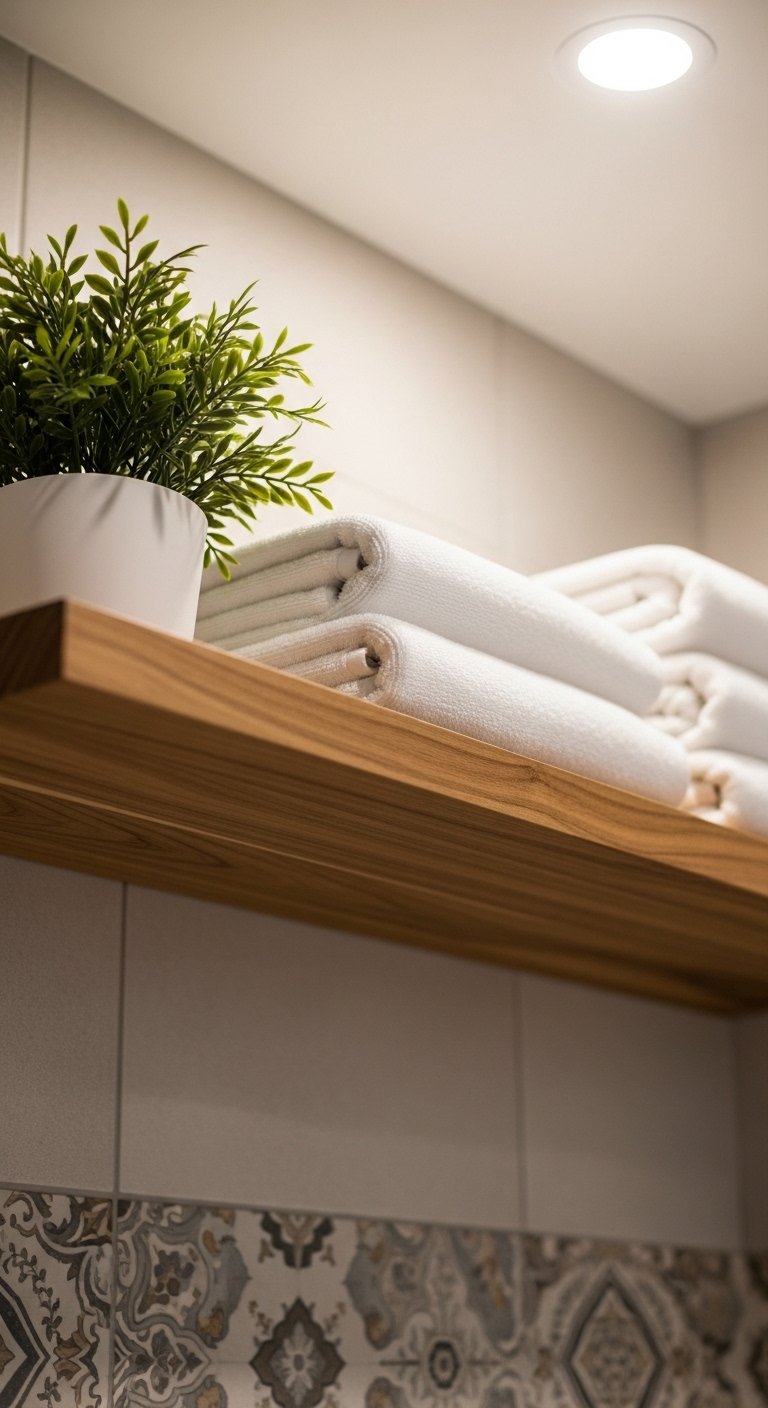
Bathrooms need moisture-friendly wood. Teak or cedar resist rot and look warm against tile. Build a 6-8 inch deep shelf and seal with a marine-grade oil. The mistake I see is using untreated pine that warps quickly. Use teak-oil-8oz and marine-grade-varnish-1qt. Budget $40-150 depending on hardwood. These shelves work for open storage of towels and toiletries and keep a small bathroom feeling curated instead of cluttered.
Patio Bar Cart From Reclaimed Wood for Outdoor Entertaining
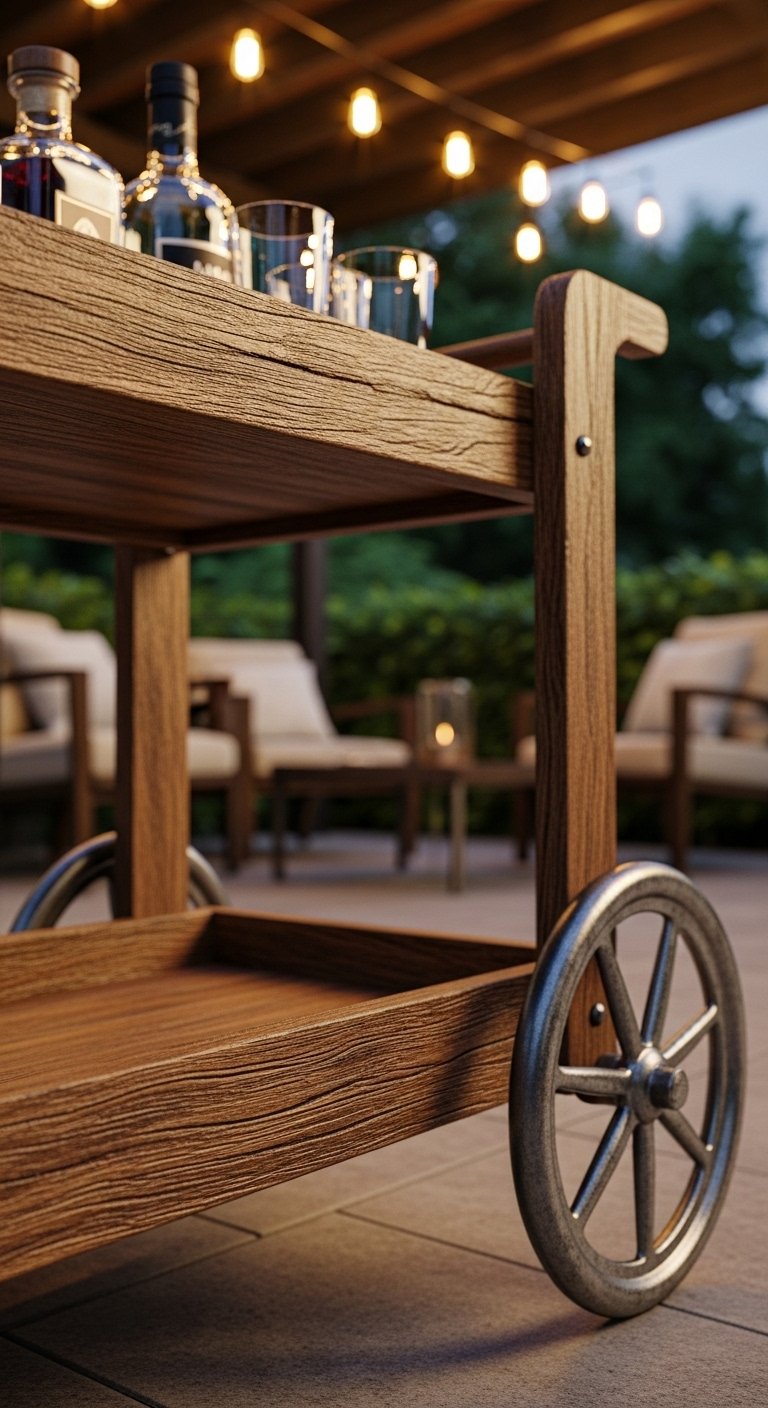
An outdoor bar cart makes entertaining easier and gives you an excuse to refine weatherproofing. Use treated pine or cedar and seal every surface. People skip sealing caster brackets and they rust fast. I use stainless steel casters and three coats of an exterior sealer. Try stainless-caster-wheels-set and exterior-wood-sealer-gallon. Budget $60-180. This is flexible for patios and balconies and looks charming next to outdoor seating.
Turned Side Table Using a Simple Lathe Alternative for Cozy Corners
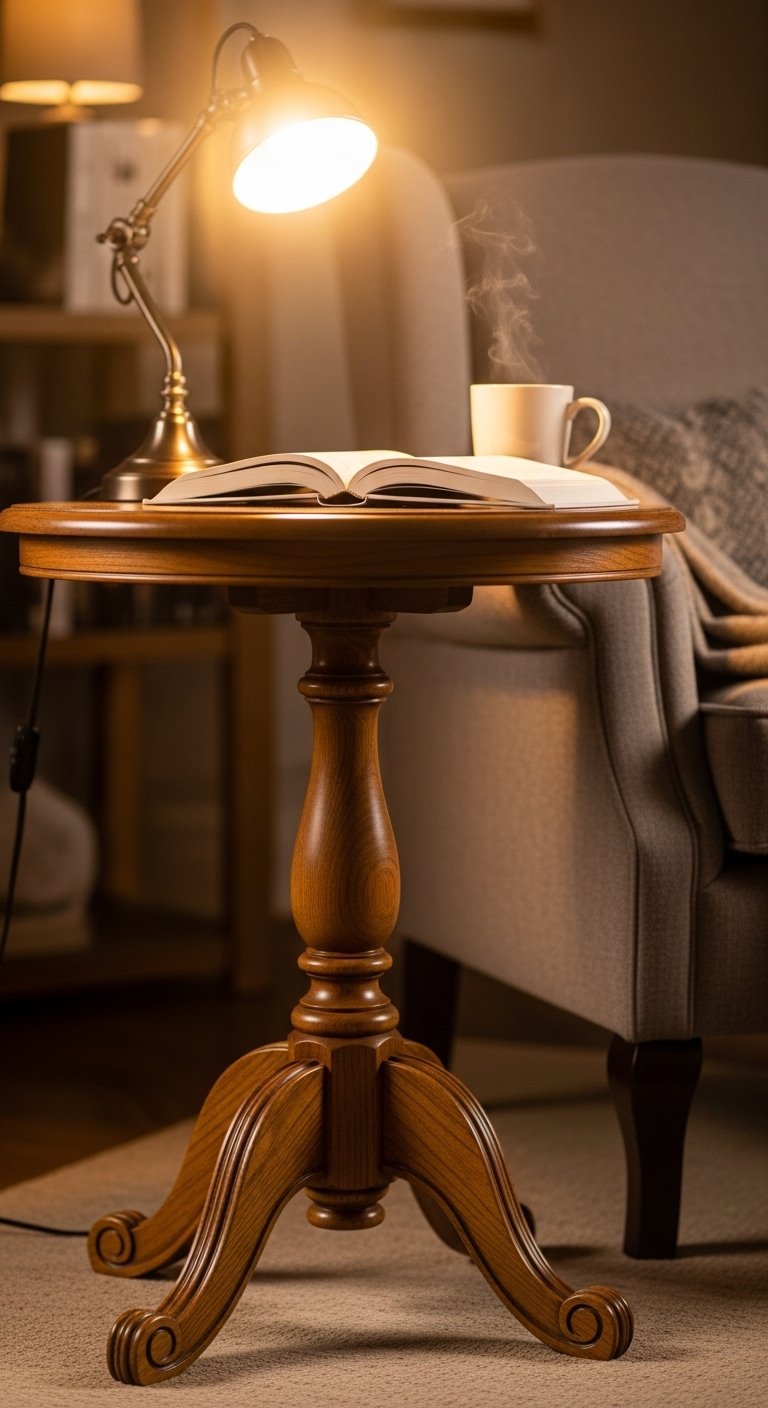
You do not need an industrial lathe to get turned legs. I used a hand-carving method on a scrap 3-inch diameter dowel and sanded to smooth curves. A common error is mismatch scale, where the leg is too thick for the tabletop. Keep the leg diameter about one third of the top diameter for balance. Seal with polyurethane-satin-8oz. Budget $20-70. This table reads handmade and pairs perfectly with the platform bed or the coffee table idea above.
Your Decor Shopping List
Textiles
- Honestly the best $40 I have spent. Chunky knit throw in cream (50×60 inches) to drape over a sofa or chair
- Velvet pillow covers set of 4 in 22-inch down-filled linen for layering, ~ $35
Wall Decor
- For the floating shelf trick, use white-oak-floating-shelves-36-inch (36×10 inches) ~$70-120
- Round-entryway-mirror-30-inch to balance a console, ~$50
Tools & Hardware
- Hairpin-legs-16-inch for tables, set of 4 ~ $30
- Folding-shelf-brackets-100lb for drop-leaf desks, pair ~$20
- Wood-glue-extra-strong 8 oz, ~$8
Finishes & Protection
- Wipe-on-wood-oil 16 oz for natural finishes, ~$15
- Exterior-wood-sealer-gallon for outdoor projects, ~$40
Plants & Greenery
- Artificial-fiddle-leaf-fig-6ft when you need height without the fuss, ~$80
Notes: Many of these items have similar options at Target or HomeGoods if you prefer seeing finishes in person.
Shopping Tips
White oak beats dark wood in 2026. Design feeds have shifted completely. These white oak floating shelves look current, not dated.
Grab hairpin-legs-16-inch for $30 a set. Swap table legs seasonally or paint them and the whole piece reads different.
Curtains should puddle or kiss the floor, never hang halfway up. These 96-inch linen panels are right for standard 9-foot ceilings.
Lead with one statement piece rather than five small things. A single 6-foot fiddle leaf fig has ten times the visual impact of five tiny succulents.
If you plan to stain, buy a small sample first. Matte-wood-stain-walnut in a 4 oz can avoids a full gallon mistake.
Frequently Asked Questions
Q: What size area rug do I actually need for a DIY coffee table?
A: Bigger than you think. For a standard living room, go 8×10 minimum so the front legs of the sofa and chairs sit on the rug. If your coffee table is slim, choose a 6×9 only when seating is tight.
Q: Can I mix white oak shelves with a darker reclaimed table without it looking messy?
A: Yes, mix tones intentionally using the 80/20 rule so 80 percent of the room uses one tone and 20 percent uses the accent. White oak shelves plus a darker table reads layered and intentional rather than clashing.
Q: How do I stop a DIY pallet coffee table from wobbling?
A: Use corner blocks or a cross brace under the tabletop and attach hairpin legs with long screws into the battens. Most wobble comes from fasteners into thin top boards, not from the legs.
Q: What tools are truly worth buying for these projects?
A: A good cordless drill, a sander, and a circular saw handle most builds. I used a corded-jigsaw-6-amp for curves and a sander for finish. Rent a planer if you need perfectly flat boards.
Q: Can I use pallet wood for an indoor dining tabletop?
A: You can, but plane and stabilize the planks first. Avoid chemically treated pallets and always sand to 180-220 grit. Clamp and glue with biscuits every 12 inches to keep the top flat.
Q: Should I seal bathroom shelves differently than bedroom shelves?
A: Yes, use teak or cedar and a marine-grade oil for bathrooms. Moisture will warp untreated woods quickly, so splurge on protection for small spaces.
Q: How do I pick the right height for a console or media unit?
A: Measure the center of your TV to sit roughly 30-36 inches from the floor for comfortable viewing. For consoles, pick 30-36 inches high so they read proportionate to sofas and chairs.