

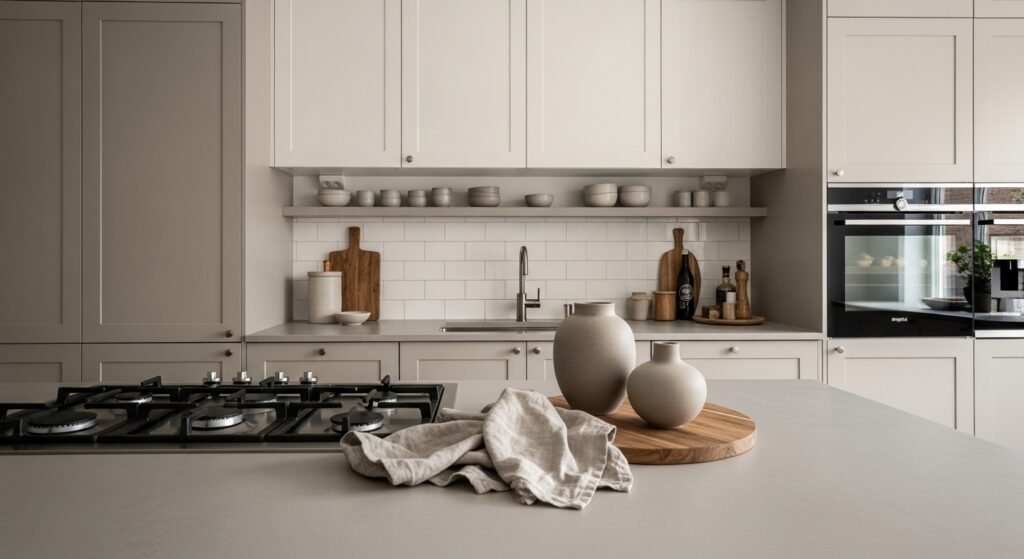
I kept filling every inch of my counters because empty felt wrong. For months my kitchen looked cluttered even when there were only a few things out. I finally realized the problem was not the objects themselves. It was how I grouped them, how I let negative space breathe, and how many competing colors I allowed.
I tried the "add more" approach three times. The fourth attempt was different because I pulled half the stuff away and paid attention to texture and weight. The result felt calmer, and I still had everything I needed on hand.
Step 1: Clear, define, then keep 30 to 40 percent empty
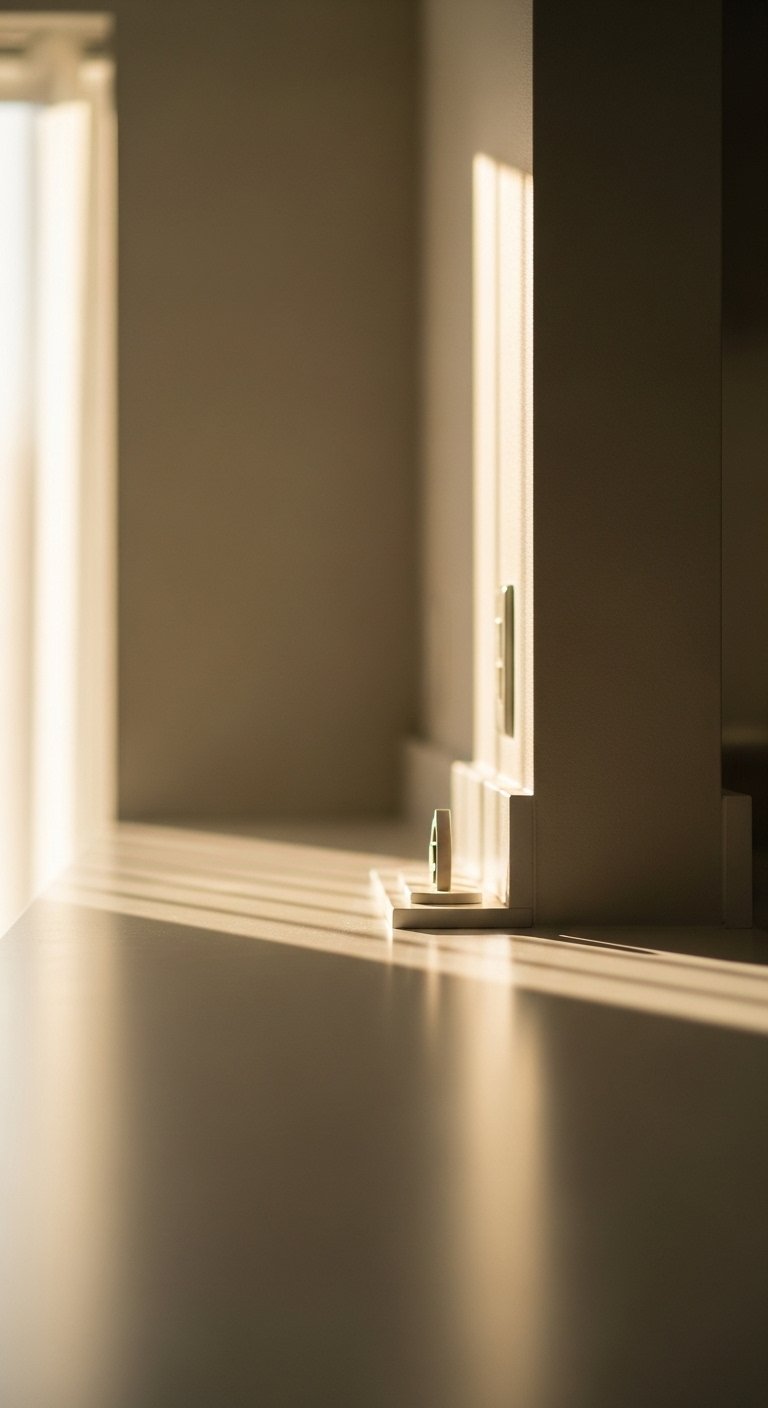
Pull everything off the counter and decide which activities happen where. I leave 30 to 40 percent of the working surface clear. That number helped me stop the urge to fill every corner. Messy, useful items go in a drawer. Decorative items get grouped, not scattered.
Common mistake: people fill gaps because empty feels wasted. Try keeping one clear zone next to the stove or sink, then place a single anchor item like a cutting board or a tray. The visual change is immediate. At first it looked too sparse to me, but after a few hours I noticed how the textures stood out.
Step 2: Choose a restrained palette, use a 60/30/10 feel
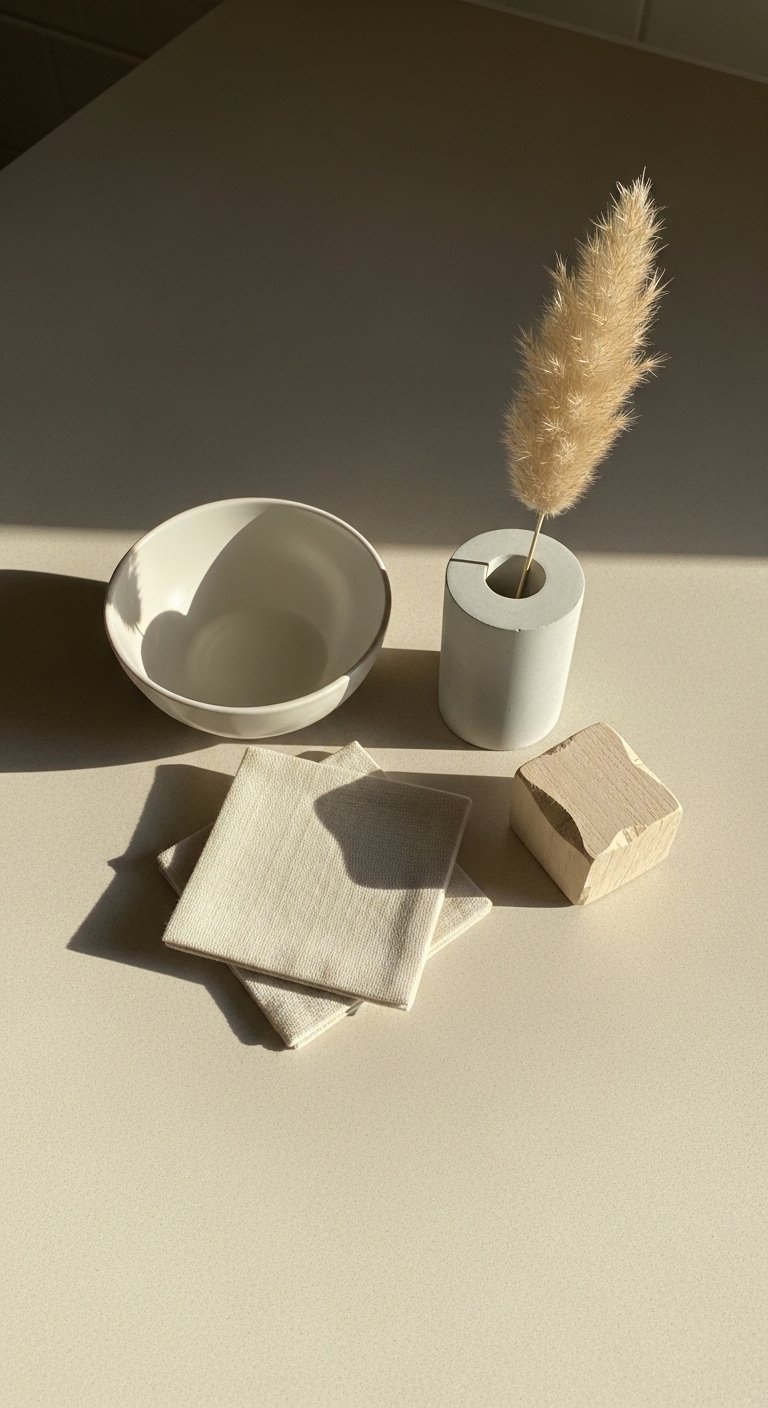
Pick two neutral base materials, one secondary material, and one small pop of color. Think about proportion as roughly 60 percent base, 30 percent secondary, 10 percent accent. For me that meant painted cabinets and wood counters, stone or ceramic accessories, and a single soft green plant.
Mistake I made: mixing three metals and three bright colors. It looked busy. Swap the extra metal for a warm wood or matte ceramic. I like linen towels because they add a cool, slightly nubby feel that reads calm in photos and in real life.
Step 3: Group items in odd numbers, anchor with height
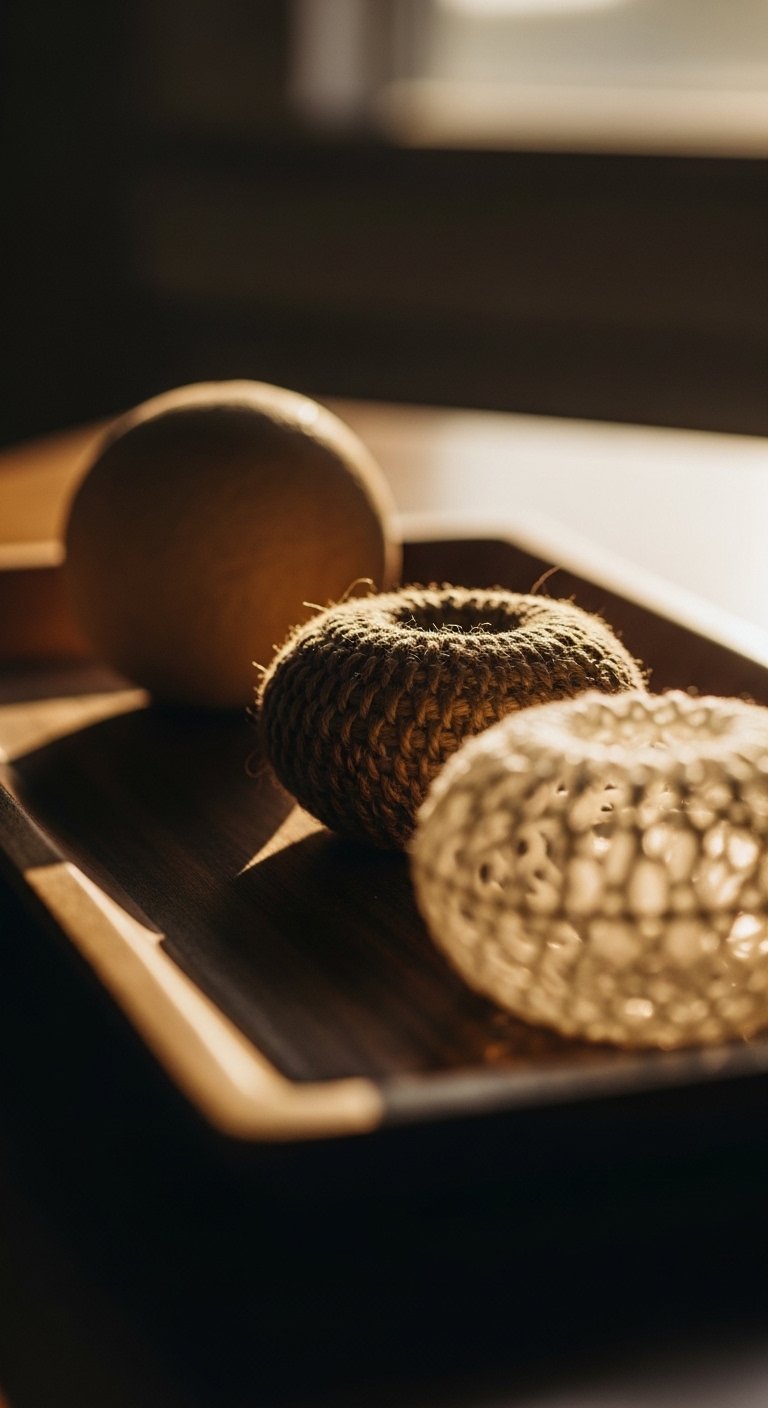
Group 3 or 5 items together. Place the tallest item in back, mid-height in the middle, and the smallest up front. That 2/3 height idea means two lower pieces balance one taller piece. The effect feels grounded and not staged.
I kept arranging things symmetrically until my partner admitted the asymmetrical version looked better. Sensory note: a ceramic vase should feel cool and solid in your hand. Use a wood board behind it to add warmth and weight. A lightweight plastic item will always read cheap next to ceramics, so choose materials you can feel.
Step 4: Add texture with textiles and a small rug
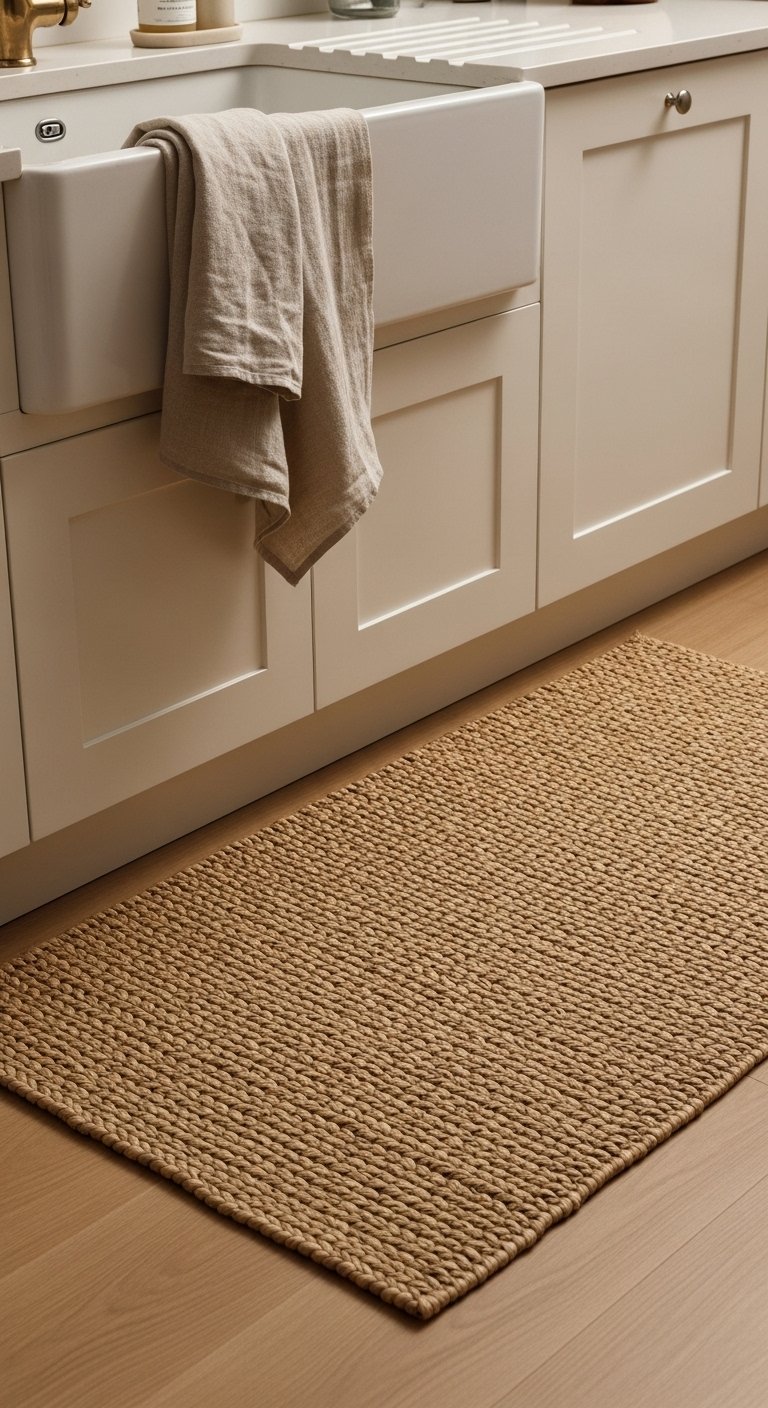
Textiles soften the room and hide everyday wear. A small jute mat near the sink and linen dish towels folded on a hook add nubby texture and a lived-in look. Linen feels a touch rough but softens with use. Jute is coarse underfoot but anchors the space.
Common mistake: picking printed or shiny textiles that compete with everything else. Stick to natural fibers and muted tones. If you have pets, skip the low open shelf and use a washable mat instead.
Step 5: Edit, live with it, then tweak after three days
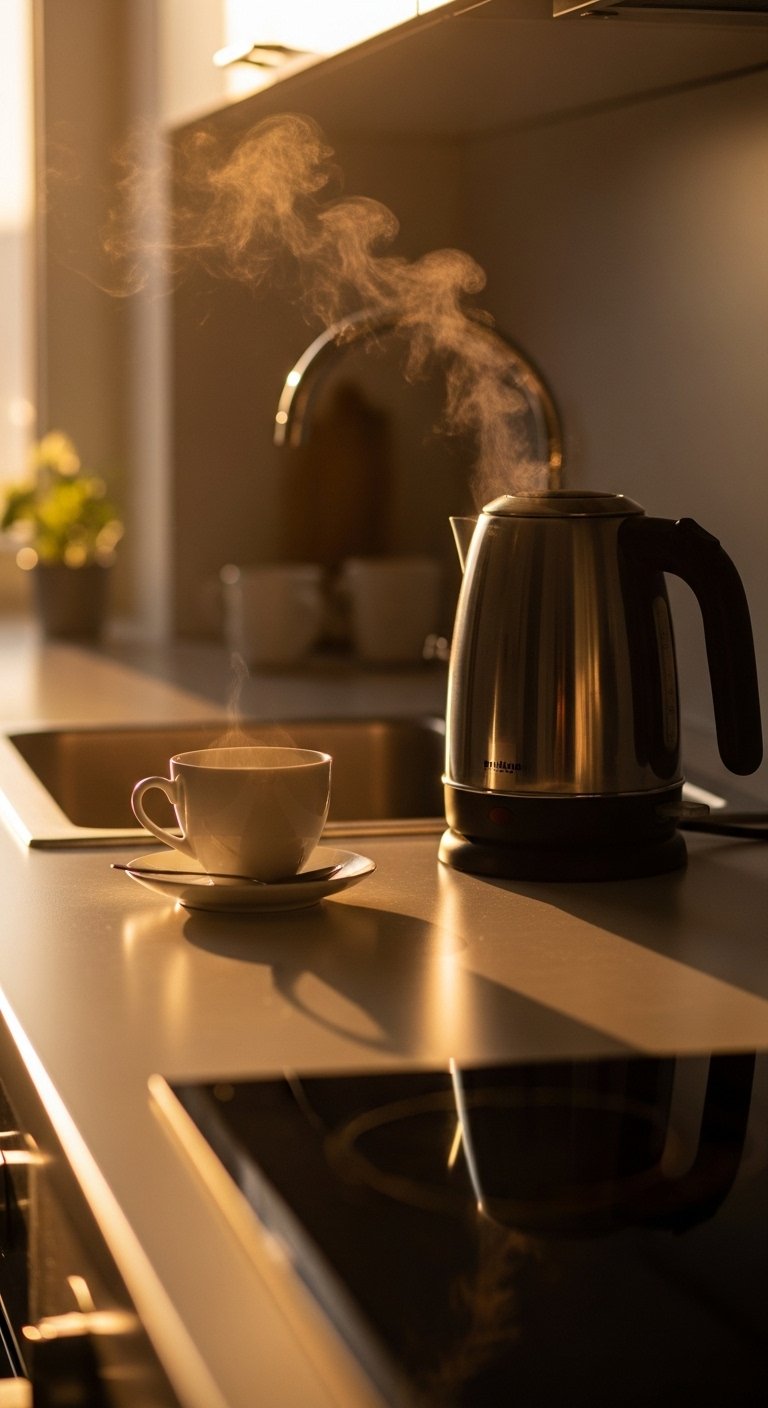
After styling, walk away for a day. I almost always want to add something immediately. Don't. Live with the arrangement for three days and note what you actually touch. Move the frequently used cup closer, put the seldom-used vase on a higher shelf.
One real failure of mine was leaving a delicate bowl too close to the stove. My roommate knocked it over twice. I moved it and the scene has survived a week of real life. Keep one small change in mind and try it. Often that is enough.
Kitchen Items to Grab for Subtle Decor
Set of linen dish towels, natural, pack of 4 ($18-32). I use these in Step 2 and Step 4, they add that slightly nubby, cool feel.
Matte ceramic vase set, white, set of 3 ($22-40). For Step 3, height and weight anchor the vignette.
Wood cutting board, 18×12-inch, acacia ($25-45). Use as a backdrop and for daily prep in Step 1 and Step 5.
Brass soap pump, matte brass finish ($15-28). A single warm metal accent mentioned in Step 2.
Jute kitchen runner, 2×5-foot ($40-80). Softens the floor, referenced in Step 4.
Ceramic utensil crock, matte glaze, 5-inch diameter ($18-30). Holds daily tools and keeps counters tidy, used in Step 3.
Small potted faux plant, 6-inch pot, muted green ($10-22). Adds the 10 percent accent in Step 2.
Small tray, 12×8-inch, solid wood ($20-35). Good for grouping items as in Step 3.
Why Your Kitchen Still Feels Busy After Styling
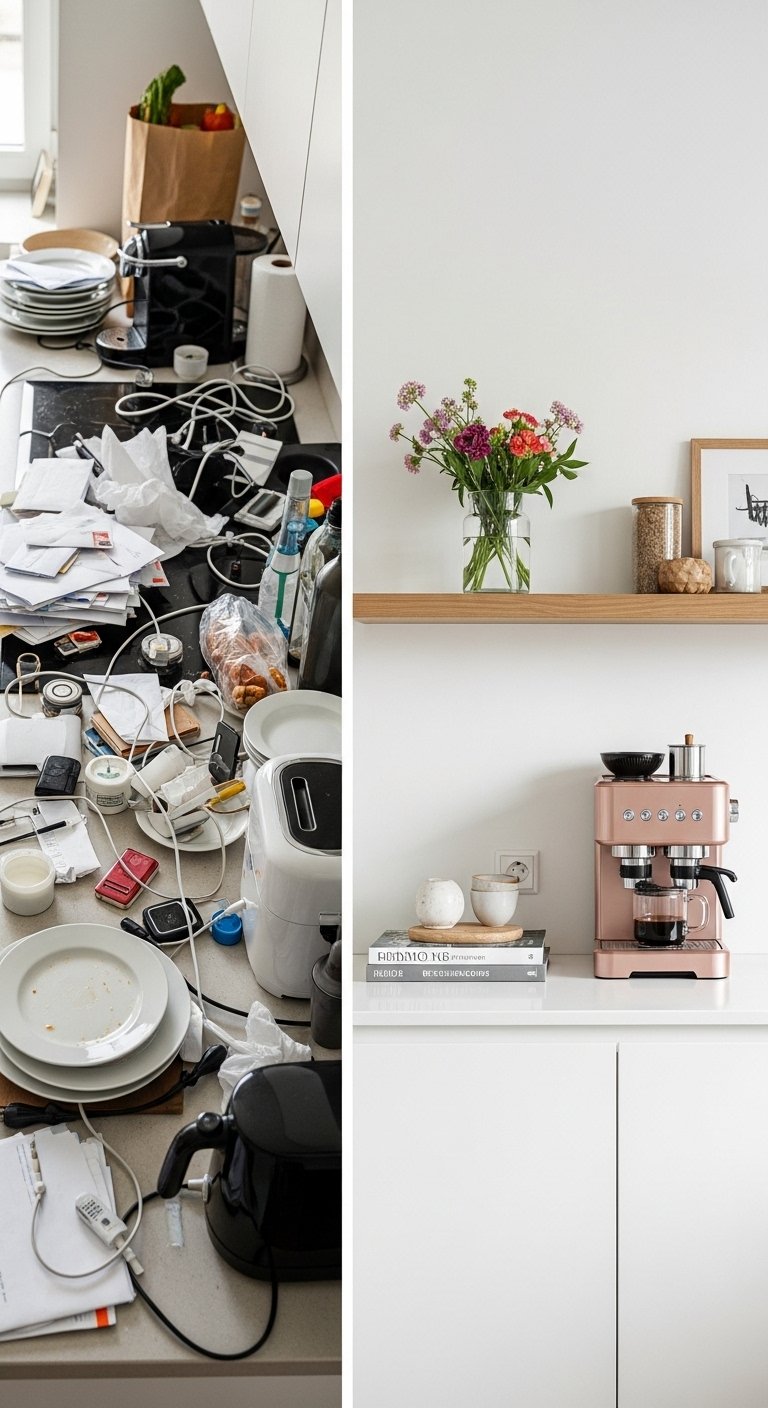
You might be missing editing, not styling. People often place everything that looks nice on the counter all at once. The fix is ruthless removal. Keep the things you use daily and edit the rest into cabinets.
Quick checks:
- Do you use this every week? If not, store it.
- Are two things competing for attention? Keep one.
- Is there more than one bright color? Tone one down.
I found this by accident. I removed a ceramic and left the wooden board. The board made the ceramic sing. Small swaps like that make a big difference.
Making This Work in a Small Kitchen
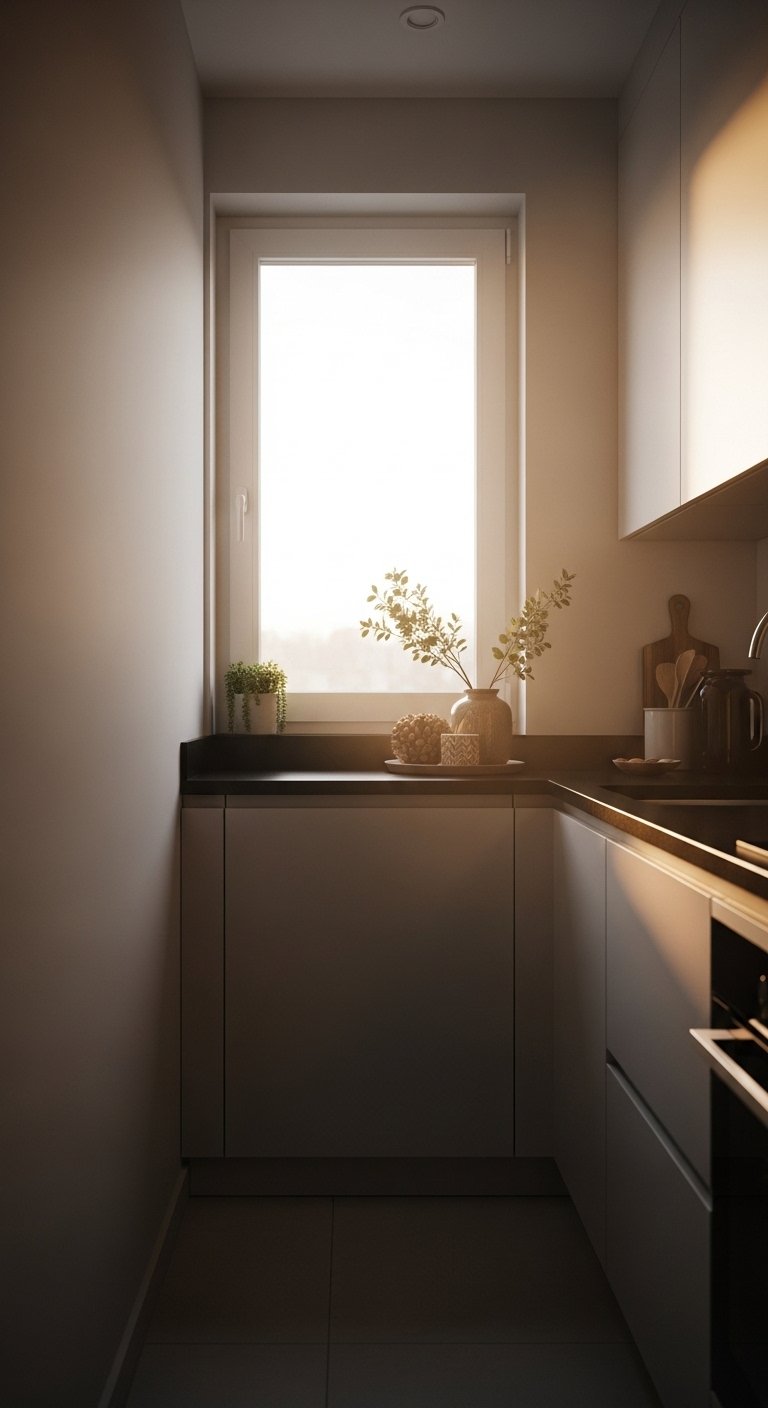
Small kitchens need fewer objects and smarter anchors. Pick one short run of counter as your display zone. Use a magnetic knife strip or a slim rail to free up surface area. Limit the display to three items in most cases.
Practical tips:
- Use vertical space for storage and decor.
- Keep textiles small, like a 1.5×2-foot mat rather than a runner.
- Choose multipurpose pieces, such as a cutting board that doubles as display.
I once filled a tiny counter with a big tray and three vases. It read crowded. One vase and a hooked towel looked better and left prep space.
What This Really Looks Like After a Week with People Using It
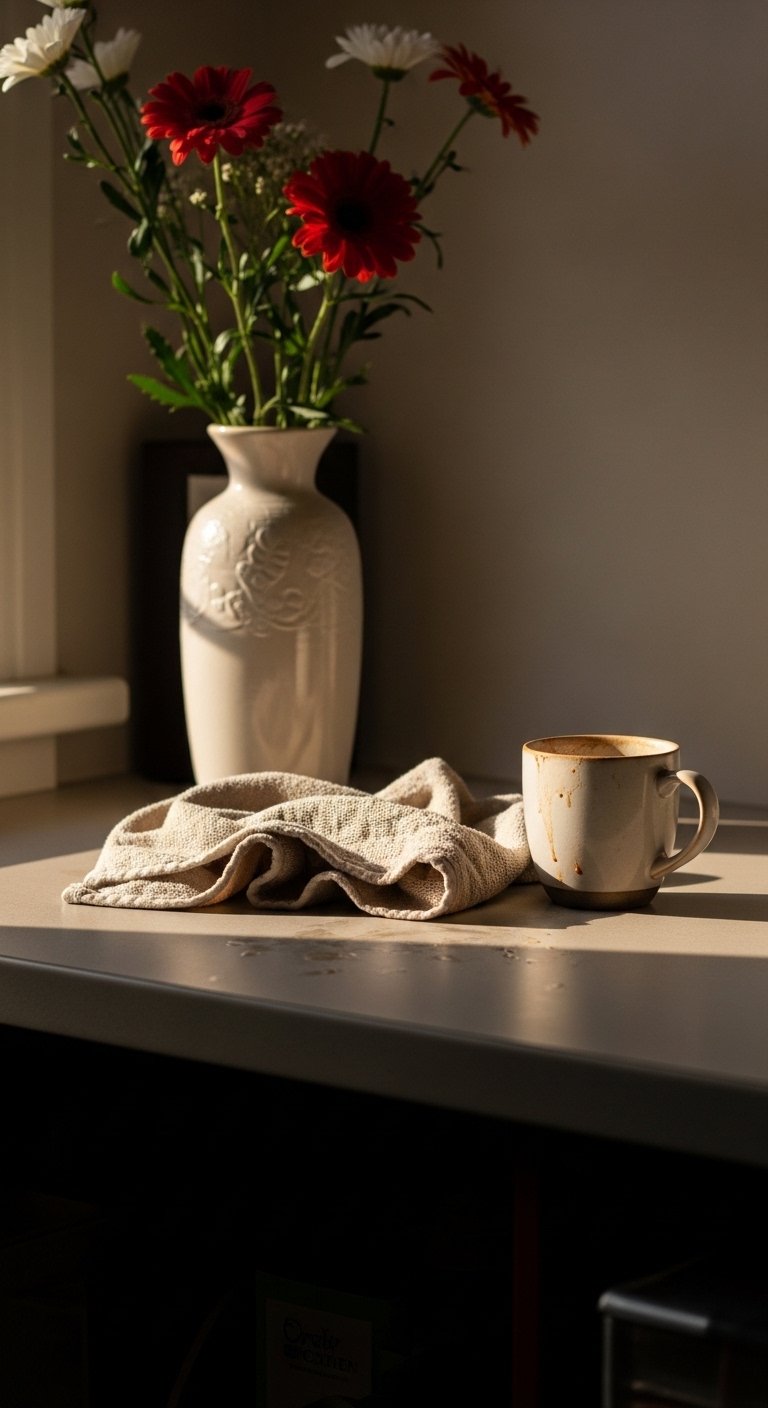
Expect movement. Cups end up in front of your vase. Towels get used. The goal is that the edited vignette survives being touched. If something is constantly moved, it belongs in active storage, not on display.
After a week I usually:
- Move the most-used item forward.
- Replace fragile ceramics with sturdier versions if needed.
- Keep one low-effort swap ready, like a faux plant, for when real plants suffer.
My apartment shows wear, but the overall feel stayed calm. That was the win for me.
Start with One Corner
Pick one counter corner, clear it, and style it with one wooden board, one ceramic vase, and linen towels. Live with it for three days before you change anything. If you want the smallest commitment, try swapping your current dish towels for linen. That single touch changes texture and tone without a big effort.
You will notice small wins quickly. The space calms, and you learn what you actually need on the surface.