
I used to think mirrors were just for checking hair. Then I started moving them around the house and noticed how they change light and mood. I’ve returned a few too many frames and learned what actually makes a room feel bigger without feeling staged.
Here are real ideas I use in my own rooms — the ones that work after living with them, fixing mistakes, and keeping what felt right.
24 Stunning Mirror Decor Ideas That Make Rooms Look Bigger
These 24 ideas are practical, tested, and photo-ready. I include real tips from living with each arrangement, what went wrong for me, and how to avoid the same mistakes. Use them room-by-room or pick a few that fit your style.
1. Lean a tall floor mirror against a blank wall to double vertical space
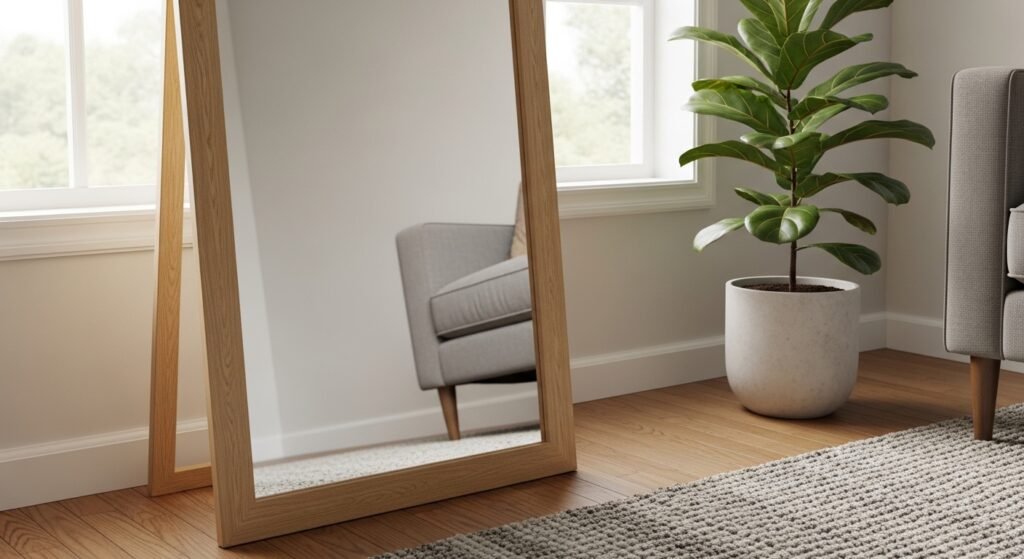
I leaned a 6-foot mirror in my narrow hallway and it made the ceiling feel taller immediately. I used to hang it and felt boxed in; leaning gave a softer scale. The mirror reflects the opposite wall and the window light, so the space reads wider without clutter.
Watch the angle. I tilt mine just enough to catch the window but not the whole room. If you have pets, anchor the base to prevent slips.
What You'll Need for This Look
- Leaning floor mirror (72 inch, wood frame)
- Anti-tip mirror safety straps
- Large textured area rug, neutral
2. Create a mirror gallery wall in a cozy corner
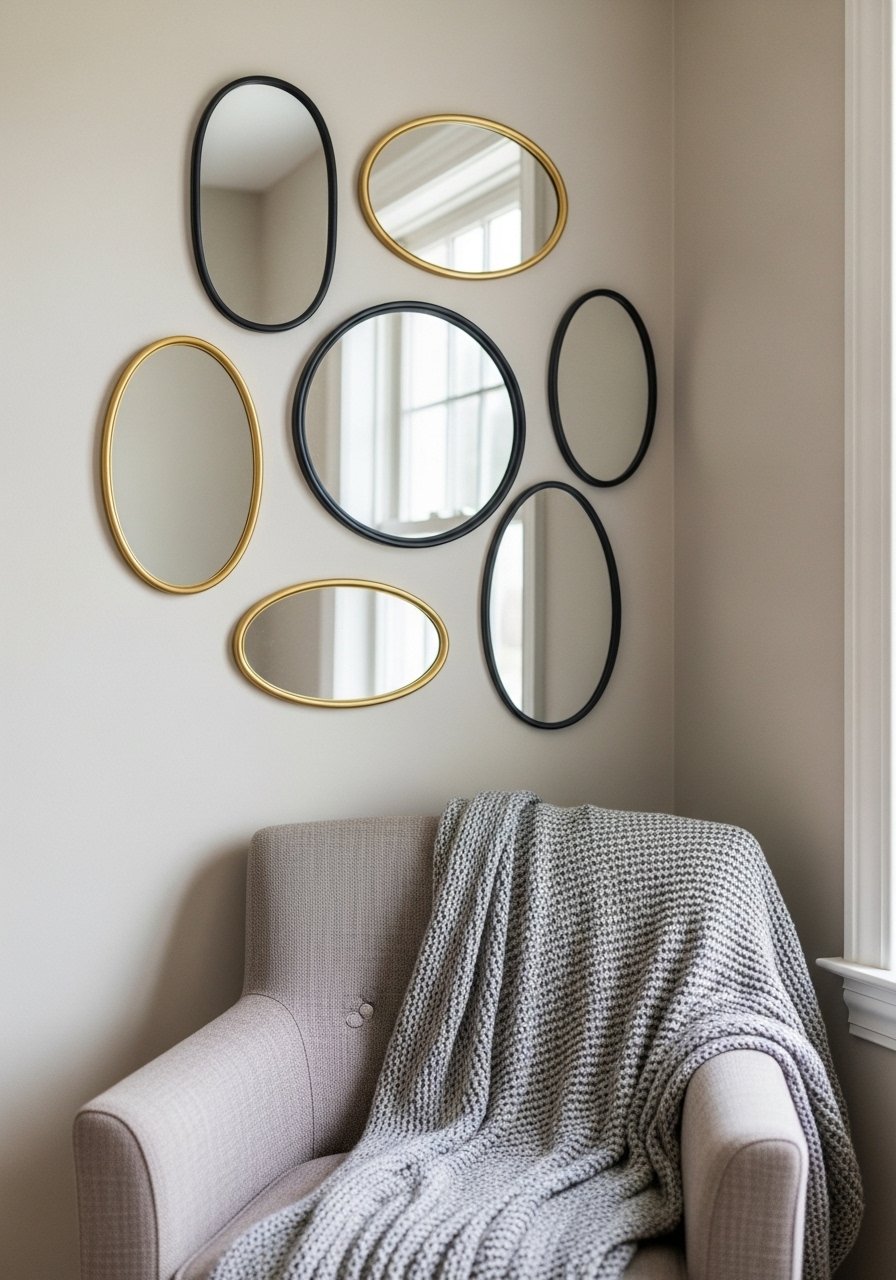
I grouped small mirrors above my reading chair to bounce light and add interest without taking over. Mixing shapes keeps it casual. I arranged them over time, moving pieces after living with the layout for a week.
Start with the largest mirror as an anchor. I prefer odd numbers and varied frames so it never looks too museum-like. Keep the cluster centered on the seating area, not the wall.
What You'll Need for This Look
- Round wall mirror (small, gold frame)
- Oval mirror, black frame (12 inch)
- Command picture hanging strips, large
3. Hang an oversized round mirror above a console to open an entry
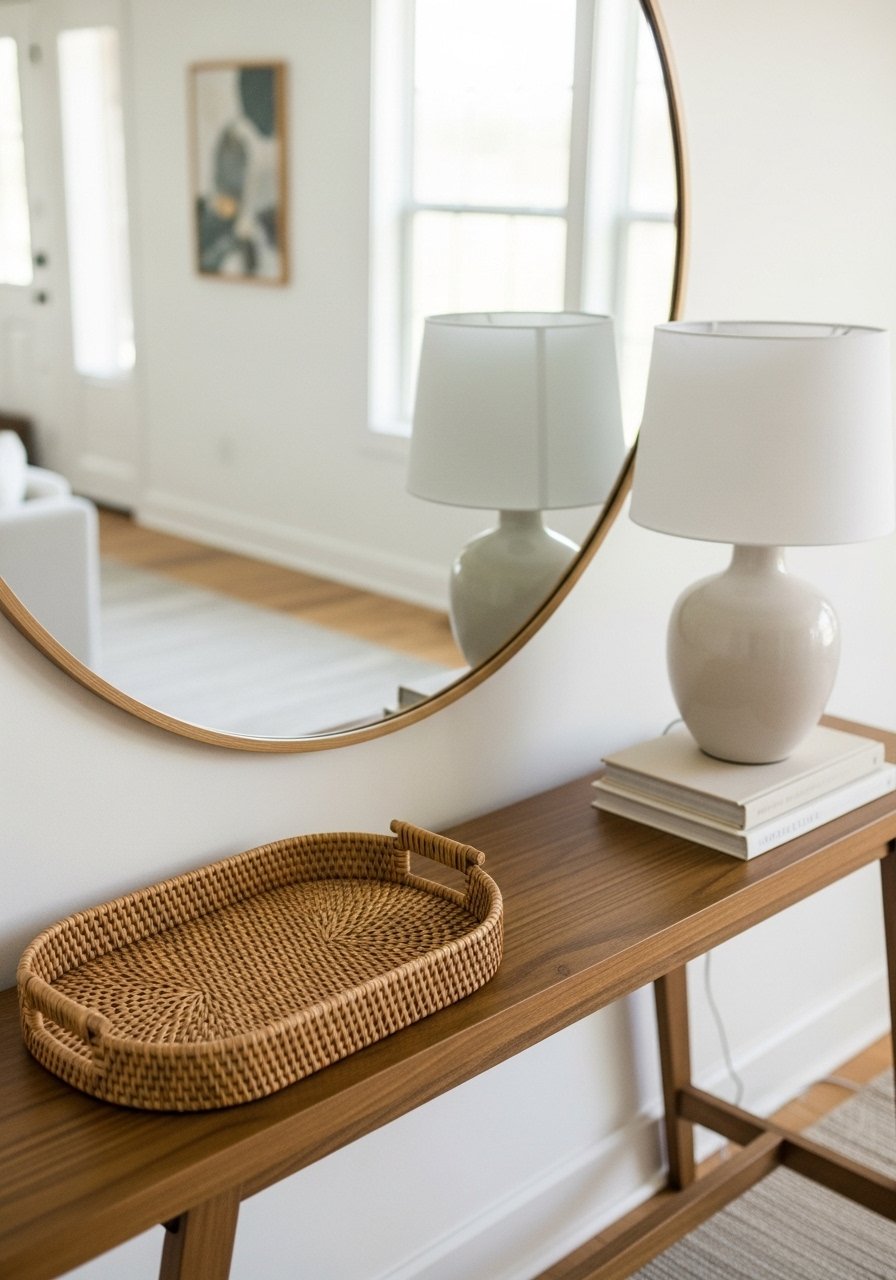
I replaced art above my console with a large round mirror and the entry suddenly felt bright and spacious. My mistake at first was choosing a mirrored frame too ornate for the small foyer; it overwhelmed the space. The round shape softens corners and reflects the front door light.
Keep the mirror centered over the console and at eye level. If your console is narrow, choose a mirror that is wider than the table for balance.
What You'll Need for This Look
4. Replace a cabinet door with mirrored panels in a small bathroom
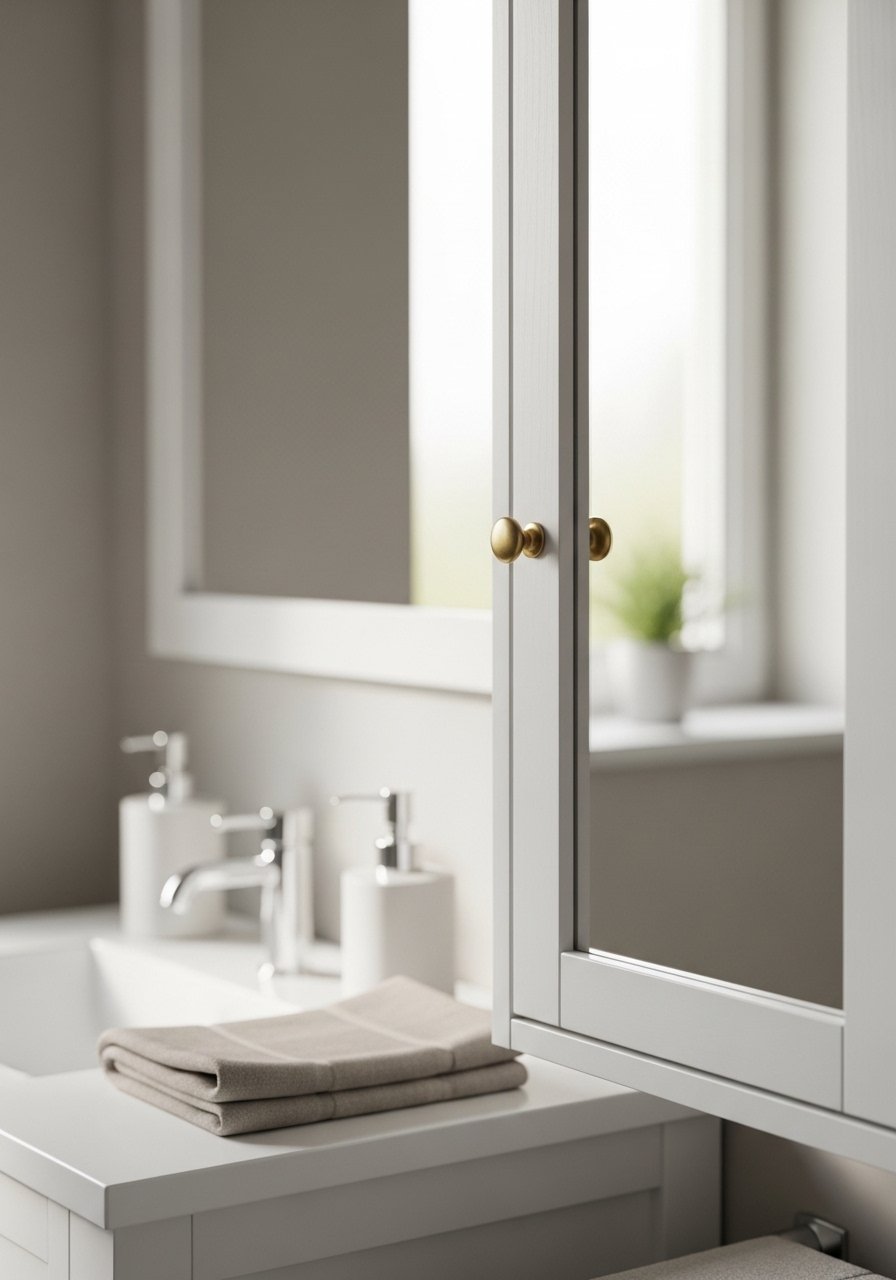
I swapped a plain cabinet door for a mirrored panel and it was the simplest change that made the tiny bathroom feel twice as deep. I originally chose a frame that clashed with the faucet finish — lesson learned. Mirrored surfaces reflect light and cut down the heavy look of cabinetry.
Measure twice. The mirrored panel should be sealed around the edges to avoid moisture issues. I keep a small tray of toiletries so the reflection stays tidy.
What You'll Need for This Look
5. Use a mirror above the mantel to reflect art and law of scale
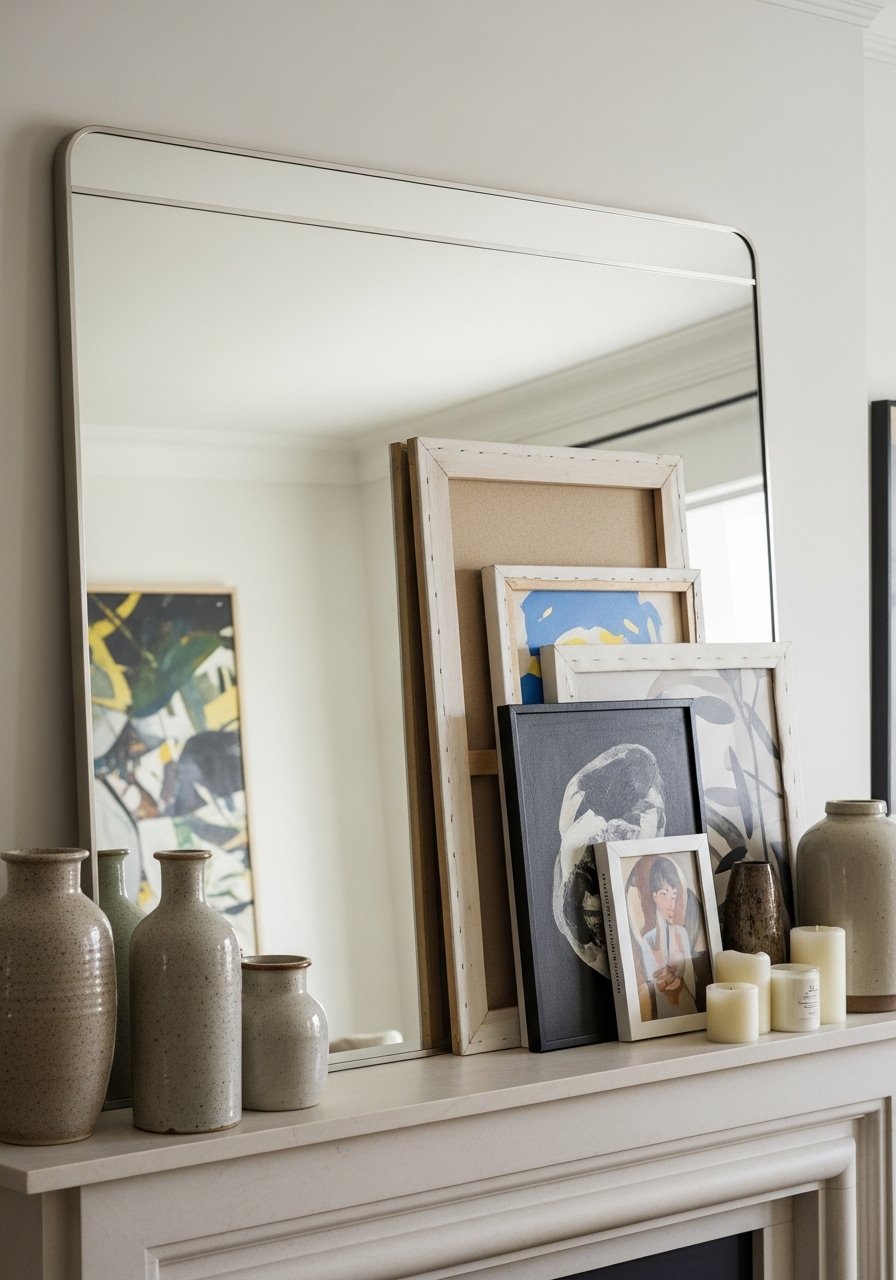
I hung a mirror over the mantel and layered framed art in front of it. At first I chose a mirror that was too small and the mantel looked fussy. The right size makes the fireplace wall feel like one open composition.
I learned to leave breathing room between the mirror and mantle objects. The reflected artwork adds depth, but don’t overcrowd the mantel — I remove pieces seasonally to keep it calm.
What You'll Need for This Look
6. Build a mirrored headboard for a reflective bedroom focal
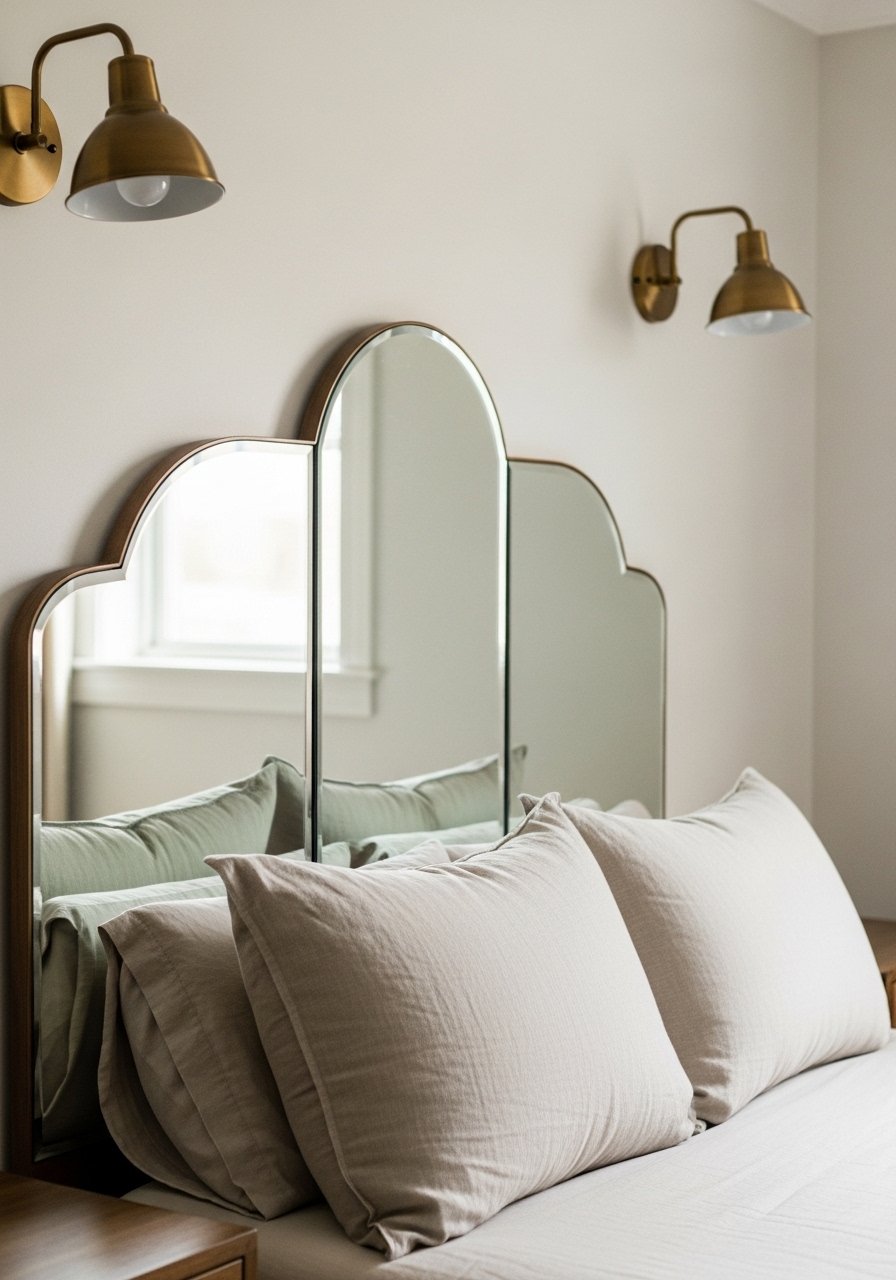
I installed slim mirrored panels as a headboard and the bedroom felt airier. My first attempt used large beveled pieces that made the bed look busier; switching to thin, vertical panels fixed that. The mirror picks up the window and makes the headboard read like negative space.
Anchor mirrors to a sturdy backing and avoid sharp edges near the bed. I like pairing the mirrors with soft textiles to keep the space warm.
What You'll Need for This Look
7. Layer a small mirror on a shelf with books and objects for depth

I started propping a small circular mirror on my bookshelf and it made the shelf feel deeper. My mistake was placing it flush behind objects so the reflection looked cluttered. Pulling the mirror forward gave a glimpse of the room and made the shelf more interesting.
Vary heights and materials around the mirror. I keep one plant nearby to soften the reflection. It’s a tiny change that adds visual breathing room.
What You'll Need for This Look
8. Install mirror tiles behind a narrow console to widen a hallway
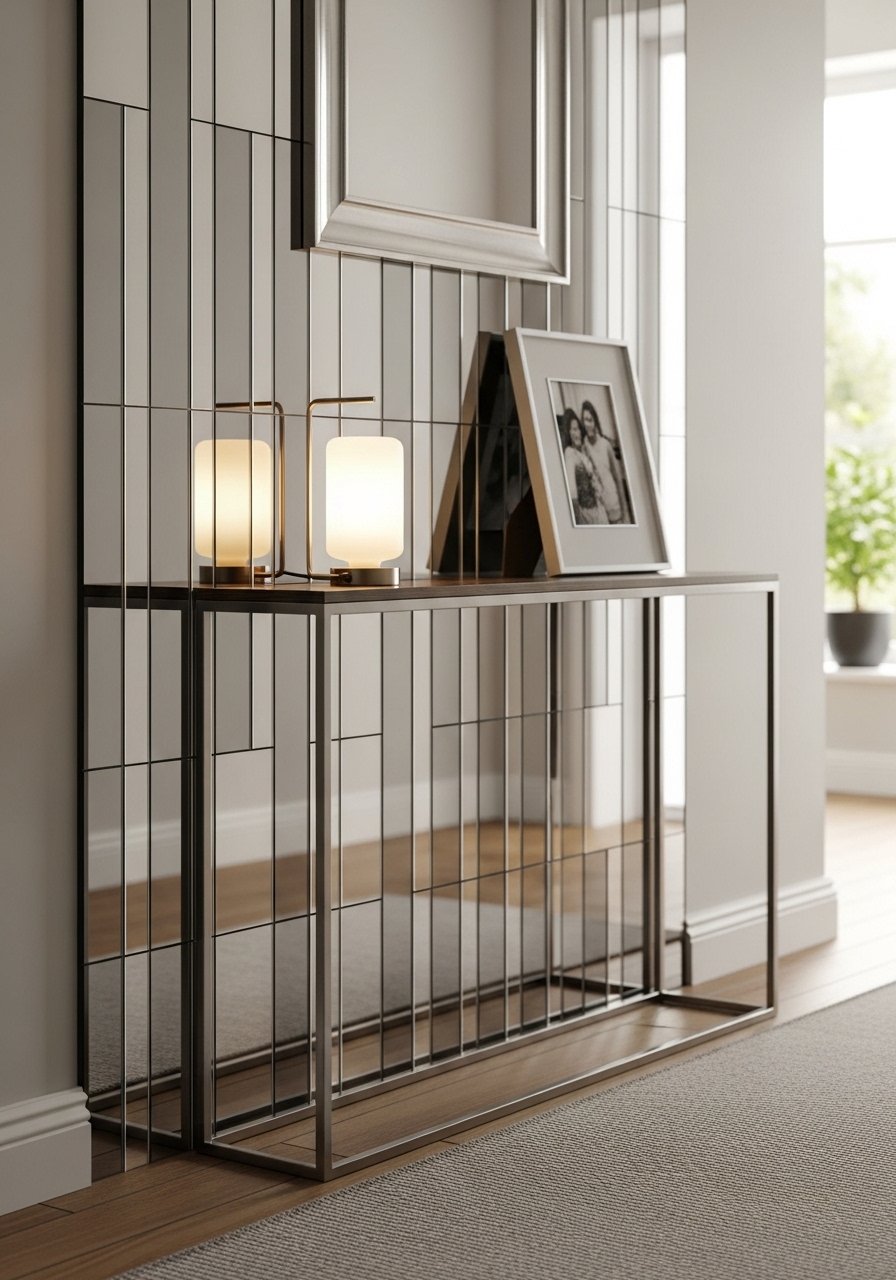
I tiled mirrors behind a slim console in my narrow hallway and the space felt wider at once. I underestimated grout color at first — a darker grout feels busy in tight spaces, so I re-grouted with a light tone. The tiled effect adds texture while reflecting light.
Use small, well-cut tiles and keep the mirror area free of too many hooks or heavy decor. It’s an inexpensive way to make a tight corridor feel open.
What You'll Need for This Look
9. Use mirrored closet doors to expand a small bedroom
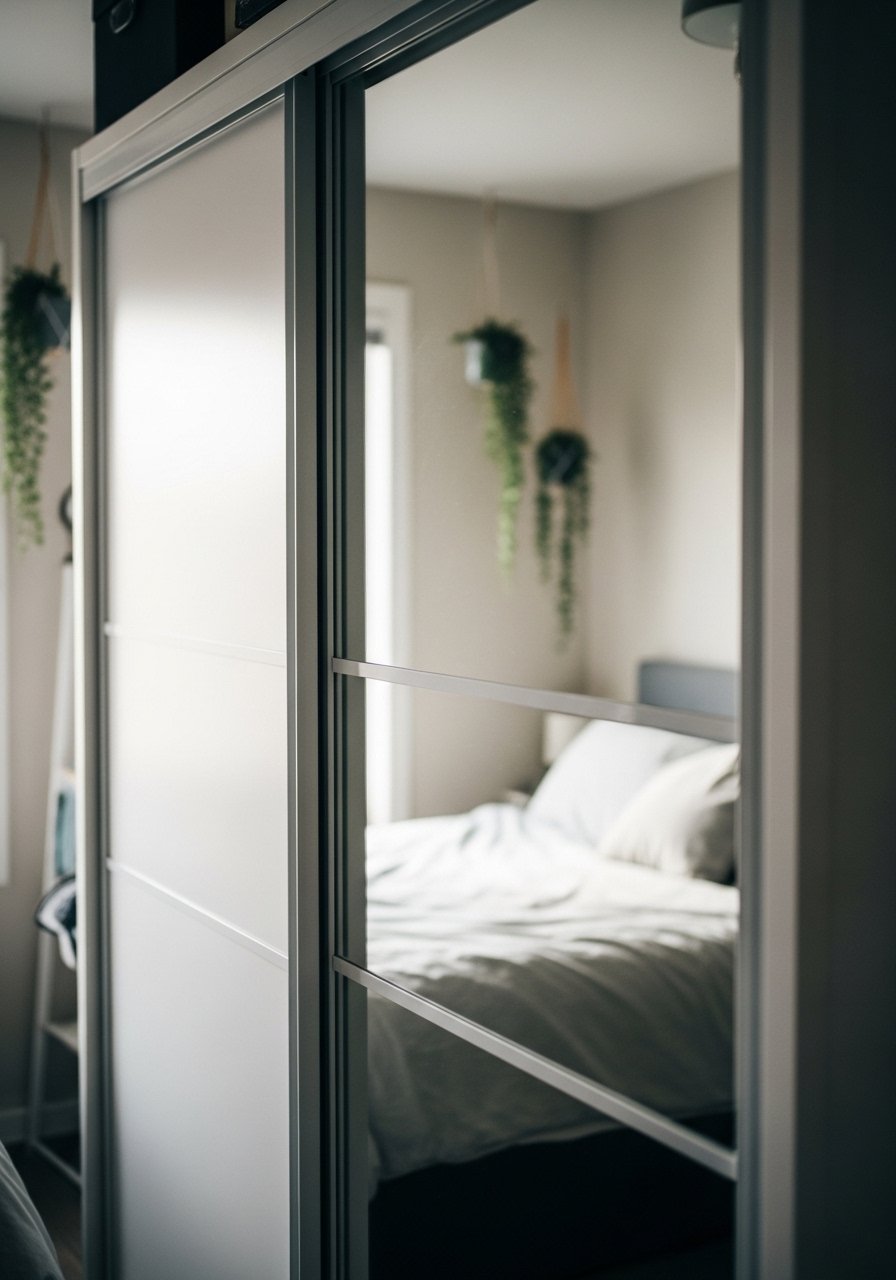
I replaced solid closet doors with mirrored sliding doors and the bedroom felt like it had an extra window. At first I thought full mirrors would show every mess — they do — so I started keeping a daily tidy routine. If you can live with quick clean-ups, the payoff is huge.
Choose sliding mirrors to save floor space. I keep a basket for stray items so the reflection stays calm.
What You'll Need for This Look
10. Create a mirror backsplash in a small kitchen for instant light
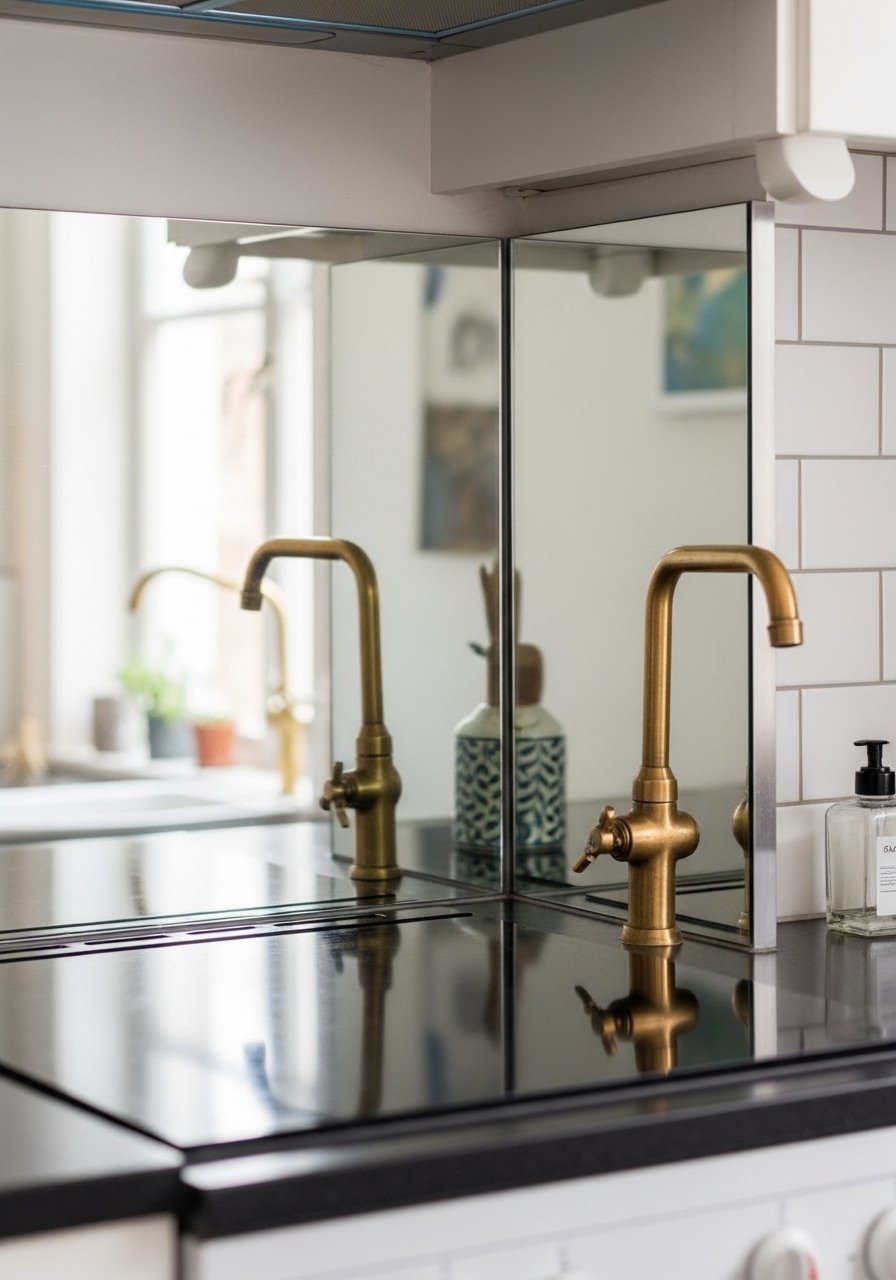
I added a mirrored backsplash behind my stove and the compact kitchen felt brighter. I made the mistake of choosing mirrored sheets without thinking about splatter; now I keep the area sealed and clean it more often. The mirror reflects countertop light and makes the room feel larger.
Stick to small mirrored sections near the sink or stove to avoid constant smudges. I liked how mirrors highlighted my brass faucet without overwhelming the room.
What You'll Need for This Look
11. Lean a mirror against an empty windowless wall to fake a second window
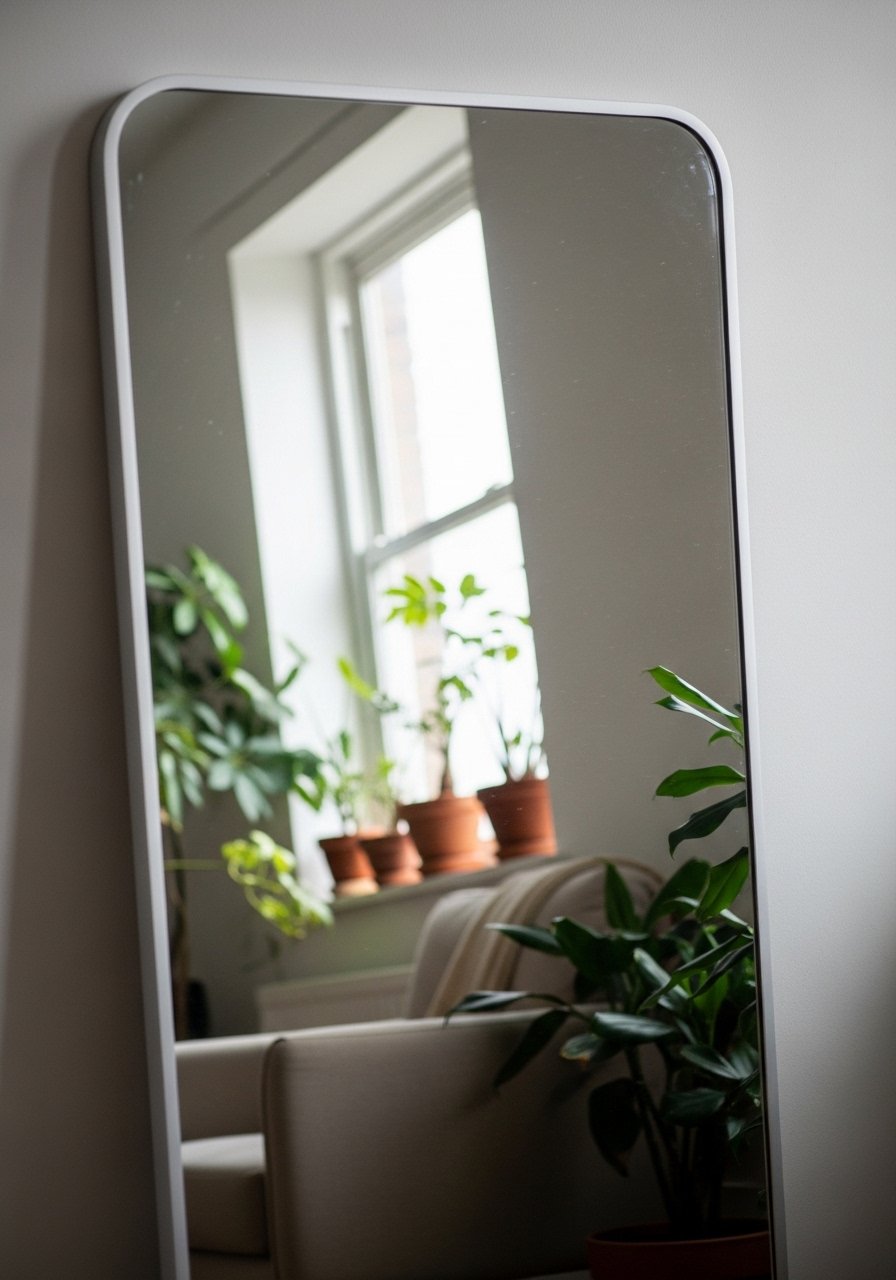
I positioned a tall mirror opposite a real window to create the feeling of another source of light. At first I placed it too close to the wall and it only reflected the ceiling. Pulling it out a few inches made the reflection include the window and the view.
This trick works best with a mirror that reads like a window — mullioned or arched styles help. I add a plant nearby so the reflection feels intentional.
What You'll Need for This Look
12. Frame a small bathroom mirror with a ledge for styling and light
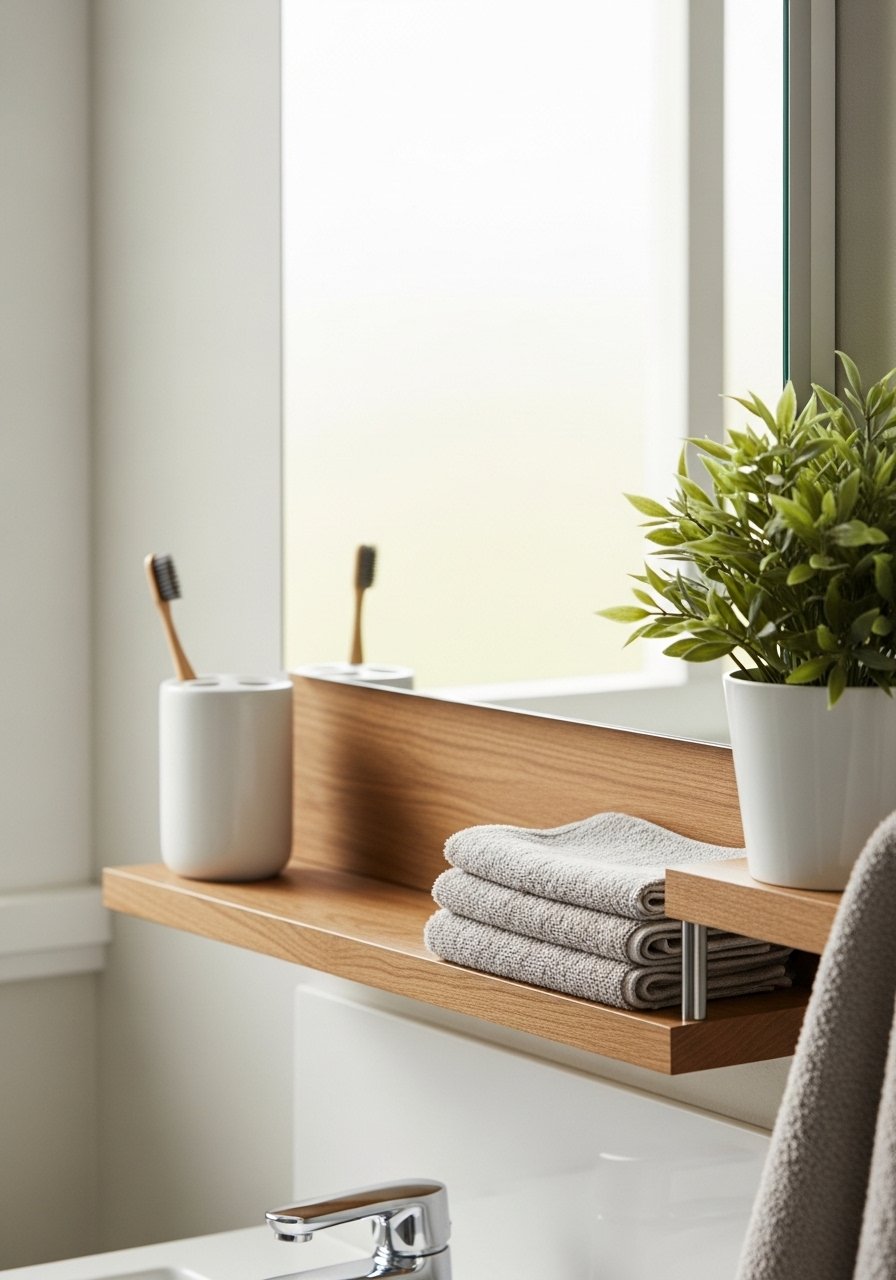
I added a narrow wooden ledge beneath a small bathroom mirror to hold daily items. I once cluttered the ledge and the mirror looked messy — now I limit it to a soap dish and a plant. The mirror multiplies the objects, so keep them simple.
The ledge adds dimension and reflection at eye level. Choose moisture-resistant wood and seal it. I like the way it softens a plain mirror and gives storage without bulk.
What You'll Need for This Look
13. Mix tinted mirrors to add depth without heavy color
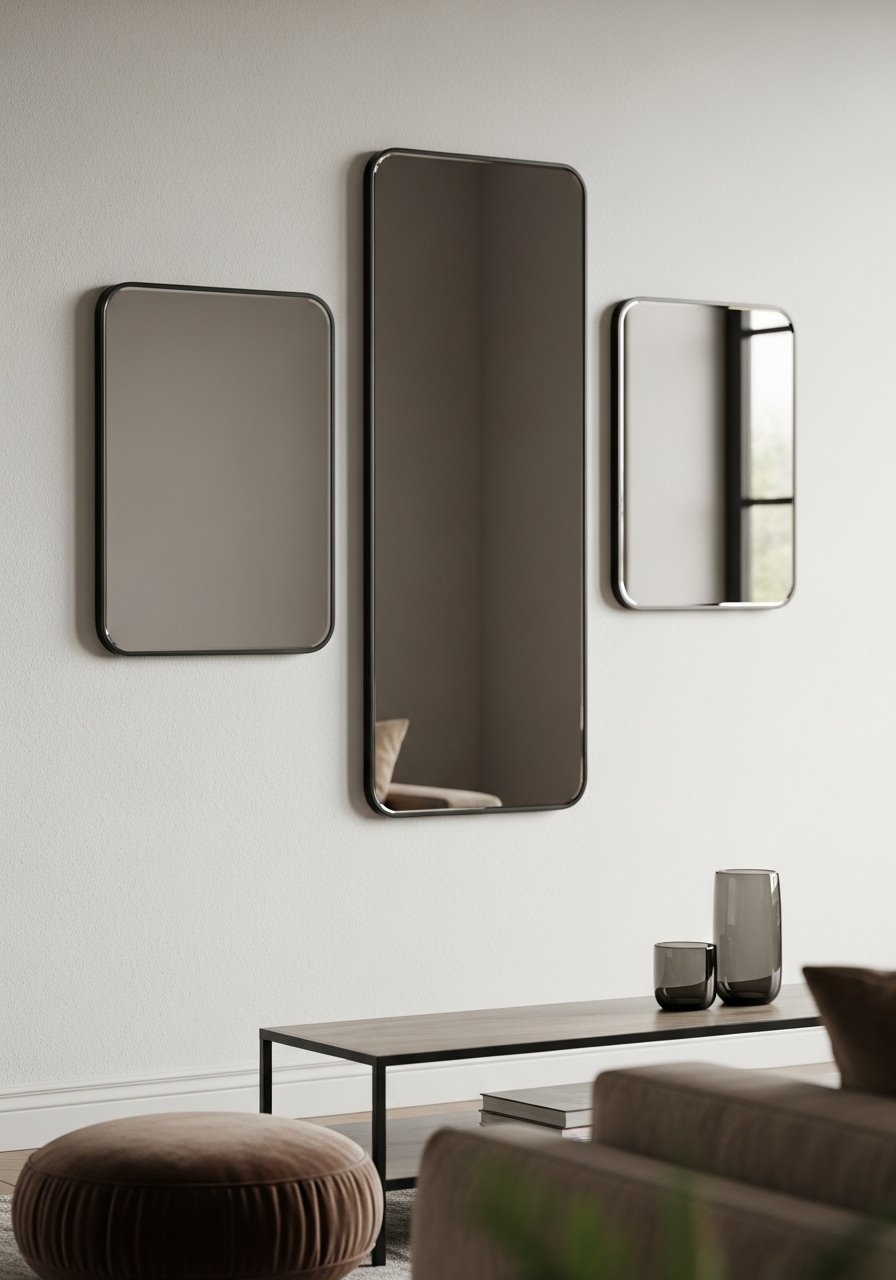
I started using slightly tinted mirrors in the living room to add depth while keeping a calm palette. My early pick was too dark and swallowed the space; switching to lighter smoke tint kept reflections readable. Tinted mirrors add warmth and a subtle layer without obvious color.
Group a few different tints for interest. I use them opposite windows so the light plays through the tint and feels more nuanced.
What You'll Need for This Look
14. Use a sunburst-style mirror to reflect light and keep it airy

I hung a sunburst mirror above the buffet and it reads decorative without feeling heavy. I once tried a mirrored disco-like finish and it felt too loud. The sunburst adds brightness and acts like jewelry for the wall while still reflecting light.
Keep surrounding decor minimal so the mirror reads as one piece. I pair it with simple ceramics and warm wood for an approachable look.
What You'll Need for This Look
15. Place a mirror behind a coffee table vignette for layered reflections
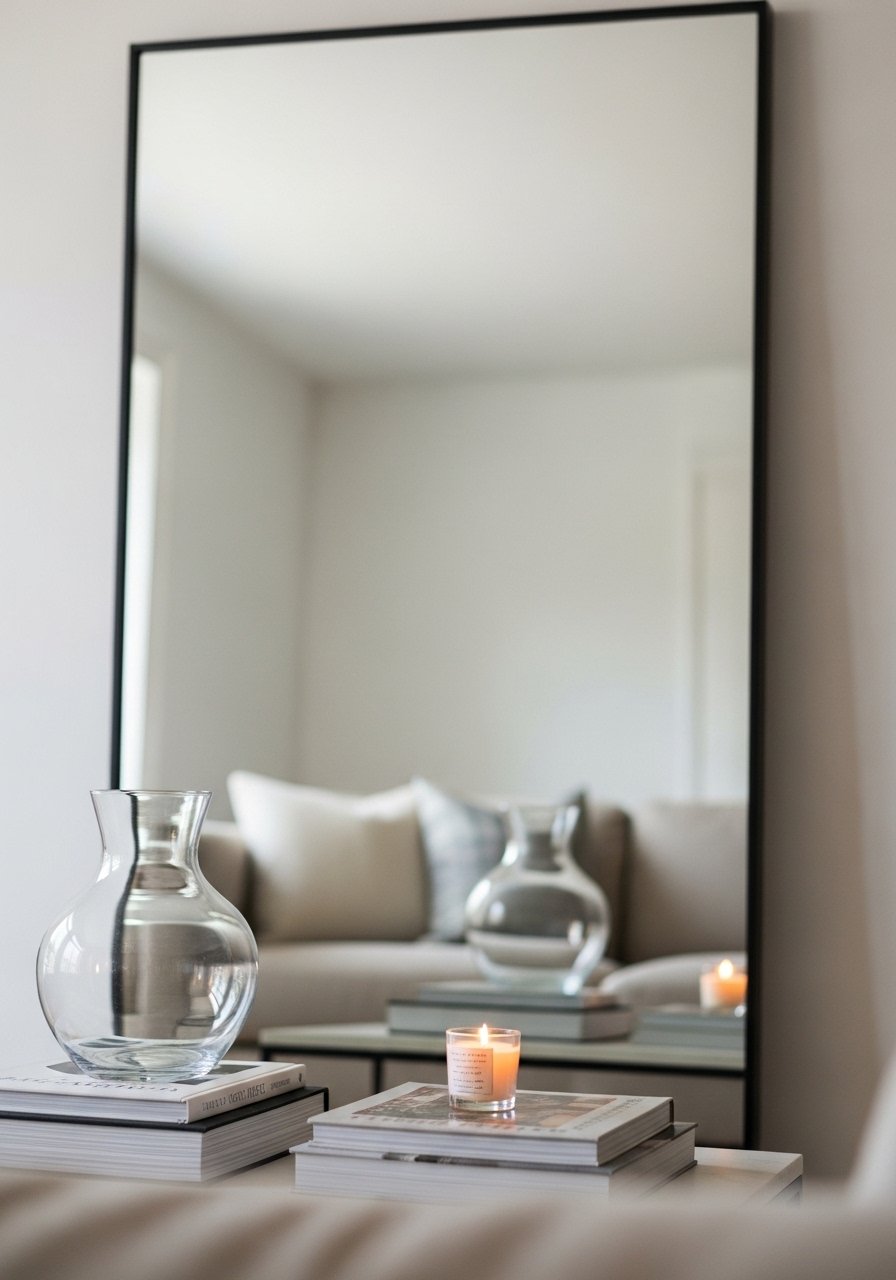
I used a slim mirror behind my coffee table vignette and it created a soft echo of the sofa and rug. My mistake was making the mirror too reflective — fingerprints showed immediately. Now I keep a microfiber nearby and limit the mirrored area to behind decorative objects.
The mirrored layer gives the vignette more depth without adding bulk. Place low and angle slightly upward to capture the sofa lines.
What You'll Need for This Look
16. Combine mirrors and plants to create layers of life and light
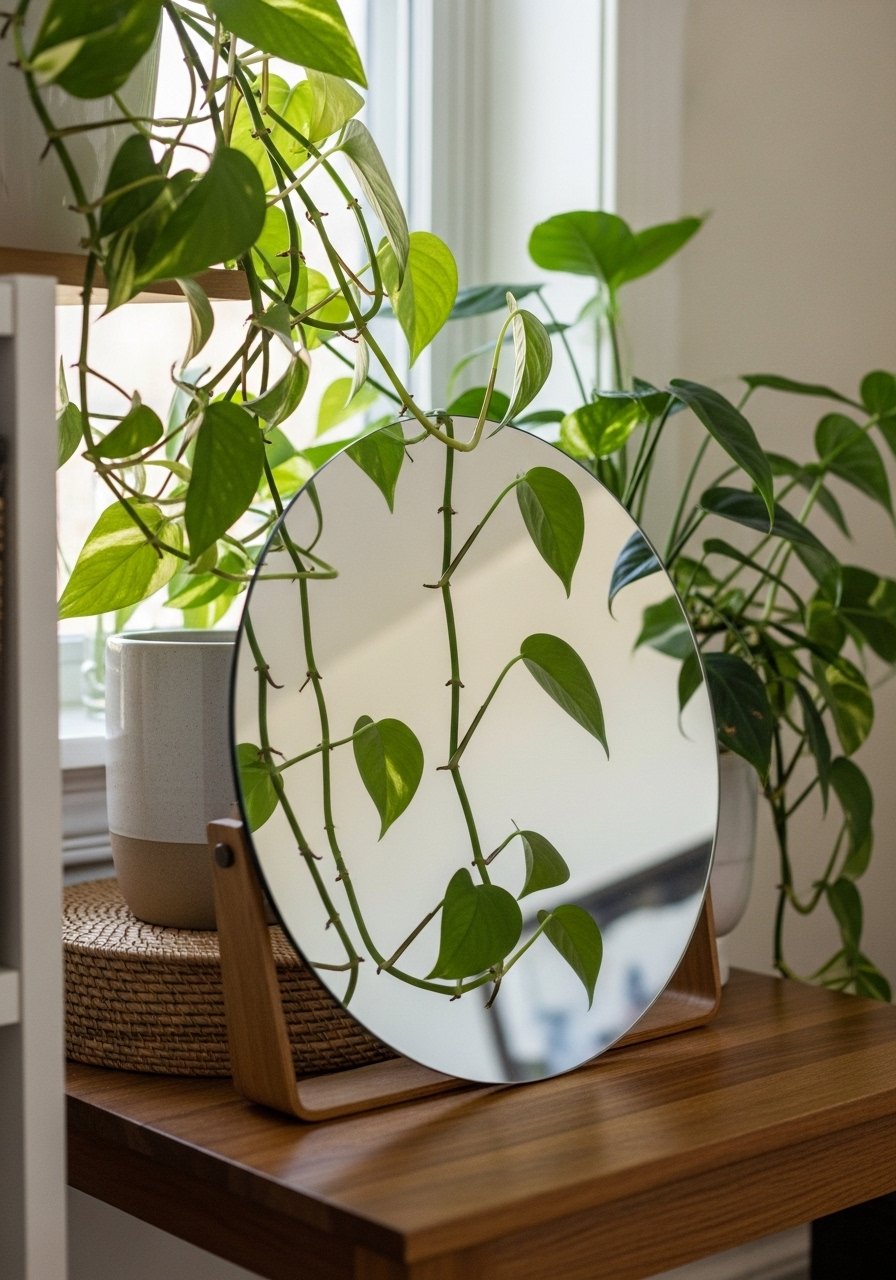
I group mirrors with plants so the reflection doubles the greenery and the room feels deeper and fresher. I once placed a mirror that reflected only a plain wall and it felt flat. When the mirror shows plants, the effect feels intentional and natural.
Rotate plants occasionally so the reflection changes with seasons. I like trailing vines near the mirror edge — they soften the reflection and look effortless.
What You'll Need for This Look
17. Use a mirror as a backsplash behind an open shelf in the kitchen
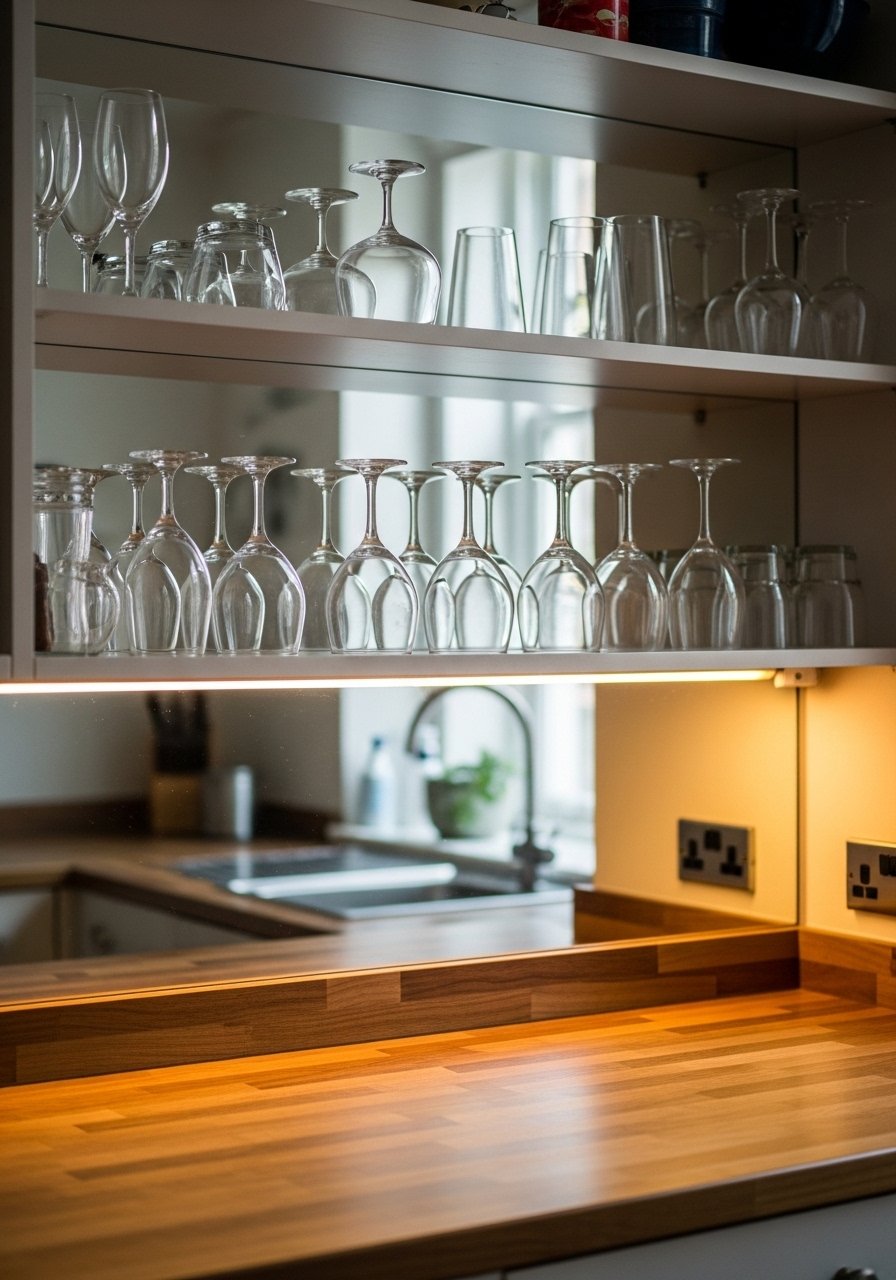
I installed a mirror behind my open kitchen shelf and the glassware reflections made the space feel lighter. I originally used an unsealed mirror and moisture caused marks; resealing fixed it. The mirror highlights dishes and makes the kitchen feel taller.
Keep items on the shelf organized since the mirror shows them twice. I use warm under-shelf lighting so the reflections feel cozy, not harsh.
What You'll Need for This Look
18. Add a small mirror above a desk to make a compact workspace feel larger
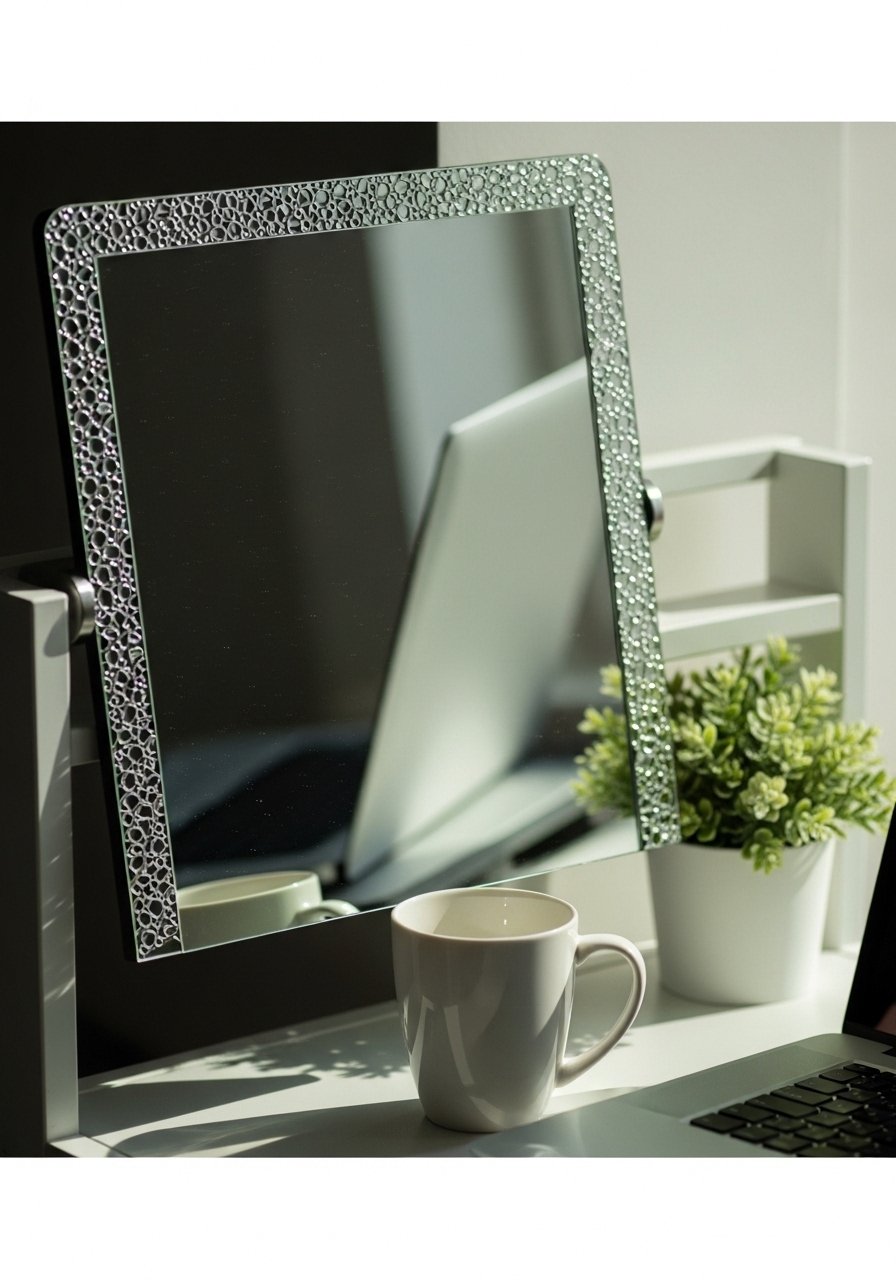
I hung a small mirror above my compact desk to reflect the window light and it stopped the area from feeling claustrophobic. My earlier choice was too ornate and distracted when I worked; a simple frame keeps focus on the task.
Position the mirror so it doesn’t reflect screens directly. A subtle reflection of the room gives the desk breathing room without causing glare.
What You'll Need for This Look
19. Use mirrored side tables to reflect the sofa and make the living room feel larger
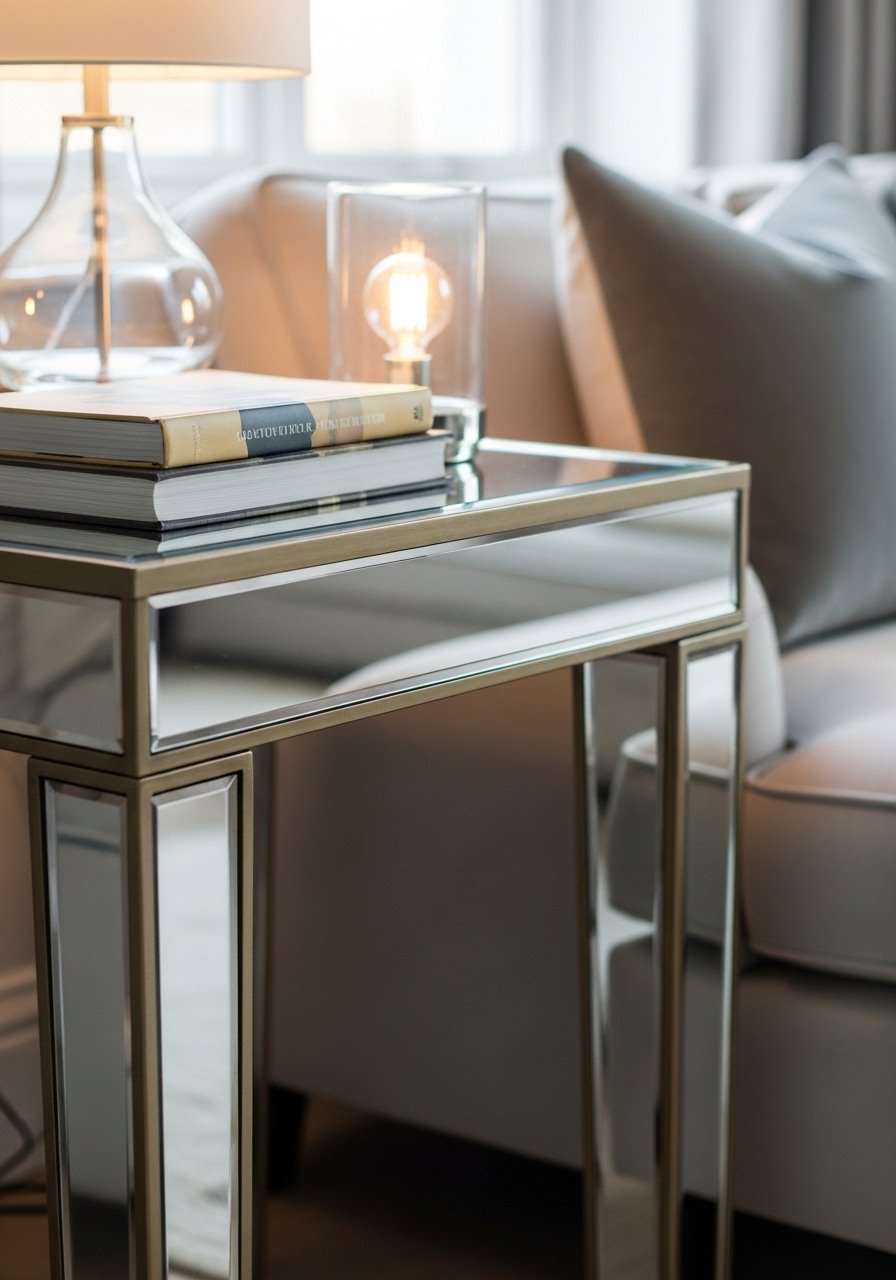
I swapped a solid side table for a mirrored one and the sofa area looked airier. My mistake was placing one mirrored piece next to shiny metal; it read too busy. Pairing it with matte finishes calmed the look.
Mirrored tables reflect floor and lower sofa lines, creating a perception of more square footage. I keep styling minimal on top to avoid reflecting clutter.
What You'll Need for This Look
20. Hang a mirror at the end of a short corridor to create a visual extension
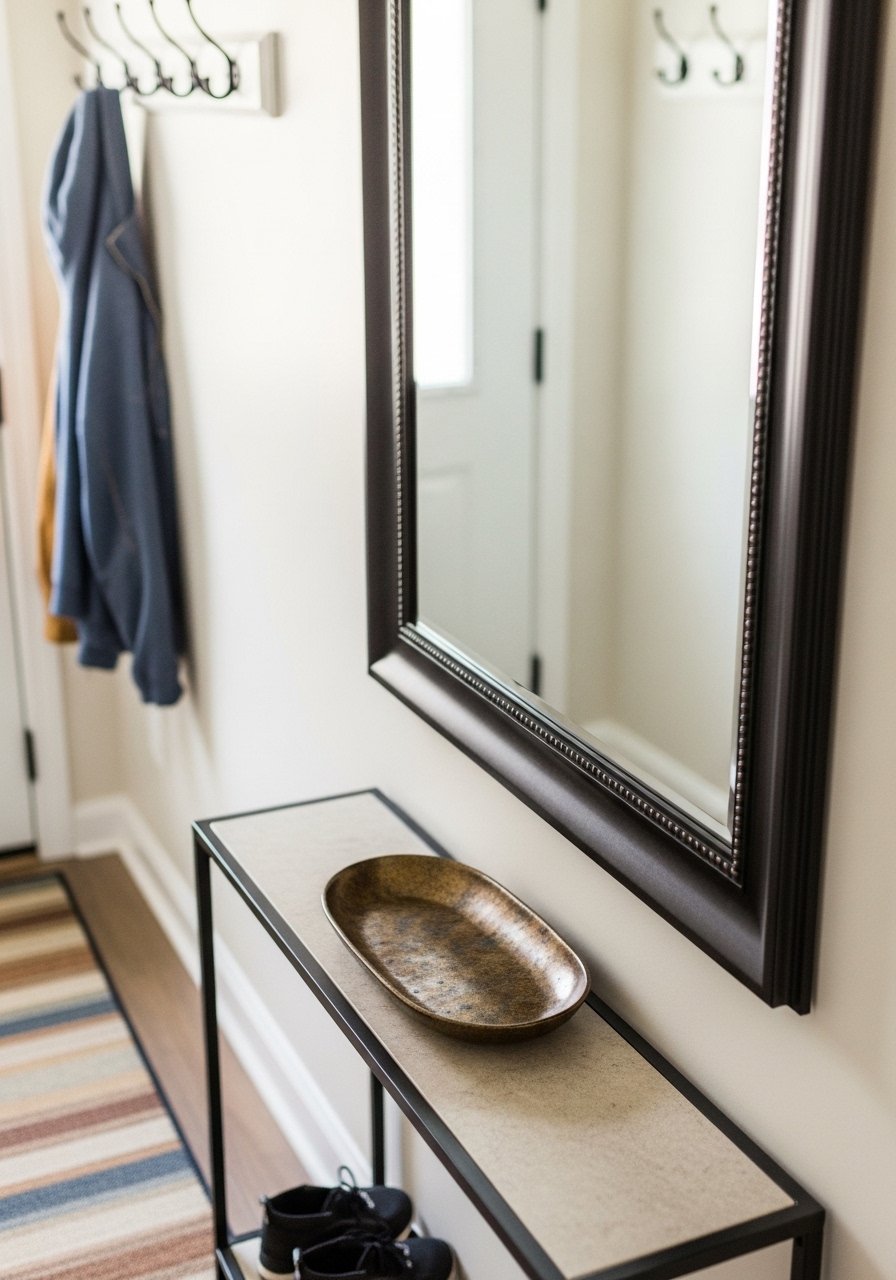
I placed a wall mirror at the end of a cramped corridor and it felt like the space extended. At first the mirror reflected a cluttered closet door and it felt wrong. I fixed it by tidying the closet and adding a simple basket so the reflection looks intentional.
Use a mirror that complements the hallway scale. A vertical piece helps emphasize the corridor’s length.
What You'll Need for This Look
21. Pair a mirror with wall-mounted lighting to amplify glow
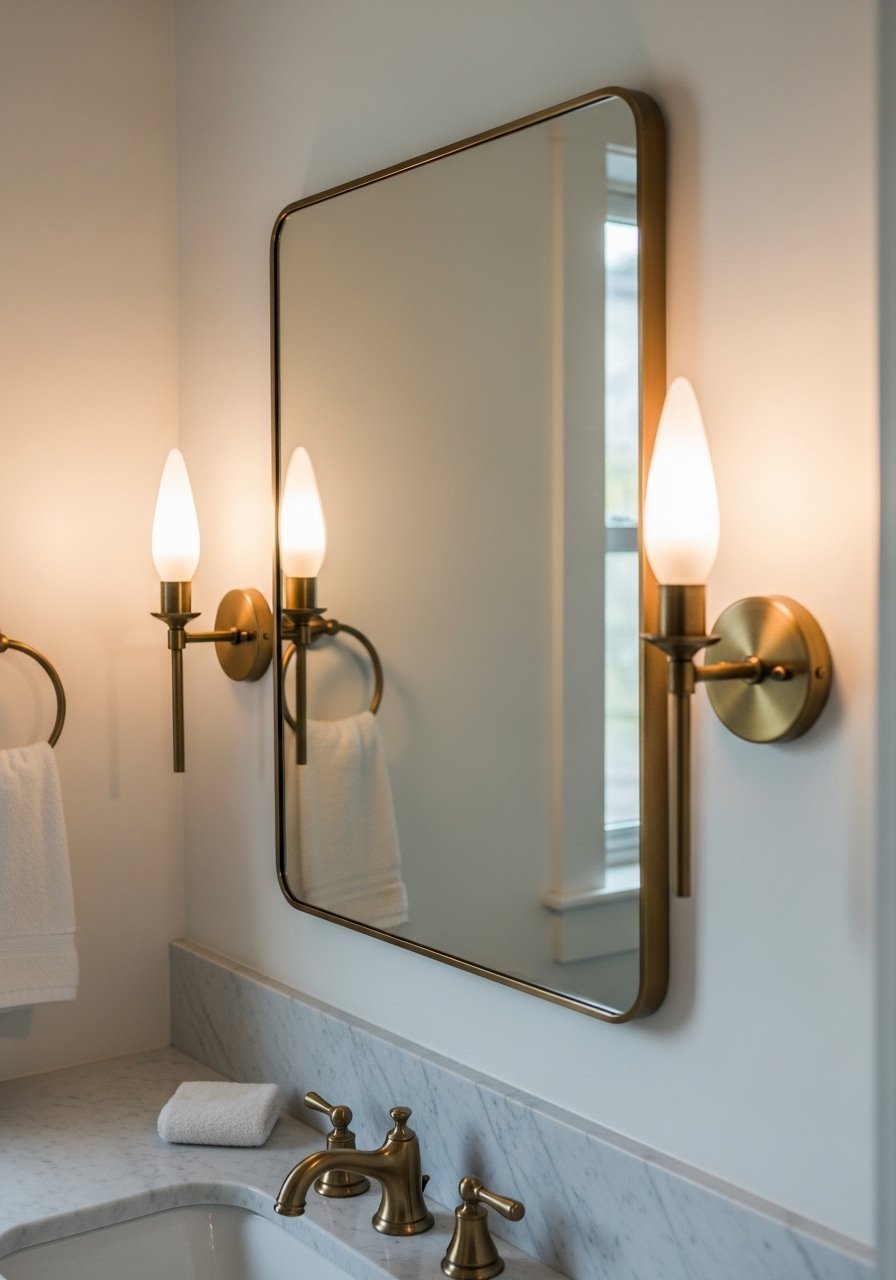
I flanked a bathroom mirror with wall sconces and the light doubled in a soft, flattering way. My early bulbs were too bright and harsh — swapping to warm bulbs fixed the mood. The mirror bounces the sconce light into corners and lifts the whole room.
Choose fixtures that match the mirror scale. I prefer diffused glass shades so the reflection is warm, not glaring.
What You'll Need for This Look
22. Make a mirrored field behind a bar cart to enlarge the drinks area
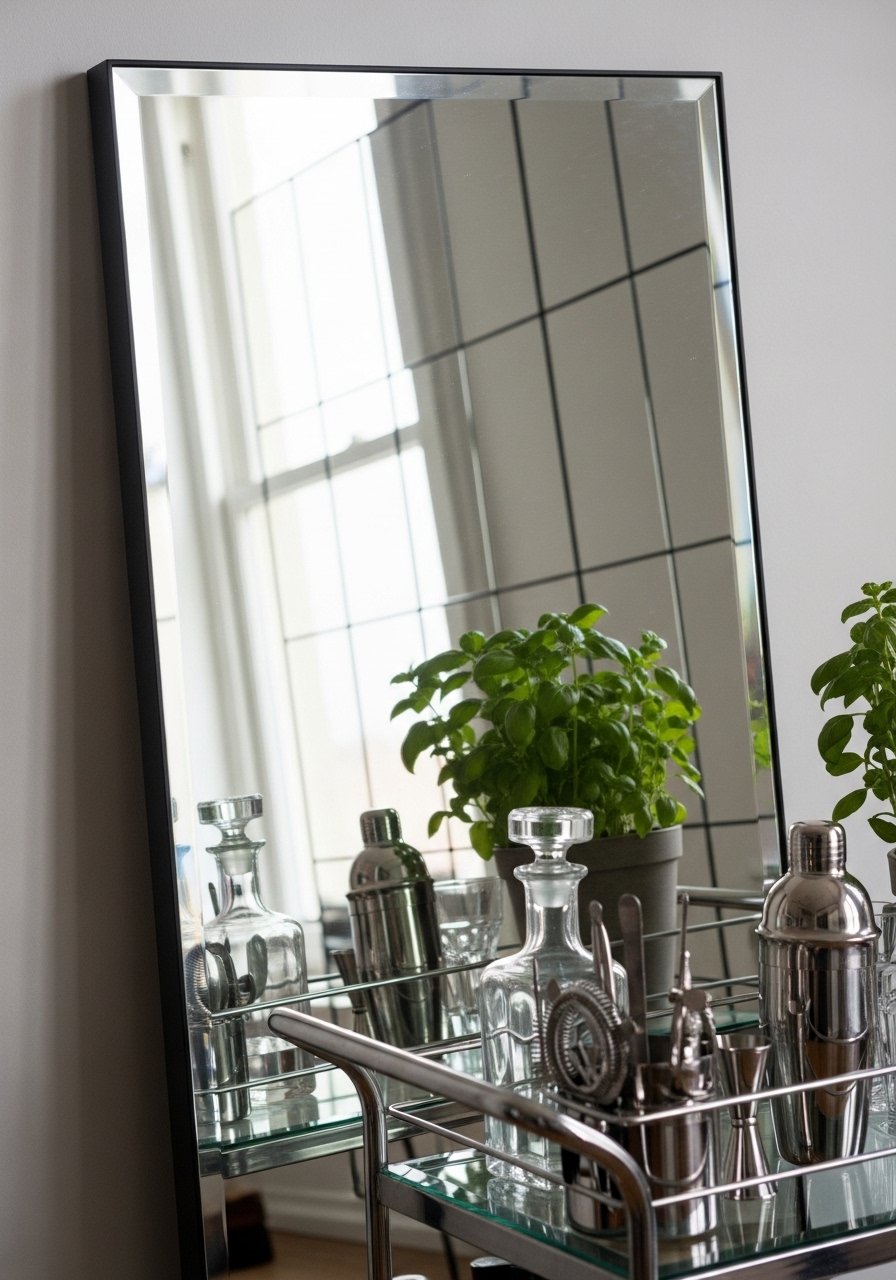
I added a mirror panel behind the bar cart and suddenly the area felt like a dedicated nook. Initially I used a mirror that reflected the TV and it felt chaotic. Repositioning the cart and mirror to reflect art made the setup feel calmer and more purposeful.
A mirror helps the bar area look curated. Keep glassware tidy since reflections multiply everything.
What You'll Need for This Look
23. Create a mirrored wardrobe front in a studio for maximum openness
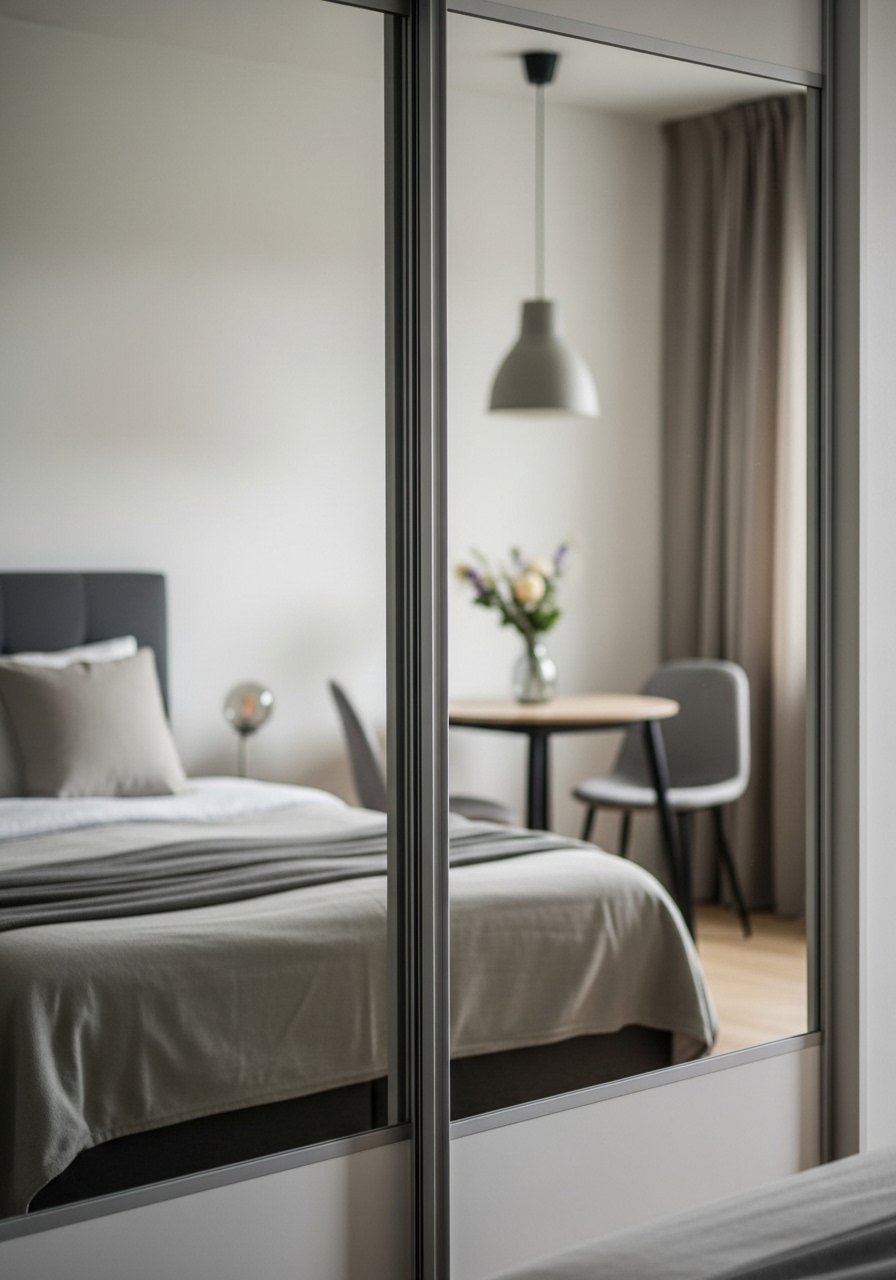
I made mirrored fronts for a freestanding wardrobe in my studio and the whole place read larger. My first panels showed the messy part of the room and it was obvious. I fixed it by arranging the furniture so the mirror reflects the tidier side.
Mirrored wardrobe doors double the visual space and disguise storage when styled thoughtfully. Keep a small routine to hide clutter and the effect stays calm.
What You'll Need for This Look
24. Cut a mirror into panels and stagger them for a modern rhythm
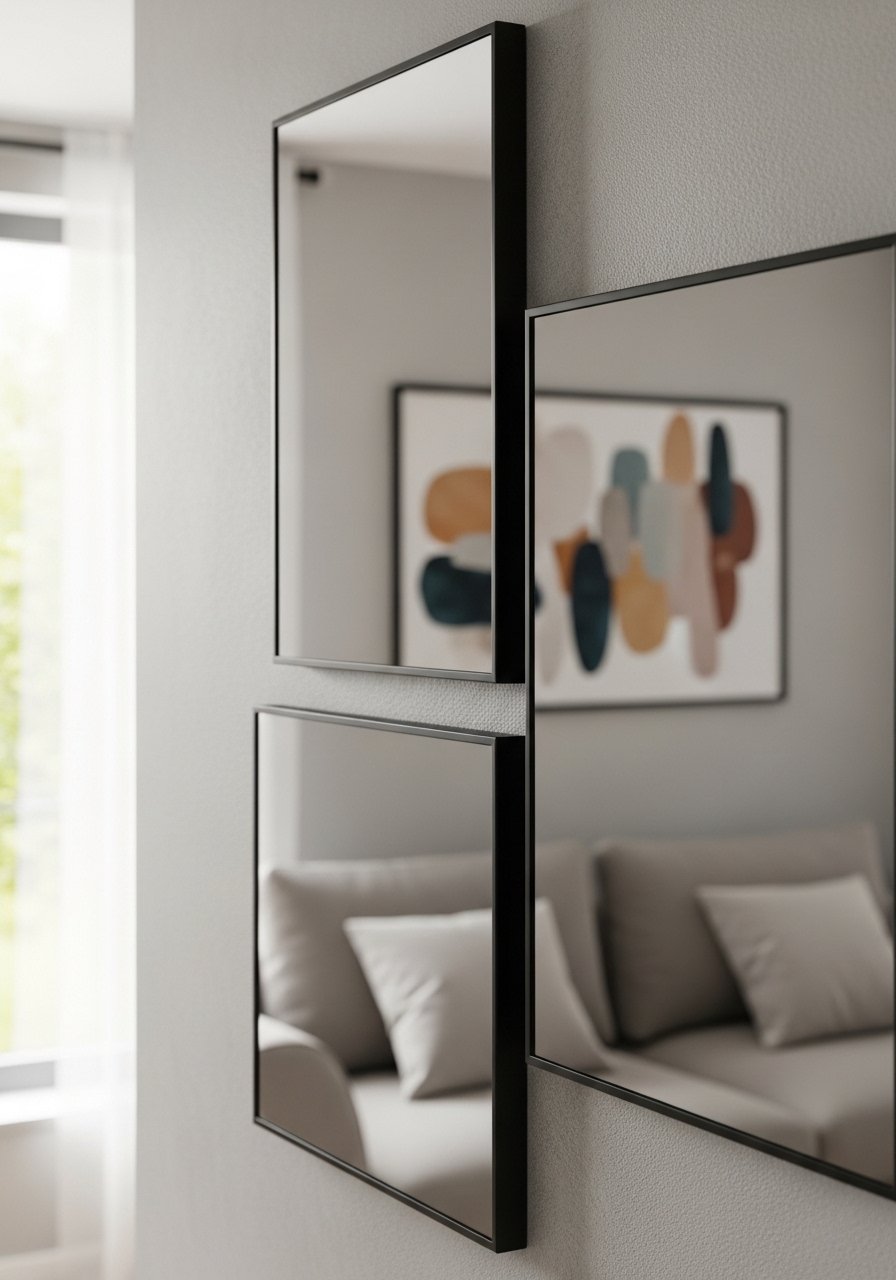
I had mirrors cut into three staggered panels and mounted them with a small gap to create rhythm on a plain wall. My first layout was perfectly even and felt static. The staggered placement adds movement and makes the wall feel longer.
This approach feels modern but lived-in. Measure carefully and use spacers so the gaps are consistent. It adds depth without too much shine.
What You'll Need for This Look
Final Thoughts
Mirrors are one of the easiest, most forgiving ways I used to make rooms feel larger. You don’t need to change everything at once.
Pick one idea that fits your room, try it, and live with it for a week. Small edits make the biggest difference, and you’ll know what to keep.