
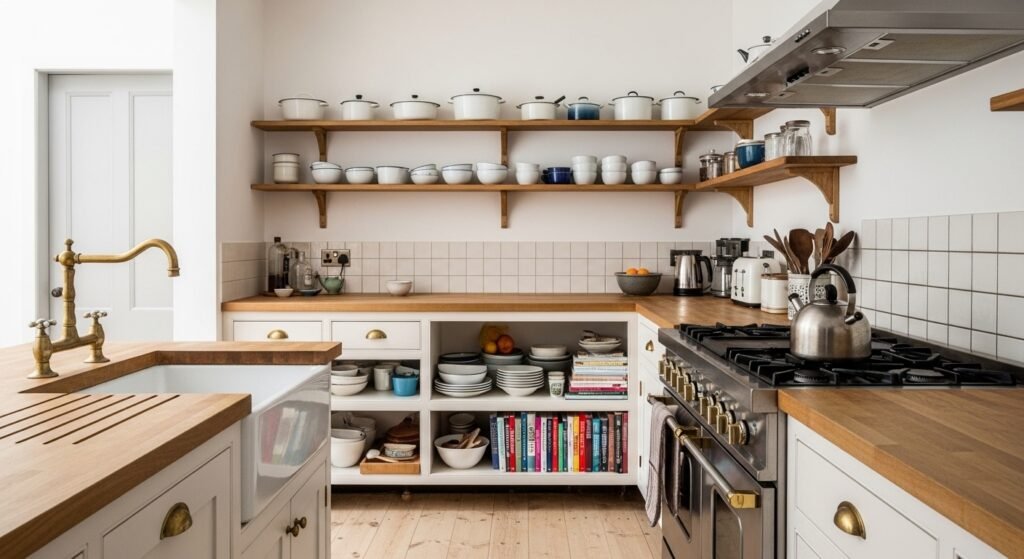
I used to walk into our kitchen and feel the air go thin. It looked clean, but cold. Empty corners and too-modern finishes made it feel temporary.
Vintage style fixed that. It wasn’t about matching an era. It was about warmth, weighed details, and small, lived-in layers that make a kitchen feel like it’s been loved for years.
How to Decorate a Kitchen With Vintage Style
This shows exactly how to get a warm, lived-in kitchen without gutting anything. You’ll learn how to pick a calm base, add hardware and lighting with personality, and stage surfaces so the room reads like it’s been collected over time. It’s practical, small-step, and very doable.
What You'll Need
- Vintage-style brass cup pulls, 10-pack (~$20–45)
- Antique-look pendant light in aged brass, 12"–14" (~$70–150)
- Large end-grain butcher block cutting board, 20×15" (~$40–120)
- Enamel cookware set, assorted colors (2–4 pieces) (~$30–100)
- Patterned linoleum runner, 2×6 ft (~$40–120)
- Ceramic canister set, 3-piece, cream (~$30–70)
- Wooden cookbook stand (~$15–40)
- Framed vintage botanical prints, set of 2, 8×10" (~$20–60)
Step 1: Start with a calm base of warm whites and wood
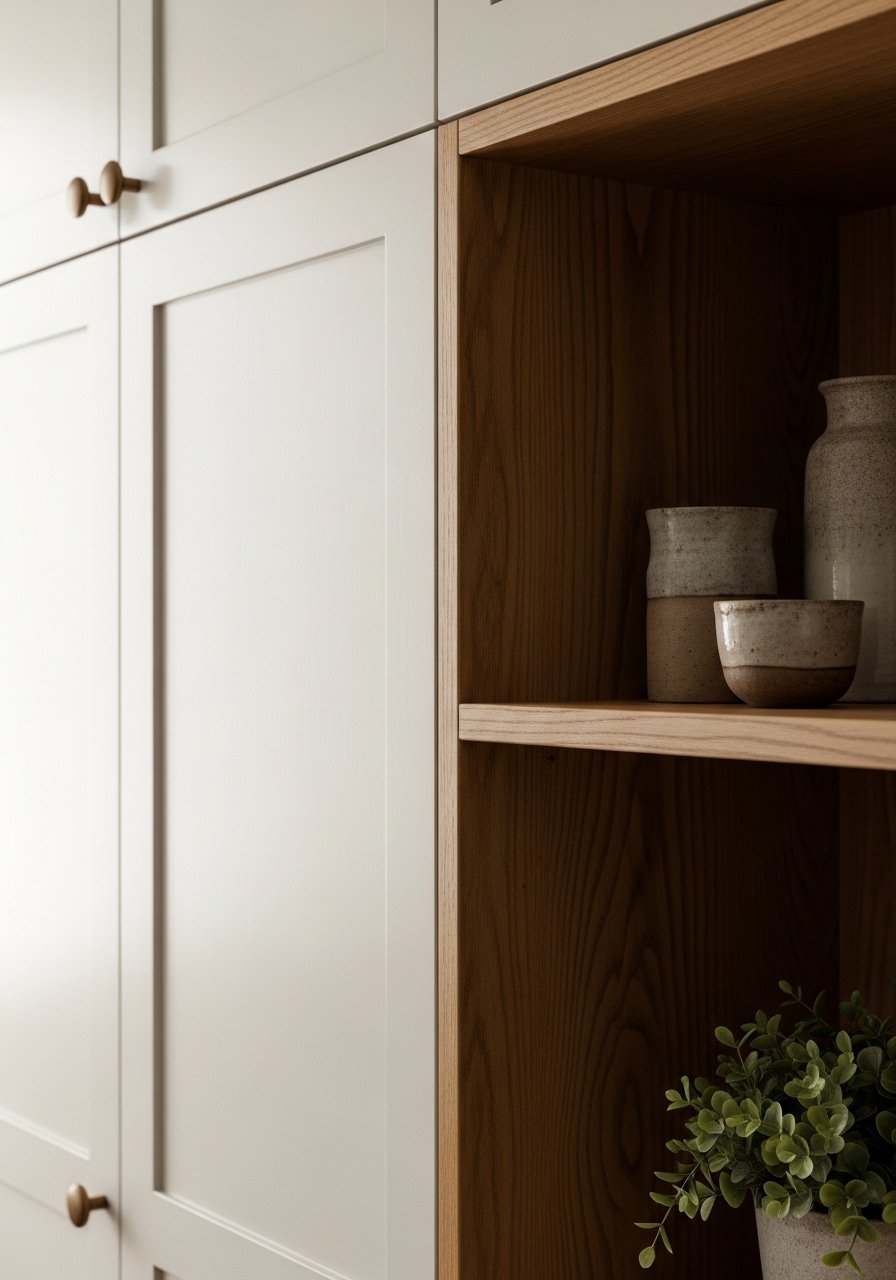
I begin by choosing a base that reads vintage even when modern pieces are present. Warm white paint and a strip of warm wood—think open shelves or the face of a lower cabinet—makes everything feel older and softer. Visually, the room goes from sharp to lived-in.
People miss how much a small band of wood changes the room’s mood. One mistake is over-darkening; too much distress reads staged. Keep the wood real and the white warm.
Step 2: Swap hardware and add a brass pendant
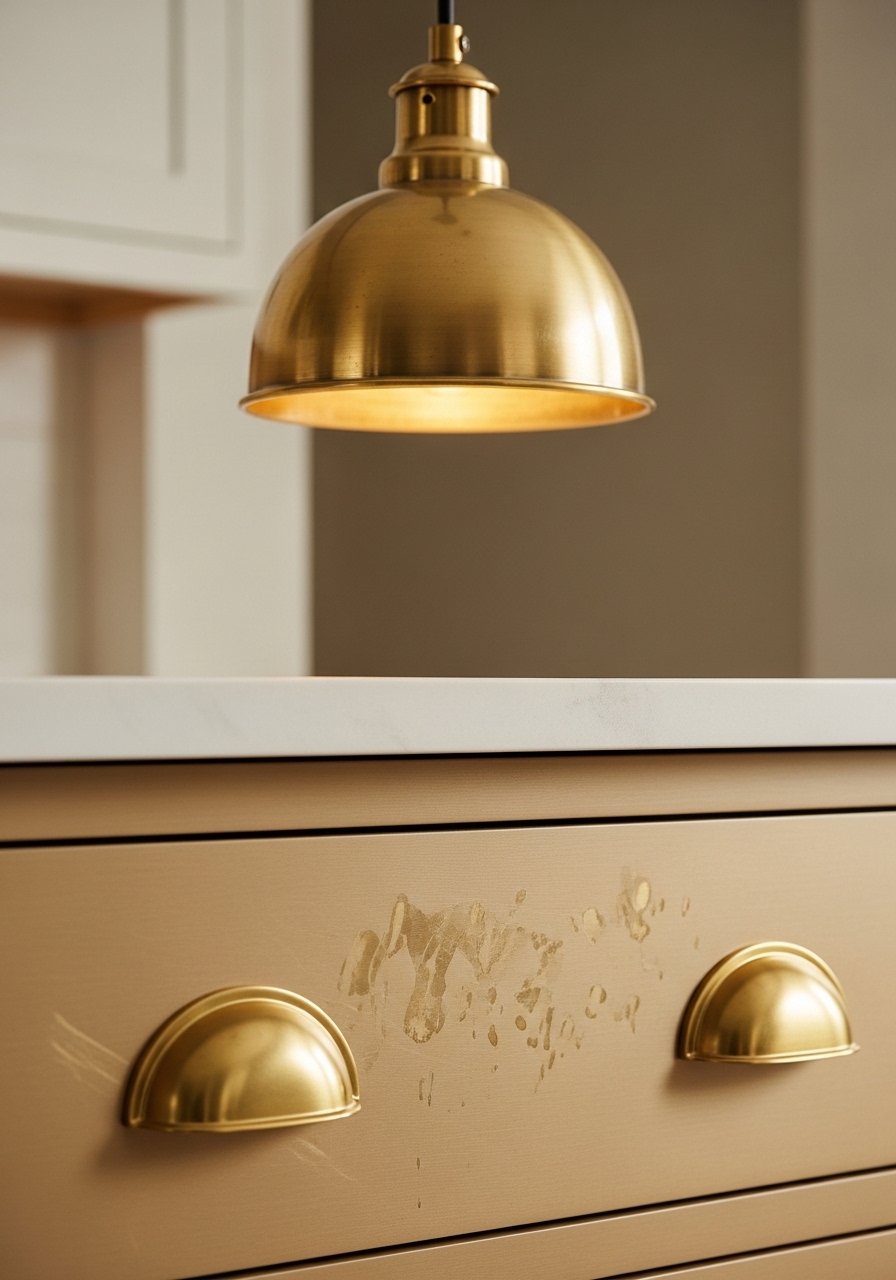
Changing the hardware is an instant character trick. I replace sleek pulls with brass cup pulls and drop in an aged-brass pendant over the island. The result is weight and age without clutter. Light and hardware anchor the room visually.
A lot of people only change knobs, not lighting. Don’t forget the top-down effect a pendant gives. Avoid mixing too many metals at once; pick brass as your primary accent and let other finishes be quiet.
Step 3: Curate open shelves and a cookbook nook
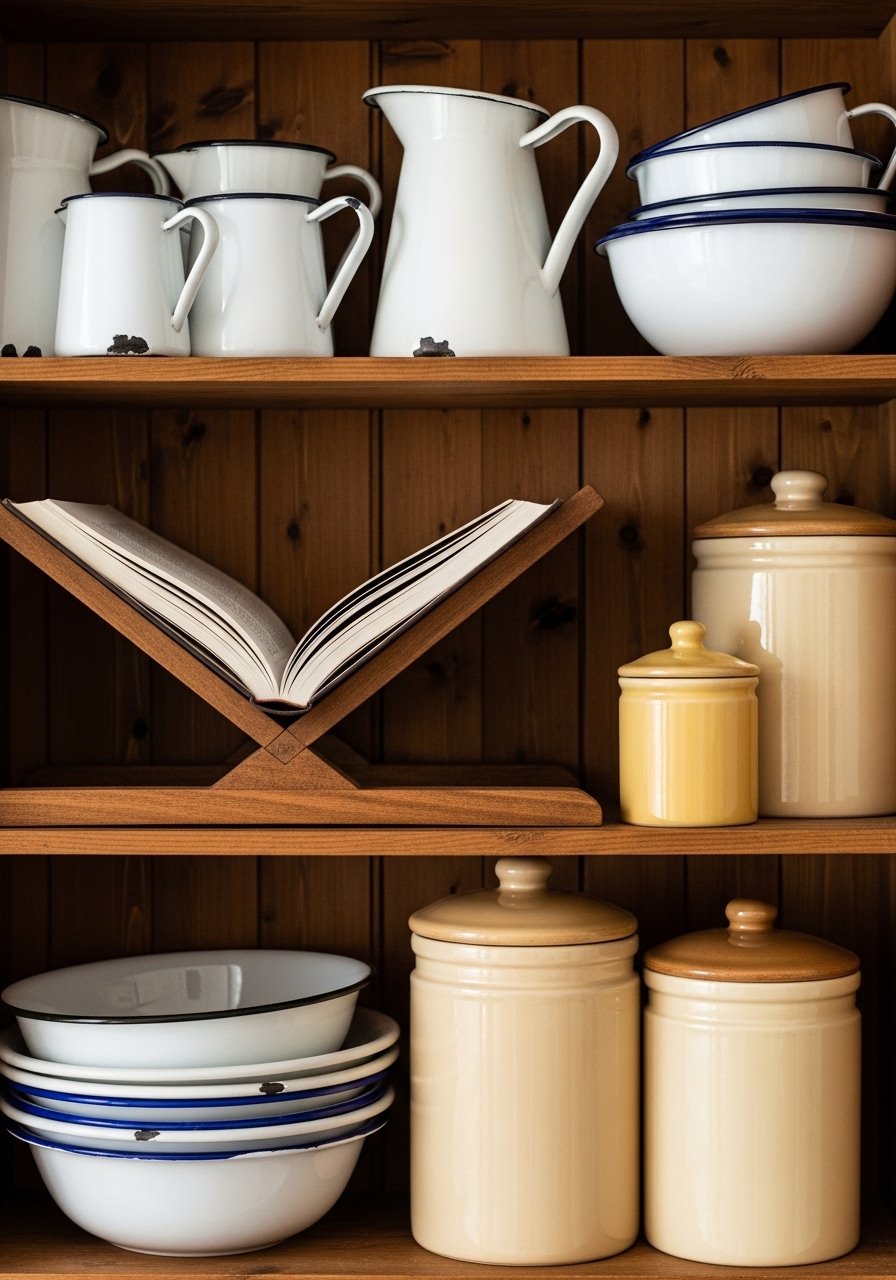
Open shelving reads vintage instantly if you style it like a collection. I keep a wooden cookbook stand with a few well-worn cookbooks, group enamelware in one area, and place ceramic canisters nearby. It looks used, not staged.
People tend to spread items evenly. Instead, cluster like items in odd numbers. The common mistake is cluttering every shelf—leave breathing room so each piece reads intentional.
Step 4: Anchor the floor with a patterned runner
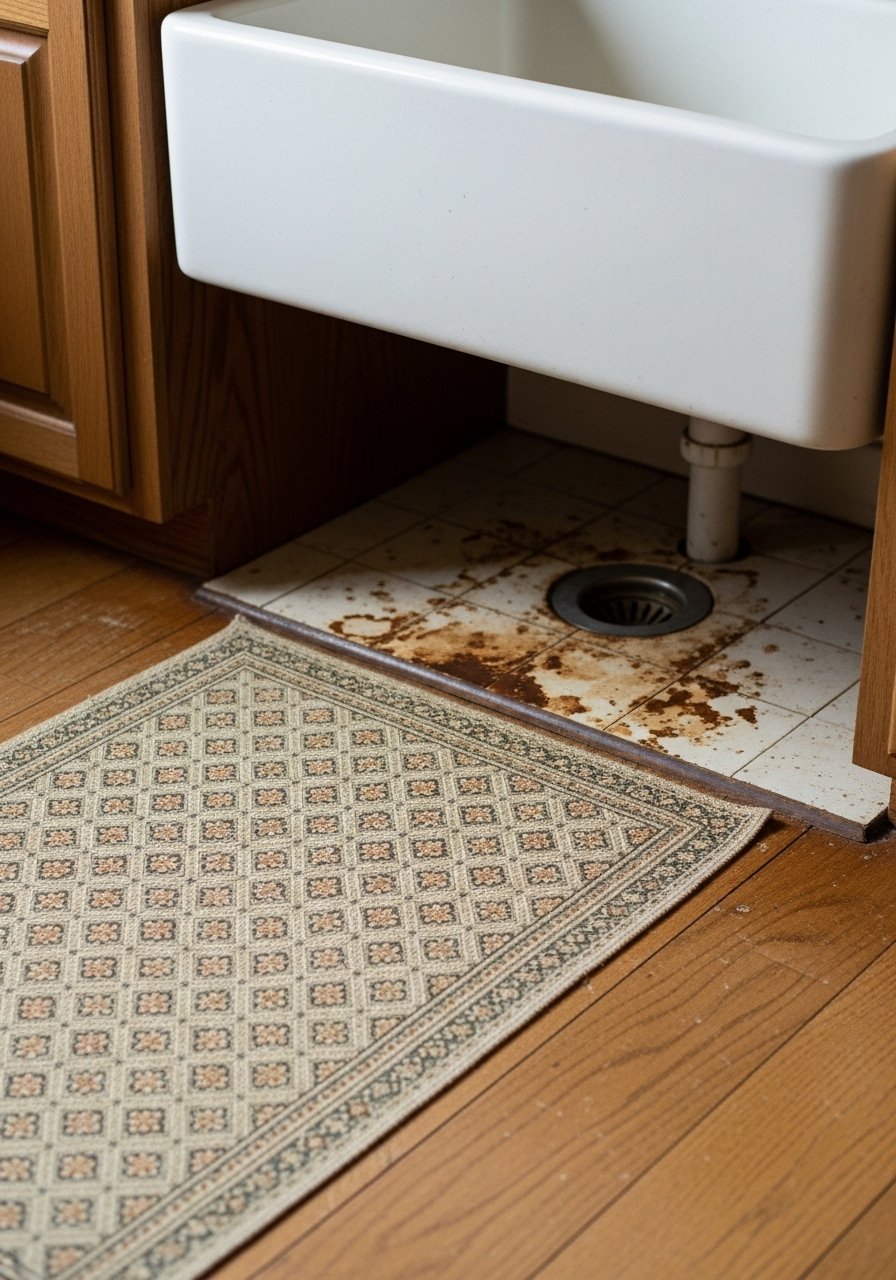
A runner with a subtle, traditional pattern grounds the kitchen. I place it in front of the sink or stove to give a vintage carpeted feel that’s practical and warm. It softens tile or wood and adds color without screaming for attention.
Many people pick bold, trendy patterns that compete with other vintage touches. Pick a smaller-scale pattern and muted tones. Don’t use a runner that’s too narrow; it should cover the walking zone comfortably.
Step 5: Stage countertops with butcher block and enamelware
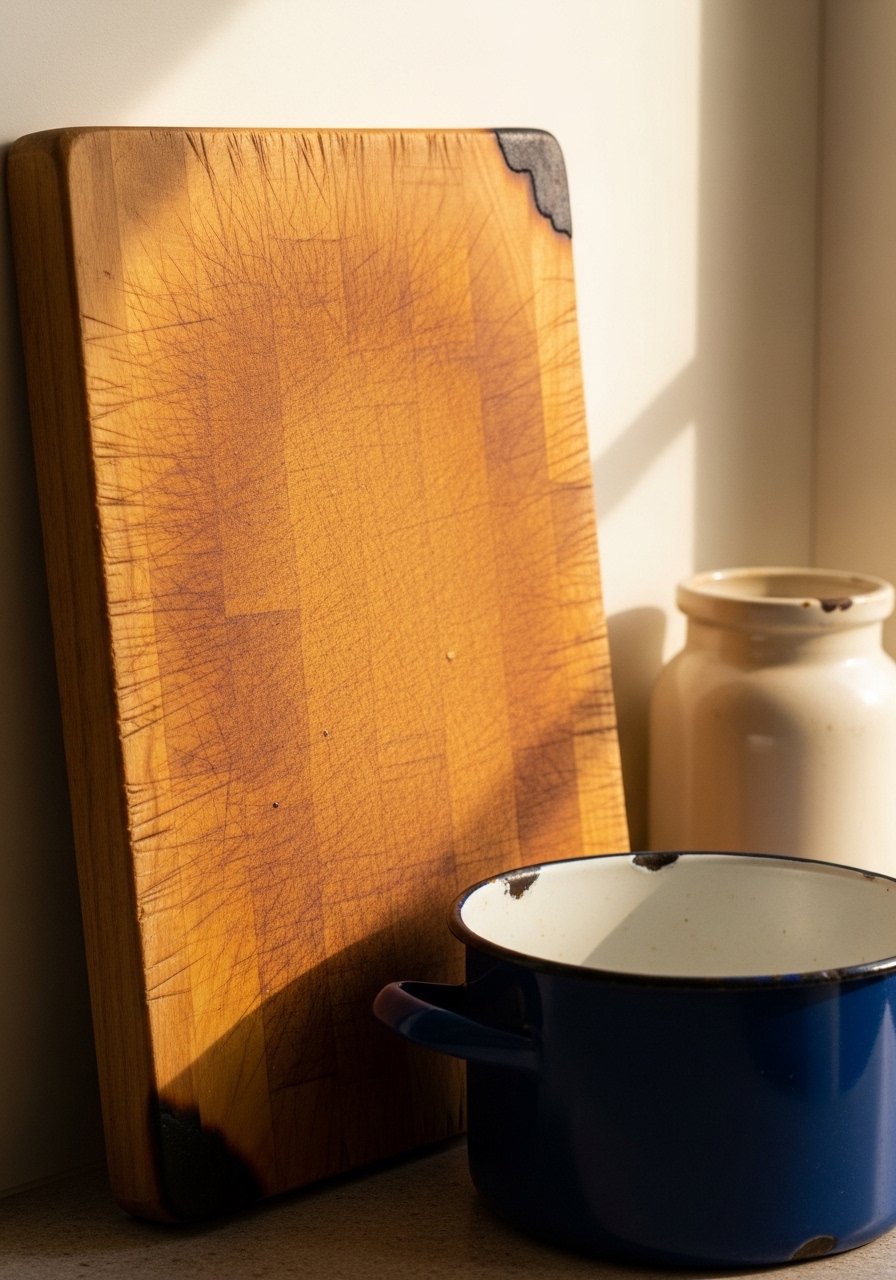
Countertop styling is about lived-in utility. I keep a large butcher block against the backsplash, an enamel pot near the stove, and a small pile of frequently used utensils in a ceramic canister. This reads like daily life, not a store display.
People often over-accessorize and create dust traps. My tip: limit to three functional objects per counter zone. Avoid placing everything on the counter; leave a stretch clean to keep the space readable.
Step 6: Finish with small art and imperfect framing
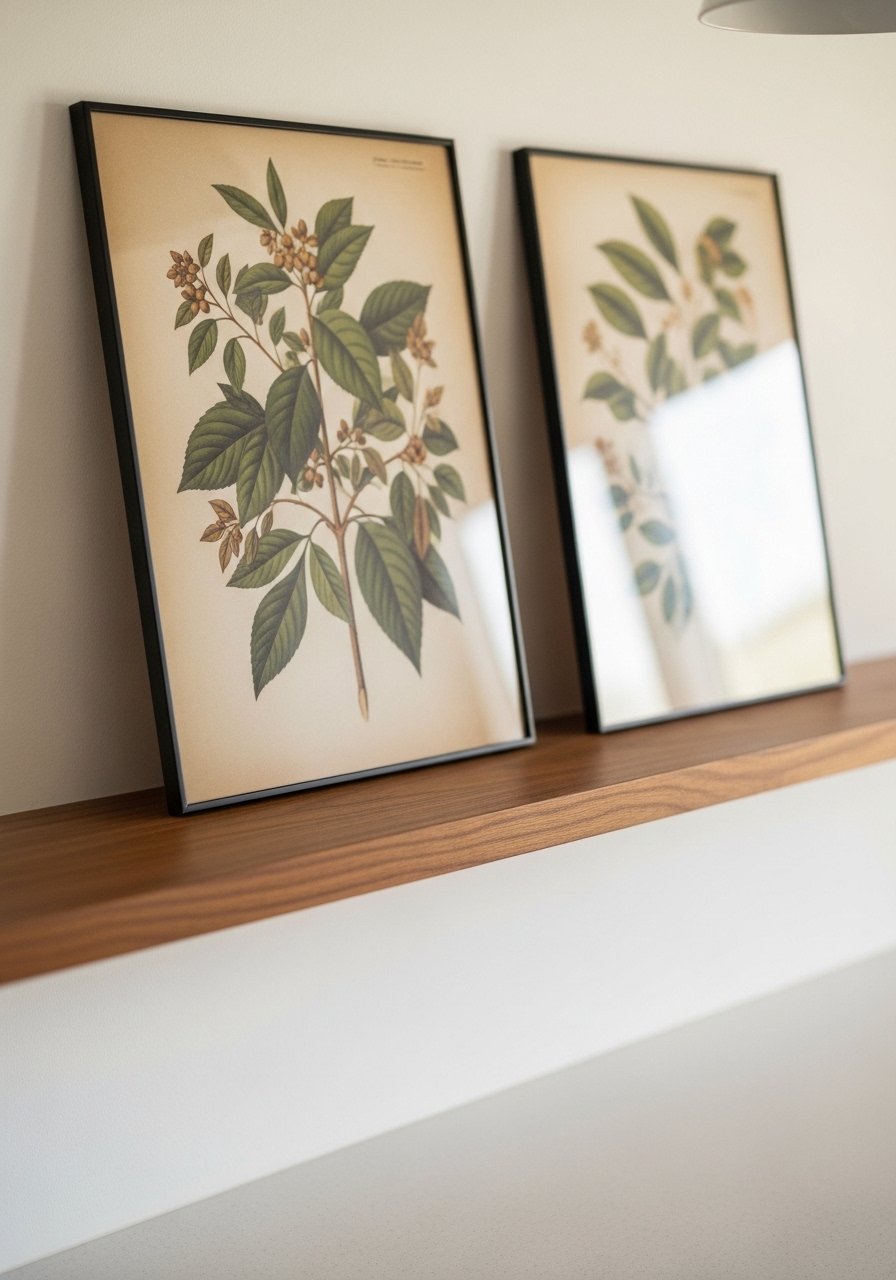
Small framed prints and a slightly askew frame make a kitchen feel personal. I lean botanical prints against a backsplash or hang them low near the prep area. They add history without demanding wall space.
Many people hang art too high or choose modern graphics that clash. Pick simple, traditional subjects and place art where you actually look—near the coffee station, above a bookcase, or by the pantry.
Common Mistakes with Vintage Kitchen Styling
I see the same missteps over and over. They’re easy to fix once you know them.
- Too much faux distress: real materials and subtle aging read better.
- Mixing too many eras: choose one dominant vintage vibe—farmhouse, English cottage, or coastal.
- Over-accessorizing counters: leave breathing room; function still matters.
If you’re unsure, start by swapping hardware and adding one shelf vignette. Those small changes tell you if you’re on the right track.
Adapting the Look for Small Kitchens and Tight Budgets
You don’t need a full remodel to get vintage character. I work in small spaces the same way I do in large ones.
- Choose one focal wall for open shelves or prints.
- Swap pulls and add a single pendant rather than multiple fixtures.
- Use a butcher block board and enamelware as affordable, high-impact props.
On a budget, prioritize hardware and one good textile (like a runner). They give the most vintage feel per dollar.
How to Mix Vintage with What You Already Own
Vintage style should be a conversation with what’s already in the room, not a takeover.
- Keep large modern appliances and soften them with warm wood and brass details.
- Blend a modern island with vintage open shelving or a freestanding bookcase for cookbooks.
- Repeat materials—wood, brass, enamel—around the room to tie pieces together.
If a piece feels too new, anchor it with smaller vintage touches nearby so it reads as a deliberate mix.
Final Thoughts
Start small. Swap a set of brass cup pulls or add a butcher block and you’ll see the mood change immediately. Take one corner at a time and make it feel used and loved.
Vintage style is patience more than price. Little, honest layers create warmth that lasts.