
Wood has a quiet superpower in kitchens. One well-placed accent can turn a cold, showroom-style space into something that feels lived-in, calm, and welcoming. The trick isn’t adding more wood—it’s adding the right kind, in the right places, with balance.
Whether your kitchen is modern, white, farmhouse, or somewhere in between, this guide breaks down exactly how to decorate a kitchen with wood accents so it feels intentional, elevated, and Pinterest-worthy.

1. Use a Wood Island as the Visual Anchor
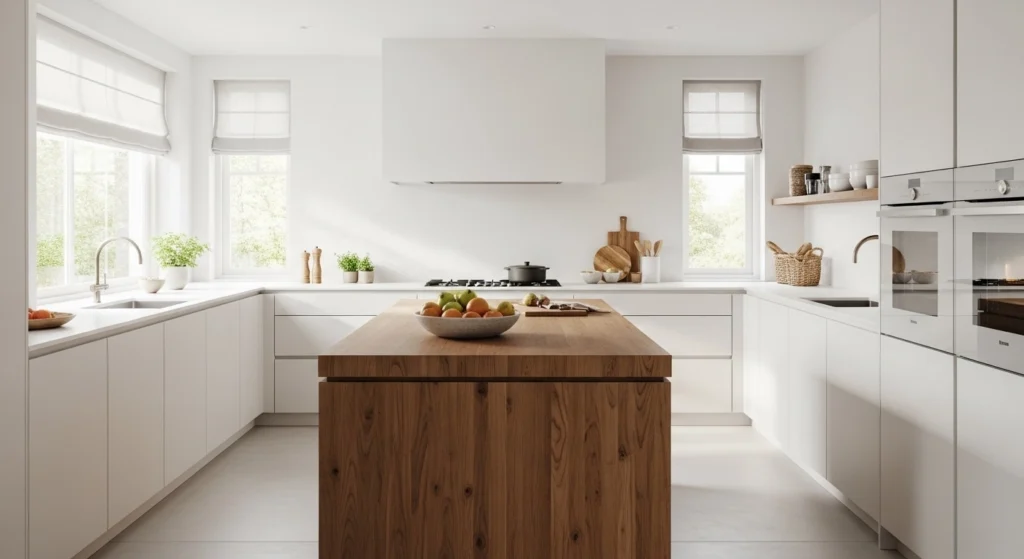
If your kitchen has room for an island, this is hands-down the most impactful place to introduce wood.
A wood island instantly:
- Grounds an all-white kitchen
- Adds warmth without overwhelming the space
- Creates a natural focal point
How to style it right:
- Pair wood bases with a light stone or butcher block top
- Keep surrounding cabinets white or neutral
- Choose visible grain for character
💡 Design tip: Herringbone or fluted wood panels on the island base add texture while hiding everyday scuffs.

2. Mix Butcher Block for Function + Style
Butcher block isn’t just for countertops—it’s one of the easiest ways to soften a sleek kitchen.
Use it for:
- Full countertops in small kitchens
- A dedicated prep zone
- Movable cutting boards styled on counters
Why it works:
The natural grain contrasts beautifully with stainless steel, white cabinets, and matte black hardware.
Keep it looking fresh:
- Oil regularly
- Avoid placing near sinks unless sealed
- Let imperfections add character

3. Style Open Wood Shelving With Intention
Open shelving is where wood accents meet everyday function. Done right, it adds rhythm and depth—not clutter.
What to display:
- Stacked white dishes
- Glass jars with dry goods
- Wooden cutting boards and utensils
- A small plant or two
What to avoid:
- Too many colors
- Random decor without purpose
💡 Use veneered plywood shelves for durability, especially in small kitchens.

4. Layer Wood Tones for a Designer Look
Not all wood needs to match—and that’s a good thing.
A simple rule designers love:
- Lighter wood up high (shelves, beams)
- Darker wood down low (base cabinets, islands)
This creates:
- Visual depth
- Better balance
- A high-end, layered feel
Stick to 2–3 tones max to keep things cohesive.
5. Add Wood Through Small, Functional Decor
You don’t need renovations to bring in wood accents. Sometimes the smallest details do the most work.
Easy upgrades:
- Wooden cutting boards leaned against the backsplash
- Utensil crocks made from rustic planters
- Breadboards or vintage trays
- Wood-handled knives or tools
These pieces double as decor and daily essentials.

6. Try Wood Accent Walls or Ceiling Beams
For kitchens that feel flat or overly minimal, architectural wood adds instant interest.
Popular options:
- Reclaimed plank accent walls
- Faux or real ceiling beams
- White-washed wood for lighter spaces
This works especially well in kitchens with high ceilings or open layouts.
7. Soften Cabinets With Wood Base Units
If full wood cabinetry feels too heavy, start with base cabinets only.
Why it works:
- Grounds the kitchen visually
- Keeps upper areas light and airy
- Creates subtle color-blocking
Walnut or medium oak tones are especially flattering in smaller kitchens.
8. Bring Wood Into Seating and Lighting
Wood doesn’t have to live only on cabinets.
Try:
- Wicker or wood bar stools
- Steam-bent wood pendant lights
- Wood trim around windows or counters
These touches layer warmth without stealing attention from the main design.
9. Balance Wood With the Right Colors
Wood shines best when paired thoughtfully.
Best color pairings:
- White + warm oak
- Greige + walnut
- Soft gray + light maple
You can even introduce muted bold hues—just keep wood as the grounding element.
10. Choose Durable Wood-Look Alternatives When Needed
High-traffic zones need durability.
Smart swaps:
- Wood-look porcelain tile on islands
- Vertical grain panels on under-counter units
You’ll get the look without the maintenance stress.
Final Takeaway: Warmth Is About Balance
Decorating a kitchen with wood accents isn’t about going rustic—it’s about adding warmth, texture, and intention.
Start small if needed. One wood island, a few cutting boards, or open shelves can completely change how your kitchen feels.
✨ Save this guide for later and start layering warmth into your kitchen—one wood accent at a time.