
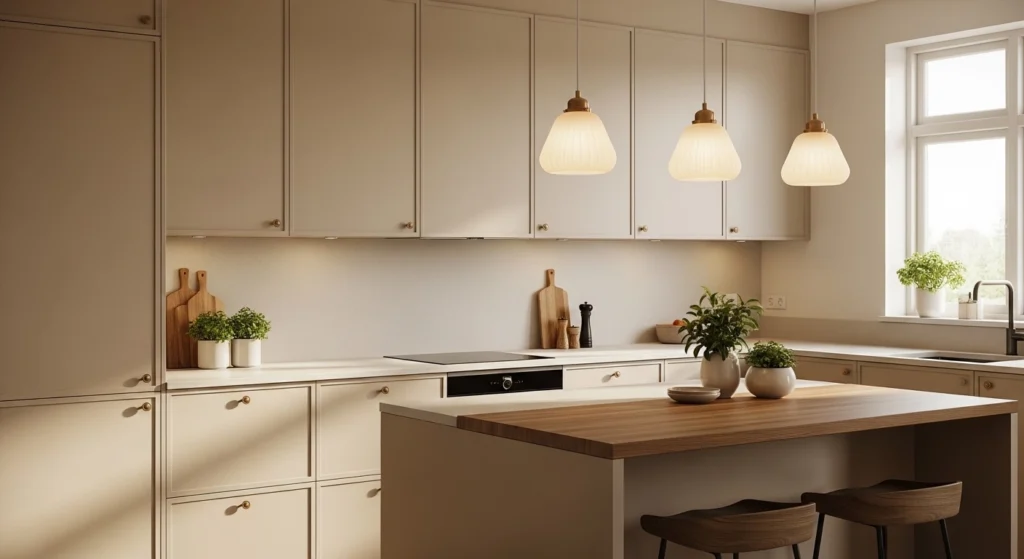
Neutral kitchens are timeless, calm, and endlessly adaptable—but let’s be honest, they can also feel a little flat if you’re not careful. The good news? Warming up a neutral kitchen doesn’t require a full renovation or bold colors. With the right textures, materials, and lighting, you can turn a bland space into a cozy, inviting heart of the home.
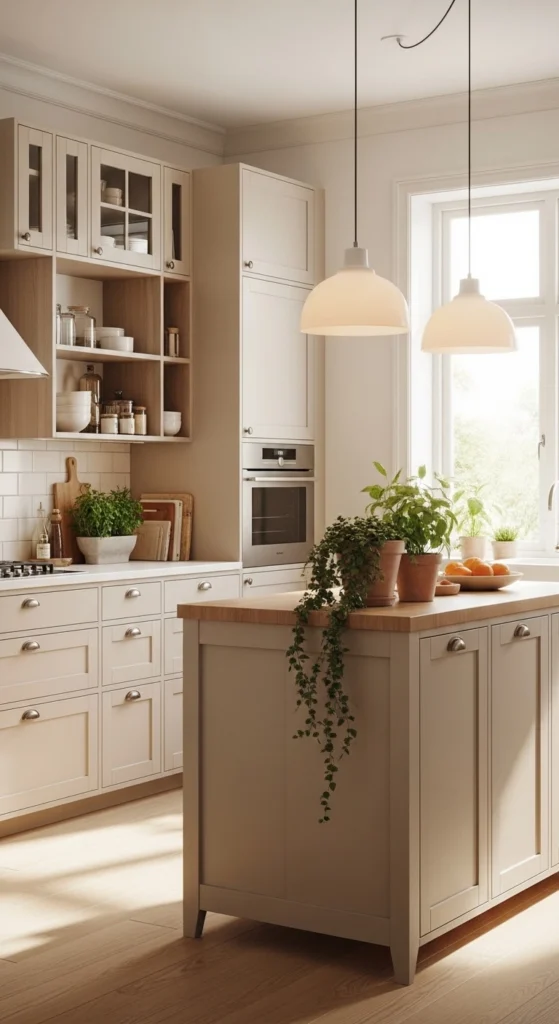
Whether you’re working with white cabinets, soft beige tones, or warm greige, these steps will help you add depth and personality while keeping that clean, neutral look you love.
1. Layer Textures to Create Visual Depth
The fastest way to make a neutral kitchen feel warm is by layering textures. When everything is smooth and flat, neutrals can feel sterile. Mixing finishes adds instant character.
Try combining:
- Woven baskets for storage
- Natural wood shelves or cutting boards
- Matte ceramics or stoneware
- Linen or cotton tea towels
Think of texture as your substitute for color—it keeps the palette calm but visually interesting.
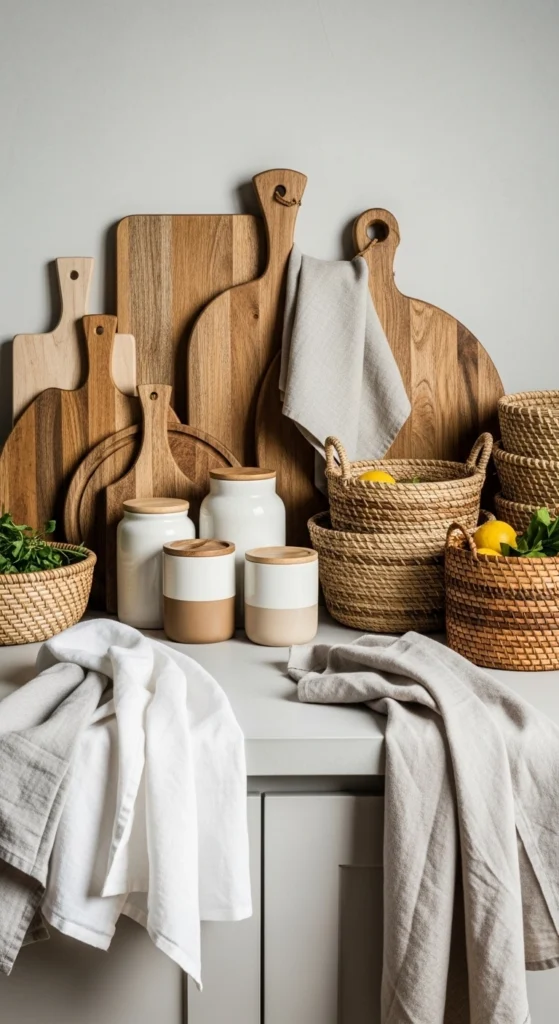
Quick tip: If your cabinets are sleek and modern, balance them with something organic like wood or weave.
2. Use Natural Materials for Warmth
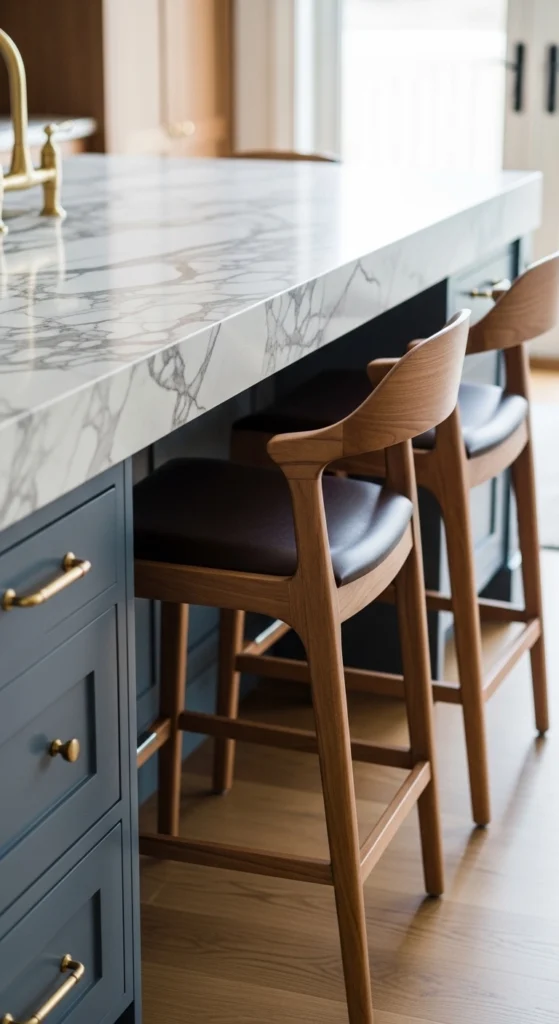
Nothing warms up a neutral kitchen like natural materials. Wood, stone, and marble soften the look of white or beige cabinetry and make the space feel grounded.
Popular pairings include:
- Marble or quartz countertops with wood accents
- Wood bar stools paired with a stone island
- Floating wood shelves against light walls
These combinations feel elevated but still cozy—perfect for a kitchen that looks styled yet livable.
3. Choose Warm Neutrals Over Stark Ones
Not all neutrals feel the same. Cool grays and bright whites can read modern, but they sometimes feel cold. Warm neutrals bring comfort.
When possible, lean toward:
- Beige, cream, or soft taupe for walls and cabinets
- Warm wood tones instead of gray-washed finishes
- Soft off-whites rather than crisp, icy white
A good rule of thumb: limit your palette to three main neutral tones (for example, ivory, taupe, and charcoal) to keep the look cohesive.
4. Add Statement Lighting That Feels Inviting
Lighting does more than illuminate—it sets the mood. In a neutral kitchen, statement lighting adds personality without overwhelming the space.
Great options include:
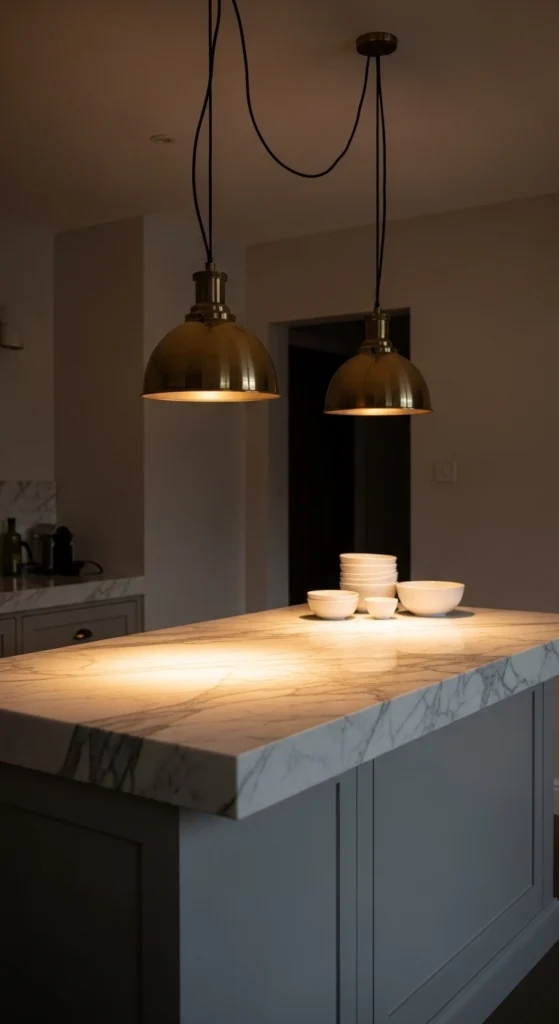
- Warm brass or bronze pendant lights over the island
- Minimalist pendants with soft, diffused light
- Recessed lighting to highlight textures subtly
Avoid overly harsh or cool-toned bulbs. Warm light enhances neutral colors and makes the kitchen feel welcoming, especially in the evenings.
5. Style Open Shelving With Restraint
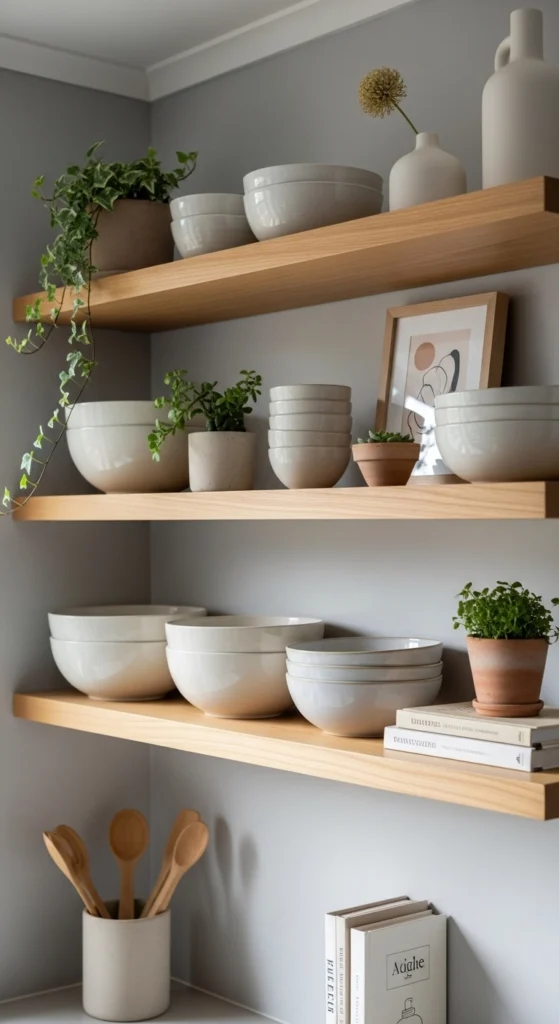
Open shelving can add warmth, but clutter kills the vibe fast. The secret is restraint and repetition.
Follow the 2–3 tone rule:
- Stick to ceramics, wood, and greenery
- Repeat similar shapes or colors
- Leave some negative space
Use shelves to display:
- Artisanal bowls or vases
- Small stacks of neutral dishes
- Fresh herbs or potted plants
6. Create a Clear Focal Point
A neutral kitchen needs a hero. Without one, the space can feel forgettable.
Choose one standout feature:
- A statement island
- A subtly textured backsplash
- Unique pendant lighting
Build the rest of the design around that focal point, keeping everything else quieter so it can shine.
7. Use Hardware and Seating for Subtle Contrast
Small details make a big impact in neutral kitchens. Hardware and seating are perfect places to add texture and warmth.
Consider:
- Brass or champagne-gold cabinet pulls
- Woven or upholstered bar stools in beige tones
- Matte finishes instead of glossy ones
These touches add polish without disrupting the calm palette.
8. Bring in Life With Greenery
Plants instantly soften a neutral kitchen and make it feel lived-in. Even minimal greenery goes a long way.
Easy options:
- Potted herbs on the counter
- A small olive tree in a corner
- Trailing plants on open shelves
If you’re short on light, faux plants can still add warmth without maintenance.
9. Keep the Layout Calm and Functional
Warmth isn’t just visual—it’s emotional. A kitchen that feels calm and easy to use naturally feels more inviting.
Design choices that help:
- Avoid placing the stove on the island for a cleaner look
- Keep counters mostly clear
- Use accessories that are easy to swap seasonally
This makes your kitchen adaptable, so it always feels fresh without major changes.
Final Takeaway: Warmth Is in the Details
A warm neutral kitchen isn’t about bold colors—it’s about thoughtful layers. Texture, natural materials, warm lighting, and small accents work together to create a space that feels serene yet welcoming.
Start with one change—maybe wood accents or new lighting—and build from there.
✨ Save this guide for later and come back whenever your kitchen needs a cozy refresh.