

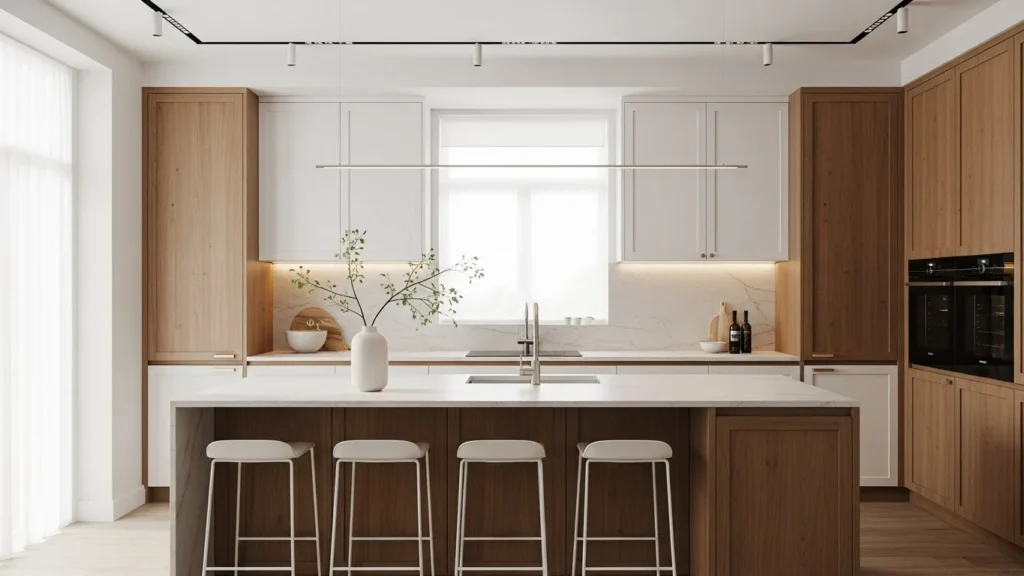
You don’t need a designer budget to get a kitchen that feels polished, calm, and high-end. What most “expensive-looking” kitchens have in common isn’t cost—it’s consistency, restraint, and smart styling. With a few intentional upgrades and styling tricks, you can completely change the feel of your kitchen without spending much.
The key is knowing where to save and where to focus.

Let’s break it down into simple, budget-friendly steps that actually work.
1. Start With a Clean, Neutral Foundation
Expensive kitchens almost always start with a calm base. Loud colors and busy patterns can instantly make a space feel cheaper and cluttered.
Focus on:
- Soft whites, warm creams, light grays, or greige tones.
- One main color with one or two supporting accents.
- Clean walls and uncluttered surfaces.
Budget-friendly upgrades:
- Paint walls instead of cabinets.
- Use peel-and-stick backsplash in a subtle pattern.
- Swap bold mats for neutral ones.
A neutral base makes everything else look more intentional—even budget pieces.
2. Upgrade Hardware for Instant Impact
Cabinet hardware is one of the easiest and most affordable ways to elevate your kitchen.

What works best:
- Simple shapes over ornate designs.
- Finishes like brushed brass, matte black, or soft bronze.
- Matching hardware throughout the kitchen.
Tips to save:
- Replace only the most visible cabinets first.
- Keep sizes consistent to avoid drilling new holes.
- Choose quality-looking finishes, even if the material is basic.
This one change alone can make the kitchen feel custom.
3. Style Countertops Like a Designer
The difference between a budget kitchen and an expensive one is often what’s left out.

Follow this rule:
- Keep most of the counter empty.
- Group items instead of scattering them.
Designer-style counter styling:
- A wooden cutting board leaning against the wall.
- One ceramic container for utensils.
- One small plant or bowl.
Avoid:
- Too many appliances on display.
- Random containers in different colors.
- Overdecorating every surface.
Negative space is what makes a kitchen feel upscale.
4. Use Open Shelves (But Style Them Carefully)
Open shelving can look expensive—or messy. The difference is restraint.

How to get it right:
- Stick to matching dishware.
- Use clear or neutral containers.
- Leave empty space between stacks.
Budget tip:
- Remove one upper cabinet instead of all.
- Style shelves with items you already own.
- Avoid overcrowding—less always looks better.
Open shelves add airiness without major renovation costs.
5. Add Warmth With Texture, Not Color
High-end kitchens rely on texture more than bold color.
Easy texture upgrades:
- Wood cutting boards.
- Linen or cotton towels.
- Woven baskets.
- Ceramic or stone accessories.

These elements add depth without visual noise—and most are inexpensive.
6. Improve Lighting for a Luxury Feel
Lighting changes everything. Even a simple kitchen looks expensive when lit well.
Ways to upgrade lighting on a budget:
- Swap harsh bulbs for warm-toned ones.
- Add under-cabinet stick-on lights.
- Use one statement pendant if possible.
Good lighting:
- Softens hard edges.
- Highlights clean surfaces.
- Makes finishes look richer.
This is one of the most overlooked upgrades—and one of the most powerful.
7. Edit Ruthlessly (This Is the Real Secret)
The most expensive-looking kitchens are edited regularly.
Do this every few months:
- Clear all counters.
- Put back only daily essentials.
- Donate or store duplicates.
Ask yourself:
- Does this item earn its place?
- Does it add calm or chaos?
- Would the space look better without it?
Editing costs nothing—but it changes everything.
Final Takeaway
A kitchen that looks expensive isn’t about spending more—it’s about choosing less, choosing wisely, and styling with intention. Neutral colors, simple hardware, clean counters, warm textures, and good lighting can transform even the most basic kitchen.
Save this guide for later and start with one small change today—your kitchen will thank you.